
Reviewed · WALKING TOURS
Amsterdam Old City Private Walking Tour
Amsterdam’s story is written into its streets: a city built on swampy ground that grew into a major world center. This private two-hour walk links the medieval center, old canals, former Jewish District, Chinatown, and Red Light District, so you get a useful first look rather than a single neighborhood.
I like the flexible route and the chance to ask questions as you go. I also like that the walk reaches places such as the Oude Manshuispoort and Begijnhof, not just the postcard canals. The main drawback is time: two hours passes quickly, especially if you want long stops inside sights.
Key points at a glance
- Amsterdam’s origins: Learn how the city was built on reclaimed swamp and became a major European power.
- A private route: Your guide can adapt the walk to your interests in architecture, history, or city life.
- Old and modern Amsterdam: See the Old Church, canals, Chinatown, the former Jewish District, and the Red Light District.
- Local perspective: The tour can include lesser-known corners and stories about Amsterdam’s more recent past.
- Good first orientation: Meet at Amsterdam Central Station and finish with a clearer sense of how the old city fits together.
- Practical format: The tour lasts two hours, accepts private groups of up to 10, and is wheelchair accessible.
Starting at Amsterdam Central Station
The meeting point is in front of the main entrance of Amsterdam Central Station. This is a practical place to begin because it puts you right beside the historic core, with the old city spreading south from the station.
You should arrive ready to walk. Large bags and luggage are not allowed, so leave your suitcases at your hotel or in suitable storage before meeting the guide. Food and drinks are not included, and this is a walking tour rather than a sightseeing trip with transport.
The private format matters here. In a large group, a guide has to keep to a fixed script. With your own group, you can ask why a building looks the way it does, spend more time on architecture, or shift attention toward social history and modern Amsterdam.
The tour is offered in English, Dutch, or German. It is also wheelchair accessible, though the route moves through an old city center where street conditions and crowds can affect the pace. If accessibility is especially important for your group, raise your needs when booking so the route can be handled well.
More Walking Tours in Amsterdam
- Anne Frank’s Story – Guided Walking Tour through Amsterdam
★ 5.0 · 11,619 reviews - Amsterdam: Life of Anne Frank and World War II Walking Tour
★ 4.8 · 10,467 reviews - Absolutely Amsterdam – the Essential Introductory Walking Tour
★ 5.0 · 3,629 reviews
Amsterdam built on mud and water
One of the most useful parts of this walk is the basic explanation of how Amsterdam came into being. The city was built on reclaimed swamp, with land stabilized and raised over time. That simple fact explains much of what you see: narrow streets, water management, canal engineering, and buildings that seem to lean or settle.
The early harbor was not easy to reach from the North Sea. Direct connection was not achieved until the 19th century, yet Amsterdam had already grown into one of Europe’s leading cities. That contrast gives the city’s rise some bite. Amsterdam did not begin with an easy natural setting, but careful engineering and trade changed its fortunes.
By 1650, about 220,000 people lived here, making Amsterdam the third-largest city in Europe. Your guide connects that population boom to the city’s role in trade, science, culture, and finance. These facts are more useful when you are standing among the canals and merchant houses that made such growth possible.
I like this early context because it prevents the tour from becoming a parade of pretty buildings. You learn why the canals exist, why the city developed in rings, and why Amsterdam’s old center feels so carefully planned despite its medieval beginnings.
Medieval streets and the old city wall
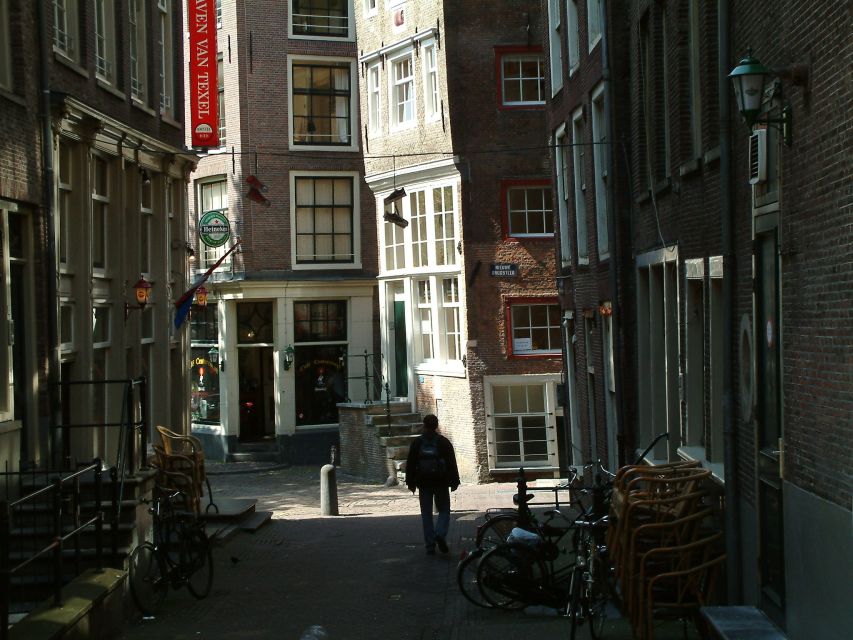
The route moves through the medieval center, including parts of Amsterdam’s old city wall. This is where the city feels oldest and most compressed, with tight streets and layers of development packed close together.
The Old Church, or Oude Kerk, is one of the major sights in this part of the walk. Its presence in the middle of the modern city helps show how the settlement grew around religious and commercial centers. The tour also includes lesser-known places such as the Oude Manshuispoort, an old passageway that offers a quieter look at the city’s past.
These smaller details are important. Amsterdam is easy to reduce to canals and bicycles, but passages, courtyards, old entrances, and former institutions often explain daily life better than a grand landmark does. Your guide can point out what you might walk past alone.
The route is not built around long interior visits, so do not expect a full museum tour or an extended examination of the Old Church. Think of this section as a compact introduction to the city’s oldest layer, with time for questions and photos along the way.
Merchant houses along the canal belt
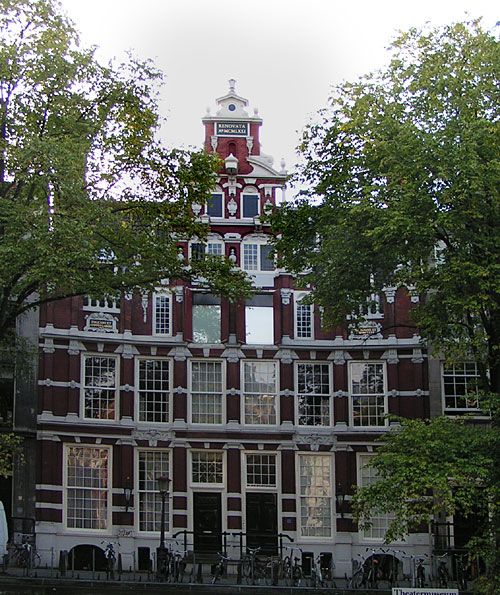
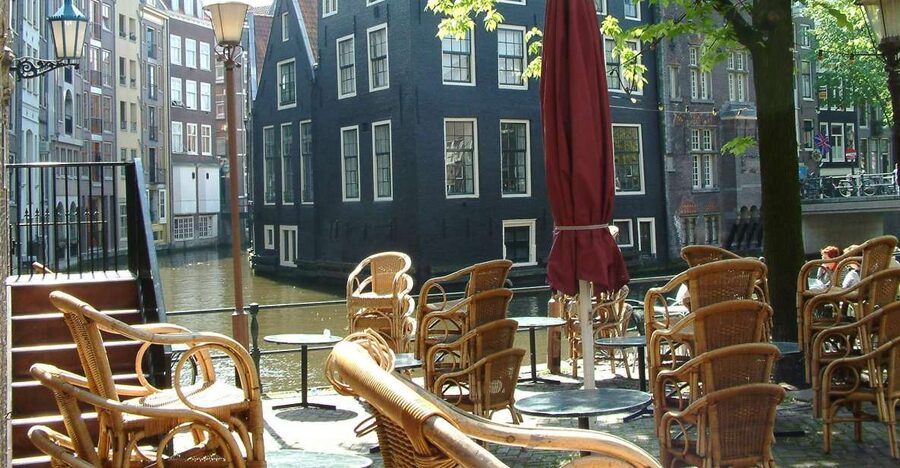
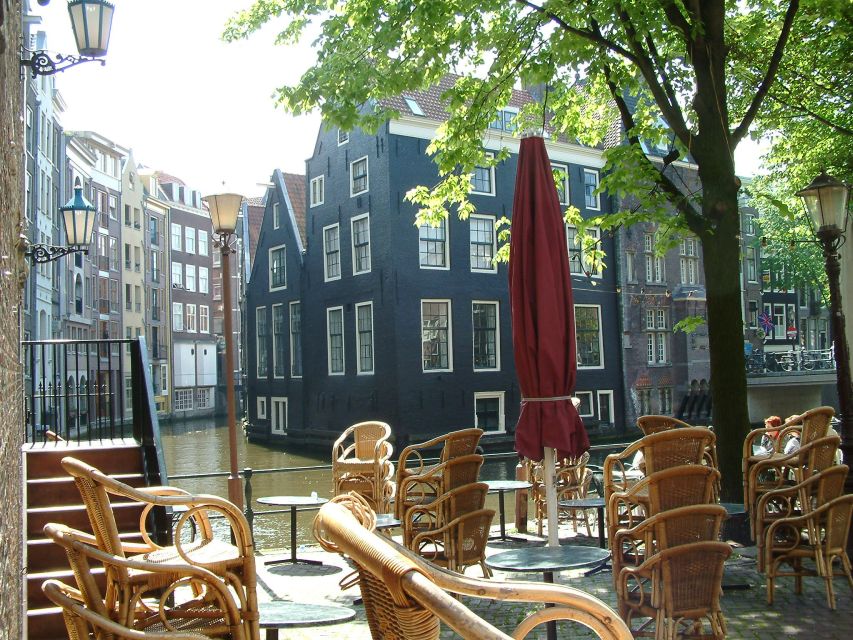
The canals give the walk its most recognizable scenery. You follow the banks of the Herengracht, one of the first three major canals in the city, and see the handsome merchant houses that helped define Amsterdam’s 17th-century image.
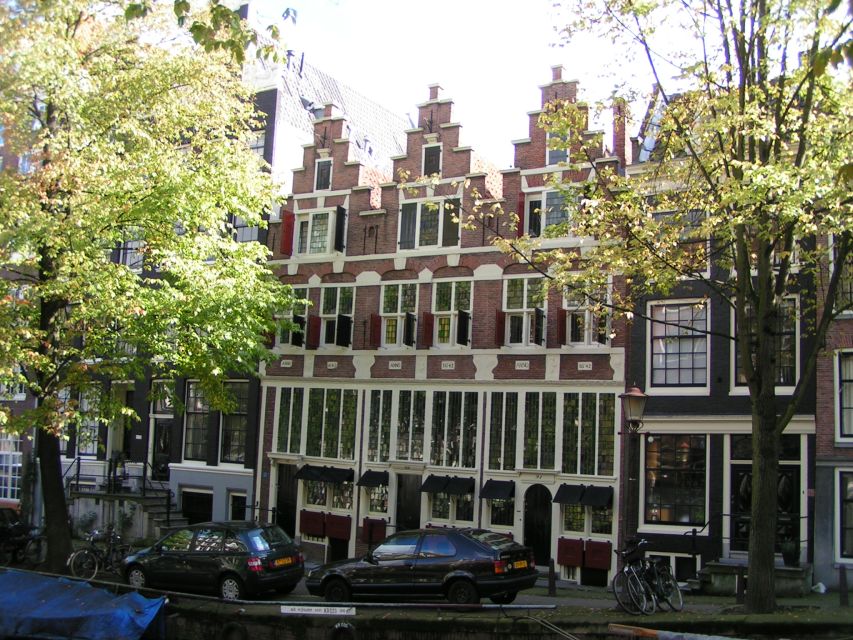
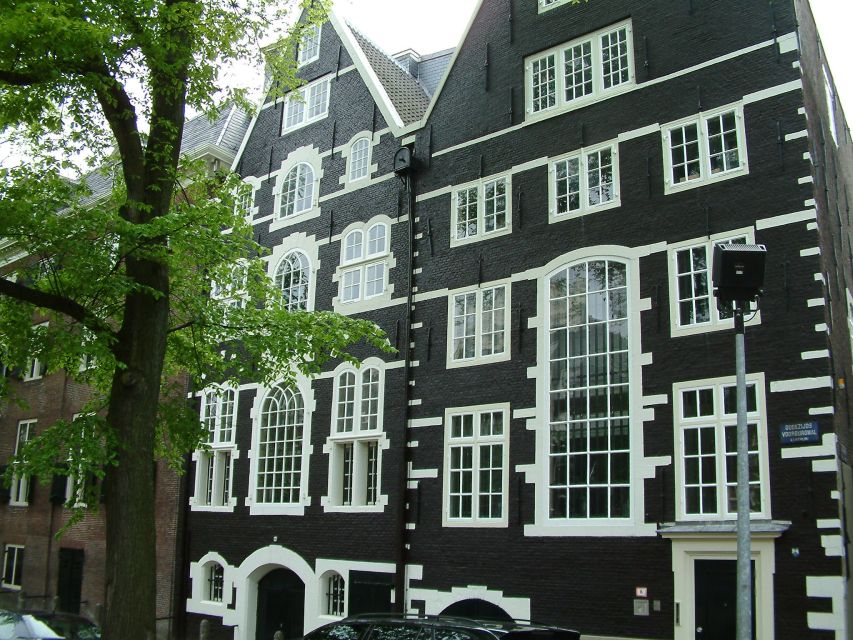
These buildings are not simply decorative. They reflect the wealth of merchants who made money through shipping, trade, finance, and overseas business. Their narrow fronts and tall proportions also reflect the value of urban land and the way buildings were fitted into long, slim plots.
A key stop is the 17th-century Oostindisch Huis, the Amsterdam headquarters of the East India Company. This connects the elegant canal city to the harder side of its commercial power. The company helped make Amsterdam wealthy and influential, but that success was tied to global trade and colonial expansion.
I appreciate having that connection made plainly. You see polished façades, then learn about the institutions behind them. The point is not to turn a two-hour walk into a lecture, but to help you read the city with more care.
The canal section also gives you a chance to compare Amsterdam’s grander streets with its quieter corners. If architecture interests you, tell your guide early. The route is adapted to your wishes, and this is one area where a few extra explanations can make the buildings much more rewarding.
Other guided walks around Amsterdam:
- Amsterdam: Anne Frank Guided Small Group Walking Tour
★ 4.8 · 2,722 reviews - Amsterdam: Anne Frank Walking Tour – Guided in EN/DE/IT/ES
★ 4.9 · 2,676 reviews - Amsterdam: Guided Cultural Walking Tour
★ 4.9 · 2,384 reviews - Amsterdam: Guided Ganja Walking Tour of Coffee Shops
★ 4.2 · 2,092 reviews
The Red Light District in context
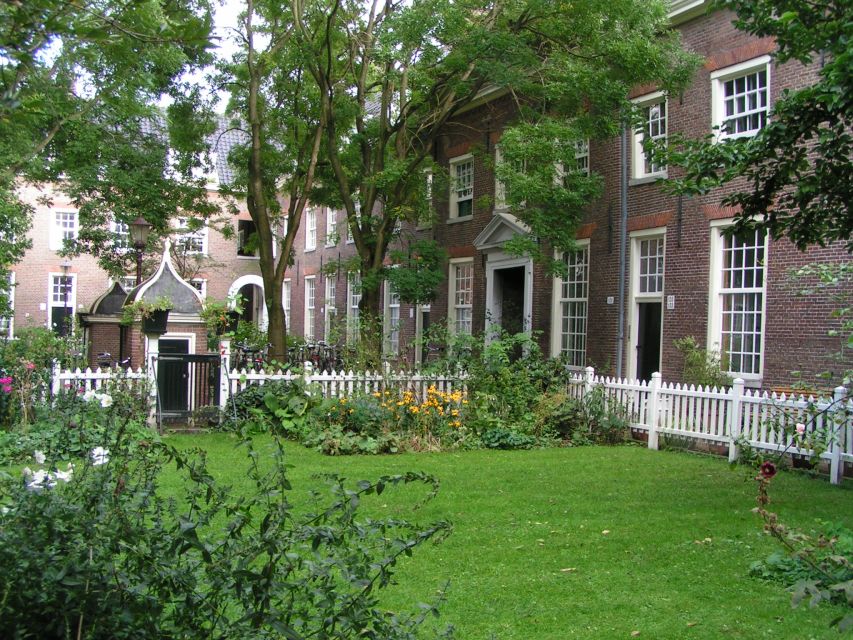
The Red Light District is part of the route, and it is handled as a piece of Amsterdam’s urban history rather than a simple spectacle. You walk through the area, learn how it fits into the old center, and see how commercial, religious, residential, and nightlife uses have overlapped here.
The Old Church sits in this part of town, which makes the area especially interesting. A historic church surrounded by streets associated with adult entertainment captures one of Amsterdam’s long-running contrasts: old institutions and modern tolerance sharing the same small patch of city.
Your guide can help explain the district without turning the walk into a cheap thrill. That is useful if you want cultural context, but it may feel brief if you are hoping for detailed information about current policies or nightlife. The tour is about the city’s development and character, not an evening entertainment crawl.
Use ordinary respect here. Do not treat people working in the area as scenery, and follow any local restrictions about photography. The guide can point out the relevant streets, but you should keep the tone attentive and discreet.
The former Jewish District and Chinatown
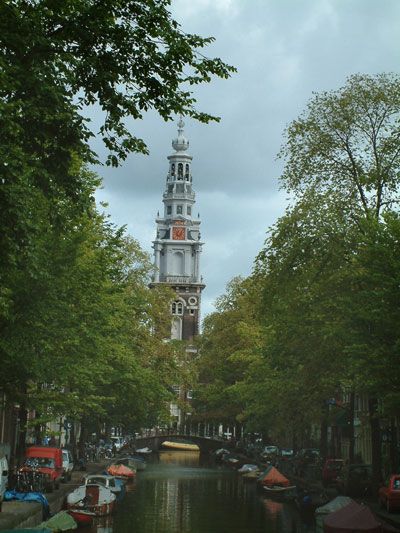
The walk continues through Amsterdam’s old Jewish District, adding an important social and cultural layer to the city’s story. This part of Amsterdam helps you see how neighborhoods formed around community, work, religion, and trade.
The route also reaches Chinatown and Nieuwmarkt. These areas show a different side of the old center, with food, businesses, and communities shaping streets that began with earlier purposes. You get a sense of how Amsterdam keeps changing while its street plan remains tied to the past.
I like the combination because it stops the tour from presenting Amsterdam as one tidy historical period. The city is medieval, commercial, Jewish, Chinese, colonial, modern, and residential at once. A guide can make those connections in a way that a map alone cannot.
The former Jewish District may require a more serious mood than the canal section. The tour does not provide a separate memorial visit or museum program, but it gives you a geographic foundation for understanding where this community lived and how the area fits into Amsterdam’s wider history.
Begijnhof and quieter corners
Begijnhof provides a welcome change from the busy center. This enclosed group of homes was associated with women known as beguines, and its sheltered character makes it feel removed from the surrounding streets.
The stop is valuable because it shows another kind of Amsterdam architecture. Instead of merchant wealth or commercial power, you see domestic buildings and a quieter community setting. It is also a reminder that the city’s story includes religious and social institutions that do not fit neatly into the usual canal-house picture.
The route can also include old pawn shops and handsome houses in the Jordaan district. These details give the walk a more lived-in feel. Pawn shops point toward everyday financial life, while the Jordaan’s buildings show how residential quarters developed beside the grander canal belt.
Do not expect every stop to receive equal time. The guide has only two hours and must keep the route moving. If Begijnhof or the Jordaan matters most to you, say so at the start. The private format gives you a better chance of shaping the balance.
A guide who can connect old and recent Amsterdam
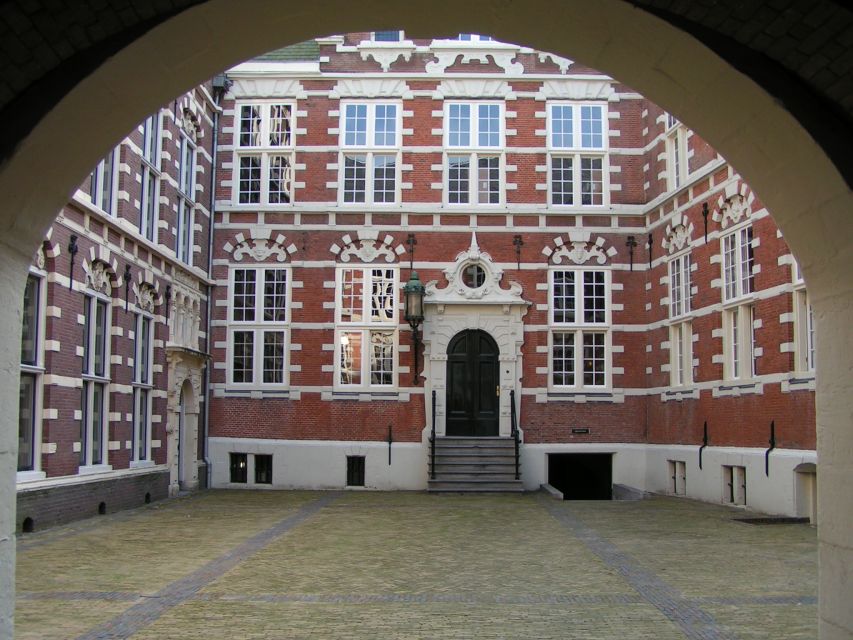
The strongest version of this experience depends on the guide’s ability to link facts with stories. The tour is designed to cover the classic historical material, but it can also include Amsterdam’s more recent development.
A local guide with decades of experience can add details about changes in the city during the 1970s and later. That kind of personal city memory gives you something a standard history talk cannot: a sense of how streets, neighborhoods, and public attitudes changed within living memory.
The route may also reach places that are easy to miss in a standard guidebook. I value this because the best private walks are not just shorter versions of a group tour. They give you room to ask about a storefront, a passage, a building’s former use, or a neighborhood that catches your eye.
The guide languages are English, Dutch, and German. The information provided does not name individual guides, so you should not book expecting a particular person. Instead, choose the language that will let you ask the most questions and follow the historical detail comfortably.
Is $265 good value for a private group?
The price is $265 for a group of up to 10 people. For one or two people, that is a significant cost compared with a shared walking tour. For a family or group of friends, the calculation looks better because the price is divided among everyone.
I see the main value in the private format, not in the length. Two hours is short, but you get a guide focused on your group, a route adapted to your interests, and a broad introduction to several parts of the old city. That can be useful on your first day, when you want to understand Amsterdam before exploring alone.
The price makes less sense if you want long interior visits, a food tasting, or a detailed specialist tour of one neighborhood. Food and drinks are not included, and the walk does not replace a museum ticket or an in-depth visit to the Old Church.
For a group of eight to 10, the cost per person becomes much easier to justify. It can also work well for families with different interests because the route can balance architecture, history, and modern city life rather than forcing everyone into one narrow theme.
Who will enjoy this Amsterdam walk?
I would choose this tour for first-time visitors who want a clear map of the old center and enough history to understand what they are seeing. It also suits repeat visitors who have seen the main canals but want local stories and less obvious corners.
History and architecture are enough to enjoy the tour. You do not need specialist knowledge. The guide explains Amsterdam’s growth from reclaimed land, its role in European trade, and the changes that shaped its neighborhoods.
This is also a good fit for groups who value conversation. If you like stopping to ask questions, comparing neighborhoods, or changing the emphasis as you walk, a private tour gives you room to do that.
I would be cautious if your priority is a relaxed stroll with many café stops. Two hours covers a lot, and the route includes several districts. It is also not the best choice if large bags are unavoidable or if you want a tour built mainly around food, shopping, or nightlife.
The walk is wheelchair accessible, but the age and layout of the historic center can affect movement. Confirm your needs in advance, especially if your group requires a particular pace or route adjustment.
Practical details before you book
The tour lasts two hours, with starting times available according to the date you choose. Meet in front of the main entrance of Amsterdam Central Station.
You can cancel up to 24 hours before the tour for a full refund, and you can reserve now and pay later. Those terms are useful when your Amsterdam plans are still shifting.
The tour is private and can include up to 10 people. Bring comfortable walking shoes and a small bag only. Since food and drinks are not included, plan a café stop before or after the walk rather than expecting refreshments during it.
The activity has an overall rating of 4.6 from 33 reviews. The strongest praise centers on informative guiding, an authentic feel, and a route that goes beyond the most obvious tourist streets. That matches the tour’s main strength: it gives you a broad city introduction while leaving room for personal questions and local detail.
Should you book this tour?
Book it if you want a private orientation to Amsterdam with history, architecture, and several contrasting neighborhoods in one compact walk. It is especially good value for groups of four or more, and it suits anyone who prefers a guide who can adjust the route instead of delivering a fixed script.
Skip it if you want extended time inside monuments, a food-focused experience, or a slow walk limited to one district. The two-hour schedule is useful but packed.
For most first visits, I would schedule it early in your stay. Afterward, you will know which canals, museums, and neighborhoods deserve a longer return visit, and Amsterdam will feel less like a pretty maze.
FAQ
How long is the Amsterdam Old City Private Walking Tour?
The tour lasts two hours.
What is the price for the private tour?
The price is $265 for a private group of up to 10 people.
Where does the tour meet?
Meet your guide in front of the main entrance of Amsterdam Central Station.
Which languages are available?
The tour is available in English, Dutch, and German.
Is the tour private?
Yes. It is offered as a private group experience.
Can the route be adapted to my interests?
Yes. The two-hour walking tour is adapted to your wishes, so you can discuss your interests with the guide.
Which parts of Amsterdam does the walk visit?
The route can include the medieval center, the old city wall, the Old Church, Oude Manshuispoort, the Red Light District, the former Jewish District, Begijnhof, Chinatown, Nieuwmarkt, the Jordaan, and the Herengracht.
Is the tour wheelchair accessible?
Yes, the activity is listed as wheelchair accessible.
Are food and drinks included?
No. Food and drinks are not included in the tour.
Can I cancel for a full refund?
Yes. You can cancel up to 24 hours in advance for a full refund.
Just added in Amsterdam
- Guided Day Trip – Volendam, Zaanse Schans, Marken & Edam★ 4.0 · 232 reviews
- Private Tour Zaanse Schans Windmills and Volendam in Jaguar★ 5.0 · 10 reviews
- Zaanse Schans and Giethoorn Unique Day Trip with Boat Cruise★ 4.5 · 17 reviews
- Half-Day Private Guided Sightseeing Tour of Zaanse Schans★ 5.0 · 14 reviews
- Zaanse Schans Private Tour Windmills★ 5.0 · 18 reviews
- Private bike tour: Hidden gems around Amsterdam and surroundings★ 5.0 · 4 reviews
- Bike tour in Amsterdam with an Italian guide★ 5.0 · 15 reviews
- Amsterdam Sightseeing Tour + Hidden Gems + Tastings + PDF guide★ 5.0 · 35 reviews
Walking Tours, compared.
Anne Frank’s Story – Guided Walking Tour through Amsterdam
Read our review →
Life of Anne Frank and World War II Walking Tour
Read our review →

Anne Frank Walking Tour – Guided in EN/DE/IT/ES
Read our review →

Anne Frank Walking Tour Amsterdam Including Jewish Cultural Quarter
Read our review →
Amsterdam Highlights Walking Tour: Small Group Experience
Read our review →Browse the lists this tour appears in