
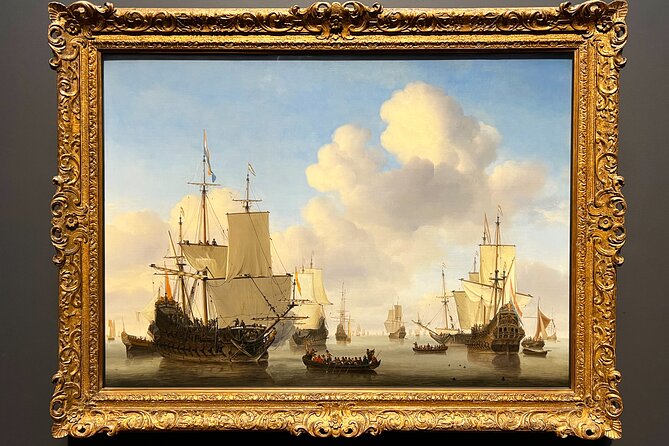
Reviewed · RIJKSMUSEUM TICKETS
Rijksmuseum Guided Tour, private local Dutch guide
The best reason to book this Rijksmuseum tour is simple: you get a private guide to help you make sense of a huge collection in just two hours. Instead of wandering past famous paintings without context, you’ll focus on Rembrandt, Vermeer, Dutch sculpture, war artifacts, and the museum’s remarkable building.
I like the private format, which lets your guide adjust the pace and explain what interests you most. I also like the art-history focus, especially the chance to connect The Night Watch with the Dutch Republic, the Protestant Reformation, and the Eighty Years War.
The main consideration is price. At $150.18 per person, this costs far more than entering the museum on your own. It makes the most sense for a small party that wants efficient guidance, personal attention, and a better understanding of the collection.
Key points at a glance
- Private English-language visit: Only your party takes part, with a local Dutch guide.
- Two-hour route through major works: Expect Rembrandt’s The Night Watch, The Jewish Bride, The Standard Bearer, and several Vermeer paintings.
- Architecture included: The visit begins with Pierre Cuypers’s Rijksmuseum exterior and continues through the Great Hall.
- Flexible focus: Your guide can shape the discussion around your interests in art history.
- Good for mixed-age groups: Guide Anna kept one family’s 11-year-old and 16-year-old engaged with humor and clear explanations.
- Practical extras: Museum admission and cloakroom use are included, and portable stools are available.
Why a private Rijksmuseum guide changes the visit
The Rijksmuseum is not a small gallery you can casually finish between coffee and a canal cruise. Its collection covers centuries of Dutch art and culture, and its famous works attract steady attention. A private guide gives you a plan, explains what deserves your time, and keeps the visit from turning into a long march through crowded rooms.
This tour is offered in English and lasts about two hours. That is enough time for a well-chosen introduction, but not enough to cover every important painting in the building. I see that as a strength. A short, focused visit can leave you with a clearer memory of six or eight works than a rushed attempt to see everything.
The private setting also matters if your party has mixed interests. You can ask for more painting analysis, more architectural detail, or more background on Dutch political and religious change. The tour is not a fixed lecture delivered to a large group.
Guides named Anna and Ana receive especially warm praise for clear English, warmth, humor, and strong art-history training. The spelling varies in the supplied information, so confirm your assigned guide when booking. The important point is that the experience depends heavily on the person leading it, and the guide is intended to do more than point out famous names.
More Rijksmuseum tickets and tours in Amsterdam:
- Amsterdam: Rijksmuseum Entry Ticket
★ 4.7 · 25,535 reviews - Amsterdam: City Canal Cruise and Rijksmuseum
★ 4.5 · 2,129 reviews - Rijksmuseum Amsterdam Small-Group Tour with Private Upgrade
★ 4.5 · 1,547 reviews
Starting outside with Pierre Cuypers
Meet at Cobra Café on Hobbemastraat 18, near the museum. The tour begins outside, before you enter the collection, with a discussion of the Rijksmuseum building.
This is a smart opening. The museum was designed by Pierre Cuypers, and the building itself helps explain the national story the institution wanted to tell. You’ll hear about the architect’s vision, the period in which the museum was built, and the work of the artisans who decorated it.
Many visitors hurry through the entrance and head straight for The Night Watch. That can mean missing the building’s carved details, grand proportions, and mixture of architectural influences. Starting outdoors gives you a useful frame for what follows inside.
The exterior discussion also helps you understand that the Rijksmuseum is not just a neutral container for paintings. Its design reflects ideas about Dutch culture, national identity, art, and education. Your guide can connect those ideas to the displays once you enter.
Entering the museum and setting your route
After the outside introduction, you enter the Rijksmuseum and visit the cloakroom. Museum admission is included, as is cloakroom access, so you do not need to arrange those parts separately.
Your guide then explains the collection and the plan for the next two hours. This is where the private format becomes most useful. If you already care about Rembrandt, you can spend more time on his work. If you prefer social history, religious change, or architecture, you can steer the conversation in that direction.
You should tell the guide early if anyone in your group has special interests or limited stamina. Portable stools are available, which is helpful when you want to stop and look closely rather than remain standing through every explanation.
The tour is designed for most participants, and service animals are allowed. Young children must remain seated in a stroller. These details make the visit workable for many families, though the museum’s scale and the two-hour pace still require some attention from parents.
Dutch Renaissance painting and sculpture
The first major art section introduces Dutch Renaissance painting and sculpture. This gives you a base for understanding the later works by Rembrandt and Vermeer.
A good guide can show you how Dutch art changed over time, including shifts in subject matter, technique, patronage, and religious purpose. You may find that this background makes the celebrated seventeenth-century paintings easier to read. Instead of treating each masterpiece as an isolated object, you see it as part of a larger development.
The tour also includes sculpture, so the experience is not limited to flat images on walls. If your main interest is painting, you may want to tell the guide that you would prefer to keep this section brief. Since the visit is private and customizable, the time can be directed toward the subjects that matter most to you.
This part of the route is valuable for first-time museum visitors who know the names Rembrandt and Vermeer but are less familiar with the artistic setting around them. It also gives children and art beginners a starting point before the more famous galleries.
A few more things to do in Amsterdam worth a look
- Van Gogh Museum Tour Reserved Entry Semi Private
★ 5.0 · 1,437 reviews - Private Amsterdam Red Light District and Coffee Shop Tour
★ 5.0 · 763 reviews - Anne Frank and Jewish Quarter Amsterdam Private Walking Tour
★ 5.0 · 684 reviews - Amsterdam Airport & Non-Airport Private Transfer to City Center
★ 4.5 · 521 reviews
Protestant Reformation and the Eighty Years War
The Rijksmuseum collection includes historical artifacts connected with the Protestant Reformation and the Eighty Years War. These objects add political and religious context to the paintings.
You do not need a detailed knowledge of Dutch history to benefit from this section. Your guide explains why religious change and conflict affected art, public life, and the subjects artists chose. That context can make seventeenth-century Dutch painting feel less like a collection of pretty interiors and portraits.
This is one of the tour’s strongest features for anyone who wants more than a list of famous artworks. The connection between objects, events, and paintings gives the visit a stronger sense of place. You may find that a small historical artifact helps clarify a much larger painting.
The possible drawback is that every minute spent on artifacts is a minute not spent in front of Rembrandt or Vermeer. If your group wants only the headline paintings, say so. If you enjoy social and religious background, this section earns its place.
Meeting Rembrandt in several different moods
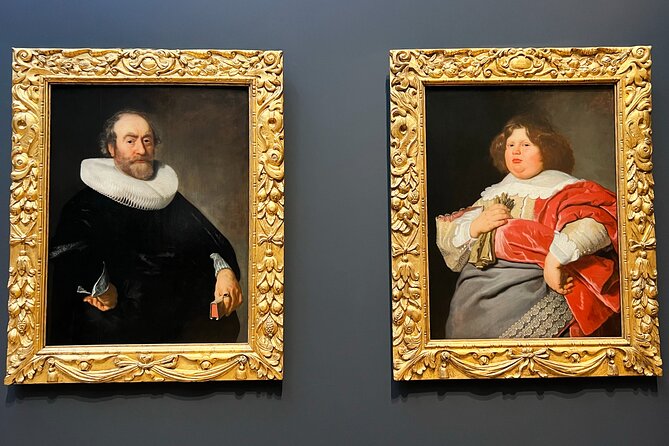
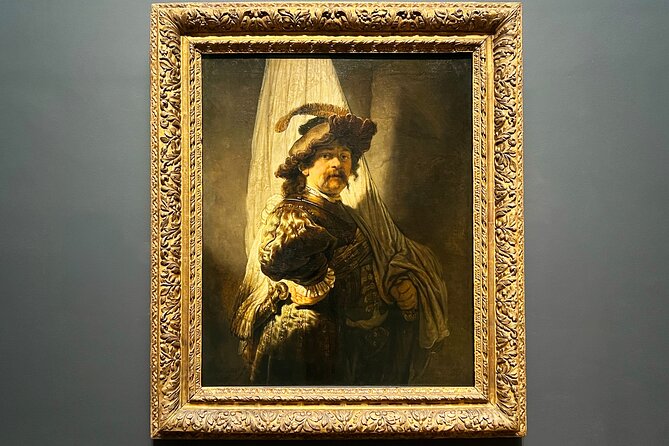
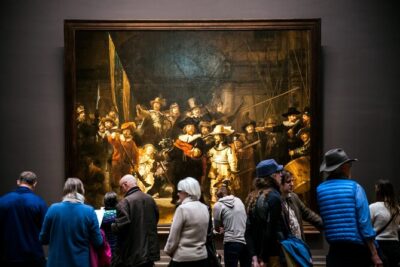
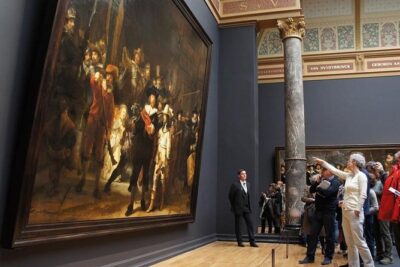
Rembrandt’s The Night Watch is the main event, but the route includes several other works that show how varied his art could be. You will see:
- The Night Watch
- The Standard Bearer
- Self-portrait as the Apostle Paul
- Syndics of the Draper’s Guild
- The Jewish Bride
Seeing these works together is more useful than seeing The Night Watch alone. You can compare public drama, private feeling, self-presentation, group portraiture, and later emotional depth.
Your guide also discusses artifacts connected with The Night Watch. That gives the painting a wider setting and helps you look beyond the famous figures in the foreground. You may come away with a better sense of how the work functioned as a civic commission, not simply as a celebrated museum image.
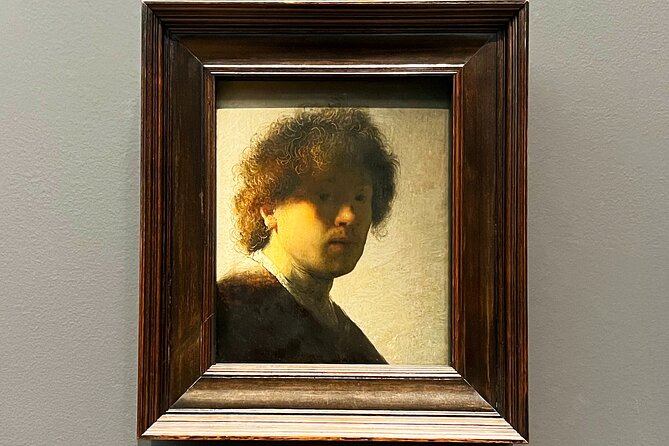
The other Rembrandt paintings make the route feel less like a single-stop photo opportunity. The Syndics of the Draper’s Guild offers a group portrait with a very different mood from The Night Watch. The Jewish Bride is quieter and more intimate. Self-portrait as the Apostle Paul opens a path into Rembrandt’s use of his own face and identity.
The private arrangement helps here. You can pause to ask why a pose, gesture, light effect, or facial expression matters. A large group often has to keep moving, while your guide can spend a little longer on the work that catches your attention.
Vermeer’s quiet rooms and careful light
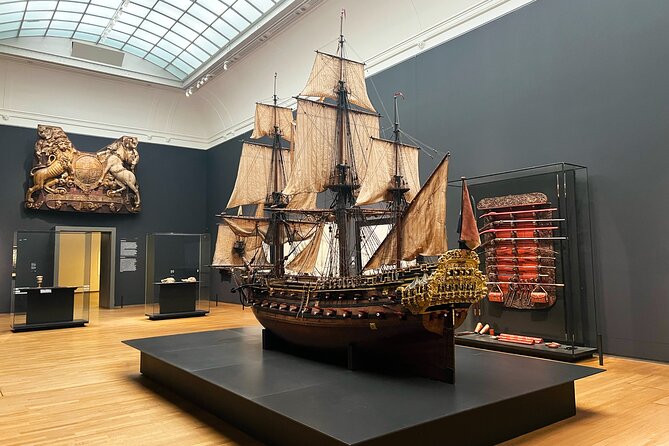
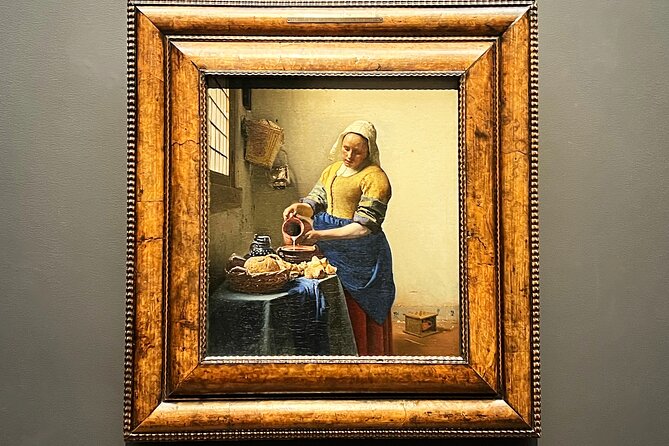
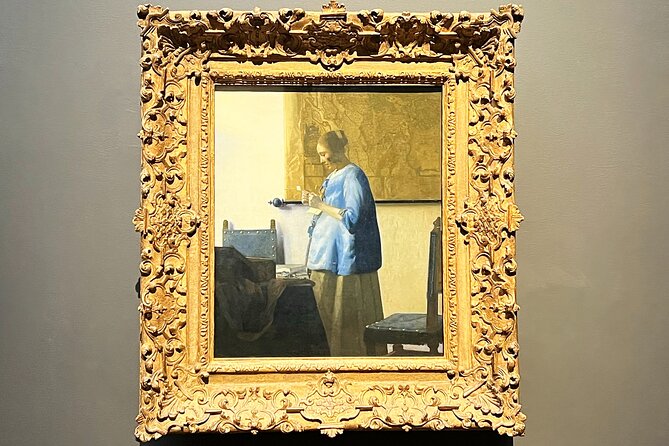
The Vermeer portion includes The Milkmaid, The Love Letter, Woman Reading a Letter, and The Little Street. These paintings reward slow looking, and a guide can point out details that are easy to miss from a quick glance.
Vermeer’s scenes appear calm, but they are carefully constructed. Light, domestic objects, doorways, maps, walls, and small gestures all help shape the meaning of the scene. Your guide can help you compare the private interiors with the street view of The Little Street.
This is a strong section for people who know Vermeer mainly through one or two famous images. Seeing several works in one visit lets you notice repeated concerns, while also showing how different each composition can feel.
Families may appreciate the contrast between Rembrandt’s movement and Vermeer’s stillness. The guide who worked with an 11-year-old and a 16-year-old used humor and accessible explanations to keep both children involved. That does not guarantee every child will enjoy an art museum, but the private setting gives the guide room to adjust the approach.
If Vermeer is your priority, mention it at the beginning. Four paintings in a two-hour route leave limited time for extended discussion of every one, especially if your party also wants architecture and Dutch history.
The Great Hall and Cuypers’s vision
The Great Hall is another major stop. Here you can look up from the paintings and pay attention to the scale, decoration, and craftsmanship of the museum interior.
This section brings the opening architecture discussion back into the museum. Pierre Cuypers’s vision was not limited to the facade. The Great Hall reflects the building’s larger purpose and the work of the artisans who made its decorative program possible.
I like that the tour treats the building as part of the experience rather than as a background. The museum’s rooms affect how you encounter the paintings, and a guide can explain why the main spaces feel ceremonial and grand.
For some people, this is a welcome pause from painting analysis. For others, it may feel like time taken away from the collection. The private format again helps: you can ask for more architectural detail or move more quickly if the great works are your priority.
Is $150.18 per person good value?
The price is $150.18 per person. That is a serious expense for a two-hour museum visit, especially when compared with entering the Rijksmuseum independently.
The value comes from the private guide rather than the ticket alone. You are paying for planning, interpretation, personal questions, a flexible pace, and help choosing what to see in a very large museum. Admission and cloakroom use are included, which simplifies the visit but does not by itself justify the full cost.
I think the price works best for a couple, family, or small group that would otherwise hire a guide or spend time trying to organize the museum independently. It is also easier to justify if the Rijksmuseum is one of your main Amsterdam priorities.
For a solo visitor or a strict budget, the cost may be harder to defend. You can visit the museum without a private guide, and this tour does not provide a full-day experience. It gives you a focused introduction, not an exhaustive examination of the collection.
Group discounts may be available, so check the current terms if several people are booking together. The tour is often reserved about 71 days ahead, which suggests planning early is sensible, especially if you have fixed Amsterdam dates.
Timing, meeting point, and pace
The meeting point is Cobra Café at Hobbemastraat 18, 1071 ZB Amsterdam. The tour ends inside the Rijksmuseum, in the downstairs atrium, at Museumstraat 1.
That end point is convenient. You are already in the museum and can continue independently if you want more time afterward. The official experience lasts about two hours, so plan your day around a focused museum visit rather than a full day inside the building.
The start time is important because the tour is designed around a particular route and guide. Arrive with enough time to find Cobra Café and settle your group before the discussion begins. The supplied information does not promise a separate skip-the-line entrance, so do not assume that private guiding means every queue disappears.
The museum is near public transportation, which makes the meeting area practical from other parts of Amsterdam. You receive confirmation at booking, and the mobile ticket is useful for keeping the details on your phone.
Who should book this private museum tour?
I would choose this experience for:
- First-time Rijksmuseum visitors who want a clear route.
- Art lovers focused on Rembrandt and Vermeer.
- Families with older children who may need a lively explanation.
- Small groups that want to ask questions without holding up strangers.
- Visitors interested in the link between art, religion, war, and national identity.
- Anyone with limited time who wants the major works explained rather than simply photographed.
I would think twice if you prefer to wander alone, want several hours for close study, or are mainly seeking the lowest admission cost. The tour gives structure and personal guidance, but structure is not everyone’s ideal museum experience.
Cancellation and practical notes
Free cancellation is available if you cancel at least 24 hours before the local start time. Cancellations made less than 24 hours ahead are not refunded, and changes inside that window are not accepted.
The activity is private, offered in English, and open to anyone who can participate under the museum’s rules. Service animals are allowed. Bring your own water if you want it, since bottled water is not included.
Should you book the Rijksmuseum private tour?
Book it if you want the Rijksmuseum to feel manageable and meaningful in a short visit. The combination of Rembrandt, Vermeer, Cuypers’s architecture, Dutch religious change, and a private English-speaking guide gives you more than a quick march to The Night Watch.
The strongest case is for a small group with a shared interest in art, or a family that wants someone to keep the visit lively. Anna’s use of humor with children, along with her clear English and art-history background, shows the kind of personal attention this format can provide.
Skip it if your budget is tight or you already know exactly which galleries you want to study on your own. At $150.18 per person, you are paying for interpretation and efficiency. For the right group, that can be money well spent. For a confident independent museum visitor, the admission cost alone may be the better choice.
FAQ
How long does the Rijksmuseum guided tour last?
The tour lasts approximately two hours.
Is museum admission included?
Yes. Museum tickets are included in the price.
Is the tour private?
Yes. Only your group participates in the activity.
What language is the tour offered in?
The tour is offered in English.
Where does the tour begin?
It begins at Cobra Café, Hobbemastraat 18, 1071 ZB Amsterdam, Netherlands.
Where does the tour end?
It ends in the downstairs atrium of the Rijksmuseum at Museumstraat 1, 1071 XX Amsterdam, Netherlands.
Which artists and paintings are included?
The route includes works by Rembrandt and Vermeer. Rembrandt paintings include The Night Watch, The Standard Bearer, Self-portrait as the Apostle Paul, Syndics of the Draper’s Guild, and The Jewish Bride. Vermeer paintings include The Milkmaid, The Love Letter, Woman Reading a Letter, and The Little Street.
Are museum and cloakroom fees included?
Yes. Museum admission and cloakroom use are included. Bottled water is not included.
Can I cancel for a full refund?
Yes, if you cancel at least 24 hours before the experience start time. Cancellations made less than 24 hours before the start time are not refunded.
Just added in Amsterdam
- Guided Day Trip – Volendam, Zaanse Schans, Marken & Edam★ 4.0 · 232 reviews
- Private Tour Zaanse Schans Windmills and Volendam in Jaguar★ 5.0 · 10 reviews
- Zaanse Schans and Giethoorn Unique Day Trip with Boat Cruise★ 4.5 · 17 reviews
- Half-Day Private Guided Sightseeing Tour of Zaanse Schans★ 5.0 · 14 reviews
- Zaanse Schans Private Tour Windmills★ 5.0 · 18 reviews
- Private bike tour: Hidden gems around Amsterdam and surroundings★ 5.0 · 4 reviews
- Bike tour in Amsterdam with an Italian guide★ 5.0 · 15 reviews
- Best of Netherlands: Zaanse Schans Mills, The Hague & Rotterdam★ 4.5 · 10 reviews
Rijksmuseum Tickets, compared.
Rijksmuseum Amsterdam Small-Group Tour with Private Upgrade
Read our review →
Rijksmuseum Entry Ticket and Canal Cruise Combo
Read our review →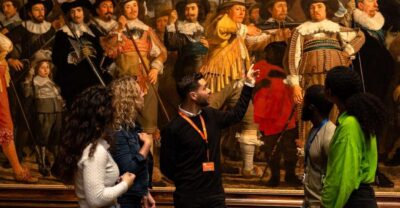
Rijksmuseum Amsterdam Exclusive Guided Tour w/ Reserved Entry
Read our review →
Van Gogh & Rijksmuseum w/ Reserved Entry Semi-Private 8ppl Max
Read our review →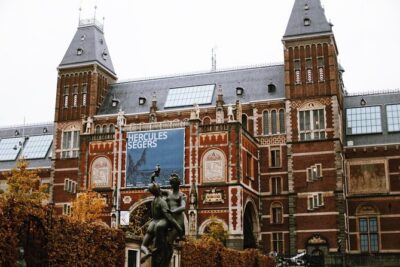
Van Gogh & Rijksmuseum w/ Reserved Entry Exclusive Guided Tour
Read our review →Browse the lists this tour appears in