
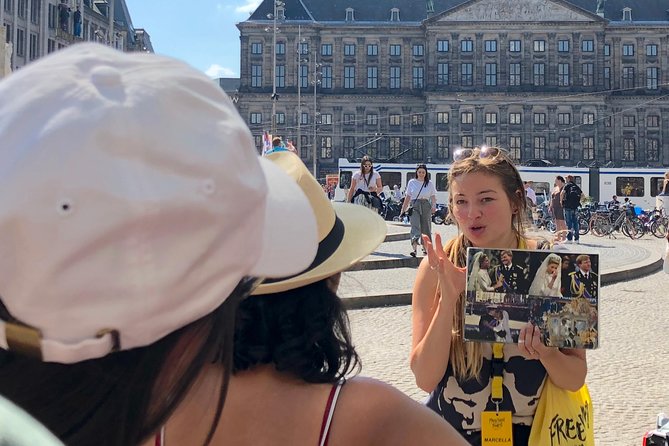
Reviewed · WALKING TOURS
Absolutely Amsterdam – the Essential Introductory Walking Tour
Amsterdam’s story comes together quickly on this 2.5-hour walk through the old center. You move from the former harbor and Red Light District to Chinatown, the Jewish Quarter, the Amstel, and Dam Square, with each stop adding a new piece to the city’s character.
I like the way the tour links everyday sights to bigger ideas: why canal houses lean, how the Dutch East India Company helped shape modern capitalism, and why Catholic worship once moved into hidden rooms. I also like the small visual aids, such as the copy of Rembrandt’s painting, which help turn a street corner into a real story.
The main drawback is the subject matter and setting. Amsterdam’s center can be crowded, bicycle traffic demands attention, and some stops cover prostitution, drugs, wartime suffering, and colonial trade in a short time. You will hear a lot, so this works best if you stay alert and wear good shoes.
Key points at a glance

- A strong first look at Amsterdam: See major central sights while learning how water, trade, religion, war, and monarchy shaped the city.
- A tip-based price: The listed cost is just $5.93 per person, so you decide how much to give the guide afterward.
- Stories behind familiar sights: The route explains leaning canal houses, open curtains, bicycle culture, coffeeshops, and the city’s old harbor.
- Guides with different strengths: Raymond, Jaap, Sergio, David, Fernando, and others are praised for humor, clear storytelling, local insight, and useful suggestions.
- A compact central route: The walk visits ten stops and finishes around Dam Square, with no attraction admissions included.
- Best for first days in town: You get your bearings and ideas for places to revisit later.
Why this walking tour works as an Amsterdam introduction
Amsterdam is easy to admire and easy to misunderstand. You can photograph the canals, dodge bicycles, and pass the Red Light District without grasping why the city developed this way. This walk gives those sights a framework.
The route is not built around entering museums or royal rooms. Instead, you pause outside important buildings and hear the story attached to each one. That keeps the price low and lets you cover a lot of ground, though you should not expect an indoor sightseeing tour.
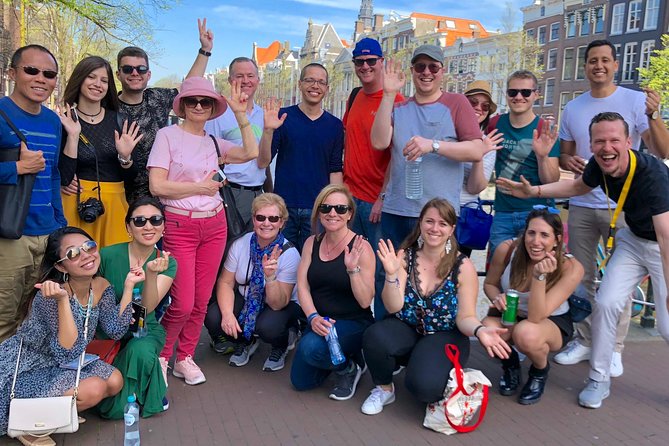
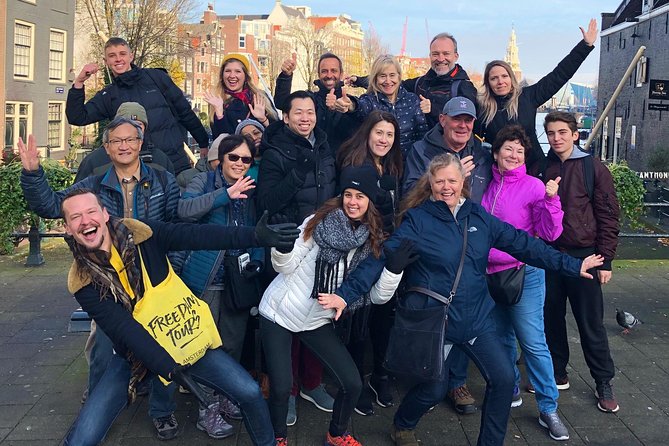
The group is limited to a maximum of 15 people. That is small enough for a guide to keep the group together and answer questions, yet large enough that the experience still feels like a public walking tour rather than a private outing. The guide may vary. Names associated with the tour include Raymond, Jaap, Sergio, David, Fernando, Gianni, Alexander, Roman, Samuel, Esi, Ramses, and Sebastien.
The style also varies by guide, but the strongest pattern is clear: humor, visual material, and storytelling matter here. Raymond is described as a lifelong local, Jaap as funny and well informed, and Sergio as passionate and entertaining. David, Fernando, Roman, and Sebastien are also singled out for strong delivery and personal help.
More Walking Tours in Amsterdam
- Anne Frank’s Story – Guided Walking Tour through Amsterdam
★ 5.0 · 11,619 reviews - Amsterdam: Life of Anne Frank and World War II Walking Tour
★ 4.8 · 10,467 reviews - Amsterdam: Anne Frank Guided Small Group Walking Tour
★ 4.8 · 2,722 reviews
Beurs van Berlage and the vanished Amstel
Begin at Freedam Tours, Beursplein 5, in front of the Beurs van Berlage. This is a smart starting point because it introduces Amsterdam through two forces that still define the city: water and money.
The exchange buildings were built where the Amstel once flowed. Your guide explains how the settlement grew around water and how commerce helped turn a small place into a major European center. The stop lasts about 20 minutes and is free to view from outside.
I like this opening because it avoids starting with a list of dates. You first learn to look at the ground beneath the city and ask what used to be here. That makes the later canal and trading stories easier to follow.
Damrak, the harbor, and the Red Light District
The walk continues along Damrak, the old harbor. Here the focus turns to the complicated relationship between religion, commerce, and prostitution.
You hear how the Red Light District began, how the Church and commercial interests interacted, and why prostitution became legal. The guide also covers changes in the neighborhood during the 20th and 21st centuries and the problems it faces now.
This is useful context before exploring the area on your own. Amsterdam’s Red Light District can seem like a simple spectacle if you only see the windows and neon. The discussion places it inside a longer civic and social story.
The stop lasts about 15 minutes. Expect crowds, narrow streets, and bicycle traffic. Stay close to the guide and do not treat the neighborhood as a theme park. The value here is in understanding the place, not simply taking pictures.
A hidden church and Dutch religious tolerance
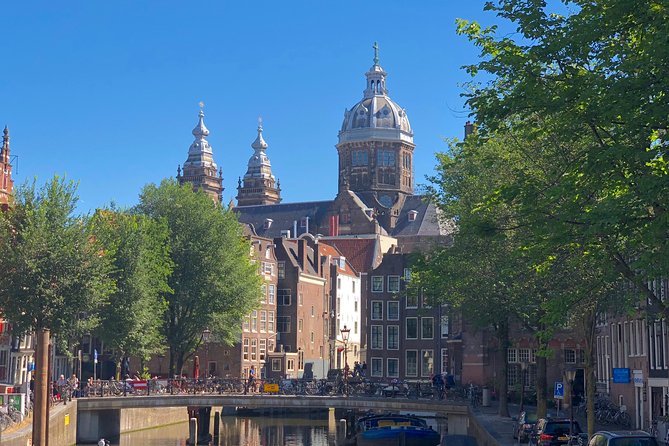
Outside Our Lord in the Attic Museum, Ons’ Lieve Heer op Solder, you learn how Catholics continued worshipping after Catholicism became illegal in the 17th century.
The church is hidden inside a canal house, but this tour does not enter the museum. You see the building from outside, and the guide uses pictures of the interior to explain how religious tolerance worked in practice. The discussion then connects those older rules to the meaning of tolerance today.
That distinction matters. If you want to see the concealed church itself, you will need a separate museum visit. The walking tour gives you the setting and the idea, not the full indoor experience.
Other guided walks around Amsterdam:
- Amsterdam: Anne Frank Walking Tour – Guided in EN/DE/IT/ES
★ 4.9 · 2,676 reviews - Amsterdam: Guided Cultural Walking Tour
★ 4.9 · 2,384 reviews - Amsterdam: Guided Ganja Walking Tour of Coffee Shops
★ 4.2 · 2,092 reviews - Anne Frank Walking Tour Amsterdam Including Jewish Cultural Quarter
★ 5.0 · 1,879 reviews
Chinatown and the origins of coffeeshop culture
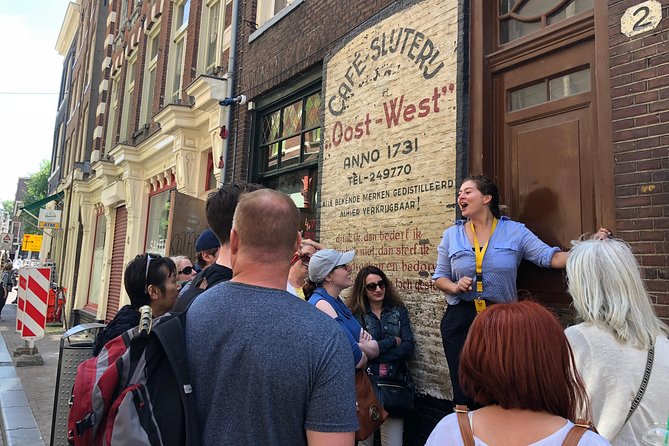
Next comes Chinatown, where the subject shifts to Dutch drug policy. The guide explains how the area became known as a no-go zone in the 1970s and how that helped lead to the creation of coffeeshops devoted to marijuana sales.
This stop gives you a way to understand a policy many people associate with Amsterdam but few understand in detail. The discussion is about how the system developed, not a promise of a cannabis stop or a purchase opportunity.
Like the Red Light District discussion, this section benefits from a calm, factual approach. It also shows how the route handles subjects that can attract easy jokes. You get social context instead of a shallow tour of Amsterdam stereotypes.
The Waag and Rembrandt’s early breakthrough
At the Waag, you hear about the place where Rembrandt painted his first major work and why that painting changed portrait making. The guide brings a copy of the work so you can examine details while standing outside.
That simple visual aid is one of the tour’s best teaching tools. A painting reproduced on paper can help you see what the guide is describing, rather than asking you to remember a name and a date in the middle of a busy street.
The stop is brief, about 10 minutes, and admission is not included. The point is not to visit an art collection. It is to connect a building and a local setting with a major moment in Dutch art.
Oostindisch Huis and Amsterdam’s Golden Age
Oostindisch Huis provides one of the route’s most important historical stops. During weekdays, you may be able to see a striking 17th-century courtyard inside the building. The courtyard is connected with the headquarters of the Dutch East India Company, one of the first and largest corporations in human history.
Here you learn how Amsterdam became a center of global trade and one of the richest cities in the 17th century. The guide also explains how the company helped shape modern capitalism.
The discussion does not present the Golden Age as a spotless success story. It includes the darker legacy of the period, which is essential if you want a useful account rather than a city-branding speech. Trade brought wealth to Amsterdam, but the systems behind that wealth affected people far beyond the city.
The weekday condition is important. If you take the tour on a weekend, you should not count on entering the courtyard. You still receive the historical explanation, but the visual part may be limited.
Waterlooplein and Amsterdam’s Jewish Quarter
At Waterlooplein Market, the route reaches the former Jewish Quarter. The market is described as Amsterdam’s oldest, but the more serious subject is what happened to the neighborhood during the Second World War.
You learn about the Jewish population that had made Amsterdam a refuge for people fleeing persecution elsewhere in Europe, and about the disastrous results of Nazi occupation. The guide also explains what Amsterdammers endured during the final hunger winter of the war.
The stop is not only about loss. It helps you understand the area as a living neighborhood before the war, rather than reducing it to a memorial site. At about 15 minutes, the treatment is necessarily concise, but it adds weight to the streets you have already walked.
This can be one of the tour’s more sobering sections. That is a strength for many people, but if you want only light sightseeing, the route may feel serious at this point.
The Amstel and the logic of canal houses
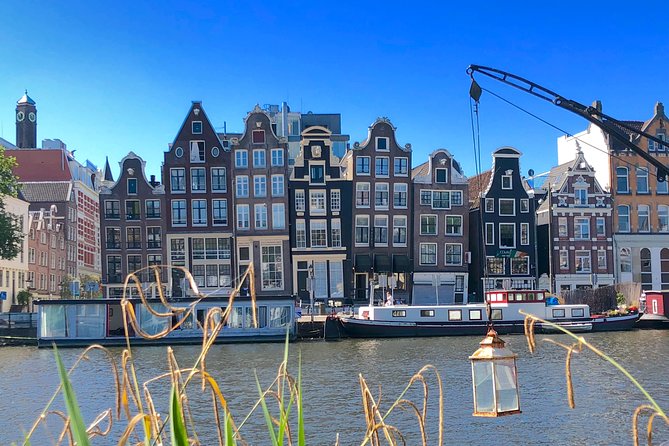
At the Amstel, or at another canal if the weather or guide requires a change, the tour turns back to Amsterdam’s physical character.
You learn why the city has canals and why the famous houses are so narrow. The guide explains why many buildings lean, which parts of that leaning are intentional, and why houses have hooks near the roof. You also hear the story behind Dutch curtains being left open.
These are exactly the details that make a walking tour useful. You may notice a crooked house or a lifting hook on your own, but the explanation gives the feature meaning. The canal houses stop being a pretty backdrop and become evidence of how people built and lived in a tight, water-bound city.
Weather can change the exact canal used for this discussion. That means the experience is not completely fixed, but the subject remains central to the tour.
Oudemanhuispoort and the practical truth about bicycles
Oudemanhuispoort is a former monastery that later became a hospital and now forms part of the University of Amsterdam. In this tucked-away passage, the guide explains Dutch bicycle culture.
You learn why there are so many bikes, why Amsterdam takes cycling so seriously, and why many bicycles look plain or battered rather than sleek and expensive. That last point is a useful bit of local logic: in a city where bikes are everyday transport, a practical bike can be more sensible than a precious one.
Pay attention while walking. Bicycle traffic is a real part of the route, and one guide specifically reminds participants that avoiding bikes can be challenging. The pace is generally described as easy and manageable, but you still need to look before stepping across a cycle lane.
Dam Square and the Royal Palace
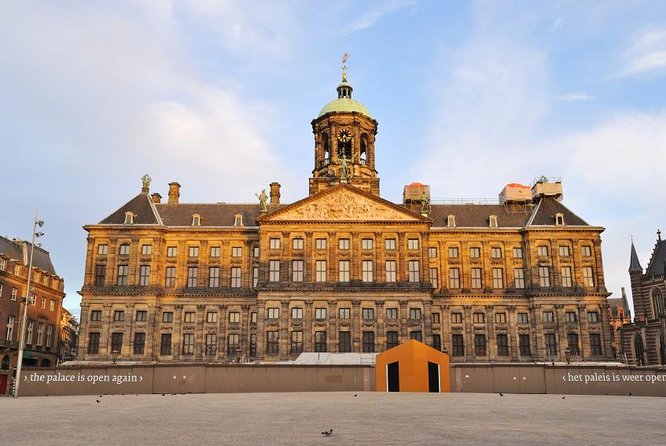
The final major stop is the Royal Palace Amsterdam on Dam Square. Here you learn how the Netherlands moved from a republic to a monarchy and receive an introduction to the current royal family, including photographs and some lighter royal gossip.
The Palace itself is not included as an interior visit. This is an outside explanation of the building and the political history linked to it. That makes the stop easy to fit into a first-day schedule, but it will not replace a palace ticket if you want to see the rooms inside.
Dam Square is given as the end of the route. The meeting information also describes the activity as ending back at the meeting point, so check the exact end instructions when you book. Either way, the final location is central and useful for continuing your day.
Price, pace, and what you actually receive
At $5.93 per person, this is unusually inexpensive for a 2.5-hour guided walk. The price is best understood as a low-cost entry point, not the full measure of what the guide’s time is worth, because the model allows you to tip as much as you like.
That gives you flexibility. A solo visitor or a couple on a tight budget can join without paying for a standard full-price tour, then decide on a tip based on the guide, pace, and amount of help provided. You should still budget for a tip if the experience serves you well.
The route covers ten stops, but the actual walking time between them means you will see a lot of the center. Good shoes are essential. One participant specifically recommends comfortable footwear, and that advice makes sense even though the pace is not described as strenuous.
The tour is offered in English only. Most people can take part, and service animals are allowed. It runs near public transportation, which helps with arrival and onward plans.
Who should book it
I would choose this tour early in an Amsterdam stay if I wanted the city’s basic structure explained before visiting museums or exploring neighborhoods alone. It suits first-time visitors especially well, and it can also work for repeat visitors who want a fresh account of familiar streets.
It is a good match for you if you enjoy:
- History tied to real buildings and streets
- Guides who use humor and personal insight
- Social subjects handled with context
- A manageable walking pace
- Suggestions for places to return to later
- A low upfront cost
It is less suitable if you want extensive indoor access, a quiet private tour, or a narrow focus on art, architecture, or royal history. You also need to be comfortable with mature subjects and the realities of a busy city center.
Final verdict: book it for your first day
I would book Absolutely Amsterdam if I wanted a broad, useful orientation at very little upfront cost. Its best feature is the way it connects ordinary details, such as a roof hook or an ugly bicycle, with larger stories about trade, belief, law, war, and daily life.
Choose a guide-led walk early in your stay, then use the route to decide where to return. Wear good shoes, watch for bicycles, and remember that the hidden church, Royal Palace, and other paid sights are discussed from outside rather than entered.
For a compact introduction with strong storytelling, clear local context, and a flexible tip system, this is a smart choice. Its only real weakness is the amount of material packed into one walk. You will not master Amsterdam in 2.5 hours, but you will understand the city better when you finish.
FAQ
How long does the Amsterdam walking tour last?
The tour lasts approximately 2 hours and 30 minutes.
How much does the tour cost?
The listed price is $5.93 per person. The tour also allows you to tip the guide as much as you wish.
What language is the tour offered in?
The tour is offered in English.
Where does the tour start?
It starts at Freedam Tours, Beursplein 5, 1012 GZ Amsterdam, Netherlands, in front of the Beurs van Berlage.
Where does the tour end?
The route information gives Dam Square and the Royal Palace as the final stop and says the tour ends there. The meeting information also describes the activity as ending back at the meeting point, so check the exact end details when booking.
Does the tour enter the hidden church at Ons’ Lieve Heer op Solder?
No. The guide discusses the church from outside and uses pictures of the interior. Admission to the museum is not included.
Is the Royal Palace included inside the tour?
No. The Royal Palace is discussed from outside, and admission is not included.
Can I cancel for a full refund?
Yes. You can cancel at least 24 hours before the experience begins for a full refund. Cancellations or changes made less than 24 hours before the start time are not refunded or accepted.
Just added in Amsterdam
- Become a Dutch Art Piece Photo Shoot in Amsterdam★ 5.0 · 100 reviews
- Full-Day Private Historic Royal Tour around Palaces and Castles★ 5.0 · 16 reviews
- Private transfers from or to Schiphol (AMS) airport Amsterdam★ 5.0 · 235 reviews
- Private Taxi Airport Transfer to or from Schiphol Airport (AMS)★ 4.5 · 66 reviews
- Castle De Haar Small-Group Tour from Amsterdam★ 5.0 · 101 reviews
- Amsterdam: ‘Boom Chicago’ English Comedy Show★ 4.5 · 213 reviews
- English Comedy Show Amsterdam: Boom Chicago★ 4.5 · 112 reviews
- Amsterdam: E-Bike Sightseeing Tour★ 4.7 · 99 reviews
Walking Tours, compared.
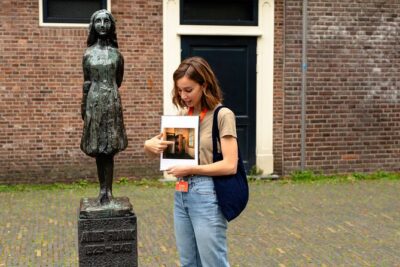
Anne Frank’s Story – Guided Walking Tour through Amsterdam
Read our review →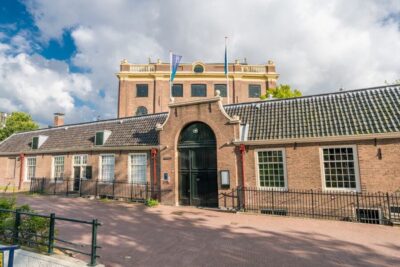
Life of Anne Frank and World War II Walking Tour
Read our review →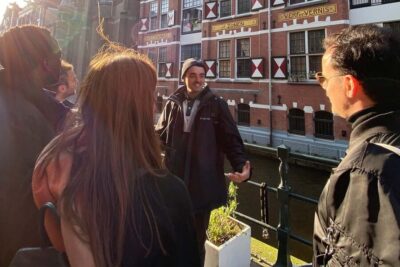

Anne Frank Walking Tour – Guided in EN/DE/IT/ES
Read our review →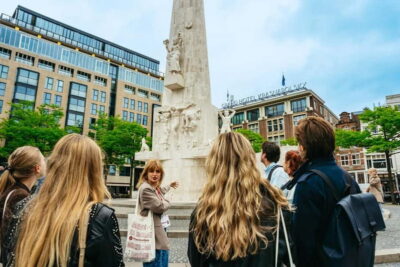

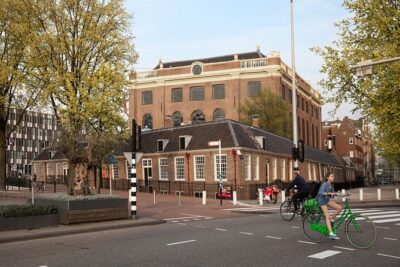
Anne Frank Walking Tour Amsterdam Including Jewish Cultural Quarter
Read our review →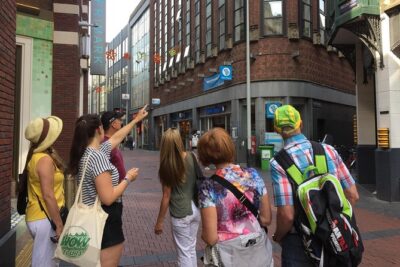
Amsterdam Highlights Walking Tour: Small Group Experience
Read our review →Browse the lists this tour appears in