Reviewed · TOURS IN AMSTERDAM
Private Guided Tour of Contemporary Amsterdam Noord by Bike
Amsterdam Noord is where Amsterdam trades old brick and pretty canals for shipyards, floating homes, art spaces, and experiments in city living. This private four-hour bike tour takes you across the IJ and into the city’s modern side, including NDSM, a crane converted into a hotel, an eco-village, and a house partly made from potato peel.
I like the ferry crossing and the chance to see Amsterdam as a working city rather than a postcard. I also like the private format, which leaves room for questions and a guide such as artist-guide Anastasia Afonina to explain why these unusual projects matter. The main drawback is clear: you do not get the classic Amsterdam on this ride, and the bicycle, food, and drinks are not included.
Key things to know before you book
- A modern Amsterdam route: Expect architecture, social projects, creative workspaces, and experimental housing rather than historic streets and canal bridges.
- The ferry is part of the experience: You cross the IJ with your bicycle and get views of the Eye Museum, A’DAM Tower, and Silodam.
- NDSM gets the most time: About an hour is set aside for the former shipyard, workshops, and art activity.
- You provide the bike: Bike rental is not included, so arrange one before the start at Centraal Station.
- It is a private tour: Only your group participates, with group discounts available.
- Weather matters: Poor weather can lead to a new date or a full refund.
Why Amsterdam Noord is worth four hours
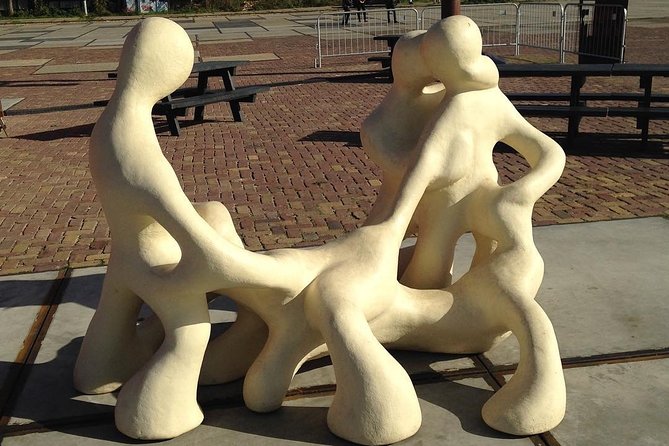
If you have already seen the canal ring, Amsterdam Noord gives you a useful change of pace. The area across the IJ feels less polished and more experimental. Old industrial sites have been reused for art, hospitality, housing, and small businesses. The result is not a tidy open-air museum. It is a city still working out what it wants to become.
That makes the tour especially useful if you care about design, urban planning, sustainability, or contemporary culture. You will not simply look at a building and hear its date. You will hear how cranes, containers, trams, shipyards, and port buildings have been given new lives.
The experience also has a social angle. Sexyland and Nieuwe Dakota are not just photo stops. They offer a way to discuss who gets space in a changing city, how cultural projects survive, and how former industrial areas attract new uses.
The route covers several subjects in a short time, so the guide’s explanations matter. Anastasia Afonina is identified as a guide for this experience and has an artist’s perspective. That background can add useful context to the art spaces and public areas, especially if you want more than a basic architecture tour.
A few more things to do in Amsterdam worth a look
- Rijksmuseum Amsterdam Small-Group Tour with Private Upgrade
★ 4.5 · 1,547 reviews - Van Gogh Museum Tour Reserved Entry Semi Private
★ 5.0 · 1,437 reviews - Private Amsterdam Red Light District and Coffee Shop Tour
★ 5.0 · 763 reviews
Starting at Centraal Station and crossing the IJ
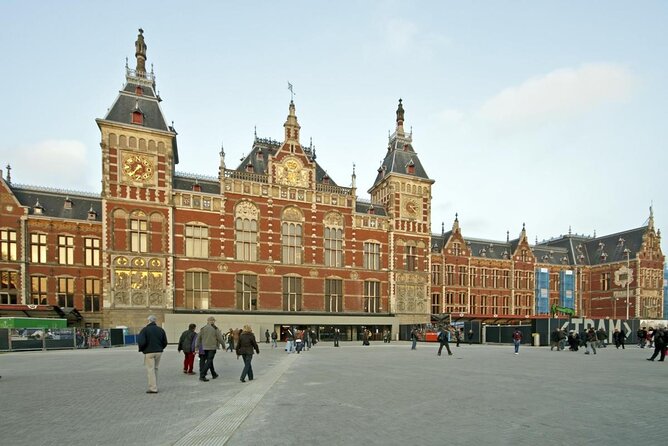
The meeting point is Stationsplein 13a, near Amsterdam Centraal Station. You meet there, arrange the bicycle you will use, and begin with the ferry crossing to Amsterdam Noord.
The ferry is a smart opening. Instead of treating the water as a barrier, you use it the way local cyclists do. Your bicycle comes with you, and the crossing provides an immediate view of the city from the IJ.
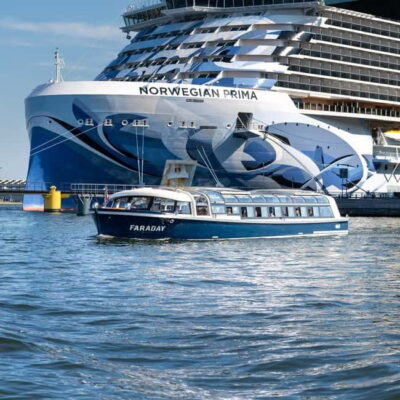
Look toward the Eye Museum and A’DAM Tower, two of the most recognizable modern buildings in this part of Amsterdam. You may also see the Silodam building, designed by MVRDV. The view helps set up the rest of the ride: this is Amsterdam viewed through new construction, reused industry, and large-scale urban change.
The first section lasts about 25 minutes, including the move from the station across the water. The tour information says not to worry about difficult traffic because the district visited is considered safe for cycling. Still, you should feel comfortable riding a bicycle in an urban setting. You will be moving between multiple stops, and the tour depends on cycling rather than simply walking from one sight to the next.
NDSM: a former shipyard turned creative district
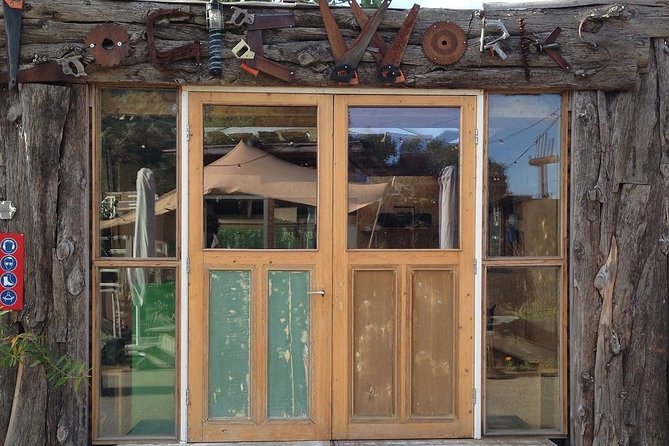
NDSM is the heart of the tour, with about an hour devoted to the former shipyard. This is the point where the industrial past and the present creative scene meet most clearly.
The old shipyard has become a setting for art, workshops, and cultural activity. Your guide explains how the site changed from an industrial area into a creative district, then gives you time to look around and visit an art exhibition.
NDSM is a good place for a guide-led visit because the significance is not always obvious from the outside. You might see large industrial structures, open spaces, and rough surfaces without knowing how the area developed. The explanation connects those physical remains with the people and projects now using them.
The hour also gives the tour some breathing room. Many city tours rush through modern architecture with a quick photograph and a short fact. Here, NDSM receives enough time for you to notice the setting and ask questions.
There is a tradeoff. NDSM is not a conventional museum with a fixed collection and a neat sequence of rooms. What you see can depend on the current exhibition and the activity taking place there. If you want famous paintings or a tightly planned indoor attraction, this will not be that kind of stop.
Sexyland and Nieuwe Dakota in 15 minutes
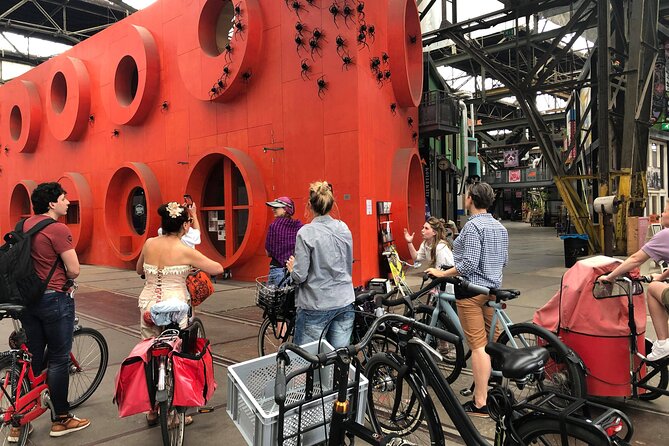
The next stop takes about 15 minutes and focuses on Sexyland and Nieuwe Dakota, two art spaces connected with the cultural life of Amsterdam Noord.
This is a brief stop, so do not expect a long gallery visit. The value is in the conversation about social initiatives and the reuse of urban industrial space. These places help explain why Noord has attracted artists, organizers, and new cultural projects.
I like this part because it moves beyond architecture as a collection of unusual shapes. The tour asks you to consider how a city decides what to preserve, what to replace, and what to give over to temporary or community-led uses.
The short timing means the guide’s explanation will carry much of the stop. If a particular exhibition catches your interest, you may want to return on your own. The tour offers an introduction, not a full gallery afternoon.
Same city, a different sort of day:
- Amsterdam: Van Gogh Museum Ticket
★ 4.7 · 52,054 reviews - Amsterdam Classic Saloon Boat Cruise with Drinks and Cheese
★ 5.0 · 31,825 reviews - Amsterdam Luxury Canal Cruise + Unlimited Drinks & Bites option
★ 5.0 · 30,518 reviews - Amsterdam: Heineken Experience Ticket
★ 4.6 · 30,055 reviews
The crane hotel and Amsterdam’s taste for unusual reuse
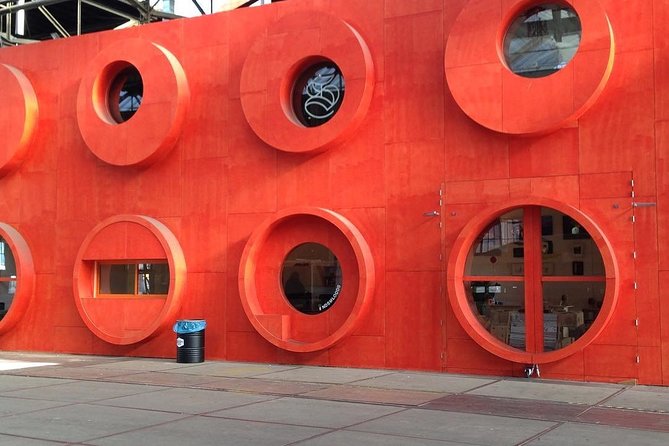
At the crane hotel, the subject is commercial reuse. A former construction crane has been turned into a luxury hotel, making it one of the route’s most memorable examples of adaptive design.
The appeal is simple: an object once used to build the city has become a place to stay. It also raises practical questions. How do you turn industrial machinery into a hotel? What happens when a working object becomes a premium experience? How does a bold idea fit into a changing district?
You spend about 15 minutes here. That is enough to see the project and hear about similar commercial ideas, but not enough for a full look inside. The hotel is an exterior and discussion stop, not an included hotel visit.
This is one of the strongest photo opportunities on the route, but the guide’s explanation is more valuable than the picture alone. You begin to see Noord as a testing ground for new uses rather than a finished neighborhood.
Floating housing, an eco-village, and a potato-peel house
The floating sustainable village and eco-village receive about 30 minutes. This section turns from reuse to new construction and practical sustainability.
You hear about Dutch startups, modern architecture, and social projects. The examples include sustainable housing on the water, a greenhouse, an eco-cafe, and a small 3D-printed house partly built from potato peel.
These ideas can sound futuristic when presented in isolation. Seeing them together helps you compare different responses to familiar city problems: limited land, energy use, food production, waste, and the cost of housing.
The floating homes are particularly relevant in the Netherlands, where water is a constant part of urban planning. The tour does not promise a technical engineering lesson, but it gives you a clear introduction to how people are experimenting with accommodation and community design.
The eco-village stop is also a reminder that sustainability is not only about solar panels or unusual materials. It can include how people share space, grow food, run small businesses, and build a neighborhood.
Keep your expectations in check. These are active projects and examples, not a full sustainability course. You may leave with more questions than answers, which is part of the point. The guide gives you a way to think about the projects rather than claiming that every experiment is a finished solution.
The Eye Museum, A’DAM Tower, and the high swing
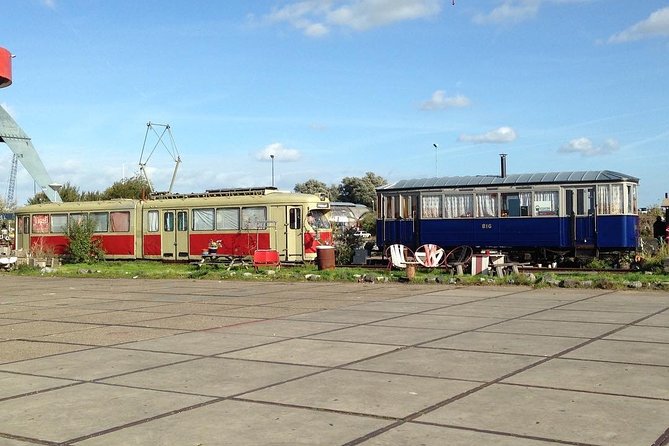
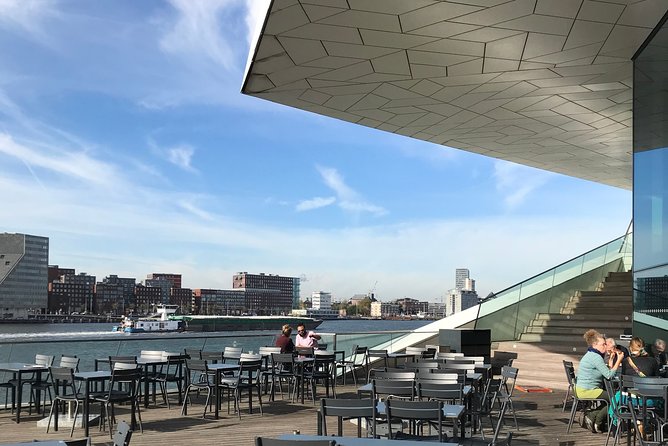
Near the Eye Museum and A’DAM Tower, the tour shifts toward public space, design, and cinematography. You hear about how the area is arranged and how people use it.
A’DAM Tower is also known for a swing about 100 meters above the city. The tour description presents it as an optional idea for people who want an extra thrill. The swing is not listed as included, so treat it as a nearby attraction to consider rather than part of the guided package.
This stop lasts about 30 minutes. It gives you a chance to connect the modern buildings with the ferry view from the start of the tour. From the water, they establish the skyline. From land, you can think more about their public spaces, design, and role in the district.
The Eye Museum adds a film and visual culture angle. You should not expect admission to the museum as part of the bike tour. Instead, the stop introduces the area and may help you decide if you want to return later for a longer visit.
The Palace of Justice and Dutch urban planning
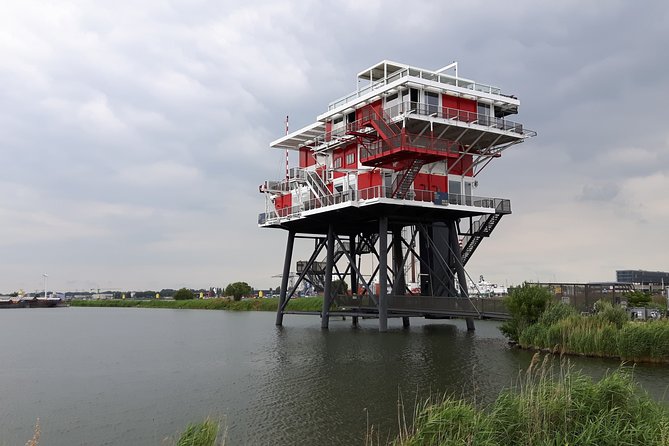
The final major stop is the Palace of Justice, with about 30 minutes devoted to modern architecture and the surrounding area.
The focus is not only on the building’s history. You also look at how the nearby structures fit together and how Dutch planners have shaped a newer urban district. This gives the tour a useful closing idea: individual buildings matter, but so do the spaces between them.
After seeing reused cranes, shipyards, containers, and trams, you reach a more formal example of modern public architecture. The contrast helps show the range of Amsterdam Noord. Some projects are playful or improvised. Others are official, large-scale, and built for civic use.
This stop may appeal most to people interested in architecture and planning. If you prefer lively street scenes or food stops, it could feel more academic. The private format helps here because you can ask the guide to focus on the parts that interest you most.
What the $260.46 price means
At $260.46 per person, this is not a bargain bike ride. The price makes more sense for a private experience where the guide works only with your group and takes you to places that are not part of the standard historic center route.
The certified guide is included. The bicycle is not, and neither are coffee, tea, or snacks. You should budget for the bike separately and arrive ready to ride. The lack of refreshments is easy to manage, but it is worth knowing because four hours on a bicycle can make a drink break useful.
Value depends heavily on your group size and interests. A couple or small group pays more per person than a larger group, but you also get a more personal format. Group discounts are available, though the specific amount is not provided.
I would compare this tour with the cost of hiring a private guide for a custom architecture or street-art outing. If you would otherwise spend a half-day trying to find NDSM, the floating village, the eco-village, and the Palace of Justice on your own, the guided route can save time and give those places a clear connection.
If your main goal is to see the Anne Frank House, canal belt, old churches, and traditional Amsterdam streets, spend your money elsewhere first. This tour is designed for the city beyond the familiar center.
Who should book this Noord bike ride?
You are a good match if you like contemporary art, unusual hotels, sustainable design, public space, or urban change. It also suits repeat visitors who have already seen the main historic sights and want to understand another side of Amsterdam.
Families with older children may enjoy the crane hotel, floating homes, and potato-peel house, provided everyone is comfortable cycling. The private setting can help if you want to adjust the pace or ask many questions.
Art-minded visitors should pay attention to the guide choice. Anastasia Afonina is described as an artist as well as a guide, and that perspective may make the NDSM and gallery stops more rewarding.
You may want to skip it if you dislike bicycles, want a food-focused outing, or expect a traditional sightseeing tour. The route is also weather dependent. A poor-weather cancellation can lead to a different date or a full refund, but you should still avoid scheduling it as the only important activity on a tight visit.
Free cancellation is available up to 24 hours before the start time. Changes or cancellations made later are not accepted for a refund. The tour is near public transportation, most people can participate, and it ends back at the starting point.
FAQ
Where does the tour start?
It starts at Stationsplein 13a, 1012 AB Amsterdam, near Amsterdam Centraal Station.
Does the tour include a bicycle?
No. The bicycle is not included. You arrange a suitable bike at the meeting point or beforehand.
Is the ferry crossing included in the route?
Yes. You take the ferry from Centraal Station to Amsterdam Noord with your bicycle.
Is this a private tour?
Yes. Only your group participates in the activity.
How long does the experience last?
The tour lasts approximately four hours.
What happens if the weather is poor?
The experience requires good weather. If it is canceled because of poor weather, you can receive a different date or a full refund.
Should you book this tour?
Book it if you want Amsterdam as a work in progress: creative, experimental, and slightly unruly. The private format, ferry crossing, NDSM visit, floating housing, and unusual design projects give you a side of the city that a standard canal tour will not reach.
Skip it if this is your first and only few hours in Amsterdam and you still need the classic sights. But if you have already met the old city, or if modern culture matters more to you than historic façades, this four-hour ride offers a thoughtful and unusual way to see Noord.
Just added in Amsterdam
- Guided Day Trip – Volendam, Zaanse Schans, Marken & Edam★ 4.0 · 232 reviews
- Private Tour Zaanse Schans Windmills and Volendam in Jaguar★ 5.0 · 10 reviews
- Zaanse Schans and Giethoorn Unique Day Trip with Boat Cruise★ 4.5 · 17 reviews
- Half-Day Private Guided Sightseeing Tour of Zaanse Schans★ 5.0 · 14 reviews
- Zaanse Schans Private Tour Windmills★ 5.0 · 18 reviews
- Private bike tour: Hidden gems around Amsterdam and surroundings★ 5.0 · 4 reviews
- Bike tour in Amsterdam with an Italian guide★ 5.0 · 15 reviews
- Zaanse Schans Edam Volendam Private Day Tour from Amsterdam★ 5.0 · 3 reviews
Tours in Amsterdam, compared.

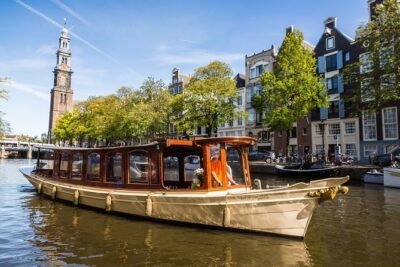
Amsterdam Classic Saloon Boat Cruise with Drinks and Cheese
Read our review →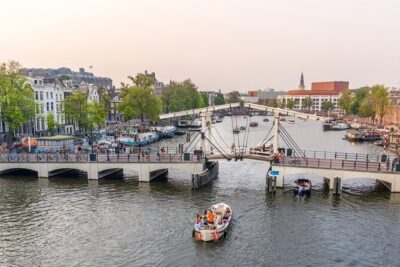
Amsterdam Luxury Canal Cruise + Unlimited Drinks & Bites option
Read our review →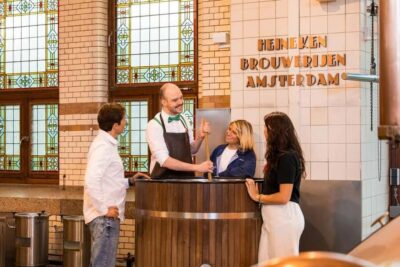
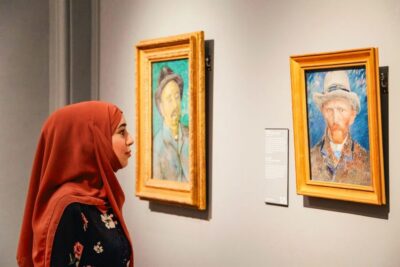
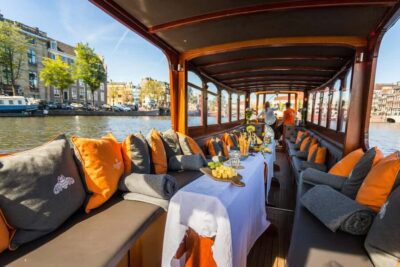
Classic Boat Cruise with Optional Cheese & Wine
Read our review →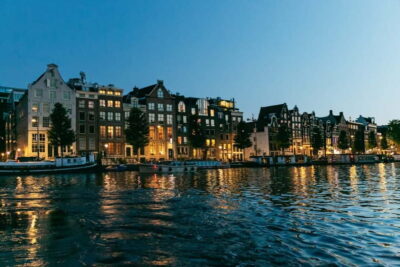
Evening Cruise with Optional Wine and Snacks
Read our review →