Reviewed · TOURS IN AMSTERDAM
Amsterdam in World War II Tour
Amsterdam’s wartime story becomes clearest when you are standing in the actual streets where it happened. This small walking tour links Anne Frank House, Dam Square, the former city hall, and the National Holocaust Names Monument with stories of occupation, resistance, deportation, and liberation.
I like the maximum of eight people, which gives Peter, Ben, or another retired historian time to answer questions and show period photographs. I also like the slow pace and use of maps, logbooks, and copied documents. The main consideration is that you do not enter Anne Frank House, and the tour deals frankly with murder and persecution.
Key points to know before booking
- Retired historians lead the walk: Guides including Peter and Ben bring academic knowledge, personal warmth, photographs, and plenty of time for questions.
- Anne Frank House is an exterior stop: You hear about the German attack and Jewish refugees outside the building, but museum admission is not part of the tour.
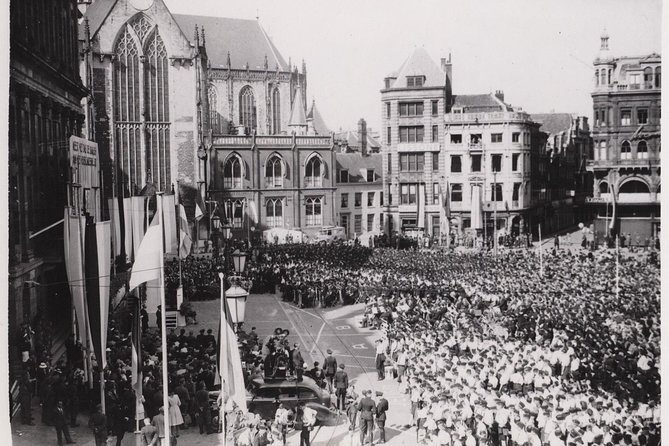
- Dam Square holds several wartime stories: The route covers the 1940 occupation, recruitment for the German war effort, the May 1945 shooting, and Dutch remembrance.
- The group is capped at eight: This makes it easier to hear the guide and study photographs without being lost in a crowd.
- The walk ends near the Holocaust Names Monument: You finish close to the Portuguese Synagogue and city hall, in Amsterdam’s former Jewish Quarter.
- Plan for three to three and a half hours outdoors: The pace is deliberately slow, but you should still dress for Amsterdam weather.
Why this Amsterdam World War Two walk works
Many Amsterdam tours touch on the war, then hurry back to canals, cafés, and pretty façades. This one gives the occupation years, from 1940 to 1945, the full morning. You move through ordinary-looking streets while the guide explains what changed under German rule, how Jewish residents were targeted, and how Dutch officials and citizens responded.
The setting matters. You are not listening to a general lecture in a room. You are outside the Anne Frank House, on Dam Square, beside the former post office, and near the building that served as Amsterdam’s city hall during the war. The places are familiar, but the stories change how you see them.
The three guides are retired historians with a special interest in the German occupation of the Netherlands. Peter and Ben are named in the tour material, and both are praised for a calm, personal approach. Peter uses photographs linked to Amsterdam, while Ben is noted for bringing a notebook of wartime images and taking time with questions.
This is a serious subject, and the walk does not soften the facts. Still, the guide may add lighter details about Amsterdam between the heavier stories. That balance matters during three hours on foot. You get a human account without turning the occupation into entertainment.
Other trips people book in Amsterdam:
- Amsterdam: Van Gogh Museum Ticket
★ 4.7 · 52,054 reviews - Amsterdam Classic Saloon Boat Cruise with Drinks and Cheese
★ 5.0 · 31,825 reviews - Amsterdam Luxury Canal Cruise + Unlimited Drinks & Bites option
★ 5.0 · 30,518 reviews
A small group makes the history easier to follow
The group limit is eight people. That is one of the tour’s best practical features. A guide can speak to everyone, hold up a photograph, and answer a question without stopping a large crowd from drifting away.
The pace is slow. That does not mean the walk is effortless, but it does make the morning manageable for most people who can participate in a normal walking tour. The guide sets the speed by the slowest person in the group, a useful touch on a route that lasts about three hours.
You may receive copies of documents or see logbooks, maps, and old photographs during the walk. These materials help you compare present-day Amsterdam with the city under German control. A photograph can make a street corner far easier to understand than a long explanation alone.
The route is also designed to keep you oriented. Amsterdam’s canals and narrow streets can confuse first-time visitors, especially when several places have similar names. Walking with a guide lets you focus on the story rather than checking your phone at every turn.
Anne Frank House: beginning outside the hiding place
The tour starts at Prinsengracht 263, outside Anne Frank House. This is an important starting point, but you should be clear about what you are booking: the group does not enter the museum.
The guide begins with the German attack on the Netherlands and the experience of Jewish refugees. Anne Frank’s story becomes part of the larger history of Amsterdam’s Jewish population, rather than the only subject of the morning.
That distinction is valuable. If you want to visit the Anne Frank House museum, you need a separate admission ticket and arrangement. This tour provides context outside the building, but it does not replace the museum visit.
Starting here also gives the guide a natural way to explain how the occupation affected daily life. The focus is not simply on one famous diary. You hear about a city where Jewish residents, refugees, civil servants, workers, and resistance members faced choices shaped by German orders.
Raadhuisstraat and the Multatuli statue

The next brief stop is at the statue of Multatuli, in Raadhuisstraat and on the bridge over the Singel. The stop lasts about ten minutes and looks at how Amsterdam changed after the war.
This is less about a single dramatic event and more about memory and the city itself. The guide uses the area to show what remains visible, what has changed, and how postwar Amsterdam grew around places marked by occupation.
It is a useful pause in the route. After the intense beginning at Anne Frank House, you get a wider view of the city. Amsterdam is not presented as a museum frozen in 1940. It is a living place where modern streets sit over difficult memories.
Same city, a different sort of day:
- Amsterdam: Heineken Experience Ticket
★ 4.6 · 30,055 reviews - Amsterdam: Rijksmuseum Entry Ticket
★ 4.7 · 25,535 reviews - Amsterdam: Classic Boat Cruise with Optional Cheese & Wine
★ 4.6 · 22,925 reviews - Amsterdam: Evening Cruise with Optional Wine and Snacks
★ 4.4 · 19,696 reviews
Magna Plaza and the wartime post office
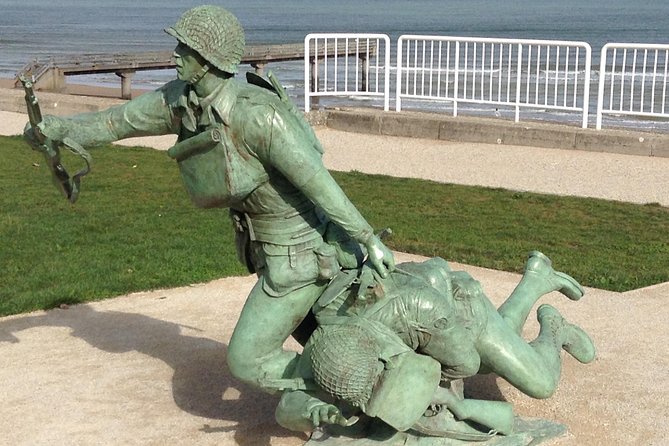
Magna Plaza now operates as a shopping mall, but during World War Two the building served as Amsterdam’s post office. The stop is short, about five minutes, yet the story attached to it is grim: Dutch postmen were executed by German forces.
This is the kind of detail that gives the walk its value. You might otherwise pass Magna Plaza as an attractive old building on the way to Dam Square. The guide connects the building to the people who worked there and to the risks faced by Dutch citizens under occupation.
Because this is an exterior stop, you do not spend much time inside. The point is the building’s former role and the human cost linked to it. The quick stop also keeps the route moving toward the center of wartime Amsterdam.
Nieuwe Kerk and the Mozes en Aäronstraat story
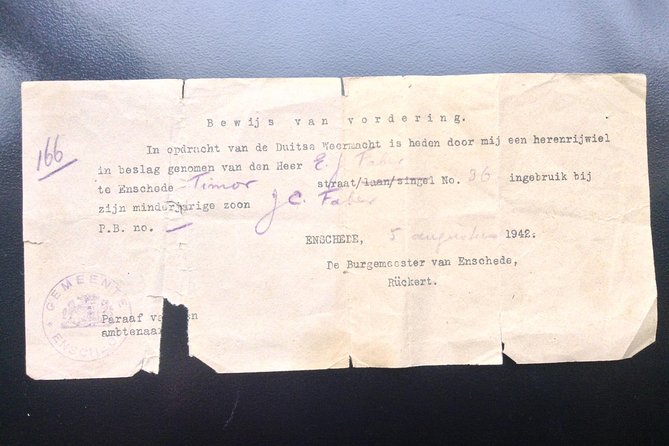
At Nieuwe Kerk, the guide discusses the street between the Royal Palace and the church, known as Mozes en Aäronstraat in the wartime story presented on this walk. Again, this is not a major museum visit. It is a short stop that uses a familiar central location to explain an event or connection from the occupation years.
These compact stops work best if you enjoy linking small details. The tour is not built around grand interiors or long visits to attractions. It is built around the meaning of places you can see from the street.
The guide’s photographs and maps are particularly useful here. They give you a reference point for understanding how Amsterdam looked and functioned during the war, even when the modern view seems peaceful.
Dam Square: occupation, liberation, and remembrance
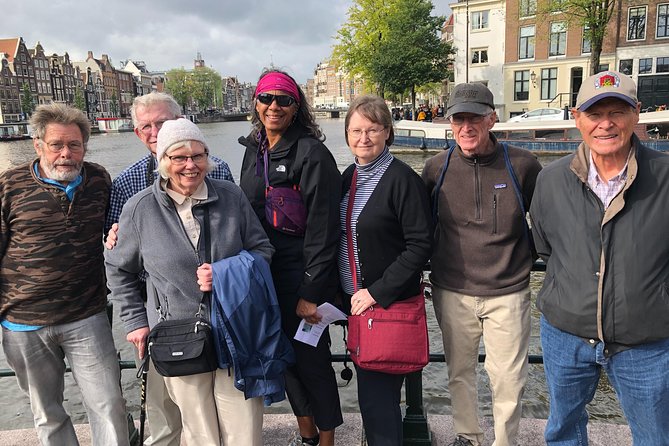
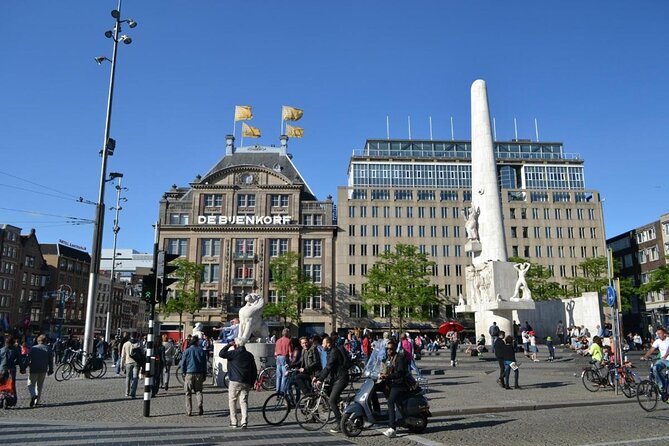
Dam Square receives the longest dedicated stop, about 25 minutes. That makes sense. This is the heart of Amsterdam, and several major wartime stories meet here.
You hear about the German occupation and about Dutch volunteers recruited for the German campaign described as a crusade against Bolshevism. The guide also covers the shooting on May 7, 1945, two days after Germany surrendered. Liberation did not bring instant calm, and this incident shows how tense those days remained.
The square is also tied to Dutch remembrance. The tour discusses Remembrance Day on May 4 and the World War Two monument. You are encouraged to see Dam Square not only as a central meeting place, but also as a site where Amsterdam remembers loss and honors those who died.
This section may be the clearest example of the tour’s larger approach. Military history, local politics, resistance, public memory, and ordinary city life are placed together. You are not given a simple story of heroes and villains. You see a society under pressure, and a city still working out how to remember it.
The former city hall at The Grand
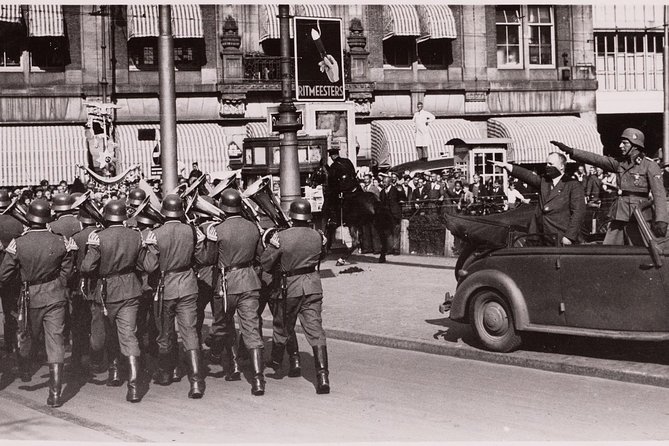
The Sofitel Legend The Grand Amsterdam occupies the building that served as Amsterdam’s city hall during the war. The stop lasts about five minutes, but the location carries a sharp political point.
German troops were welcomed by Dutch civil servants on May 15, 1940. The guide uses the former city hall to discuss the uneasy role of local government during the occupation. That is an important part of the Dutch story, because the war was not experienced only through battles. It also played out through offices, orders, public institutions, and decisions made by officials.
The modern hotel setting can make the location easy to overlook. That contrast is exactly why the explanation helps. You see how an ordinary civic building became part of the arrival of German power in Amsterdam.
Ending at the National Holocaust Names Monument
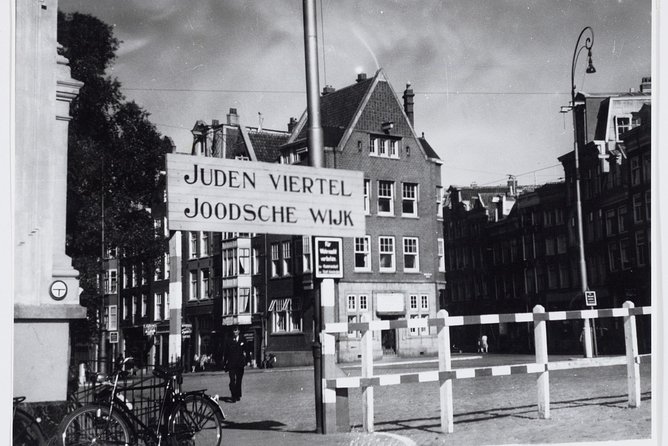
The walk ends at the National Holocaust Names Monument, close to the Portuguese Synagogue and not far from city hall. This gives the tour a solemn finish in the area associated with Amsterdam’s Jewish community.
Ending here brings the earlier stories together. Anne Frank House, the deportation and persecution of Jewish residents, the wartime city government, and the stories of resistance all lead toward a place devoted to names and remembrance.
The ending is not a museum tour or a guided entry into the monument. It is a final location for reflection and a useful starting point if you want to continue exploring the former Jewish Quarter on your own.
Price, length, and what you receive
The price is $46.44 per person. For a three to three and a half hour guided walk led by a retired historian, I consider that a fair price, especially with the group limited to eight. You are paying for focused interpretation, not transportation or attraction admission.
The value depends on your interests. If you want a quick overview of central Amsterdam, you can find shorter and lighter walks. If you care about the German occupation, Jewish history, resistance, and how Amsterdam remembers the war, this tour gives you much more time and context than a standard city introduction.
The guided tour is included. Coffee and tea are not, and private transportation is not provided. A coffee stop can happen if the group chooses or conditions make it useful, but you should not book this expecting refreshments to be part of the package.
The starting time is 9:30 a.m. at Prinsengracht 263. The route finishes at the National Holocaust Names Monument. Since you walk from place to place, wear comfortable shoes and allow for wind or rain. The activity requires good weather, and a poor-weather cancellation can result in another date or a full refund.
Who should book this experience
I would choose this tour if you want history explained in place, with time for questions and visual material. It is especially suited to people who have already seen Amsterdam’s main sights and want to understand what happened behind the façades.
It also suits anyone interested in Anne Frank’s story who wants more context than a museum visit can provide. Just remember that the Anne Frank House is an exterior stop only.
The tour may not suit you if you prefer a fast-moving sightseeing walk, dislike difficult wartime subjects, or want to enter several museums. The morning is about listening and thinking as much as walking. The subject includes the Holocaust, executions, persecution, and the choices made during occupation.
The small group helps, but personal interest matters even more. With only a few people, you may have a more direct conversation with Peter, Ben, or the other historian leading your walk. Bring questions. The format gives you room to use them.
Booking advice and final verdict
Book this Amsterdam World War Two tour if you want a serious, well-organized look at the city between 1940 and 1945. The strongest features are the retired historian guides, the slow walking pace, the small group, and the use of photographs and documents tied to specific streets.
The main limitation is simple: you are walking outside, and Anne Frank House admission is not included. But at $46.44, the price is reasonable for three to three and a half hours of focused guiding. With a 4.9 rating from 63 reviews and 98 percent recommendation, it is a strong choice for history-minded visitors who want Amsterdam’s wartime past explained with care.
FAQ
How long does the Amsterdam in World War Two Tour last?
The tour lasts approximately three to three and a half hours. The walking pace is slow.
What time does the tour start?
The tour starts at 9:30 a.m.
Where does the tour begin?
The tour begins outside Anne Frank House at Prinsengracht 263, 1016 GV Amsterdam.
Does the tour enter Anne Frank House?
No. The guide tells the story outside Anne Frank House, but the museum is not visited and admission is not included.
Where does the tour end?
The tour ends at the National Holocaust Names Monument, near the Portuguese Synagogue and not far from city hall.
How many people can join the tour?
The tour has a maximum of eight participants.
Is transportation included?
No. Private transportation is not included. The experience is a walking tour.
What happens if the tour is canceled because of bad weather?
You will be offered a different date or a full refund if the experience is canceled because of poor weather. Free cancellation is also available if you cancel at least 24 hours before the start time.
Just added in Amsterdam
- Guided Day Trip – Volendam, Zaanse Schans, Marken & Edam★ 4.0 · 232 reviews
- Private Tour Zaanse Schans Windmills and Volendam in Jaguar★ 5.0 · 10 reviews
- Zaanse Schans and Giethoorn Unique Day Trip with Boat Cruise★ 4.5 · 17 reviews
- Half-Day Private Guided Sightseeing Tour of Zaanse Schans★ 5.0 · 14 reviews
- Zaanse Schans Private Tour Windmills★ 5.0 · 18 reviews
- Private bike tour: Hidden gems around Amsterdam and surroundings★ 5.0 · 4 reviews
- Bike tour in Amsterdam with an Italian guide★ 5.0 · 15 reviews
- Amsterdam Sightseeing Tour + Hidden Gems + Tastings + PDF guide★ 5.0 · 35 reviews
Tours in Amsterdam, compared.

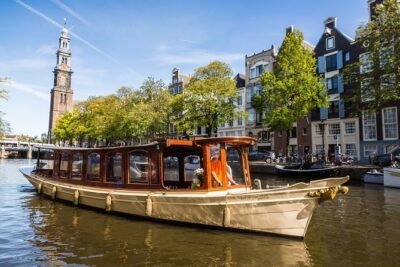
Amsterdam Classic Saloon Boat Cruise with Drinks and Cheese
Read our review →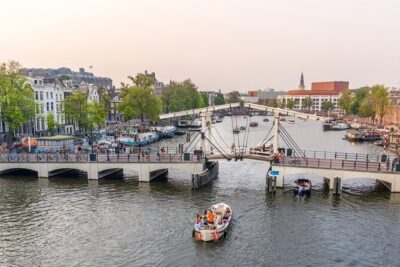
Amsterdam Luxury Canal Cruise + Unlimited Drinks & Bites option
Read our review →

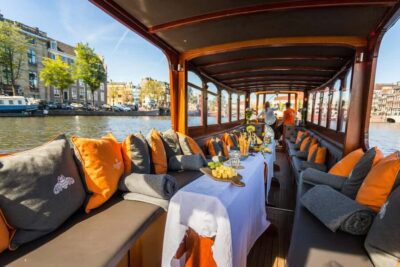
Classic Boat Cruise with Optional Cheese & Wine
Read our review →
Evening Cruise with Optional Wine and Snacks
Read our review →