
Reviewed · CANAL CRUISES
Amsterdam 1-Hour Canal Cruise With Live Guide
Amsterdam is best understood from the water, and this one-hour cruise gives you a comfortable look at the city’s canal ring without taking half a day. You glide through the Jordaan and along major canals while a live guide explains the houses, bridges, churches, museums, and odd corners passing by.
I especially like the quiet electric boat and the practical comfort of cushioned seats, blankets, and heating in cold weather. I also like the small-boat feel, which makes it easier to ask questions than on a large sightseeing vessel. The main consideration is that the commentary can be hard to hear if the captain’s radio is loud, and the route may be less detailed than the long list of sights suggests.
Key points to know before booking
- A calm one-hour introduction: The cruise gives you a quick orientation to Amsterdam’s canals, architecture, and major sights.
- Comfort in changing weather: Open-air boats use cushions, blankets, and umbrellas, while winter departures use a closed, heated boat.
- Live commentary matters: Guides mix history, local stories, humor, and practical city knowledge.
- The route covers a lot: Expect views of the Jordaan, Rijksmuseum, Amstel, Magere Brug, Westerkerk, and other central landmarks.
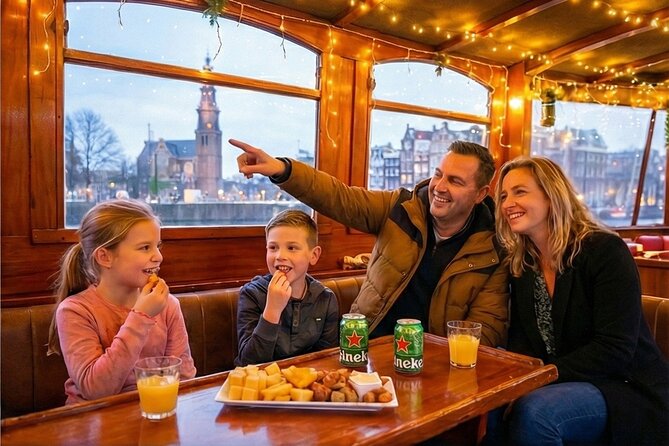
- Drinks cost extra: The onboard bar sells alcoholic and nonalcoholic drinks, with nuts available for purchase.
- Check the exact departure setup: Some departures may be combined with a sister-company boat and described as a standard one-hour route with 12 main pass-bys.
Why a canal cruise is the right first look at Amsterdam
Amsterdam’s canals are not just pretty waterways. They explain how the city grew, traded, lived, and made room for itself. More than 100 kilometers of canals, around 90 islands, and roughly 1,500 bridges shape the city center.
The three major Golden Age canals are the Herengracht, Keizersgracht, and Prinsengracht. They form broad arcs around the older city, with the Jordaan beyond the Prinsengracht. This canal ring became a UNESCO World Heritage Site in 2010.
From street level, Amsterdam’s narrow houses can feel like a wall of façades. From the boat, you get the full picture. You can see the steep gables, long canal fronts, leaning buildings, bridges, houseboats, and water-level entrances in one continuous view.
That is the real value of the cruise. You are not paying just to move past monuments. You are buying a short lesson in how Amsterdam works.
Other boats out on the water around Amsterdam:
- Amsterdam Luxury Canal Cruise + Unlimited Drinks & Bites option
★ 5.0 · 30,518 reviews - Amsterdam: 75 Minute City Canal Cruise with Audio Guide
★ 4.4 · 17,501 reviews - Amsterdam: City Centre Canal Cruise
★ 4.2 · 12,827 reviews
Starting in the Jordaan at Prinsengracht 261a
The meeting point is at Prinsengracht 261a, in the Jordaan, and the cruise returns to the same place. This is a useful starting point because you can pair the boat ride with the Anne Frank House area, the Westerkerk, the Noordermarkt, and the small boutiques and cafés of the Jordaan.
The Prinsengracht is one of Amsterdam’s principal canals. Construction began in 1612, and later sections were added as the city expanded. The name refers to the Princes of Orange, and the canal became one of the defining routes through the historic center.
The Jordaan itself is one of the most appealing parts of Amsterdam to explore on foot. Many streets and canals carry names linked to trees and flowers, which helps explain one theory about the neighborhood’s name. Another connects it to the Dutch word for the Jordan River.
Allow extra time before or after the cruise to walk around. The boat is a good overview, but the Jordaan rewards slow wandering. Noordermarkt, held on Mondays and Saturdays, adds a traditional market stop to the area.
Anne Frank, Westerkerk, and the human side of the canals
The Anne Frank House is close to the starting area, and the boat passes through the part of the city connected with Anne Frank and her family’s hiding place. The house itself is a major museum, but admission is separate and timed entry is required.
The guide’s comments here can add context to the canal setting. Anne lived in hiding for more than two years before being deported to Bergen-Belsen, where she died in 1945 at age 15. Seeing the canal outside the house gives a physical sense of how an ordinary Amsterdam address became tied to one of the most important personal stories of World War II.
Nearby, the Westerkerk provides another useful landmark. This Reformed church sits between the Prinsengracht and Keizersgracht beside the Jordaan. It is one of the central architectural markers in this part of town.
The nearby Homomonument, at Westermarkt, also reflects Amsterdam’s social history. The three pink granite triangles honor gay men and women persecuted because of their identity. A canal ride cannot explain every part of the city in depth, but it can point you toward places worth returning to.
From houseboats to small shops and Leidseplein
One especially pleasant part of the route is the view of Amsterdam’s houseboats. The Houseboat Museum on the Prinsengracht offers a closer look at this unusual form of city living, while the cruise lets you see houseboats as part of the working canal scene.
This is a detail that often appeals to children. It also helps correct the idea that the canals are only a historic display. People still live along them, commute across them, and use them as part of everyday city life.
The cruise also moves toward the Leidseplein area, one of Amsterdam’s main entertainment districts. Bars, restaurants, nightclubs, concert halls, and theaters fill the streets nearby. The Melkweg operates in a former sugar refinery and milk factory, while the DeLaMar Theater and Stadsschouwburg add major performance venues.
You might also hear about the former church turned concert hall, a reminder of Amsterdam’s habit of giving old buildings new uses. The area is lively, but from the water you get a calmer view than you would on foot at night.
A few more things to do in Amsterdam worth a look
- Guided Amsterdam Canal Cruise – Snacks & Drinks on board(1 Hour)
★ 5.0 · 1,049 reviews - Combo Ticket: Van Gogh Museum Ticket and 1-Hour Canal Cruise
★ 4.0 · 676 reviews - Combo Ticket: Xtracold Icebar Amsterdam and 1-Hour Canal Cruise
★ 4.0 · 400 reviews - Rotterdam: 1-Hour Sightseeing Splash Tour
★ 4.5 · 3,299 reviews
Rijksmuseum and the Museum Quarter from the water
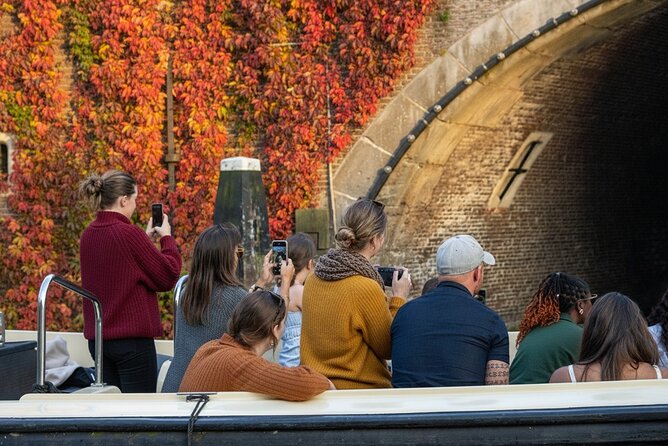
The boat passes the Rijksmuseum, and some departures dock or pause close to the museum. You can admire the building from the canal before visiting its collection on foot.
The Rijksmuseum is home to Rembrandt’s Night Watch, one of the best-known paintings in the Netherlands. The museum also gives you a useful next stop after the cruise, especially if the guide’s comments about Dutch art leave you wanting more.
The Museum Quarter includes the Rijksmuseum, Van Gogh Museum, Stedelijk Museum, Moco Museum, and Concertgebouw. The square and park around these institutions make it easy to continue sightseeing after the boat returns.
The nearby Spiegelgracht connects the Prinsengracht with the Lijnbaansgracht and leads into Nieuwe Spiegelstraat. This is Amsterdam’s antique and gallery district, with paintings, furniture, and decorative objects in narrow shopfronts.
The Moco Museum takes a different approach, focusing on modern, contemporary, and street art, including Banksy. The contrast is useful: Amsterdam’s art scene is not limited to Old Masters.
The Amstel, Magere Brug, and the city’s name
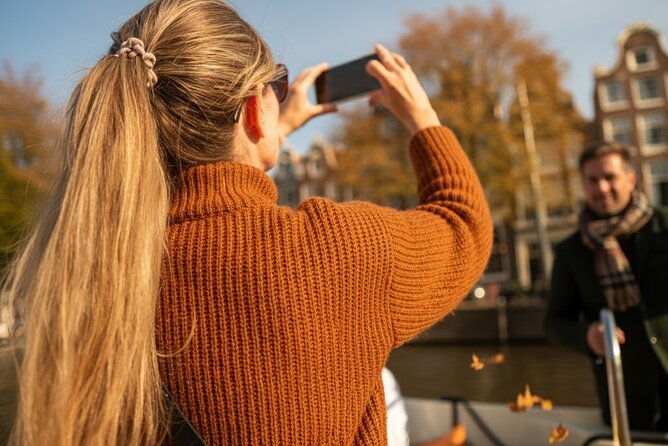
The cruise eventually reaches the Amstel, the river from which Amsterdam takes its name. The city developed around a dam built by fishermen across the river, giving Amsterdam its familiar name.
The Amstel also gave its name to the well-known Dutch beer. You can buy beer and other drinks on board, but beverages are not included in the ticket price. That is worth remembering when comparing the advertised fare with your final spending.
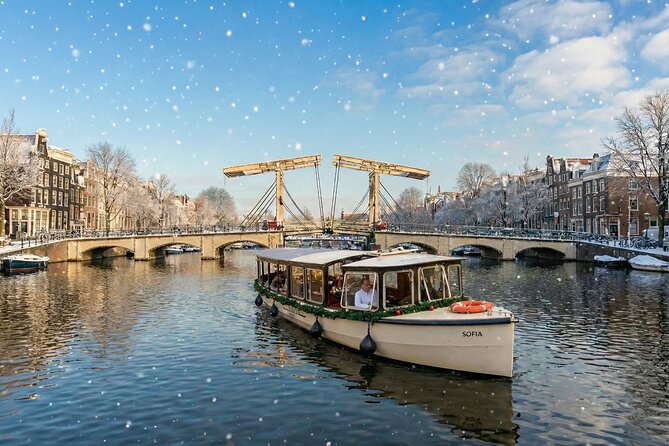
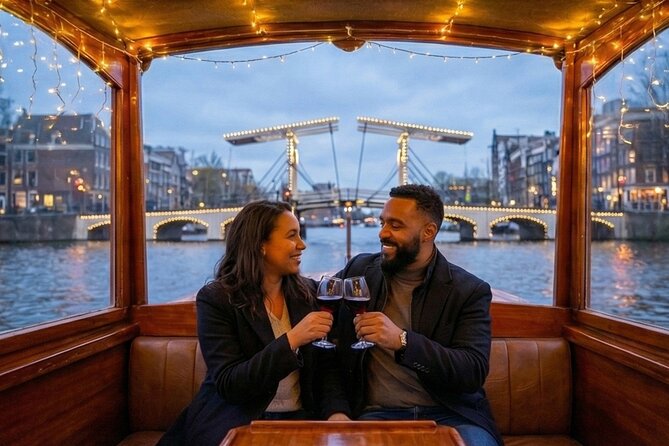
The Magere Brug, or Skinny Bridge, is one of the most photographed sights on the river. The original wooden bridge was so narrow that two pedestrians had difficulty passing each other. A wider replacement appeared in 1871, but the old nickname stayed.
The bridge is also linked with a familiar romantic tradition. It is often called a love bridge, and local folklore says that a kiss there brings lasting love. The canal guide may treat this as playful city lore rather than serious history, which is the right tone for a short sightseeing ride.
Old markets, churches, and the eastern canal route
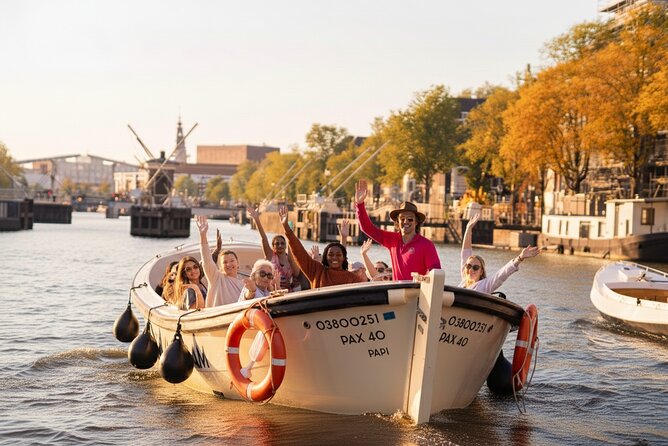
The eastern portion of the cruise brings a different side of Amsterdam. The Blauwbrug connects the Rembrandtplein area with Waterlooplein, close to the Stopera, home to the Dutch National Opera and Ballet.
The nearby Jewish Historical Museum explains Jewish culture, religion, and history in the old Jewish neighborhood. The Hollandsche Schouwburg, once a theater, became a wartime gathering place where Jewish people were deported to concentration and extermination camps. These places give serious weight to an area that can otherwise seem focused only on markets and nightlife.
Waterlooplein is the oldest flea market in the Netherlands and operates six days a week with around 300 stalls. You might find secondhand books, vintage cameras, jewelry, or clothing. The nearby De Waag began as a city gate and later served as a guild house, museum, fire station, and anatomical theater.
The Zuiderkerk was Amsterdam’s first church built specifically for Protestant worship. The Noorderkerk, in the Jordaan, was built between 1620 and 1623 for the neighborhood’s working population. These churches show how quickly the expanding city needed new places for worship and community life.
The Singel, flower stalls, and a final city portrait
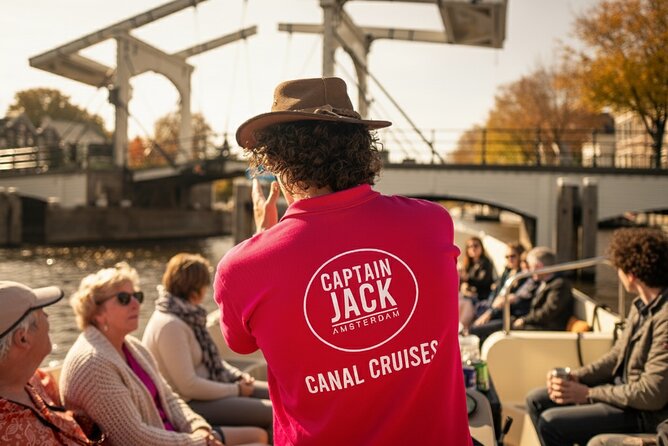
The Singel once served as Amsterdam’s medieval moat. It later became the innermost canal in the city’s famous semicircular canal ring, running from the IJ near Central Station toward the Amstel.
The Bloemenmarkt is associated with tulip bulbs, flowers, and Dutch souvenirs. It is touristy, but it remains a recognizable part of Amsterdam’s city-center experience. If you want a more local shopping atmosphere, the Jordaan markets and smaller neighborhood shops may suit you better.
Other sights connected with the route or nearby streets include the Munttoren, once part of a medieval city gate and later used to mint coins, and the Amsterdam Museum, which traces the city’s past and present.
The route may also place you near the Museum of the Canals, which explains how money, art, celebrations, and daily life shaped Amsterdam’s waterways. A short boat ride cannot stop at all these places, so think of the commentary as a useful preview rather than a substitute for museum visits.
Boat comfort, weather, and the onboard experience
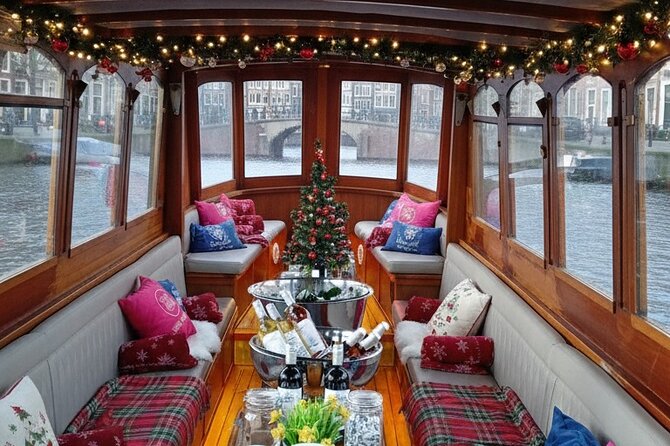
The electric boat is designed for comfort rather than speed. Cushioned seats make the hour easier on your back, and blankets are provided when temperatures drop. Umbrellas are available, and winter departures use a closed, heated boat.
On warm days, the open-air setup gives you the best views and the clearest sense of the city. On colder or windy days, the covered option matters more than the luxury label. Amsterdam weather can change quickly, so bring a layer even when the forecast looks mild.
The boat carries a maximum of 30 people. That is small enough to give the guide a more personal feel, though the exact atmosphere depends on the group and the crew. Some departures have two crew members, with one steering and the other helping with commentary.
The main practical weakness is sound. A captain needs a marine radio for safety, and one experience had the radio turned up so loudly that the guide was difficult to hear. If you are seated far from the guide, or if the boat is noisy, ask to move closer when possible.
Boarding can also be a little difficult for older passengers. The activity is suitable for most people, and service animals are allowed, but anyone with limited mobility should be prepared for a boat-style boarding process.
Live commentary, drinks, and the level of detail
The strongest part of this cruise is the guide. The best commentary combines canal history, house architecture, local customs, and humor. You should expect a light educational experience, not a university lecture.
Guides explain why the houses are narrow, how the canal belts were planned, and how Amsterdam’s neighborhoods developed. They also add current city details, local gossip, and stories about everyday life. This mix works well for a first visit, especially if you want an easy introduction for teenagers or family members who might not enjoy a formal museum tour.
Drinks are available from the onboard bar, including alcoholic and nonalcoholic choices. Nuts can be purchased, but snacks are not included. You can enjoy a beer or wine while looking at the bridges, but budget separately for it.
One point needs careful attention. The route description covers a very large number of sights, while the operating explanation describes a standard one-hour cruise with 12 main pass-bys. In practice, you should not expect a detailed stop-by-stop presentation of every museum, church, hotel, market, and neighborhood listed. The cruise is a moving overview, with more time spent on the central highlights.
Is the $26.59 price good value?
At $26.59 per person, the cruise is fairly priced for an hour on a small electric boat with a live guide, cushions, blankets, and taxes included. It is not the cheapest way to see Amsterdam’s canals, but the smaller boat and personal commentary can justify the difference.
I would see it as good value if you want orientation, comfort, and local explanation in one compact activity. It is also useful early in a city break, since you can mark places such as the Jordaan, Rijksmuseum, Magere Brug, Waterlooplein, and Museum Quarter for later visits.
It is weaker value if you expect a full historical tour of every sight or a long cruise through every canal district. For that, you need more time and perhaps separate museum visits.
The experience is booked, on average, about 22 days ahead, so popular times can fill. Free cancellation is available up to 24 hours before departure. If poor weather cancels the cruise, you are offered another date or a full refund. The same applies if the minimum number of people is not reached.
Who should book this Amsterdam canal cruise?
I would recommend it to first-time visitors, couples, families, and anyone who wants a gentle introduction before tackling Amsterdam on foot. It suits you especially well if you enjoy stories, architecture, and city history but do not want a formal lecture.
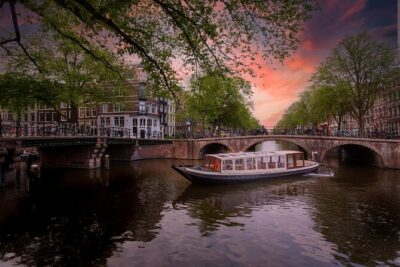
It is also a good choice for a sunset departure, when the canals and bridges take on a softer look. The hour-long length leaves plenty of time for museums, markets, and neighborhoods afterward.
I would hesitate if you need guaranteed silence, have serious boarding difficulties, or want a highly detailed account of every listed sight. In that case, confirm the boat and route details before booking, and ask where the guide will speak from.
FAQ
How long is the Amsterdam canal cruise?
The cruise lasts approximately one hour and returns to the same meeting point.
Where does the cruise start?
It starts at Prinsengracht 261a, 1016 GV Amsterdam, Netherlands.
Where does the cruise end?
The cruise ends back at the meeting point on Prinsengracht.
Is the boat electric?
Yes. The experience uses a quiet, electric-powered boat.
Is the boat open-air?
The usual boat has an open-air deck. In winter, a closed and heated boat is used.
Are blankets provided?
Yes. Cushions, blankets, and umbrellas are included.
Are drinks included in the ticket price?
No. Alcoholic and nonalcoholic drinks can be bought from the onboard bar.
How many people can join the cruise?
The maximum group size is 30 people.
What is the cancellation policy?
You can cancel for a full refund up to 24 hours before the start time. Cancellations or changes made within 24 hours are not refunded. If poor weather or an insufficient number of people cancels the cruise, you are offered another date or a full refund.
Should you book it?
Book this cruise if you want one comfortable hour of Amsterdam context with a live guide, good views, and a small electric boat. The best reasons are the relaxed pace, the mix of serious history and local humor, and the chance to see the canal ring from the angle that makes the city make sense.
Before paying, keep your expectations practical. You are booking a concise overview, not a detailed tour of every attraction named in the route. If that suits your plans, $26.59 is a sensible way to get your bearings, enjoy the water, and decide which Amsterdam sights deserve your time on land.
Just added in Amsterdam
- Schiphol Amsterdam Airport Private Arrival Transfer★ 5.0 · 68 reviews
- Amsterdam Castle & Utrecht City – Private Day Tour★ 5.0 · 21 reviews
- Amsterdam Canal, Tulip, Windmill Photoshoot | Custom Request★ 5.0 · 147 reviews
- Amsterdam Light Festival Winter Walk with Stroopwafel Workshop★ 5.0 · 66 reviews
- Become a Dutch Art Piece Photo Shoot in Amsterdam – Single Portrait★ 5.0 · 65 reviews
- Become a Dutch Art Piece Photo Shoot in Amsterdam★ 5.0 · 100 reviews
- Full-Day Private Historic Royal Tour around Palaces and Castles★ 5.0 · 16 reviews
- Private transfers from or to Schiphol (AMS) airport Amsterdam★ 5.0 · 235 reviews
Canal Cruises, compared.
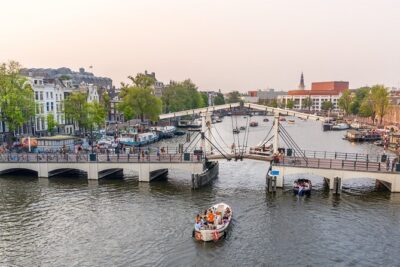
Amsterdam Luxury Canal Cruise + Unlimited Drinks & Bites option
Read our review →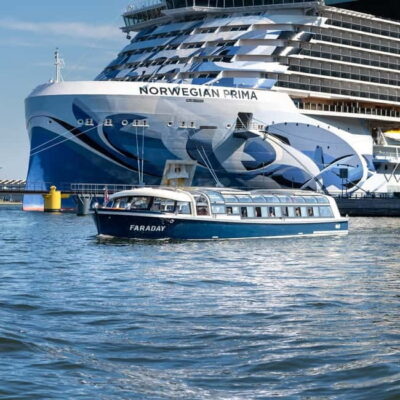
75 Minute City Canal Cruise with Audio Guide
Read our review →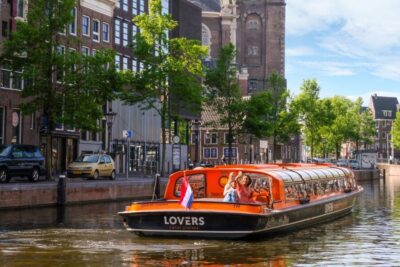
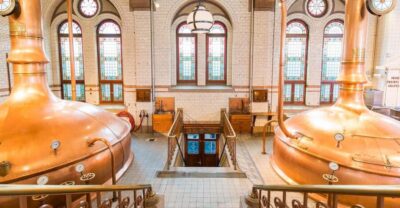
City Canal Cruise and Heineken Experience Ticket
Read our review →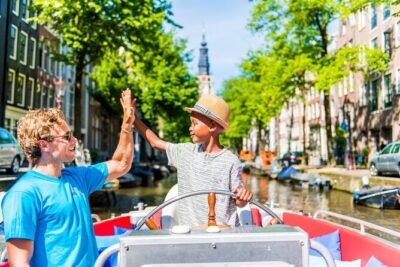
Amsterdam Canal Cruise in Open Boat with Unlimited Drinks Option
Read our review →
Amsterdam Evening Canal Cruise with Live Guide and Onboard Bar
Read our review →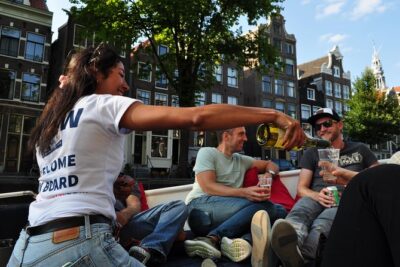
Amsterdam Canal Cruise With Live Guide and Unlimited Drinks
Read our review →Browse the lists this tour appears in