
Reviewed · RIJKSMUSEUM TICKETS
Amsterdam Rijksmuseum PRIVATE TOUR with a Local Private Guide
The best thing about this Rijksmuseum tour is its private guide format. Instead of wandering through a huge museum and wondering which rooms matter, you get a focused path through Dutch art, from the medieval period to the Golden Age and beyond. Guides including Rolf, Anna, and Marten have been praised for connecting paintings with Dutch trade, politics, architecture, and daily life.
I like two things in particular: the guide can adjust the visit to your interests, and the two-hour route keeps you moving toward the museum’s major works. It is also useful if your Amsterdam schedule is tight. The main drawback is important: the admission ticket costs an extra €20 per person in cash, and there have been isolated problems with ticket availability, meeting communication, and guide attendance.
Key points to know before booking
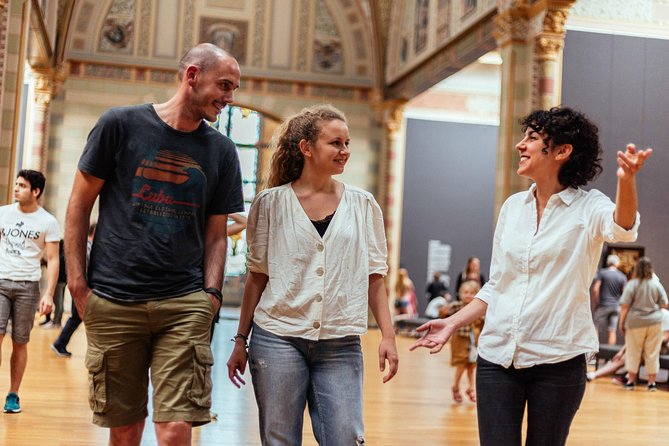
- Private visit: Only your group and the guide take part, so you can ask questions without holding up a larger party.
- A fast route through Dutch art: The planned visit covers medieval painting, the Renaissance, the Golden Age, the 18th century, and the 19th century.
- Major names included: Expect attention to Rembrandt, Vermeer, Frans Hals, van Gogh, Geerten tot St. Jans, and Lucas van Leyden.
- Two hours means highlights: You will see important works, but you will not cover every gallery in this enormous museum.
- Extra cash payment: The €20 admission fee per person is not included in the advertised price and must be paid to the host.
- Strong overall response: The experience is rated 4.8 out of 5 from 159 ratings, with 94 percent recommending it.
Why a private guide helps at the Rijksmuseum
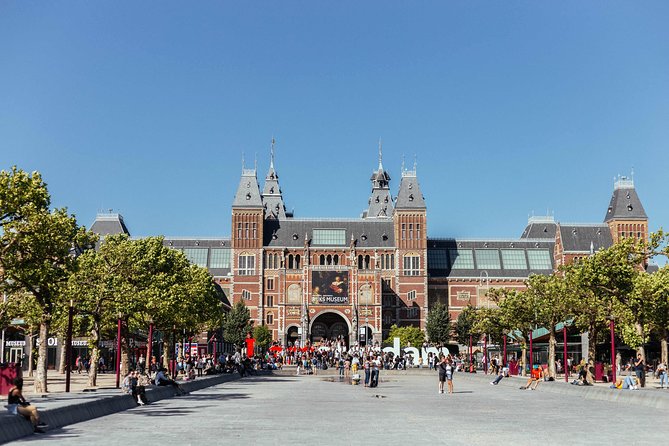
The Rijksmuseum is not a small, tidy collection you can finish between breakfast and lunch. Its art spans centuries, and the building contains far more than the famous Rembrandt and Vermeer rooms. You can easily spend your first half hour finding your bearings, reading labels, and still miss the ideas that connect the collection.
A private guide gives you a clear route. You can ask why a particular painting mattered, how a scene reflects Dutch society, or what you should notice in the background. That personal exchange is the real reason to choose this experience over entering on your own.
The guides praised most highly bring art history to life without turning the visit into a lecture. Rolf is described as especially strong at tailoring the route to a family’s background and interests. Anna is praised for tying historical setting to artistic detail, while Marten is known for explaining the development of painting from medieval works through Rembrandt.
That said, guide quality can vary. One less successful visit felt rushed and leaned more toward personal opinion than historical meaning. You should think of this as a guide-led introduction to the museum, not a guaranteed specialist lecture from the same person every time.
More Rijksmuseum tickets and tours in Amsterdam:
- Amsterdam: Rijksmuseum Entry Ticket
★ 4.7 · 25,535 reviews - Amsterdam: City Canal Cruise and Rijksmuseum
★ 4.5 · 2,129 reviews - Rijksmuseum Amsterdam Small-Group Tour with Private Upgrade
★ 4.5 · 1,547 reviews
Meeting at Hobbemastraat and getting started
The tour begins at Hobbemastraat 18, 1071 ZB Amsterdam, near public transportation. The activity ends at the same meeting point. Keep the meeting address handy and arrive early, since finding a guide in a busy museum district can take time.
Communication has not always been perfect. A past participant lost about ten minutes because the meeting instructions and direct contact details were unclear. Another group arrived on time but found the guide absent after ticket trouble. Those incidents appear to be exceptions rather than the normal pattern, but they are worth taking seriously because a two-hour museum visit leaves little room for delays.
The advertised price is $141.87 per person. That is a serious amount for a two-hour activity, especially because museum admission is separate. The private format makes the cost easier to justify for a family or small group that wants personal attention, but it is less attractive if you are a solo visitor or comfortable exploring museums independently.
The guide handles prebooking, which is meant to save you time at the entrance. Still, you pay the €20 ticket cost per person in cash. Confirm the exact meeting and payment details before the day of the visit, and do not assume that the advertised tour price covers the museum ticket.
Medieval art and the Tree of Jesse
The route begins with medieval Dutch art, including religious paintings by Geerten tot St. Jans. His Tree of Jesse is a key early work on the route.
This section helps you see how different the purpose of painting was before the Dutch Golden Age. Religious images were central to public and private devotion, and the symbolism can be hard to follow without explanation. A guide can point out the figures, relationships, and visual clues that make the work readable.
For some visitors, these early galleries will be the least familiar part of the tour. That is exactly why a guide helps. If you only want Rembrandt and Vermeer, you may feel that time spent here takes away from the famous masters. If you want to understand how Dutch painting developed, this opening gives the later galleries a useful starting point.
The Renaissance and Lucas van Leyden
The Renaissance section shows how ideas from southern Europe changed northern painting. The tour highlights Lucas van Leyden, sometimes called the Rembrandt of the 16th century, as an important bridge toward the later Dutch tradition.
Your guide is expected to explain how artists became more interested in human figures, observation, detail, and worldly subjects. This period also sets up the cultural changes that helped produce the Dutch Golden Age.
The value here is not simply seeing another old painting. It is learning that the Golden Age did not appear from nowhere. The artists celebrated later built on earlier experiments in composition, storytelling, portraiture, and technical skill.
Because the visit lasts only two hours, you should expect a selection rather than a full account of the Renaissance. Ask your guide to spend more time here if the development of art interests you. If your priority is the Night Watch or Vermeer, let the guide know early.
A few more things to do in Amsterdam worth a look
- Van Gogh Museum Tour Reserved Entry Semi Private
★ 5.0 · 1,437 reviews - Private Amsterdam Red Light District and Coffee Shop Tour
★ 5.0 · 763 reviews - Anne Frank and Jewish Quarter Amsterdam Private Walking Tour
★ 5.0 · 684 reviews - Amsterdam Airport & Non-Airport Private Transfer to City Center
★ 4.5 · 521 reviews
Hals, Vermeer, and Rembrandt
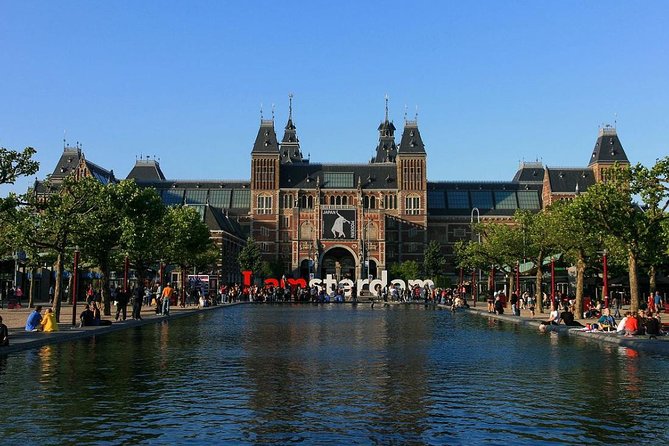
The Golden Age is the central reason most people visit the Rijksmuseum, and the tour gives special attention to its big three: Frans Hals, Johannes Vermeer, and Rembrandt van Rijn.
Frans Hals brings energy and character to portrait painting. Vermeer rewards patient looking, with carefully arranged light, interiors, and quiet human moments. Rembrandt offers a wider emotional and dramatic range, from group portraits to scenes shaped by shadow and expression.
A guide is particularly useful here because famous works can be surprisingly easy to glance at and leave. You might recognize the names but miss how a pose, light source, gesture, or object changes the meaning of a scene. The strongest guides in this experience explain those details in plain language and connect them to Dutch society and commerce.
One praised guide, Martin, links painting with Dutch history, architecture, and trade. That broader approach can make the collection feel less like a parade of masterpieces and more like a picture of a country gaining wealth, confidence, and influence.
You should not expect to study every major painting at length. The route is designed for highlights. If you want quiet time with a particular Vermeer or Rembrandt, tell your guide, and remember that the clock continues during questions and discussion.
Eighteenth-century objects beyond paintings
The Rijksmuseum is not only a painting museum. The itinerary also includes 18th-century clocks, handmade furniture, marble vases, fireplaces, porcelain animals, and other decorative works.
This is a welcome change of pace. These objects show how art entered homes and public rooms, and they reveal the taste and wealth of the people who commissioned them. A carved cabinet or porcelain animal can tell you as much about status and fashion as a painted portrait.
For families, these galleries may offer a break from rows of framed canvases. Children may respond more quickly to furniture, clocks, and three-dimensional objects than to a long sequence of portraits.
The limitation is time. Two hours cannot give equal attention to paintings, sculpture, furniture, and decorative art. If objects and design matter to you, say so at the start. Otherwise, the guide may understandably spend more time on the best-known Dutch masters.
The Battle at Waterloo and 19th-century art
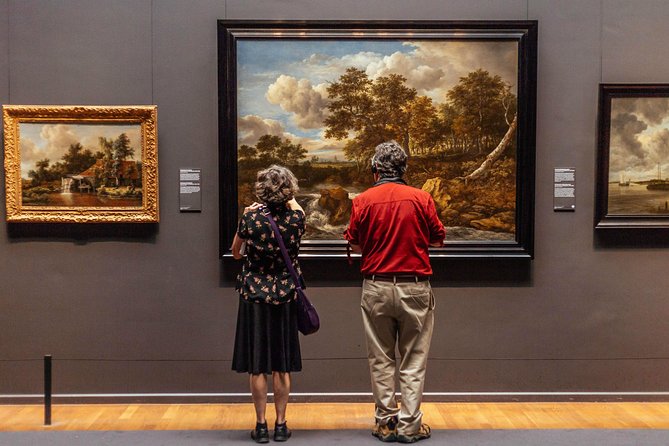
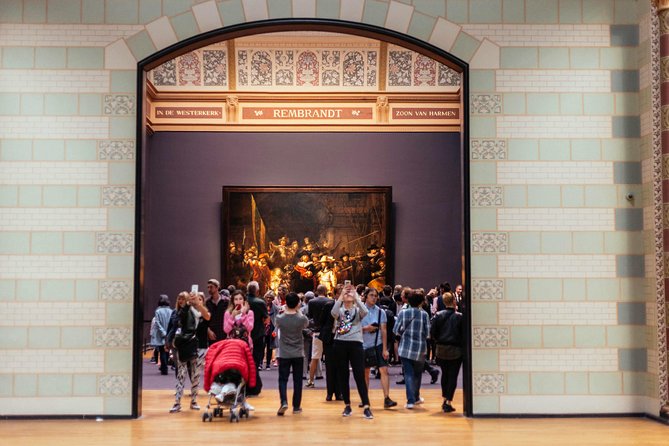
The 19th-century section includes the Rijksmuseum’s largest painting, The Battle at Waterloo. Its size alone changes the experience. After smaller works and intimate interiors, a giant battle scene fills your view and shifts the focus toward national memory, military power, and public spectacle.
The painting also broadens the story beyond the Golden Age. A visit focused only on Rembrandt can leave you with the impression that Dutch art ended in the 17th century. The later galleries show how artists and institutions continued to respond to politics, war, public identity, and changing taste.
The itinerary also mentions van Gogh, giving you a chance to connect the museum’s older traditions with a later Dutch master. The experience is not presented as a dedicated van Gogh tour, so do not expect an exhaustive study of his work. Think of it as a quick link between the museum’s earlier collections and the art that followed.
What the two-hour length really means
Two hours is enough for a strong introduction, not a full museum day. One visitor with limited time found the format ideal because the guide led the way to the major works and explained them without wasting time. Another visitor felt the guide finished before the full two hours of museum time had passed.
That difference points to a practical issue: clarify whether the two hours begins at the scheduled meeting time or when you enter the galleries. Meeting delays may reduce the actual time inside. If the guide keeps a strict two-hour schedule, arriving early becomes especially important.
The private setting lets you set priorities. Tell the guide if your group includes first-time museum visitors, children, art students, or people mainly interested in Dutch history. The more clearly you explain your interests, the more useful the visit should be.
After the museum, the guide can offer local recommendations for Amsterdam. This is a modest but useful extra. You can ask what to see next, where to continue your art-focused day, or how to spend the rest of your time in the city.
Who gets the best value
I would consider this tour for a family, couple, or small group that wants personal attention and has limited Amsterdam time. It is also a good fit if museums make you feel overwhelmed, or if you want a clear introduction before returning on your own.
The tour works well for people who enjoy context. You will hear about artistic change, Dutch commerce, historical events, the building, and the meaning behind selected works. It is less suitable if you want to wander silently at your own pace for several hours.
The price is harder to defend for budget travelers. You pay $141.87 per person, then add €20 per person for admission. If you are happy using a museum guidebook or audio material by yourself, independent entry will likely cost less and give you more time.
Families should also weigh the private format against the duration. A personal guide can keep children engaged, but two hours may be enough for some young visitors and too long for others. The ability to adjust the route is helpful here.
Booking, ticket, and cancellation cautions
The experience is non-refundable and cannot be changed after booking. That makes date selection important, especially if your Amsterdam plans are still moving around.
Ticket handling deserves extra attention. The guide is supposed to prebook the museum admission, but past ticket problems led to cancellations and, in one case, a guide failing to appear without advance notice. The money was refunded in those cases, but the lost opportunity was more serious for people who had planned their Amsterdam visit around the Rijksmuseum.
I would confirm the appointment, meeting address, guide contact details, and cash ticket payment before setting out. Keep enough flexibility in your day to handle a delay, even though the tour itself is scheduled for about two hours.
Should you book the Rijksmuseum private tour?
Book it if you want a focused route, personal explanations, and help making sense of a very large museum. The strongest part of the experience is the guide’s ability to connect a painting with its time, place, and people. Rolf, Anna, and Marten are especially associated with the warm, art-focused approach this tour aims to provide.
Skip it if you are on a tight budget, want several hours inside the museum, or prefer to explore without a fixed path. Also think carefully about the separate €20 admission payment and the non-refundable booking rule.
My advice is simple: choose this private tour for a first, efficient look at the Rijksmuseum, but arrive early, confirm the details, and tell the guide exactly what you want to see. That preparation gives the two-hour visit its best chance to feel personal rather than rushed.
FAQ
How long does the Rijksmuseum private tour last?
The tour lasts approximately two hours.
Is the Rijksmuseum admission ticket included?
No. Admission is not included in the advertised tour price. You must pay the host €20 per person in cash.
Does the guide arrange the museum tickets?
The guide prebooks the admission tickets, according to the tour details. Ticket availability should still be confirmed before your visit.
Is this a shared group tour?
No. This is a private activity, so only your group and the guide take part.
Where does the tour begin?
The meeting point is Hobbemastraat 18, 1071 ZB Amsterdam, Netherlands.
Where does the activity end?
The activity ends back at the meeting point.
Which artists are included in the visit?
The route includes works and discussion connected with Geerten tot St. Jans, Lucas van Leyden, Frans Hals, Vermeer, Rembrandt, and van Gogh.
Does the tour cover more than paintings?
Yes. The route includes clocks, handmade furniture, marble vases, fireplaces, porcelain animals, and other works from the 18th century.
Is the tour suitable for most people?
The supplied information says most people can participate, and the meeting point is near public transportation.
Can I cancel or change the booking?
No. The experience is non-refundable and cannot be changed for any reason.
Just added in Amsterdam
- Guided Day Trip – Volendam, Zaanse Schans, Marken & Edam★ 4.0 · 232 reviews
- Private Tour Zaanse Schans Windmills and Volendam in Jaguar★ 5.0 · 10 reviews
- Zaanse Schans and Giethoorn Unique Day Trip with Boat Cruise★ 4.5 · 17 reviews
- Half-Day Private Guided Sightseeing Tour of Zaanse Schans★ 5.0 · 14 reviews
- Zaanse Schans Private Tour Windmills★ 5.0 · 18 reviews
- Private bike tour: Hidden gems around Amsterdam and surroundings★ 5.0 · 4 reviews
- Bike tour in Amsterdam with an Italian guide★ 5.0 · 15 reviews
- Amsterdam Sightseeing Tour + Hidden Gems + Tastings + PDF guide★ 5.0 · 35 reviews
Rijksmuseum Tickets, compared.
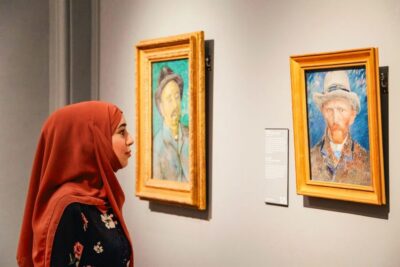
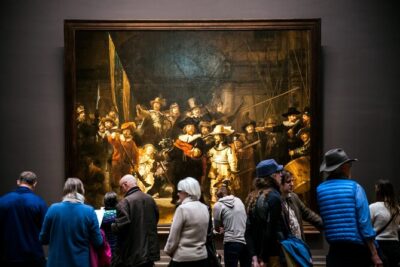
Rijksmuseum Amsterdam Small-Group Tour with Private Upgrade
Read our review →
Rijksmuseum Entry Ticket and Canal Cruise Combo
Read our review →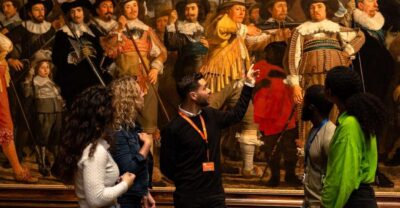
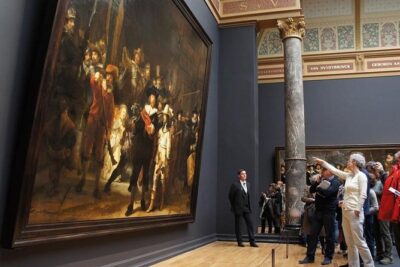
Rijksmuseum Amsterdam Exclusive Guided Tour w/ Reserved Entry
Read our review →
Van Gogh & Rijksmuseum w/ Reserved Entry Semi-Private 8ppl Max
Read our review →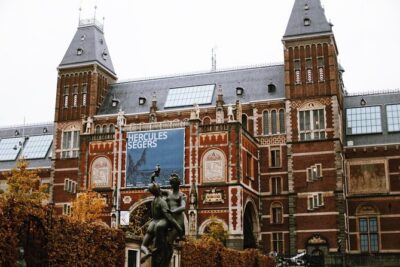
Van Gogh & Rijksmuseum w/ Reserved Entry Exclusive Guided Tour
Read our review →Browse the lists this tour appears in