Reviewed · TOURS IN AMSTERDAM
Amsterdam TulipFields of Holland Tour
The best part of this tour is its access to quiet bulb-growing roads where large coaches cannot go. You spend time beside several flower fields, stop for photos, and then visit De Tulperij, where tulips, hyacinths, and daffodils are grown and displayed.
I like the small group of seven and the relaxed ride in an air-conditioned vehicle. Guide Leander adds local stories about farming, tulip cultivation, windmills, and the business behind the flowers. Dutch apple pie, coffee, tea, and bottled water are welcome extras.
The main drawback is the price: at $216.26 per person, this is not a budget outing. It also lasts about four and a half hours, with no lunch included, so check the timing before you book.
Key points to know before you book
- Small group access: The vehicle carries no more than seven people, making it easier to ask questions and stop for photos.
- Two-part flower experience: You see open fields along rural roads, then spend about two hours at De Tulperij.
- Guide Leander’s local knowledge: Expect practical explanations of growing, bulb farming, tulip history, windmills, and the business side of the trade.
- Quiet photo stops: The route includes places away from the main coach traffic, including farmer fields with special hybrid tulips.
- Good-value inclusions: Transport, coffee or tea, bottled water, snacks, Dutch apple pie, and entrance fees are covered.
- Weather matters: Poor weather can lead to a different date or a full refund, and the tour also requires a minimum number of participants.
Why this small-group tulip tour works
Amsterdam is a fine base for seeing Dutch flowers, but the city itself cannot show you how the bulb trade works. For that, you need to reach the countryside west of town, where flat fields stretch along narrow rural roads and the flowers are grown as a working crop, not just arranged for visitors.
This tour is built around that difference. You are not simply taken to one large attraction, given a short photo stop, and driven back. The first two hours are spent moving through the flower bulb region, with several stops beside blooming fields. Then you spend another two hours at De Tulperij, a tulip farm where the growing process receives proper attention.
I especially like the scale. A maximum of seven people means the outing feels more personal than a coach excursion. You can ask Leander about a particular field, request a photo stop when conditions allow, or follow up on something you noticed along the way.
The small vehicle is also practical. You do not need to focus on driving, parking, or finding the right rural road. Instead, you can watch the fields through the windows and listen to the explanations. That matters in the bulb region, where the scenery changes quickly and the best stops are not always obvious from a main road.
Other trips people book in Amsterdam:
- Amsterdam: Van Gogh Museum Ticket
★ 4.7 · 52,054 reviews - Amsterdam Classic Saloon Boat Cruise with Drinks and Cheese
★ 5.0 · 31,825 reviews - Amsterdam Luxury Canal Cruise + Unlimited Drinks & Bites option
★ 5.0 · 30,518 reviews
Leaving Amsterdam for the bulb region
The meeting point is at Oosterdoksstraat 4 in Amsterdam, near public transportation. From there, the tour heads west toward the flower bulb region in an air-conditioned vehicle.
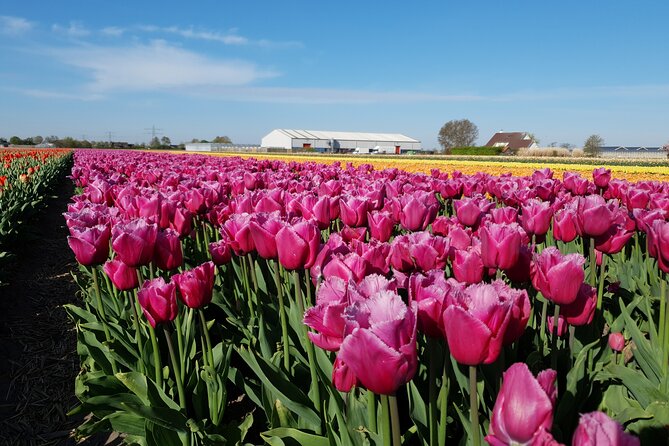
The drive is part of the experience. As the city gives way to rural roads, you begin seeing flower fields on both sides. Leander explains how farmers grow the bulbs and gives context to what you are seeing. That turns a pretty view into something more useful: you learn why fields are planted in blocks, how different flowers fit into the farming cycle, and how the flower business works beyond the bright rows you see from the road.
You should expect the exact appearance of the fields to depend on the date of your visit. Flowering is not controlled for a sightseeing schedule, so some fields may be at their best while others are between stages. The tour’s several stops help with this. Instead of relying on one field, you visit different places and look for the strongest colors and best views along the route.
The scenery is especially appealing if you want a break from Amsterdam’s canals and museums. This is open countryside, with broad skies, working farms, rural roads, and occasional windmills. One stop may offer a better view of a particular color, while another may show a different type of planting or a quieter stretch of farmland.
Photo stops where coaches cannot go
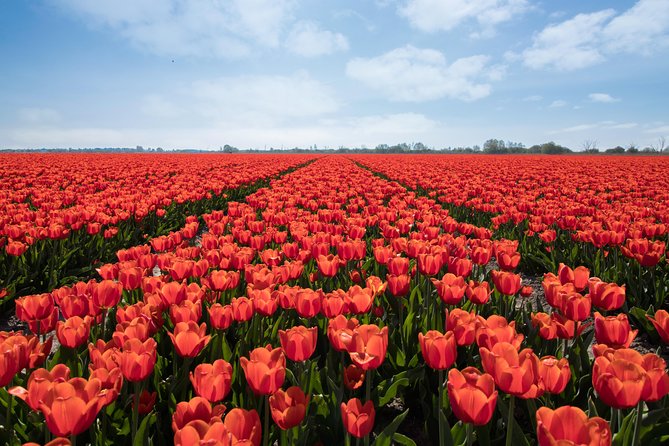
The tour’s strongest feature is its access to places unavailable to large tour buses. That does not mean every field is open for walking. Flower bulbs are a farmer’s crop, and you should follow the guide’s instructions about where you can stand and take pictures.
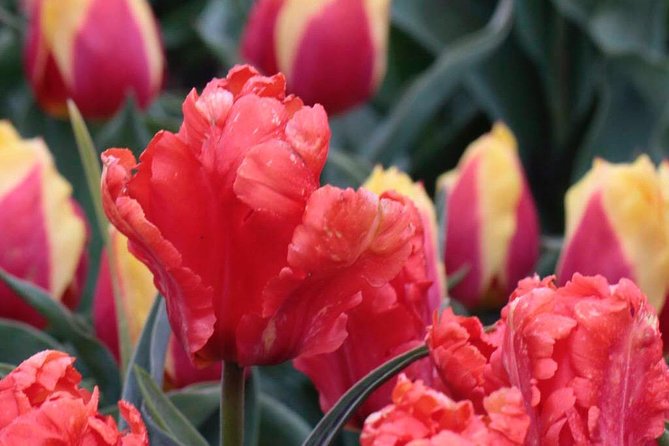
You do, however, get several chances to stop near the fields. The setting gives you time for photographs rather than forcing you to shoot through a bus window. One particularly unusual attraction is access to farmer fields with hybrid tulips. These special varieties can add more color and variety than a single standard field.
Leander may also stop at fields blooming in different colors. This is useful because the flower region is not one giant garden with identical rows. Each field can look different, and the mix of colors gives the outing more visual interest.
If you want personal photos, tell the guide. One useful detail from the experience is that Leander has been willing to take excellent pictures for visitors when asked politely. It is a small touch, but it helps if you are traveling alone or want a photograph with the fields behind you.
Bring a phone or camera with enough battery. The tour provides bottled water and snacks, but photography equipment is your responsibility. Since the outing depends on conditions outdoors, comfortable clothing and shoes are sensible, though no special equipment is listed as required.
Two hours at De Tulperij
The second major stop is De Tulperij, where you visit a tulip bulb farmer. This is not just another field for photographs. It gives you a closer look at the people and work behind the flower displays.
You learn about the cultivation of tulips, hyacinths, and daffodils. That broader focus matters. The Dutch bulb region is not only about tulips, even though tulips get most of the attention. Seeing several kinds of bulbs helps you understand the area as an agricultural region rather than a single seasonal attraction.
Plan on spending about two hours here. That is a generous amount of time for walking around the farm’s tulip fields and show gardens, taking photos, and listening to explanations. The farm setting also lets you connect the polished image of Dutch flowers with the less visible work of planting, growing, sorting, and selling bulbs.
Several people have found this farming side especially valuable. The tour explains the history of tulips in the Netherlands, the growing process, and the business side of the trade. You also get a chance to meet the farmer, which gives the stop a more direct human connection than a standard garden visit.
The farm can be a better place to study the flowers up close. In the open countryside, you mainly see broad rows and color blocks. At De Tulperij, you have more time to look at individual flowers and compare varieties. If you care about horticulture, photography, or the practical side of agriculture, this is likely to be the most rewarding part.
Same city, a different sort of day:
- Amsterdam: Heineken Experience Ticket
★ 4.6 · 30,055 reviews - Amsterdam: Rijksmuseum Entry Ticket
★ 4.7 · 25,535 reviews - Amsterdam: Classic Boat Cruise with Optional Cheese & Wine
★ 4.6 · 22,925 reviews - Amsterdam: Evening Cruise with Optional Wine and Snacks
★ 4.4 · 19,696 reviews
What Leander adds to the day
Guide Leander is a central part of the experience. His role goes beyond driving. He explains the fields, talks about tulip cultivation, gives background on the local countryside, and answers questions during the stops.
His local connection is useful because the route is not presented as a generic sightseeing loop. He knows the farmers and can take the group to quieter areas away from the main tourist traffic. That local access is one reason the tour costs more than a basic transfer to a flower park.
The guide’s style also seems to suit people who like conversation. The group is small, and the vehicle is described as feeling more like an outing with a friendly local than a ride on an industrial bus. If you prefer a formal lecture with little interaction, this may feel more informal than expected. If you enjoy asking questions and learning as you go, the format should work well.
Leander also explains windmills when they appear along the route. The windmill information adds some Dutch context to the flower trip, though the main subject remains bulbs and farming. If your ideal outing includes tulips, rural scenery, and a little local culture, that combination makes sense.
Food, comfort, and what is not included
The tour includes coffee or tea, bottled water, and snacks, including Dutch apple pie. The pie has received plenty of attention, and it gives the morning or afternoon a distinctly Dutch pause between field stops.
These inclusions are useful, but they do not replace lunch. Lunch is not included, and the tour lasts about four and a half hours. Check your schedule and eat before departure or plan a meal afterward. Do not assume the snack service is a full meal.
The air-conditioned vehicle is another practical plus. The countryside is best enjoyed when someone else handles the roads, and the vehicle keeps the group together as it moves between fields and the farm. The small size also makes the ride less impersonal than a large bus.
The tour ends back at the original meeting point in Amsterdam. That simplifies planning, especially if you have another activity later in the day. Still, leave some flexibility around the tour rather than booking an important timed attraction immediately afterward.
Is $216.26 a fair price?
At $216.26 per person, this is a premium half-day outing. You are paying for more than transport. The price covers a small group capped at seven, an air-conditioned vehicle, a local guide, access to quieter field areas, the farm visit, entrance fees, drinks, snacks, and apple pie.
The value is strongest if you want personal attention and a route that avoids the feel of mass tourism. A large bus may cost less, but it is unlikely to offer the same flexibility or the same chance to ask questions. It may also spend more time moving between crowded attractions and less time near working farms.
The value is weaker if you only want a quick photograph among tulips. In that case, a less expensive garden visit or public transport outing may suit you better. This tour makes sense when you want the countryside, the farming story, several photo stops, and a guide who can explain what you are seeing.
The advance booking pattern also matters. The tour averages about 96 days between booking and the visit, which suggests you should not leave it until the last minute if your dates are fixed. Confirmation arrives within 48 hours, subject to availability.
Who should book this tour?
I would choose this for someone visiting Amsterdam during the flower season who wants more than a crowded photo stop. It is a good fit for couples, families, solo visitors, and small groups who value conversation and do not want to drive through unfamiliar rural roads.
It also suits anyone curious about agriculture. The explanations cover cultivation, bulb farming, flower history, and the business behind the blooms. You get a clearer picture of why the bulb region matters instead of simply seeing a colorful field and moving on.
Photography fans should like the repeated stops and access to special hybrid tulip fields. Solo visitors may appreciate the chance to ask the guide to take photos. People who dislike large organized excursions will likely prefer the seven-person limit.
I would hesitate if you need a low-cost activity, want a full meal included, or dislike outdoor plans that depend on weather and flower conditions. The tour requires good weather, and poor conditions can result in a different date or a full refund. It also requires a minimum number of participants, so the operator may cancel if that minimum is not met.
Free cancellation is available up to 24 hours before the start time for a full refund. Changes or cancellations inside that window are not accepted for a refund.
Should you book the Amsterdam tulip fields tour?
Book it if your priority is quiet countryside access, a very small group, and a real look at bulb farming. The combination of rural field stops and two hours at De Tulperij gives the outing more substance than a quick flower photo run.
I would especially recommend it if Leander is your guide and you enjoy asking questions. His local connections, explanations, and willingness to take photos add real value to the day.
Skip it if you only want the cheapest way to see flowers or if your schedule cannot handle a weather-related change. For everyone else, this is a thoughtful, well-paced way to see the Dutch bulb region from Amsterdam, with enough time to appreciate both the beauty and the work behind it.
FAQ
Where does the Amsterdam tulip fields tour start?
The tour starts at Oosterdoksstraat 4, 1011 DK Amsterdam, Netherlands. The meeting point is near public transportation.
Where does the tour end?
The activity ends back at the original meeting point in Amsterdam.
How long does the tour last?
The tour lasts approximately four hours and 30 minutes.
How many people can join the tour?
The maximum group size is seven people.
What will I see during the countryside portion?
You will travel through the flower bulb region on rural roads, see fields on both sides, stop several times for photographs, and hear about tulip cultivation and farming.
What is De Tulperij?
De Tulperij is a tulip bulb farm in the bulb-growing region. You learn about growing tulips, hyacinths, and daffodils and spend about two hours at the site.
Are food and drinks included?
Yes. The tour includes coffee or tea, bottled water, snacks, Dutch apple pie, and all fees and taxes. Lunch is not included.
What happens if the weather is poor?
The experience requires good weather. If it is canceled because of poor weather, you will be offered a different date or a full refund.
Just added in Amsterdam
- Guided Day Trip – Volendam, Zaanse Schans, Marken & Edam★ 4.0 · 232 reviews
- Private Tour Zaanse Schans Windmills and Volendam in Jaguar★ 5.0 · 10 reviews
- Zaanse Schans and Giethoorn Unique Day Trip with Boat Cruise★ 4.5 · 17 reviews
- Half-Day Private Guided Sightseeing Tour of Zaanse Schans★ 5.0 · 14 reviews
- Zaanse Schans Private Tour Windmills★ 5.0 · 18 reviews
- Private bike tour: Hidden gems around Amsterdam and surroundings★ 5.0 · 4 reviews
- Bike tour in Amsterdam with an Italian guide★ 5.0 · 15 reviews
- Zaanse Schans Edam Volendam Private Day Tour from Amsterdam★ 5.0 · 3 reviews
Tours in Amsterdam, compared.

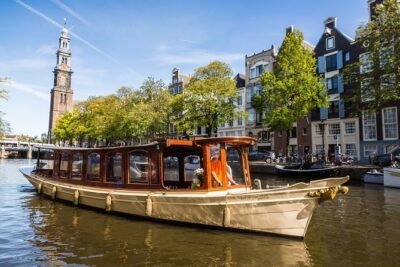
Amsterdam Classic Saloon Boat Cruise with Drinks and Cheese
Read our review →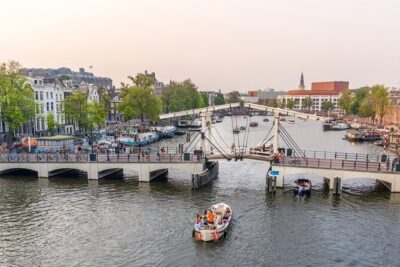
Amsterdam Luxury Canal Cruise + Unlimited Drinks & Bites option
Read our review →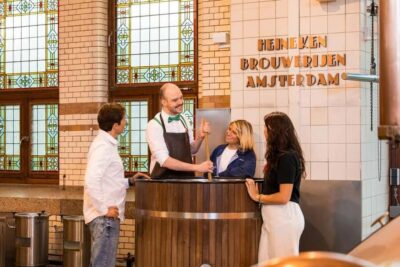

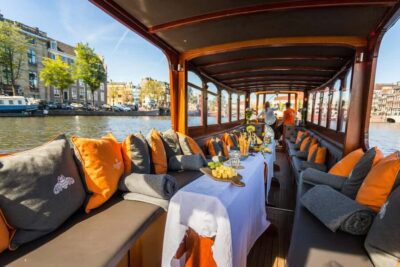
Classic Boat Cruise with Optional Cheese & Wine
Read our review →
Evening Cruise with Optional Wine and Snacks
Read our review →