
Reviewed · WALKING TOURS
Maastricht Private Walking Tour With A Professional Guide
Maastricht’s story stretches from Roman settlement to the birth of the euro, and this private two-hour walk gives that long timeline a human scale. You move through the old center on foot, linking churches, squares, bridges, and city walls instead of watching the sights pass from a bus window.
I like the customizable format, since you can ask for more architecture, wartime history, religion, or European politics. I also like the private setup for up to 15 people, which makes it easier to ask questions and keep the pace comfortable. The main caution is a serious one: a booking mix-up once left guests without a guide, so confirm your appointment details before arrival.
Key points to know before you book
- Roman beginnings to the euro: The tour connects Maastricht’s earliest settlement with the Maastricht Treaty and the creation of the European Union.
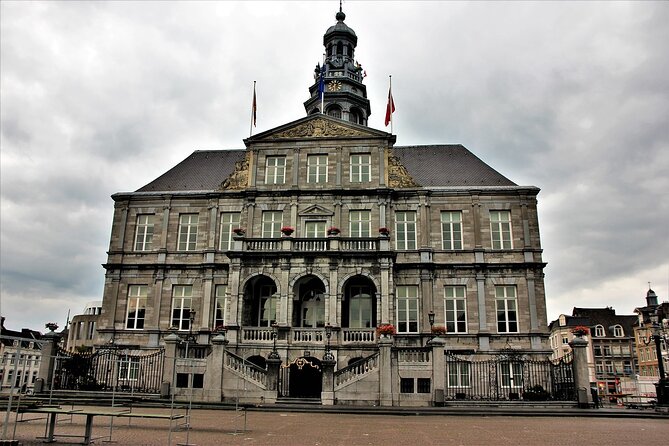
- A walk through major landmarks: You pass the Markt, City Hall, Dominican Church, St. Servatius Church, Helpoort, and Sint Servaasbrug.
- Private for your group only: Up to 15 people can join, with no unrelated group sharing the guide.
- Easy to adjust: You can discuss your interests with the guide and make possible changes during the tour.
- Two hours on foot: This is a useful introduction, but not a full museum visit or a slow examination of every building.
- Good value for a full group: At $275.65 per group, the cost works out to about $18.38 per person if 15 people join, but much more if you are only two or three.
Start at Markt 52, where Maastricht’s story feels close
The meeting point is Markt 52, beside Maastricht’s central market square. This is a practical place to begin because the old center unfolds from here in several directions, and the tour ends back at the same meeting point.
The Markt gives your guide a natural opening for the city’s political and commercial story. You can expect to see the City Hall, or Stadhuis, and learn how the center functioned as a place for civic business and public life. The square also helps you get your bearings before the route narrows into older streets.
A private walk works well here. If you already know the basics of Maastricht, you can ask to move quickly through general orientation and spend more time on the details that interest you. If this is your first visit, the guide can build a clear framework before introducing the churches, walls, and bridges ahead.
The route is designed for people who are comfortable walking. Most participants can take part, and the tour is near public transportation, but the format remains firmly pedestrian. Wear shoes you can use on city streets for two hours, and remember that the price does not include entrance fees.
Other guided walks around Maastricht:
- Maastricht 2-Hour Walking Tour | Discover The City With A Local
★ 4.5 · 57 reviews - 2H Walking Tour Maastricht
★ 4.8 · 57 reviews - Best of Maastricht: Private Walking Tour with a Local
★ 5.0 · 10 reviews
Roman Maastricht and the long road to the Middle Ages
One of the most useful parts of the walk is the broad historical sequence. You are not simply shown a church or a square and given a date. The guide explains Maastricht’s origins under the Romans, then moves into the Middle Ages and the period of the Carolingian Empire.
That early history matters because it explains why Maastricht developed as an important crossing and settlement. The tour’s value is in connecting the pieces. You hear about the city’s place in larger European powers, then see how later religious buildings and defensive structures grew from that earlier foundation.
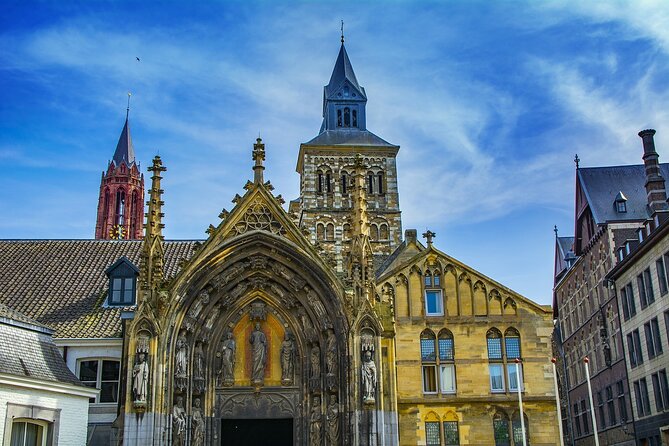
The story of Saint Servatius adds a strong local thread. St. Servatius Church is one of the key sights, and the legend surrounding the saint gives the city’s religious identity a memorable focus. You can expect the guide to explain why this church matters rather than treating it as just another old facade.
There is a limit to what two hours can cover. You will get a guided introduction to the churches and their place in Maastricht’s past, but entrance fees are not included. If you want a detailed look inside any building, ask the guide how much time is available and whether a separate visit would be better after the walk.
The Dominican Church and Maastricht’s religious conflicts
The Dominican Church, or Dominikanerkerk, brings the medieval and religious story into a more specific setting. The building is among the stops, and it gives the guide a way to discuss how religious institutions shaped the city.
The itinerary also covers the religious wars of the 16th and 17th centuries. This is an important subject because Maastricht was not simply a quiet medieval town preserved for modern sightseeing. Its churches and public spaces reflect periods of conflict, competing beliefs, and political pressure.
The route includes St. John Church, or Sint-Janskerk, and the Church of Our Lady, or Onze-Lieve-Vrouwekerk. Seeing several religious buildings in one walk lets you compare their roles and architectural presence. It also keeps the history grounded in actual streets and structures.
I would ask questions here. A private guide is most useful when you use the freedom to pause and clarify. You can ask how religious conflict affected daily life, how the churches changed over time, or how the city’s religious identity relates to its political history.
From industrial change to the Napoleonic era
Maastricht’s story does not end with medieval stonework. The tour moves through the economic turnaround brought by the Industrial Revolution and then into the Napoleonic era.
This part helps explain why the city should not be viewed only as an old European center. Economic change altered work, trade, and the shape of urban life. Napoleon’s period adds another layer, showing Maastricht within the wider political changes that swept across Europe.
The guide also covers the Kingdom of the Netherlands and Maastricht’s difficult integration into it. That subject can be easy to miss if you only look at the city’s architecture. The point is not just that Maastricht became part of the Netherlands, but that the process was not simple or effortless.
This is where the private format can pay off. Political history often raises natural questions, and you have a guide available to explain how Maastricht’s position differed from other Dutch cities. You can also ask the guide to spend less time on a period that does not interest you, though any adjustment depends on the time available.
A few more things to do in Maastricht worth a look
- Rijksmuseum Amsterdam Small-Group Tour with Private Upgrade
★ 4.5 · 1,547 reviews - Van Gogh Museum Tour Reserved Entry Semi Private
★ 5.0 · 1,437 reviews - Private Amsterdam Red Light District and Coffee Shop Tour
★ 5.0 · 763 reviews - Anne Frank and Jewish Quarter Amsterdam Private Walking Tour
★ 5.0 · 684 reviews
The city’s wartime experience, from refuge to occupation
The tour covers World War I, when Maastricht served as a haven for refugees, and World War II, when the city was under German occupation. Those subjects give the walk a more serious tone and show how Maastricht’s borderland position affected ordinary people.
World War I is especially useful in a walking tour because the city’s location becomes part of the explanation. Maastricht was connected to events beyond its own streets, and its role as a refuge adds a human dimension to the political timeline.
The World War II section moves from refuge to occupation. You can expect the guide to place the German occupation within the city’s wider past and post-war development. The tour also covers the post-war period, so the discussion does not stop at liberation or leave the city’s later rebuilding unexplained.
I value this part because it keeps the experience from becoming a parade of attractive facades. Maastricht has handsome squares and churches, but its identity also comes from pressure, division, migration, and recovery. Ask questions if you want more detail on how the wartime years affected the city. The two-hour schedule may limit how far the guide can go.
Maastricht’s European role at the Sint Servaasbrug
The final historical movement leads to the Maastricht Treaty and the foundation of the European Union and the euro. This gives the tour a modern ending and explains why Maastricht matters far beyond its medieval center.
The treaty is not presented as an abstract political event. It belongs to the city’s modern identity, and the walk lets you place that history alongside the older buildings and streets. After hearing about Roman origins, religious wars, Napoleon, and wartime occupation, you see Maastricht as a city that has repeatedly adjusted to larger European changes.
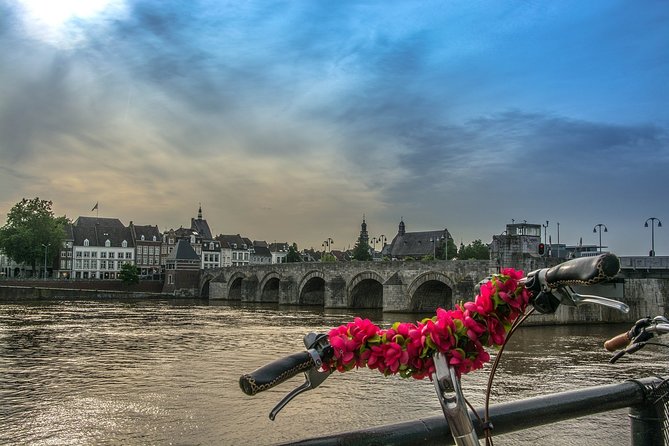
Sint Servaasbrug is one of the listed sights and an effective place to think about movement, connection, and the city’s position over time. The bridge is also a clear visual stop on a walking route. You can ask the guide to connect the bridge, the river crossing, and Maastricht’s role as a link between places and political systems.
The tour also includes Pieke oet de Stokstraot and Hendrik van Veldeke. These names add local character to the route, though the available details do not specify exactly how much time is spent at each. If one interests you, ask the guide to explain its connection to Maastricht.
What the walking route feels like in practice
This is a city introduction, not a museum-heavy visit. You move between outdoor sights, hear the story attached to each place, and keep walking. For a first visit, that is often the right balance because you learn where the important parts of the center are before returning on your own.
The route includes the Markt, City Hall, the Dominican Church, St. Servatius Church, Museum Aan Het Vrijthof, St. John Church, Onze-Lieve-Vrouwekerk, Helpoort, Pieke oet de Stokstraot, and Sint Servaasbrug. That is a lot of named material for two hours, so expect a steady pace rather than long stops at every location.
Museum Aan Het Vrijthof appears as an outdoor stop on the route, not as an included museum visit. Entrance fees are not covered, and the experience ends back at the starting point. Plan a separate museum visit if you want to go inside.
The walk is described as easy in one account, and a guide was able to continue patiently after a late arrival. Still, you should arrive on time. A private tour can adjust its pace, but it cannot create extra minutes at the end.
Private guiding, group size, and flexibility
The guide is local, licensed, and described by the provider as having more than 20 years of guiding experience. No guide’s personal name is supplied, so you should not book expecting a named individual.
The private arrangement is the main advantage over a standard group tour. Your group alone participates, and the maximum is 15 people. That makes the price easier to justify for a family, club, or larger party. It is less compelling for one or two people unless you place a high value on a private guide and personal questions.
Customization is possible on the spot. That does not mean the route can become an entirely different tour, but it does give you room to express your priorities. Before the walk, think about what you want most: Roman and medieval history, church architecture, the World Wars, the Maastricht Treaty, or a general introduction.
The guide’s patience is another practical strength. One account describes a late-arriving group receiving a full explanation and a broad look at Maastricht. You should still treat that as a reason to be considerate, not as permission to arrive late.
There is one operational concern worth taking seriously. A previous booking was missed because the guide mistakenly believed the tour had been canceled. The provider apologized and accepted responsibility. That appears to have been an isolated mix-up, but I would confirm the date, time, and meeting point before you set out.
Is $275.65 a fair price?
The listed price is $275.65 for the whole group, up to 15 people. With 15 participants, that is about $18.38 each. With six people, it is about $45.94 each. With two people, the cost is about $137.83 per person.
That sliding value is important. I would consider the tour fairly priced for a larger group that wants a private introduction and the ability to ask questions. For a couple, the cost is harder to defend unless a private guide is a priority or your schedule does not suit a shared tour.
The price includes the local guide and private guided service. It does not include entrance fees, so budget separately if you want to enter a museum or church where a fee applies. The walking route itself is the central product.
Free cancellation is available if you cancel at least 24 hours before the start time. A cancellation within 24 hours is not refunded, and late changes are not accepted. Those rules matter if your Maastricht plans may shift.
Who should book this Maastricht walk?
I would choose this tour if you are visiting Maastricht for the first time and want a clear overview without joining a large group. It suits people who like to ask questions, prefer an outdoor introduction, and want history tied to real streets and buildings.
It also fits a family or private party of several people. The fixed group price becomes more attractive as your group grows, and the guide can adjust the emphasis to suit different ages or interests.
I would think twice if you want long interior visits, a highly specialized architecture tour, or a full-day examination of Maastricht’s museums. Two hours goes quickly, and entrance fees are separate.
Service animals are allowed, public transportation is nearby, and most people can participate. The main physical requirement is walking for about two hours, so consider your own comfort before booking.
Should you book it?
Book this private walk if you want Maastricht’s Roman, medieval, religious, wartime, and European stories tied together in one manageable route. The strongest reasons are the private guide, the chance to adjust the focus, and the efficient list of major sights.
Skip it if the group is very small and cost matters more than privacy, or if you prefer to spend your time inside museums. If you book, confirm the appointment details and arrive at Markt 52 on time. Used as a first look at Maastricht, this tour can give you the map and historical context you need for the rest of your visit.
FAQ
How long does the Maastricht private walking tour last?
The tour lasts approximately two hours.
Where does the tour begin?
It begins at Markt 52, 6211 CK Maastricht, Netherlands.
Where does the tour end?
The activity ends back at the meeting point.
How many people can join the private tour?
The tour is private for your group and can include up to 15 people.
Are entrance fees included?
No. Entrance fees are not included in the tour price.
Can the tour be customized?
Possible customization can be discussed with the local guide during the tour.
What is the cancellation policy?
You can cancel for a full refund up to 24 hours before the experience start time. Cancellations or changes made less than 24 hours before the start time are not accepted for a refund.
Just added in Maastricht
- Maastricht 2-Hour Walking Tour | Discover The City With A Local★ 4.5 · 57 reviews
- Maastricht Highlights, Architecture & Heritage Tour★ 5.0 · 7 reviews
- e-Scavenger hunt Valkenburg: Explore the city at your own pace★ 4.5 · 20 reviews
- Discover Maastricht with a self-guided Outside Escape city game★ 5.0 · 29 reviews
- Maastricht Medieval Mystery: Interactive City Game & Tour★ 4.0 · 25 reviews
- Maastricht Evening Sightseeing Tour★ 4.5 · 7 reviews
- Maastricht Heritage and Nature Tour★ 5.0 · 6 reviews
- Maastricht Self Guided Sherlock Holmes Murder Mystery Game★ 3.5 · 6 reviews
Walking Tours, compared.

Anne Frank’s Story – Guided Walking Tour through Amsterdam
Read our review →
Life of Anne Frank and World War II Walking Tour
Read our review →

Anne Frank Walking Tour – Guided in EN/DE/IT/ES
Read our review →


Anne Frank Walking Tour Amsterdam Including Jewish Cultural Quarter
Read our review →
Amsterdam Highlights Walking Tour: Small Group Experience
Read our review →Browse the lists this tour appears in