Reviewed · TOURS IN AMSTERDAM
Amsterdam: Jordaan District Tour with a German guide
Amsterdam’s Jordaan is at its best when you leave the broad canals and turn into a quiet lane or courtyard. This 90-minute walk shows you both sides of the district: its polished, desirable present and its past as a working-class neighborhood. Along the way, a German-speaking guide explains the canal system, Anne Frank’s story, tulip mania, and the small details that are easy to miss on your own.
I like the access to several private-looking courtyards, including Sint Andrieshofje, Claes Claeszhofje, Karthuizerhofje, and Van Brienenhofje. I also like the small-group feel and the chance to ask questions, something visitors particularly appreciated with guides Lili and Justin. The main consideration is pace: 1.5 hours gives you a useful introduction, not a full study of every street or the interior of the Anne Frank House.
Key Points At A Glance

- Secret courtyard access: Visit several peaceful hofjes that you might easily pass without noticing.
- German-language guidance: The tour is led in German by a native German guide, with Lili and Justin among the guides praised for friendly, personal answers.
- Anne Frank context: Begin at the Anne Frank Monument and pass the building connected with her hiding place.
- Four centuries of canals: Learn how Amsterdam’s canal belt shaped the Jordaan and earned UNESCO World Heritage status in 2010.
- Tulip mania in a garden: Hear the 17th-century tulip story in one of the district’s quiet green courtyards.
- Flexible format: Choose a small group or private tour, with free cancellation up to 24 hours before the start.
Why The Jordaan Makes A Good Walking Tour
The Jordaan is compact enough to explore on foot but layered enough to reward a guide. Its streets run beside canals, over low bridges, and past narrow houses that make frequent photo stops tempting. The district has changed greatly in recent decades, yet the old street plan and courtyards still give it a strong sense of place.
I find the contrast especially useful for first-time visitors. You are not simply looking at pretty water and brick façades. You are learning how a former working-class area became one of Amsterdam’s most desirable neighborhoods, while still retaining traces of its older social life.
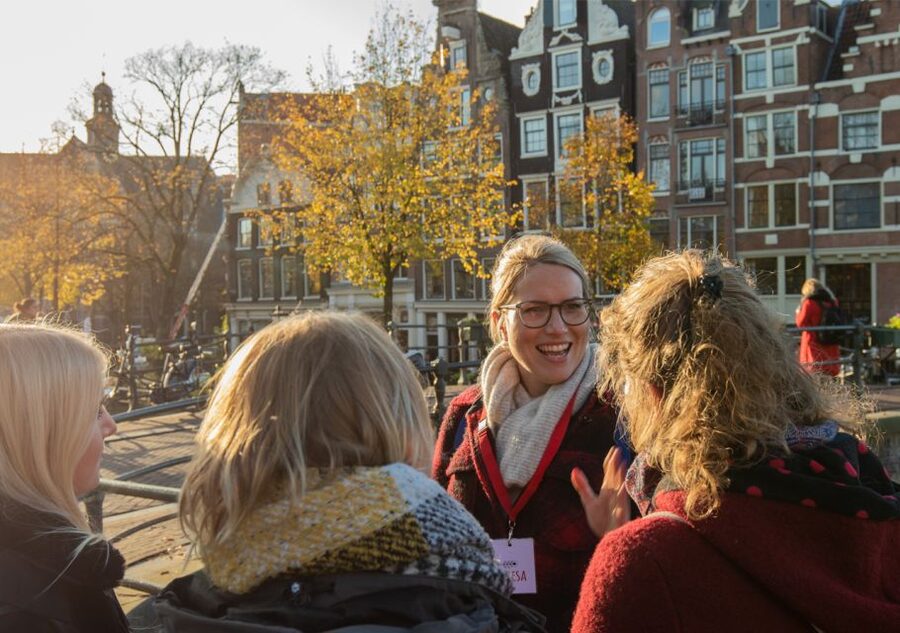
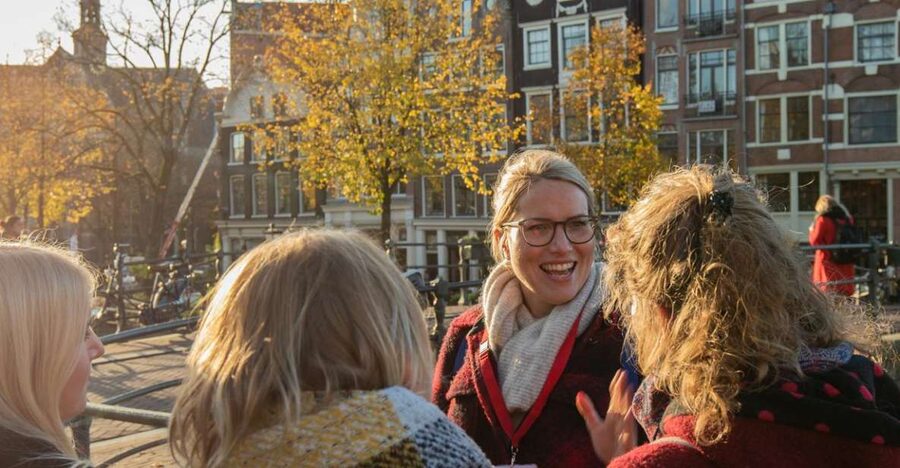
The tour begins at the Anne Frank Monument, on the southern side of Westerkerk. That is a sensible meeting point because it places the group beside two important landmarks from the start. Look for the guide wearing a red name tag around her neck.
The route returns to the same spot, which makes the walk easy to fit around other plans. You do not need to arrange transport between stops, and the 90-minute length works well before lunch, after arriving in the city, or as an introduction to a longer independent walk.
A few more things to do in Amsterdam worth a look
- Amsterdam: 75 Minute City Canal Cruise with Audio Guide
★ 4.4 · 17,501 reviews - Anne Frank’s Story – Guided Walking Tour through Amsterdam
★ 5.0 · 11,619 reviews - Amsterdam: Johan Cruijff ArenA Tour with Optional Guide
★ 4.6 · 8,954 reviews
Starting At The Anne Frank Monument
The first stop is the Anne Frank Monument, where the guide spends about 15 minutes. This gives you brief historical context before the walk moves into the Jordaan’s canals and side streets.
The tour does not include entry to the Anne Frank House. Instead, you pass the famous hiding place and hear a short account of Anne Frank’s story and its connection to this part of Amsterdam. That distinction matters. If you want the full museum visit, you need to arrange that separately, but this stop helps place the story within the neighborhood rather than treating it as an isolated attraction.
Starting here also gives the group a clear orientation. From the monument, the route moves toward Westerkerk and the older canal streets. You can expect a stop for explanation and photographs rather than a long museum-style talk.
Westerkerk And The Canal Belt
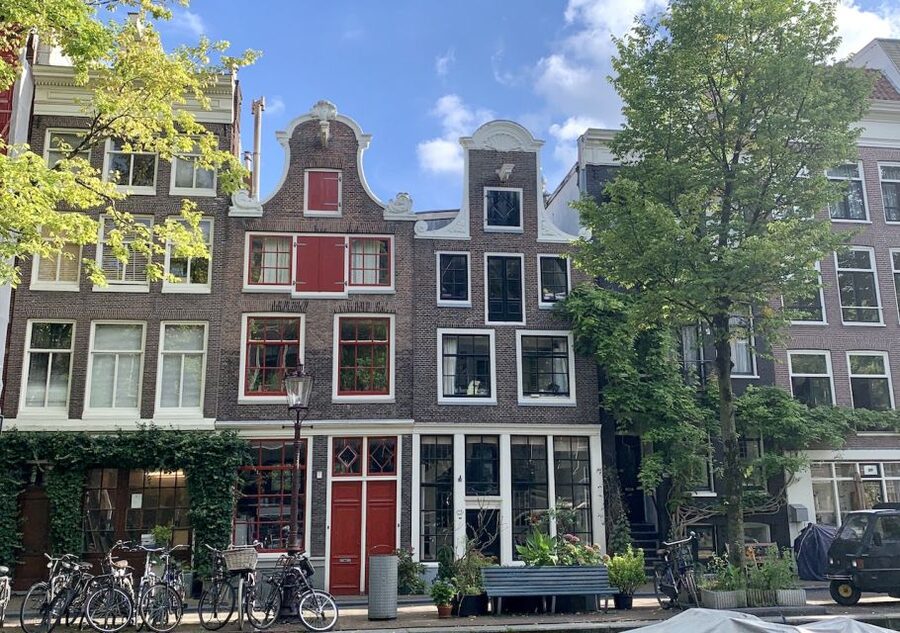
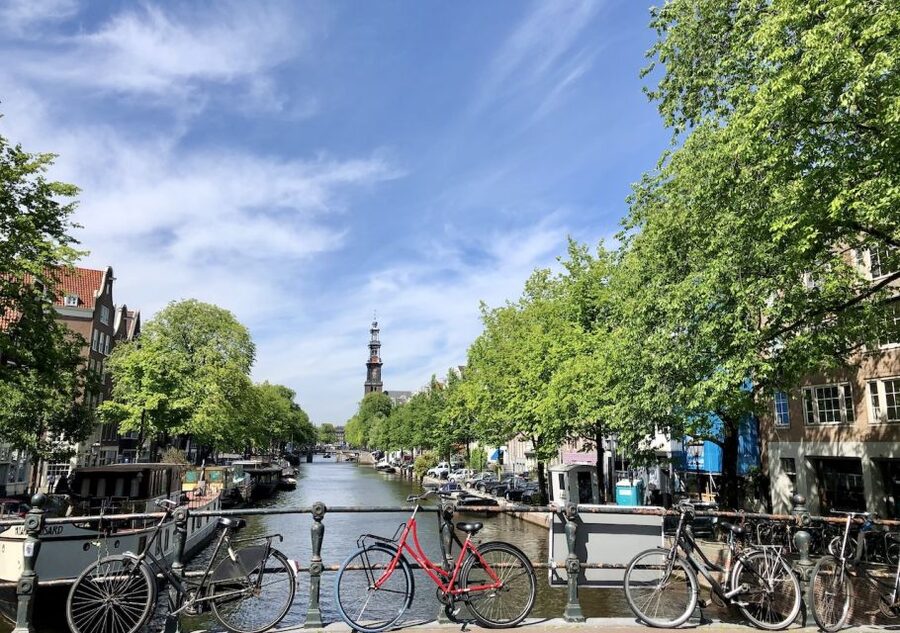
The Westerkerk stop lasts about 10 minutes. The church is one of the district’s best-known landmarks, and its location beside the canals makes it a natural point for discussing Amsterdam’s urban design.
From there, the walk reaches the Grachtengordel, or canal belt. The guide explains the roughly 400-year-old canal system, which received UNESCO World Heritage status in 2010. This is one of the most useful parts of the tour because the canals are easy to admire without understanding why they were built in such a deliberate pattern.
You will spend around 10 minutes here, with time for photographs and orientation. The canal belt is not a single scenic viewpoint. It is a network of waterways, bridges, houses, and streets, so a guide helps connect the visual details with the city’s development.
Bring a phone or camera, but do not plan to rush. The Jordaan’s narrow lanes and bridges are made for pauses. The walk is short enough that you can stop often without losing the group, though you should still stay aware of the guide’s pace.
The Courtyards: The Tour’s Strongest Feature
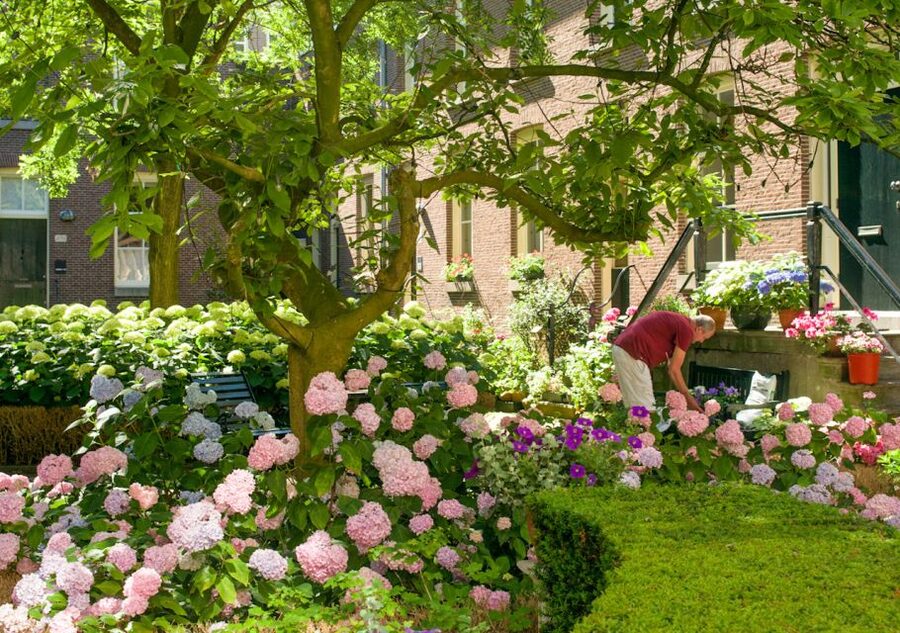
The hofjes are the part I would consider most distinctive. These enclosed courtyards are easy to miss when you walk the Jordaan alone. From the street, some entrances look ordinary. Inside, they can open into quiet green spaces surrounded by older homes.
The itinerary includes four courtyard stops:
- Sint Andrieshofje: About 10 minutes for photographs and explanation.
- Claes Claeszhofje: Another 10-minute stop focused on the courtyard and its place in the district.
- Karthuizerhofje: A further look at the Jordaan’s small enclosed spaces.
- Van Brienenhofje: The final courtyard stop before the route returns to the Anne Frank Monument.
The tour description also refers to one of these spaces as a secret garden. That wording captures the appeal, though you should remember that these are not broad public parks. They are intimate courtyards, and access may depend on the conditions at the time of the visit.
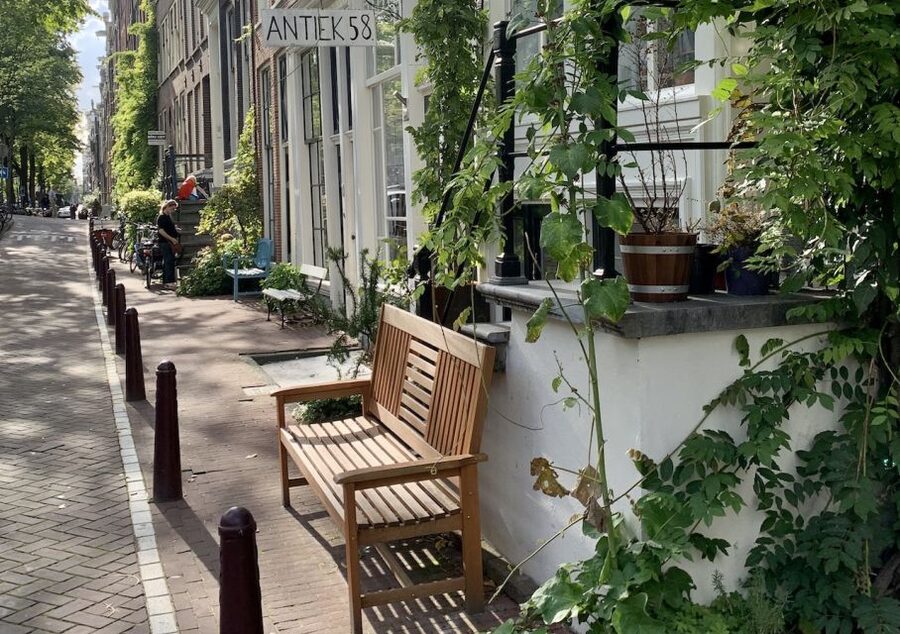
I like this section because it gives the walk a purpose beyond well-known landmarks. Anyone can photograph a canal. Fewer people notice the quiet spaces behind the street façades. You get a better sense of how residents once shared sheltered areas away from the traffic of the main lanes.
The courtyards also require respectful behavior. Keep voices low, follow the guide’s instructions, and avoid treating residential spaces like a stage set. Their value comes partly from their calm.
Same city, a different sort of day:
- Amsterdam: Van Gogh Museum Ticket
★ 4.7 · 52,054 reviews - Amsterdam Classic Saloon Boat Cruise with Drinks and Cheese
★ 5.0 · 31,825 reviews - Amsterdam Luxury Canal Cruise + Unlimited Drinks & Bites option
★ 5.0 · 30,518 reviews - Amsterdam: Heineken Experience Ticket
★ 4.6 · 30,055 reviews
Tulip Mania In A Quiet Green Space
The tulip mania discussion takes place in one of the hidden courtyards. The subject fits the setting well. Amsterdam’s tulip story is often reduced to a quick tale about expensive flowers, but the guide can use the garden to explain why tulips became such a famous part of 17th-century Dutch culture.
You should expect a short, focused introduction rather than a full economic lecture. The guide has room to answer questions, so this is a good moment to ask about the popular stories surrounding tulip prices and speculation.
This stop adds variety to the route. The canal sections show the city’s public face, while the garden offers a quieter setting for a topic linked with Dutch history. If you enjoy learning through specific places rather than listening to a list of dates, this part should work well.
Noorderkerk And The Northern Jordaan
The walk continues to Noorderkerk, with about 10 minutes for a guided stop and photographs. The church helps mark the northern side of the route and gives you another view of the neighborhood beyond the Anne Frank area.
This is useful for understanding the Jordaan as a district rather than as a small cluster around one famous house. The route moves through streets that connect churches, canals, courtyards, and former working-class areas. You see how close these elements are to one another, yet how different each setting can feel.
There is a practical point here: the tour covers several stops in a short period. You will hear a focused explanation at each location, not an extended talk. That keeps the walk moving, but anyone who wants long architectural discussions may find the pace brisk.
Het Papeneiland And The Return Route
Het Papeneiland receives about five minutes, making it one of the shorter stops. It is included as a photo and guide stop before the walk continues to Van Brienenhofje and eventually returns to the Anne Frank Monument.
The shorter timing suggests that this point works mainly as a quick landmark and part of the route rather than as the tour’s central subject. That is helpful if you prefer variety, since the walk does not linger too long at any one location.
By the final courtyard and return to the starting point, you have covered the district’s main themes: canals, churches, Anne Frank, courtyards, tulip mania, and social change. You also have a fixed place to continue on your own or ask the guide for suggestions.
German Guidance And The Human Scale
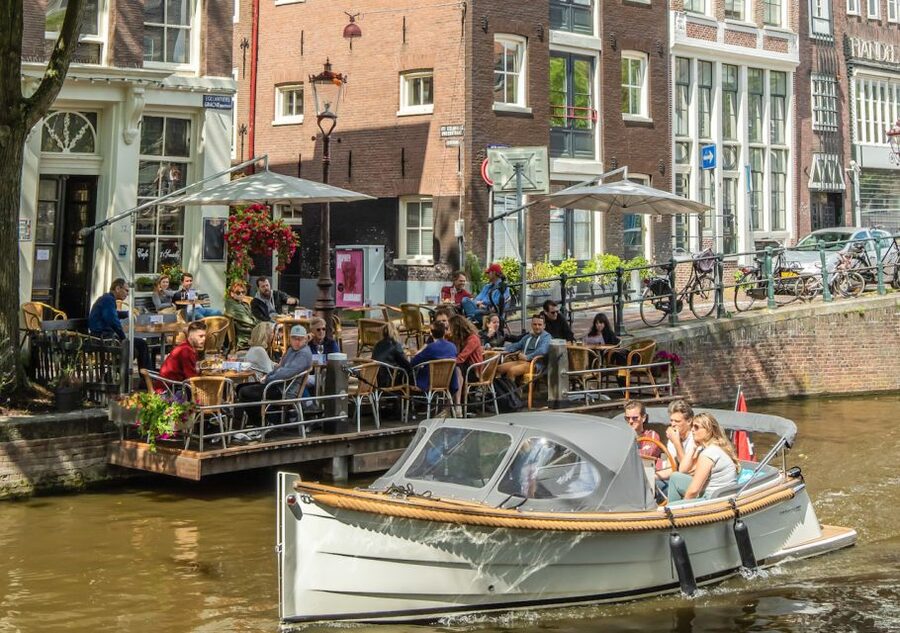
The tour is conducted in German by a native German-speaking guide. That is the main reason to choose this experience over an English-language walk. Complex historical details are easier to follow in your strongest language, and you can ask questions without having to search for words.
The guide names connected with this experience include Lili and Justin. Lili led a group of eight and was noted for answering many questions in a friendly, capable way. Justin was also praised for giving informative, individual answers to a group that asked plenty of questions.
That detail tells you something about the tour’s style. It is not designed only for people who want to walk silently from one photo stop to the next. Questions are welcome, and the guide can adjust some of the conversation to the group.
The group size can vary, but the tour offers a small-group format and a private option. A small group usually gives you some social energy without the feel of a large crowd. A private group makes more sense if you want greater control over questions, timing, or the people joining you.
Price And What You Get For $27
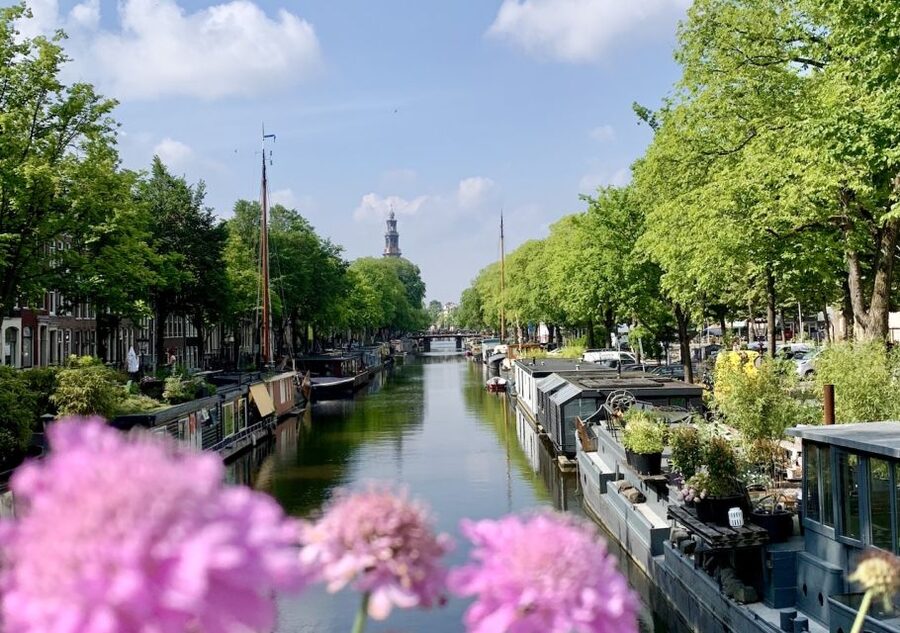
At $27 per person, this is a reasonable price for a 90-minute guided walk, especially because the €1.50 city tax is included. The real value is not in the number of landmarks. It is in the access to courtyards and the explanations that connect the stops.
You are paying for a native German guide, a planned route, local context, and the chance to ask questions. You are not paying for admission to the Anne Frank House or another major indoor attraction. Keep that distinction in mind when comparing the tour with museum tickets or longer city walks.
The price makes the most sense for someone who wants an introduction rather than an all-day sightseeing program. Afterward, you can revisit the streets and courtyards that interested you, or continue toward other parts of Amsterdam without having spent a large part of your day.
A private group is available, but the supplied price is stated per person and does not explain how private pricing changes. Check the amount shown for your chosen option before booking.
Who Will Get The Most From This Walk
I would choose this tour if you want:
- A German-language introduction to Amsterdam
- A short walk with several distinct stops
- Historical context without a full-day commitment
- Access to courtyards that are easy to overlook
- A guide who can answer personal questions
- An orientation to the Jordaan before exploring alone
It suits first-time visitors particularly well because the route combines famous sights with less obvious corners. It also works for returning visitors who have already seen the major museums and want to understand the neighborhood itself.
Families and older visitors may appreciate the 90-minute length, though the tour is still a walking experience through streets and courtyards. The activity is listed as wheelchair accessible, but the provided information does not give further details about surfaces, ramps, or courtyard access. If those points matter for your visit, ask before booking.
You may want something else if you prefer a long, specialist history tour, a museum visit, or a route conducted in English. You should also avoid treating this as a replacement for the Anne Frank House. It passes the hiding place and gives context, but it does not include entry.
Practical Details Before You Go
Meet in front of the Anne Frank statue on the southern side of Westerkerk. The guide wears a red name tag around her neck, which should make the meeting point easier to identify.
The activity lasts 1.5 hours, and starting times depend on availability. Wear comfortable shoes and leave room for pauses at the canals and courtyards. The walk is not long, but the value comes from seeing details at street level, so arriving ready to walk at an easy pace will make it more enjoyable.
You can cancel up to 24 hours in advance for a full refund. A reserve-now-and-pay-later option is also available, which helps if your Amsterdam schedule is still changing.
Should You Book This Jordaan Tour?
Book it if you want a focused German-language walk that combines Amsterdam’s famous canal scenery with courtyards, neighborhood history, and Anne Frank context. The strongest reason to choose it is the access to several hofjes, supported by guides such as Lili and Justin who make time for questions.
Skip it if you are looking for a full tour of the Anne Frank House, a long architectural seminar, or a full-day itinerary. For $27 and 90 minutes, this is a compact introduction to the Jordaan, not a complete study of Amsterdam. Used that way, it offers good value and a pleasant way to see the district with more understanding than you would gain from wandering without a guide.
FAQ
How long is the Jordaan district tour?
The walking tour lasts 1.5 hours, or 90 minutes.
What language is the tour conducted in?
The live tour guide speaks German. The experience is led by a native German guide.
Where does the tour meet?
Meet in front of the Anne Frank statue on the southern side of Westerkerk. The guide wears a red name tag around her neck.
Does the tour include the Anne Frank House?
No. The tour passes Anne Frank’s famous hiding place and provides a brief introduction to her story, but entry to the Anne Frank House is not included.
Which courtyards are visited?
The route includes Sint Andrieshofje, Claes Claeszhofje, Karthuizerhofje, and Van Brienenhofje. The tour also describes one courtyard as a secret garden.
Does the tour discuss tulip mania?
Yes. The guide explains 17th-century tulip mania during the courtyard section of the walk.
Is the tour wheelchair accessible?
The activity is listed as wheelchair accessible. The available information does not provide further details about specific courtyard surfaces or access conditions.
Can I book a private tour?
Yes. A private group option is available in addition to the small-group format.
Can I cancel the booking?
Yes. You can cancel up to 24 hours before the tour for a full refund. A reserve-now-and-pay-later option is also available.
Just added in Amsterdam
- Guided Day Trip – Volendam, Zaanse Schans, Marken & Edam★ 4.0 · 232 reviews
- Private Tour Zaanse Schans Windmills and Volendam in Jaguar★ 5.0 · 10 reviews
- Zaanse Schans and Giethoorn Unique Day Trip with Boat Cruise★ 4.5 · 17 reviews
- Half-Day Private Guided Sightseeing Tour of Zaanse Schans★ 5.0 · 14 reviews
- Zaanse Schans Private Tour Windmills★ 5.0 · 18 reviews
- Private bike tour: Hidden gems around Amsterdam and surroundings★ 5.0 · 4 reviews
- Bike tour in Amsterdam with an Italian guide★ 5.0 · 15 reviews
- Amsterdam Sightseeing Tour + Hidden Gems + Tastings + PDF guide★ 5.0 · 35 reviews
Tours in Amsterdam, compared.

Amsterdam Classic Saloon Boat Cruise with Drinks and Cheese
Read our review →
Amsterdam Luxury Canal Cruise + Unlimited Drinks & Bites option
Read our review →

Classic Boat Cruise with Optional Cheese & Wine
Read our review →
Evening Cruise with Optional Wine and Snacks
Read our review →