
Reviewed · WALKING TOURS
Amsterdam: Queer City Walking Tour With Local Guide
Amsterdam’s queer story is woven into some of the city’s most familiar places. On this two-hour walk, Sanne connects the Homomonument, the Red Light District, old cafés, shops, and street corners with stories of love, protest, gender, AIDS, and everyday life.
I like the personal focus. Sanne talks about falling in love and being gay and single in Amsterdam, so the walk is not just a string of dates and names. I also like the route’s mix of major sights and lesser-known queer stories, including the first condom shop in the world and a pioneering passport change.
The main thing to consider is the pace. You cover many stops in two hours, with short visits at most places. This suits you if you want a lively introduction and a local point of view, but not if you want long museum-style explanations at every stop.
Key points at a glance
- Sanne’s personal stories: Hear about queer life in Amsterdam from a guide who brings her own experiences into the walk.
- The Homomonument: Spend about 20 minutes at Amsterdam’s memorial to LGBTQI+ people and hear the debated story behind its creation.
- Old queer Amsterdam: Walk through the oldest part of the city, including the Red Light District and Zeedijk Street.
- History beyond the usual tour: Learn about Pride, protest, AIDS-era health concerns, gender recognition, and queer nightlife.
- A memorable finish: End outside Café ’t Mandje, described as Amsterdam’s oldest queer bar.
- Practical format: The tour lasts two hours, costs $59 per person, runs in English or Dutch, and takes place rain or shine.
Why this walk offers more than a standard city tour
Many Amsterdam walks explain canals, merchants, churches, and grand houses. This one asks a different question: how did queer people shape the city, and how did the city treat them in return?
That change in viewpoint matters. You still see familiar Amsterdam, but the stories shift your attention toward public affection, nightlife, protest, gender identity, health, and the search for safe places to meet. A palace, a canal, or an old street can take on a different meaning when you hear who gathered there and what they risked.
Sanne’s approach is personal rather than purely academic. She shares parts of her queer life, including falling in love and being single in Amsterdam. I like this because it gives the history a human scale. You are not only learning what happened. You are also hearing how queer life can feel in the present.
The tour welcomes LGBTQI+ people and allies. You are encouraged to connect with the group and share your own stories, though you can also simply listen. That makes the experience suitable for solo visitors who want a social setting, couples, friends, and anyone looking for a broader view of Amsterdam.
More Walking Tours in Amsterdam
- Anne Frank’s Story – Guided Walking Tour through Amsterdam
★ 5.0 · 11,619 reviews - Amsterdam: Life of Anne Frank and World War II Walking Tour
★ 4.8 · 10,467 reviews - Absolutely Amsterdam – the Essential Introductory Walking Tour
★ 5.0 · 3,629 reviews
Starting at Dam Square and the National Monument
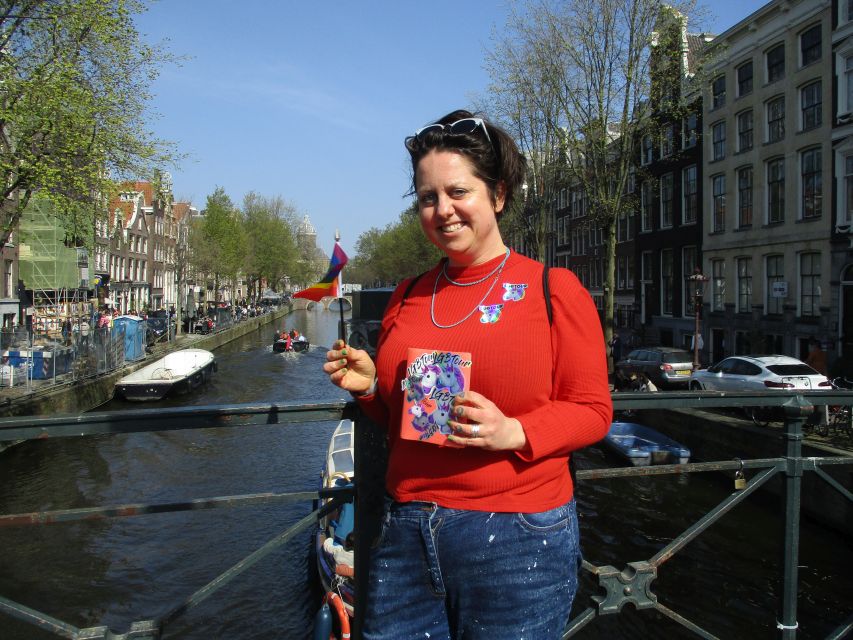
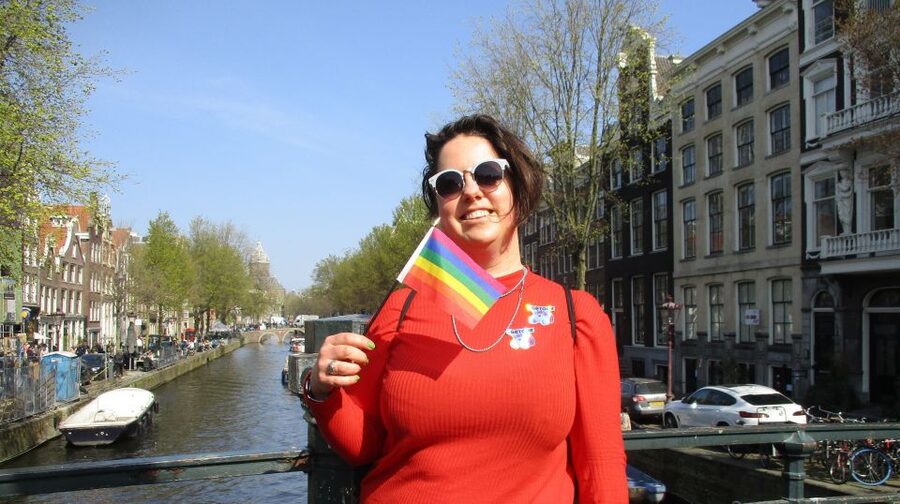
The walk begins at the National Monument on Dam Square. This is a practical meeting point in the middle of central Amsterdam, and Sanne is easy to recognize by her small rainbow flag.
Starting here gives the tour a public, central setting from the first minute. Dam Square is associated with national memory and official Amsterdam, while the walk soon turns toward stories that have often received less public attention. That contrast fits the purpose of the experience.
You should arrive ready to walk rather than expecting a seated talk. Wear comfortable shoes and clothes, and bring rain gear, a sun hat, and sunscreen. The tour runs rain or shine, so the weather can affect your comfort even though the route itself remains accessible for wheelchair users.
The Homomonument and the politics of remembrance
The Homomonument is the main stop on the route, with about 20 minutes set aside for a guided visit. This is the point where the tour’s themes of memory, identity, and public recognition come together.
Sanne explains the monument’s meaning and the controversial stories surrounding how it came to be. That detail is important. Memorials are rarely created without disagreement, and learning about the arguments behind this one gives you a better sense of how queer history is presented in Amsterdam today.
The stop also helps place Pride and protest in a wider setting. Amsterdam is famous for celebrating Pride on its canals, but public celebration did not appear from nowhere. It grew from demands for visibility, safety, and equal treatment.
You should expect a thoughtful stop rather than a quick photo opportunity. The Homomonument has emotional weight, and Sanne’s personal approach may make this part especially affecting. If you prefer a light sightseeing walk with no serious subjects, this is worth knowing in advance.
Belle, the Condomerie, and practical queer history
The next section brings the story down to street level. A 10-minute stop at Belle adds another piece to the area’s queer identity, followed by around 10 minutes at the Condomerie.
The Condomerie is presented as the first condom shop in the world, with its story linked to the AIDS crisis. This is one of the tour’s strongest details because it connects queer history to health, fear, responsibility, and practical action. It is not history kept in a book. It concerns the products people needed and the public conversations they had to create.
I like this part because it moves beyond famous names and celebrations. Pride is only one part of queer life. Health campaigns, safer sex, shops, bars, and everyday decisions also shaped the community.
The stop is short, so you will receive a focused explanation rather than a long look at every aspect of the AIDS crisis. Still, it adds useful context to a route that could otherwise focus too heavily on nightlife and monuments.
Other guided walks around Amsterdam:
- Amsterdam: Anne Frank Guided Small Group Walking Tour
★ 4.8 · 2,722 reviews - Amsterdam: Anne Frank Walking Tour – Guided in EN/DE/IT/ES
★ 4.9 · 2,676 reviews - Amsterdam: Guided Cultural Walking Tour
★ 4.9 · 2,384 reviews - Amsterdam: Guided Ganja Walking Tour of Coffee Shops
★ 4.2 · 2,092 reviews
The Red Light District through a queer lens
The walk then enters Amsterdam’s Red Light District for about 15 minutes. This is the oldest part of the city and an important setting for the tour’s discussion of queer life.
You are not simply being shown the district as a famous tourist sight. The route uses it to explore old meeting places, changing attitudes, sex, visibility, and the ways people found room for themselves in a crowded city. The queer perspective changes how you read the streets.
There is an advantage to visiting this area with a clear theme. You can look past the usual photographs and ask who was allowed to be visible, who had to stay private, and how nightlife could provide freedom while also exposing people to judgment.
The drawback is that the Red Light District can be a busy and distracting setting. With only 15 minutes here, the stop is designed as part of a larger story rather than a complete explanation of the neighborhood. Keep your attention on the guide, and remember that this is a walking tour, not a private extended visit to each business.
Eagle Amsterdam, Zeedijk Street, and the old nightlife map
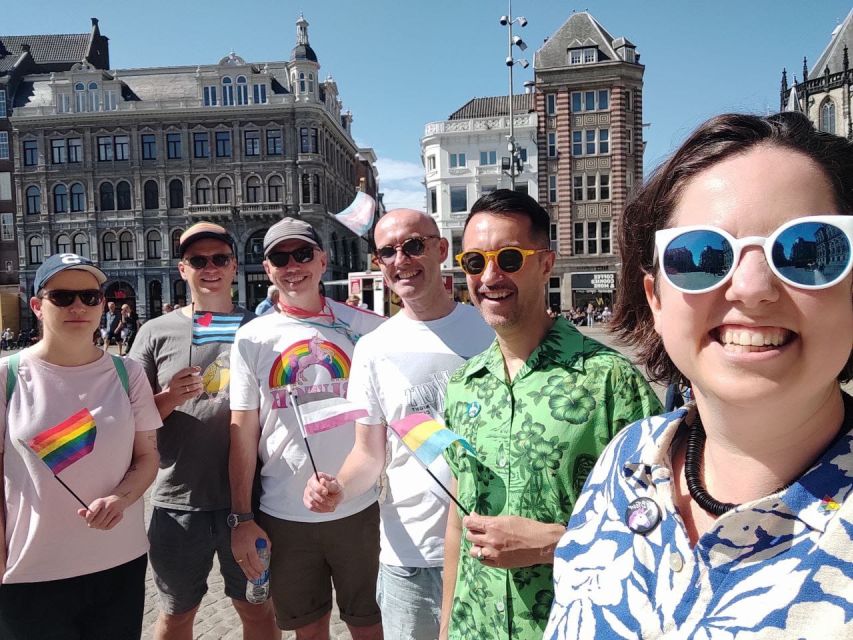
The route passes by Eagle Amsterdam for about five minutes, then spends roughly 15 minutes walking along Zeedijk Street. These shorter sections help connect individual venues into a wider picture of queer Amsterdam.
Passing a venue rather than stopping for a full guided visit keeps the walk moving. You get a sense of where queer nightlife fits into the city without spending the whole afternoon inside bars and clubs. For some people, that balance will be ideal. Others may want more time at each venue.
Zeedijk provides a useful link between street life, the historic center, and the city’s queer past. Sanne’s job here is to point out connections that you might miss on your own. This is where the tour’s local perspective matters most: the value lies less in looking at a building and more in understanding why it belongs in the story.
The tour also passes Pride Clothing for about five minutes. That brief stop reinforces the link between queer identity, public expression, and the visual side of Pride. It is not a shopping session, so plan to browse on your own later if you want more time.
Kokopelli and Amsterdam’s changing queer identity
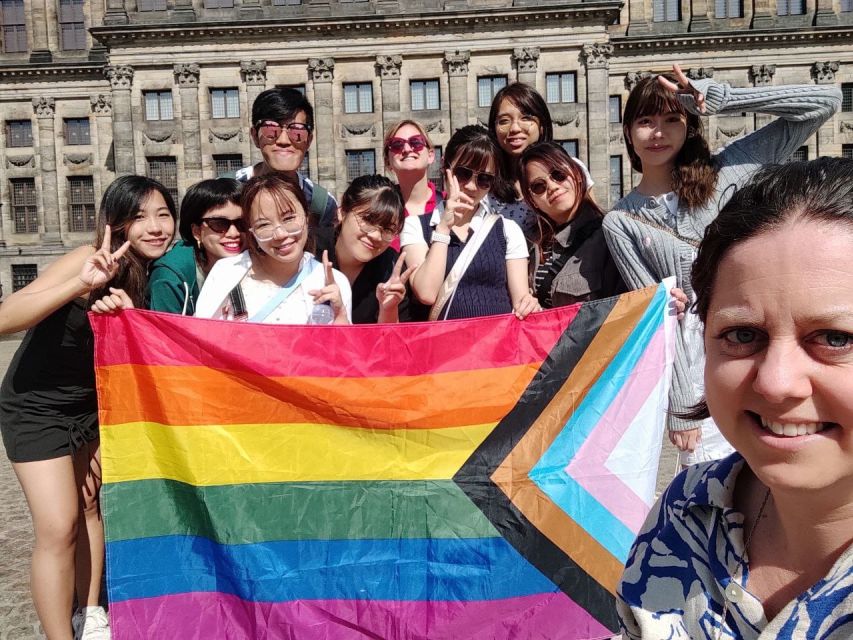
A 10-minute guided stop at Kokopelli adds another layer to the route. Along with the bars, shops, and streets, this stop helps show that queer Amsterdam is not one single scene.
The tour covers different parts of LGBTQI+ life rather than presenting a narrow story centered on one group. One of the advertised themes is the T in LGBTQI+, including the story of a woman who became the first person to change her gender on her passport. That story gives the walk a clear connection to legal recognition and personal identity.
This is valuable for anyone who knows Amsterdam mainly through its gay nightlife. The city’s queer past also includes trans history, public policy, protest, health, relationships, and the question of who gets recognized by official documents.
Again, timing matters. Ten minutes can introduce a story and give it a place in the route, but it cannot cover every detail. If you want a specialist history seminar, choose a longer format. If you want several connected examples in one afternoon, this structure works well.
The Dancing Houses and a final stop at Café ’t Mandje
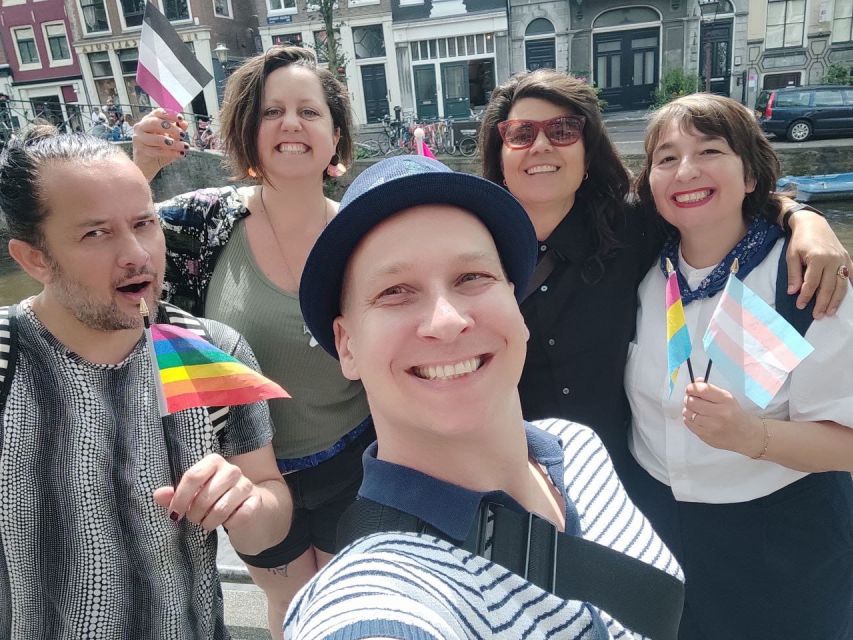
The Dancing Houses provide a 10-minute photo stop near the end of the walk. This is a chance to pause, take in the canal-side setting, and see one of Amsterdam’s most recognizable rows of leaning façades.
The photo stop also gives the tour a lighter moment after its more serious subjects. I appreciate that rhythm. A good city walk needs room to look around, not just listen.
The final stop is Café ’t Mandje, described as Amsterdam’s oldest queer bar. Finishing here is a smart choice because it brings the walk back to a real social place. After monuments, public streets, and political stories, you end with the idea of queer community as something lived in ordinary spaces.
The tour finishes outside the café, so you should not assume that a drink or an extended visit is included. If you want to continue your evening there, you can make your own plans after the walk.
What the $59 price gets you
At $59 per person, this is not the cheapest way to spend two hours in Amsterdam. The price makes more sense if you value a focused theme, a live guide, and personal storytelling rather than simple sightseeing.
You are paying for a route that links many small pieces: the Homomonument, Belle, the Condomerie, the Red Light District, Eagle Amsterdam, Zeedijk Street, Pride Clothing, Kokopelli, the Dancing Houses, and Café ’t Mandje. Several stops are brief, but together they create a clear portrait of queer Amsterdam.
The strongest value comes from Sanne’s approach. A guide can point out a street or a venue, but personal stories give those places meaning. The positive response to her warmth and care is easy to understand, especially for visitors who want an open and welcoming introduction rather than a dry lecture.
I would book it for the perspective, not for the number of attractions. If you want maximum sightseeing per dollar, a general city walk may cover more major buildings. If you want to understand Amsterdam through queer memory and lived experience, the price is easier to justify.
Who should book this Amsterdam queer tour
I would recommend it to LGBTQI+ visitors who want local context, allies who want to listen and learn, and solo visitors who enjoy meeting people around a shared interest. It also suits repeat visitors who have already seen the major sights and want to read the center of Amsterdam differently.
The tour is a good choice for people who appreciate honest discussion. It includes love, loneliness, Pride, protest, AIDS, gender recognition, and contested memorial history. This is not only a cheerful rainbow-themed photo walk.
Families and younger participants should consider the subject matter and the Red Light District setting before booking. The supplied information does not give an age recommendation, but the themes include sex, nightlife, and the AIDS crisis.
The route is wheelchair accessible, and the guide speaks English and Dutch. Since the tour takes place outdoors in all weather, good shoes and weather protection matter more than stylish clothing.
You can cancel up to 24 hours in advance for a full refund, and the reserve-now, pay-later option keeps your plans flexible. Starting times vary, so check availability before booking.
Should you book it?
Book this tour if you want a personal queer view of Amsterdam, not just a list of famous sights. Sanne’s stories, the Homomonument, the AIDS-era Condomerie story, and the finish at Café ’t Mandje give the walk a clear emotional and historical shape.
Skip it if you want long visits inside museums, detailed architectural commentary, or a tour focused mainly on photographs. The two-hour format moves quickly, and some venues receive only a few minutes.
For most people interested in Amsterdam’s LGBTQI+ past and present, this is a thoughtful use of an afternoon. Bring comfortable shoes, expect rain or shine, and arrive ready to listen as well as look.
FAQ
How long does the Queer City Walking Tour last?
The tour lasts two hours.
How much does the tour cost?
The listed price is $59 per person.
Where does the tour begin?
The meeting point is the National Monument at Dam Square.
How will I recognize the guide?
Sanne will be holding a small rainbow flag.
Who leads the tour?
The tour is led by Sanne from LGBTOUR_AMSTERDAM.
What languages are available?
The live tour guide is available in English and Dutch.
Where does the tour finish?
The tour finishes at Café ’t Mandje.
Is the tour wheelchair accessible?
Yes, the activity is listed as wheelchair accessible.
Does the tour operate in bad weather?
Yes. The tour takes place rain or shine, so bring suitable rain gear and wear comfortable clothes.
What is the cancellation policy?
You can cancel up to 24 hours in advance for a full refund. A reserve-now, pay-later option is also available.
Just added in Amsterdam
- Guided Day Trip – Volendam, Zaanse Schans, Marken & Edam★ 4.0 · 232 reviews
- Private Tour Zaanse Schans Windmills and Volendam in Jaguar★ 5.0 · 10 reviews
- Zaanse Schans and Giethoorn Unique Day Trip with Boat Cruise★ 4.5 · 17 reviews
- Half-Day Private Guided Sightseeing Tour of Zaanse Schans★ 5.0 · 14 reviews
- Zaanse Schans Private Tour Windmills★ 5.0 · 18 reviews
- Private bike tour: Hidden gems around Amsterdam and surroundings★ 5.0 · 4 reviews
- Bike tour in Amsterdam with an Italian guide★ 5.0 · 15 reviews
- Best of Netherlands: Zaanse Schans Mills, The Hague & Rotterdam★ 4.5 · 10 reviews
Walking Tours, compared.
Anne Frank’s Story – Guided Walking Tour through Amsterdam
Read our review →
Life of Anne Frank and World War II Walking Tour
Read our review →
Anne Frank Walking Tour – Guided in EN/DE/IT/ES
Read our review →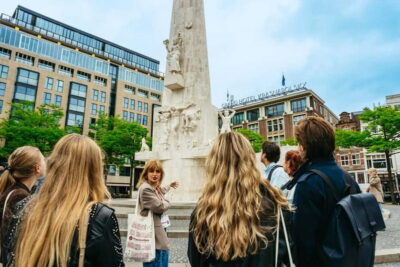

Anne Frank Walking Tour Amsterdam Including Jewish Cultural Quarter
Read our review →
Amsterdam Highlights Walking Tour: Small Group Experience
Read our review →Browse the lists this tour appears in