
Reviewed · WALKING TOURS
Amsterdam City Center Guided Walking Tour Semi-Private 12ppl Max
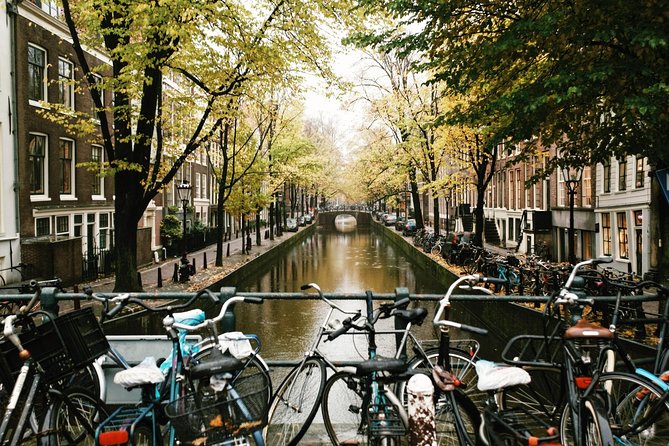
Amsterdam reveals itself best at street level, where a medieval gate, a crooked canal house, a former sea dike, and a quiet courtyard can sit within a few minutes of one another. This 2.5-hour walking tour links a remarkable number of central sights, from Saint Nicholas Basilica to the Jordaan.
I like the small-group format, which gives you room to ask questions and hear stories without shouting across a crowd. I also like the route’s range: religious buildings, Dutch East India Company history, canal homes, Chinatown, the Anne Frank House exterior, and a 1642 brown café all make an appearance.
The main drawback is pace. With about 20 stops packed into 150 minutes, most places are brief outdoor visits rather than full sightseeing stops. The tour description also refers to groups of eight or fewer, while the booking terms allow up to 12 people, so confirm the expected group size if that matters to you.
Key points to know before you book
- A broad first look at Amsterdam: The route connects the Old Centre, canal belt, Begijnhof, Dam Square, and the Jordaan.
- Small group, with a stated maximum of 12: The tour is designed for personal attention, though the description also mentions groups of eight or fewer.
- Mostly an exterior tour: Several sights are viewed from outside, and admission fees are not included.
- Local guides can make the difference: Josje B. and Hanneke are named in the supplied feedback, with praise for detailed history and engaging local insight.
- A good orientation walk: You receive suggestions for places to return to later, but you will need separate tickets for major interiors.
- Plan for cobblestones and weather: Wear comfortable shoes, carry water, and bring rain protection.
From Saint Nicholas Basilica to Amsterdam’s first sea defenses
The meeting point is Saint Nicholas Basilica, on Prins Hendrikkade near Amsterdam Central Station. That makes the start convenient if you have just arrived by train or are staying near the Old Centre.
Inside, the basilica offers a quick look at Amsterdam’s Catholic past. Built in the late 19th century, it appeared after centuries when Catholic worship was restricted. Its design blends several architectural styles, a useful reminder that Amsterdam’s religious story is not as simple as its famous Protestant churches suggest.
The first walk leads to the Schreierstoren, or Weeping Tower. This medieval structure once formed part of the city defenses. Its name is linked to women saying farewell to men leaving by ship, which gives the old stone tower a human story rather than just a military one.
Next comes Zeedijk, one of Amsterdam’s oldest streets. The name refers to a sea dike that helped protect the city from the waters of the IJ. At the Kolksluis, you can pause for photographs near one of the city’s picturesque lock bridges.
This opening section gives you the basic Amsterdam story: water shaped the city, trade brought people here, and defenses helped keep the growing settlement dry. It is useful context for everything that follows.
More Walking Tours in Amsterdam
- Anne Frank’s Story – Guided Walking Tour through Amsterdam
★ 5.0 · 11,619 reviews - Amsterdam: Life of Anne Frank and World War II Walking Tour
★ 4.8 · 10,467 reviews - Absolutely Amsterdam – the Essential Introductory Walking Tour
★ 5.0 · 3,629 reviews
Nieuwmarkt and The Waag explain the old trading city
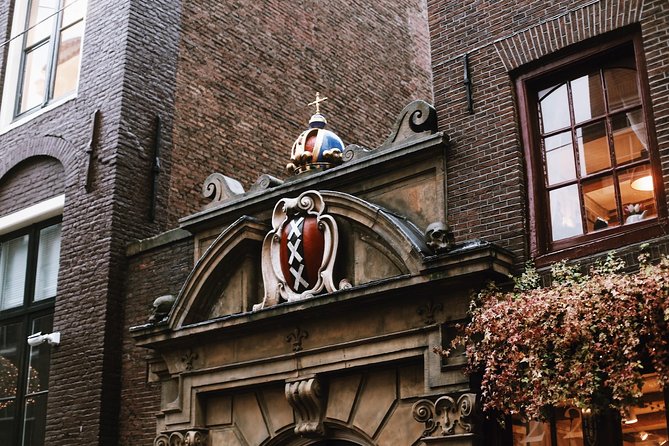
Nieuwmarkt is a short stop, but it packs in a lot of history. The square sits just inside the old city gate and became a place for trade and social life. Today, it remains one of the central city’s best-known public spaces.
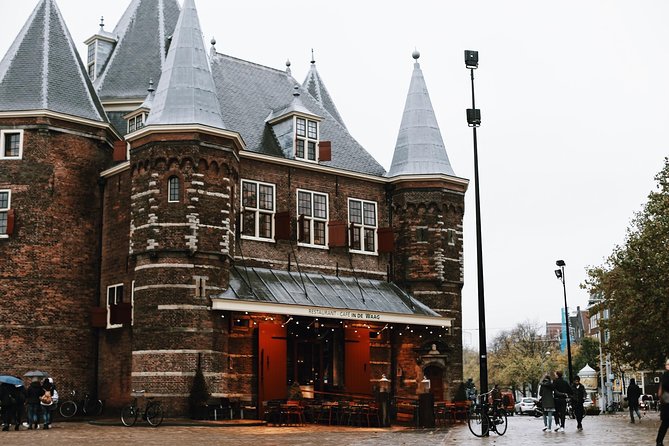
The Waag is the main reason to pause here. This 15th-century building began as a city gate and part of Amsterdam’s walls. Later, it served as a guildhall, museum, and fire station. Its changing uses show how old buildings in Amsterdam were repeatedly adapted as the city grew.
You will not have time to explore every corner of Nieuwmarkt or linger over a drink. Instead, use the stop to note the street plan and ask your guide how Amsterdam shifted from a small fishing settlement into a major commercial center.
Narrow homes, wealthy merchants, and the Dutch East India Company
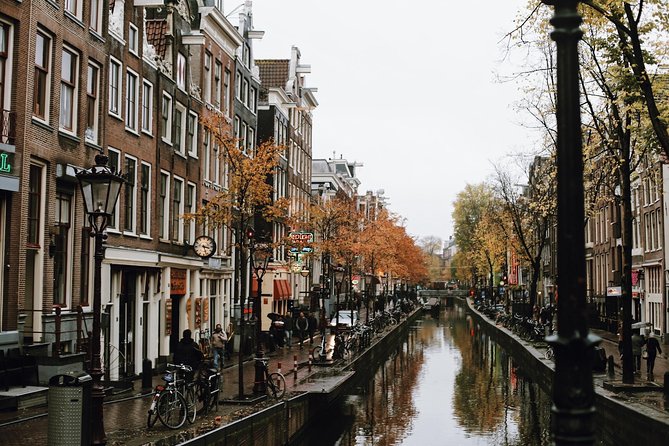
The next part of the walk focuses on Amsterdam’s unusual houses and its global trading past. The Trippenhuis is known as Amsterdam’s widest home, stretching about 22 meters across. Directly opposite is the Klein Trippenhuis, one of the narrowest houses in the city.
These buildings make more sense when you understand the old tax system, which encouraged narrow frontages. Land costs and taxes helped shape the tall, slim canal houses that now define central Amsterdam. The contrast between the very wide Trippenhuis and the tiny Klein Trippenhuis makes the point quickly.
The walk continues to the courtyard of the Oost-Indisch Huis, once the headquarters of the Dutch East India Company. This is an important stop because it connects Amsterdam’s elegant architecture with the trade network that helped make the city wealthy. The company is often described as the world’s first multinational corporation.
The courtyard visit is brief, and admission is not included. Treat it as a visual introduction rather than a full museum visit. If the subject interests you, ask your guide for suggestions on where to learn more during the rest of your stay.
Churches and Rembrandt’s former home
The Zuiderkerk was Amsterdam’s first purpose-built Protestant church. Designed by Hendrick de Keyser, it has an elegant tower that helps mark the old city. The church also reflects the changing religious order of Amsterdam after the Reformation.
You then pass Museum Het Rembrandthuis, where Rembrandt lived and worked from 1639 to 1656. The museum holds his etchings, paintings, and work by artists connected to him. On this walking tour, you see the building from outside, so plan another visit if you want the interior and collection.
The route moves on to the Stopera, the complex that houses city hall and the Dutch National Opera and Ballet. Its construction took at least 60 years to reach completion. The building offers a sharp change from the medieval streets and old canal homes earlier in the walk.
Together, these stops show three sides of Amsterdam: Protestant civic life, the world of Dutch art, and the modern city government. The stops are short, but the contrasts help keep the walk from becoming a string of similar canal views.
Other guided walks around Amsterdam:
- Amsterdam: Anne Frank Guided Small Group Walking Tour
★ 4.8 · 2,722 reviews - Amsterdam: Anne Frank Walking Tour – Guided in EN/DE/IT/ES
★ 4.9 · 2,676 reviews - Amsterdam: Guided Cultural Walking Tour
★ 4.9 · 2,384 reviews - Amsterdam: Guided Ganja Walking Tour of Coffee Shops
★ 4.2 · 2,092 reviews
A house at three canals and the quiet Begijnhof
Huis Aan De Drie Grachten is a rare 17th-century canal house at the meeting point of three canals. Its façades face in three directions, making it one of those details you could easily miss while walking on your own.
Begijnhof provides a calmer change of pace. This secluded courtyard once housed Beguines, unmarried women who lived together under vows of chastity. The collection of homes surrounds a garden, and two churches are located within the complex.
Begijnhof is valuable because it feels different from the main streets. It gives you a look at community life, religious practice, and domestic architecture in a compact setting. Keep your voice low and follow any posted rules, since this remains a quiet place rather than a normal public square.
The tour allows about five minutes here, so you should not expect a long visit. Still, this is one of the stops where your guide’s explanation can add real value, especially if you want to understand why Amsterdam has so many secluded courtyards.
Dam Square and the Herengracht’s Golden Bend
Dam Square brings you into one of the city’s most recognizable public spaces. The Royal Palace, New Church, and National Monument all face or border the square. It is also a regular setting for public events, so the atmosphere can change from one day to the next.
The tour then reaches the Herengracht and its Golden Bend. This section of canal is lined with especially large and ornate homes built by wealthy residents during the Dutch Golden Age. Their size and decoration give you a clear sense of how strongly trade wealth shaped Amsterdam’s architecture.
The canal belt is best appreciated slowly, with time to study façades, bridges, and reflections. This tour gives you an efficient first look, but you may want to return later for a quieter walk with your camera.
The Anne Frank House exterior and the Westerkerk tower
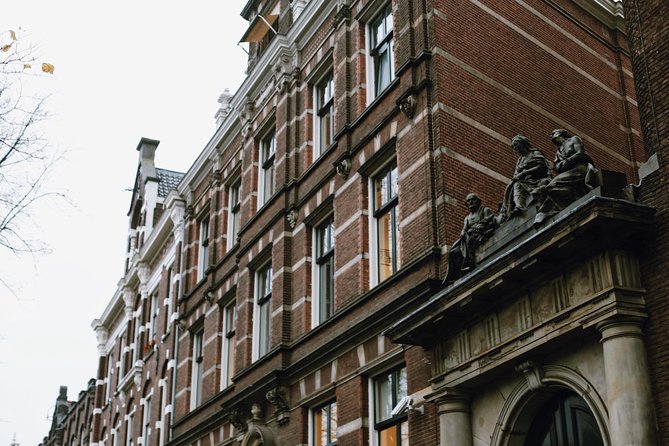
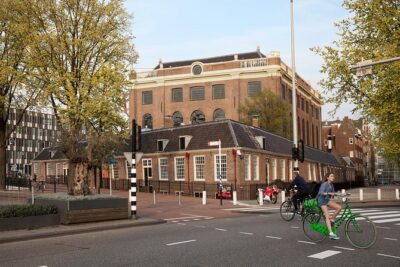
The route pauses outside the Anne Frank House. You will not go inside, and admission is not part of this experience. That distinction matters, since visiting the interior requires separate planning.
Next door is the Westerkerk, whose tower is the tallest church tower in Amsterdam. From outside, you can connect the building to the canal district and the wartime story associated with Anne Frank’s hiding place.
This stop can be emotionally weighty, even though the visit is brief. A guide can provide context, but the tour is not a substitute for time inside the Anne Frank House. If you want to visit the museum, arrange that separately and well ahead of your trip.
Gable stones, the Jordaan, and Noorderkerk
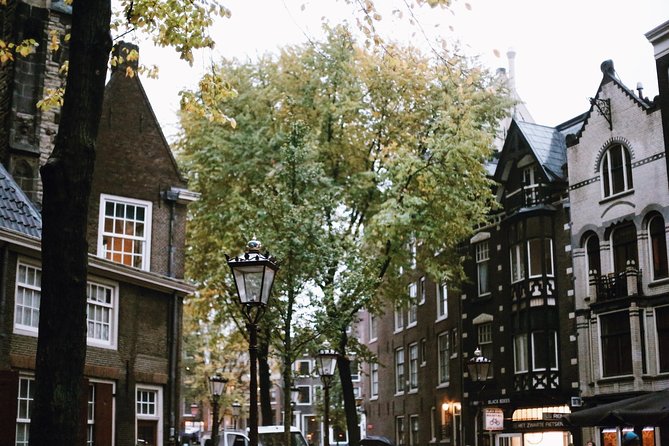
Amsterdam’s façades often carry small carved stones called gable stones. At De Drie Hendricken aan de Bloemgracht 87 to 91, look up for carved images linked to trade, work, and allegory. These details make canal walks more rewarding because they turn ordinary-looking buildings into clues about the people who lived there.
The route then moves through the Jordaan area and reaches Noorderkerk. Built in the 17th century for the district, the church has an unusual cross-shaped floor plan based on new Protestant ideas about worship.
One stop in this section is labeled Coöperatieve Vereniging Karthuizerhof in the supplied route details, while its description refers to Rembrandt Square and the Night Watch sculpture. Because those details do not fully match, I would confirm the exact route with the guide on the day. Either way, the broader point is clear: the walk continues through central neighborhoods tied to Amsterdam’s art, civic life, and old residential quarters.
Ending at Papeneiland and its famous apple pie
The final stop is Het Papeneiland, a brown café dating to 1642 at the corner of the Prinsengracht. It is known for apple pie and sits at one of Amsterdam’s prettiest canal junctions.
Ending here works well. You are left in the canal belt, near places where you can continue walking or stop for a drink. The café is not simply a photo point. It gives you a chance to pause after a long walk and decide which neighborhoods or museums deserve a closer look.
The tour begins near Saint Nicholas Basilica and ends at Papeneiland, so you should not expect a return to your hotel. Use public transport, a taxi, or Uber if you need to get back quickly. Large bags and suitcases are not allowed, so leave luggage at your accommodation or storage facility.
What the $59.28 price gets you
At $59.28 per person, the value rests mainly in the guide and the route, not in admissions. You are paying for 2.5 hours of organized walking, historical context, navigation through a complicated city center, and practical ideas for the rest of your visit.
That is a fair proposition if Amsterdam is new to you and you want a fast orientation. The route covers many places you might struggle to connect on your own, particularly the shift from the Old Centre to Begijnhof, the canal belt, and the Jordaan.
The price is less attractive if you want extended time inside museums or churches. Admission is not included at several stops, and most visits are exterior views lasting about five minutes. You may spend more later on separate tickets for the Anne Frank House, Rembrandthuis, or other attractions.
Group discounts may be available, and the tour is offered in English with a mobile ticket. A minimum of two people is required for the tour to operate. If that minimum is not met, you are offered another date or a full refund.
Who will enjoy this walk most
I would recommend this tour to first-time visitors who want to get their bearings quickly. It also suits people who enjoy architecture, city history, canals, and stories about how Amsterdam developed.
It is a good fit for solo visitors, couples, and families with older children who can manage a steady walk. Children must be accompanied by an adult.
You should have moderate physical fitness. The route includes cobblestone lanes, bridges, and a fair amount of walking. It is not recommended for people with walking disabilities or those using a wheelchair.
Weather is part of the deal because the tour runs rain or shine. Wear comfortable shoes, bring water, and carry an umbrella in wet weather. A hat is useful in summer.
The route can change during national celebrations. You will be given an alternative route that still covers the major sights, but refunds or discounts are not offered for that adjustment.
Should you book the Amsterdam City Center walk?
Book it if you want a well-organized first look at central Amsterdam and value a guide who can connect architecture, religion, trade, art, and daily life. The detailed approach associated with Josje B. and the engaging local perspective associated with Hanneke are exactly the kind of guiding this route needs.
Skip it if you prefer long museum visits, a slow photographic walk, or a route focused on only one neighborhood. Twenty stops in 2.5 hours means plenty of seeing, but not much time at each place.
For most first visits, this is a useful opening activity. Take notes on the places you want to revisit, then return on your own with more time. Cancel at least 24 hours before the start for a full refund. Changes or cancellations inside that window are not accepted.
FAQ
Where does the walking tour start?
The tour starts at Basilica of Saint Nicholas, Prins Hendrikkade 73, 1012 AE Amsterdam.
Where does the tour end?
The tour ends at Het Papeneiland, Prinsengracht 2, 1015 DV Amsterdam.
How long does the experience last?
The walking tour lasts approximately 2.5 hours.
What is the maximum group size?
The stated maximum is 12 people. The tour description also refers to a small group of eight people or fewer, so confirm the expected group size when booking if this is important to you.
Are attraction admission fees included?
No. The tour includes the guided walk, but admission fees for places such as the Schreierstoren, Oost-Indisch Huis, Rembrandthuis, Begijnhof, and other attractions are not included. Several sights are viewed from outside.
Can I cancel for a full refund?
Yes. You can cancel at least 24 hours before the experience start time for a full refund. Cancellations or changes made less than 24 hours before the start are not accepted, and the tour requires a minimum of two people to operate.
Just added in Amsterdam
- Guided Day Trip – Volendam, Zaanse Schans, Marken & Edam★ 4.0 · 232 reviews
- Private Tour Zaanse Schans Windmills and Volendam in Jaguar★ 5.0 · 10 reviews
- Zaanse Schans and Giethoorn Unique Day Trip with Boat Cruise★ 4.5 · 17 reviews
- Half-Day Private Guided Sightseeing Tour of Zaanse Schans★ 5.0 · 14 reviews
- Zaanse Schans Private Tour Windmills★ 5.0 · 18 reviews
- Private bike tour: Hidden gems around Amsterdam and surroundings★ 5.0 · 4 reviews
- Bike tour in Amsterdam with an Italian guide★ 5.0 · 15 reviews
- Amsterdam Sightseeing Tour + Hidden Gems + Tastings + PDF guide★ 5.0 · 35 reviews
Walking Tours, compared.

Anne Frank’s Story – Guided Walking Tour through Amsterdam
Read our review →
Life of Anne Frank and World War II Walking Tour
Read our review →

Anne Frank Walking Tour – Guided in EN/DE/IT/ES
Read our review →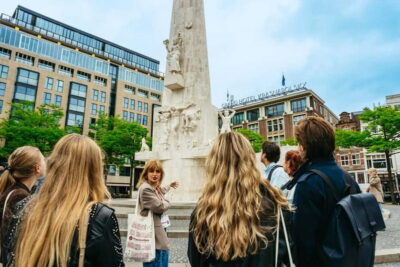

Anne Frank Walking Tour Amsterdam Including Jewish Cultural Quarter
Read our review →
Amsterdam Highlights Walking Tour: Small Group Experience
Read our review →Browse the lists this tour appears in