
Reviewed · CANAL CRUISES
Amsterdam: Guided Open Boat Canal Cruise Unlimited Drinks Option
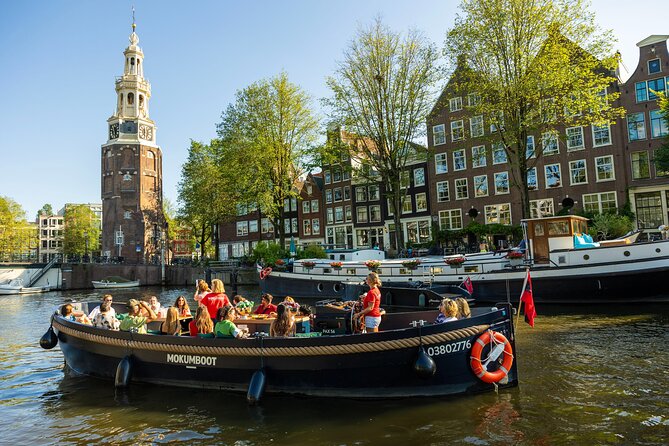
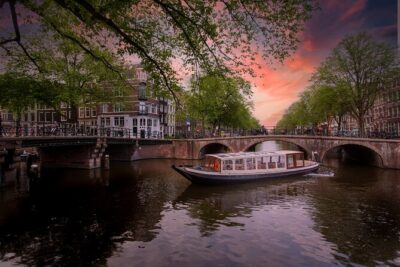
Amsterdam’s canals are best seen from a low, open boat, where old merchant houses, leaning façades, bridges, and houseboats pass close enough to study. This one-hour cruise covers a remarkable amount of central Amsterdam, from the Maritime Museum and NEMO to the Jordaan and Anne Frank House.
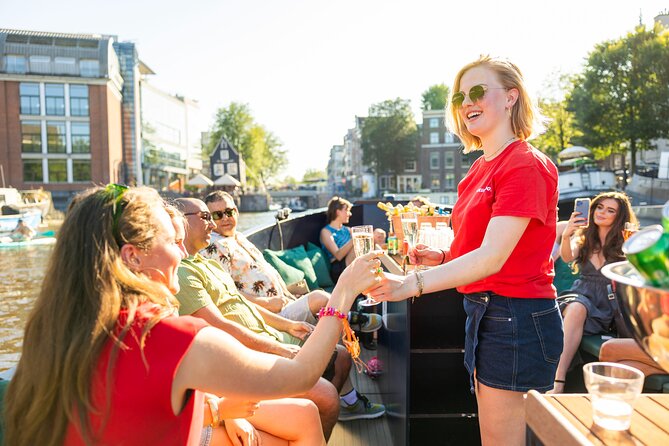
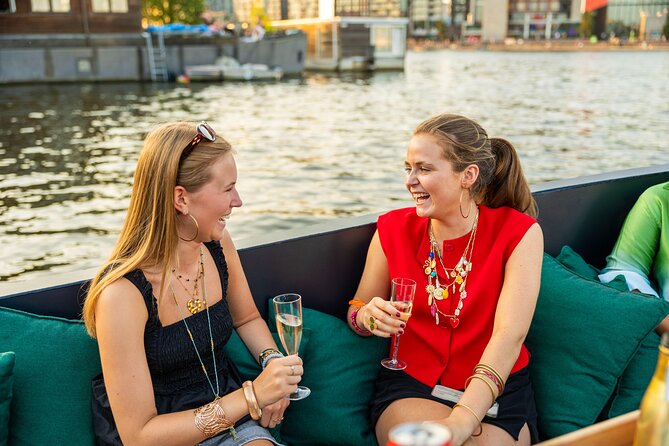
I like the quiet electric boat, which lets you hear the guide and city sounds without a noisy engine. I also like the choice of buying drinks on board, or selecting the unlimited drinks option if you want a relaxed, social ride. Guides such as Captain Jang, Emil, Mike, Nils, Tom, and Zoey have been praised for humor, clear explanations, and helpful local tips.
The main caution is consistency. Some departures have excellent guiding, while others have offered little commentary or suffered from poor meeting-point communication. Finding the right boat among several canal operators can also take patience, so arrive early and confirm the Mokumboot boat before departure.
Key things to know before boarding
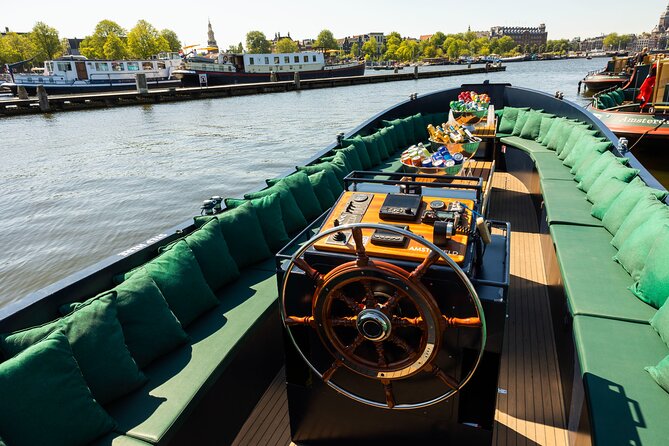
- An open electric boat keeps the views clear: You can look up at canal houses and bridges without large windows or a high roof blocking the scene.
- The one-hour route is packed: You pass major sights including the Maritime Museum, Magere Brug, Museumplein, Westerkerk, and the Anne Frank House area.
- The guide makes or breaks the ride: Strong guides add local stories and humor, while weaker departures may provide only brief comments.
- The drinks option can be good value: It may make sense if you plan to have several drinks, especially with Amsterdam prices.
- Weather matters: Blankets, ponchos, and umbrellas are available, but an open boat is still more exposed than a covered canal vessel.
- The meeting point needs care: Start at Stationsplein 28, near Amsterdam Central Station, and allow extra time to identify the correct boat.
Why an open electric boat works so well in Amsterdam
Canal cruises are not just a pleasant way to sit down after a day of walking. They give you a different view of Amsterdam’s structure. From water level, the canal ring feels less like a collection of separate sights and more like one connected city built around trade, defense, water control, and grand merchant homes.
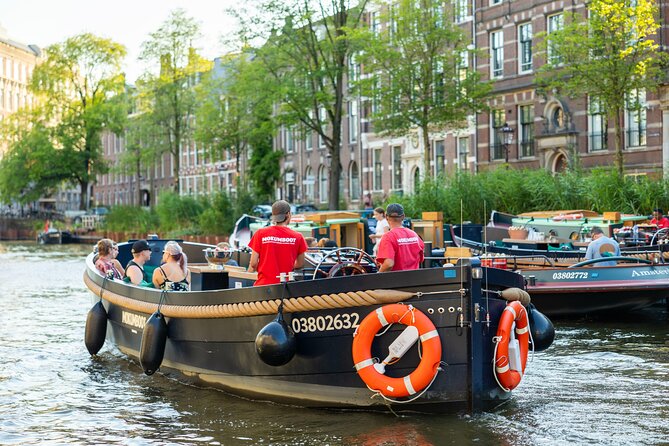
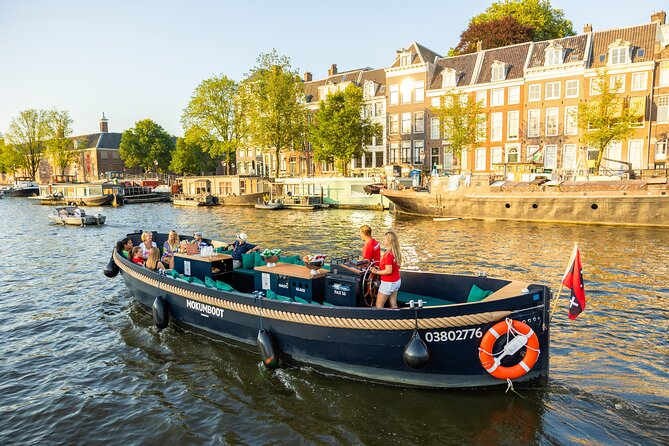
This boat is fully electric, so the ride is quiet. That matters when you are trying to hear a guide explain why one canal is wider than another or point out a detail high on a gabled house. It also makes the boat feel calmer than a larger motor vessel.
The open design is the other major advantage. You get an unobstructed view in every direction, which is useful for photography and for spotting small details along the banks. You can look behind you as the boat moves away from a bridge, or turn toward a narrow house that would be easy to miss from a covered cabin.
The tradeoff is exposure. Amsterdam weather can change quickly, and rain or wind will affect an open boat more than a fully enclosed cruise. Blankets and ponchos are provided, and umbrellas may be available, but you should still dress for the forecast. On a sunny day, umbrellas can also provide welcome shade.
Other party boats leaving Amsterdam:
- Amsterdam Luxury Canal Cruise + Unlimited Drinks & Bites option
★ 5.0 · 30,518 reviews - Amsterdam: Open Boat Cruise option Unlimited Drinks & Bite
★ 4.6 · 15,046 reviews - Amsterdam: Covered Canal Booze Cruise with Unlimited Drinks
★ 4.7 · 5,435 reviews
From Stationsplein to the old harbor
The boat departs from Stationsplein 28, close to Amsterdam Central Station. This is a practical starting point if you have just arrived by train, but the area has many boats and tour operators. Do not simply wait at the first pier you see. Arrive early, look for the Mokumboot departure, and ask for help if the boat is not immediately clear.
The route begins near grand architectural works associated with Pierre Cuypers, the Dutch architect also responsible for the Rijksmuseum. Starting here gives you an early reminder that Amsterdam’s transport hub is also part of the city’s architectural story.
The boat then reaches the old harbor area and the Saint Nicholas Church, dedicated to the patron saint of sailors. This part of Amsterdam connects the modern station district with the city’s older maritime life. You may also pass the remaining tower of Amsterdam’s medieval defenses, built in 1487. It is a useful reminder that the canal city was once protected by walls, towers, and controlled waterways.
The route continues toward NEMO, the bright green science museum. Its exhibits focus on hands-on experiments in physics, chemistry, biology, and human behavior. You will not stop for a museum visit, but the guide can point out how the building fits into the former harbor zone.
Nearby is the National Maritime Museum, housed in a former navy storage facility. The museum is one of the city’s key places for understanding Dutch seafaring, shipbuilding, trade, and exploration. Again, the value of seeing it from the canal is context rather than entry. You can note it for a later visit while learning how central the water was to Amsterdam’s growth.
Eastern defenses, diamonds, and Jewish Amsterdam
The boat passes a former watchtower built in 1516 as part of the eastern defenses. It is also known as Silly Jake because its clock was said to ring at strange times. Stories like this are exactly where a good local guide adds value. The building itself is interesting, but the nickname gives you something memorable to carry away.
You may also see one of Amsterdam’s old pubs, a family-run diamond factory, and locations connected with the city’s Jewish quarter. The diamond factory represents a long trade tradition in Amsterdam, while the Jewish Museum explains how Jewish communities became part of the city’s social and cultural life.
The Portuguese Synagogue is especially important in this part of the route. It is possible to visit it separately, but from the boat you get a quick orientation to the neighborhood and its religious landmarks. The stop connected with Rembrandt’s former home offers another change of focus. Rembrandt lived and worked there, and the museum contains a large group of his etchings.
This section can feel full of names and landmarks in only a short time. Listen for the larger story rather than trying to memorize every building. Amsterdam’s artistic life, Jewish heritage, maritime trade, and wealthy merchant culture all meet within a compact area.
The Amstel, theater district, and Magere Brug
The route then moves along the Amstel, where several landmarks show how Amsterdam has used its waterways for both work and entertainment. The Dutch National Opera and Ballet is one of the major performance venues along the river. The Royal Theater Carré began as a circus built for horses and later became a stage for Dutch and international performers.
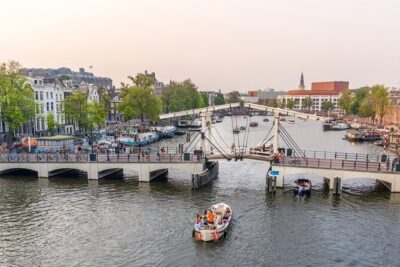
The Magere Brug is one of Amsterdam’s most recognizable drawbridges. It has attracted plenty of local stories, and the guide may sort fact from folklore. This is a good place to keep your camera ready, although the boat’s position and passing traffic can affect your view.
The Amstel also gives you a look at the Hermitage Amsterdam, now called the H’ART Museum. Its changing exhibitions draw from different museum collections. The building sits directly on the river, so it is easy to spot from the water.
The route includes the Waterlooplein area, known for its flea market, and a bridge that was presented to Amsterdam as a gift from France. The bridge was originally built too low for many ships to pass. Those details help explain why bridges and locks are not just decoration here. They are working parts of a city shaped by water.
Other boats out on the water around Amsterdam:
- Amsterdam: 75 Minute City Canal Cruise with Audio Guide
★ 4.4 · 17,501 reviews - Amsterdam: City Centre Canal Cruise
★ 4.2 · 12,827 reviews - Amsterdam: City Canal Cruise and Heineken Experience Ticket
★ 4.5 · 5,367 reviews - Amsterdam Canal Cruise in Open Boat with Unlimited Drinks Option
★ 5.0 · 4,976 reviews
Canal houses, museums, and the seven bridges view
The cruise then reaches the formal canal belt, including the Herengracht and Keizersgracht. The Herengracht began as part of the city’s defenses before becoming a prime address for wealthy merchants. Its grand homes reflect the profits of shipping and trade, with tall narrow façades designed around Amsterdam’s limited plots.
The Willet-Holthuysen House gives you a glimpse of life inside one of those canal homes. Its period rooms show how wealthy residents lived in the eighteenth and nineteenth centuries. You will see the exterior from the boat, but the museum is worth noting if you want to go beyond the postcard view.
The route also passes the photography museum Foam, the mayor’s official residence, and the lively Rembrandtplein area, which is lined with bars and restaurants. These sights show the city’s modern social life alongside its older architecture.
One of the most pleasing moments comes at Reguliersgracht. From the Herengracht, you can sometimes see seven bridges lined up in succession. The effect is particularly attractive after dark, when the bridges are lit. Daytime riders still get the view, but an evening departure can give this section extra atmosphere.
You may also pass Felix Meritis on the Keizersgracht, a former society building now used for lectures, debates, performances, films, exhibitions, and workshops. Its original interests included art, science, and business, with technology later added to its public program.
The Rijksmuseum, Museumplein, and Amsterdam’s cultural core
Pierre Cuypers appears again through the Rijksmuseum, one of the most important buildings on the route. Its collection includes major Dutch art and historical objects, with the Gallery of Honor displaying famous seventeenth-century works.
Seeing the Rijksmuseum from the canal is not a substitute for going inside. It does, however, help you understand its position within Amsterdam’s cultural center. The cruise also points toward Museumplein, where the Rijksmuseum, Van Gogh Museum, Stedelijk Museum, and Royal Concertgebouw sit close together.
The Concertgebouw opened in 1888 and is home to the Royal Concertgebouw Orchestra. It has hosted major classical ensembles as well as performers from popular music. You will likely hear it described as one of Europe’s important concert halls, but the useful takeaway is simple: this is Amsterdam’s main arts district, not just a museum stop.
The route also includes the city’s large pop music venue and Leidseplein, another square lined with bars, restaurants, theaters, and the famous Bulldog café. These places are easy to combine with an evening out, so note them if you want to plan dinner or a performance after the cruise.
Jordaan views, Anne Frank House, and the western canals
The boat heads toward the Jordaan and the western canal belt, where the mood becomes more residential. The Negen Straatjes, or Nine Streets, are a group of small streets with independent shops and cafés. From the canal, you see the setting rather than the stores themselves, but the area makes a good walking extension afterward.
The Keizersgracht is the widest of Amsterdam’s three main central canals, measuring about 28.31 meters. Its first section was dug in 1615, after the Prinsengracht had begun. Canal names and dates can blur together during a fast tour, so this is another moment when a clear guide is valuable.
The Houseboat Museum offers a look at life on the water. It occupies the Hendrika Maria, a former cargo ship built in 1914. The old cargo hold was converted into a living space, showing how a working vessel became a home with more comfort than you might expect.
Near the Westerkerk is the Homomonument, made of three pink granite triangles. It remembers gay men and women persecuted because of their sexual orientation and supports the continuing fight against discrimination. This is an important landmark, and a respectful guide should explain its meaning rather than treating it as just another photo stop.
The Westerkerk is one of Amsterdam’s best-known churches. Its Renaissance design was begun by Hendrick de Keyser and completed under the direction of his son. The tower is closely tied to the Jordaan and to a famous local song, which gives the church both architectural and neighborhood importance.
The Anne Frank House is nearby on the Prinsengracht. The canal cruise does not include museum admission, and you should not expect to tour the hiding place from the boat. Still, passing the building gives you useful orientation if you have a timed visit planned or want to understand where the house sits within the canal belt.
Brouwersgracht and the return to Central Station
Brouwersgracht marks the northern edge of the main canal belt. Its name comes from the many breweries that operated in the area during the sixteenth and seventeenth centuries. Former warehouses along the water have since been converted into homes, creating the tall, narrow façades that make this canal especially photogenic.
The Nieuwe Haarlemmersluis was completed in 1602 as a lock in the sea dike around Amsterdam. Its job was to help keep seawater from entering the city canals at high tide. Seeing it from the boat brings the city’s water-management story full circle, from defensive walls and harbor trade to locks and regulated tides.
The cruise ends back at the meeting point. Since the ride lasts about an hour, it works well as an introduction early in your stay, a rest after a long walking route, or a compact final look at the center before heading to the station.
Drinks, group size, and comfort on board
Drinks are available from the onboard bar, while snacks are not sold. The booking offers an unlimited drinks option, and one strong account of the experience found that this was a good bargain compared with Amsterdam drink prices. If you plan to have several beers, wines, or soft drinks during the hour, the upgrade may make financial sense.
If you only want one drink and prefer to focus on the sights, buying separately may be the safer choice. Check the exact option you select when booking, since the basic description lists drinks for sale rather than including them automatically.
The maximum group size is 35 people, though some departures have been smaller, with around 20 people on board. A smaller group can make it easier to hear the guide and ask questions. A full boat may feel tight, especially if you are seated away from the guide.
The boat carries blankets, ponchos, and umbrellas. Life jackets are available free for children aged six and under. Service animals are allowed, and the activity is near public transportation. Most people can participate, but an open boat still requires you to manage steps, seating, and changing weather.
Guide quality and what can go wrong
The best part of this cruise is the live local guiding. Captain Jang was praised for interesting stories, humor, and even sharing Amsterdam treats. Emil received strong praise for being friendly, informative, and letting people help themselves to drinks when he was handling the boat and bar alone. Captain Mike and Zoey were also singled out for a pleasant ride and useful dinner advice, while Nils and Tom were described as friendly and professional.
That said, the experience is not perfectly uniform. Some departures have had guides who spoke only a few times, used their phones, or had no microphone. One boat was reported to be double-booked and crowded, making it hard to hear from the back. Another departure had no clear representative at the pier, and the boat did not arrive.
These problems appear to be exceptions rather than the norm, since the overall rating is 4.7 from 196 ratings and 93 percent of customers recommend the activity. Still, they matter because a one-hour cruise leaves little time to recover from a late boat or poor commentary.
Arrive early, confirm the operator, and sit where you can hear the guide. If the weather is cold or wet, choose practical clothing over style. You can enjoy the ride without drinks, but the combination of a quiet boat, good guide, and comfortable weather makes the experience much stronger.
Is the $23.59 price good value?
At $23.59 per person, this is a reasonable way to see a large part of central Amsterdam without paying for a long excursion. The value comes from the route and the live explanation, not from admission to any museum. You still need separate tickets for places such as the Anne Frank House, Rijksmuseum, Maritime Museum, and Van Gogh Museum.
For a first visit, the one-hour length is useful. You get an overview of the canal belt, the Amstel, the old harbor, the Jordaan, and Museumplein, then decide where to spend more time on foot. It is also a good fit if you have less than a day in Amsterdam.
The price becomes less attractive if the guide offers little commentary or if communication at the pier is poor. The boat ride itself still gives you fine views, but the educational side is a central reason to book a guided cruise rather than simply taking any available boat.
Free cancellation is available until 24 hours before the start time. The experience requires suitable weather, and if the operator cancels because of poor conditions, you can receive a different date or a full refund.
Who should book this canal cruise?
I would choose this cruise if you want a quick overview, prefer a small open boat to a large enclosed vessel, or like having a local guide explain what you are seeing. It suits couples, families, first-time visitors, and anyone who wants a restful hour between museum visits.
The unlimited drinks option is most useful for an easygoing social outing. It may not suit you if you want a formal historical tour, guaranteed detailed commentary, or complete shelter from rain and wind.
Book it for the setting, the quiet electric boat, and the chance of a lively guide. Go in with sensible expectations: the route is excellent, but the quality of the commentary and pier organization can vary. If you confirm the boat early and choose a comfortable weather window, this is a good-value introduction to Amsterdam from its most important viewpoint, the water.
FAQ
Where does the Amsterdam canal cruise start?
The cruise starts at Stationsplein 28, 1012 AB Amsterdam, near Amsterdam Central Station.
Where does the cruise end?
The activity ends back at the meeting point.
How long does the cruise last?
The cruise lasts approximately one hour.
Is the boat covered?
The boat is an open boat. Blankets, ponchos, and umbrellas are available, but the experience remains exposed to the weather.
Are drinks included?
Drinks are available from the onboard bar for purchase. An unlimited drinks option is also offered, so check the package you select when booking.
Are snacks available?
No. Snacks are not sold on board.
What language is the tour offered in?
The tour is offered in English with live guiding.
What happens if the weather is poor?
The experience requires good weather. If it is canceled because of poor weather, you will be offered another date or a full refund. You can cancel for a full refund up to 24 hours before the start time.
Just added in Amsterdam
- Guided Day Trip – Volendam, Zaanse Schans, Marken & Edam★ 4.0 · 232 reviews
- Half-Day Private Guided Sightseeing Tour of Zaanse Schans★ 5.0 · 14 reviews
- Private Tour Zaanse Schans Windmills and Volendam in Jaguar★ 5.0 · 10 reviews
- Zaanse Schans and Giethoorn Unique Day Trip with Boat Cruise★ 4.5 · 17 reviews
- Zaanse Schans Private Tour Windmills★ 5.0 · 18 reviews
- Private bike tour: Hidden gems around Amsterdam and surroundings★ 5.0 · 4 reviews
- Bike tour in Amsterdam with an Italian guide★ 5.0 · 15 reviews
- Amsterdam Sightseeing Tour + Hidden Gems + Tastings + PDF guide★ 5.0 · 35 reviews
Canal Cruises, compared.
Amsterdam Luxury Canal Cruise + Unlimited Drinks & Bites option
Read our review →
75 Minute City Canal Cruise with Audio Guide
Read our review →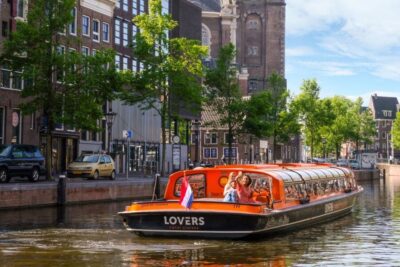
City Canal Cruise and Heineken Experience Ticket
Read our review →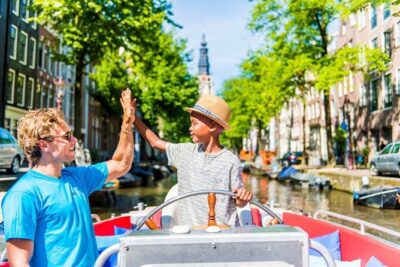
Amsterdam Canal Cruise in Open Boat with Unlimited Drinks Option
Read our review →
Amsterdam Evening Canal Cruise with Live Guide and Onboard Bar
Read our review →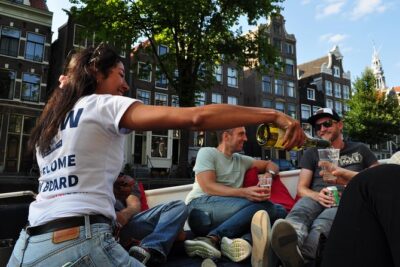
Amsterdam Canal Cruise With Live Guide and Unlimited Drinks
Read our review →Browse the lists this tour appears in