
Reviewed · MUSEUMS
Amsterdam: Rembrandt House Museum Entrance Ticket
Rembrandt’s house gives you something his paintings alone cannot: a look at the rooms, tools, debts, collections, and daily routines behind the famous name. I like the live demonstrations of paintmaking and etching, and I like the audio tour, which gives each room a clear place in Rembrandt’s life rather than leaving you to stare at furniture without context.
The museum also holds an almost complete collection of Rembrandt’s etchings, along with works by his friends, students, and artistic followers. The main drawback is the building itself: it covers several floors with steep stairs, and some rooms can feel tight when a large group arrives.
Key points to know before you go
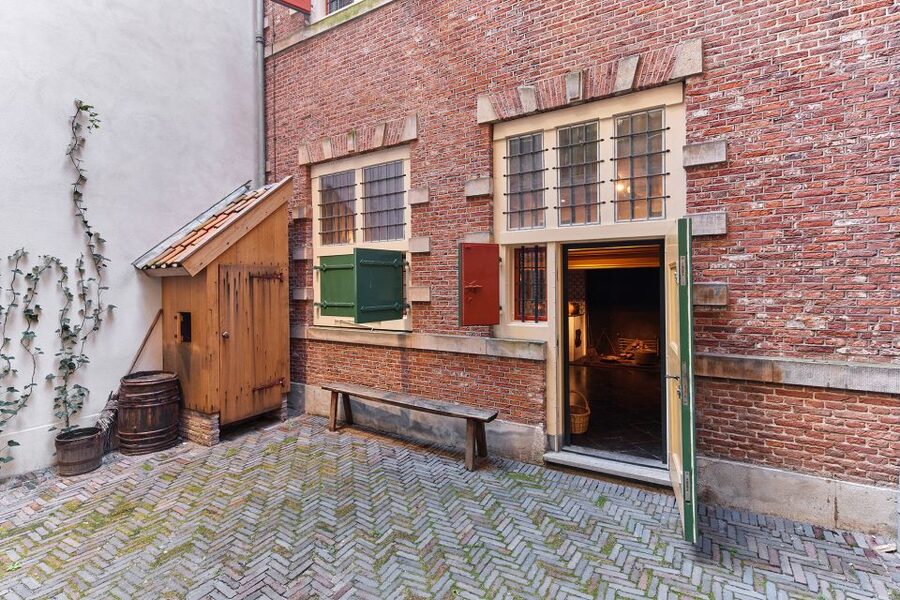
- You enter Rembrandt’s actual former home and workplace, where he lived before financial trouble forced him to leave.
- The audio tour is included and is available in English, Dutch, Spanish, French, German, Italian, and Russian.
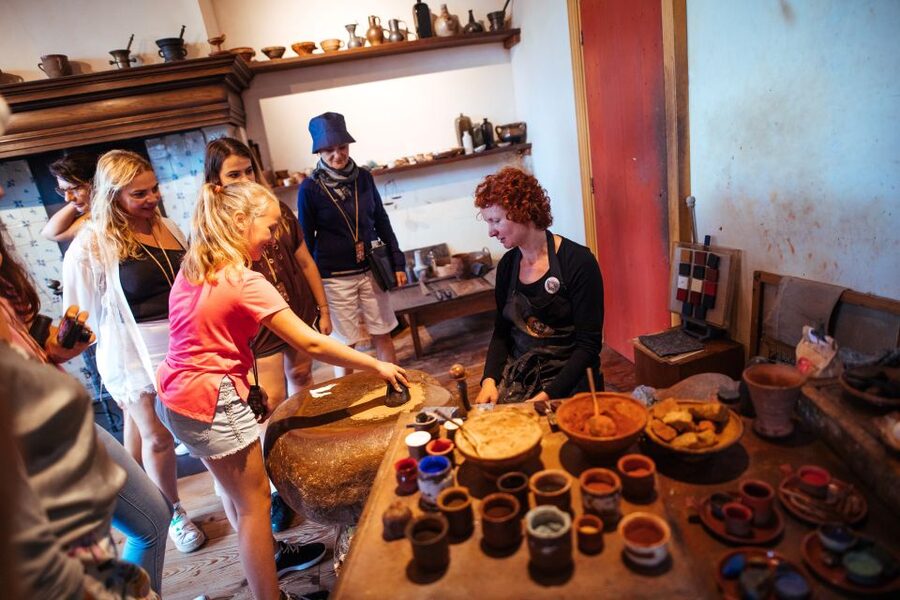
- Paint mixing and etching demonstrations make the artist’s methods easier to understand than labels alone.
- Most of the appeal is Rembrandt’s life and process, not a gallery filled with his major finished paintings.
- The house has steep stairs and narrow rooms, so it is not suitable for wheelchair users or people with mobility impairments.
- Allow two to three hours if you want time for the rooms, audio, sketches, demonstrations, and temporary exhibition.
What the Rembrandt House Museum really offers
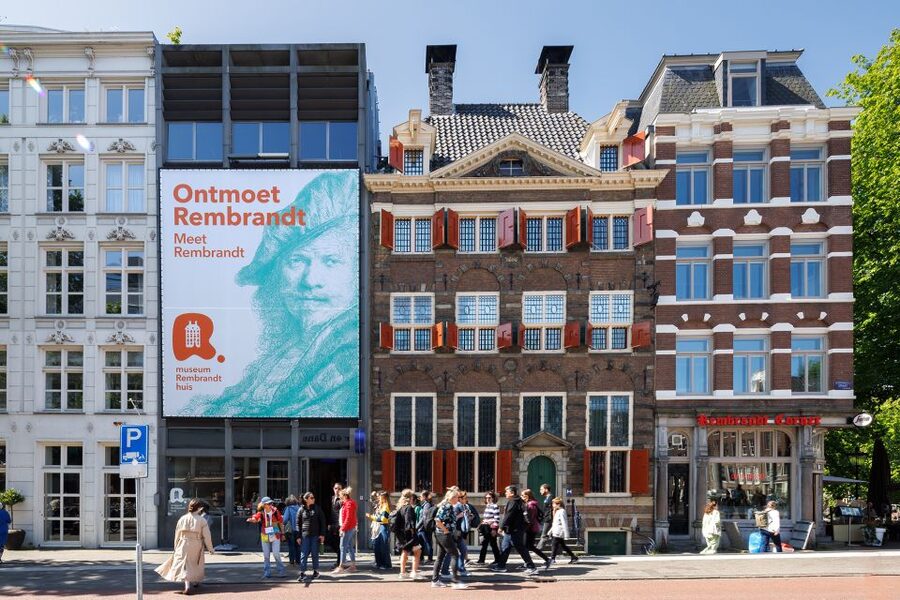
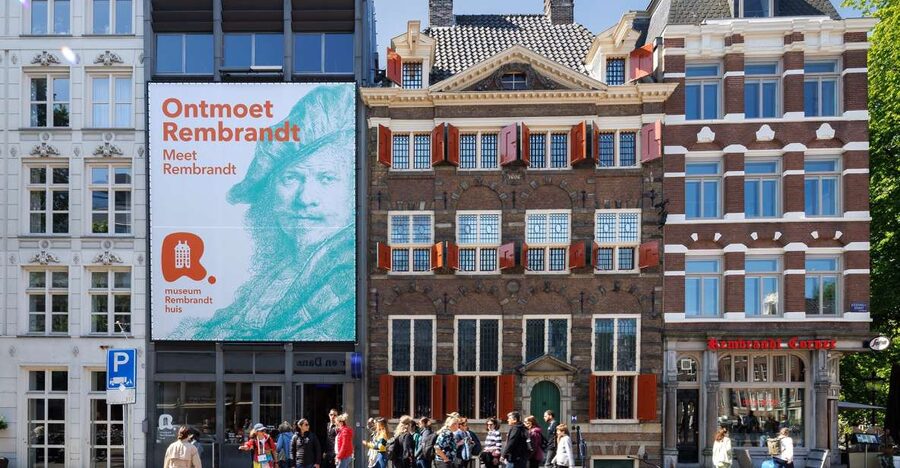
The Rembrandt House Museum sits at Jodenbreestraat 4, in central Amsterdam. This is not simply a room with one famous painting hung on the wall. It is a carefully restored historic home that shows how Rembrandt lived and worked during the most successful, and later most difficult, years of his career.
You move through a house with several floors, reconstructed furnishings, working spaces, and art displays. The experience follows Rembrandt from his arrival in Amsterdam as an ambitious artist to his later financial collapse and forced departure.
That story matters because Rembrandt’s life was not a smooth climb from talent to fame. He became a celebrated painter, bought an expensive home, collected art and unusual objects, and worked with students and assistants. His debts eventually caught up with him. The house helps connect those personal choices to the rooms around you.
I find that useful context. You are not just seeing where a famous person slept. You are seeing how an artist’s working habits, spending, teaching, collecting, and family life fitted together.
More Museums in Amsterdam
- Amsterdam: Van Gogh Museum Ticket
★ 4.7 · 52,054 reviews - Moco Museum Amsterdam Entrance Tickets with Banksy & More
★ 4.4 · 10,088 reviews - Amsterdam: The Upside Down Museum Entrance Ticket
★ 4.4 · 9,506 reviews
Beginning the visit with the multimedia tour
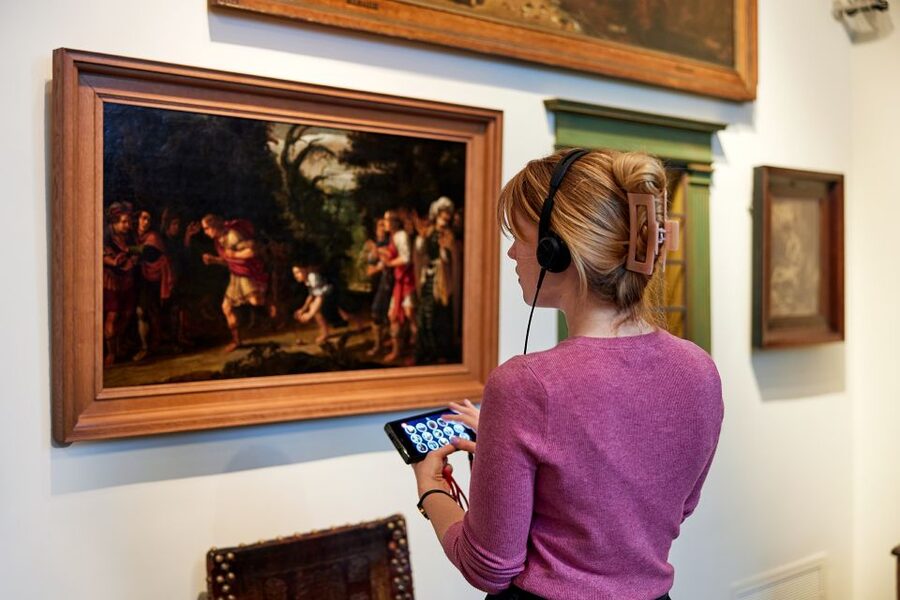
Your ticket includes a multimedia tour, and I recommend using it from the first room. The audio is one of the strongest parts of the visit because the house itself can be confusing at the beginning. Several rooms look intimate and similar, and it may not be immediately clear where you are or which recording to play first.
Once you get oriented, the system gives the house a sensible order. It explains the rooms, Rembrandt’s family, the people who worked with him, and the objects connected with his life. The recordings are detailed enough to reward a careful visit, but you can also move at your own pace.
The audio guide is available in English, Dutch, Spanish, French, German, Italian, and Russian. English-speaking visitors should find the narration easy to follow. I would not rush through the recordings. Some sections take around five minutes, while the living room, studio, and collection room contain longer explanations about Rembrandt’s process and possessions.
If you are mainly interested in architecture or simply want a quick look, you can move faster. If Rembrandt’s life interests you, the audio turns the visit into a much fuller experience.
The reconstructed rooms and Rembrandt’s daily life
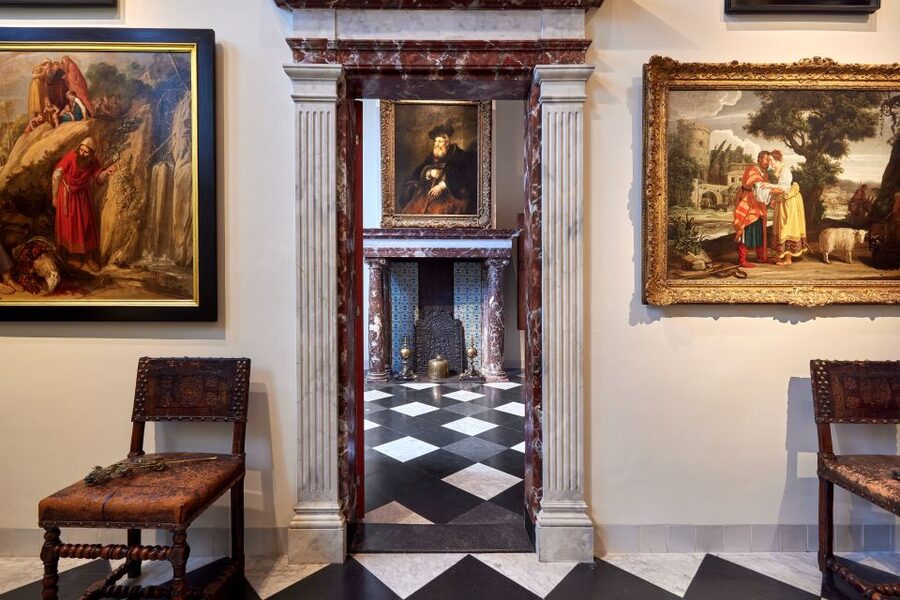
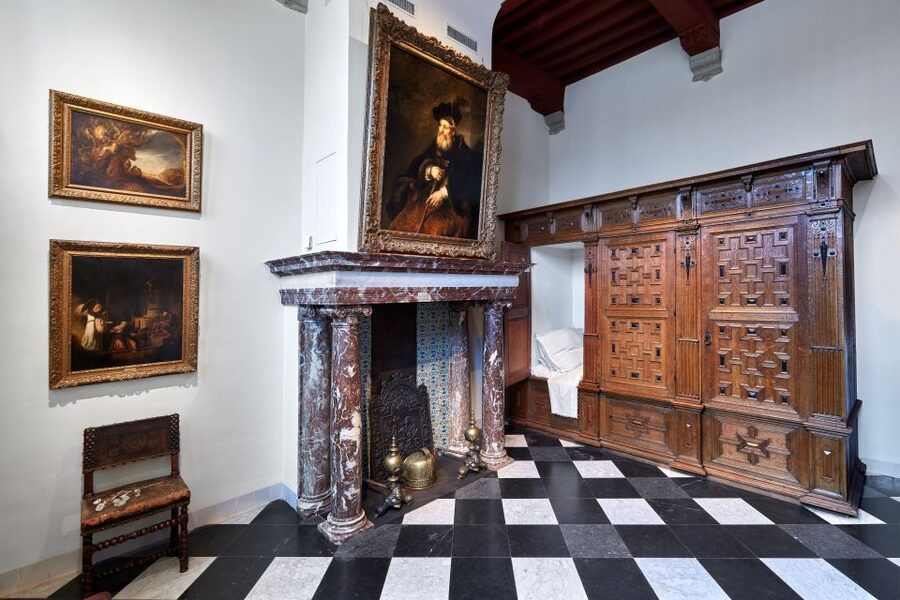
The rooms are presented as a working home rather than a grand palace. You see how Rembrandt and his household used the property, and how a successful 17th-century artist might have lived.
The museum has reconstructed or sourced furnishings and possessions to show the character of the home. Some objects are replicas, and displays identify how items relate to the historical record. That care is important because the house is not preserved exactly as Rembrandt left it. It is a reconstruction based on research, collections, and surviving evidence.
You should keep that distinction in mind. You are not looking at untouched rooms frozen in 1658. You are looking at a thoughtful recreation that helps you picture the setting.
The collection room is especially useful. Rembrandt was an eager collector, and his interests reached beyond paintings. The objects around him influenced his work and reveal the habits of an artist who looked closely at people, clothing, animals, and objects from different places.
The house also tells you about his family and students. His studio was not a private room where he worked alone every minute. It was a place of production, instruction, and collaboration. That makes the visit useful even if you know little about Dutch art.
Rembrandt’s studio and the making of paint
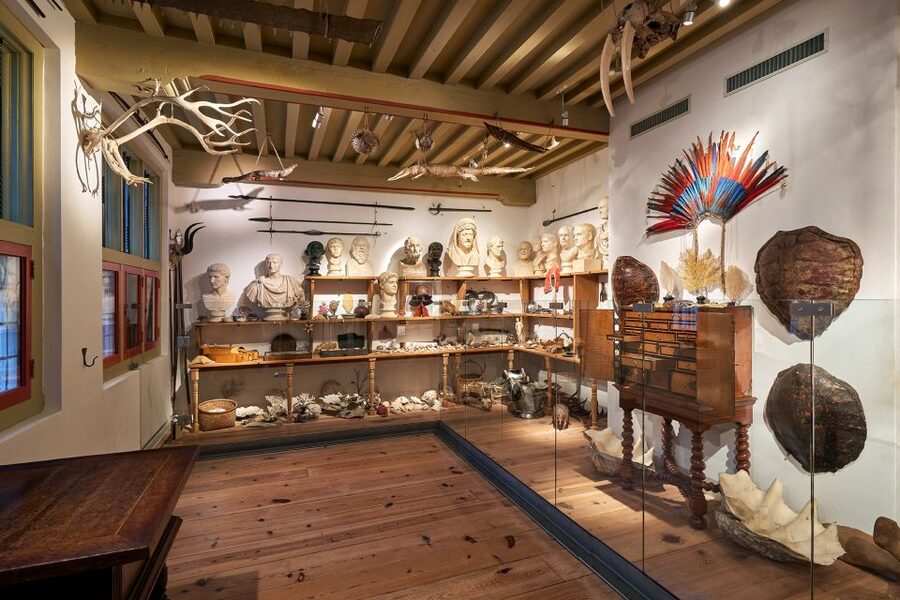
The studio is the heart of the museum. Here, you see the place associated with Rembrandt’s paintings and teaching, and you learn how materials were prepared before an artist could begin painting.
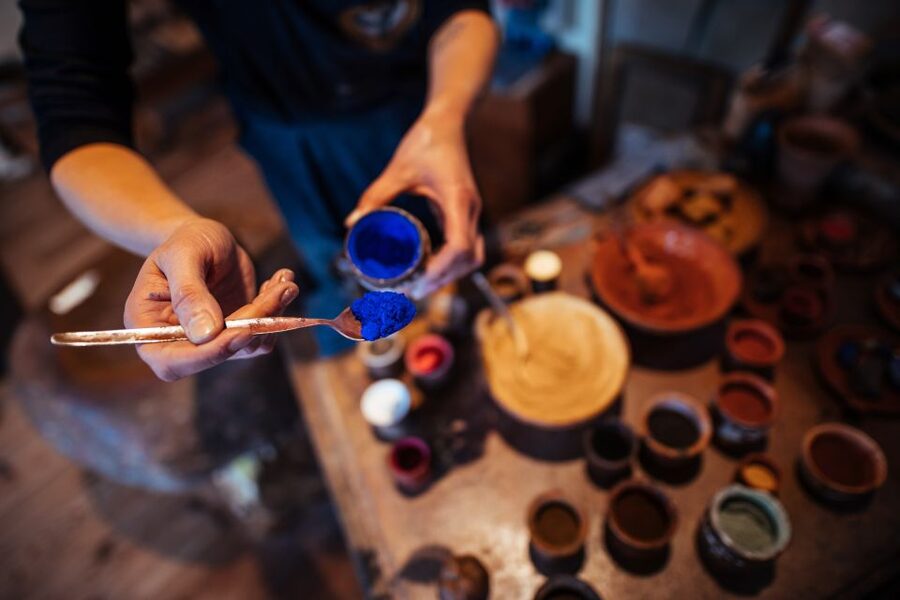
A live demonstration explains how oil paint was made in Rembrandt’s time. Staff show the pigments and the process of mixing paint, helping you understand the physical work behind a finished canvas. This is a small presentation, but it can change the way you look at old paintings.
Paint was not simply taken from a modern tube. Artists and their workshops had to prepare materials, work with pigments, and control the mixture. The demonstration gives you a more practical sense of Rembrandt as a maker, not just a famous name from an art textbook.
The presentation is also a welcome break from listening to recordings. You can watch a real person explain the materials and answer the basic question of how a 17th-century painting began.
The exact schedule of demonstrations can vary, so do not treat one as guaranteed at a particular minute. If you see one beginning, it is worth staying for. Several people have found the paintmaking display to be an unexpected highlight.
Other collections worth booking around Amsterdam:
- Amsterdam: Red Light Secrets Museum Entry Ticket
★ 4.2 · 5,722 reviews - Amsterdam’s Weirdest Museum: Believe It or Not!
★ 4.5 · 4,086 reviews - Amsterdam: Van Gogh Museum Ticket and City Canal Cruise
★ 4.6 · 3,899 reviews - Amsterdam: Van Gogh Museum Ticket & Canal Cruise
★ 4.5 · 3,304 reviews
The etching attic and Rembrandt’s prints
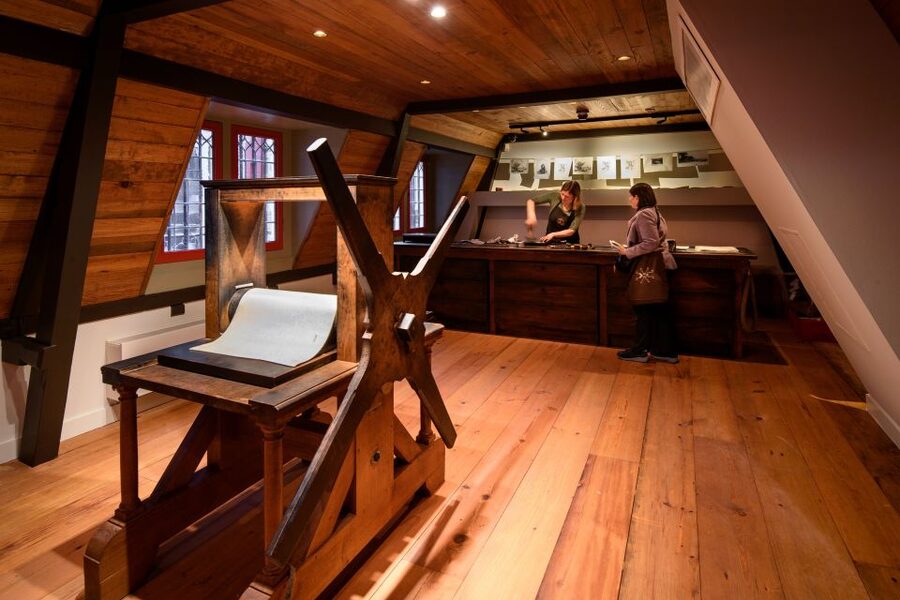
The new etching attic focuses on one of Rembrandt’s most important skills. He is often remembered first for paintings, but his etchings show his drawing ability, quick observation, and willingness to experiment.
The museum has an almost complete collection of his etchings. That gives you a rare chance to follow this part of his career in depth. Small prints reward close attention, so take your time rather than viewing them from across the room.
An etching demonstration explains how the process works. You see how an image is prepared and printed, and how the final result differs from an ordinary drawing. The demonstration helps connect the marks on the paper with the tools and decisions behind them.
I especially like this part for visitors who are not art specialists. You do not need to know the names of every technique to understand the basic challenge. Rembrandt had to think in lines, tones, pressure, and reversed images. Watching the process makes those small prints feel much less mysterious.
The attic also adds another layer to the house. The studio shows painting as a physical craft, while the etching space shows how Rembrandt could produce detailed images with a different set of tools.
The art on display beyond Rembrandt’s own work
One practical point deserves emphasis: this is not the best place in Amsterdam if your main goal is to see a large group of Rembrandt’s major paintings.
You will see Rembrandt’s etchings, sketches, and selected works, but much of the other art comes from contemporaries, pupils, and artists influenced by him. That is not a weakness, but you should know what you are booking.
The museum’s purpose is to explain Rembrandt’s world. Works by other artists show the artistic setting in which he worked and taught. They also help you compare his approach with the people around him.
If you want to stand before famous finished paintings, pair this visit with another Amsterdam museum. If you want to understand how Rembrandt lived, taught, collected, and worked, the house is the better choice.
Rembrandt’s Masterclass, January 30 to May 25, 2026
If your visit falls between January 30 and May 25, 2026, the temporary exhibition Rembrandt’s Masterclass adds a hands-on layer to the experience.
The exhibition examines five areas of his practice: Looking, Technique, Emotion, Experimenting, and Selling. The point is not simply that Rembrandt was talented. You are encouraged to consider the habits and choices that helped him develop his craft.
The displays include Rembrandt’s etchings, paintings, and a drawing. You can also try activities yourself, such as drawing an elephant, identifying a genuine Rembrandt, and practising the pose of a self-portrait.
These exercises should work well for families and for adults who prefer an active museum visit. They also make the exhibition less intimidating if you do not usually spend much time looking at art.
At the end, you encounter The Anatomy Lesson of Jan Deijman. A slow-looking room breaks the painting down step by step, showing how Rembrandt combined observation, technique, and emotional force.
Because temporary exhibitions change, check the dates before booking if this section is your main reason for visiting. The permanent house and collection remain the core experience.
How long to stay and how crowded it can feel
The ticket is valid for one day, but most people will use it for one visit. I would allow at least 90 minutes for a brisk look, and around two to three hours if you listen to the audio recordings and watch the demonstrations.
One careful visit can take about two and a half hours. Add more time if you read every label, complete the temporary exhibition activities, or wait for a demonstration.
The rooms are small. When a large group gathers, you may need to step aside or skip a room temporarily. A loud guided group can also make it harder to hear the audio or concentrate on the displays.
You can make the visit easier by moving at your own pace and returning to a room after a group has passed through. Starting early may also help, although entry times and crowd levels can change.
The house is spread over four or five floors, depending on how you count the spaces. Stairs are part of the experience, but they are steep. Good railings help, and a lift may be available for visitors who need to avoid stairs, but the activity is listed as unsuitable for wheelchair users and people with mobility impairments. Ask staff about current access arrangements before relying on the lift.
Is the $23 ticket good value?
At about $23 per person, the ticket is fair value if you plan to use the audio tour and stay long enough for the demonstrations. You are paying for a historic house, a substantial collection of prints, reconstructed rooms, multimedia interpretation, and access to the working spaces.
The value drops if you want only original Rembrandt paintings. The house is more about the artist’s life and methods than a blockbuster painting collection.
Buying ahead may also save money. One visitor found the museum price about $3 higher than an advance purchase. Prices can change, so compare the current options when you book.
The flexible cancellation policy is useful: you can cancel up to two days in advance for a full refund. The ticket is valid for one day, and the museum is the meeting point, so you do not need to coordinate with a separate tour bus or city transfer.
Who will enjoy this museum most?
I would recommend it to:
- Anyone who wants more context before seeing Rembrandt’s paintings elsewhere in Amsterdam.
- Art students, sketchers, and makers interested in materials and technique.
- Families with older children who enjoy demonstrations and hands-on challenges.
- History fans curious about domestic life in 17th-century Amsterdam.
- Visitors who prefer a self-guided pace instead of following a fixed group.
It may be less satisfying if you want a short visit centered on major paintings. It is also a poor fit if stairs are difficult for you.
The museum works especially well for teenagers. The story includes ambition, success, money problems, family life, and artistic competition, not just dates and titles. The demonstrations give younger visitors something concrete to watch.
My practical verdict
Book the Rembrandt House Museum if you want to understand the person behind the paintings. The audio guide is unusually useful, the recreated rooms have real atmosphere, and the paintmaking and etching demonstrations show skills that labels alone cannot explain.
Go with realistic expectations. You will not see a hall packed with Rembrandt’s most famous paintings, and the steep stairs can be tiring. But for roughly $23, you get a focused look at his home, studio, tools, working methods, collections, and financial downfall.
I would place this visit before a major Rembrandt painting collection elsewhere in Amsterdam. Once you have seen the house and watched the demonstrations, the paintings can feel more personal and more physical. You begin to picture the artist mixing materials, teaching students, testing ideas, and working in the rooms around you.
FAQ
Where is the Rembrandt House Museum?
The museum is at Jodenbreestraat 4 in Amsterdam, in North Holland, Netherlands.
What does the ticket include?
The ticket includes admission to the Rembrandt House Museum and the new multimedia tour.
How long is the ticket valid?
The ticket is valid for one day. You should check availability for the available starting times.
Is an audio guide included?
Yes. The audio guide is included with admission.
Which languages are available for the audio guide?
The audio guide is available in Spanish, Dutch, English, French, German, Italian, and Russian.
Is the visit guided by a person?
The visit is mainly self-guided with the multimedia tour. Museum staff also give demonstrations, and the listed host or greeter languages are English and Dutch.
What demonstrations can I see?
You may see demonstrations of paintmaking in Rembrandt’s studio and etching techniques in the etching attic. Demonstrations are given at scheduled times.
Is the museum suitable for wheelchair users?
No. The activity is listed as unsuitable for wheelchair users and people with mobility impairments. The historic house has steep stairs, though a lift may be available for visitors who need to avoid stairs.
Can I cancel the booking?
Yes. You can cancel up to two days in advance for a full refund.
Just added in Amsterdam
- Become a Dutch Art Piece Photo Shoot in Amsterdam – Single Portrait★ 5.0 · 65 reviews
- Become a Dutch Art Piece Photo Shoot in Amsterdam★ 5.0 · 100 reviews
- Full-Day Private Historic Royal Tour around Palaces and Castles★ 5.0 · 16 reviews
- Private transfers from or to Schiphol (AMS) airport Amsterdam★ 5.0 · 235 reviews
- Private Taxi Airport Transfer to or from Schiphol Airport (AMS)★ 4.5 · 66 reviews
- Castle De Haar Small-Group Tour from Amsterdam★ 5.0 · 101 reviews
- Amsterdam: ‘Boom Chicago’ English Comedy Show★ 4.5 · 213 reviews
- English Comedy Show Amsterdam: Boom Chicago★ 4.5 · 112 reviews
Museums, compared.


Moco Museum Amsterdam Entrance Tickets with Banksy & More
Read our review →





Van Gogh Museum Amsterdam Exclusive Tour w/ Reserved Entry
Read our review →Browse the lists this tour appears in