
Reviewed · CANAL CRUISES
Amsterdam Sightseeing Canal Cruise with Audio Guide
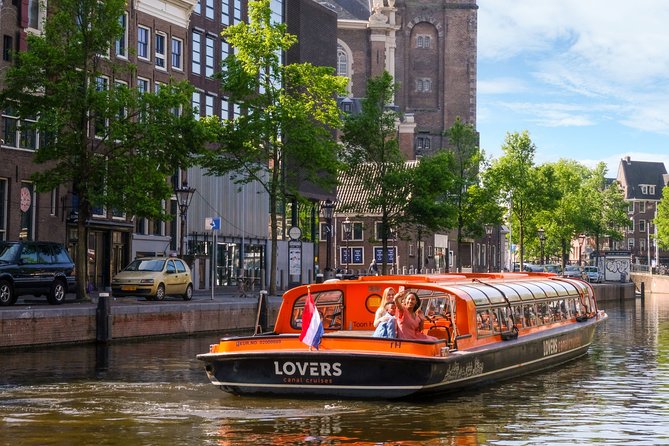
Amsterdam is best understood from the water, where narrow canal houses, low bridges, and old merchant facades slide past at eye level. This one-hour cruise gives you that quick orientation from a glass-topped boat, with commentary on the sights and history along the way.
I like the four departure points, which make it easy to fit the cruise into a day of sightseeing. I also like the short one-hour length. It is long enough to see a good stretch of the canal belt without taking over your afternoon.
The main catch is the enclosed boat. It keeps out rain and cold, but window frames can limit photographs and the cabin can feel hot or crowded. Audio quality also depends on working headphones and a quiet boat.
Key things to know before you board
- Four useful starting points: Choose from Central Station, Anne Frank House, Rijksmuseum, or Leidse Square, depending on where you are sightseeing.
- A glass roof protects you from weather: This is helpful on rainy or changeable days, though it can reduce your views for photographs.
- A fast introduction to Amsterdam: In about an hour, you pass canals, bridges, merchant houses, museums, and major landmarks.
- The audio guide supplies context: It explains the city and sights, with commentary available in several languages. The booking information lists English.
- The boat can hold up to 60 people: Arrive about 10 minutes early if you want a better chance at a favorable seat.
- The price is modest: At $16.74 per person, this is a reasonably priced overview, not a small-boat or deeply personal tour.
Why seeing Amsterdam from the canals matters
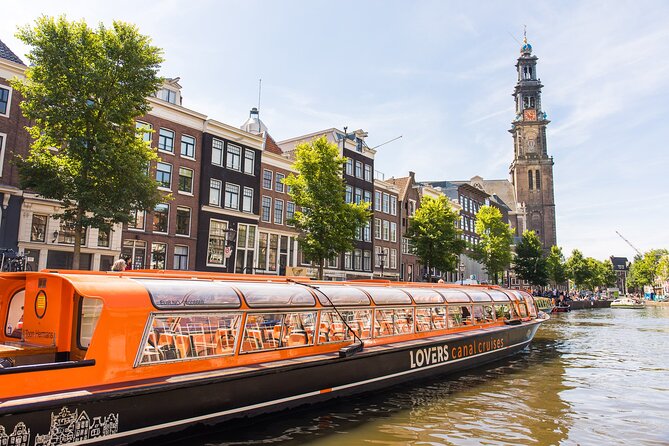
Amsterdam’s canals are not just pretty waterways added for sightseeing. The canal belt was built during the city’s great expansion in the early 17th century, when Amsterdam was growing into a major trading center. The water routes carried goods, supported trade, and shaped the city’s unusual house-lined streets.
From the road, you often see only the front of a canal house. From a boat, you notice how the buildings lean, how narrow plots fit together, and how bridges connect the old neighborhoods. You also get a clearer sense of how closely the city’s daily life remains tied to the water.
That is the real value of this cruise. It does not replace walking through Amsterdam or visiting its museums. Instead, it gives you a calm first look at the city’s structure. I especially like it near the start of a visit, when the commentary can help you decide which areas deserve more time on foot.
The cruise is also a useful rest for your feet. Amsterdam sightseeing can involve a lot of walking over cobbled streets and bridges. An hour seated on the water gives you a change of pace without requiring another museum visit or a long meal.
More Sightseeing Tours in Amsterdam
- Amsterdam Hop-On Hop-Off 24h or 48h Bus and Boat Option
★ 3.5 · 1,836 reviews - Amsterdam: Historic City Sightseeing Canal Cruise
★ 4.5 · 444 reviews - Amsterdam: E-Bike Sightseeing Tour
★ 4.7 · 99 reviews
Choosing the right departure point
You can make your own way to one of four departure locations. This flexibility matters because Amsterdam’s main sights are spread across several neighborhoods.
Central Station is the most practical choice if you have just arrived by train, are staying near the city center, or want a simple meeting point close to public transportation. The station itself is worth a look. Designed by Pierre Cuypers and built between 1881 and 1889 on artificial islands in the IJ, it combines Gothic and Renaissance Revival details with a huge iron roof.
The Anne Frank House departure point works well if you are already in the Jordaan or canal belt. Keep in mind that passing the Anne Frank House by boat is not the same as visiting it. The cruise gives you an exterior view from the water, while the museum requires its own admission and planning.
The Rijksmuseum departure point suits a museum day. You can pair the cruise with the Museumplein area and the Rijksmuseum, Van Gogh Museum, or nearby streets. The Rijksmuseum building, also designed by Cuypers, opened in 1885 and houses major works by Rembrandt, Vermeer, and other Dutch artists.
Leidse Square is convenient if you are near the theaters, restaurants, or the western edge of the central canal belt. Whichever point you choose, check the exact departure details carefully and arrive at least 10 minutes before your reserved time.
What the one-hour route reveals
The exact order of sights can vary with the departure point and operating conditions, but the route is designed to show off the central waterways and nearby landmarks. You are not getting off at each place. The value comes from the changing views and the commentary as the boat passes.
Magere Brug and the Amstel River
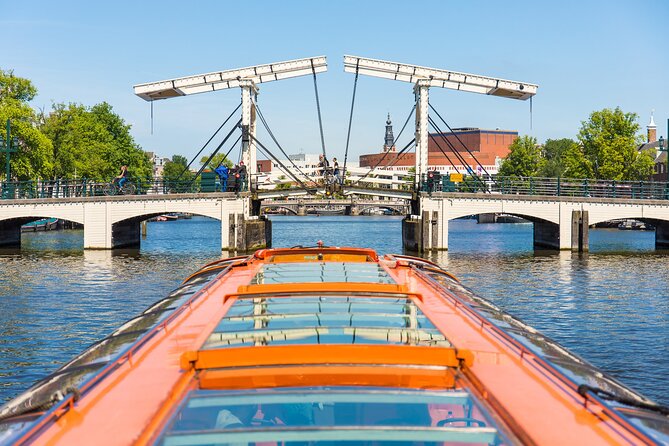
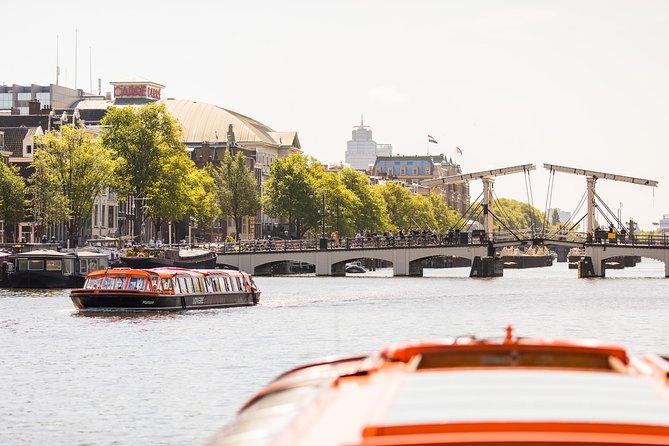
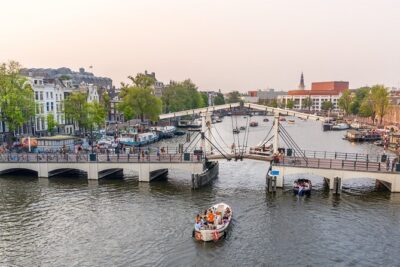
The Magere Brug, or Skinny Bridge, is one of Amsterdam’s most recognizable crossings. The current wooden drawbridge follows the traditional style of the original bridge, built in 1691 and rebuilt in 1934. It is particularly attractive when illuminated at night.
The Amstel gives the cruise a wider stretch of water after the narrower canals. The river helped shape Amsterdam’s growth and gave the city its name. From the boat, you can see why the river was so useful for trade and transport, with bridges and historic buildings arranged along its banks.
Other boats out on the water around Amsterdam:
- Amsterdam Luxury Canal Cruise + Unlimited Drinks & Bites option
★ 5.0 · 30,518 reviews - Amsterdam: 75 Minute City Canal Cruise with Audio Guide
★ 4.4 · 17,501 reviews - Amsterdam: City Centre Canal Cruise
★ 4.2 · 12,827 reviews - Amsterdam: City Canal Cruise and Heineken Experience Ticket
★ 4.5 · 5,367 reviews
Keizersgracht and Herengracht
Keizersgracht is the widest of the main canals in the canal belt. It was created in 1612 and named for Emperor Maximilian I. Its broad waterway and large houses reflect the wealth Amsterdam gained through trade.
Herengracht was also dug in 1612 and became the most prestigious address in the city. The section known as the Golden Bend is lined with especially grand merchant houses. Look up as you pass. The facades may seem similar at first, but details around the windows, rooflines, and entrances reveal differences in age and status.
Prinsengracht and the western canal belt
Prinsengracht was named for the Prince of Orange and became a desirable residential canal. It is associated with elegant houses, churches, and cultural landmarks, including the area around the Anne Frank House and Westerkerk.
This stretch is one of the most meaningful parts of the route, but it can also be one of the hardest to photograph from an enclosed boat. Window frames, reflections, and the angle of the cabin may get in the way. If photographs matter to you, keep your camera ready but treat the cruise as a viewing experience first.
Westerkerk and the Anne Frank House
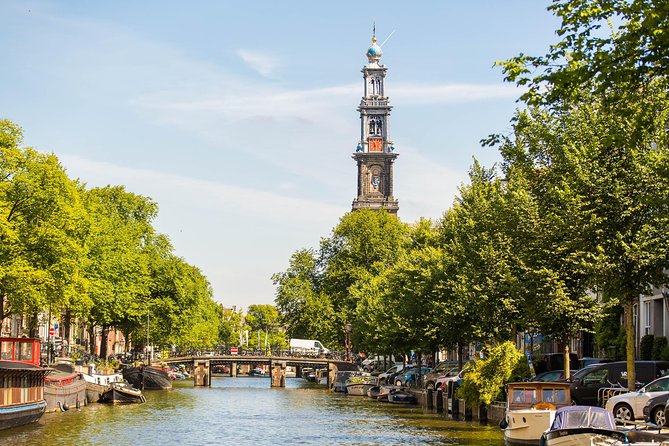
Westerkerk was completed in 1631 and is known for its tall Westertoren. The church sits close to the Anne Frank House, making this one of the most recognizable areas along the western canals.
The boat passes the Anne Frank House rather than taking you inside. That distinction is important. If you have reserved a museum visit, leave enough time to reach it separately. The cruise can provide a useful sense of the neighborhood, but it does not offer the personal, interior experience of the museum.
De 9 Straatjes
The Nine Streets are a compact group of narrow lanes between the main canals. They are known for independent boutiques, vintage shops, and cafes inside historic buildings.
From the water, you will not browse the shops, but you will see the canal-side setting that gives this district its appeal. I would use the cruise to note the area, then return on foot if you want shopping or a closer look at the small bridges and house fronts.
The Rijksmuseum and Museumplein
The Rijksmuseum is easy to recognize from its grand architecture and central position near Museumplein. The boat provides an outside view, not museum access, but the audio commentary helps place it within Amsterdam’s cultural map.
This is a good pairing for a first day in the city. You can use the cruise to understand where the Rijksmuseum sits in relation to the canals, then visit the collection separately. Do not expect the boat ride to substitute for time inside the museum. The two experiences serve different purposes.
The Bloemenmarkt
The floating flower market on the Singel dates to 1862. Its stalls sit on houseboats and sell bulbs, plants, and souvenirs. It began as a practical market supplied by boat and is now a popular stop for visitors.
The market is colorful, but the canal view is more valuable than the shopping itself. If you are buying bulbs, check the packaging and import rules for your home country. The cruise gives you an outside look, so you can decide later if you want to return on foot.
De Wallen and Nieuwmarkt
The Red Light District, known locally as De Wallen, is Amsterdam’s oldest neighborhood. It began as a harbor area in the 14th century and now combines old buildings, nightlife, regulated sex work, and tourism. A boat view offers historical context without requiring you to walk through the area.
Nearby Nieuwmarkt grew around the old city wall and the former Sint Antoniespoort. Its central Waag building began as a city gate and later served as a guildhall. From the water, the important point is how Amsterdam’s defensive and trading past still shapes the modern city.
The Maritime Museum, NEMO, and the IJ
The Scheepvaartmuseum occupies a 17th-century warehouse and tells the story of the Netherlands as a seafaring nation. Its collection includes ships, maps, and nautical objects.
NEMO Science Museum is easier to spot from the water. Renzo Piano designed its green, ship-like structure, which rises above the Oosterdok. It is an interactive science center aimed especially at children and families.
The IJ is the larger body of water connected to Amsterdam’s maritime trade and the North Sea. Depending on the route, you may get views toward this waterfront area and its ferries, cultural buildings, and open water. It gives the cruise a different feel from the tight canal belt.
Audio commentary, captains, and comfort
The audio guide is meant to provide the historical thread as you pass each sight. This is useful because many canal houses look similar when you first arrive. A little explanation about the canal system, the Golden Bend, or the city’s trading past helps you see more than a row of attractive facades.
The recorded commentary is not always the whole experience. Captains may add information or humor over the boat’s speaker. Eddie, one captain praised for being funny and helpful, is an example of how a personable crew member can make a standard route feel more lively.
There is a practical downside. If children or adults are talking loudly, recorded commentary can become difficult to hear. Some passengers have also had trouble with earphones, including information arriving after the boat has passed a sight. Bring patience, and if the captain offers useful live information, listen to that as well.
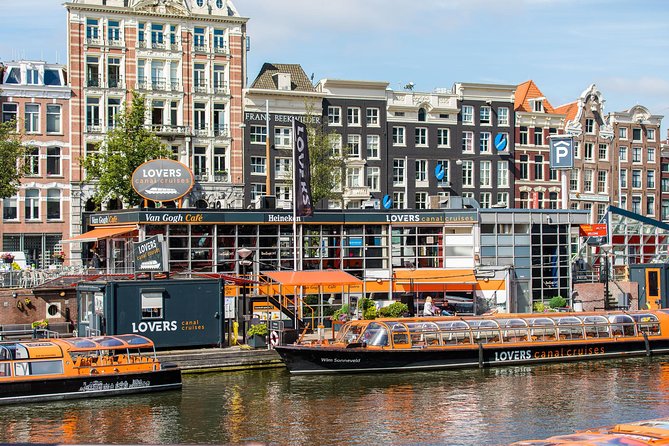
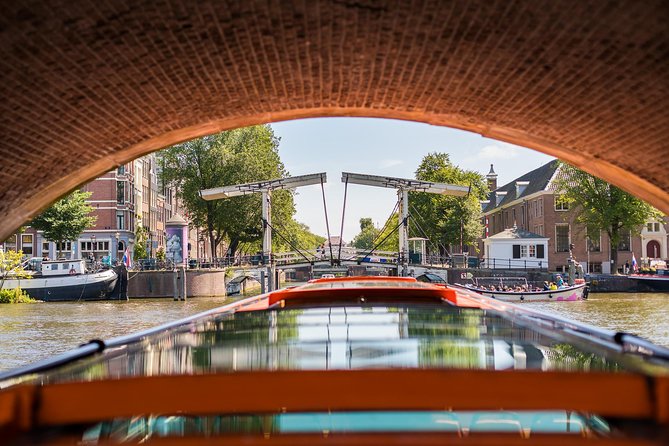
The covered boat is a sensible choice in Amsterdam’s changeable weather. On a cold or rainy day, the enclosure can make the cruise much more pleasant than an open boat. On a warm day, however, the cabin may feel hot, especially when it is full. Windows can usually be opened, but the design still limits clear photographs.
How much value do you get for $16.74?
At $16.74 per person, this is one of the cheaper ways to get a structured overview of Amsterdam from the water. You receive about an hour on the canal, an audio guide, and access to a route covering many central sights.
The price is strongest when you use the cruise as an introduction. You get orientation, a rest from walking, and a way to see the city’s architecture from an angle you cannot get on land. It is also a good option if you have limited time or want a simple activity between museum visits.
The value is weaker if you want a quiet, intimate boat ride with excellent photographs. A boat carrying up to 60 people will feel more like a standard city cruise than a private outing. If you prefer personal storytelling, more open views, and a slower pace, a smaller boat with a live guide may suit you better, though it may cost more.
Timing, crowds, and simple ways to improve the ride
Arrive 10 minutes before departure. This is not just a formality. The boat can fill up, and arriving early gives you a better chance of choosing a seat with a clear view.
If you want photographs, sit near a window and keep reflections in mind. The glass roof is useful for looking upward at bridges and tall facades, but overhead framing can interrupt a shot. A cloudy day may produce softer light, while an evening cruise can show illuminated bridges and canal lights.
Evening rides have a particular appeal. The Magere Brug and canal lights can look striking after dark, and the city feels quieter from the water. Daytime is better if your priority is seeing architectural detail and taking pictures.
Plan your expectations carefully. This is a relaxed city overview, not a full historical lecture and not a hop-on, hop-off service. You stay aboard and return to your original departure point.
Who should book this canal cruise?
I would recommend it to a first-time visitor who wants a quick sense of Amsterdam’s layout. Families may appreciate the seated format, especially when the weather is uncertain. It also suits anyone who has limited mobility for walking, although the supplied information only states that most people can participate and does not provide detailed accessibility specifications.
It is a smart choice for a short visit, a rainy afternoon, or the beginning of a longer stay. Use it to mark places you want to revisit on foot, such as De 9 Straatjes, the Bloemenmarkt, or the area around Westerkerk.
I would be more cautious if your main goal is photography, silence, or a highly personal guide. The roof, window frames, crowd size, occasional noise, and mixed audio quality can get in the way. A smaller open boat may be a better match for those priorities.
Should you book it?
Book this cruise if you want an affordable, weather-protected introduction to Amsterdam that lasts about an hour. The four departure points make it easy to fit into a sightseeing day, and the route covers many of the city’s famous canals, bridges, museums, and historic districts.
Skip it if you already know Amsterdam well or expect an intimate experience with uninterrupted views. For the best value, reserve it early in your visit, arrive 10 minutes ahead of time, and choose an evening departure for canal lights or a daytime departure for architecture.
Free cancellation is available up to 24 hours before the start time. Changes or cancellations inside that window are not accepted for a refund, and poor weather may lead to a different date or a full refund.
FAQ
How long does the Amsterdam canal cruise last?
The cruise lasts approximately one hour.
How much does the cruise cost?
The listed price is $16.74 per person.
Where can I board the cruise?
You can choose from departure points near Central Station, the Anne Frank House, the Rijksmuseum, and Leidse Square.
Do I need to arrange transportation to the boat?
Yes. Hotel pickup and drop-off are not included, so you make your own way to your chosen departure point.
Is the boat covered?
Yes. The cruise uses a glass-topped boat. The enclosure helps protect you from rain and cold, though it can limit views and photographs.
Is an audio guide included?
Yes. An audio guide is included, with commentary available in several languages. The booking information lists English.
Does the cruise enter the Anne Frank House?
No. The boat passes the Anne Frank House from the canal, but admission to the house is not included.
How early should I arrive?
You should check in with Lovers 10 minutes before your reserved departure time.
How many people can join the cruise?
The activity has a maximum capacity of 60 people.
Can I cancel for a full refund?
You can cancel at least 24 hours before the experience start time for a full refund. Cancellations or changes made less than 24 hours in advance are not accepted for a refund.
More Self-Guided Tours in Amsterdam
- Amsterdam: Royal Palace Entry Ticket and Audio Guide
★ 4.6 · 6,475 reviews - Amsterdam: Canal Cruise with Live Commentary & Audio Guide
★ 4.4 · 1,034 reviews - Rotterdam: Steamship Rotterdam Audio Tour Entry Ticket
★ 4.5 · 325 reviews - Self-Guided Electric Boat Rental
★ 4.5 · 60 reviews
More passes and sightseeing buses around Amsterdam
- Rotterdam: Harbor Sightseeing Cruise
★ 4.3 · 7,599 reviews - Rotterdam: 1-Hour Sightseeing Splash Tour
★ 4.5 · 3,299 reviews - The Hague: Hop-on Hop-off Old-Fashioned Heritage Tram Tour
★ 4.4 · 1,083 reviews - Haarlem: Sightseeing Canal Cruise through the City Center
★ 4.3 · 762 reviews
Just added in Amsterdam
- Amsterdam: E-Bike Sightseeing Tour★ 4.7 · 99 reviews
- Amsterdam: Magic Show★ 4.7 · 38 reviews
- Amsterdam: Private Photoshoot for Couple, Family, or Solo★ 4.9 · 251 reviews
- Amsterdam: The Comedy Embassy Stand-Up Show★ 3.9 · 20 reviews
- Private Airport Transfer to or from Schiphol Airport★ 4.5 · 128 reviews
- Schiphol Amsterdam Airport Private Arrival Transfer★ 5.0 · 68 reviews
- Amsterdam Castle & Utrecht City – Private Day Tour★ 5.0 · 21 reviews
- Amsterdam Canal, Tulip, Windmill Photoshoot | Custom Request★ 5.0 · 147 reviews
Canal Cruises, compared.
Amsterdam Luxury Canal Cruise + Unlimited Drinks & Bites option
Read our review →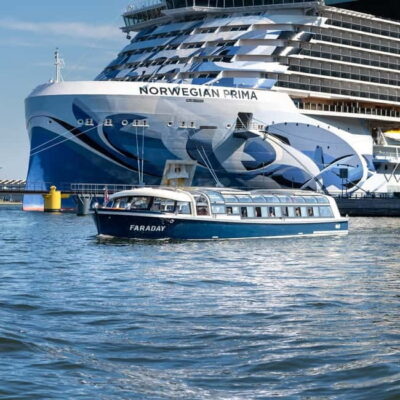
75 Minute City Canal Cruise with Audio Guide
Read our review →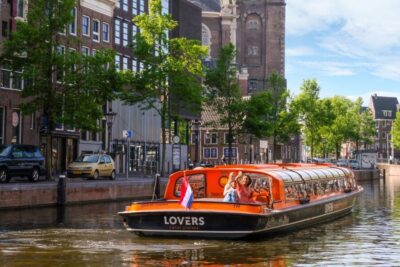
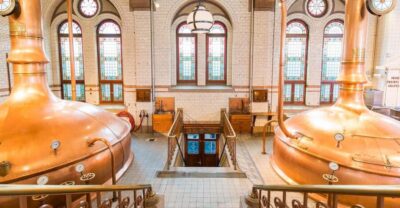
City Canal Cruise and Heineken Experience Ticket
Read our review →
Amsterdam Canal Cruise in Open Boat with Unlimited Drinks Option
Read our review →
Amsterdam Evening Canal Cruise with Live Guide and Onboard Bar
Read our review →
Amsterdam Canal Cruise With Live Guide and Unlimited Drinks
Read our review →Browse the lists this tour appears in