
Reviewed · ESCAPE GAMES & SCAVENGER HUNTS
e-Scavenger hunt Breda: Explore the city at your own pace
Breda’s best feature here is not a single monument, but the way the Qula City Trail strings several of them together. You walk from the station through churches, squares, museums, the castle area, and Valkenberg Park while your phone turns the outing into a friendly contest. It is sightseeing with a little mischief added.
I like the freedom to start, pause, and stop when you wish, and I like the mix of photo searches, general questions, timed answers, and location-based puzzles. The fixed group price is also attractive: $37.21 for up to six people works out to about $6.20 each if you fill the team.
The main caution is that this is a self-guided phone game, not a live tour with a person explaining Breda as you go. Some questions may feel easy, and a road closure or unclear instruction could interfere with a task, so keep your route flexible and read the starting instructions carefully.
Key points at a glance
- Eight useful Breda stops: The route includes Waalse Kerk, Grote Markt, the Begijnhof Museum, Breda Castle, Valkenberg Park, and several other central sights.
- Your group stays private: One booking covers up to six people, with no strangers added to your team.
- A flexible 24-hour format: Start any day and time, pause for food or photos, and continue when convenient.
- A good puzzle mix: Expect photo searches, knowledge questions, timed answers, riddles, and assignments.
- A low group price: At $37.21 for six people, the cost per person is modest, though you must provide your own phone and mobile data.
- Several language choices: English, German, French, Dutch, Spanish, Italian, and more are available.
What kind of Breda outing is this?
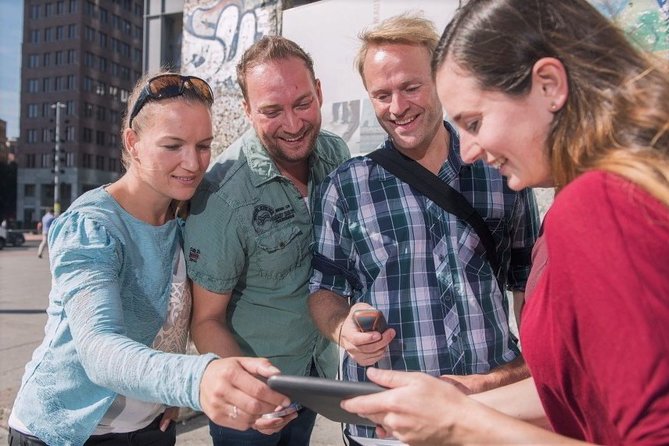
Think of this as a walking route with a game layer, rather than a conventional guided tour. You receive instructions by email, use an Android phone or iPhone, and begin at Stationsplein in Breda. From there, the app leads you through a series of tasks tied to places in the city.
You are not simply following a list of monuments. You may need to find a visual detail, answer a question about a building, complete a timed task, or take a closer look at your surroundings. That format gives you a reason to pay attention to details you might otherwise pass while walking from one sight to the next.
The activity is listed at about three hours, while the game instructions indicate that the trail itself can guide you through the city within roughly two hours. I would allow at least three hours in practice. That gives you time to solve clues, take pictures, pause for coffee, and deal with a busy square or a temporary obstruction.
There is no live guide and no fixed departure time. That is a major advantage for independent groups, but it also means your team must handle the login, route, phone battery, and interpretation of each task yourselves.
Other outdoor games and hunts around Rotterdam:
- Rotterdam Highlights & Spies: Interactive City Game
★ 4.0 · 51 reviews - Discover the best spots in Rotterdam with Outside Escape
★ 4.5 · 24 reviews - Discover Breda with a self-guided Outside Escape city game tour!
★ 5.0 · 16 reviews
Starting at Stationsplein
Stationsplein is a practical meeting point because Breda railway station is included as one of the route stops. If you arrive by train, you can begin without arranging a taxi or finding a distant meeting place. The activity ends back at the meeting point, so you finish where you started.
The station is not just a functional beginning. It gives the trail a clear orientation point before you move into the historic center. Have the booking email ready before you arrive, and make sure the phone you plan to use has mobile data and enough battery for a few hours of navigation and game play.
The experience is designed for a private team of two to six people. The six-person limit matters because the price is per group, not per person. A couple will pay the full group amount, but a family or group of friends can spread the cost among six participants.
Waalse Kerk and the first clues
The Waalse Kerk is one of the early places where the game shifts your attention from walking directions to the city itself. Churches in an old European center can look similar at first glance, so a question or visual task gives you a practical reason to inspect the façade and surroundings.
Do not rush the opening section. The first few questions are also your chance to learn how the game works. Check how answers are entered, how photo tasks are handled, and how the route tells you where to go next.
Because the tasks are phone-based, your group should agree on who holds the device. One person can navigate while another reads clues, but passing the phone around constantly can slow things down. For a family, letting different people solve different questions keeps younger participants involved.
Grote Kerk and De Kerkschat
The route then reaches De Kerkschat at the Grote Kerk, one of Breda’s most important central landmarks. This stop adds a more formal historic setting to the outing and gives you a chance to look beyond the surface of the church and its surroundings.
The game’s questions are generally designed to be answered at the location. That is useful because you do not need to prepare a stack of background material before arriving. You look carefully, read the clue, and work things out as a group.
The drawback is that the experience does not promise a full explanation of the church. If you want detailed architectural or religious context, you would need to visit independently or use another guide. Here, the building is part of a sequence of challenges rather than the subject of a long talk.
Same city, a different sort of day:
- Rotterdam: Harbor Sightseeing Cruise
★ 4.3 · 7,599 reviews - Rotterdam: 1-Hour Sightseeing Splash Tour
★ 4.5 · 3,299 reviews - Rotterdam: Rotterdam Zoo Blijdorp Entry Ticket
★ 4.6 · 2,754 reviews - Rotterdam: Euromast Lookout Tower Ticket
★ 4.4 · 2,549 reviews
Grote Markt and the social side of the game
Grote Markt is a natural place for the trail to become more lively. It is a central public square, and the tasks here help turn an ordinary walk across the square into a search for details, answers, and good photographs.
This is where the competitive element can work well. You can compare scores within your own group and try to finish with the top result. The pressure is light, but it gives friends and family a reason to keep moving and pay attention.
A busy public square can also make a task less simple. People, outdoor seating, or temporary work may block a view or make it harder to find a detail. If a question cannot be answered because of roadwork or an obstruction, do not treat the route as a strict exam. Take note of the problem and continue when needed.
Breda’s Begijnhof Museum
The Breda’s Begijnhof Museum adds a quieter and more distinctive stop. A begijnhof is associated with communities of religious women who lived together while following a religious life without entering a convent in the usual way. The setting gives the route a different feel from the open city square and major church.
The best way to approach this stop is to slow down. The game may ask for a particular answer or visual detail, but the surroundings deserve more than a quick phone check. You might find that the quieter setting is one of the most memorable parts of the walk.
Keep in mind that the supplied details do not promise admission to every interior or a separate museum tour. Treat the stop as part of the outdoor city trail unless your booking instructions say otherwise. The value here comes from seeing a less obvious part of central Breda and learning through the task.
Breda railway station as part of the route
Including Breda railway station in the trail is practical and slightly unusual. Many city walks begin at a station and immediately leave it behind. Here, the station is one of the points connected to the game, so you may look at a familiar transport hub with more purpose.
This also makes the activity easy to combine with a day trip. You can arrive by train, meet your group at Stationsplein, complete the route, and return to the same point. The activity information places the start and finish together, which removes some of the guesswork at the end of the day.
The station stop may feel less scenic than the church, square, or park. That is fair. Its value is mainly convenience and route structure, not postcard atmosphere.
Kasteel Van Breda and the city’s grander side
Kasteel Van Breda brings a more imposing landmark into the sequence. The castle gives the route a sense of scale after the smaller streets and church settings. As with the other stops, expect a task that asks you to observe, answer, or search rather than a long guided explanation.
This is a good place to work as a team. One person may notice a visual clue while another knows the answer to a general question. The variety prevents the game from becoming a simple history quiz, which is helpful if your group includes people with different interests.
You should not book this expecting an extended castle visit with an expert guide. The supplied format is a city trail, and the castle is one checkpoint along it. If your main goal is an in-depth look inside the building, this is not the right product by itself.
Bibliotheek Breda and changing the pace
Bibliotheek Breda gives the trail another change of setting. A library may not be the first place you associate with a sightseeing route, but that is part of the appeal. The activity takes you to places you might skip on a standard monument-to-monument walk.
This stop also shows how the Qula format differs from a list of famous sights. Some route points are major landmarks, while others help you see how the city works as a lived-in place. That balance makes the walk feel less like ticking off a checklist.
The exact task may be easy for one group and harder for another. That unevenness is built into the format. Some people will enjoy the quick wins, while others may prefer harder questions throughout. If you want a demanding escape-room style challenge, the trail may feel too gentle in places.
Valkenberg Park and the final stretch
Stadspark Valkenberg provides a welcome outdoor finish. After churches, squares, civic buildings, and the station, the park gives you room to walk at a slower pace and take a break from the screen.
The park is also a fitting place for photo-based tasks. You can pause without feeling that you are blocking a narrow street, and the open setting may make it easier for your team to talk through an answer. If the weather is good, this part of the route can make the outing feel more relaxed than a tightly scheduled tour.
The experience is available all day and night, but daylight is likely to make visual questions and photographs easier. The information does not set a time limit, so you can pause in the park or stop for food and return to the game later.
How the questions and scoring work
The strongest part of the activity is its variety. You may encounter:
- Photo-search tasks
- General knowledge questions
- Timed answers
- Riddles
- Location-based assignments
That mix keeps the walk from becoming repetitive. A simple question can give your group momentum, while a harder clue can make you stop and inspect a building more carefully.
The scoring system adds a small competitive edge. You can try to set the best score among your friends or family, but the format still works if you ignore the competition and use the questions as prompts for sightseeing.
Instructions matter. One past difficulty involved access on a second phone after the trail appeared to have expired, along with uncertainty about the order of the tasks. I would read the email carefully before starting and make sure the whole group understands which phone will run the trail. If you want to involve several devices, confirm the rules before setting out rather than assuming every phone can log in independently.
Price, timing, and practical value
The listed price is $37.21 per group of up to six. For six people, that is about $6.20 each, which is strong value for a two to three hour city activity. For two people, the per-person cost is higher, but you still receive a private route with no scheduled departure and no need to match another group’s pace.
The trade-off is that the price does not include a smartphone or mobile data. You need an Android phone or iPhone and a working data connection. Bring a charged device, and consider carrying a portable charger if your phone battery is not reliable.
The trail is offered in English, German, French, Dutch, Spanish, Italian, and additional languages. That makes it useful for mixed-language groups, although the exact language list and instructions should be checked when booking.
Free cancellation is available if you cancel at least 24 hours before the local start time. Changes or cancellations inside that window are not accepted for a refund. Service animals are allowed, and the activity is near public transportation. The format is also described as suitable for people with hearing impairments because it is not built around listening to a live guide.
Who should choose this trail?
I would choose this for families, couples, friends, and small private groups who want to see Breda without committing to a fixed schedule. It works especially well when some people want sightseeing and others need a little competition to stay engaged.
It is also a good fit for repeat visitors. The route can draw you to places you have passed before without really noticing, and the questions encourage a closer look at ordinary details.
I would be more cautious if your main aim is expert commentary, a strict historical narrative, or a difficult puzzle challenge. There is no named guide because there is no guide at all, and the quality of your day depends partly on your phone, the clarity of the instructions, and the condition of the route.
Should you book the Breda Qula City Trail?
Book it if you want a flexible, affordable way to cover Breda’s central sights while keeping your own pace. The private format, group pricing, varied questions, and route through churches, the Begijnhof, the castle area, the library, station, square, and park give you plenty to do without a fixed timetable.
Skip it if you want a person to explain each building or if you dislike using your phone while sightseeing. For everyone else, this is a sensible choice for a relaxed day out, especially with four to six people sharing the cost. Start with a full battery, keep an eye on temporary roadwork, and leave enough time to enjoy Breda beyond the next clue.
FAQ
Where does the Breda City Trail start and finish?
It starts at Stationsplein, 4811 Breda, Netherlands, and ends back at the meeting point.
How long does the activity take?
The listed duration is approximately three hours. The trail instructions indicate that the route can guide you through Breda within about two hours, but you can allow extra time for pauses, photos, and solving tasks.
Can I choose my own starting time?
Yes. There are no fixed starting times or reservations. The trail is available 24 hours a day, seven days a week, and you can start, pause, or stop when it suits you.
How many people can join one booking?
The price covers a private team of up to six people. Only your group participates in the activity.
What do I need to play?
You need an Android phone or iPhone and mobile data. The booking email contains instructions for starting the trail.
Can I cancel for a refund?
Yes. You can receive a full refund if you cancel at least 24 hours before the experience start time. Cancellations or changes made less than 24 hours before the start time are not accepted for a refund.
Just added in Rotterdam
- Rotterdam: City Walk Audio Guide in 7 Languages on your Phone★ 3.5 · 6 reviews
- Rotterdam Must Do Tour: Highlights, History, WW2 and Architecture★ 5.0 · 20 reviews
- e-Scavenger hunt Rotterdam: Explore the city at your own pace★ 4.5 · 13 reviews
- All-Inclusive Private Windmill Tour to Kinderdijk from Rotterdam★ 4.5 · 59 reviews
- Discover Rotterdam: Classic Highlights Bike Tour with a Local★ 5.0 · 22 reviews
- Rotterdam in half a day: All-inclusive, Authentic private Tour of Rotterdam★ 5.0 · 146 reviews
- Discover Breda with a self-guided Outside Escape city game tour!★ 5.0 · 16 reviews
- Breda Fun Puzzle Quest: True Lord Self-Guided Tour★ 4.0 · 9 reviews
Escape Games & Scavenger Hunts, compared.

e-Scavenger hunt Maastricht: Explore the city at your own pace
Read our review →
Rotterdam Highlights & Spies: Interactive City Game
Read our review →
Discover Utrecht with a self-guided Outside Escape city game tour
Read our review →
e-Scavenger hunt Den Bosch: Explore the city at your own pace
Read our review →
Discover The Hague with a self-guided Outside Escape city tour
Read our review →
Discover Amerfoort’s city center in this Outside Escape game tour
Read our review →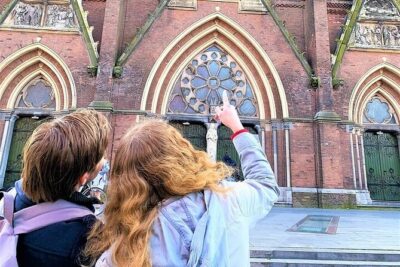
Discover Maastricht with a self-guided Outside Escape city game
Read our review →Browse the lists this tour appears in