

Reviewed · ESCAPE GAMES & SCAVENGER HUNTS
e-Scavenger hunt Dordrecht: Explore the city at your own pace
Dordrecht’s best feature is its compact old center, and this smartphone scavenger hunt gives you a reason to wander beyond the obvious streets. You follow GPS from the Grote Kerk to historic courtyards, grand gates, museums, and old merchant homes while answering questions and completing challenges.
I like the freedom to start anytime and pause whenever you want. I also like the price: $37.35 covers a private group of up to six, which is strong value for a family or group of friends. The drawback is that you provide the phone and mobile data, and the experience is less personal than a live guide.
Key points to know before you book
- Start at Grote Kerk: The trail begins on Grotekerksplein and returns you there at the end.
- A flexible two-hour route: The active trail takes about two hours, but there is no fixed time limit, so you can stop for food, coffee, or museum visits.
- Twelve historic stops: Expect churches, city gates, courtyards, museums, patrician houses, a distillery, and a monument.
- One price for six people: At $37.35 per group, the cost works out well for a full team.
- Play in your preferred language: English, Dutch, French, German, Spanish, Italian, and other language options are available.
- Good for mixed ages: The questions and puzzles are designed for families and groups, with GPS helping you stay on course.
A city game that lets Dordrecht set the pace
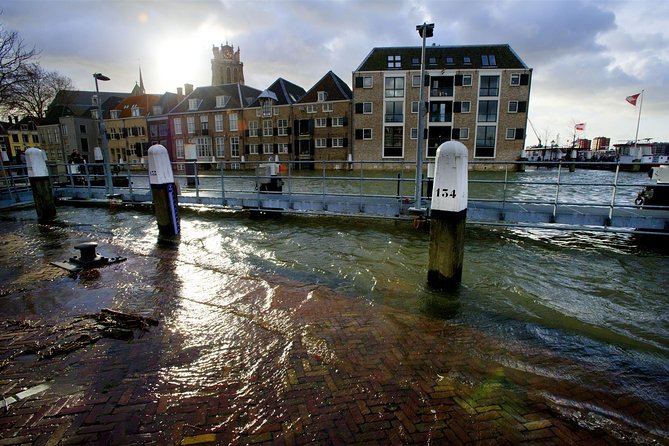
Dordrecht is one of the Netherlands’ oldest cities, but you do not need a lecture to appreciate it. Its appeal comes from small discoveries: a quiet courtyard, an old city gate, a grand facade, or a building you might otherwise pass without noticing.
This Qula trail turns those discoveries into a game. Your phone tells you where to go, then asks questions or gives you a task connected with the place. You can compete for the top score, work together, or simply use the challenges as a reason to look closely.
The format suits Dordrecht well. The center is walkable, and the route links major sights with less obvious corners. One particularly useful detail is that the trail does not force you to rush. You can pause the game for a museum visit, a meal, or a break from the weather.
The route itself is described as taking about two hours, although the listed activity duration is approximately three hours. I would plan for at least half a day if you want time for stops, pictures, and indoor visits. The game ends back at the starting point, which makes it easier to combine with a parked car or public transport.
Other outdoor games and hunts around the Netherlands:
- e-Scavenger hunt Maastricht: Explore the city at your own pace
★ 4.5 · 110 reviews - e-Scavenger hunt Middelburg: Explore the city at your own pace
★ 4.5 · 55 reviews - Rotterdam Highlights & Spies: Interactive City Game
★ 4.0 · 51 reviews
Starting at the Grote Kerk
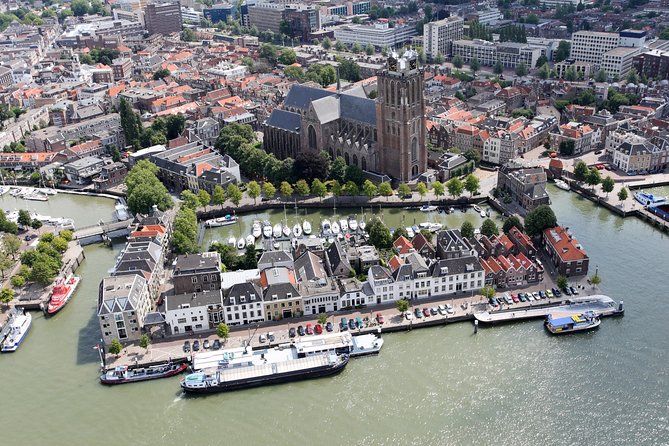
Your meeting point is Grotekerksplein, beside the Grote Kerk, or Great Church. This is a sensible place to begin because it puts you in the middle of Dordrecht’s old center and gives you an immediate sense of the city’s scale.
The church is one of the most recognizable buildings in town. Even if you do not go inside, its tower and broad historic form provide a strong first landmark. Your first questions help you get used to the game, the GPS, and the way the clues work.
Bring your phone fully charged. The operator sends instructions by email after booking, and you use your own Android phone or iPhone to play. You also need mobile data, which is not included.
City Hall and the Hof van Nederland
The next stops bring you to Stadhuis van Dordrecht, Dordrecht’s city hall, and Hof van Nederland. This pairing gives the route a useful change of mood. One stop points you toward civic life and public buildings, while the other connects you with the city’s political and national past.
The Hof van Nederland is especially useful for anyone who wants more context than a simple photo stop provides. The questions encourage you to examine the setting rather than walk straight through it. I like this part of the route because the game can make a familiar-looking square or facade feel worth a closer look.
The trail works best when your group discusses the answers instead of letting one person do all the work. Children can search for visual clues, while adults can handle questions that need a bit more reading or historical attention.
Groothoofdspoort and Dordrecht’s waterborne identity
Groothoofdspoort is one of the route’s most striking stops. This old gate marks an important entrance to the city and reflects Dordrecht’s position near major waterways.
The gate gives you a strong sense of how the city once presented itself to people arriving by land or water. It is also the sort of place that benefits from a pause. Look up, check the architectural details, and let the challenge direct your attention to features you might otherwise miss.
GPS is helpful here because a phone-based trail can otherwise feel like a string of disconnected addresses. The navigation keeps the route moving and reduces the worry that you have taken a wrong turn. It does not remove the need to pay attention, though. You still need to watch traffic, other pedestrians, and your surroundings.
Same city, a different sort of day:
- Amsterdam: Van Gogh Museum Ticket
★ 4.7 · 52,054 reviews - Amsterdam Classic Saloon Boat Cruise with Drinks and Cheese
★ 5.0 · 31,825 reviews - Amsterdam Luxury Canal Cruise + Unlimited Drinks & Bites option
★ 5.0 · 30,518 reviews - Amsterdam: Heineken Experience Ticket
★ 4.6 · 30,055 reviews
Arend Maartenshof and the pleasure of a surprise
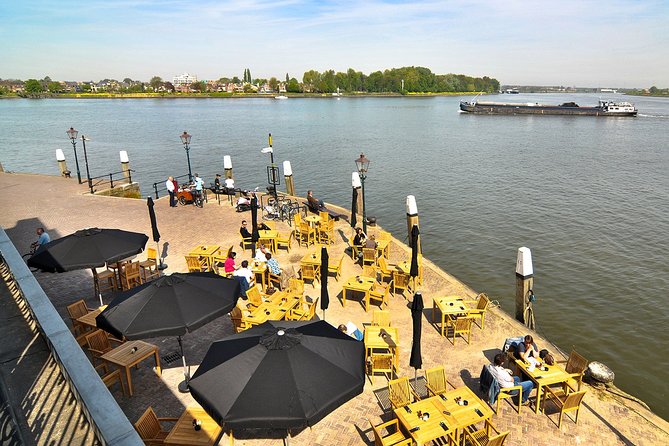
The route includes Arend Maartenshof, a historic courtyard, and later returns to it. The repeated listing suggests that this is not just a quick pass-by. It is a place where the trail may ask you to notice more than one detail or approach the site from another direction.
This courtyard is one of the more rewarding parts of the walk because it feels quieter than the main streets. You might find yourself slowing down here, especially if the gate is open and you can see further into the complex.
A useful practical point comes from the experience of past groups: the regents’ room at Arend Maartenshof may be accessible during your visit. That is not guaranteed by the trail information, so treat it as a possible bonus rather than a promised feature. Still, it shows why leaving some extra time is wise.
Dordrechts Museum and Huis Van Gijn
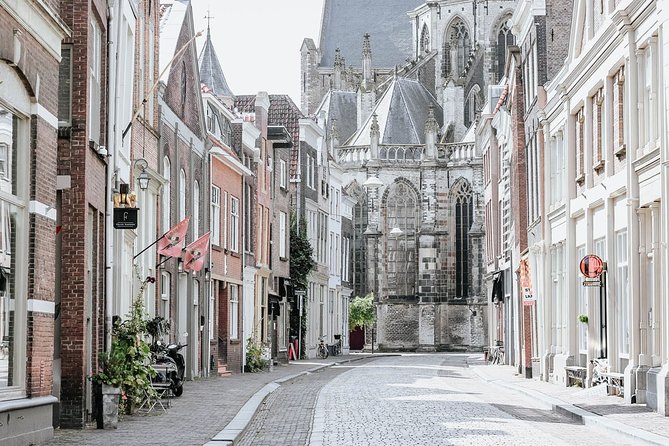
The Dordrechts Museum and Huis Van Gijn add indoor culture to the outdoor walk. They also give you an option when rain makes the streets less inviting.
The museum stop is not the same as a museum tour. The city game takes you to the location and builds a challenge around it, but admission and a full visit are not included. If you want to explore the collections, you should allow extra time and check opening details separately.
Huis Van Gijn offers a different kind of look at Dordrecht. The name is tied to a historic house and its former occupants, so the building helps you picture how a well-off family once lived. Again, the trail does not replace a proper interior visit, but it can point you toward a place you might have skipped.
I like this pairing because it breaks up the walk. You get streets, buildings, and public spaces, then the option of a more focused indoor stop. Families should decide in advance if museums fit the group’s mood, since younger children may prefer to keep solving challenges rather than spend a long time inside.
Patrician homes and the Rutte distillery
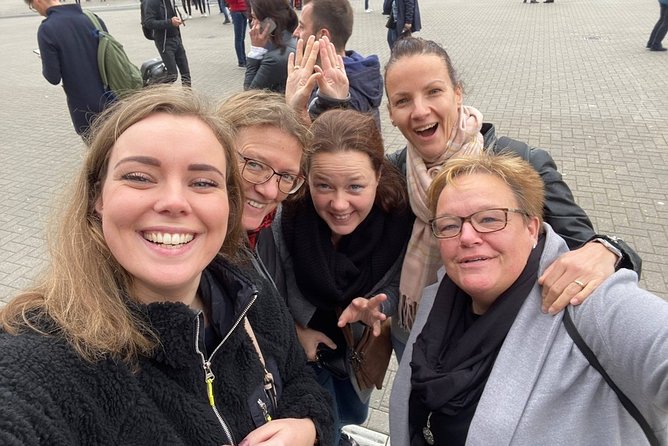
Next come Dordts Patriciershuis and Distillery Rutte, two stops that add domestic and commercial character to the route.
A patrician house shows the wealth and confidence of Dordrecht’s leading families. Its importance is not only in the facade. Details around doors, windows, and proportions can tell you how the city’s prosperous residents wanted to be seen.
Distillery Rutte gives the walk a more everyday connection. A distillery is a working place tied to local food and drink traditions, not just a monument. The trail lets you connect Dordrecht’s grand architecture with the businesses that helped give the city its character.
Do not assume that a tasting or interior tour is included. The supplied information only confirms the stop itself. If you want to visit inside, check separately and keep the trail’s flexible timing in mind.
The De Witt brothers and Augustijnenkerk

The route then reaches the statue of the De Witt brothers, followed by the Augustijnenkerk. These stops bring political history and religious architecture into the same walking sequence.
The De Witt monument is a reminder that Dordrecht’s past is tied to national events as well as local streets. A short challenge here can give your group a reason to discuss what the figures represent instead of treating the statue as a quick photo opportunity.
The Augustijnenkerk provides another change in tone. Churches often reward a slower look, even when you are not taking part in a formal tour. Notice the building’s position in the old center and how it fits into the surrounding streets.
The final stop brings you back toward the beginning, and the activity ends at the meeting point. That simple finish is useful. You are not left on the far side of town trying to find your way back to the station or car.
What the puzzles add to the walk
The main value here is not secret information or a theatrical story. It is the way the questions make you look. A plain walk through Dordrecht can turn into a blur of old buildings. A prompt asking you to identify a detail, solve a riddle, or complete a task gives everyone a role.
I would divide the work among the group. Let children search for visual clues, give history-minded adults the reading tasks, and have someone keep an eye on the route. The game is designed for two to six people, so a group of four to six has enough voices for lively competition without becoming unwieldy.
The questions are intended for a broad age range. That does not mean every question will be equally easy for every person. Some groups will enjoy working out the answers together. Others may find the competition distracting if they prefer a quiet sightseeing walk.
The trail is private, so only your own group participates. That is a real advantage for a family, a birthday outing, or a bachelor day where you want to set your own pace. You do not need to match the rhythm of strangers or wait for a guide.
Weather, phones, and practical planning
Rain does not make the trail impossible. The route can still work in wet weather, and Dordrecht’s old center remains interesting when the streets are damp. But you will spend much of the activity outside, so waterproof clothing and a phone cover are sensible.
The no-time-limit policy is especially useful in poor weather. You can pause in a cafe or museum, then continue later. You can also stop if the group needs a break. There is no fixed starting time, and the trail is available 24 hours a day, seven days a week.
The route relies on GPS, so keep location services active. The phone and data are your responsibility. Read the email instructions before arriving, and make sure the person who booked the activity can access them.
The starting point is near public transportation. If you drive, parking away from the center may be cheaper. Weeskinderendijk was used by one group as a low-cost parking option, followed by a short walk into the center. Parking conditions can change, so check current information before you set out.
Service animals are allowed. The activity is also described as suitable for people with hearing impairment, since the instructions and challenges are delivered through the phone rather than by spoken commentary.
Is $37.35 good value for six people?
The price is $37.35 per group of up to six, not per person. With six participants, that is a very low-cost outing. Even with two people, it remains reasonable if you want a structured way to see the city without paying for a private guide.
The value comes from flexibility rather than added inclusions. You are not paying for transport, entry tickets, a guide, or equipment. You are paying for the route, game content, and access instructions.
That makes this a good choice for independent groups. If you want detailed stories at every stop, personal recommendations, or immediate answers to questions, a live guide would offer more. If you want to choose your own start time and stop for lunch without asking permission, the Qula format has the edge.
The cancellation terms are fair but important. You can cancel for a full refund up to 24 hours before the start time. Changes or cancellations inside that window are not accepted for a refund.
Who should choose this Dordrecht experience?
I would choose this trail for families with children old enough to use clues, groups of friends who enjoy a little competition, and people who want to see Dordrecht without committing to a fixed tour schedule.
It also works well for locals. The route can reveal courtyards, rooms, and historical details you have passed many times without noticing. A group celebrating a birthday or bachelor day can make the score part of the fun, then add food or drinks during a pause.
I would think twice if you dislike phone-based activities or want a quiet, unstructured stroll. You may also prefer another format if you need a fully guided explanation of every building. The trail provides prompts, not a personal historian.
The range of languages is helpful for international groups. English, Dutch, French, German, Spanish, Italian, and additional options make it easier for everyone to take part in the same game.
Should you book the Qula Dordrecht trail?
Book it if you want an affordable, private way to cover Dordrecht’s old center with a bit of purpose. The route links the Grote Kerk, city hall, Hof van Nederland, Groothoofdspoort, Arend Maartenshof, museums, historic houses, Rutte distillery, the De Witt statue, and Augustijnenkerk.
The strongest reasons to choose it are the flexible schedule, the group price, and the way the puzzles make you notice details. Plan extra time for museums, meals, weather breaks, and possible access to the regents’ room at Arend Maartenshof.
Skip it if you want a live guide, a formal museum visit, or a tour with every minute planned for you. For everyone else, this is a practical and good-value introduction to Dordrecht, with enough freedom to make the day your own.
FAQ
How long does the Dordrecht city trail take?
The active trail takes about two hours, while the listed activity duration is approximately three hours. There is no time limit, so you can pause or stop when it suits your group.
Where does the trail start and finish?
It starts at Grotekerksplein, near the Grote Kerk in Dordrecht. The activity ends back at the same meeting point.
How many people can join one booking?
The price covers a private group of two to six people. Only your group takes part.
Do I need my own smartphone?
Yes. You need an Android phone or iPhone, along with mobile data. The smartphone and data are not included.
What languages are available?
The trail is available in English, Dutch, French, German, Spanish, Italian, and additional languages.
Can I start at any time?
Yes. There are no fixed starting times or reservations for a particular hour. The trail is available 24 hours a day, seven days a week.
Can I cancel for a refund?
You can cancel up to 24 hours before the experience’s start time for a full refund. Cancellations or changes made less than 24 hours in advance are not accepted for a refund.
Just added in the Netherlands
- Private Tour of The Hague, Delft and Rotterdam with Lunch★ 5.0 · 3 reviews
- Historical The Hague: Private Tour with Local Guide★ 5.0 · 6 reviews
- The Blue’s Clues in Delft Exploration Game and Tour★ 3.5 · 10 reviews
- The Hague Self-Guided Audio Tour★ 5.0 · 3 reviews
- Discover Historical Delft with an Audio Guide★ 5.0 · 3 reviews
- Taking Pictures in the Tulip Field at De Tulperij★ 4.5 · 35 reviews
- Delft 2-Hour Walking Tour | Discover The City With A Local★ 4.5 · 8 reviews
- 90 minutes Self Guided Walking Tour with puzzles in Den Haag★ 4.5 · 7 reviews
Escape Games & Scavenger Hunts, compared.

e-Scavenger hunt Maastricht: Explore the city at your own pace
Read our review →
Rotterdam Highlights & Spies: Interactive City Game
Read our review →
Discover Utrecht with a self-guided Outside Escape city game tour
Read our review →
e-Scavenger hunt Den Bosch: Explore the city at your own pace
Read our review →
Discover The Hague with a self-guided Outside Escape city tour
Read our review →
Discover Amerfoort’s city center in this Outside Escape game tour
Read our review →
Discover Maastricht with a self-guided Outside Escape city game
Read our review →Browse the lists this tour appears in