
Reviewed · WALKING TOURS
Private Amsterdam WW2 walking tour
Amsterdam’s World War II story is told most clearly through its streets, monuments, and former Jewish Quarter. This private walk connects the Portuguese Synagogue, Auschwitz Monument, Hollandsche Schouwburg, and Anne Frank story in about two hours, giving you a sober look at how occupation and deportation changed the city.
I like the private format, since you can ask questions without trailing behind a large group. I also like the route’s mix of memorials, Jewish history, resistance history, and famous central sights. The main drawback is pace: nine stops in two hours leaves little time at any one place, and the Anne Frank House is discussed rather than entered.
Key points
- Private guide for your party: You get a more personal walk and can ask questions as the story unfolds.
- Jewish Amsterdam comes first: The Portuguese Synagogue and Plantage area give useful context before the tour turns to deportation and resistance.
- Several important memorial sites are outdoors: Auschwitz Monument, Dam Square, and the Spinoza Monument can be visited without separate admission.
- Anne Frank’s story is included, but house entry is not: Do not book this expecting an interior visit to the Anne Frank House.
- Guide quality matters: Aaron, James, Masha, and Stan have led highly praised tours, but one booking reports a serious problem with Aaron’s manner.
- Two hours means a brisk walk: You cover a lot of ground, so comfortable shoes and focused attention will help.
A sobering route through Amsterdam’s Jewish Quarter
This is not a general sightseeing stroll with a few wartime facts sprinkled in. Its main purpose is to show you how Amsterdam’s Jewish community developed, suffered under Nazi occupation, and is remembered today.
The tour begins at Amstel 51C, near the Portuguese Synagogue. From there, your guide leads you through a series of sites in and around the Jewish Quarter before walking toward Dam Square and the Royal Palace. The tour ends back at the meeting point, according to the supplied details.
I appreciate the order of the route. You first hear about Jewish life and community institutions. Only then does the walk move toward deportation, resistance, and remembrance. That sequence gives the history a human setting instead of reducing Amsterdam’s wartime past to dates and military events.
Because this is a private tour, the experience can adjust somewhat to your interests. If your family wants more detail about Jewish life, resistance, monuments, or Anne Frank, you can ask. Still, the advertised timing is fixed at roughly two hours, so a question-heavy visit may mean less time at later stops.
More Walking Tours in Amsterdam
- Anne Frank’s Story – Guided Walking Tour through Amsterdam
★ 5.0 · 11,619 reviews - Amsterdam: Life of Anne Frank and World War II Walking Tour
★ 4.8 · 10,467 reviews - Absolutely Amsterdam – the Essential Introductory Walking Tour
★ 5.0 · 3,629 reviews
Portuguese Synagogue: beginning with Jewish life before the war
The Portuguese Synagogue is the first major stop, with about ten minutes planned there. The building reflects the size and wealth of Amsterdam’s Sephardic Jewish community during the Dutch Golden Age, when this was one of the largest Jewish communities in Europe.
That background matters. You begin by learning that Amsterdam’s Jewish presence was not created by the events of the 1940s. It had its own institutions, religious traditions, prosperity, and public life long before the Nazi occupation.
The synagogue remains an active place of worship and is also open as a visitor attraction. This walk does not include a paid admission ticket, and the short scheduled stop suggests that you should expect an outdoor explanation or a brief look rather than a full interior visit.
If you want to study the synagogue in detail, plan separate time for it. Ten minutes is enough for orientation, not a full visit. That is one of the recurring trade-offs of this tour: you see many meaningful places, but you do not linger.
Auschwitz Monument and the weight of deportation
The route then reaches the Auschwitz Monument, where the guide explains the deportation of Amsterdam’s Jewish population. This is one of the walk’s most direct memorial stops, and its purpose is remembrance rather than sightseeing.
Your guide’s role here is especially important. A good explanation can connect the physical monument with the people and events it represents. Several guides associated with this experience have been praised for making the history clear, personal, and respectful, including James, Masha, and Stan.
The planned stop lasts around ten minutes. That may feel brief for a place with such emotional weight, but the guide’s explanation can provide a strong framework for understanding it. You may want to return later if you prefer time for quiet reflection.
The tour is not light entertainment. Even when the guide keeps the walk conversational, the subject includes deportation, occupation, and the destruction of a community. I would choose this experience when you are ready to give the subject your full attention.
Resistance history at Verzetsmuseum Amsterdam
At Verzetsmuseum Amsterdam, the guide discusses resistance involving the Jewish community and the wider Dutch response to Nazi occupation. The museum itself is an important Amsterdam institution, but the tour does not include admission.
This stop is useful because it broadens the story. The walk is not only about victims and memorials. It also addresses the choices people faced during occupation, including resistance and the efforts made to oppose Nazi rule.
Again, the schedule allows about ten minutes. That is enough for a guide to point out the museum, explain its role, and suggest why it may deserve a longer independent visit. It is not enough to tour the museum itself.
If you have limited time in Amsterdam, this kind of introduction can help you decide where to return. The guide may also suggest other museums, as James has done for previous groups. Treat those suggestions as a bonus, not as part of the guaranteed route.
Other guided walks around Amsterdam:
- Amsterdam: Anne Frank Guided Small Group Walking Tour
★ 4.8 · 2,722 reviews - Amsterdam: Anne Frank Walking Tour – Guided in EN/DE/IT/ES
★ 4.9 · 2,676 reviews - Amsterdam: Guided Cultural Walking Tour
★ 4.9 · 2,384 reviews - Amsterdam: Guided Ganja Walking Tour of Coffee Shops
★ 4.2 · 2,092 reviews
Hollandsche Schouwburg and the machinery of deportation
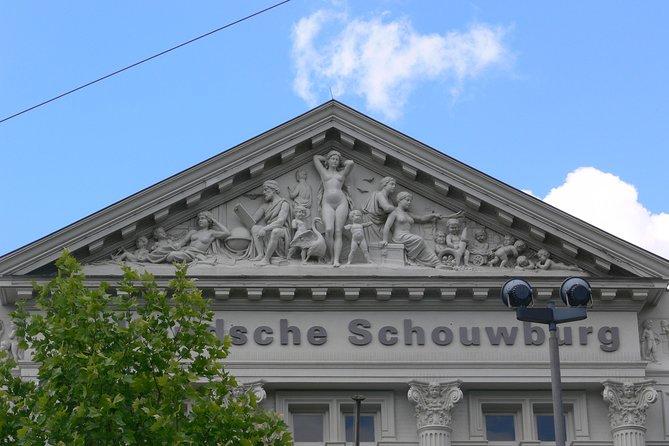
The Hollandsche Schouwburg is another serious stop. Here, the guide explains deportation camps and the building’s role in the persecution of Amsterdam’s Jewish population.
This location helps make the process of deportation more concrete. The Nazi persecution was not an abstract sequence of events happening somewhere else. It involved familiar city buildings, official systems, forced movement, and the loss of neighbors and community members.
The allotted time is roughly ten minutes. You will receive context, but you should not expect a full museum visit or a long indoor presentation. If this subject is central to your trip, you may wish to return independently after the walk.
The advantage of visiting with a guide is the connection between sites. On your own, you might pass the Hollandsche Schouwburg without understanding its place in the city’s wartime story. Here, it forms part of a larger chain that began with community life and moves through deportation and remembrance.
Plantage and the Spinoza Monument
The walk continues through De Plantage, a pleasant part of Amsterdam with its own history. This offers a change in tone without abandoning the tour’s main subject. Your guide shows how the area fits into the city and links its streets to the Jewish history already discussed.
I like this part of the route because it prevents the experience from becoming a series of isolated memorials. You are moving through a real neighborhood, not a museum corridor. The ordinary setting can make the historical discussion feel closer and more immediate.
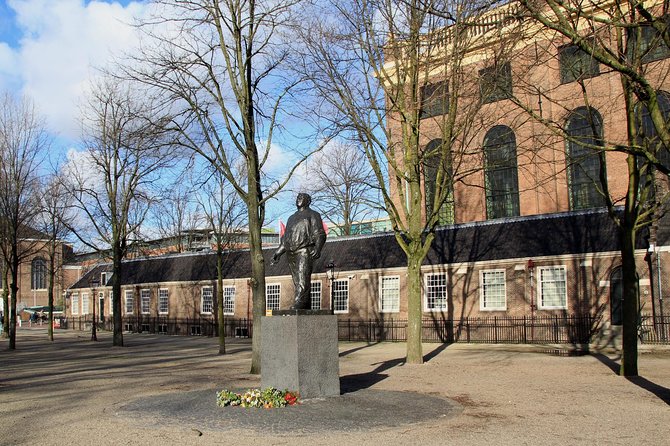
The Spinoza Monument follows, with another ten-minute stop. Your guide explains the monument and its connection to the philosopher Baruch Spinoza. The supplied details do not promise a long biography, so expect a focused explanation rather than a full philosophical lecture.
The Plantage and Spinoza stop also show the broader range of Amsterdam’s Jewish story. The experience is not limited to World War II alone. It places the wartime period within a longer account of Jewish life, thought, religion, and public presence in the city.
Walking toward Dam Square and the Royal Palace
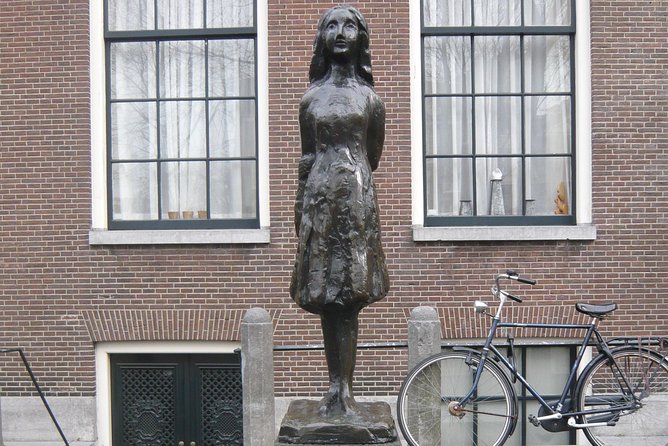
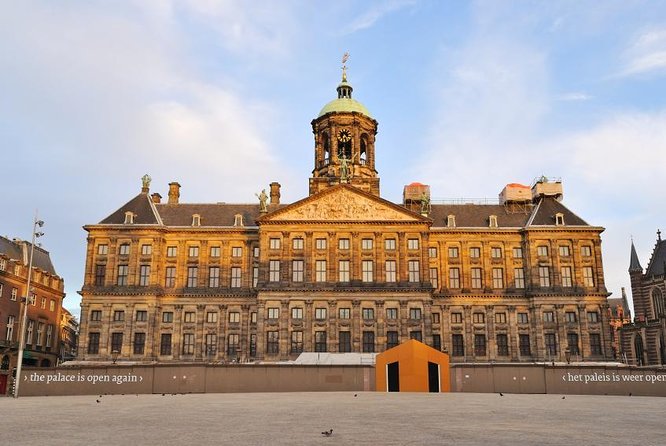
After the Jewish Quarter and wartime sites, the group walks to Dam Square and the Royal Palace. This part changes the mood and gives you two of Amsterdam’s best-known central landmarks.
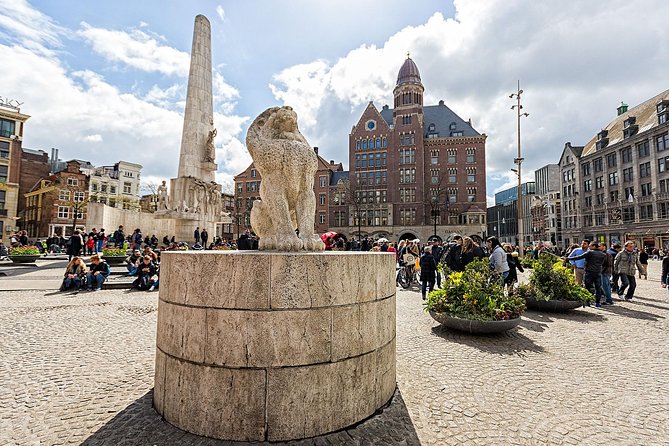
At Dam Square, the guide discusses the monument for about ten minutes. The square is a major public space, and its monument carries its own place in Dutch remembrance. You get a chance to connect the city’s national memory with the more specific Jewish memorials visited earlier.
The Royal Palace Amsterdam is scheduled for a short five-minute stop. The supplied information does not include palace admission, and the tour price does not include food or drinks. Treat this as an exterior orientation or brief sightseeing stop unless your guide tells you otherwise.
These final landmarks are useful for first-time visitors because they put the Jewish Quarter walk into a wider Amsterdam itinerary. Still, they are not the reason to book this experience. If you mainly want palace interiors, architecture, or a general city tour, another activity would serve you better.
Anne Frank’s story, with an important limit
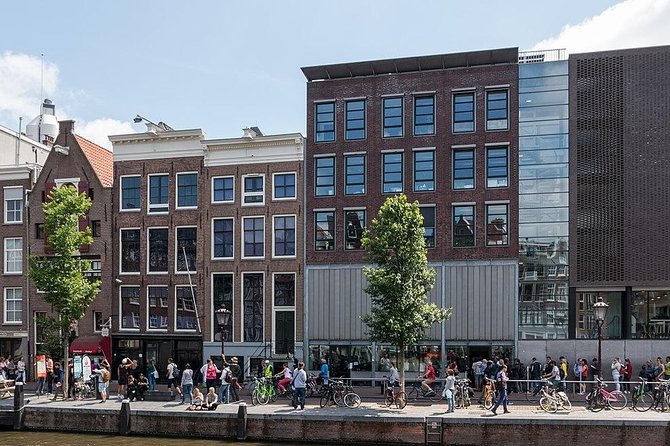
The final listed subject is the Anne Frank House. Your guide explains Anne Frank’s story, but admission is not included. The supplied details do not say that the group enters the house.
This point deserves careful attention. Some people book a tour like this expecting a visit inside Anne Frank House because the name appears in the route. That expectation can lead to disappointment. You should think of this as a guided discussion of Anne Frank and the surrounding history, not a ticketed house tour.
The listing places Anne Frank House at the end of the sequence, while the activity also says the walk ends back at the meeting point. That makes the exact stopping arrangement worth confirming at booking. In any case, you should arrange a separate Anne Frank House ticket if you want to enter, and you should not assume this private walk provides one.
The benefit is convenience: you hear how Anne Frank’s story fits into Amsterdam’s occupation and Jewish history without arranging a separate guide. The limitation is depth and access. Ten minutes cannot replace a full visit, and no admission is included.
Private format and the difference a guide can make
The private setup is the strongest practical feature. Only your party participates, so you are not locked into the needs of a large group. Families and couples can ask direct questions, pause briefly, or request more explanation on a particular subject.
The guides named in past bookings include Aaron, James, Masha, and Stan. James has been praised for offering unusual historical perspectives and museum suggestions. Masha has been described as friendly, interactive, and especially effective for Jewish history. Stan has received strong praise for continuing clearly even in cold, wet, and windy weather.
There is also a serious caution involving Aaron. One booking describes a cold, condescending manner and remarks that made the participant feel unwelcome. Another account praises Aaron’s handling of the route, so experiences have not been uniform. If you are concerned about guide fit, ask whether a specific guide can be requested when booking.
A private tour does not automatically guarantee a great guide. The subject matter calls for tact, patience, and respect, especially when discussing persecution and family history. The guide’s tone can shape the entire experience.
Is $126.31 per person fair?
At $126.31 per person, this is not a bargain city stroll. The price makes more sense for a small party that values a private guide and wants a focused introduction to Amsterdam’s Jewish and World War II history.
For a couple, the total cost can feel high for two hours. For a larger private group, group discounts may improve the value. The tour also saves you from planning the route between several sites and working out how the locations connect.
You are paying for the guide’s time, the private format, and the historical structure, not for admissions. Most stops have no admission charge, while the Anne Frank House is specifically not included. Food and drinks are also not included.
I would consider it good value if you want personal explanation and have limited time. I would consider it poor value if you prefer to explore museums at your own pace or mainly want to enter the Anne Frank House. Compare the price with your group size, since the private format becomes more attractive when shared among several people.
Timing, weather, and practical comfort
Two hours sounds manageable, but this is a concentrated walk. With roughly ten minutes assigned to most stops, you will spend much of the experience moving between locations and listening while standing outdoors.
Wear comfortable shoes. The tour is on foot, and one past group completed it in poor weather, including rain, wind, and cold. That does not mean bad weather will cancel the walk. It does mean you should dress for Amsterdam’s conditions and be ready to stay outside.
The tour is offered in English and is near public transportation. Mobile tickets are supported, and confirmation is received at booking. Service animals are welcome, and most people can participate.
The meeting point is Amstel 51C, 1018 EJ Amsterdam. The activity is listed as ending back at the meeting point. Since the route includes central landmarks and a separate walk toward Dam Square, confirm the exact end-of-tour arrangement if you have a tight schedule afterward.
You can cancel for a full refund up to 24 hours before the start time. Cancellations or changes made less than 24 hours ahead are not accepted for a refund.
Who should book this Amsterdam history walk?
I would recommend it to first-time visitors who want a clear introduction to Amsterdam’s Jewish history and World War II sites without building the route themselves. It also suits families or small groups that value a private guide and want freedom to ask questions.
It is a good choice for visitors who plan to visit the Jewish Cultural Quarter, the Resistance Museum, or Anne Frank House separately and want the citywide context first. The route gives you useful orientation and can help you choose which places deserve more of your time.
I would not choose it as your only Jewish history experience in Amsterdam. The two-hour format is brisk, and the short stops limit the time available for museums and quiet reflection. I also would not book it if your main goal is entering Anne Frank House.
FAQ
How long is the private Amsterdam World War II walking tour?
The tour lasts approximately two hours.
What language is the tour offered in?
The tour is offered in English.
Is this a private tour?
Yes. Only your party participates in the activity.
Where does the tour start?
The meeting point is Amstel 51C, 1018 EJ Amsterdam, Netherlands.
Where does the tour end?
The activity is listed as ending back at the meeting point.
Is admission to the Anne Frank House included?
No. Admission to the Anne Frank House is not included. The guide discusses Anne Frank’s story, but you should not assume the tour includes entry.
Are food and drinks included?
No. Food and drinks are not included.
Should you book it?
Book this walk if you want a private, tightly focused introduction to Amsterdam’s Jewish history and wartime past, especially if you appreciate having a local guide connect several memorials and neighborhoods. The strongest parts are the route’s historical range, the private format, and the chance to hear different perspectives from guides such as James, Masha, or Stan.
Go in with realistic expectations. You will cover many sites quickly, most explanations happen outdoors, and the Anne Frank House is not part of the admission. If you can confirm a guide whose approach suits you and the private price fits your group, this can be a meaningful first look at a difficult part of Amsterdam’s story.
Just added in Amsterdam
- Guided Day Trip – Volendam, Zaanse Schans, Marken & Edam★ 4.0 · 232 reviews
- Half-Day Private Guided Sightseeing Tour of Zaanse Schans★ 5.0 · 14 reviews
- Private Tour Zaanse Schans Windmills and Volendam in Jaguar★ 5.0 · 10 reviews
- Zaanse Schans and Giethoorn Unique Day Trip with Boat Cruise★ 4.5 · 17 reviews
- Zaanse Schans Private Tour Windmills★ 5.0 · 18 reviews
- Private bike tour: Hidden gems around Amsterdam and surroundings★ 5.0 · 4 reviews
- Bike tour in Amsterdam with an Italian guide★ 5.0 · 15 reviews
- Amsterdam Sightseeing Tour + Hidden Gems + Tastings + PDF guide★ 5.0 · 35 reviews
Walking Tours, compared.
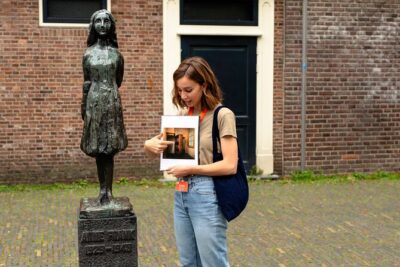
Anne Frank’s Story – Guided Walking Tour through Amsterdam
Read our review →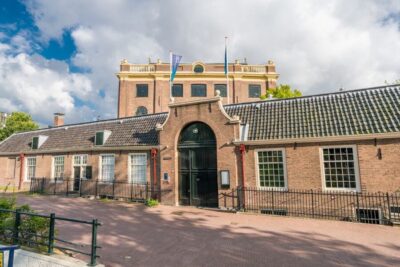
Life of Anne Frank and World War II Walking Tour
Read our review →

Anne Frank Walking Tour – Guided in EN/DE/IT/ES
Read our review →

Anne Frank Walking Tour Amsterdam Including Jewish Cultural Quarter
Read our review →
Amsterdam Highlights Walking Tour: Small Group Experience
Read our review →Browse the lists this tour appears in