Reviewed · TOURS IN AMSTERDAM
Rembrandt House & Neighborhood Guided Tour Semi-Private 8ppl Max
Rembrandt House is the heart of this experience, but the walk to it gives you the better story. You follow canals, old defenses, art dealers, bridges, Jewish Amsterdam, and the places tied to Rembrandt’s working life before entering the house where he lived and painted. The small group of no more than eight is a real plus, since Amsterdam’s narrow streets and busy squares are easier to handle with a guide who can hear your questions.
I like the personal focus, especially the chance to connect Rembrandt’s house with nearby Museum Van Loon, the bronze Night Watch figures, and the Amstel. I also like the clear route from Cobra Café to the museum, which lets you finish at Rembrandt House rather than doubling back. The main drawback is pace: two and a half hours covers a lot of ground, and most early stops are brief exterior visits rather than full museum entries.
Key points to know before booking
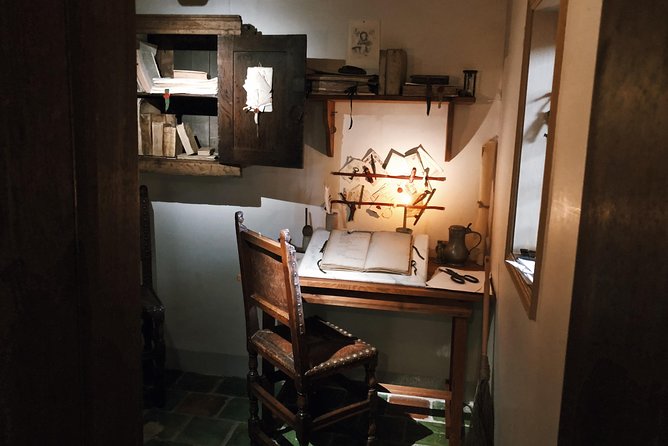
- Rembrandt House gets a full hour: You finish inside the artist’s former home and workplace, with time for its paintings, etchings, and personal items.
- Eight people maximum: The small party size allows for direct questions and a more tailored walk.
- The route links art and city life: You see Spiegelkwartier galleries, canal defenses, Rembrandtplein, the Amstel bridges, and the former Jewish neighborhood.
- Most sightseeing happens outdoors: Museum Van Loon, the Munttoren, and the Stopera are viewed along the route, with admission not included at those stops.
- The tour is in English: It begins at 1:30 p.m. at Cobra Café and ends at Rembrandt House Museum.
- Plan for steady walking: The tour is not recommended for people with walking disabilities or wheelchair users.
Following Rembrandt from Spiegelkwartier to the canals
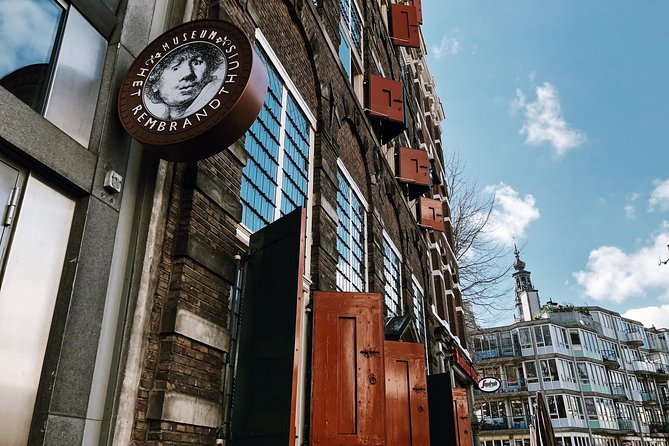
The meeting point is Cobra Café on Hobbemastraat, near the Museumplein area. From there, the guide leads you toward the Singelgracht, the waterway that once marked the outer defenses of central Amsterdam.
That opening gives you useful city context before the tour turns fully toward Rembrandt. Amsterdam’s canals were not just pretty streetside views. They helped shape the city’s growth, trade, and defenses. You then reach the Spiegelgracht, part of Amsterdam’s UNESCO-listed canal area and a compact stretch known for art galleries and antique shops.
I like this first section because it places Rembrandt in a working city rather than treating him as an isolated name in a museum. You see the sort of canal setting that shaped Amsterdam’s wealth and culture. The catch is that this part lasts about ten minutes, so you should expect a guided orientation, not time to browse galleries or shop for antiques.
The guide’s role matters here. With only eight people, it should be easier to stop for a question or hear an explanation beside the water. Jo, one of the guides associated with this experience, has been singled out for giving her small group her full attention and for her warm, informed approach.
A few more things to do in Amsterdam worth a look
- Rijksmuseum Amsterdam Small-Group Tour with Private Upgrade
★ 4.5 · 1,547 reviews - Van Gogh Museum Tour Reserved Entry Semi Private
★ 5.0 · 1,437 reviews - Private Amsterdam Red Light District and Coffee Shop Tour
★ 5.0 · 763 reviews
Keizersgracht and the house linked to Ferdinand Bol
The route continues to Keizersgracht, or the Emperor’s Canal, the widest of Amsterdam’s three main central canals. It takes its name from Maximilian of Austria. Like the Spiegelgracht, it is best appreciated slowly, but the tour allows about ten minutes here.
You then pass Museum Van Loon, a canalside house on Keizersgracht connected with Ferdinand Bol, one of Rembrandt’s favorite pupils. The building offers a useful reminder that Amsterdam’s artistic circles were close-knit. Rembrandt’s influence reached into workshops and households across the city, not only into the paintings now displayed in major museums.
The tour does not include admission to Museum Van Loon. You see it as part of the walking route, so plan a separate visit if you want to enter. That is a fair trade for a two-and-a-half-hour tour, but it is worth knowing before booking. The phrase private museum tour applies most clearly to the final visit to Rembrandt House, not to entry at every building along the way.
Flower stalls, the Munttoren, and Rembrandtplein
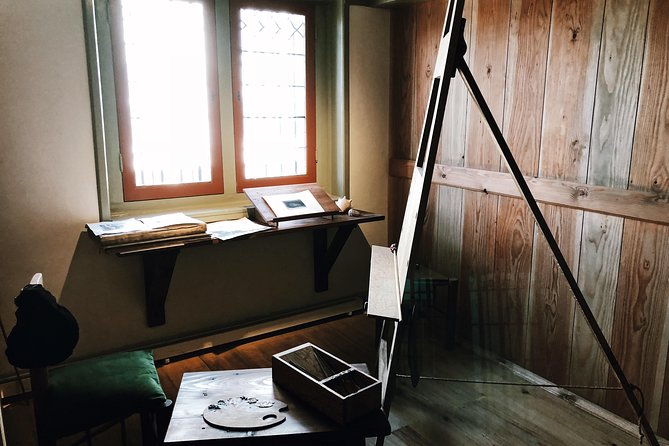
The walk then passes the Bloemenmarkt, Amsterdam’s famous flower market, with a view of the Munttoren. The tower was once part of a gate in the medieval city wall. Its present role is less defensive, but it remains a useful marker of how the old city was organized.
The itinerary gives about ten minutes to this area. The tower is viewed from outside, and admission is not included. That keeps the tour moving, though you will not have time for a lengthy market stop or an interior visit.
From here, the route reaches Rembrandtplein, one of central Amsterdam’s busiest squares. The square carries Rembrandt’s name, and a bronze representation of The Night Watch has been displayed there since 2006, when it formed part of the celebrations for the 400th anniversary of the artist’s birth.
The bronze figures make the painting easier to understand as a group scene. You can look closely at the poses and composition in three dimensions, though the display is not a replacement for seeing the original painting. The square itself can be busy, so staying close to the guide is sensible, especially while the group is gathered around the monument.
This is one of the more memorable outdoor moments of the tour because the subject is no longer simply a canal or a building. You are looking at Rembrandt’s most famous work represented in the city that made him famous. The stop is free, but it is brief, with about ten minutes allocated.
The Skinny Bridge, Blue Bridge, and Stopera
The route then reaches the Amstel River and two well-known bridges. The Skinny Bridge is perhaps Amsterdam’s most famous bridge, while the Blue Bridge takes its name from a wooden blue bridge that crossed the Amstel in the 17th century. The current bridge is not blue, which gives the name an amusing bit of historical baggage.
You get about ten minutes along the river. This is a good point for photographs and for understanding how Amsterdam’s canals connect to the larger waterway. The bridges are seen from the route, not explored as separate attractions.
Next comes the Stopera, the complex that houses Amsterdam’s city hall and the Dutch National Opera and Ballet. Its construction took at least 60 years to come together, a detail that helps explain why the building has such an unusual civic and cultural role.
The tour does not include admission to the opera and ballet. You should treat this as an architectural and city-planning stop, not a performance visit. The same applies to the earlier buildings that are marked as exterior views. The route works best for you if you want a connected walking story rather than a string of long indoor visits.
Same city, a different sort of day:
- Amsterdam: Van Gogh Museum Ticket
★ 4.7 · 52,054 reviews - Amsterdam Classic Saloon Boat Cruise with Drinks and Cheese
★ 5.0 · 31,825 reviews - Amsterdam Luxury Canal Cruise + Unlimited Drinks & Bites option
★ 5.0 · 30,518 reviews - Amsterdam: Heineken Experience Ticket
★ 4.6 · 30,055 reviews
Jodenbuurt and Amsterdam’s Jewish past
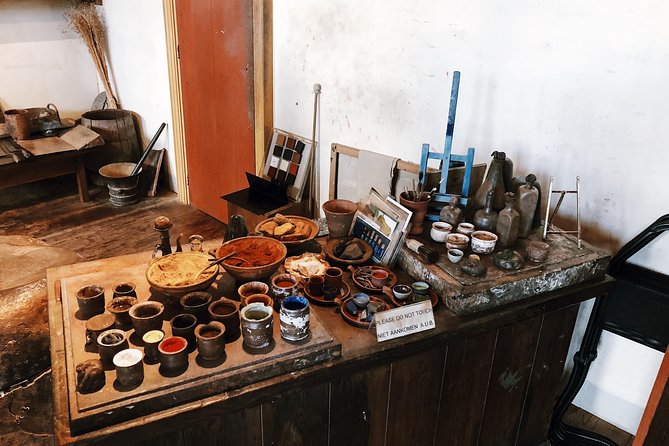
The walk continues into Jodenbuurt, the former Jewish neighborhood. This area contains important buildings preserved and managed by the Jewish Cultural Quarter.
The stop is especially valuable because it widens the tour beyond art and canals. Rembrandt’s Amsterdam was shaped by many communities, and the former Jewish neighborhood adds a serious civic and social layer to the afternoon. You should expect an introduction to the area and its preserved sites, not a separate visit to every institution within the Jewish Cultural Quarter.
The schedule allows about ten minutes here. That is enough to orient yourself, but not enough for a detailed study of the neighborhood’s museums. If this subject matters greatly to you, make time for a separate visit during your stay.
Entering Rembrandt House for the final hour
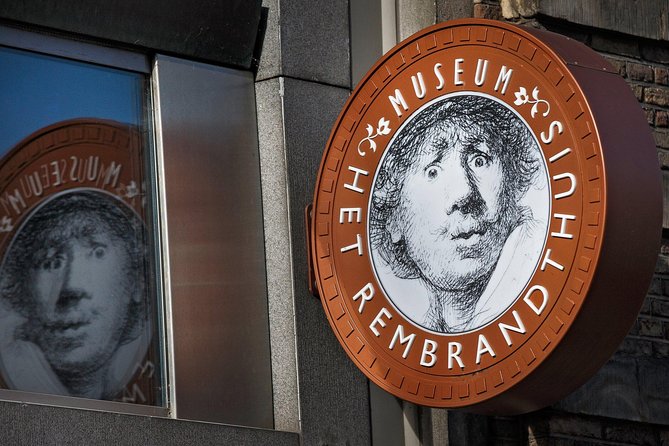
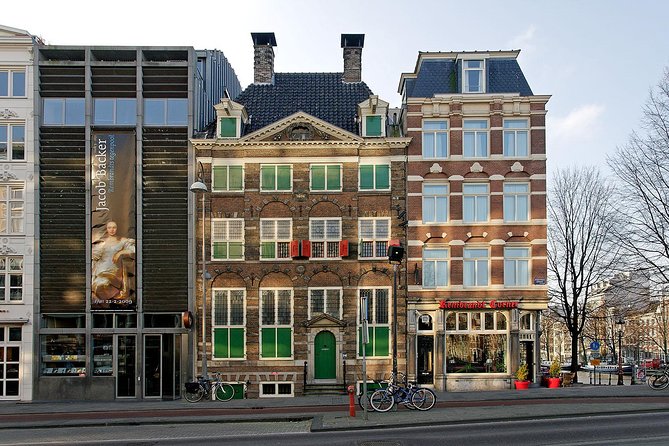
The tour ends at Museum Het Rembrandthuis, at Jodenbreestraat 4. This is the main indoor visit and the part that gives the outing its title.
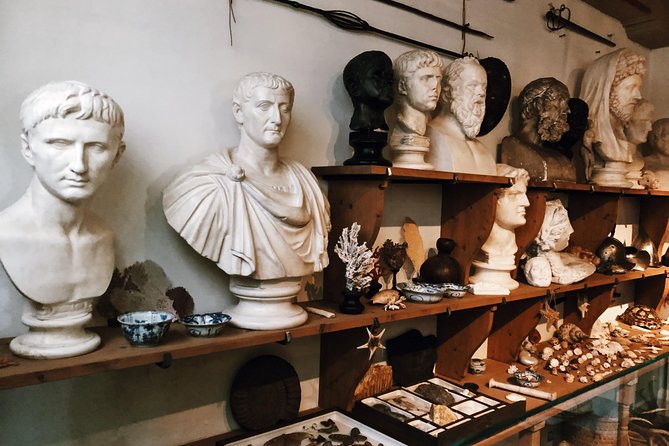
Rembrandt lived and worked in the house from 1639 to 1656. Inside, you can see the home and studio setting, along with paintings, etchings, work by his contemporaries, and objects connected with his personal life. The value of the guided entry is the connection between the rooms and the earlier walk. By the time you arrive, Rembrandtplein, the canals, the old Jewish neighborhood, and the city’s art trade have already given you a sense of his surroundings.
About an hour is reserved for the museum. That is much more useful than a quick pass through, especially if you want time to look at the etchings and understand how the house functioned as both a home and a workplace.
Some rooms require quiet or limit speaking. The guide provides information before entering those areas, so listen for the instructions. Museum collections can change during the year, and occasional closures can happen without warning. If the museum opening is delayed by more than an hour, an alternative is provided, but the stated terms do not promise a refund or discount.
Leave large bags and suitcases behind. Only handbags or small, thin backpacks are allowed through museum security. Appropriate dress is also required at some sites along the route.
What the $159.21 price gives you
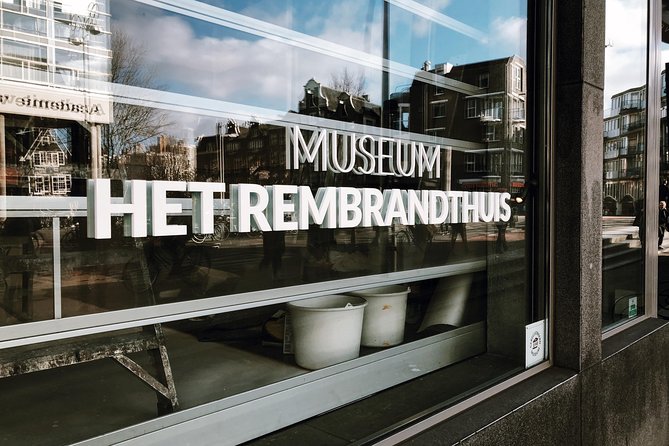
At $159.21 per person, this is not a budget walking tour. The price makes more sense for people who value a private-style guide, a very small group, and included entry to Rembrandt House.
You are paying for roughly two and a half hours, an English-speaking professional guide, the walking portion, and the museum visit. The group cannot exceed eight people, and group discounts may be available. The mobile ticket also keeps the booking simple.
The value depends on how much guidance you want. If you already know Amsterdam well and mainly want to enter Rembrandt House, you can likely spend less by visiting independently. If you want the museum tied to canals, bridges, art districts, Rembrandtplein, and Jodenbuurt, the guided route gives you more context in one afternoon.
Keep your expectations in check. Several stops are only about ten minutes, and admission is not included at Museum Van Loon, the Munttoren, or the Stopera. Those are sightseeing points along the walk. Rembrandt House is the major included entry.
Timing, walking, and meeting-point advice
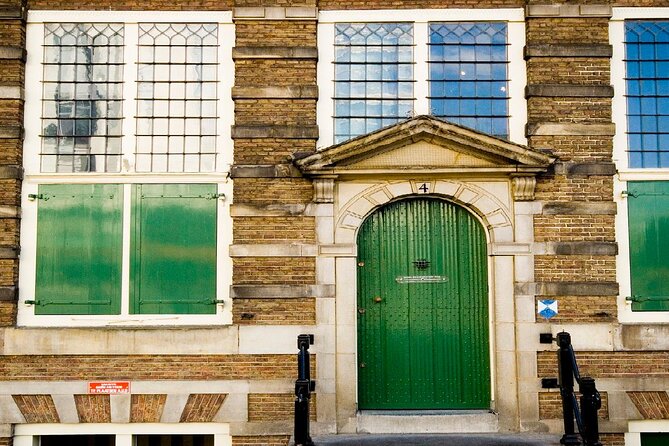
The tour starts at 1:30 p.m. and ends at Rembrandt House Museum. There is no hotel pickup or drop-off, so you need to reach Cobra Café on your own. Uber or a taxi is suggested for hotel transfers, while the starting point is also near public transportation.
You should be comfortable walking for most of the afternoon. The experience is not recommended for people with walking disabilities or those using a wheelchair. Amsterdam’s canals, bridges, squares, and museum approach can require steady movement, and the tour runs rain or shine.
Bring a charged mobile phone and provide your country code with your phone number when booking. That contact detail is required. A small bag is the practical choice, especially because large luggage cannot enter Rembrandt House.
The tour is commonly booked well ahead, with an average booking lead time of 53 days. That does not guarantee a particular guide, but it is a useful planning signal if you are visiting during a fixed holiday period.
Who will get the most from this tour
I would choose this experience if you want Rembrandt to be the main theme of an Amsterdam afternoon, but you do not want to spend the whole time inside one museum. The route gives you a wider sense of the city and ends with the strongest indoor visit.
It suits first-time visitors who want a guide to connect landmarks that can otherwise feel scattered. It also works well for couples, families with older children, or a small group of friends who prefer to ask questions without competing with a large crowd.
Art lovers should appreciate the house, etchings, and links to Ferdinand Bol. Architecture fans get canals, bridges, the Munttoren, and the Stopera. History-minded visitors gain an introduction to Jodenbuurt and Amsterdam’s old defenses.
I would think twice if you dislike walking, want long visits at each stop, or expect entry into every building named along the route. You may also prefer an independent museum visit if the $159.21 price feels high for a tour where most of the first hour is outdoors.
Should you book the Rembrandt House and Neighborhood Tour?
Book it if you want a compact, personal introduction to Rembrandt’s Amsterdam and value an English-speaking guide for a group of eight or fewer. The final hour inside Rembrandt House is the clear anchor, while the canals and neighborhoods give that visit useful context.
Skip it if you want a slow museum day, a wheelchair-friendly route, or a cheaper way to see the house alone. For the right visitor, the combination of small-group attention, city walking, and included museum entry makes the price easier to justify.
Free cancellation is available when you cancel at least 24 hours before the 1:30 p.m. start. Changes or cancellations made inside that window are not accepted for a refund.
FAQ
How long does the Rembrandt House and Neighborhood Tour last?
The tour lasts approximately two and a half hours, including the walking route and about one hour inside Rembrandt House.
What time does the tour start?
It starts at 1:30 p.m.
Where does the tour begin?
The meeting point is Cobra Café, Hobbemastraat 18, 1071 ZB Amsterdam.
Where does the tour end?
The tour ends at Rembrandt House Museum, Jodenbreestraat 4, 1011 NK Amsterdam.
How many people can join the tour?
A maximum of eight people is allowed on each tour.
Is the tour offered in English?
Yes. The tour is offered in English.
Are all entrance fees included?
The tour includes the entrance fee for Rembrandt House and is described as including entrance fees. The listed stops at Museum Van Loon, the Munttoren, and the Stopera do not include admission, and the route presents them as sightseeing stops.
Is the tour suitable for wheelchair users?
No. The tour is not recommended for people with walking disabilities or those using a wheelchair. A moderate level of physical fitness is expected.
Just added in Amsterdam
- Guided Day Trip – Volendam, Zaanse Schans, Marken & Edam★ 4.0 · 232 reviews
- Private Tour Zaanse Schans Windmills and Volendam in Jaguar★ 5.0 · 10 reviews
- Zaanse Schans and Giethoorn Unique Day Trip with Boat Cruise★ 4.5 · 17 reviews
- Half-Day Private Guided Sightseeing Tour of Zaanse Schans★ 5.0 · 14 reviews
- Zaanse Schans Private Tour Windmills★ 5.0 · 18 reviews
- Private bike tour: Hidden gems around Amsterdam and surroundings★ 5.0 · 4 reviews
- Bike tour in Amsterdam with an Italian guide★ 5.0 · 15 reviews
- Amsterdam Sightseeing Tour + Hidden Gems + Tastings + PDF guide★ 5.0 · 35 reviews
Tours in Amsterdam, compared.

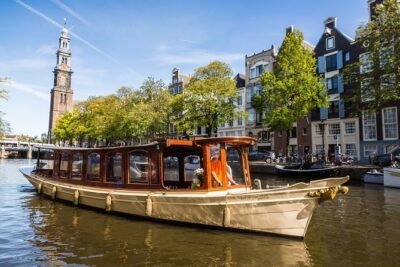
Amsterdam Classic Saloon Boat Cruise with Drinks and Cheese
Read our review →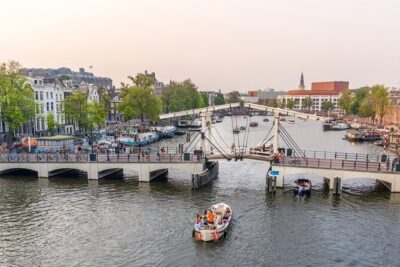
Amsterdam Luxury Canal Cruise + Unlimited Drinks & Bites option
Read our review →


Classic Boat Cruise with Optional Cheese & Wine
Read our review →
Evening Cruise with Optional Wine and Snacks
Read our review →