
Reviewed · ZAANSE SCHANS & WINDMILL TOURS
Rotterdam: Kinderdijk UNESCO World Heritage Entry Ticket
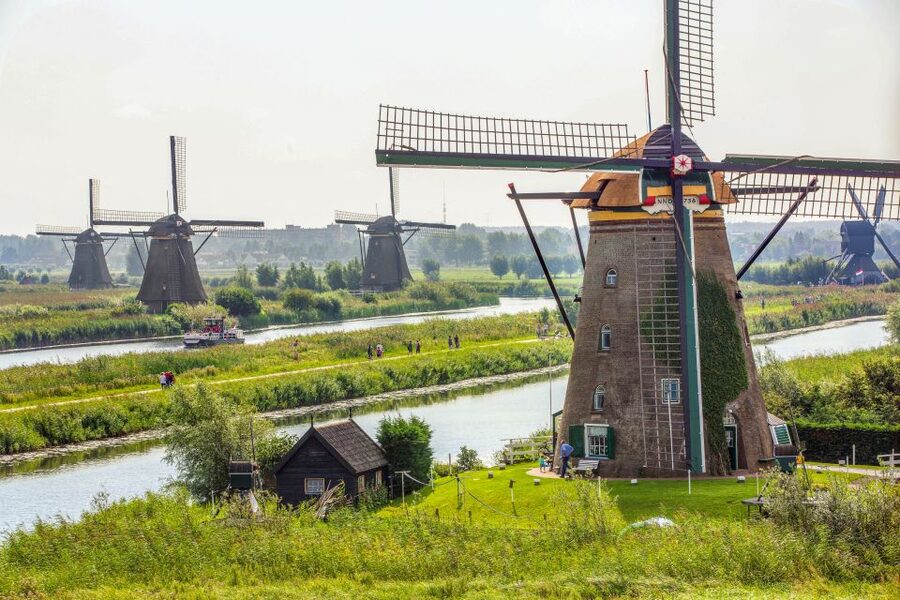
Kinderdijk is where Dutch water engineering becomes real rather than decorative. You walk beside canals, dikes, and 19 historic windmills, then step inside two working mills to see how families lived and how the machinery moved water. I like the mix of open-air walking and indoor exhibits, and I like that the boat gives your feet a break while showing the site from the water. The main catch is that this is a self-guided visit, not a hosted day tour, and the long paths offer little shade.
The $25 ticket earns its keep if you enter the museums, pumping station, and take the boat. Much of the outer walk can be seen without paying, so the ticket is less useful if you only want a quick photo stop. Plan at least two to three hours, or most of a day if you add a picnic, bicycle, or careful audio tour.
Key points about the Kinderdijk ticket
- Nineteen windmills in their working setting: You see the mills beside the canals and polders, not lined up in a museum hall.
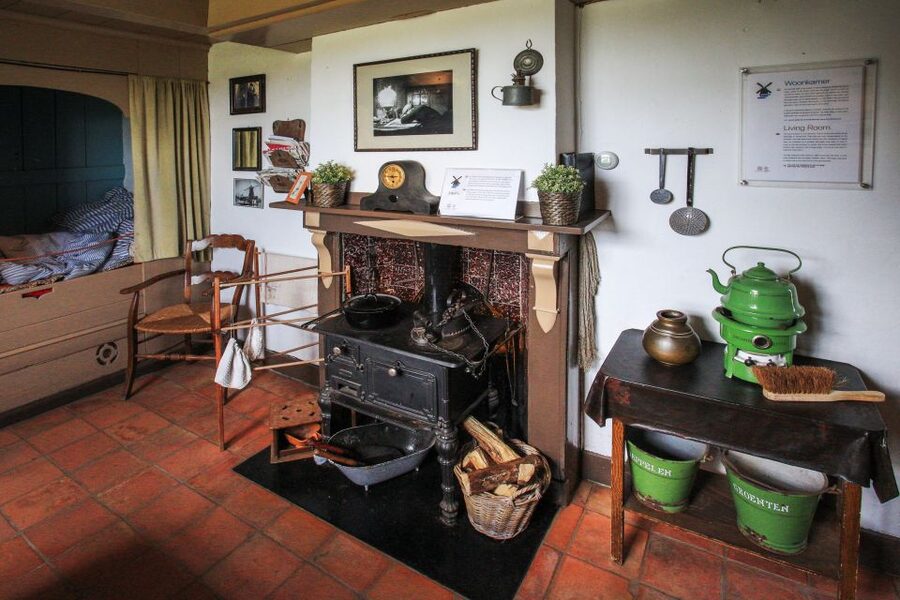
- Two museum mills: Blokweer and Nederwaard show both the machinery and the cramped domestic life of miller families.
- Boat ride included: The boat links parts of the site and gives you a calm view of the windmills from the water.
- Pumping station access: The engine room explains how modern equipment joined the older windmill system.
- Self-guided and flexible: Use the online audio guide, film, exhibition, and walking paths at your own pace.
- Plan for weather and walking: Boats may stop in bad weather, and exposed paths can feel hot, windy, or wet.
Why Kinderdijk is more than a windmill photo
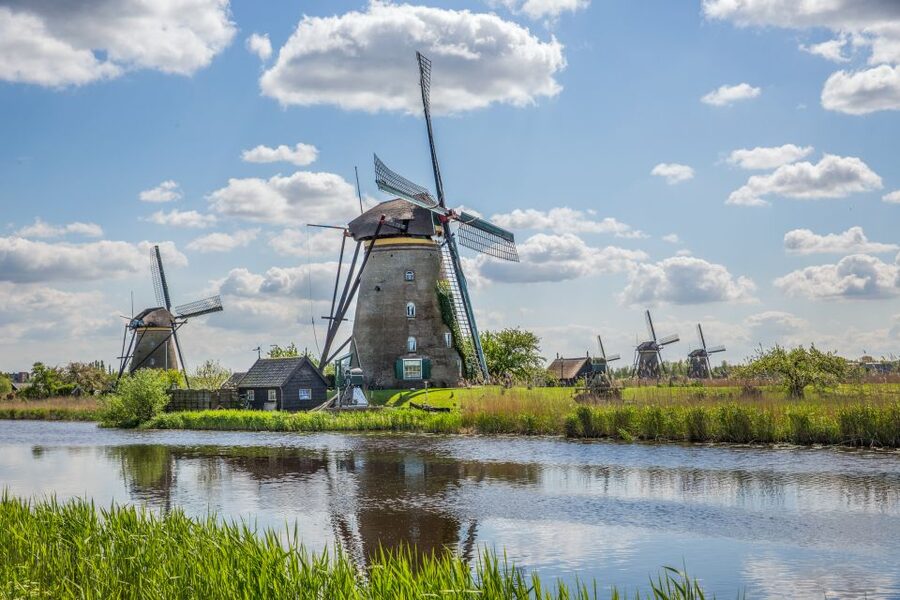
A row of Dutch windmills makes an easy postcard. Kinderdijk becomes more interesting when you understand the job those mills performed. This is a water-management system, built around canals, dikes, pumping, and constant maintenance. The mills helped drain excess water from the low-lying polders, allowing people to live and farm below water level.
That practical purpose gives the visit weight. You are not simply looking at old buildings. You are seeing the tools of a long fight against water, still arranged in the place where they worked. The windmills, waterways, and dikes make sense together.
The setting is peaceful. You hear the weather, water, and moving sails rather than city traffic. On a clear day, the views are especially good, but the site remains exposed. Bring protection from sun and rain, since the long stretches between stops have little shade.
More windmill trips booked from the Netherlands:
- From Amsterdam: Zaanse Schans, Volendam, and Marken Day Trip
★ 4.4 · 15,931 reviews - Amsterdam: Zaanse Schans, Edam, Volendam & Marken Bus Tour
★ 4.6 · 15,034 reviews - Day Trip to Zaanse Schans, Edam, Volendam and Marken from Amsterdam
★ 5.0 · 5,392 reviews
Arriving from Rotterdam by water
Transport is not included, so you need to arrange your own way to Kinderdijk. One popular option is the Waterbus, with visitors using Waterbus 21 toward the Kinderdijk area. Some combine the ride with a bicycle rental, while others arrive by boat and walk the site.
Check the current waterbus timetable before setting out. The service is useful, but a missed departure can disrupt your whole day. If you are coming from a cruise ship or central Rotterdam, allow time for the transfer rather than treating Kinderdijk as a quick side trip.
Driving is possible, but parking can be difficult, especially at busy times. I would not choose a car simply because it seems easiest. Public transport, a water connection, or a bicycle may suit the setting better, though each needs planning.
Once you arrive, the ticket gives you access to the paid attractions. The main paths and views can be enjoyed without entering every exhibit, but the ticket adds the parts that explain what you are seeing. That distinction matters when you compare the price with a free walk around the outer area.
The first walk through the windmill village
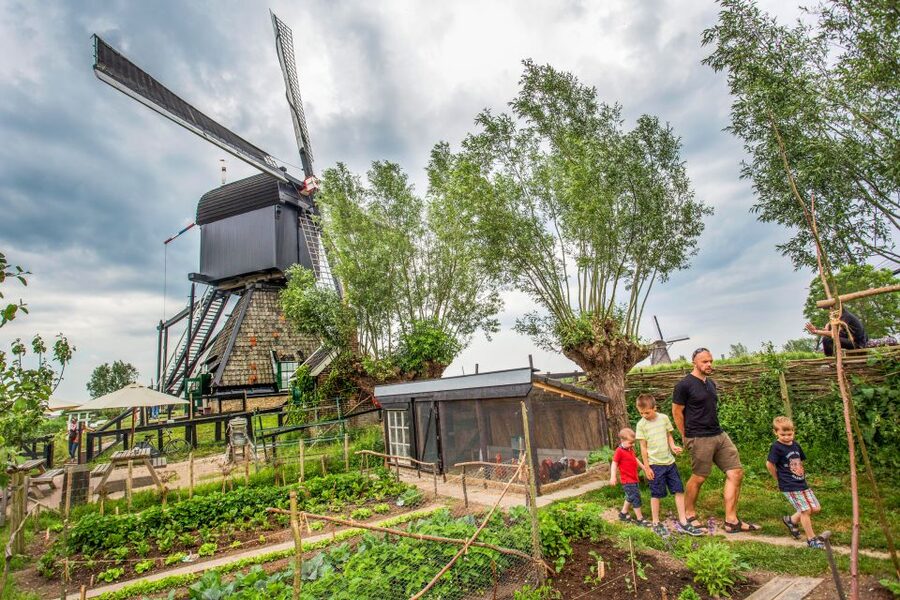
Start by getting your bearings at the entrance, then follow the paths beside the water. The route is not a tightly packed museum circuit. You walk from one point to another through open countryside, with windmills appearing across the canals and fields.
That spacing is part of the charm. It also means you should not underestimate the distance. You may spend much of the visit on foot, and some crossings take time because the paths follow the dikes and waterways rather than cutting directly across them.
Cyclists may share parts of the route, so keep an eye on your surroundings. A bicycle can help you cover more ground, but walking gives you time to pause for photographs and read the displays. If you bring children, the interactive scavenger hunt gives them a reason to look more closely instead of rushing from one mill to the next.
The site rewards a slow pace. You can stop to watch the sails, study the canal system, or simply enjoy the quiet. If your schedule allows only a short visit, prioritize the two museum mills and the boat rather than trying to inspect every path.
Inside Blokweer and Nederwaard museum mills
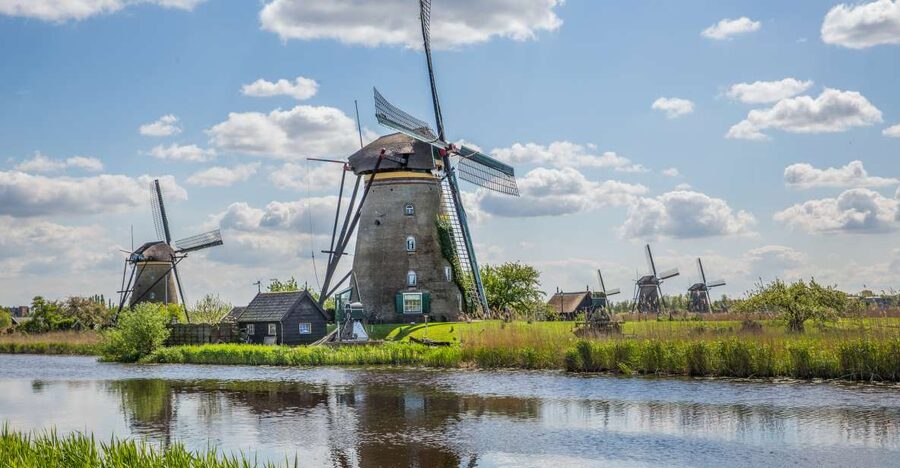
The two museum mills are the heart of the ticket. They let you move from the broad outdoor view to the tight, practical world inside a mill.
At Blokweer Museum Mill, you get a sense of the mill as a working home and workplace. The attraction is not just the wooden machinery. It is the way the building brings together the miller’s duties, family life, and daily dependence on wind and water.
The Nederwaard Museum Mill offers another look at life inside one of these structures. You see how limited the space could be and how closely work and home were tied together. This is where the visit becomes personal: the windmills were operated by families, not by anonymous machines.
Look closely at the moving parts and the way the building is arranged. The machinery can seem simple at first, but the system is carefully designed. The working mill gives you a much better sense of the force involved than a photograph ever could.
One useful tip is to visit the museums before or after the full boat circuit, depending on crowd levels. The boat can save walking, but some visitors prefer to walk directly to the museums first and use the boat later. That approach lets you spend your best attention inside the mills rather than arriving tired.
A few more things to do in the Netherlands worth a look
- Amsterdam Food and Cultural Tour with Tastings
★ 5.0 · 2,442 reviews - The Hague: Hop-on Hop-off Old-Fashioned Heritage Tram Tour
★ 4.4 · 1,083 reviews - Rotterdam: Harbor Cruise on a Historic Ship
★ 4.2 · 812 reviews - Amsterdam: Haunted History and Ghost Walking Tour
★ 4.5 · 488 reviews
The pumping station and the newer chapter
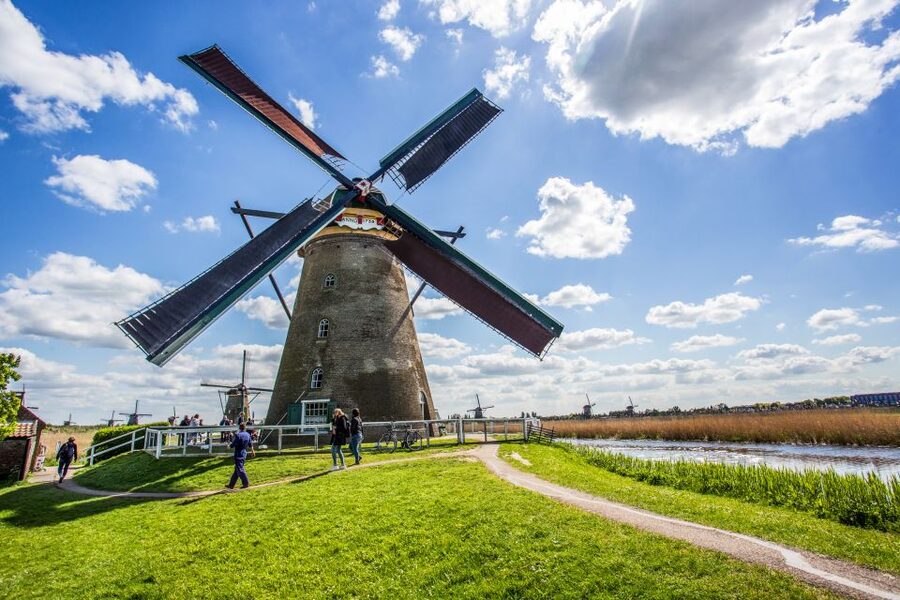
The pumping station engine room shows how Dutch water control continued to develop. Windmills were vital, but mechanical pumping added another layer to the system.
This stop helps you connect the old and new methods. Without it, the visit can feel like a collection of picturesque mills. With it, you see a continuing effort to control water through changing technology.
The pumping station is also a good indoor pause if the weather turns. Do not expect the whole experience to be indoors, though. Kinderdijk is mainly an outdoor site, and the engine room is one part of a much larger open-air visit.
Taking the boat through the polders
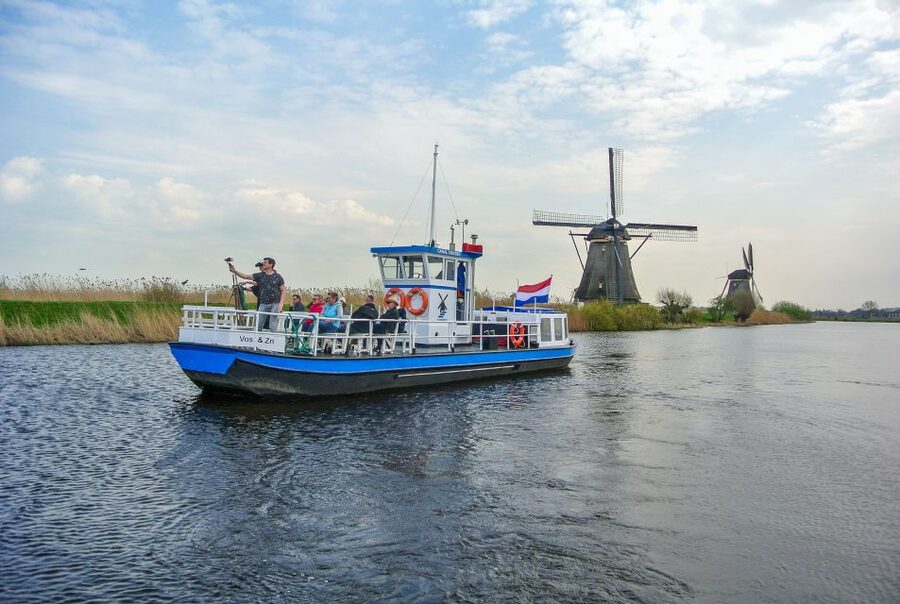
The included boat ride is one of the ticket’s best features. The boat glides along the polder waterways, giving you a view that is difficult to get from the path. Windmills pass at a slower, more graceful pace, and the water makes the whole system easier to read.
The ride also helps with the distances between attractions. If you have limited stamina, use it as a practical link rather than treating it only as sightseeing. Boats have limited seating, so do not assume you can board at any moment during a busy period.
The last boat leaves 30 minutes before closing. That is an easy detail to miss, especially if you spend too long inside the museums. Check the departure times when you arrive and leave yourself a margin.
Bad weather can stop the boats. Wind and rain are part of Dutch life, but they can change the plan here. If the boat is important to you, check conditions and keep enough time for walking if service is suspended.
The boat is not a full guided group tour in the usual sense. You receive the site’s audio and information resources, while the day remains largely self-paced. That suits people who dislike being hurried, but anyone expecting a guide beside them throughout the visit may find the format too independent.
Film, exhibition, and audio guide
The informative film and exhibition give you the basic story before or after you walk outside. I would use them early, because a little context makes the windmills easier to understand. You begin noticing the channels, pumping points, and position of the mills instead of seeing only a pretty view.
The online audio guide is available in English, Dutch, French, Spanish, Italian, Chinese, and German. Dutch and English are also available for the hosted information and site services listed for the activity.
Ask for the audio guide access details at the information desk if you do not see them immediately. Do not assume the code or instructions will appear automatically. Bring a charged phone and headphones if you plan to use the guide for the full visit.
The audio format gives you control. You can pause it for photographs, skip sections, or listen while walking. It is less personal than a live guide, but it works well for a site spread across open paths.
How long to spend at Kinderdijk
The ticket is valid for one day, which gives you useful freedom. A focused visit can take two to three hours. That is enough for the main walk, both museum mills, the pumping station, and the boat if connections work in your favor.
I would allow half a day for most people. You will walk farther than expected, and rushing through the mills would waste the best part of the ticket.
A full day works if you arrive early, rent a bicycle, bring a picnic, or want time for the film, audio guide, and quieter walks. The site has room for a relaxed pace, but it does not have shade along every stretch. In hot weather, a long afternoon can become tiring.
Opening hours change by season. From March 6 through November 1, the site is open daily from 9 a.m. to 5:30 p.m. From November 2 through December 31, and on open days until March 5, hours are 10:30 a.m. to 4 p.m. It is closed on Christmas Day.
Check the hours for your exact date. A late arrival can leave too little time for the boat and museums, particularly in the shorter winter schedule.
Is $25 good value?
At $25 per person, the ticket is fair if you use its main inclusions. You receive entry to two museum mills, the pumping station engine room, the film and exhibition, the online audio guide, and the boat. Paying for each part separately would make the visit less simple and could cost more, though no separate prices are provided here.
The value is weaker if you only want to photograph the windmills from the paths. Much of the outer area can be viewed without the paid ticket. In that case, you are mainly paying for access inside the mills and for the boat.
I think the ticket makes the most sense for first-time visitors who want to understand Kinderdijk rather than make a short photo stop. It also suits families, since the scavenger hunt gives children a clear activity and the boat breaks up the walking.
The price is especially reasonable when compared with a longer paid tour from Rotterdam, since you control the pace and can choose how much time to spend at each stop. Transport still costs extra, and food and drinks are not included, so budget for those separately.
Walking, bicycles, weather, and access
You should be comfortable with a fair amount of walking. The route is kept in good condition, but the site is spread out, and some paths lead toward crossings or separate museum areas rather than taking a direct line.
A bicycle can make the visit easier and extend your range. It also fits the setting well, though you still need to watch for cyclists when walking. A picnic can turn the ticket into a longer day, but no food or drink is included with admission.
Kinderdijk is wheelchair accessible at the site, and mobility scooters can work well once you are there. Access from some water transport connections may be less convenient for disabled visitors, so check the transfer carefully before you travel. The open paths, boat boarding, and individual museum entrances may each feel different in practice.
Dress for changeable weather. On sunny days, the lack of shade matters. On wet or windy days, the boat may not sail, and the exposed paths can feel demanding. The visit is at its best when you treat weather planning as part of the day rather than an afterthought.
Who will enjoy this most?
I would recommend Kinderdijk to you if you like engineering, local history, open-air sites, photography, or slow sightseeing. It is also a strong choice for families, provided children are happy with walking and you use the scavenger hunt.
It suits independent visitors better than anyone looking for a continuous guided narration. You choose the order, stop when you want, and decide how much detail to absorb.
Cruise passengers can fit it into a Rotterdam stop with careful timing, but you should allow for transport delays and check the return schedule. Visitors staying in Rotterdam can give the site a more comfortable half day or full day.
People with limited mobility can still find the attraction worthwhile, especially because the venue itself is accessible and mobility scooters are supported. The route from the transport stop may require extra planning.
Should you book the Kinderdijk ticket?
Book it if you want the full Kinderdijk experience: two museum mills, the pumping station, the boat, and the story behind Dutch water control. The ticket is good value for a self-guided day, and the freedom to walk, cycle, pause, and return to a favorite view is a real advantage.
Skip it if you only want a quick look at the windmills from outside. You can see much of the setting without paying, though you will miss the interiors and boat.
For most first visits from Rotterdam, I would choose the ticket, check the waterbus timetable, arrive early, and protect enough time for both museums before the final boat departure. That turns a pretty photograph into a useful, memorable look at how the Netherlands manages to live with water.
FAQ
What does the Kinderdijk entry ticket include?
It includes entry to the Blokweer Museum Mill, Nederwaard Museum Mill, pumping station engine room, informative film and exhibition, online audio guide, and boat trip through the World Heritage Site.
Is transport from Rotterdam included?
No. You arrange and pay for transport to Kinderdijk separately. Waterbus services and bicycle travel are options mentioned for reaching the site.
How long is the ticket valid?
The ticket is valid for one day.
Is the Kinderdijk visit guided?
The visit is mainly self-guided. You can use the online audio guide, film, exhibition, and site information at your own pace.
Which audio guide languages are available?
The audio guide is available in English, Dutch, French, Spanish, Italian, Chinese, and German.
Can the boat stop running?
Yes. The tour boats may not sail in bad weather. The last boat departs 30 minutes before closing time.
What are the opening hours?
From March 6 through November 1, the site is open daily from 9 a.m. to 5:30 p.m. From November 2 through December 31, and on open days until March 5, it is open from 10:30 a.m. to 4 p.m. Christmas Day is closed.
Is Kinderdijk wheelchair accessible?
The site is wheelchair accessible, and mobility scooters can be used at the venue. Access from some water transport connections may be less suitable for disabled visitors.
Can I cancel the booking?
You can cancel up to 24 hours in advance for a full refund. A reserve now and pay later option is also available.
Just added in the Netherlands
- Aalsmeer: Flower Auction Royal Flora Holland Entry Ticket★ 4.6 · 41 reviews
- Highlight Running Tour★ 5.0 · 118 reviews
- Maastricht Privat Sightseeing City Walk★ 5.0 · 76 reviews
- The Hague 2-Hour Walking Tour | Discover The City With A Local★ 4.5 · 81 reviews
- Food Walking Tour of The Hague – by Bites & Stories★ 5.0 · 188 reviews
- Utrecht Walking Tour with a local comedian as guide★ 5.0 · 48 reviews
- Utrecht Old Town: Medieval Monster Hunt & Walking Tour★ 4.0 · 62 reviews
- The Hague: City Walking Tour★ 4.5 · 156 reviews
Zaanse Schans & Windmill Tours, compared.
Zaanse Schans, Volendam, and Marken Day Trip
Read our review →
Zaanse Schans, Edam, Volendam & Marken Bus Tour
Read our review →
Guided Zaanse Schans, Windmills & Cheese Tour
Read our review →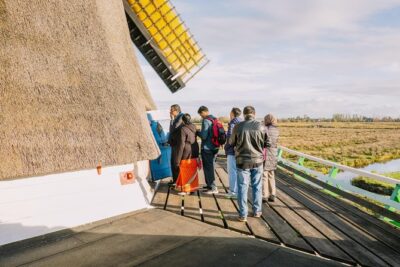
Windmill Tour from Amsterdam, Including Volendam & Marken
Read our review →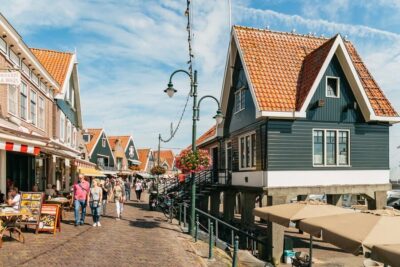
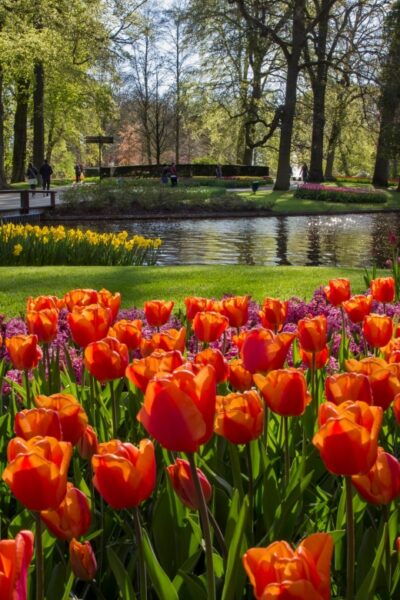
Tour to Keukenhof Gardens with Windmill Cruise
Read our review →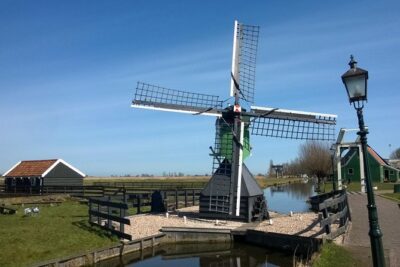
Zaanse Schans Windmills, Clogs and Dutch Cheese Small-Group Tour from Amsterdam
Read our review →
Browse the lists this tour appears in