Reviewed · TOURS IN AMSTERDAM
Small Group Hidden Gems Tour in Amsterdam
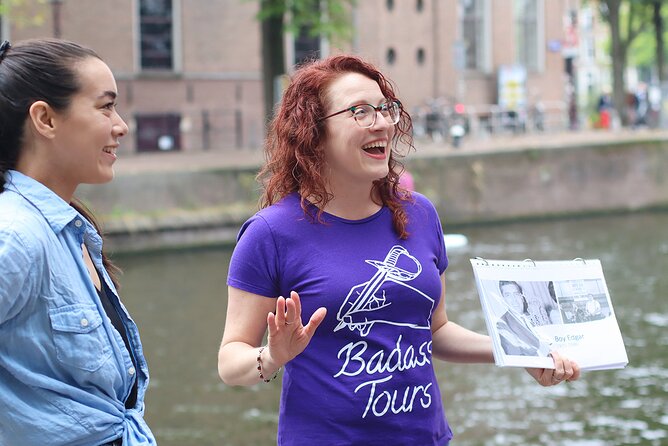
Amsterdam’s past comes into sharper focus when you stop looking only at grand canals and famous paintings. This two-hour walk connects the Dutch National Opera & Ballet, the Portuguese Synagogue, Hortus Botanicus, De Burcht, ARTIS, and H’ART Museum through stories of people who changed the city, often without getting much credit. The focus on overlooked voices is the tour’s main strength.
I like the small maximum of 12 people, which gives the guide room to answer questions, and I like the range of subjects: same-sex marriage, Jewish survival, Black life in the 17th century, workers’ rights, women’s political work, art, and resistance during World War II. The main drawback is pace. Nine stops in about two hours means you’ll hear short, carefully chosen stories rather than receive a full tour of each building or museum.
Key points at a glance
- Nine stops in about two hours: You move from Amstel 23 to H’ART Museum, with most stops lasting between five and 15 minutes.
- A people-first view of Amsterdam: The stories center on philosophers, rebels, union workers, artists, suffragists, diplomats, and resistance heroes.
- A maximum of 12 participants: This is a useful size for questions and conversation without the feel of a large walking crowd.
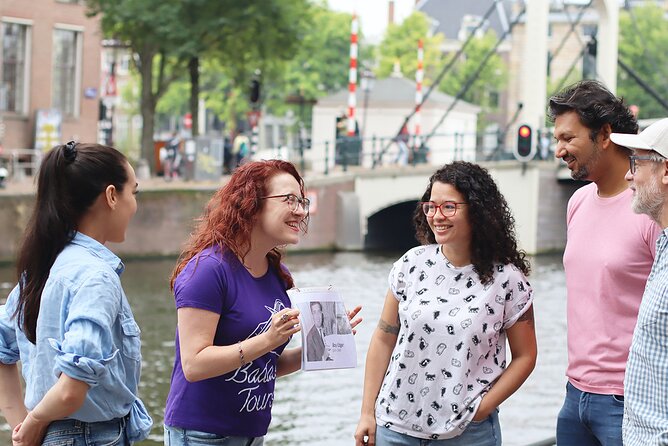
- English-speaking guides with personality: Guides including Elyzabeth, Astrid, Tanja, and Elizabeth are praised for clear storytelling and personal attention.
- No attraction admissions are included or needed: The listed stops are viewed from outside or passed along the route, so the $48.16 price pays for the guided walk and interpretation.
- A thoughtful route for history fans: You finish at H’ART Museum, near the Amstel, in a useful area for continuing your afternoon.
Why this Amsterdam walk feels different
Many first visits to Amsterdam follow a familiar path: canals, the Rijksmuseum, Anne Frank House, and perhaps a boat ride. Those are worthwhile, but this tour asks you to read the city through its people. A quiet monument, a synagogue wall, a union building, or a zoo entrance becomes a doorway into a larger story.
The route also avoids putting Amsterdam’s past into one neat box. You move from religious tolerance to exclusion, from emancipation to exploitation, from art to politics, and from resistance to remembrance. That range matters because the city’s story was never only about merchants, painters, and canal houses.
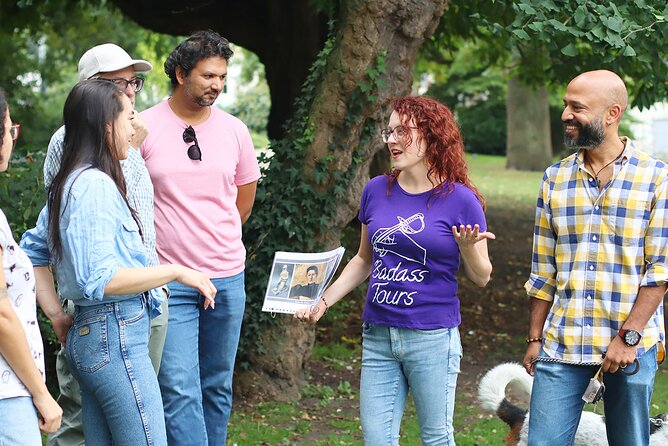
The guides are central to the experience. Names associated with the tour include Elyzabeth, Astrid, Tanja, and Elizabeth. Elyzabeth is especially praised for being an engaging storyteller, while Astrid is noted for bringing care and gravity to Jewish history and World War II. Elizabeth has also made a strong impression by adapting her approach for a participant using a wheelchair and dealing with hearing limitations.
You should expect a guide-led interpretation of the places, not a museum tour with long interior visits. The buildings and monuments provide the setting. The real content comes through the stories told beside them.
Other trips people book in Amsterdam:
- Amsterdam: Van Gogh Museum Ticket
★ 4.7 · 52,054 reviews - Amsterdam Classic Saloon Boat Cruise with Drinks and Cheese
★ 5.0 · 31,825 reviews - Amsterdam Luxury Canal Cruise + Unlimited Drinks & Bites option
★ 5.0 · 30,518 reviews
Starting at the Dutch National Opera & Ballet
The walk begins at Monument Megadlé Jethomiem, Amstel 23, near the Dutch National Opera & Ballet. This is a practical place to get oriented because the guide starts with a broad introduction to Amsterdam before narrowing the focus to the people and events along the route.
The opening story concerns the world’s first same-sex marriage and the unassuming building connected with it. The subject immediately gives you a sense of the tour’s method: a major historical milestone may be tied to a place that looks ordinary at first glance.
You spend about 10 minutes here. That is enough time to understand the setting and establish the tone, but not enough for a long architectural discussion. I like this as an opening because it gives you a clear reason to pay attention to less obvious buildings throughout the rest of the walk.
Spinoza and the cost of independent thought
The Spinoza Monument receives only about five minutes, yet it introduces one of Amsterdam’s most important philosophers. Baruch Spinoza became an outcast within his own community because of his ideas, and the guide uses his story to show the limits of Amsterdam’s reputation for tolerance.
This is a good example of why a short stop can still matter. You are not studying Spinoza’s philosophy in detail. Instead, you get a compact portrait of a man whose intellectual freedom came with a serious personal cost.
If philosophy interests you, this stop may leave you wanting more. That is one of the tradeoffs of the route. The guide has to keep moving, and each story is designed to connect with the next rather than fill an entire lecture.
Mozes en Aaronkerk and Amsterdam’s Black community
At Mozes en Aaronkerk, the subject shifts to the life of a couple in Amsterdam’s free Black community during the 17th century. This stop helps correct the old picture of Amsterdam as a city populated only by white Dutch merchants, sailors, and artists.
The story is brief, at about five minutes, but its value lies in the change of focus. You are asked to consider who lived, worked, loved, and built a life in Amsterdam, even when those lives rarely appear in standard sightseeing accounts.
The church itself provides a strong visual setting, though the tour is not presented as an interior visit. If you want detailed religious architecture, this will feel quick. If you want a wider understanding of the people who shaped Amsterdam, it adds an important piece.
Same city, a different sort of day:
- Amsterdam: Heineken Experience Ticket
★ 4.6 · 30,055 reviews - Amsterdam: Rijksmuseum Entry Ticket
★ 4.7 · 25,535 reviews - Amsterdam: Classic Boat Cruise with Optional Cheese & Wine
★ 4.6 · 22,925 reviews - Amsterdam: Evening Cruise with Optional Wine and Snacks
★ 4.4 · 19,696 reviews
The Portuguese Synagogue and a secret escape network
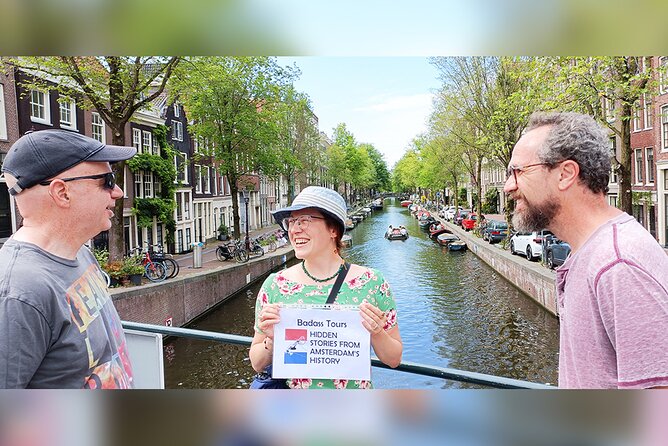
The Portuguese Synagogue is one of the route’s more memorable settings. You stand among Amsterdam’s historic synagogues while hearing about a wealthy heiress who helped create an underground railroad during the Spanish and Portuguese Inquisitions.
The story links wealth, family networks, religious persecution, and organized escape. It also gives the surrounding Jewish Quarter a human scale. Instead of treating the synagogue as an impressive old building alone, the guide connects it with decisions that affected real lives.
This stop lasts about 10 minutes, which gives the subject more room than some earlier points. The tour also includes a separate Jewish history thread that can feel especially serious when it reaches World War II. Astrid, in particular, is praised for handling that material with care and for explaining how the suffering of the period should be remembered.
You should be ready for difficult subjects. The tone is thoughtful rather than light, and that is part of the point. This is not a tour designed to keep every moment cheerful.
Hortus Botanicus and two Indonesian revolutionaries
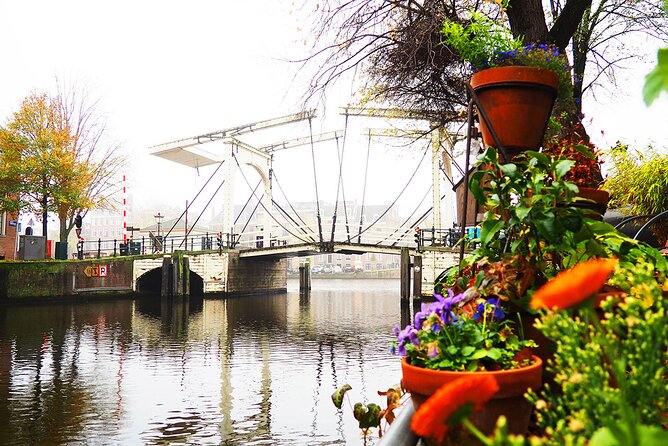
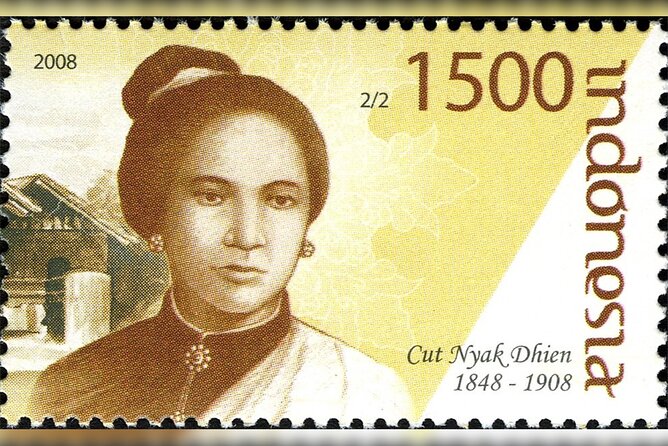
Near Hortus Botanicus, the guide tells the stories of two Indonesian rebels and revolutionaries who lived very different lives. This is one of the route’s strongest reminders that Amsterdam’s past cannot be separated from its overseas power and colonial connections.
The stop lasts about 10 minutes. That gives the guide time to show contrast between the two figures, rather than offering only a name and date. You begin to see how personal choices, politics, and empire could shape lives on different sides of the same historical system.
The route does not promise entry into Hortus Botanicus, so you should not book this expecting a botanical garden visit. The garden is part of the setting and a useful point for discussing the people and events connected with Dutch history.
De Burcht and the fight for workers’ rights
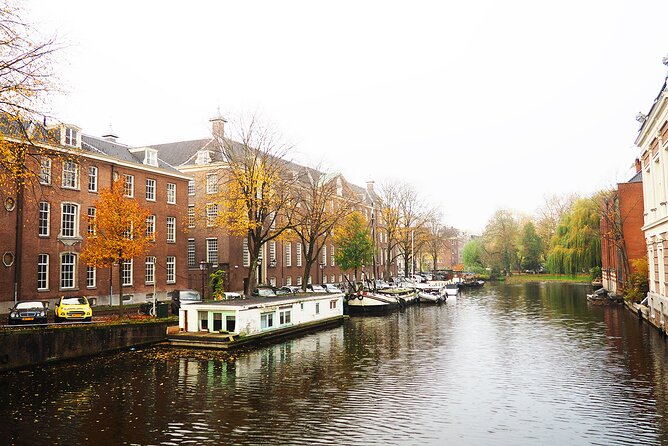
De Burcht offers a change of subject and mood. Amsterdam’s diamond trade was built not only by dealers and owners but also by workers, and the union that built this distinctive building helped win rights that people still rely on today.
The stop takes about 10 minutes. I appreciate this part because it moves the discussion away from famous individuals and toward collective action. A union building may not be at the top of your Amsterdam list, but it can explain how ordinary workers gained a stronger voice.
De Burcht also gives the walk visual variety. You are not simply moving from one religious site to another. The route keeps showing how politics, labor, art, and social change overlap in the same city.
ARTIS and a wider cast of Amsterdammers
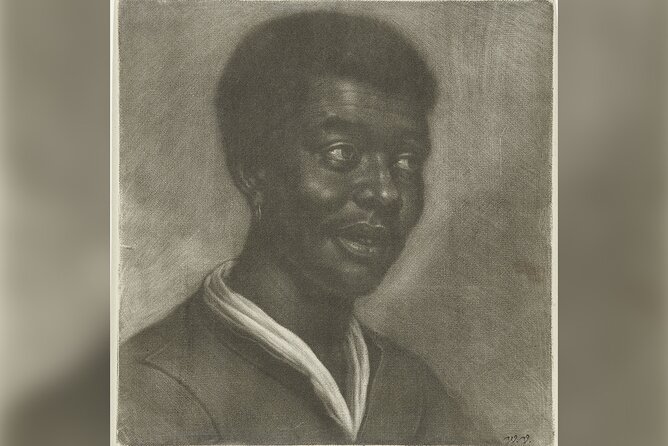
The longest stop comes near ARTIS Amsterdam Royal Zoo and lasts about 30 minutes. You pass Amsterdam’s flamingos while hearing about several influential Amsterdammers, including groundbreaking artists and people who resisted the Nazis during World War II.
The setting helps break up some of the heavier material. At the same time, the subjects can remain serious. The guide uses the area to connect individual lives with larger changes in the city, including artistic work and wartime courage.
Because this is the longest section, it may become the tour’s storytelling center. You have enough time to follow several people and see how very different kinds of influence can shape a city. The tradeoff is that the other stops need to stay compact.
If you want a complete tour of ARTIS, this is not that. You pass by the zoo rather than receive an admission-based visit. The flamingos are a pleasant visual bonus, but the guide’s stories are the main event.
The University of Amsterdam and two forms of public service
The route crosses the University of Amsterdam campus for about 15 minutes. Here you hear about an influential suffragist and a world-changing diplomat.
This stop broadens the tour’s political frame. The earlier sections show individuals challenged by religious or social limits. At the university, the focus turns toward public influence, education, gender equality, and international affairs.
The campus also gives you a change from monuments and historic religious buildings. You are moving through a working academic setting, which makes the route feel connected to present-day Amsterdam rather than sealed inside the past.
As with several parts of the walk, the stop offers an introduction rather than a full biography. If a particular figure catches your interest, note the name and explore further later.
Ending at H’ART Museum with an art-world story
The final stop is H’ART Museum, formerly known as the Hermitage Amsterdam, at Amstel 51. The guide tells how one of the giants of the art world might not be known today without a relative who barely knew him. The story follows the fall and rise of a household name.
This is a fitting ending because it returns to art while keeping the focus on people and relationships. Fame rarely appears from nowhere. Family choices, chance, money, and timing can all shape who gets remembered.
The walk ends in front of the museum, not with a museum admission. That is useful if you want to continue inside on your own, though the tour price does not include entry. It also leaves you near the Amstel for a simple next stop.
What $48.16 buys you
At $48.16 per person, the tour is not the cheapest way to spend two hours in Amsterdam. You are paying for a small group, an English-speaking guide, and a carefully connected set of stories rather than entrance tickets.
The value depends on how you like to see a city. If you want a guide to point out the main canals and famous buildings, you can find cheaper general walks. If you want someone to explain why a modest monument, union hall, or synagogue matters, the price becomes easier to justify.
The maximum group size of 12 is important. A smaller group gives you a better chance to hear clearly, ask questions, and stay connected to the guide. It also supports the personal tone that several guides bring to the walk.
Because the tour is booked, on average, 16 days ahead, I would not leave it until the last minute during a busy trip. Confirmation is normally issued at booking, though bookings made within two days of the tour may take up to 48 hours and depend on availability.
Pace, comfort, and practical planning
The tour lasts about two hours and moves between nine stops. The walking distance is not provided, so you should be prepared for a continuous city walk rather than a series of seated talks.
Most people can participate, and service animals are allowed. The route is near public transportation. A guide has also made efforts to accommodate a wheelchair user and someone with hearing limitations, but you should still share specific needs when booking because the experience includes movement between several outdoor locations.
Good weather is required. If poor weather cancels the experience, you are offered another date or a full refund. You can cancel for a full refund up to 24 hours before the start time. Changes or cancellations inside that 24-hour window are not accepted for a refund.
Wear comfortable shoes and bring something suitable for changing weather. Those are simple precautions, but they matter more on a walk with nine stops than they do on a museum visit.
Who should book this tour
I would choose this walk if you enjoy history told through individual lives. It suits people who want more than a checklist of famous sights, especially if you care about Jewish Amsterdam, Black history, LGBTQ history, labor rights, women’s political work, colonial connections, art, or wartime resistance.
It also works well early in your stay. The opening orientation can help you understand the city, and the final stop at H’ART Museum leaves you in a useful area for the rest of the day.
Families with older children may enjoy the range of stories, though the serious subjects require attention. History fans will likely get the most from it, particularly if they enjoy writing down names for later research.
I would think twice if you dislike walking, want extended time inside each attraction, or prefer a light sightseeing tour with little discussion of persecution, war, and social injustice. The material is not always easy, and the pace does not allow long pauses.
Should you book the Amsterdam Hidden Gems Tour?
Book it if you want a compact, human-centered look at Amsterdam and value a strong guide more than admission to major attractions. The best parts are the unusual subjects, the small group, and the chance to hear clear stories from guides such as Elyzabeth, Astrid, Tanja, and Elizabeth.
Skip it if you want a broad introductory tour of every famous landmark or a relaxed route with plenty of time for photographs. For the right audience, $48.16 is fair payment for two hours of focused interpretation. You leave with a more complicated, more honest picture of Amsterdam, and several names to remember after the walk ends.
FAQ
How long does the tour last?
The tour lasts approximately two hours.
How many people can join the tour?
The maximum group size is 12 participants.
What language is the tour offered in?
The tour is offered in English.
Where does the tour begin?
It begins at Monument Megadlé Jethomiem, Amstel 23, 1011 PT Amsterdam, Netherlands.
Where does the tour end?
It ends in front of H’ART Museum, formerly the Hermitage Amsterdam, at Amstel 51, 1018 EJ Amsterdam.
Are museum or attraction admission tickets included?
No admission tickets are listed as included. The stops are viewed along the walking route, and the included feature is the guided experience.
Is the tour suitable for people with accessibility needs?
Most people can participate, and service animals are allowed. A guide has made efforts to accommodate a wheelchair user and someone with hearing limitations, but you should communicate your specific needs when booking.
Can I cancel for a full refund?
Yes. You can cancel at least 24 hours before the start time for a full refund. Cancellations or changes made less than 24 hours before the start time are not accepted for a refund.
What happens if bad weather cancels the tour?
If poor weather causes cancellation, you will be offered another date or a full refund.
Just added in Amsterdam
- Guided Day Trip – Volendam, Zaanse Schans, Marken & Edam★ 4.0 · 232 reviews
- Private Tour Zaanse Schans Windmills and Volendam in Jaguar★ 5.0 · 10 reviews
- Zaanse Schans and Giethoorn Unique Day Trip with Boat Cruise★ 4.5 · 17 reviews
- Half-Day Private Guided Sightseeing Tour of Zaanse Schans★ 5.0 · 14 reviews
- Zaanse Schans Private Tour Windmills★ 5.0 · 18 reviews
- Private bike tour: Hidden gems around Amsterdam and surroundings★ 5.0 · 4 reviews
- Bike tour in Amsterdam with an Italian guide★ 5.0 · 15 reviews
- Amsterdam Sightseeing Tour + Hidden Gems + Tastings + PDF guide★ 5.0 · 35 reviews
Tours in Amsterdam, compared.

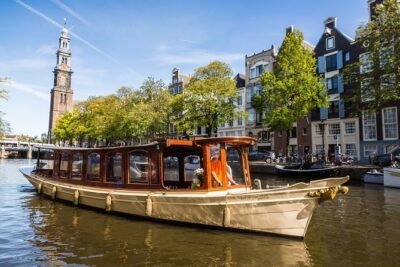
Amsterdam Classic Saloon Boat Cruise with Drinks and Cheese
Read our review →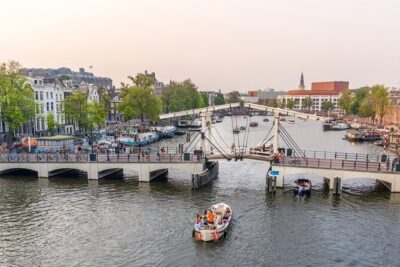
Amsterdam Luxury Canal Cruise + Unlimited Drinks & Bites option
Read our review →


Classic Boat Cruise with Optional Cheese & Wine
Read our review →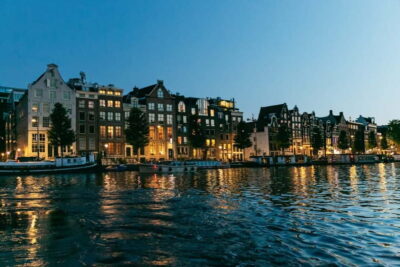
Evening Cruise with Optional Wine and Snacks
Read our review →