
Reviewed · TOURS IN UTRECHT
Utrecht: DOMunder Entry Ticket with Guide
Under Utrecht’s Domplein, DOMunder lets you walk among the city’s oldest remains, from Roman stonework to traces of the medieval cathedral complex. The clever part is the smart flashlight, which triggers short explanations as you point it at objects and sections of the excavation.
I like the way the tour joins a live introduction to a self-guided underground visit. I also like the tactile details, including old stonework and the reported 2,000-year-old paw prints. The main drawback is that the underground portion can feel brief, and the attraction is not suitable for wheelchair users.
Key points at a glance
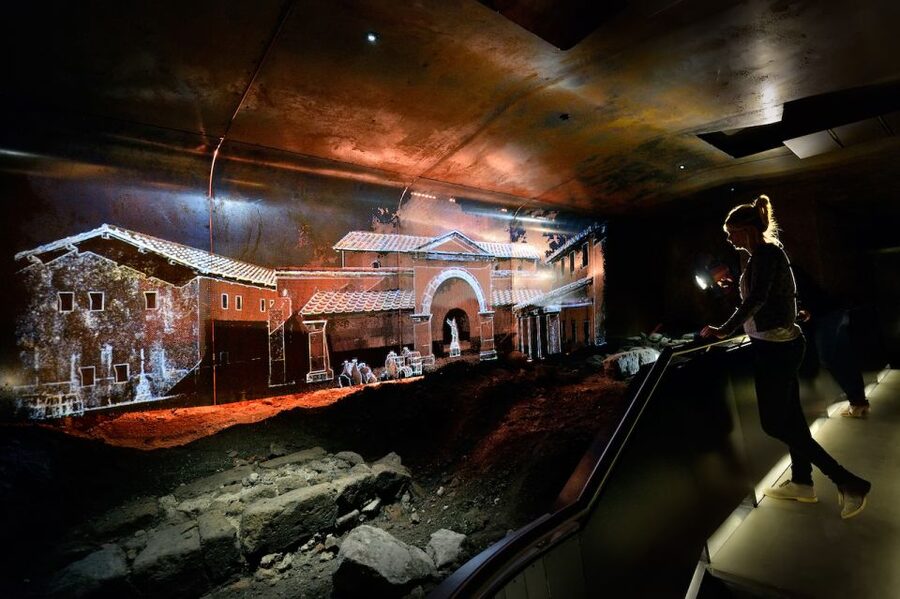
- Roman Utrecht below the square: See remains connected with the ancient settlement of Trajectum and touch stonework dating back roughly 2,000 years.
- A guide-led history lesson: English and Dutch guides explain the site before you explore it, with guides such as Christine, Stefan, and Joanna praised for clear storytelling.
- A flashlight that tells the story: Point the device at selected areas to activate short audio accounts and explanations.
- The 1674 storm comes alive: Films and visual reconstructions show how a violent storm caused the Dom Church nave to collapse and helped create today’s Domplein.
- A self-paced finish: Once underground, you can move at your own speed instead of staying beside the guide every second.
- A compact 75-minute visit: At $17 per person, it is a manageable way to add archaeological depth to a walk around central Utrecht.
What DOMunder reveals beneath Domplein
Utrecht’s Domplein looks like an open city square, but its ground holds layers from more than 2,000 years of building and rebuilding. DOMunder gives you a way to see those layers instead of simply hearing about them from street level.
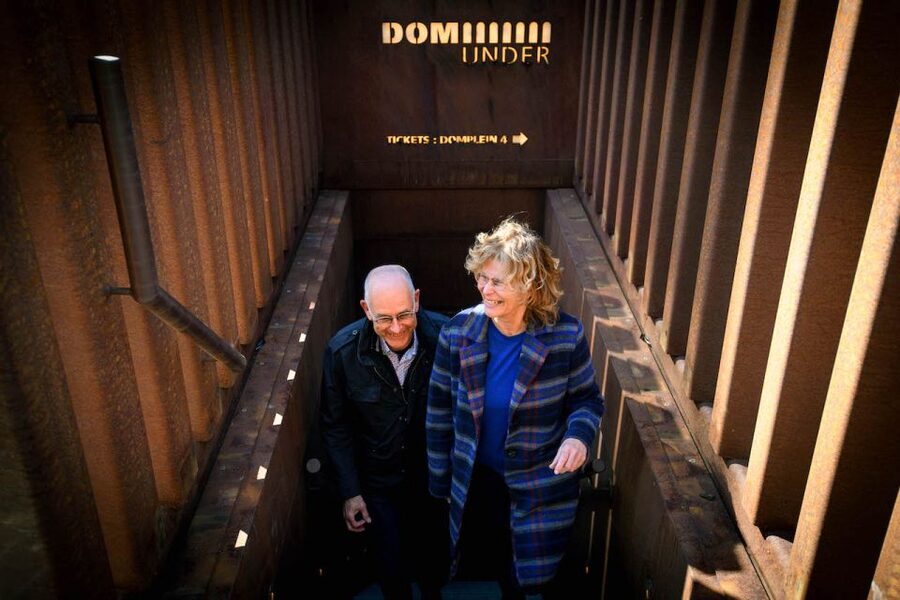
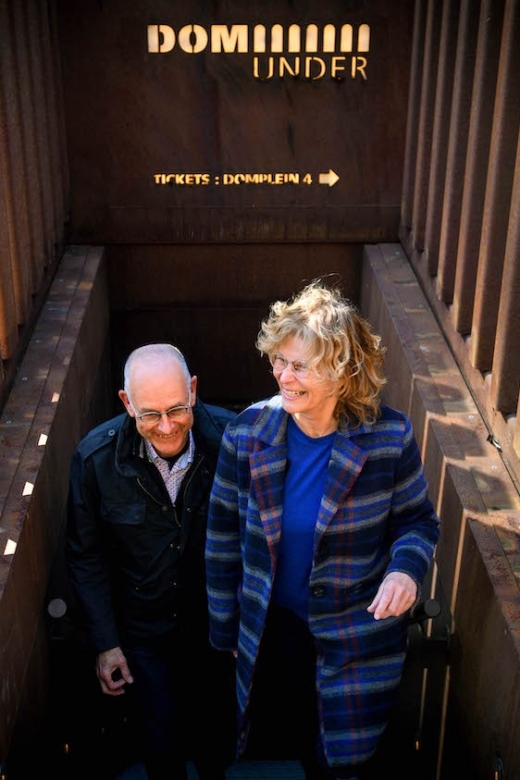
The visit begins at the Tourist Information Centre at Domplein 9, where you scan your ticket at the desk. From there, the guide provides the historical frame you need before you head below the square. That opening talk matters because the underground remains are not arranged like a conventional museum collection. You see foundations, fragments, stone surfaces, and archaeological traces. The story helps you understand what each piece once did.
The experience covers Utrecht’s Roman past, its medieval importance, and the later destruction that changed the shape of the square. You are not looking at one isolated ruin. You are following the changing use of the same central place across centuries.
A few more things to do in the Netherlands worth a look
- Amsterdam: Van Gogh Museum Ticket
★ 4.7 · 52,054 reviews - Amsterdam: Heineken Experience Ticket
★ 4.6 · 30,055 reviews - Amsterdam: Rijksmuseum Entry Ticket
★ 4.7 · 25,535 reviews
The opening story makes the ruins easier to read
The first part is guide-led, with English and Dutch tours available. The best guides turn a complicated sequence of Roman settlement, medieval construction, church building, and storm damage into a clear timeline.
Joanna, an English-speaking volunteer guide, used maps and visual material to explain how the Dom and its surrounding buildings developed. Christine was praised for taking the story from Roman times through the destruction caused by the 1674 storm. Stefan was described as patient, friendly, and highly informed.
The guide also explains building styles and construction methods. That is useful because a wall fragment can look like just another old stone until you know why it was placed there, what kind of structure it belonged to, and how later builders reused or covered it.
I would pay close attention during this introduction. The underground section gives you room to explore, but the opening talk supplies the map in your head. Without it, some of the remains may seem disconnected.
Down below with a smart flashlight
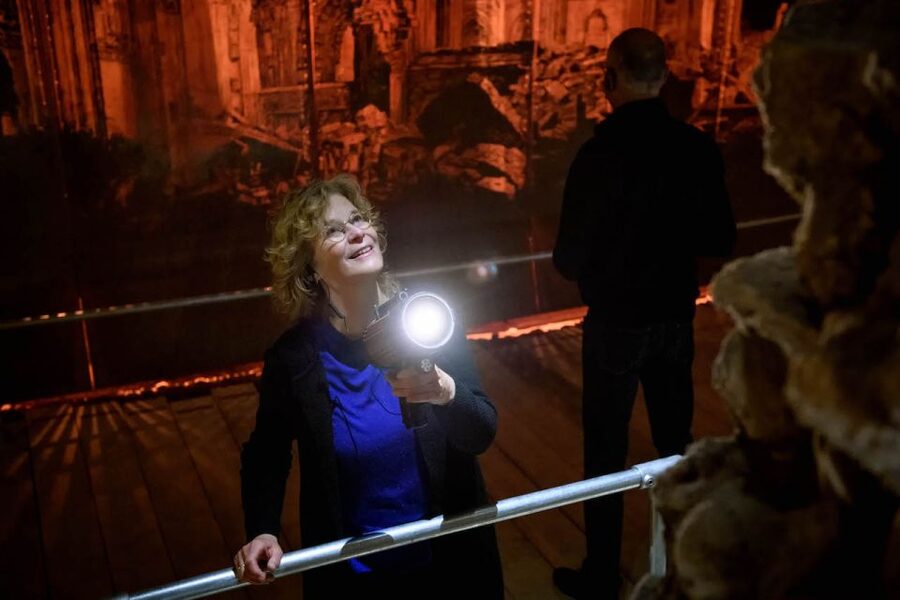
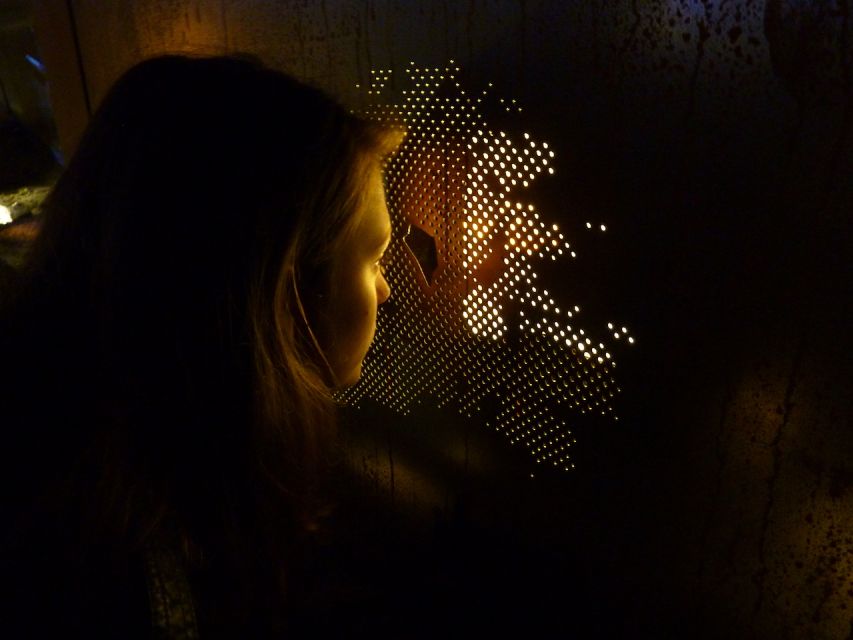
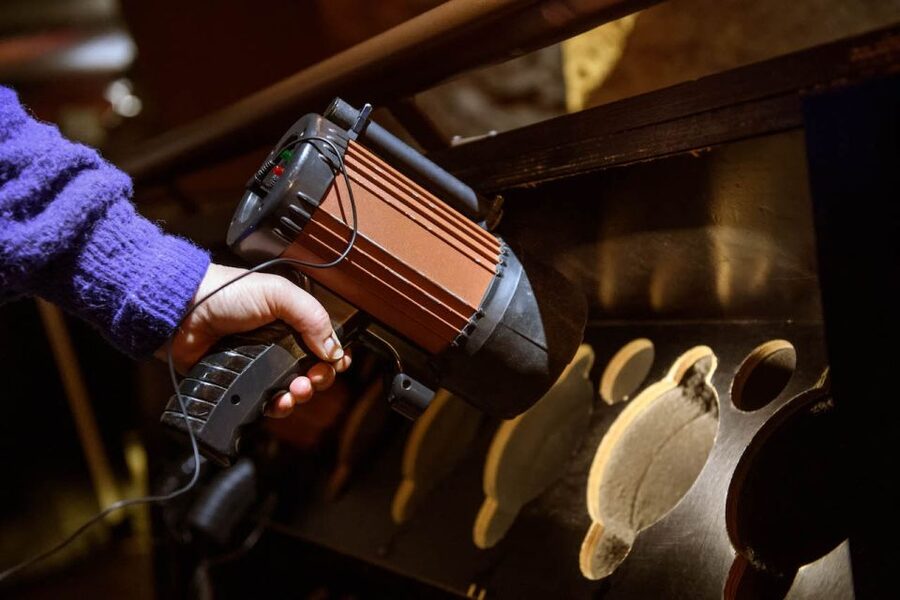
After the introduction, you go underground and receive a flashlight and audio equipment. The flashlight is not just for seeing in a dark space. Point it toward selected features and it activates short pieces of information about what is in front of you.
This turns the visit into a small archaeological search. You are not simply led from one display to the next. You choose where to aim the light, listen to the explanation, and then move on when you are ready. Several parts of the visit use short stories, films, or visual effects rather than long blocks of text.
The format works well for people who prefer doing something with their hands. It also gives the visit a different feel from walking through a standard museum and looking at objects behind glass. You can inspect the excavation at your own pace, then use the audio prompts to add meaning.
There is one practical catch. Some visitors have found certain flashlight-triggered items difficult to activate. If a prompt does not respond at once, try repositioning the light rather than assuming the feature is not working.
Roman Trajectum and the oldest remains
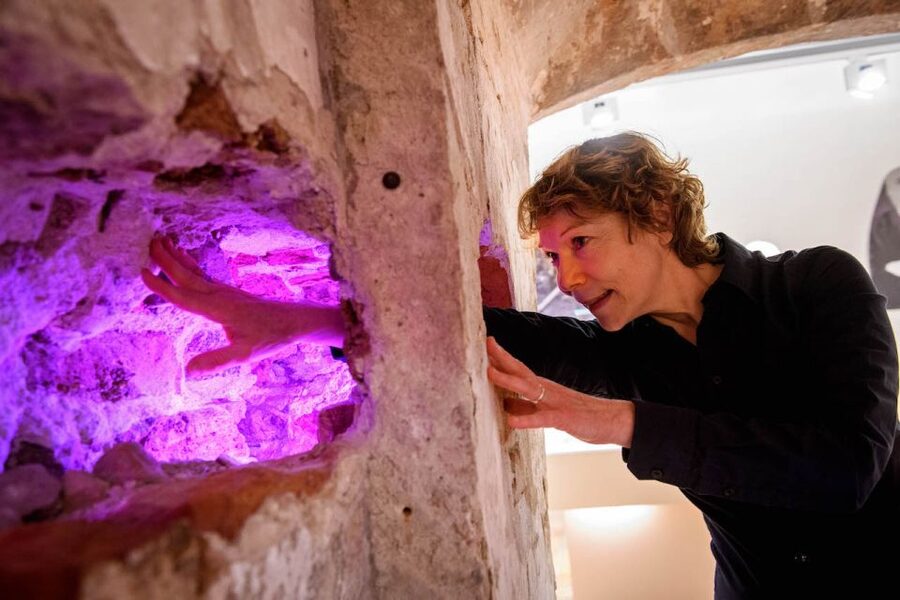
The Roman chapter is one of the strongest reasons to book DOMunder. Utrecht’s ancient name, Trajectum, is part of the story, and the excavation reaches back to the Roman period.
The attraction allows you to see and touch sections of old stonework in a setting close to where the city developed. One particularly striking detail is the mention of small paw prints preserved in stone, dating from more than 2,000 years ago. Details like this make the past feel less abstract. Someone, or something, crossed wet material long before modern Utrecht existed.
The Roman material is valuable because it gives the rest of the visit a starting point. You are not beginning with a medieval church in isolation. You first see that this was an important place before the Dom became the city’s defining landmark.
I would not expect a vast Roman archaeological park. DOMunder is a compact attraction below a busy city square. Its strength is the close view and the clear story, not the number of objects on display.
Same city, a different sort of day:
- Amsterdam Classic Saloon Boat Cruise with Drinks and Cheese
★ 5.0 · 31,825 reviews - Amsterdam Luxury Canal Cruise + Unlimited Drinks & Bites option
★ 5.0 · 30,518 reviews - Amsterdam: Classic Boat Cruise with Optional Cheese & Wine
★ 4.6 · 22,925 reviews - Amsterdam: Evening Cruise with Optional Wine and Snacks
★ 4.4 · 19,696 reviews
Medieval Utrecht beneath the Dom
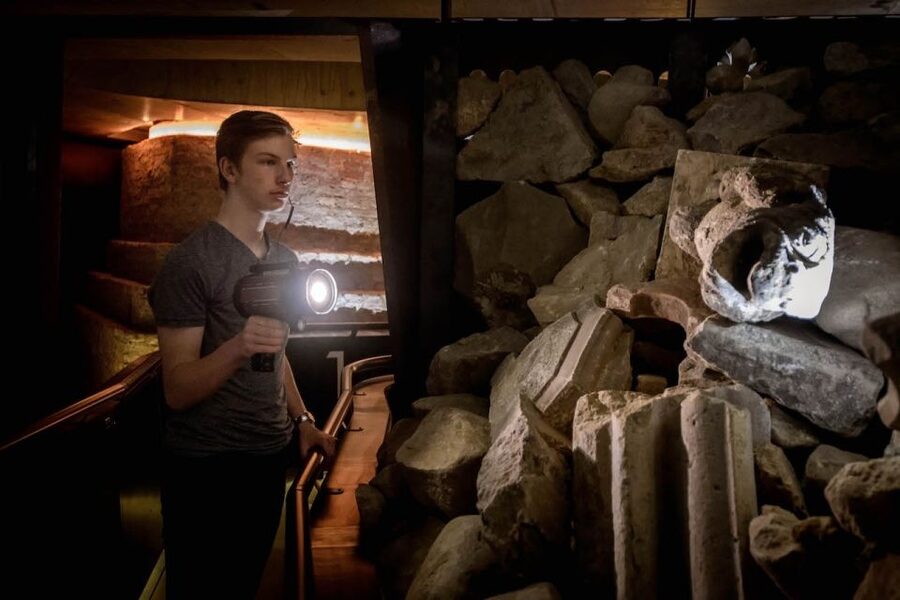
The next layer is the medieval city, when the Dom Church and related buildings shaped the square. The guide explains how the structures were built and how their forms changed over time.
The remains are particularly useful after visiting, or planning to visit, the Dom Tower. The tower gives you height and a grand view over Utrecht. DOMunder gives you the lower perspective, where the foundations and buried traces show how the complex was made.
The two experiences complement one another, though you do not need to climb the tower first. If you have already been above the city, the underground visit adds context. If you have not, DOMunder still works as a separate history stop.
Look for the construction details rather than expecting dramatic rooms. The appeal is in seeing the actual fabric of the old site and understanding how each generation built over what came before.
The 1674 storm and the birth of Domplein
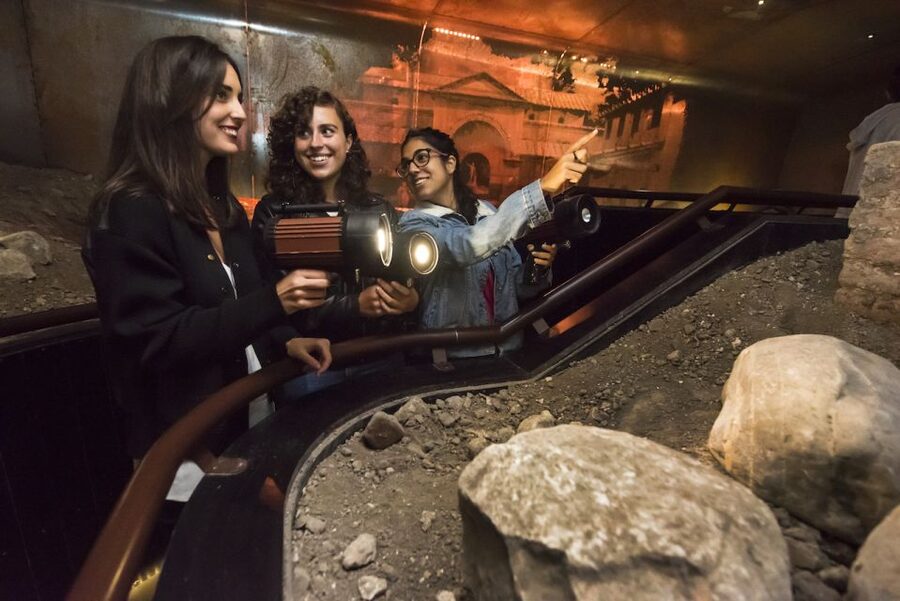
The most dramatic section concerns the storm of 1674. A violent storm caused the nave of the Dom Church to collapse. The gap left by that destruction eventually became the open Dom Square you see today.
The attraction uses film and visual reconstruction to explain the event. The screen presentation helps you picture a building that no longer exists and understand why the square has its present shape.
This is where the earlier history pays off. First you learn about the Roman and medieval site. Then you see how one destructive event altered the city center. The square is not open simply because someone designed it that way. Its form is tied to the collapse of the church nave.
One small warning: a storm-related sound or effect can surprise you if you do not know it is coming. The effect is meant to bring the event to life, but it has been mistaken for a fire alarm. If you are sensitive to sudden sounds, keep that in mind.
Why the self-guided section works
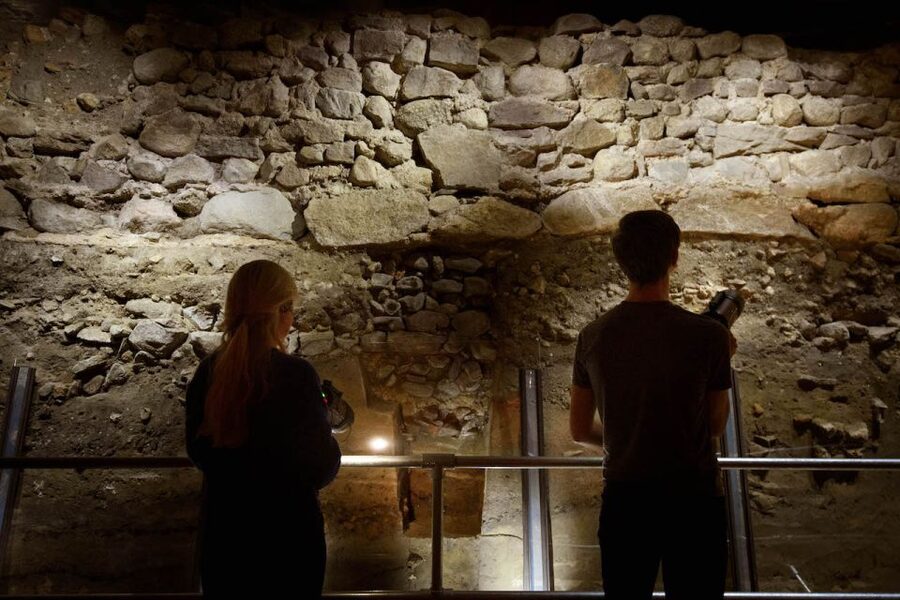
DOMunder finds a good balance between a traditional guided tour and an independent museum visit. The guide gives you the broad structure, then the technology lets you investigate the site yourself.
That arrangement suits mixed groups. One person can spend more time examining a wall or foundation while another moves on to the next prompt. Parents may appreciate the active format more than a long talk, though one English-language account suggested it may be better suited to older children than very young ones.
The equipment also keeps the visit focused. You are not wandering through an unmarked excavation and guessing what matters. The light points you toward features, and the audio explains their role.
Still, the technology is not the whole attraction. The underground remains are the reason it works. If you only want interactive effects, the visit may feel short. If you like archaeology and place-based history, the technology makes the evidence easier to understand.
How much time and money should you allow?
The visit lasts 75 minutes and costs $17 per person. That is a fair price for a central Utrecht attraction that includes an English or Dutch guide, the underground entry, the flashlight system, audio content, and visual presentations.
I would judge the value by the quality of the explanation rather than the size of the site. This is not a full-day museum. It is a focused history experience that fits neatly into a day of sightseeing around the Dom.
The schedule can work well between other central Utrecht activities. You should check the available start times when booking, since the tour runs at set times. Arrive at the Tourist Information Centre at Domplein 9 with enough time to find the correct desk and collect the equipment.
Finding the meeting point has caused confusion for some people because signs near the excavation can lead you toward the wrong entrance. Go first to the Tourist Information Centre, scan your ticket there, and follow the staff instructions.
You can cancel up to 24 hours before the visit for a full refund, and you can reserve now while paying later. Those terms are useful if your Utrecht day depends on weather, train schedules, or a changing itinerary.
Who will get the most from DOMunder?
I would recommend this tour to you if you enjoy archaeology, urban history, churches, or places where several eras occupy the same patch of ground. It is also a good choice if you want something more active than a standard museum.
The format suits adults and older children who can follow a historical sequence and use the flashlight system. The interactive elements give younger visitors something to do, but the subject matter and equipment may be more rewarding for school-age children than toddlers.
It is a particularly good add-on to a Dom Tower visit. Above ground, you see the city from a famous landmark. Below ground, you see the foundations and remains that explain why this square matters.
You should think twice if you have mobility problems. The attraction is specifically listed as unsuitable for wheelchair users, and one visitor suggested that people with slight mobility issues may want to sit during the opening section. The underground setting and movement between areas may not be comfortable for everyone.
Small practical tips for a smoother visit
Use the Tourist Information Centre at Domplein 9 as your starting point, not the visible excavation area. This simple choice can prevent a last-minute scramble.
Listen closely to the first explanation, especially the sequence from Roman Utrecht to the medieval Dom and then the 1674 collapse. The independent part is more rewarding when you know the order of events.
Expect to use the flashlight actively. Point it carefully at the marked areas, and if a prompt fails to activate, adjust the angle or position.
Do not rush the stonework. The small details, such as construction marks and the old paw prints, provide some of the most memorable connections with the past.
If you have already climbed the Dom Tower, allow yourself to compare the two viewpoints. The underground visit is not a repeat. It explains what the tower and square grew from.
Should you book DOMunder?
At $17, DOMunder is a good-value, compact history experience in central Utrecht. I would book it if you want a clear story, real archaeological remains, and a bit of hands-on technology rather than another room of display cases.
The strongest parts are the guides, the Roman and medieval layers, the flashlight-triggered audio, and the visual account of the 1674 storm. The weaker points are the short underground time, occasional difficulty with the equipment, confusing signs near the meeting point, and limited access for people with mobility needs.
For most visitors interested in Utrecht’s past, the balance is favorable. Book it as a focused 75-minute visit, arrive at Domplein 9, and treat the square above as part of the same story.
FAQ
How long does the DOMunder visit last?
The visit lasts 75 minutes.
How much does the DOMunder entry ticket cost?
The listed price is $17 per person.
Where do I meet the guide?
Scan your ticket at the desk of the Tourist Information Centre at Domplein 9 in Utrecht.
Which languages are available?
The live guide and audio guide are available in English and Dutch.
What does the ticket include?
The ticket includes entry to DOMunder and a guide. The visit also includes the flashlight and audio system used during the underground exploration.
Is DOMunder suitable for wheelchair users?
No. The attraction is listed as unsuitable for wheelchair users.
What historical periods does the tour cover?
The experience covers about 2,000 years, including Utrecht’s Roman past, the medieval Dom complex, and the 1674 storm that caused the Dom Church nave to collapse.
Can I cancel the booking?
Yes. You can cancel up to 24 hours in advance for a full refund. You can also reserve and pay later.
Just added in the Netherlands
- Aalsmeer: Flower Auction Royal Flora Holland Entry Ticket★ 4.6 · 41 reviews
- Maastricht Privat Sightseeing City Walk★ 5.0 · 76 reviews
- The Hague 2-Hour Walking Tour | Discover The City With A Local★ 4.5 · 81 reviews
- Food Walking Tour of The Hague – by Bites & Stories★ 5.0 · 188 reviews
- Utrecht Walking Tour with a local comedian as guide★ 5.0 · 48 reviews
- Utrecht Old Town: Medieval Monster Hunt & Walking Tour★ 4.0 · 62 reviews
- The Hague: City Walking Tour★ 4.5 · 156 reviews
- Utrecht 2-Hour Walking Tour | Discover The City With A Local★ 5.0 · 138 reviews
Tours in Utrecht, compared.
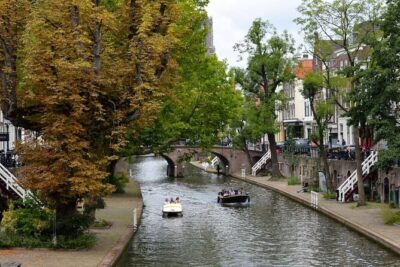
Utrecht 2-Hour Walking Tour | Discover The City With A Local
Read our review →
Utrecht Old Town: Medieval Monster Hunt & Walking Tour
Read our review →
Discover Utrecht with a self-guided Outside Escape city game tour
Read our review →
Utrecht Walking Tour with a local comedian as guide
Read our review →Browse the lists this tour appears in