
Reviewed · WALKING TOURS
Walking Tour about Golden Age Architecture, private local guide
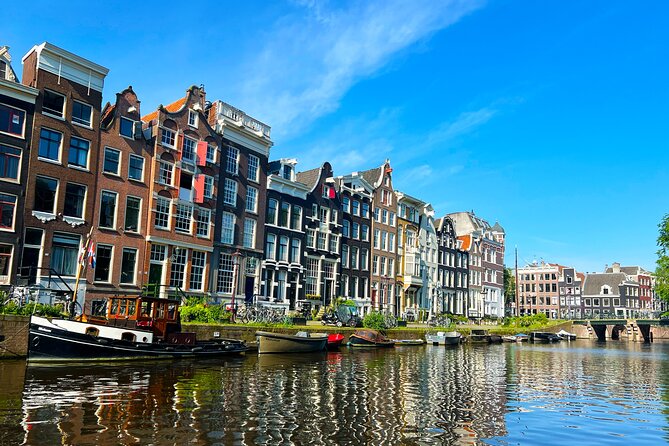
Amsterdam’s Golden Age is easiest to understand from the street, where grand merchant houses, hoisting beams, crooked façades, and tiny carved plaques still tell the story. This private walk with local guide Anna connects those details to Amsterdam’s rise as a 17th-century trading power.
I like the one-on-one format, which gives you room to ask questions and pause for photographs. I also like the focus on design and engineering, especially how builders managed Amsterdam’s soft ground. The main drawback is the pace: 90 minutes on foot with frequent standing is not a good fit if walking is difficult.
Key points to know before booking
- A private tour with Anna: Only your group takes part, so you can ask questions and request explanations at your own pace.
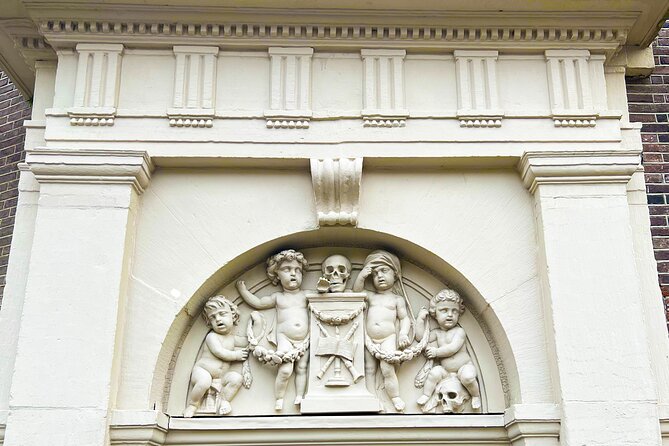
- Architecture beyond the postcard view: Look closely at gables, façade stones, domes, brickwork, and roof beams that are easy to miss on a casual walk.
- A useful Golden Age route: The walk links Dam Square, the Royal Palace, canal houses, the Jordaan, and Westerkerk.
- Engineering is part of the story: You’ll learn how major buildings were supported on Amsterdam’s marshy ground.
- A compact city introduction: In about 90 minutes, you cover several central neighborhoods without entering paid attractions.
- Plan for walking and standing: The tour is not recommended for people who use a walker or have trouble staying on their feet for 1.5 hours.
Why this architecture walk is worth your time
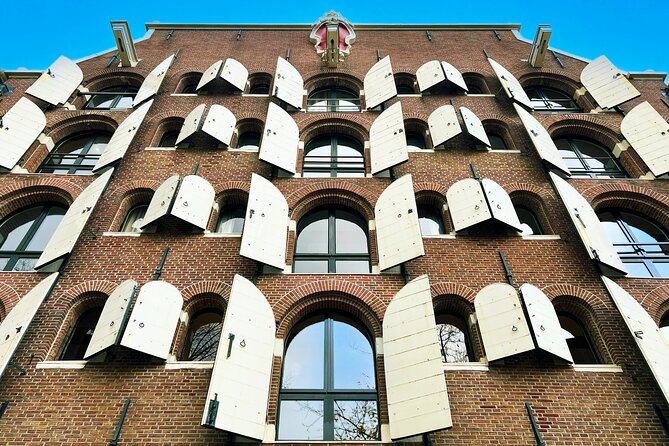
Many Amsterdam walks point out pretty canal houses and leave it there. This one asks you to look harder. Why are the buildings so narrow? Why do some lean? What are those beams above the roofs? Why do tiny stones appear in the façades?
Those questions lead to the city’s past as a major maritime trading center. During the 17th century, Amsterdam grew wealthy through commerce, shipping, and finance. That prosperity shaped everything from the grand town hall on Dam Square to the practical warehouses beside the canals.
I like that the tour links beauty with function. The houses are not just decorative objects. Their width, windows, staircases, roof shapes, and lifting beams all reflect the needs of merchants, craftsmen, and working families.
The private setup makes a difference here. With only your group, you can ask Anna to explain a façade again, stop for a picture, or connect the architecture to something you noticed earlier in your stay. Several comments about her guiding style point to clear English, patience with questions, and a friendly way of explaining difficult subjects without making them feel like a lecture.
The tour costs $73.59 per person. That is not the cheapest way to see central Amsterdam, especially if you are traveling alone. But for a private experience, the price can make sense for a couple, family, or small group that wants a focused introduction rather than a large general sightseeing walk. Group discounts are available, so check the total for your party rather than judging the value only by the per-person price.
More Walking Tours in Amsterdam
- Anne Frank’s Story – Guided Walking Tour through Amsterdam
★ 5.0 · 11,619 reviews - Amsterdam: Life of Anne Frank and World War II Walking Tour
★ 4.8 · 10,467 reviews - Absolutely Amsterdam – the Essential Introductory Walking Tour
★ 5.0 · 3,629 reviews
Starting with Dam Square and the Royal Palace
The walk begins with the story of Dam Square and Amsterdam’s rise during the Golden Age. This opening gives you the political and commercial setting for the buildings ahead.
The Royal Palace is especially useful because it was first built as Amsterdam’s city hall, not as a royal residence. In the 17th century, the building expressed the city’s confidence and wealth. Its later use as a palace adds another layer to the story, but the original purpose matters: this was a monument to civic power at the height of Amsterdam’s success.
You’ll hear about the palace’s Dutch Neoclassical design, its materials, and the methods used to construct such a large building. The ground beneath Amsterdam is soft and marshy, so the palace’s foundations are part of the story too. The tour explains how builders handled that difficult site, showing that Amsterdam’s grand architecture depended on practical engineering as much as artistic ambition.
The stop at the palace is listed as an exterior discussion with free admission, not a palace visit. That distinction matters. You are coming to understand the building from the outside, not to tour its rooms.
The listed meeting point is the Royal Palace at Nieuwezijds Voorburgwal 147. The route also includes Dam Square as its opening stop, so check the exact meeting instructions when you book and arrive with a little extra time to locate your guide.
Huis Bartolotti and the style of wealthy merchants
Next comes Huis Bartolotti, a striking canal house linked to Amsterdam’s wealthy trading class. Its red brick, broad windows, and sandstone decoration show how a private home could act as a public statement of money and status.
The house reflects Dutch Baroque design, but its details also point toward international trade. The original owner had strong business connections with Italy, and the façade’s decoration reflects that wider commercial world.
This is one of the moments when a guide adds real value. On your own, you can admire the building’s color and shape. With Anna, you can connect those features to the person who commissioned the house and to the trade networks that made such luxury possible.
The stop is brief, about five minutes. That is enough for an explanation and photographs, but not for a long architectural study. If this particular building fascinates you, use the private format to ask a follow-up question while you walk to the next stop.
Torensluis and Amsterdam’s crooked houses
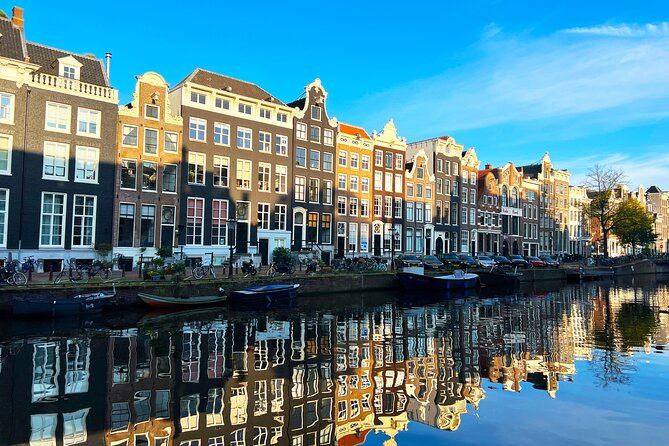
Torensluis is a wide bridge with good views of several façade types associated with the city’s mercantile class. Here, the tour turns from one grand house to a broader look at how Amsterdam’s architecture developed.
You’ll see examples of Baroque design adapted to Dutch streets. Expect attention to ornament, contrast, and the ways façades were shaped to make narrow urban buildings look more impressive.
This is also a good place to understand Amsterdam’s crooked houses. Buildings lean for several reasons connected to age, foundations, and the city’s soft ground. Their unusual angles can look amusing, but they also reveal the long-term challenge of maintaining a city built on marshy terrain.
I like this stop because it helps you read the canal belt as a whole. Instead of photographing one famous house, you compare several buildings and begin to notice repeated patterns. The stop lasts about ten minutes, so wear shoes that let you walk and stand comfortably on bridges and pavements.
Other guided walks around Amsterdam:
- Amsterdam: Anne Frank Guided Small Group Walking Tour
★ 4.8 · 2,722 reviews - Amsterdam: Anne Frank Walking Tour – Guided in EN/DE/IT/ES
★ 4.9 · 2,676 reviews - Amsterdam: Guided Cultural Walking Tour
★ 4.9 · 2,384 reviews - Amsterdam: Guided Ganja Walking Tour of Coffee Shops
★ 4.2 · 2,092 reviews
De Dolphijn and the people behind the façades
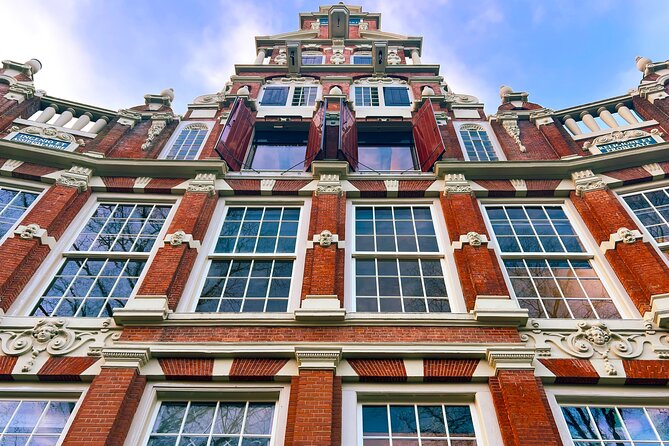
De Dolphijn adds a personal story to the architecture. Its name refers to a dolphin, a symbol of wealth connected to Amsterdam’s maritime trade.
The house was originally owned by Frans Banning Cocq, the captain shown in Rembrandt’s famous painting The Night Watch. That connection gives the building a human face. You are no longer looking only at bricks, windows, and gables. You are looking at the home of a powerful figure whose public life is also tied to one of the best-known paintings in Dutch art.
This five-minute stop is short, but it fits the tour’s larger method. Anna uses individual houses to explain the people, money, and trading activity behind Amsterdam’s architectural growth.
The domed Ronde Lutherse Kerk
The Ronde Lutherse Kerk provides a change of shape and scale. Domes were considered a major architectural achievement during the Renaissance period, and the church offers a chance to discuss that ambition in a city better known for narrow canal houses.
The stop is brief and appears to focus on the exterior. Do not book this expecting a long church visit or an extended interior tour. Instead, treat it as a quick lesson in how religious buildings could express technical skill and architectural prestige in a crowded canal city.
Prinsengracht’s warehouses and working architecture
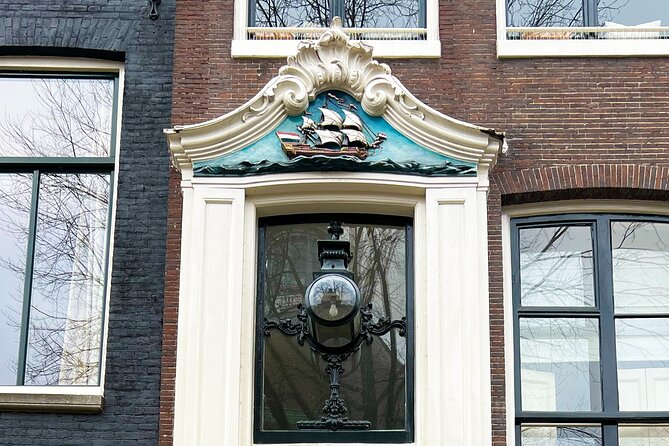
Along Prinsengracht, the focus shifts from grand homes to warehouses. These buildings tell you how Amsterdam’s trade worked at street level.
The tall, steep gables and large windows were practical choices. Wooden hoisting beams near the roofs allowed merchants and workers to lift heavy cargo from boats and move it into the upper floors. Narrow buildings with limited ground-floor space needed this vertical solution.
The exteriors may look restrained compared with a richly decorated canal house. That simplicity is part of their appeal. The clean lines and limited ornament reflect working use, while the size of the warehouses points to the scale of merchant wealth.
This stop is only about five minutes, but it gives you one of the most useful details on the entire walk: the beam projecting from a roof is not random decoration. It is evidence of a city designed around canals, cargo, and commerce.
After this tour, you’ll probably notice those beams everywhere. That is a good sign that the walk has changed how you see Amsterdam.
The Jordaan and its carved gevelstenen
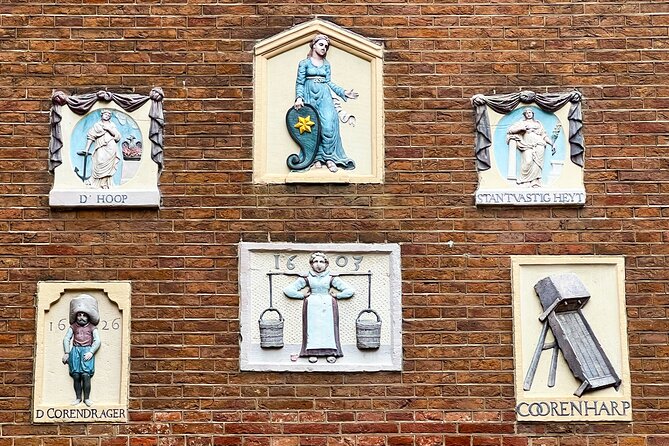
The longest stop is in the Jordaan, where you spend about 20 minutes looking at the neighborhood and its gevelstenen, or façade stones. These small carved plaques are among the most rewarding details for anyone who enjoys street-level history.
Before widespread street numbering, a façade stone could help identify a building. It might show the owner’s trade, the building’s purpose, or an important fact about the people who lived or worked there. Some are simple. Others include careful carvings that turn a practical marker into a small work of art.
The Jordaan developed as a district for craftsmen, laborers, and lower- and middle-class residents. Its narrow canals, compact houses, workshops, and small shops offer a different view of the Golden Age from the grand homes along the main canal belt.
This contrast is important. Amsterdam’s prosperity did not belong only to wealthy merchants. The city also depended on workers who made, repaired, carried, sold, and managed the goods that passed through its canals.
I especially like this part of the walk because façade stones reward attention. They are easy to miss if you are focused on canal views or bicycles. Anna can point out the details and explain what they mean, giving you a way to keep exploring after the tour ends.
The Jordaan section also adds social context. You see how architecture recorded the lives of ordinary residents, not just the names of rich owners. For many people, this will be the most memorable part of the experience.
Westerkerk and the final canal view
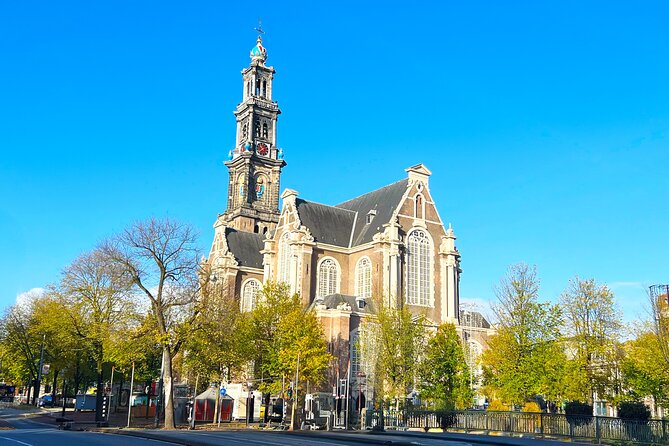
The walk finishes near Westerkerk on Prinsengracht, close to the Anne Frank House. This is a convenient ending if you have another central Amsterdam sight planned, although the tour does not include entry to the church or the Anne Frank House.
Westerkerk was built as a Calvinist church for Amsterdam’s growing population. Its spacious, relatively simple design reflects Calvinist worship, where plain elegance mattered more than heavy interior decoration.
The tower reaches 85 meters, or about 280 feet, above the Jordaan. Its imperial crown refers to Amsterdam’s status and civic importance. The clock and its chimes have marked time for generations, and the sound is also connected with Anne Frank’s diary.
The church is linked to Rembrandt as well, since he was buried there. That gives the final stop several threads to tie together: religion, civic identity, art, literature, and the everyday sound of the city.
Ending here works well. The tour begins with Amsterdam’s public power at Dam Square and closes with a landmark tied to faith, art, and local memory. It is a sensible final chapter for a short walk through the central canal districts.
What the 90-minute format feels like
The tour is listed at about one hour and 30 minutes. That is long enough to cover many buildings but short enough to fit into a busy day.
The route includes nine stops, with the most time spent in the Jordaan. Several other stops last about five minutes, while the Royal Palace and Torensluis receive around ten minutes each. You should expect a brisk sequence of short explanations rather than long stays at each site.
That format works best if you want a strong introduction. You will see a lot, learn how to recognize key architectural features, and get suggestions for what deserves a closer look later.
It is less suitable if you prefer to enter every building or spend half an hour sketching one façade. Admission is not included because the walk is built around exterior architecture and public streets.
Wear comfortable shoes, and bring water since bottled water is not included. You will be walking and standing for most of the 90 minutes. Service animals are allowed, and the route is near public transportation, but mobility aids are not available.
Who will get the most from this private walk
This tour suits you if architecture catches your eye but you want help understanding what you are seeing. It is also a good choice if you enjoy social history, engineering, art, or the connection between buildings and the people who lived in them.
The private format is useful for:
- Couples who want a focused introduction to Amsterdam
- Families with questions about canals, buildings, and city life
- Small groups interested in photography and architectural details
- Repeat visitors who want something more specific than a general city tour
- Anyone who wants a local guide rather than a large group with a fixed script
Anna’s style appears particularly suited to curious guests. She speaks English, welcomes questions, allows time for photographs, and can explain architecture in an accessible way. If you enjoy asking why a building looks the way it does, the private setting should serve you well.
You should think twice if standing for 1.5 hours is hard, if you use a walker, or if you want interior access to the Royal Palace or Westerkerk. This is a street walk, not a museum tour.
Booking value and practical tradeoffs
At $73.59 per person, the tour offers its best value when two or more people share the private guide. Group discounts may improve the price for larger parties.
You are paying less for admission and more for interpretation. The buildings themselves can be seen free of charge, but the point is learning how to read them. A casual walk might show you a crooked house or a roof beam. Anna explains why it is there, what it says about Amsterdam, and how it connects to the city’s past.
The tour is often booked 43 days ahead on average, so advance planning is sensible if your dates are fixed. Confirmation is provided at booking, and free cancellation is available up to 24 hours before the start time. Changes or cancellations inside that window are not accepted for a refund.
Should you book this Amsterdam architecture tour?
Book it if you want to understand Amsterdam’s canal houses instead of simply photographing them. The combination of private guiding, local stories, engineering details, façade stones, and Golden Age history gives the walk a clear purpose.
I would choose it early in an Amsterdam visit, since you will see the city differently afterward. You’ll notice hoisting beams, gables, carved plaques, leaning façades, and the difference between a merchant home and a working warehouse.
Skip it if you need frequent sitting breaks, want extensive interior visits, or prefer a broad city tour with many unrelated sights. For an architecture-minded couple or small group, though, this is a focused and personal way to spend 90 minutes in central Amsterdam.
FAQ
How long does the walking tour last?
The tour lasts approximately 1 hour and 30 minutes.
What is the price?
The listed price is $73.59 per person. Group discounts are available.
Is the tour private?
Yes. Only your group participates in the activity.
Who guides the tour?
The local guide named in the experience information and customer comments is Anna.
What language is offered?
The tour is offered in English.
Where does the tour start?
The listed meeting point is the Royal Palace Amsterdam at Nieuwezijds Voorburgwal 147, 1012 RJ Amsterdam.
Where does the tour end?
The tour ends at Westerkerk, Prinsengracht 279, 1016 DL Amsterdam, near the Anne Frank House.
Is admission to the buildings included?
The tour includes a private guide, but admission tickets to the buildings are not listed as included. The scheduled stops are presented as free exterior visits.
Is the tour suitable for people with limited mobility?
The tour is not recommended for people who use a walker or have trouble walking and standing for 1.5 hours. Mobility aids are not available.
Just added in Amsterdam
- Guided Day Trip – Volendam, Zaanse Schans, Marken & Edam★ 4.0 · 232 reviews
- Private Tour Zaanse Schans Windmills and Volendam in Jaguar★ 5.0 · 10 reviews
- Zaanse Schans and Giethoorn Unique Day Trip with Boat Cruise★ 4.5 · 17 reviews
- Half-Day Private Guided Sightseeing Tour of Zaanse Schans★ 5.0 · 14 reviews
- Zaanse Schans Private Tour Windmills★ 5.0 · 18 reviews
- Private bike tour: Hidden gems around Amsterdam and surroundings★ 5.0 · 4 reviews
- Bike tour in Amsterdam with an Italian guide★ 5.0 · 15 reviews
- Amsterdam Sightseeing Tour + Hidden Gems + Tastings + PDF guide★ 5.0 · 35 reviews
Walking Tours, compared.
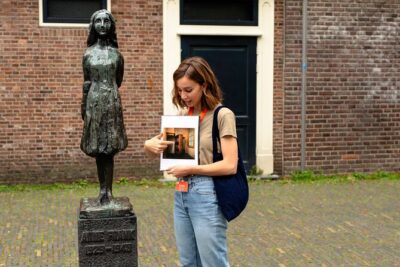
Anne Frank’s Story – Guided Walking Tour through Amsterdam
Read our review →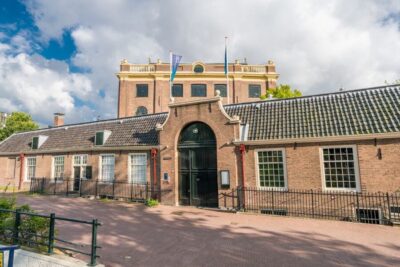
Life of Anne Frank and World War II Walking Tour
Read our review →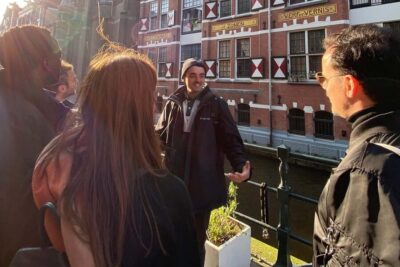

Anne Frank Walking Tour – Guided in EN/DE/IT/ES
Read our review →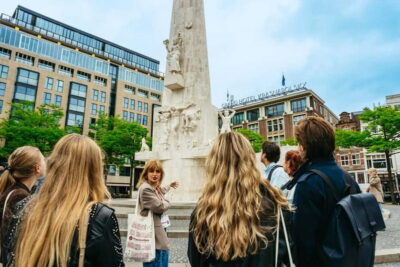

Anne Frank Walking Tour Amsterdam Including Jewish Cultural Quarter
Read our review →
Amsterdam Highlights Walking Tour: Small Group Experience
Read our review →Browse the lists this tour appears in