
Reviewed · CASTLE & PALACE TOURS
Apeldoorn: Het Loo Palace Entry Ticket
Het Loo Palace is more than a grand house with old furniture. Its palace stories put you inside the world of Willem III, Queen Mary, Wilhelmina, and the modern House of Orange-Nassau. I especially like the choice of three storylines and the roof view, where you can see the gardens’ exact symmetry from above.
I also like the contrast between private royal rooms and the showy formal gardens. The carriages and cars add a practical touch to the royal story. The main drawback is that the $25 ticket does not include parking, which costs another €8 on site, and you should allow most of a day if you want to see everything without rushing.
Key points to know
- Three palace stories: Follow Willem III and Mary, Wilhelmina, or the theme of everyday royal home life through the app or a paid audio device.
- A rooftop view with royal connections: See the baroque garden design from above and the spot where Queen Mary drank tea.
- Gardens rebuilt in their original style: Fountains, statues, flowers, and strong geometric patterns reflect the power of the first royal occupants.
- Royal transport on display: Historic carriages and cars show how the Dutch monarchy traveled for important events.
- Useful language choice: Audio is available in Dutch, English, and German, with the device costing €2.50 if you do not use the app.
- Easy planning: The ticket is valid for one day, wheelchair accessible, and cancellable up to 24 hours before the visit.
Why Het Loo Palace feels different from an ordinary royal house
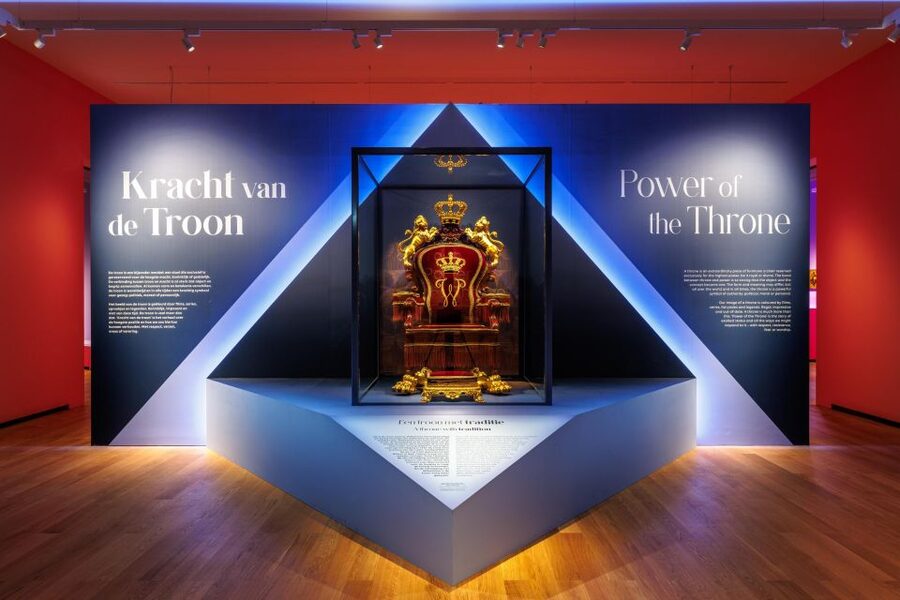
Het Loo was used by Dutch royals for more than 300 years, and that long span gives the visit a useful sense of change. You are not looking at one frozen royal period. You move from the political world of the late 17th century to the domestic life of later monarchs and then to the public image of the House of Orange-Nassau.
The palace was especially important to Willem III and Mary. When they became king and queen of England, Het Loo became a center of European power. That makes the rooms more interesting than a simple parade of expensive objects. Behind the furniture and portraits are questions of religion, family, international politics, and royal image-making.
The new underground foyer provides the entry point. It sits beneath a glass-bottom fountain, an unusual beginning for a palace visit. From there, you reach the palace and museum galleries. The modern arrival space also helps separate the practical business of entering from the older rooms upstairs.
I like that balance. Het Loo does not pretend that a royal palace was an ordinary home, but it asks you to consider how a place of work, ceremony, and politics could also feel private.
Other grand houses near the Netherlands:
- Amsterdam: Royal Palace Entry Ticket and Audio Guide
★ 4.6 · 6,475 reviews - Utrecht: De Haar Castle & Park Entry Ticket
★ 4.7 · 1,350 reviews - The Hague: Escher in The Palace Museum Ticket
★ 4.6 · 896 reviews
Three storylines help you read the rooms
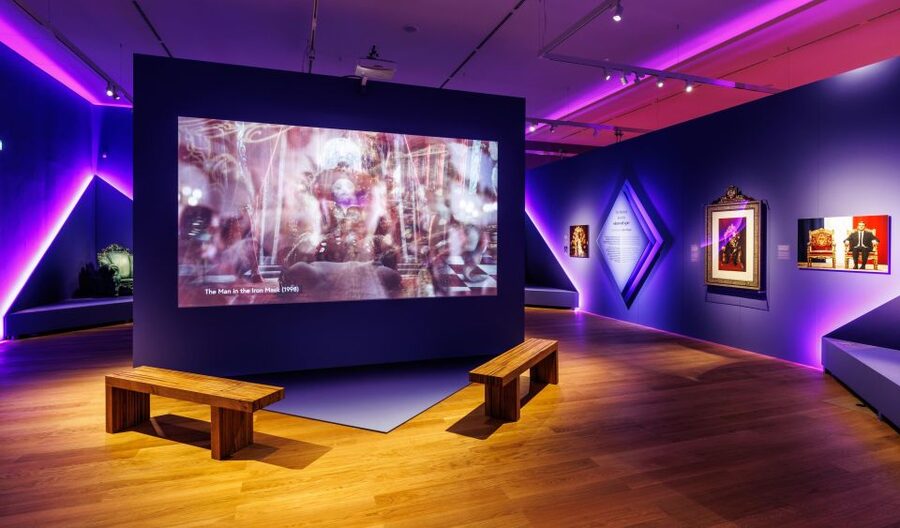
You can choose among three palace stories, delivered through an app or a paid audio device. The device costs €2.50 and the available languages are Dutch, English, and German. If you want the fullest explanation, use one of these options rather than walking through the rooms without context.
Willem and Mary
This story focuses on the palace’s first occupants. Count Hans Willem Bentinck, Willem III’s close friend, guides the story and explains 17th-century politics and palace secrets.
That point of view matters. Willem III and Mary were not simply wealthy people who built a fine country house. Their marriage, religion, family ties, and position on the European stage shaped Het Loo. Once they became king and queen of England, the palace had a much larger role than its location in Apeldoorn might suggest.
This is the best storyline if you want political background and royal drama. It gives the palace a human cast and helps you see why the formal rooms, portraits, and symbols were carefully arranged.
Wilhelmina’s Home
Wilhelmina, the great-grandmother of King Willem-Alexander, considered Het Loo her favorite palace. Guides named Ziarah and Mark lead this story into palace life during the 19th and 20th centuries.
The emphasis here is more personal. You get a look at how a monarch experienced the palace as home, not only as a place for formal duties. That can change the way you read the bedrooms, sitting rooms, furniture, and other domestic details.
Choose this route if you are most interested in Wilhelmina or in the everyday side of royal life. It also gives the building a more recent connection to the Dutch monarchy.
A few more things to do in the Netherlands worth a look
- Amsterdam: Van Gogh Museum Ticket
★ 4.7 · 52,054 reviews - Amsterdam: Heineken Experience Ticket
★ 4.6 · 30,055 reviews - Amsterdam: Rijksmuseum Entry Ticket
★ 4.7 · 25,535 reviews - Amsterdam: Icebar Entry Ticket with 3 Drinks
★ 4.2 · 14,562 reviews
At Home with the Royals
The third story asks what home means inside a palace. The question sounds simple, but it is useful. A palace contains costly furniture, old paintings, and grand rooms, yet the people living there still need privacy, comfort, and familiar routines.
This option is a good choice if you are visiting with children or if you prefer social history to a strict sequence of monarchs. It encourages you to look at the rooms in a different way. Instead of asking only who owned an object, you can ask how a royal family used the space.
You do not need to treat the three stories as competing tours. They are different ways of noticing the same building. Pick the one that matches your interests, and you can still enjoy the gardens, roof, collection, and vehicles.
The palace rooms reveal public power and private life
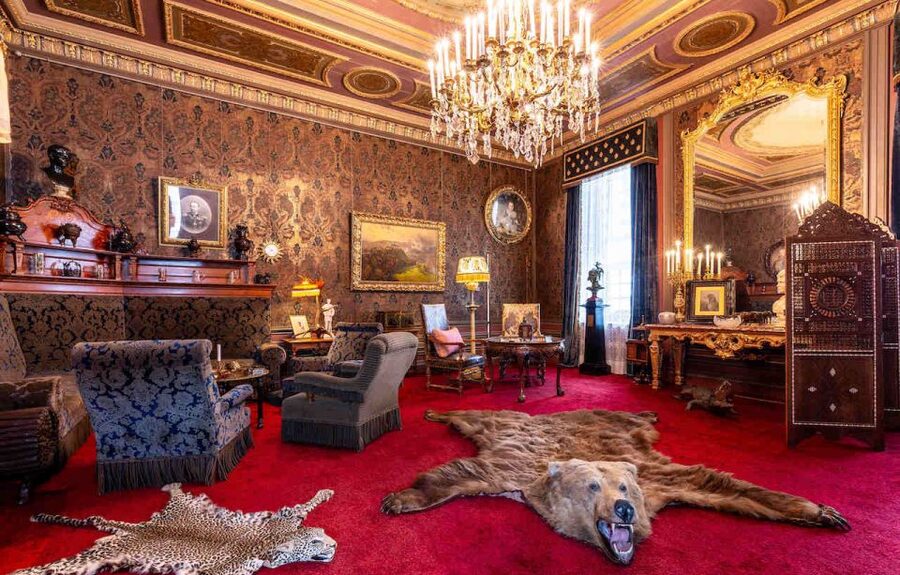
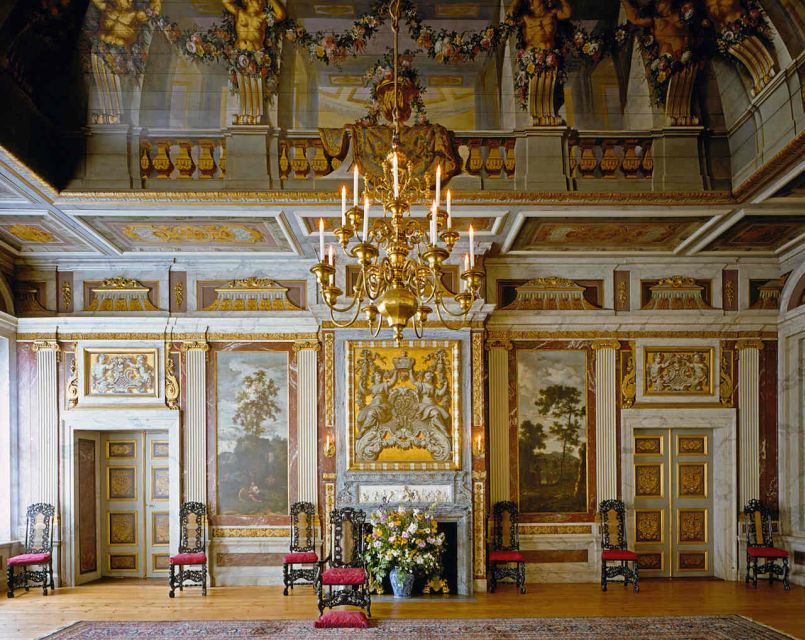
The palace rooms are the heart of the visit. They show where Dutch royals lived for more than 350 years, with the displays connecting the rooms to the wider story of the monarchy.
Expect a mix of grand decoration and personal detail. The formal objects remind you that royalty was built around ceremony and display. The domestic angle brings the scale back to human size. That shift is one of Het Loo’s strengths: you can look at an ornate room as a symbol of power, then consider how it functioned as part of someone’s home.
The building is most rewarding when you take your time. You do not need to memorize every name or date. Pay attention to how the rooms present the monarchy. The palace makes royal life appear ordered and impressive, but the audio stories add politics, family tension, and personal choices behind that polished surface.
Because the ticket lasts for one day, you have room to set your own pace. That is helpful if you want to listen closely to the palace story rather than race from room to room.
The House of Orange-Nassau collection adds a personal layer
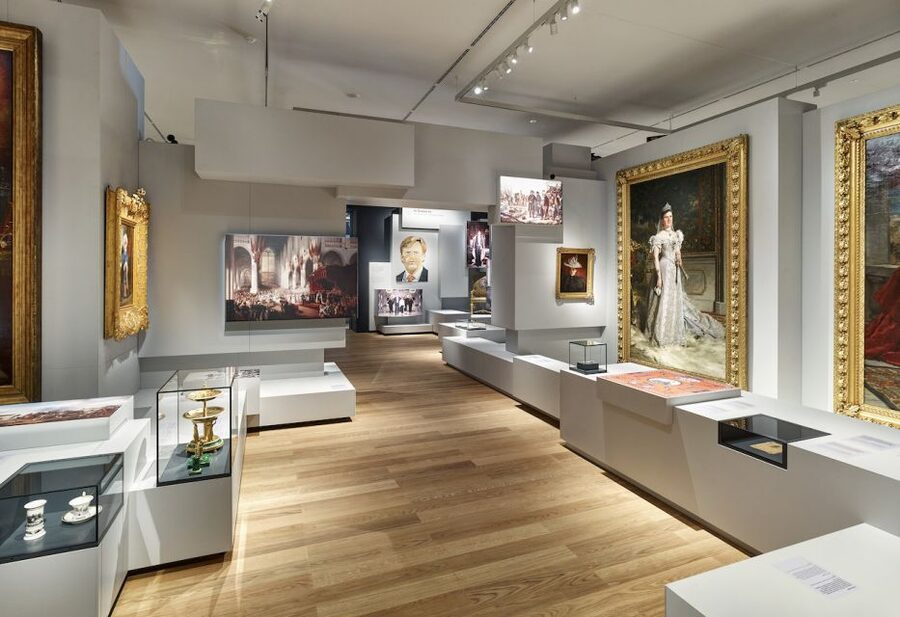
The exhibition The House of Orange-Nassau gathers art, objects, and photographs connected with the royal family. It takes you through the history of the Dutch monarchy while also showing glimpses of private life.
The photographs are particularly useful because they bring the family closer to the present. Palace rooms can feel distant, especially when they are filled with old furniture and formal portraits. Personal objects and images help bridge that gap.
I would treat this exhibition as a companion to the rooms, not a separate attraction to rush through. First, notice how the palace presents royal life through its architecture and furnishings. Then look at the collection for the people behind that public image.
The exhibition also helps if you are less familiar with Dutch royal history. You can follow the House of Orange-Nassau through objects and images instead of relying on dates alone.
Queen Mary’s roof gives you the best garden view
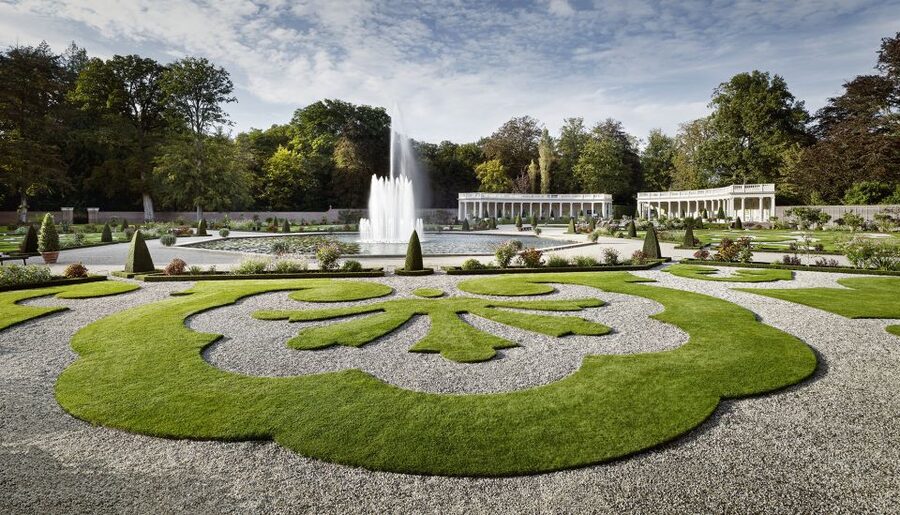
The palace roof is one of the most distinctive parts of the visit. This is where Queen Mary drank tea, and it offers a broad view over the grounds.
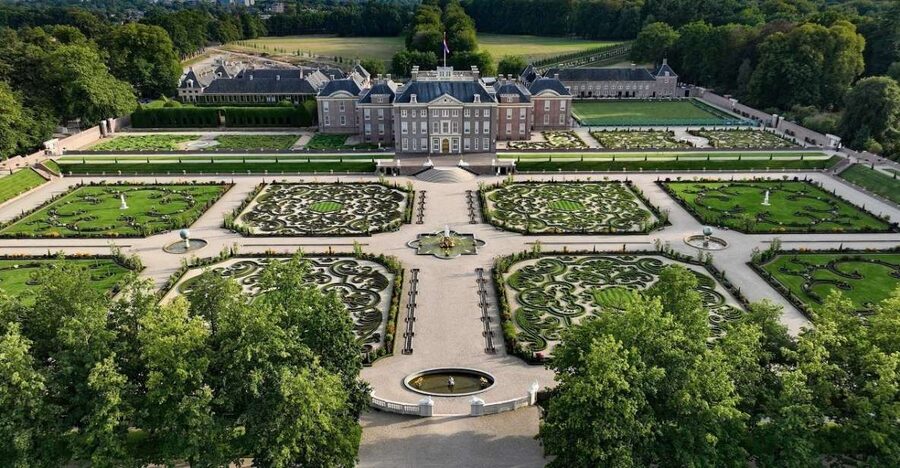
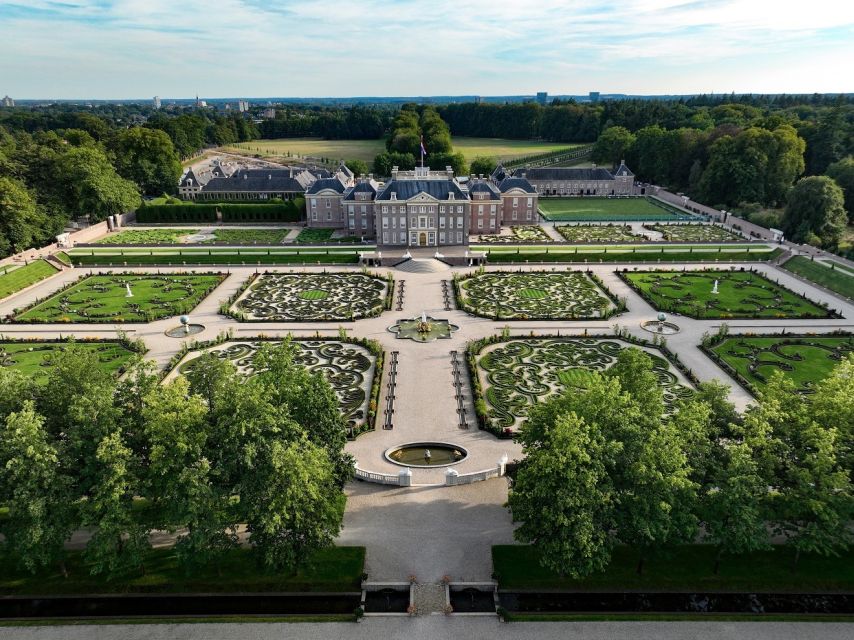
From above, the garden design makes immediate sense. The paths, fountains, planting beds, and geometric patterns form a clear plan. At ground level, you notice individual flowers, statues, and water features. From the roof, you see how those pieces fit together.
I would not skip this stop even if you are mainly interested in the palace interiors. It gives you the visual key to the gardens below. It also shows the scale of the estate and the care taken to maintain a strict baroque design.
The roof view is likely to be especially useful on a first visit. Before walking through the gardens, you can see their layout. Afterward, the symmetry will make more sense.
The baroque gardens display royal wealth
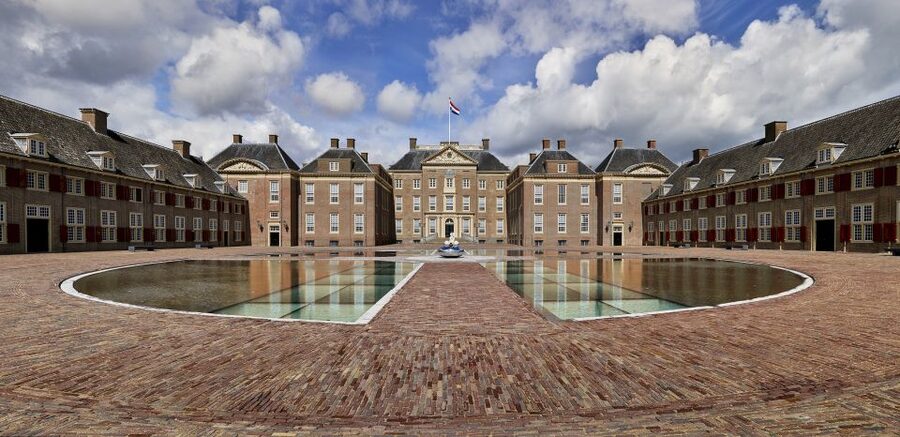
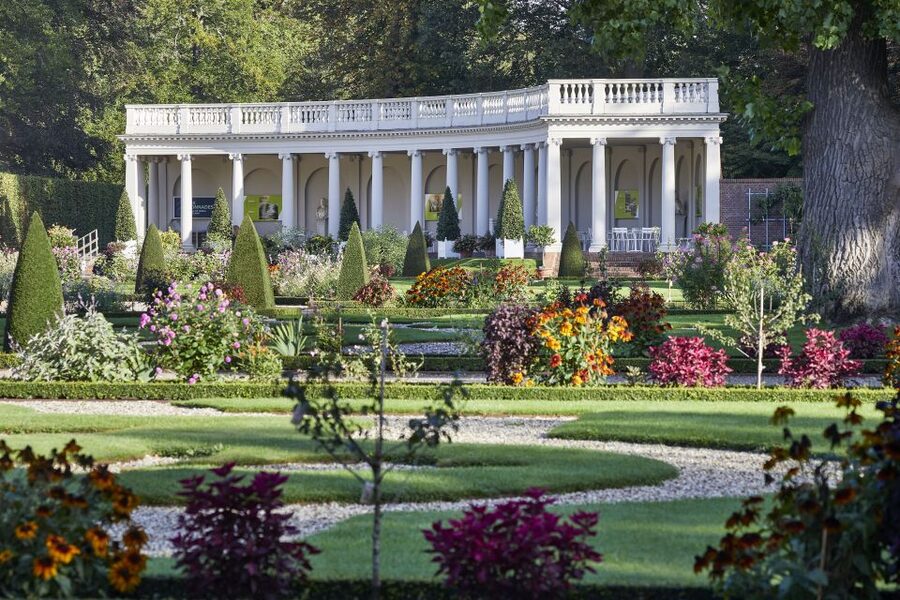
Willem and Mary created the large baroque garden to show power and wealth. Its high fountains, statues, flowers, and plants were not random decoration. The whole design was meant to impress.
The garden has been laid out to match the form created for the first occupants of Het Loo. That historical design gives the grounds a strong sense of order. You will see straight lines, repeated shapes, and carefully placed features rather than a loose park where every path wanders.
The contrast with the palace interiors is important. Inside, you study rooms and objects at close range. Outside, the garden makes a public statement on a much larger scale. The fountains and statues turn the grounds into a stage for royal power.
Give yourself enough time here. The gardens are included in the entry ticket, and they are not a quick add-on behind the palace. You can use the roof view to understand the overall pattern, then walk through the sections to notice the flowers, plants, water, and sculpture.
The formal design may not suit someone looking for a quiet, natural woodland garden. If you enjoy strong geometry and historic garden planning, though, it is one of the most satisfying parts of the visit.
Carriages and cars show the working side of monarchy
The display of royal carriages and cars adds something the palace rooms cannot. These vehicles show how the Dutch royals traveled for important events and how monarchy moved through public life.
A carriage is not just a decorative object. It tells you about ceremony, visibility, and the distance between royal family members and the public. Cars point to a later period, when the monarchy’s public image traveled by modern means.
This collection is a good change of pace after the interiors and gardens. Instead of focusing on rooms and decoration, you look at practical transport with a ceremonial purpose. Families and visitors who are less interested in paintings may find the vehicles an easy way into the royal story.
The displays also help you track change over time. The palace covers centuries, and the move from carriages to cars makes that change tangible.
The $25 ticket offers a full day of value
At about $25 per person, the ticket is not a bargain attraction for a quick one-hour stop. It becomes better value when you use the full day and see the palace, galleries, roof, gardens, collection, and transport displays.
The price includes entry to Het Loo Palace and the gardens. Parking is separate, at €8 on site, so drivers should add that to the budget. If you arrive by public transport, the cost structure is simpler. One useful detail for visitors from The Hague is that the connection by public transport is described as good, so you do not have to assume a car is essential.
The audio device costs another €2.50, unless you use the app. I would consider that a sensible small extra if you want the story of Willem and Mary, Wilhelmina, or the home-life theme to shape your visit.
The public booking score is 4.4 out of 5 from 277 ratings. The strongest clear points are friendly staff and straightforward access by public transport from The Hague. One-word praise such as perfect does not tell you much, but it does fit an experience with a simple ticket structure and several things to see in one place.
Practical planning for your visit
The ticket is valid for one day, but no fixed visit length is supplied. Plan on giving yourself plenty of time if you want to hear the audio story, explore the rooms, walk the gardens, and see the collection and vehicles.
Use the app if you prefer not to pay for an audio device. The device is available in Dutch, English, and German, so you can choose the language that lets you focus on the story rather than translate details in your head.
The experience is wheelchair accessible. That is useful information for anyone who needs step-free access, although the supplied details do not describe every route or facility in the palace and grounds. If you need very specific access information, check with Het Loo before booking.
You can cancel up to 24 hours before the visit for a full refund. A reserve-now-and-pay-later option is also available, which helps if your schedule in Gelderland is not fixed.
Who should book Het Loo Palace?
I would recommend Het Loo to you if you like royal history, formal gardens, historic houses, or displays that connect public ceremony with private life. It also works well for a full day in Apeldoorn, since the ticket covers several different parts of the estate rather than one set of rooms.
The experience suits first-time visitors who want structure. The three audio stories give you a clear way to approach the palace, while the roof and gardens provide memorable visual highlights even if you are not an expert in Dutch history.
You may want to think twice if you only have a short window in Apeldoorn or dislike formal interiors and carefully ordered gardens. The ticket earns its price through time spent, so a rushed visit will give you less value.
Should you book this palace ticket?
Book it if you want more than a quick look at a royal residence. The combination of palace rooms, royal transport, the Orange-Nassau collection, and formal gardens gives you several ways to connect with Dutch monarchy.
For the best value, choose an audio story, allow most of the day, and make time for the roof before walking through the gardens. Add €8 for parking if you drive. If you are coming from The Hague, public transport is a practical option, and the friendly staff and clear layout make this an easy cultural day out in Gelderland.
FAQ
Where is Het Loo Palace?
Het Loo Palace is in Apeldoorn, in Gelderland, the Netherlands.
What does the entry ticket include?
The ticket includes entry to Paleis Het Loo and the palace gardens.
How long is the ticket valid?
The ticket is valid for one day. Check availability for the available starting times.
How much does the ticket cost?
The listed price is $25 per person.
Is parking included?
No. Parking is not included, and a parking ticket can be bought on site for €8.
Are audio stories available?
Yes. You can use an app or pay €2.50 for an audio device. The stories are available in Dutch, English, and German.
What stories can I choose from?
You can choose Willem and Mary, Wilhelmina’s Home, or At Home with the Royals.
Is Het Loo Palace wheelchair accessible?
Yes. The experience is wheelchair accessible.
Just added in the Netherlands
- Aalsmeer: Flower Auction Royal Flora Holland Entry Ticket★ 4.6 · 41 reviews
- 2 Hours Walking Tour Throughout History & Highlights of Haarlem★ 4.5 · 18 reviews
- Highlight Running Tour★ 5.0 · 118 reviews
- Maastricht Privat Sightseeing City Walk★ 5.0 · 76 reviews
- The Hague 2-Hour Walking Tour | Discover The City With A Local★ 4.5 · 81 reviews
- Food Walking Tour of The Hague – by Bites & Stories★ 5.0 · 188 reviews
- Utrecht Walking Tour with a local comedian as guide★ 5.0 · 48 reviews
- Utrecht Old Town: Medieval Monster Hunt & Walking Tour★ 4.0 · 62 reviews
Castle & Palace Tours, compared.

Castle De Haar Small-Group Tour from Amsterdam
Read our review →
Amsterdam Castle & Utrecht City – Private Day Tour
Read our review →
Full-Day Private Historic Royal Tour around Palaces and Castles
Read our review →Browse the lists this tour appears in