
Reviewed · WALKING TOURS
Amsterdam: Private World War Two History Walking Tour
Amsterdam’s wartime story comes into sharp focus on this small-group walk. You’ll follow the German army’s arrival, look at the May 7, 1945 shooting on Dam Square, and hear how Jewish residents from one Amsterdam street died in Auschwitz or Sobibor. The guides also bring photographs and a small book of names, turning broad history into something personal.
I like the maximum group size of four, which gives you room to ask questions and set the walking pace. I also like the use of resistance photographs at the places where they were taken, along with the chance to meet Peter Schaapman, one of the retired historians leading these tours.
The main consideration is focus. This is a serious, sometimes painful three hours, not a general introduction to Amsterdam, and it does not include the Anne Frank House, the Resistance Museum, or the Hollandsche Schouwburg.
Key points to know before you book
- Starts at the old Anne Frank House: Meet at Prinsengracht 263 at 9:30 a.m., outside the building, not inside the museum.
- Keeps groups very small: No more than four people means direct conversation rather than a guide speaking to a crowd.
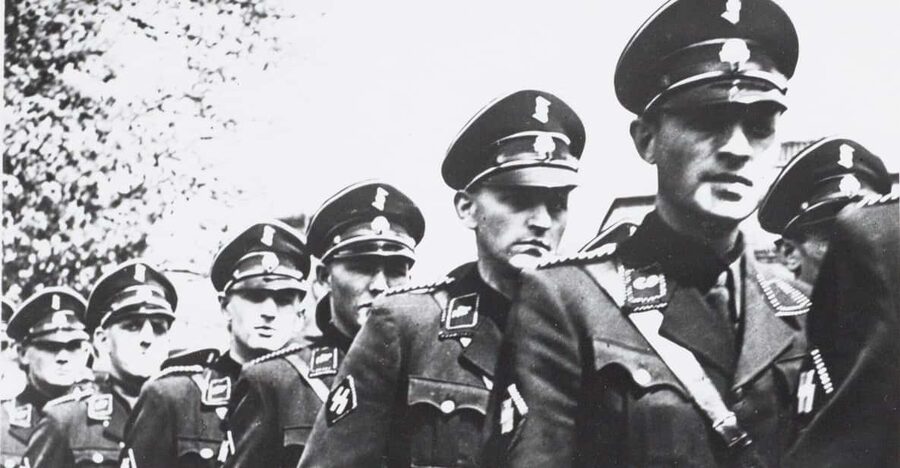
- Uses original wartime photographs: Resistance images are shown at the locations connected with them.
- Connects one Amsterdam street to the death camps: A small book lists Jewish residents, with photographs, names, and the camps where they died.
- Covers the final days of the war: The walk includes the Dam Square shooting on May 7, 1945, after liberation celebrations had begun.
- Allows time for a pause: A coffee and restroom break comes about halfway through, but refreshments cost extra.
Why this small walking tour feels different
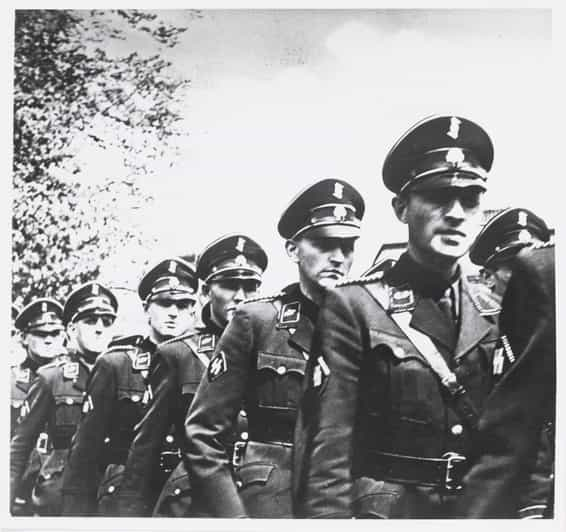
Many Amsterdam history walks concentrate on the Anne Frank story, the Resistance Museum, or the Jewish Quarter. This tour takes another route. It links places around the city to the full period of Nazi occupation, from the German army’s arrival in 1940 through the war’s final days in 1945.
That wider frame matters. You are not hearing only about persecution or only about resistance. You are also looking at public reaction, food shortages, liberation, and the confusion that remained even after German defeat. The result is a more complete picture of how the occupation affected daily life in Amsterdam.
The private format is the biggest practical advantage. At $188 for up to four people, the price is not cheap for one person. For a full group of four, it works out to about $47 each, which is reasonable for a three-hour private tour led by a retired historian. For two people, it becomes a more expensive choice, but you are paying for time, questions, and a route adjusted to your pace.
The English tour is live and personal. There is no audio system, and that suits this subject. You can stop the guide to ask about a name, photograph, monument, or event instead of waiting for a recorded explanation to finish.
More Walking Tours in Amsterdam
- Anne Frank’s Story – Guided Walking Tour through Amsterdam
★ 5.0 · 11,619 reviews - Amsterdam: Life of Anne Frank and World War II Walking Tour
★ 4.8 · 10,467 reviews - Absolutely Amsterdam – the Essential Introductory Walking Tour
★ 5.0 · 3,629 reviews
Meeting at Prinsengracht 263
The meeting point is in front of the old Anne Frank House at Prinsengracht 263. You meet outside, between the museum and the Lunch Cafe, at the spot marked A on the map. Look for a guide holding a large notebook and a sign referring to Anne Frank Huis.
This is a useful location, but it can be confusing because the Anne Frank House is not part of the tour. If you are expecting to enter the museum, you need a separate ticket. The walk uses the building as a starting point for the wider occupation story, then moves to other wartime locations around central Amsterdam.
The scheduled start is 9:30 a.m. The tour lasts about three hours, though it can run a little longer. That extra flexibility may suit you if you want time for questions or something to eat during the break.
Seeing the German army’s arrival
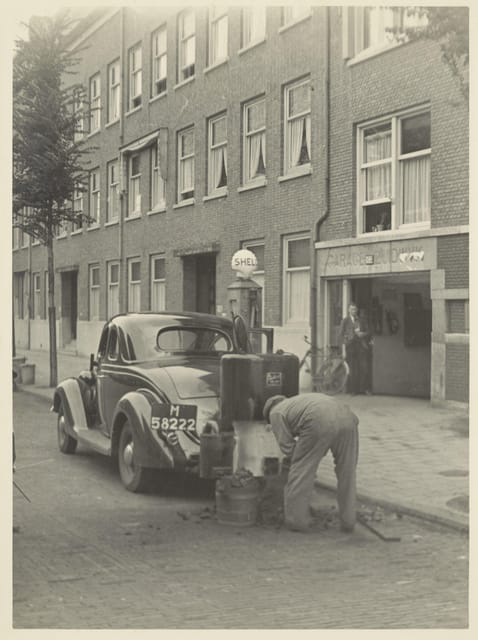
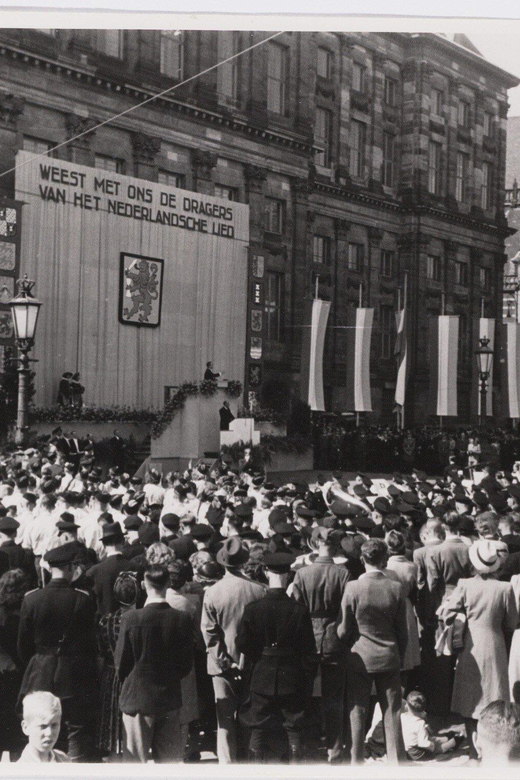
One of the early themes is the entry of the Wehrmacht into Amsterdam. The guides show photographs of the German army’s arrival and discuss the public welcome connected with the former town hall, now The Grand hotel.
Photographs make this section more useful than a simple date and place. They show what the occupation looked like in public spaces, where ordinary city life and political pressure collided. The same location later became associated with the cheering arrival of Canadian forces, creating a sharp contrast between occupation and liberation.
I appreciate that the walk uses the physical city as part of the explanation. You are not just hearing that the occupation began. You are looking at places where the arrival was seen, recorded, and later remembered.
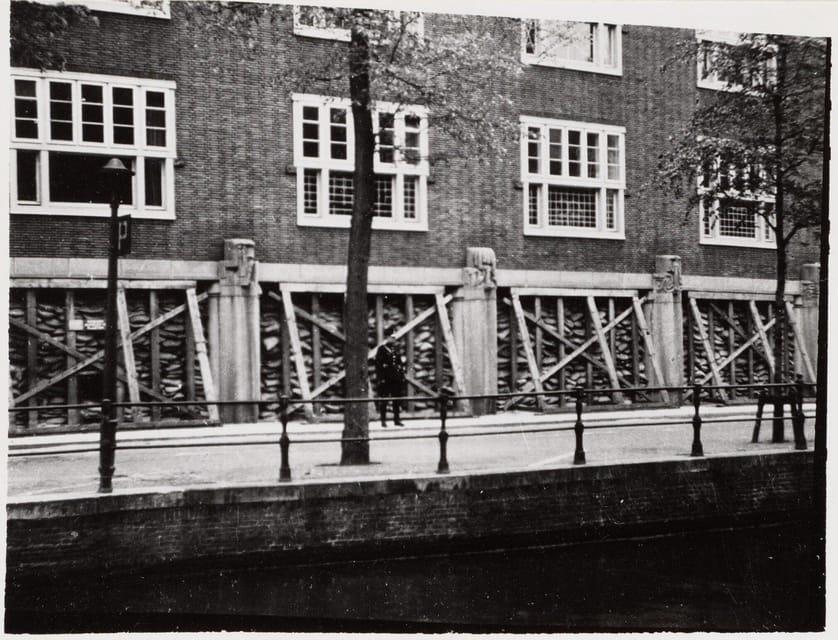
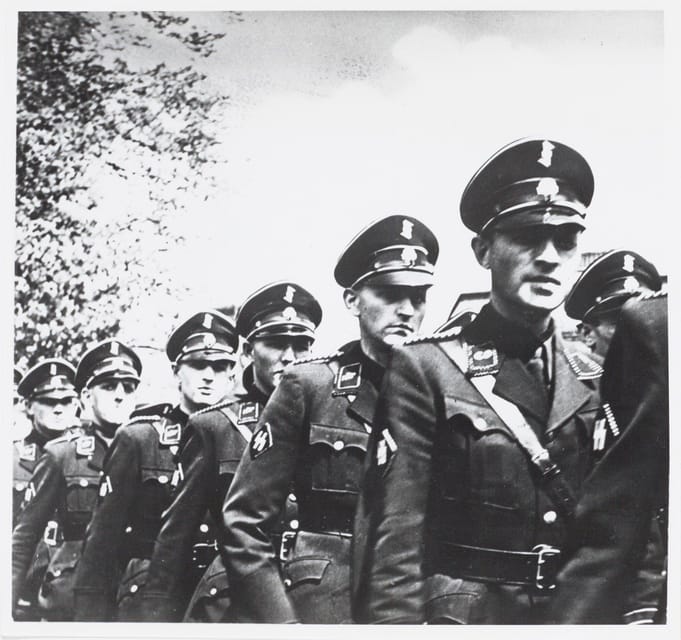
The tour also includes photos preserved by Dutch resistance fighters. These images provide another viewpoint, one that differs from official German photographs or later textbook accounts. Since the guides show several images at the locations where they were taken, you can connect the old scene with the street around you.
Dam Square and the shooting on May 7, 1945
The war did not end neatly for everyone in Amsterdam. The walk discusses the shooting incident on Dam Square on May 7, 1945, two days after the German surrender in the Netherlands.
Dam Square is one of Amsterdam’s busiest public spaces, so the subject can be easy to overlook if you pass through it on a normal sightseeing day. Here, the guide places the event in the setting of postwar celebration and uncertainty. The point is not simply that shots were fired, but that danger and confusion continued during the transition from occupation to liberation.
This is one of the tour’s most useful stops for visitors who know the basic dates but want to understand how events unfolded on the ground. It also adds balance to the usual liberation story. Canadian soldiers were welcomed, but the end of the occupation did not erase the fear, loss, or disorder of the previous years overnight.
Other guided walks around Amsterdam:
- Amsterdam: Anne Frank Guided Small Group Walking Tour
★ 4.8 · 2,722 reviews - Amsterdam: Anne Frank Walking Tour – Guided in EN/DE/IT/ES
★ 4.9 · 2,676 reviews - Amsterdam: Guided Cultural Walking Tour
★ 4.9 · 2,384 reviews - Amsterdam: Guided Ganja Walking Tour of Coffee Shops
★ 4.2 · 2,092 reviews
The Hunger Winter and food from the air
Another part of the walk deals with food dropping during the Hunger Winter. The winter of 1944 to 1945 brought severe shortages, and the tour explains how food was dropped to civilians.
This section shifts the focus from military events to survival. A city under occupation was also a city where people worried about meals, fuel, and getting through the season. The subject helps you see the war as a daily experience rather than only a sequence of armies and political decisions.
The information provided does not promise a special food tasting or a recreated ration meal. You are hearing the story at relevant city locations, with the guide explaining what happened. If you want lunch during the tour, the halfway stop may allow you to order something, but the cost is your responsibility.
Jewish deportations, names, and the death camps
The most personal part of the walk concerns Amsterdam’s Jewish population and the deportations to extermination camps, including Auschwitz and Sobibor. The guides have selected all the Jewish residents of one Amsterdam street and recorded the camp in which each person died.
You receive a small book with photographs and names. That detail gives the subject a human scale. Instead of hearing only a national statistic, you can look at the people who lived on one street, see their faces, and follow the fate recorded for each individual.
This section may be difficult, and the tour does not appear designed to soften that difficulty. It treats the deportations directly and connects them to actual residents of Amsterdam. For anyone interested in the city’s wartime past, this is likely to be the part that stays with you longest.
The walk does not enter the Hollandsche Schouwburg, the former deportation center. It also does not visit the Resistance Museum or Anne Frank House. That is important when planning your day. You can visit those places separately, but this experience is an outdoor walking tour with its own selected route and material.
The violin player from Auschwitz
The itinerary includes a statue of a famous violin player from Auschwitz. The guide uses this monument to discuss the individual and the camp experience, adding another personal story to the larger account of deportation and murder.
Because the statue is part of a walking route rather than an indoor museum visit, the explanation depends on the guide. The small group format helps here. You can ask for more context, pause at the monument, and take in the story without being hurried along by a large group.
The tour’s use of monuments is practical and thoughtful. A memorial is not treated as a photo stop. You learn why it exists and what it asks the city to remember.
A halfway break and an easy walking pace
About halfway through the walk, you stop briefly for coffee and a restroom visit. Drinks are not included, and you can also have something to eat if you want a late breakfast.
That pause matters on a three-hour walking tour, particularly because the subject requires concentration. It gives you a moment to rest before the second half, rather than asking you to absorb difficult material without a break.
The guides walk at a pace you choose. Wheelchair users can participate, but you should email ahead so the guide can account for the route and choose a suitable coffee stop. The activity is listed as wheelchair accessible, though the exact route details are not provided, so advance contact is the sensible step.
Bring an umbrella. Amsterdam weather can change quickly, and the tour is outdoors.
Peter Schaapman and the guide-led approach
Peter Schaapman is one of the guides, and the experience is led by three retired historians with a strong interest in the German occupation. Peter received especially strong praise for his extensive explanations, stories, and ability to make the walk engaging.
You should expect a conversation rather than a formal lecture. The guides do not use an audio system, and that means the sound depends on staying reasonably close. In return, you can ask questions throughout the walk and receive printed information to keep afterward.
The printed material is useful for a subject with many names and dates. You may want to read it again later, especially the record of the Jewish residents from the selected street. It also gives the experience some value after the three-hour route ends.
The tour has a perfect five-star rating from the four verified bookings available, including strong praise for Peter and the personal approach. That is a very small review sample, so I would not treat it as proof that every departure will feel identical. Still, the consistent message is clear: the guide’s historical command and storytelling are central to the experience.
Who gets the best value from this tour
I would choose this walk if you have already seen Amsterdam’s main sights and want to understand the occupation beyond a single famous house. It suits visitors who enjoy asking questions, looking closely at memorials, and taking time with difficult material.
It also works well for a family group or a small party of friends. With four people, the price becomes much easier to justify, and the private format lets you decide how much time to spend on photographs, names, and questions.
You may want another option if you are looking for a light introduction to Amsterdam, a museum visit, or a tour that includes Anne Frank House tickets. You should also think carefully about the emotional weight. Deportation, Auschwitz, Sobibor, and the deaths of local residents are not side notes here. They are central to the walk.
The route is conducted in English. The tour can be canceled up to 24 hours before departure for a full refund, and you can reserve while paying later, which helps if your Amsterdam plans are still shifting.
Should you book this Amsterdam wartime walk?
Book it if you want a small, serious, guide-led look at the Nazi occupation and value personal attention over a standard sightseeing route. The resistance photographs, the street-by-street record of Jewish victims, and the discussion of the Dam Square shooting give the walk a clear purpose.
I would especially recommend it for history-focused visitors who have time to visit the Anne Frank House, Resistance Museum, or Hollandsche Schouwburg separately. Skip it if you want a general city walk or prefer to learn indoors at your own pace. For a full group of four, the price is fair; for solo visitors, it is a larger splurge, but the private access to a retired historian may make it worthwhile.
FAQ
Where does the tour start?
It starts at 9:30 a.m. in front of the old Anne Frank House at Prinsengracht 263. Meet between the museum and the Lunch Cafe, at the spot marked A on the map.
Do I enter the Anne Frank House?
No. The tour starts outside the old Anne Frank House, but entry to the Anne Frank House is not included.
How long does the walking tour last?
The tour lasts about three hours. It may run a little longer, and you may have something to eat during the coffee stop.
How many people can join the private group?
The group never has more than four people.
What language is the tour conducted in?
The live tour guide speaks English.
Does the tour visit the Resistance Museum or Hollandsche Schouwburg?
No. The tour does not include the Resistance Museum, the Hollandsche Schouwburg, or the Anne Frank House.
Is the tour wheelchair accessible?
Yes, the tour is wheelchair accessible. You should email the provider in advance so the route and coffee stop can be planned accordingly.
Are drinks included?
No. The cost of coffee, drinks, or food during the break is not included.
What should I bring?
Bring an umbrella. The tour takes place outdoors, and the activity information specifically recommends one.
More Historical Tours in Amsterdam
- Amsterdam Food and Cultural Tour with Tastings
★ 5.0 · 2,442 reviews - Amsterdam: Haunted History and Ghost Walking Tour
★ 4.5 · 488 reviews - Amsterdam High-End Dutch Food & History Tour – Up to 8 guests
★ 5.0 · 482 reviews - Amsterdam: Historic City Sightseeing Canal Cruise
★ 4.5 · 444 reviews
Just added in Amsterdam
- Guided Day Trip – Volendam, Zaanse Schans, Marken & Edam★ 4.0 · 232 reviews
- Half-Day Private Guided Sightseeing Tour of Zaanse Schans★ 5.0 · 14 reviews
- Private Tour Zaanse Schans Windmills and Volendam in Jaguar★ 5.0 · 10 reviews
- Zaanse Schans and Giethoorn Unique Day Trip with Boat Cruise★ 4.5 · 17 reviews
- Zaanse Schans Private Tour Windmills★ 5.0 · 18 reviews
- Private bike tour: Hidden gems around Amsterdam and surroundings★ 5.0 · 4 reviews
- Bike tour in Amsterdam with an Italian guide★ 5.0 · 15 reviews
- Amsterdam Sightseeing Tour + Hidden Gems + Tastings + PDF guide★ 5.0 · 35 reviews
Walking Tours, compared.
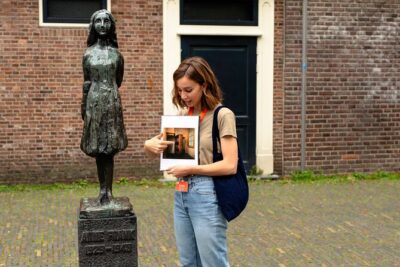
Anne Frank’s Story – Guided Walking Tour through Amsterdam
Read our review →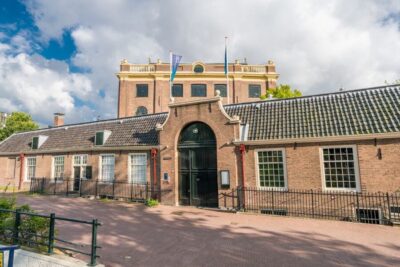
Life of Anne Frank and World War II Walking Tour
Read our review →

Anne Frank Walking Tour – Guided in EN/DE/IT/ES
Read our review →

Anne Frank Walking Tour Amsterdam Including Jewish Cultural Quarter
Read our review →
Amsterdam Highlights Walking Tour: Small Group Experience
Read our review →Browse the lists this tour appears in