
Reviewed · HISTORICAL TOURS
Amsterdam High-End Dutch Food & History Tour – Up to 8 guests
Amsterdam’s best food stories are often found in small cafés, market stalls, family shops, and old neighborhood businesses. This four-hour walk brings them together, from homemade apple pie in a brown café to herring, smoked eel, Indonesian satay, and Dutch cheese paired with wine.
I like two things right away: the group is capped at eight people, and the food is tied to Amsterdam’s past rather than reduced to fries and waffles. Guides such as Rudolph, Jan, Catharina, David, and Mark have been praised for mixing local history with an easygoing manner. The main drawback is the price, $157.21 per person, which is a serious sum for a walking tour, and Dutch food may not thrill every palate.
Six things to know before you book
- The food changes by day: Saturday and Tuesday through Friday include herring, fried cod, smoked eel, farmhouse cheese, and a Dutch wine tasting. Sunday and Monday follow a different route with grillworst, shrimp croquettes, satay, spekkoek, and ossenworst.
- You eat a full spread: This is not a light snack walk. Go hungry, since several tastings are served across roughly four hours.
- The group is genuinely small: A maximum of eight people gives your guide room to explain dishes, answer questions, and keep the walk personal.
- History comes between bites: The route includes Amsterdam’s brown cafés, the Lindengracht market, neighborhood food shops, and the former Dutch West India Company headquarters.
- Dietary needs require planning: Vegan visitors are not a good fit. Other restrictions should be given when booking, and alternatives may vary by stop.
- Walking is moderate but real: You need to walk and stand for up to 20 minutes at a time. In poor weather, tastings stay indoors and walking distances may be shortened.
Starting with apple pie at Papeneiland
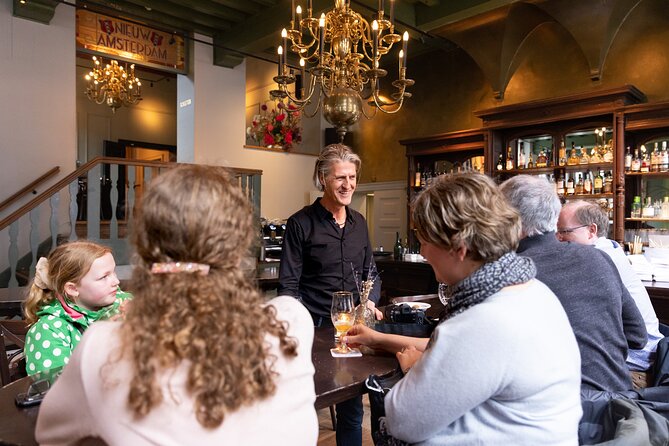
The meeting point is The Papeneiland at Prinsengracht 2, one of Amsterdam’s famous brown cafés. Brown cafés are traditional Dutch pubs with dark wood, old-fashioned interiors, and a relaxed neighborhood feel. Beginning here gives the tour a better sense of place than starting at a modern tasting room.
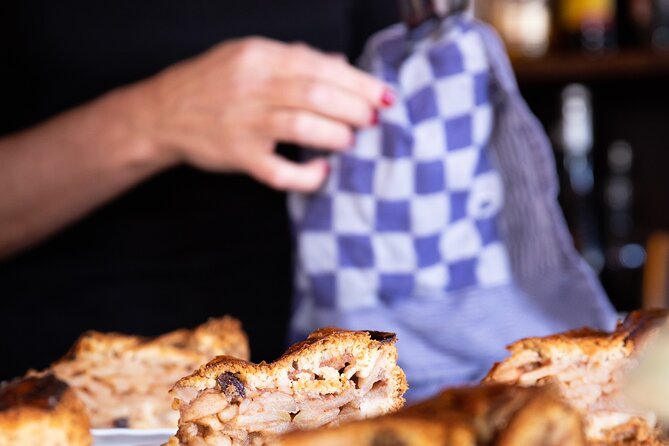
The first serving is homemade Dutch apple pie. It is a smart opening course: familiar enough to ease you into the day, but local enough to set the tone. Several guides have been praised for making this first stop more than a quick plate of food. Rudolph, in particular, is often singled out for linking dishes to Amsterdam’s streets and past.
I like starting with a café because it gives you a chance to settle in, meet the small group, and hear how the city’s food habits developed. You are not simply moving from one anonymous restaurant to another. The café, the food, and the neighborhood are part of the same story.
A few more things to do in Amsterdam worth a look
- Amsterdam Food and Cultural Tour with Tastings
★ 5.0 · 2,442 reviews - Amsterdam: Haunted History and Ghost Walking Tour
★ 4.5 · 488 reviews - Amsterdam: Historic City Sightseeing Canal Cruise
★ 4.5 · 444 reviews
Saturday brings the Lindengracht market and Indonesian satay
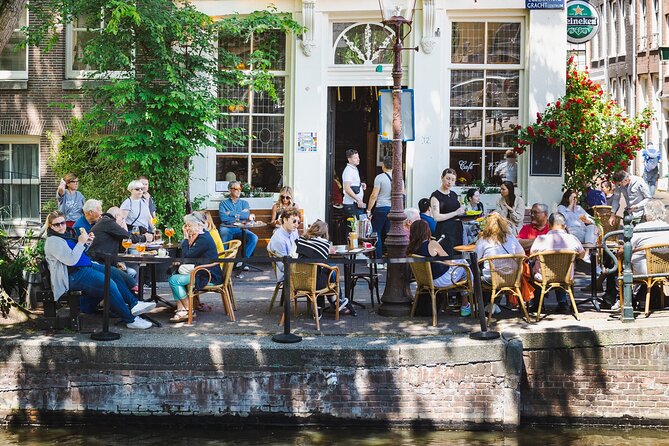
If you take the tour on Saturday, the route includes the Lindengracht market. Here you try Indonesian satay with side dishes, a reminder that Dutch food culture cannot be understood without the country’s former colonial ties.
The Indonesian course adds welcome spice and contrast to the milder Dutch dishes. You can expect grilled meat with Indonesian flavors, along with accompanying sides. It is one of the more distinctive parts of the Saturday route because it shows how food from the former Dutch East Indies became part of everyday life in the Netherlands.
Market conditions also make this day feel different from the other departures. You are not only tasting a dish in a shop. You are seeing food sold in an active Amsterdam market setting, then continuing on foot through the city.
The tradeoff is that a market stop can be less controlled than a reserved restaurant visit. Crowds, weather, and the pace of the market may affect how the stop feels. Still, the Saturday route offers the broadest mix of Dutch and Indonesian flavors.
Dutch cheese, private tasting room, and a glass of wine
A boutique deli provides three farmhouse Dutch cheeses. This is one of the strongest parts of the route for anyone who wants to understand why cheese matters so much in Dutch food culture.
The selection includes different styles rather than three nearly identical slices. On some departures, the cheeses are served with crackers and quince pear, giving you sweet and savory pairings. The combination helps you notice the difference between a cheese eaten alone and one matched with something tart or sweet.
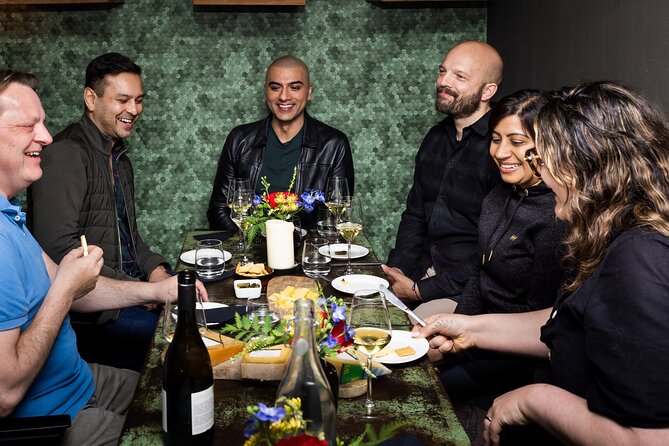
On Saturday and Tuesday through Friday, the cheese course is paired with a Dutch wine tasting in a private speakeasy room. Non-alcoholic choices and beer are available, which makes the stop more flexible for people who do not drink wine.
The private room is useful for more than atmosphere. It gives the guide a seated setting where the group can slow down, ask questions, and taste carefully. Three of the six food stops have reserved seating and a bathroom, so this is also one of the more comfortable parts of a walking day.
Sunday and Monday follow a different plan. The published food sequence includes three artisan soft and hard cheeses with crackers and quince pear, plus ossenworst, pickles, and mustard. The cheese remains central, but you should not assume the same wine tasting will be included on every departure.
Tuesday through Friday focus on traditional Dutch staples
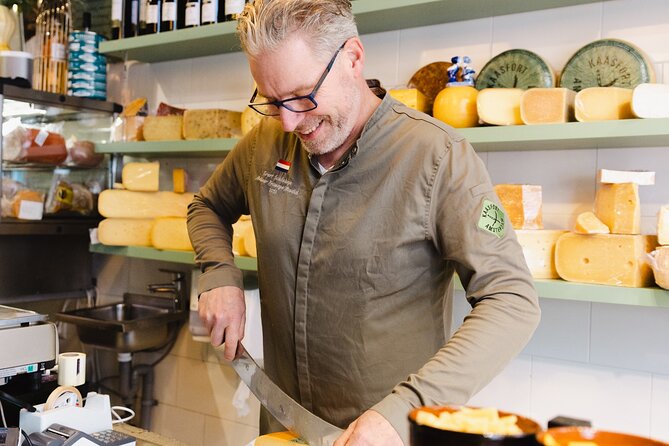
The weekday route includes ossenworst and grillworst at a 130-year-old family butcher shop. Ossenworst is a smoked beef sausage, while grillworst is a seasoned pork sausage. These are not the showiest Dutch foods, but they are useful examples of the everyday side of local cooking.
A butcher shop with more than a century of family history gives the guide a natural place to explain how sausages fit into Dutch eating habits. The stop also breaks up the cheese and seafood courses with something meatier and more savory.
As with much of the tour, this is better for an open-minded eater than for someone seeking only familiar foods. The sausages may be more interesting as cultural samples than as instant favorites. If you already know you dislike smoked meat or pork, this stop may feel less rewarding.
The weekday schedule then returns to the farmhouse cheese, private wine tasting, and fish shop. It is a strong option if herring and smoked eel are high on your list.
Same city, a different sort of day:
- Amsterdam: Van Gogh Museum Ticket
★ 4.7 · 52,054 reviews - Amsterdam Classic Saloon Boat Cruise with Drinks and Cheese
★ 5.0 · 31,825 reviews - Amsterdam Luxury Canal Cruise + Unlimited Drinks & Bites option
★ 5.0 · 30,518 reviews - Amsterdam: Heineken Experience Ticket
★ 4.6 · 30,055 reviews
Sunday and Monday add croquettes, satay, and spekkoek
The Sunday and Monday route is the best choice if you want more cooked food and fewer seafood-focused tastings. Along with apple pie, it includes a fresh baguette topped with Dutch grillworst, honey-mustard sauce, mayonnaise, pine nuts, and rocket salad.
That sandwich-style course offers several textures at once: warm sausage, soft bread, creamy sauces, crunch from pine nuts, and peppery greens. It is a more substantial tasting than a small bite and gives you a clear sense of how Dutch deli foods are served today.
You also receive a Dutch shrimp croquette from Patisserie Holtkamp, a well-known Amsterdam patisserie. Croquettes are a classic Dutch snack, with a crisp outside and a soft filling. The shrimp version brings seafood into the route without relying on raw herring.
The Indonesian section includes freshly grilled Javanese chicken satay, peanut sauce, cassava kroepoek, and sambal. It ends with handmade Indonesian spekkoek, a layered cinnamon cake. The cake is a fine example of how a dessert can carry a colonial-era connection while still feeling completely at home in Amsterdam.
This departure may suit you best if the thought of herring makes you hesitate. It still introduces traditional Dutch food, but the satay, croquette, sausage, and cake offer a broader range of flavors and textures.
Herring, fried cod, and smoked eel at the fish shop
On Saturday and Tuesday through Friday, a local fish shop serves famous Dutch herring, fried cod, and smoked eel. This is the most challenging course for cautious eaters, but it is also one of the most useful if you want to understand Dutch food beyond sweet treats.
Herring is a major Dutch food symbol. The preparation can be unfamiliar, especially if raw or lightly prepared fish is not part of your normal diet. Fried cod is an easier bridge, while smoked eel brings a strong, distinctive flavor.
The value here lies in comparison. You taste three fish preparations in one stop rather than trying to judge Dutch seafood from a single bite. A good guide can explain how the foods differ and how they fit into local habits.
This is also where I would advise you to be honest about your preferences. If you dislike seafood, the fish-shop portion will not become a highlight simply because it is traditional. If you are curious but unsure, take small tastes and treat the stop as a chance to learn what suits you.
Ending with bitterballen at the birthplace of New York
The tour ends at Café Nieuw Amsterdam on Haarlemmerstraat 75, in the former 17th-century headquarters of the Dutch West India Company. The site is connected to the early Dutch settlement that became New York, giving the final stop an unusually strong historical setting.
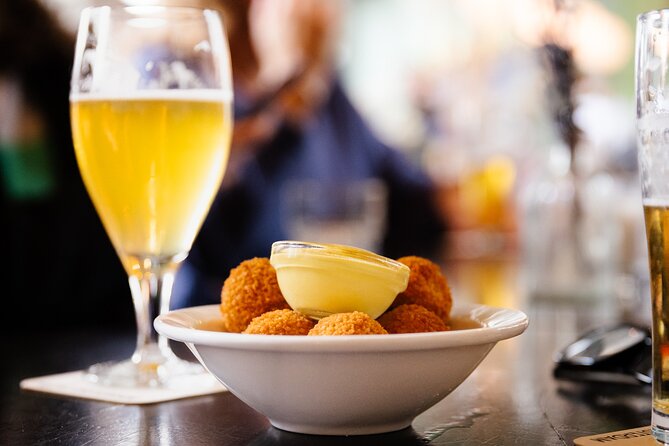
Here you finish with traditional bitterballen, crisp fried Dutch meatballs served as a bar snack. After the lighter courses and the fish tasting, bitterballen provide a warm, familiar finish.
Ending at a café also gives the group a natural place to linger. You are not being rushed out of a shop after one sample. The final stop connects food, trade, colonial history, and Amsterdam’s café culture in one setting.
The route begins and ends in the central city, but the two points are not the same. Check the end location before making evening plans, especially if you have a train, museum booking, or canal cruise soon afterward.
The guides make the difference
The strongest part of this tour is the guide-led connection between food and place. Names that appear repeatedly in the tour’s feedback include Rudolph, Jan, Catharina, David, Mark, Caroline, Dirk, Bo, and Jelte. Rudolph is especially praised for his history knowledge and warm personality, while Catharina is noted for her long connection to Amsterdam.
That does not mean every guide will suit every group. One low-rated account describes a serious personality problem involving an invited observer who was not part of the tour team, while the guide and operator disputed the details. It is a reminder that small-group tours depend heavily on the person leading your particular departure.
The larger pattern is favorable: guides are described as funny, well informed, flexible, and easy to talk to. They also appear to have good relationships with the food businesses along the route. That matters because the best food tours feel less like a lecture and more like an introduction from a local friend.
Is $157.21 a fair price?
At $157.21 per person, this is not a budget food walk. You are paying for about four hours, a maximum group size of eight, multiple substantial tastings, selected drinks, reserved seating at some stops, and a guide who provides historical context.
The price makes more sense if you count the tour as both lunch and an introduction to Amsterdam. You may sample apple pie, sausage, several cheeses, fish, bitterballen, satay, croquettes, or wine depending on the day. Several tastings are generous enough that you should not plan a large meal immediately afterward.
The value drops if you mainly want cheap street food or already know Amsterdam well. Some dishes are simple, and not every tasting will be a personal favorite. One direct assessment found the tour overpriced and repetitive, so I would not book it expecting luxury in the restaurant sense.
I see it as a premium orientation tour. If you like food, local history, and small businesses, the cost is easier to justify. If you only want to fill your stomach, spend less and visit a market on your own.
Who should book this Amsterdam food walk?
I would recommend it to first-time visitors who want a four-hour introduction to Amsterdam through food. It is also a good fit for couples, families, and small groups who prefer conversation and personal attention over a large coach-style outing.
You should come hungry and willing to try smoked meat, seafood, cheese, Indonesian food, and traditional bar snacks. The tour is not suitable for a vegan lifestyle. Other dietary restrictions should be stated at booking, but do not assume every shop can provide a close replacement. One vegetarian arrangement included extra chocolate at a butcher stop, which shows that substitutions may be practical rather than identical.
Normal mobility is needed. You must be able to walk and stand for up to 20 minutes at a time, although bad weather can shorten the walking sections and move all tastings indoors. Service animals are allowed, and the route is near public transportation.
Book at least a few weeks ahead if possible. The tour is booked an average of 49 days in advance, and the eight-person limit keeps availability tight. Free cancellation is available until 24 hours before the start time. If the minimum number is not reached and the operator cancels, you can receive another option or a full refund.
My recommendation
Book this tour if you want Amsterdam’s food culture explained alongside the city’s old cafés, markets, shops, and trading past. The small group, wide range of tastings, and strong guides make it more useful than a basic fries-and-waffles outing.
Choose your day carefully. Saturday is best for the market and Indonesian satay. Tuesday through Friday are the days for herring, eel, cod, Dutch wine, and farmhouse cheese. Sunday and Monday offer grillworst, shrimp croquette, satay, spekkoek, and a different cheese-focused route.
Skip it if you are vegan, strongly dislike seafood or smoked foods, want a cheap meal, or need a fully predictable menu for strict dietary reasons. For everyone else, it is a costly but practical way to get your bearings, taste foods you might not order alone, and leave Amsterdam with a better sense of how Dutch history reaches the plate.
FAQ
How long does the Amsterdam food and history tour last?
The tour lasts approximately four hours.
How many people can join the tour?
The maximum group size is eight people.
Where does the tour begin?
The tour begins at The Papeneiland, Prinsengracht 2, 1015 DV Amsterdam.
Where does the tour end?
The tour ends at Café Nieuw Amsterdam, Haarlemmerstraat 75, 1013 EC Amsterdam.
Is the food the same every day?
No. Saturday and Tuesday through Friday include farmhouse cheese, Dutch wine tasting, herring, fried cod, smoked eel, and bitterballen. Sunday and Monday include grillworst, shrimp croquette, Indonesian satay, spekkoek, cheeses, and ossenworst.
Are drinks included?
Complimentary craft beer or wine is included at some stops. The Tuesday through Friday and Saturday routes include a Dutch wine tasting with the cheese. Non-alcoholic and beer options are available there.
Is the tour suitable for vegans?
No. The tour is not suitable for a vegan lifestyle.
What mobility is required?
You need normal mobility and must be able to walk and stand for up to 20 minutes at a time. In bad weather, tastings remain indoors and walking distances may be shortened.
Just added in Amsterdam
- Amsterdam: E-Bike Sightseeing Tour★ 4.7 · 99 reviews
- Amsterdam: Magic Show★ 4.7 · 38 reviews
- Amsterdam: Private Photoshoot for Couple, Family, or Solo★ 4.9 · 251 reviews
- Amsterdam: The Comedy Embassy Stand-Up Show★ 3.9 · 20 reviews
- Private Airport Transfer to or from Schiphol Airport★ 4.5 · 128 reviews
- Schiphol Amsterdam Airport Private Arrival Transfer★ 5.0 · 68 reviews
- Amsterdam Castle & Utrecht City – Private Day Tour★ 5.0 · 21 reviews
- Amsterdam Canal, Tulip, Windmill Photoshoot | Custom Request★ 5.0 · 147 reviews
Historical Tours, compared.
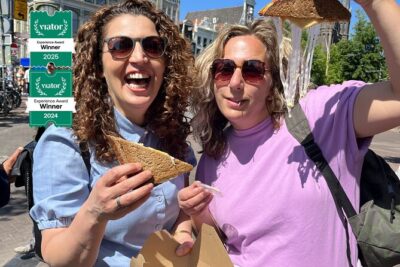
Amsterdam Food and Cultural Tour with Tastings
Read our review →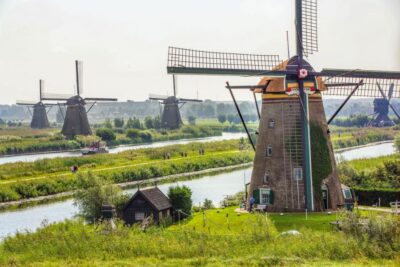
Kinderdijk UNESCO World Heritage Entry Ticket
Read our review →
Hop-on Hop-off Old-Fashioned Heritage Tram Tour
Read our review →
Cruise through the Historic City Center with Guide
Read our review →
Historical Highlights Walking Tour with Tasting
Read our review →Browse the lists this tour appears in