
Reviewed · WALKING TOURS
Amsterdam 2 Hour History Walking Tour
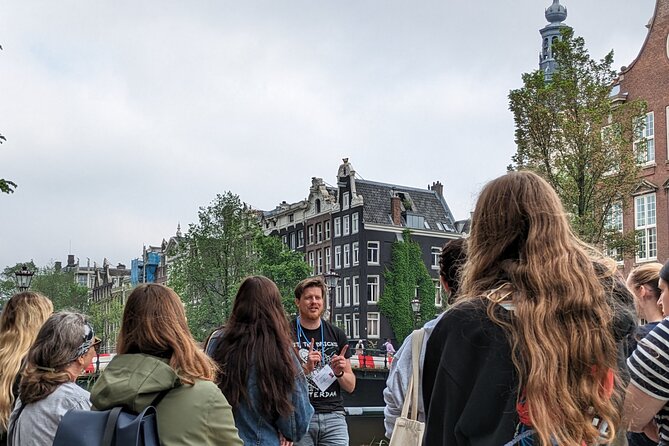
Amsterdam’s past is packed into a surprisingly small area, and this two-hour walking tour gives you a brisk introduction to the city’s canals, religious changes, royal family, wartime suffering, and trading empire. It is not just a march from one famous sight to the next. The guide uses each stop to explain how water, money, faith, and trade shaped Dutch life.
I like the relaxed small-group format, limited to 10 people, and the useful advice woven into the history. The stop at Groenburgwal also gives you a fine photo of the Monet bridge, while guides such as Axel and Mark have been praised for making the subject clear, funny, and socially comfortable.
The main drawback is the pace. You cover 10 stops in about two hours, and several formal stops last only five minutes. If you want to enter major buildings or spend long stretches at each site, this is not the right tour. It is best viewed as a smart city orientation walk.
Key points to know before you book
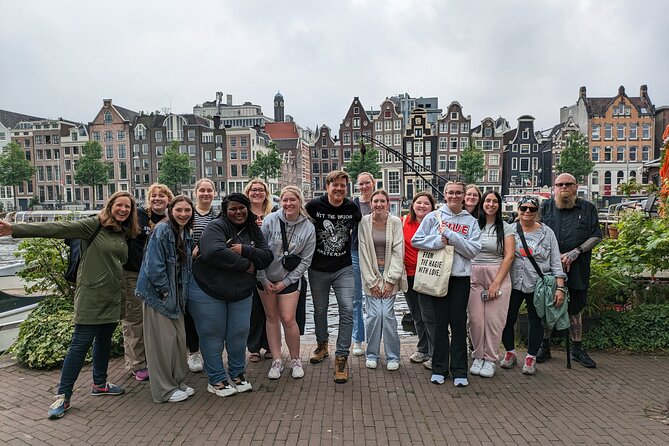
- Ten historic stops in two hours: You move from the canal belt and De Wallen to royal Amsterdam, the Jewish Quarter, Begijnhof, and the Amstel.
- A small group of no more than 10: The size should make it easier to hear the guide and ask questions.
- Strong choice for a first day: You get practical tips as well as a basic map of the city’s past and present.
- English-language guiding: The tour is offered in English, with a local guide leading the walk.
- Mostly outdoor sightseeing: Admission is free at nearly every stop, but the Royal Palace ticket is not included.
- Bring a refillable bottle: Water is not supplied, although there are places to refill along the route.
A compact introduction to Amsterdam’s big ideas
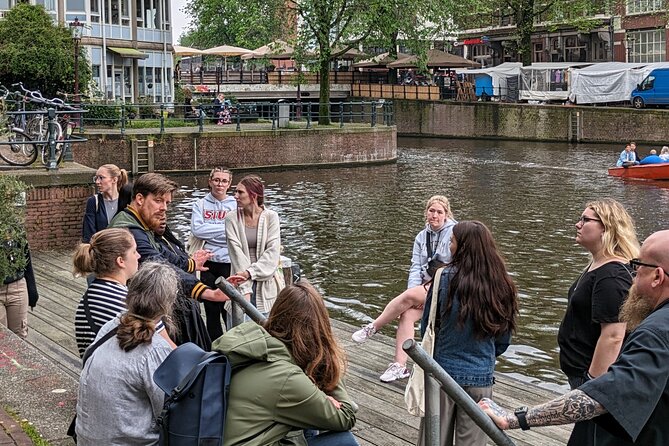
This walk works because its subjects are broad but its route is compact. Amsterdam’s canal ring explains the city’s relationship with water. De Wallen shows how commerce and social tolerance developed side by side. The Jewish Quarter and East India Company headquarters bring darker and more complicated chapters into view.
I appreciate that the tour does not present Amsterdam as only pretty canals and narrow houses. You also hear about colonial trade, religious conflict, the persecution of Jewish residents, the hunger winter, and the awkward local affection for the Stopera city hall. That mix gives you a more honest picture.
The published price is $30.04 per person. For a two-hour introduction, that is a fair use of money if you are new to Amsterdam and want context before exploring alone. You are paying mainly for the guide’s explanation, route planning, and local tips. Since the tour does not include paid admissions, the value is lower for someone who already knows the city or prefers to explore quietly with a guidebook.
The group limit matters. Ten people is small enough for a guide to keep the group together without creating the feel of a large tour party. It also gives you a better chance to ask about restaurants, transport, neighborhoods, or other tours. The company offers discount codes for its other tours upon request, which may help if you plan to book more than one experience.
More Walking Tours in Amsterdam
- Anne Frank’s Story – Guided Walking Tour through Amsterdam
★ 5.0 · 11,619 reviews - Amsterdam: Life of Anne Frank and World War II Walking Tour
★ 4.8 · 10,467 reviews - Absolutely Amsterdam – the Essential Introductory Walking Tour
★ 5.0 · 3,629 reviews
Starting beside the canal ring
The meeting point is Hit the Bricks Walking Tours at Prinsenstraat 13, with the tour beginning at 11 a.m. The opening stop is the Grachtengordel, Amsterdam’s famous canal belt.
Here the guide explains how the Dutch learned to live with water and how that practical challenge shaped national habits and attitudes. This is a useful starting point because the canals are not merely scenery. They are part of the reason Amsterdam developed the way it did.
You should expect an introduction rather than a long architectural lecture. The listed stop takes about five minutes, so the guide needs to keep the explanation tight. Still, it gives you a framework for the rest of the walk. As you see canals later in the day, you will understand them as working elements of the city rather than just attractive backdrops.
De Wallen, Amsterdam’s most debated neighborhood
The walk then reaches De Wallen, commonly known as the Red Light District. The guide discusses why the neighborhood exists, how it operates, and how Dutch society views it.
This is one of the more useful stops for a first-time visit because De Wallen can be confusing or sensationalized. A short explanation helps you see the area in its historical and social setting. The stop lasts about 10 minutes, giving it more time than several of the other locations.
You should still treat the neighborhood with respect. This is a living part of Amsterdam, not a stage set. The tour provides context, but it does not turn the area into an extended night out or a series of photo opportunities.
Dam Square and the Dutch struggle with water
At Dam Square, the guide returns to the theme of water and explains how the Dutch fight against it helped shape the country’s culture and way of thinking.
Dam Square is Amsterdam’s central square, so it is a practical place to get your bearings. It also connects several parts of the city, making it a useful reference point after the tour. The stop is scheduled for about five minutes, which is enough for a focused explanation but not enough for a detailed tour of every surrounding building.
The tour ends at Dam Square, close to the starting area and near public transportation. That makes the finish convenient if you want to continue sightseeing, catch a tram, or head back to your hotel.
Other guided walks around Amsterdam:
- Amsterdam: Anne Frank Guided Small Group Walking Tour
★ 4.8 · 2,722 reviews - Amsterdam: Anne Frank Walking Tour – Guided in EN/DE/IT/ES
★ 4.9 · 2,676 reviews - Amsterdam: Guided Cultural Walking Tour
★ 4.9 · 2,384 reviews - Amsterdam: Guided Ganja Walking Tour of Coffee Shops
★ 4.2 · 2,092 reviews
South Church and the change from Catholic to Protestant
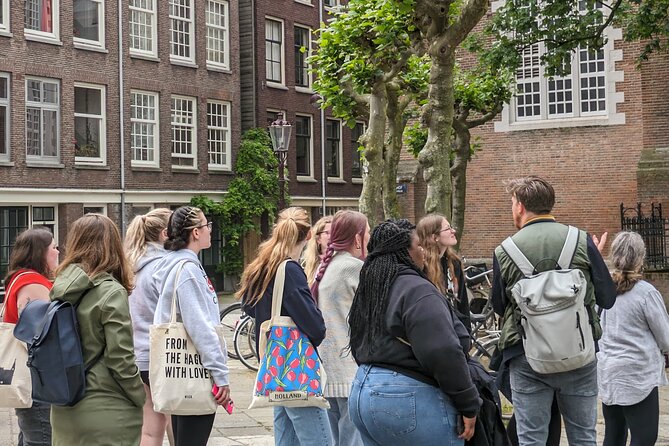
At South Church, you learn how and why the Dutch moved from Catholicism to Protestantism. The setting is an inner courtyard beside the church, described as calm and serene.
This is a good example of how the walk uses atmosphere to support the subject. A quieter courtyard can make a difficult religious shift easier to discuss than a crowded public square. The guide connects the change in faith to the wider development of Dutch society.
The scheduled time is about five minutes, so you should not expect an exhaustive account of the Reformation. What you get is a clear piece of background that helps explain why Amsterdam’s churches, streets, and public life developed as they did.
Jodenbreestraat and Amsterdam’s wartime memory
At Jodenbreestraat, the walk reaches the start of Amsterdam’s Jewish Quarter. The guide discusses the tens of thousands of Jewish people who lived in Amsterdam before and during the Second World War, along with the terrible hunger winter.
This is among the most serious parts of the route. It is also essential. A history walk that focuses only on trade and picturesque canals would leave out too much of Amsterdam’s modern past. Here, the tone should become more sober as the guide addresses persecution, loss, and the effects of war on ordinary people.
The stop is listed at about five minutes. That is enough to introduce the subject, but not enough to replace a dedicated museum visit or memorial tour. I would treat this section as a prompt to spend more time with Amsterdam’s Jewish history if that is important to you.
East India Company headquarters and the price of prosperity
The Bushuis and Oost-Indisch Huis once served as headquarters for the Dutch East India Company. This stop explains how a small country built a far-reaching empire, controlled the spice trade, and fought for independence and survival.
This is where the tour moves from local streets to global consequences. Amsterdam’s wealth did not come from canals alone. It came from trade, business organization, military force, and overseas expansion. The guide places that success within the pressures facing the Dutch Republic at the time.
I value this inclusion because it prevents a one-sided picture of Dutch prosperity. You hear about commercial skill and national independence, but also about empire and the forces behind it. The stop lasts about 10 minutes, giving the guide room to explain more than a simple date or name.
The Stopera and Amsterdam’s modern identity
At the Stopera pier on the Amstel, the guide points out the modern city hall and explains the nickname. You also hear why many locals consider the building unattractive while still taking pride in it.
This is a small but revealing part of the route. Cities are not made only of beloved monuments. Residents also have strong opinions about ordinary public buildings, city government, and modern development. The Stopera offers a glimpse of Amsterdam as a lived-in place rather than a collection of old sights.
The river setting provides a change of pace after the denser central streets. The stop lasts about five minutes, so expect a quick local perspective rather than an architectural study.
Begijnhof, a quiet courtyard in the city center
Begijnhof gives the walk one of its calmest settings. The guide introduces the beguine women who built and lived in this enclosed courtyard.
This stop is likely to appeal to you if you enjoy Amsterdam’s smaller spaces more than its major squares. The courtyard offers a pause from the city’s noise and a chance to see how religious and communal life once worked within the urban center.
About 10 minutes are scheduled here. That should allow the guide to explain the beguines and give you time to look around, although the group must still keep moving to cover the full route. Be mindful of the setting and keep your voice down.
The Royal Palace and the origins of Orange
At the Royal Palace Amsterdam, the guide explains how the Dutch royal family came to be, what France had to do with that development, and why the national color is orange even though the flag is red, white, and blue.
This is a memorable way to introduce Dutch national identity. The color question is simple on the surface, but it leads into the history of the House of Orange and the country’s political past.
The tour discusses the palace from outside. Admission is not included, and the stop is scheduled for about five minutes. If you want to see the interior, you will need to arrange that separately. That is an important cost and time consideration, especially if palace rooms are a major reason for visiting this area.
The Monet bridge and the final photograph
The last stop is Groenburgwal, where you can photograph the bridge made famous by Claude Monet’s painting. The stop lasts only about three minutes, but it gives you a clear visual payoff near the end of the walk.
This is an easy place to appreciate the tour’s balance. After serious subjects such as war and empire, you finish with one of Amsterdam’s most photogenic scenes. The guide also points out the best moment for a social-media photograph, saving you from wandering around in search of the view.
Do not expect a long photography session. Three minutes is enough for a quick picture and a look at the setting, not for working through several camera angles.
What the two-hour pace feels like
The listed stop times add up to roughly an hour, with the rest of the experience used for walking and connecting the subjects. That arrangement makes sense in central Amsterdam, where the route itself is part of the lesson.
You should wear comfortable shoes and expect to remain outdoors for most of the experience. The tour requires good weather, so poor conditions can lead to a different date or a full refund. Bring a refillable water bottle. Bottled water is not supplied, but there are several places to refill.
The tour is offered in English and uses a mobile ticket. It is near public transportation, and most people can take part. Service animals are allowed. The group has a maximum of 10 participants, which is one of the strongest practical features for anyone who dislikes crowded guided walks.
The company allows free cancellation up to 24 hours before the start time for a full refund. Changes or cancellations made inside that 24-hour window are not accepted for a refund.
Who will get the most from this walk
I would choose this tour if you are visiting Amsterdam for the first time and want a clear introduction before deciding where to spend more time. The combination of history, humor, photo stops, and practical advice makes it useful on an early day in the city.
It should also suit solo visitors or anyone who feels more comfortable in a small social group. One guide, Axel, was praised for giving an informative and engaging overview, while Mark was described as personable, funny, and easy to be around. Those details matter because a walking tour can be accurate yet unpleasant if the guide makes the group feel stiff or rushed.
You may want another type of experience if you have limited mobility, although the published information says most people can participate. You may also prefer a museum visit or a longer specialist walk if your main interests are Jewish history, the Royal Palace, the East India Company, or the Red Light District.
Should you book the Amsterdam History Walking Tour?
Book it if you want a broad first look at Amsterdam for $30.04, with a group capped at 10 and a guide who adds humor and practical advice. The route covers more than postcard scenery, including religious change, wartime suffering, colonial trade, and modern civic life.
Skip it if you want extended time inside attractions, detailed photography instruction, or a single-topic history lesson. The short stops mean you will hear the main ideas and then move on.
For a first visit, I think the tour offers solid value. It helps you understand the city’s shape and gives you several leads for the rest of your stay, while still leaving plenty of time to explore on your own.
FAQ
How long is the Amsterdam History Walking Tour?
The tour lasts approximately two hours.
Where does the tour start?
It starts at Hit the Bricks Walking Tours, Prinsenstraat 13, 1015 DA Amsterdam.
What time does the tour begin?
The stated start time is 11 a.m.
Where does the tour end?
It ends at Dam Square, near public transportation and about two minutes on foot from the starting area.
Is the Royal Palace admission included?
No. The tour stops at the Royal Palace Amsterdam, but admission is not included.
Is bottled water provided?
No. You should bring a refillable water bottle because there are several places to fill it during the walk.
What happens if bad weather cancels the tour?
Because the experience requires good weather, you will be offered another date or a full refund if it is canceled for that reason.
More 2-Hour Experiences in Amsterdam
- Amsterdam: 2-Hour Canal Cruise incl. Drinks & Dutch Snacks
★ 5.0 · 594 reviews - Amsterdam 2-hour Private Canal Cruise with Live Guide and Drinks
★ 5.0 · 296 reviews - Amsterdam 2-Hour Evening Cruise With Live Guide and Bar
★ 5.0 · 134 reviews - Amsterdam: 2-Hour Sightseeing Tour by Rickshaw
★ 4.7 · 81 reviews
More Historical Tours in Amsterdam
- Amsterdam Food and Cultural Tour with Tastings
★ 5.0 · 2,442 reviews - Amsterdam: Haunted History and Ghost Walking Tour
★ 4.5 · 488 reviews - Amsterdam High-End Dutch Food & History Tour – Up to 8 guests
★ 5.0 · 482 reviews - Amsterdam: Historic City Sightseeing Canal Cruise
★ 4.5 · 444 reviews
Just added in Amsterdam
- Guided Day Trip – Volendam, Zaanse Schans, Marken & Edam★ 4.0 · 232 reviews
- Half-Day Private Guided Sightseeing Tour of Zaanse Schans★ 5.0 · 14 reviews
- Private Tour Zaanse Schans Windmills and Volendam in Jaguar★ 5.0 · 10 reviews
- Zaanse Schans and Giethoorn Unique Day Trip with Boat Cruise★ 4.5 · 17 reviews
- Zaanse Schans Private Tour Windmills★ 5.0 · 18 reviews
- Private bike tour: Hidden gems around Amsterdam and surroundings★ 5.0 · 4 reviews
- Bike tour in Amsterdam with an Italian guide★ 5.0 · 15 reviews
- Amsterdam Sightseeing Tour + Hidden Gems + Tastings + PDF guide★ 5.0 · 35 reviews
Walking Tours, compared.

Anne Frank’s Story – Guided Walking Tour through Amsterdam
Read our review →
Life of Anne Frank and World War II Walking Tour
Read our review →

Anne Frank Walking Tour – Guided in EN/DE/IT/ES
Read our review →

Anne Frank Walking Tour Amsterdam Including Jewish Cultural Quarter
Read our review →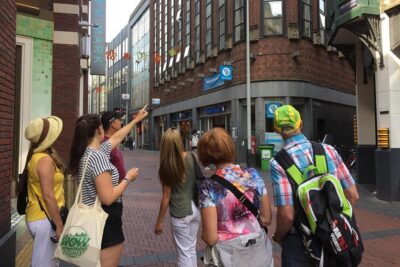
Amsterdam Highlights Walking Tour: Small Group Experience
Read our review →Browse the lists this tour appears in