
Reviewed · MUSEUMS
Diamond Museum Amsterdam Admission Ticket
The Diamond Museum Amsterdam takes you from a stone forming 200 kilometers below the earth’s surface to a finished jewel on a royal crown. The royal jewelry collection and the small display of famous diamond artifacts give the visit its sparkle, while Amsterdam’s role in cutting stones such as the Cullinan and Koh-I-Noor adds real local meaning.
I like the museum’s clear start-to-finish story, which explains formation, cutting, grading, and value in one short visit. I also like the chance to watch professional polishers and goldsmiths at work, an aspect that feels more useful than simply staring at finished jewelry. The main drawback is value: at $72 for about one to two hours, this is a costly stop if you expect a large museum or a full personal demonstration.
Key points
- Museum Square location: The museum sits between the Rijksmuseum and Van Gogh Museum, making it easy to add to a museum day.
- A 200-kilometer journey: Displays explain how diamonds form underground over billions of years before reaching a jeweler’s bench.
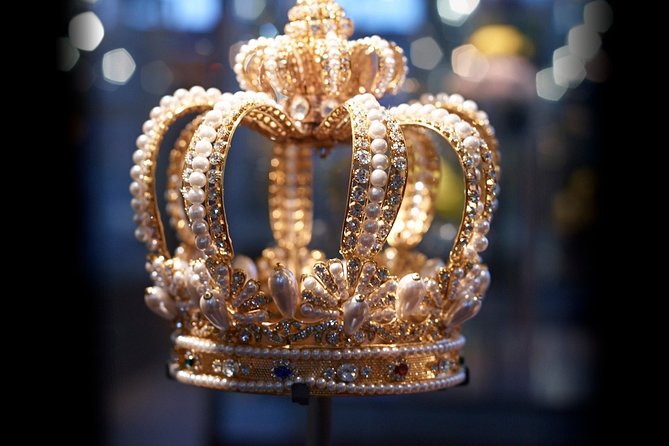
- Royal sparkle: Crowns and diamond artifacts are among the most memorable displays.
- Amsterdam’s cutting trade: Learn about Coster Diamonds and stones linked with Amsterdam, including the Cullinan and Koh-I-Noor.
- Working craft: You may watch stone polishers and goldsmiths creating jewelry at a nearby or connected workshop area.
- A playful extra: A diamond heist game gives the visit a light, interactive finish.
What the Diamond Museum Amsterdam actually offers
You enter a compact museum devoted to diamonds from several angles: geology, trade, cutting, jewelry, and royal display. This is not a grand palace filled with priceless rooms. It is a focused attraction that works best when you want a short, highly specific museum stop near Museum Square.
The visit is self-guided. A brief film helps set the scene, then you move through displays at your own pace. Written explanations and audiovisual material cover the basic questions: How do diamonds form? What makes one stone more valuable than another? How do cutting and polishing change a rough stone into a bright finished jewel?
The museum calls itself the only one of its kind in the world. That is a bold claim, but the concept is easy to understand. Amsterdam has long been linked with diamond cutting, and the museum uses that local connection as the backbone of the visit.
More Museums in Amsterdam
- Amsterdam: Van Gogh Museum Ticket
★ 4.7 · 52,054 reviews - Moco Museum Amsterdam Entrance Tickets with Banksy & More
★ 4.4 · 10,088 reviews - Amsterdam: The Upside Down Museum Entrance Ticket
★ 4.4 · 9,506 reviews
Start 200 kilometers below the ground
The first part of the museum explains the origin of a diamond. You follow the stone back to a point roughly 200 kilometers beneath the earth’s surface, where enormous pressure and heat act over billions of years.
That geological opening matters because it keeps the display from being only about luxury. Before a diamond reaches a crown, ring, or necklace, it is a rough mineral shaped by forces far beyond human control. The museum then follows the stone through mining, valuation, cutting, polishing, and setting.
You will find information about the qualities that affect value, including the familiar factors used to judge diamonds. The explanations are useful for anyone who has ever wondered why two stones of similar size can have very different prices.
The museum also touches on the human cost of mining. One section addresses the harsh conditions faced by people working in diamond extraction. It is a welcome reminder that a polished jewel has a long chain of labor behind it, though you should not expect a full social or political treatment of the modern diamond trade in a visit this short.
Amsterdam’s role in famous stones
Amsterdam is not just the address on your ticket. The museum connects the city with Royal Coster Diamonds, whose polishers worked on famous stones including the Cullinan, described as the largest diamond ever found, and the Koh-I-Noor, often called the Mountain of Light.
These names give the displays a strong sense of place. You are not looking at diamonds as abstract luxury objects. You are learning why Amsterdam became associated with the skilled work that turns rough stones into finished pieces.
The story is especially useful if you are already visiting the nearby Rijksmuseum or Van Gogh Museum. Those institutions cover art on a much larger scale, while the Diamond Museum shows a different form of craftsmanship. You can compare a painted masterpiece with jewelry made through cutting, setting, and metalwork.
Royal crowns and wearable art
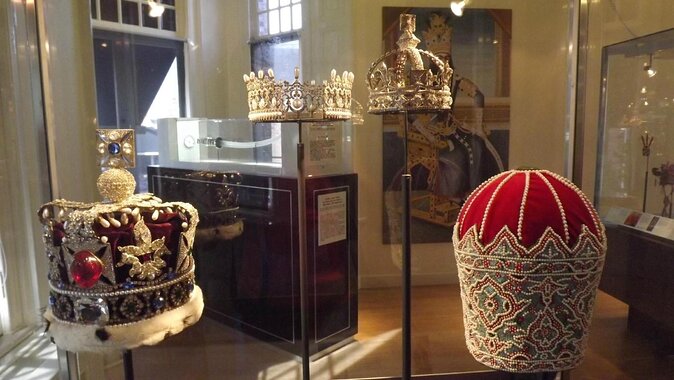
The strongest visual section is the display of crowns and royal jewelry. Even if you know little about diamond grading, the crowns make the subject easy to understand. Size, arrangement, metalwork, and light all matter once stones are placed in a finished object.
You may also see diamond artifacts and a diamond-covered version of Van Gogh’s Starry Night. The museum includes a display of the smallest diamond ever cut, another reminder that size alone does not tell the whole story.
Keep your expectations measured. Some displays use replicas or glass imitations, and not every object is an original historic jewel. That can disappoint you if you arrive expecting a vault of genuine royal treasures. The value is in seeing how diamonds have been used to signal wealth, power, craftsmanship, and status.
The crowns remain the most rewarding part for many people because they provide a visual payoff after the more instructional opening sections. They are also easy to appreciate without reading every panel.
Other collections worth booking around Amsterdam:
- Amsterdam: Red Light Secrets Museum Entry Ticket
★ 4.2 · 5,722 reviews - Amsterdam’s Weirdest Museum: Believe It or Not!
★ 4.5 · 4,086 reviews - Amsterdam: Van Gogh Museum Ticket and City Canal Cruise
★ 4.6 · 3,899 reviews - Amsterdam: Rembrandt House Museum Entrance Ticket
★ 4.7 · 3,385 reviews
Watching polishers and goldsmiths at work
The working craft area adds something that a display case cannot. You may watch stone polishers and goldsmiths at work as they shape or set jewelry. This gives you a better sense of the patience and precision needed to produce a high-carat piece.
The museum also presents tools and explanations about cutting. The exact format can vary. Do not book this expecting a private, live lesson with a named artisan or a guaranteed one-on-one demonstration. The experience is mainly a museum visit, with the working area providing a glimpse of the trade.
Some parts may be a film or a written explanation rather than a live process. If watching craftsmanship is your main reason for coming, confirm what is operating when you arrive. The workshop element is valuable, but it should not be the only reason you pay the admission price.
A nearby diamond factory or related exhibition may also be included with admission, according to the supplied visitor information. Treat that as a useful extra rather than the core of the visit, since the exact presentation is not described in detail.
The diamond heist game and interactive touches
The museum is not entirely formal. A diamond heist game gives the upper part of the visit a playful Mission Impossible feel. It can be a welcome change after the geology and trade displays, especially if you are visiting with a child or teenager.
There are also interactive rooms and audiovisual material. These touches help break up the written panels and make the subject less serious and technical.
The technology is not perfect. Some listening devices have been reported as broken, and parts of the audiovisual presentation may feel dated. Incorrectly labeled content has also been noted, so you should treat the displays as a general introduction rather than a source for specialist research.
Still, the museum does a good job of offering different ways into the subject. You can focus on the crowns, read about mining, watch the craft, or play the heist game. You do not need to study every panel to have a worthwhile visit.
How long the visit takes
Plan on roughly one to two hours. That is enough time to watch the introductory film, read the main displays, examine the crowns, and spend time at the workshop area if it is operating.
The compact size is both a strength and a weakness. I like it when I need a manageable activity between larger museums. You can get a clear introduction without giving up half a day.
If you expect a huge collection, you may leave feeling shortchanged. The building has been described as small and cramped, and the museum contains fewer diamonds than some people expect. The experience is about the story and presentation, not a long parade of rare stones.
The location helps make the short duration more useful. The museum is at Museum Square, between the Rijksmuseum and Van Gogh Museum, so you can place it before or after one of those larger institutions. It is near public transportation, and opening hours are listed as daily from 9 a.m. to 5 p.m., including weekends and holidays.
Is $72 good value?
At $72, admission is expensive for a one to two hour museum visit. I would not call it a bargain. The price makes sense only if the diamond subject interests you, you value the Amsterdam cutting connection, or you want a compact attraction that fits neatly into a Museum Square itinerary.
The cost is easier to justify when you make use of the entire experience: the film, geological story, crowns, famous-stone displays, workshop viewing, and heist game. It is harder to justify if you only want to see large diamonds. There are not enough original stones on display to guarantee that kind of visual spectacle.
This is also a place where your expectations matter. If you approach it as a focused museum about how diamonds are formed, valued, cut, and presented, the visit can feel worthwhile. If you expect a lavish royal treasury or a private jewelry lesson, the price will feel steep.
The museum shop is limited, so do not count on a major shopping stop. Jewelry purchases may be available, but buying something is entirely separate from the admission experience and should not be treated as part of the tour.
Practical concerns before you go
Your confirmation is supposed to arrive when you book, but entry can become awkward if the QR code or ticket does not appear. Have your booking information ready and allow extra time if your digital ticket has not arrived.
The museum is generally suitable for most people, but the small, cramped layout may be difficult for anyone with physical limitations. This is worth considering before you pay, especially because the visit is self-guided and staff assistance may be limited.
Language support may also vary. A French booklet has not always been available, so if you need printed information in a particular language, check ahead rather than assuming it will be provided.
The museum is open daily, including holidays, which gives you flexibility. A morning visit can work well before the nearby art museums, while an afternoon stop provides a shorter activity after a larger collection has worn you out.
Who will enjoy this museum most?
I would recommend it to anyone curious about jewelry, geology, luxury goods, or Amsterdam’s specialist crafts. Families may like the heist game, and children who enjoy shiny objects will have an easy visual entry point.
It also suits visitors who want a short indoor stop near Museum Square. You can see the main material at your own pace, with no need to join a large group or follow a fixed route.
It is less suitable for someone seeking a major Amsterdam highlight. The museum is informative and unusual, but it is not essential in the way the city’s leading art museums are. If your schedule is tight, choose it only if diamonds are a real interest.
Should you book the Diamond Museum Amsterdam?
Book it if you want a focused look at diamond formation, Amsterdam’s cutting trade, royal crowns, and the craft behind finished jewelry. The working polishers, goldsmiths, and playful heist game add variety, while the Museum Square location makes the stop easy to fit into a day.
Skip it if you expect a large collection of authentic diamonds, a polished modern audiovisual show, or a personal demonstration with a jeweler. At $72, the visit needs to match your interests.
The best reason to go is the combination of local history and practical explanation. You see how a stone begins underground, why it gains value, and how Amsterdam helped shape the trade. Just keep the visit short, allow for a compact space, and treat the crowns and craft demonstrations as the main rewards.
FAQ
Where is the Diamond Museum Amsterdam?
It is located at Museum Square, between the Rijksmuseum and the Van Gogh Museum in Amsterdam.
How long does the museum visit take?
The visit takes approximately one to two hours, depending on how closely you read the displays and watch the film or working demonstrations.
What are the museum’s opening hours?
The museum is open daily from 9 a.m. to 5 p.m., including weekends and holidays.
Is admission included with the ticket?
Yes. The entrance ticket is included. Food, drinks, and hotel pickup or drop-off are not included.
Can I watch diamonds being polished?
The experience includes the chance to watch professional stone polishers and goldsmiths at work. The exact demonstration format may vary, and some explanations may be provided through film or written displays.
Is the museum near public transportation?
Yes. The museum is near public transportation and is located at the well-connected Museum Square.
Can I cancel for a full refund?
Yes, if you cancel at least 24 hours before the experience start time. Cancellations or changes made within 24 hours are not refunded.
Just added in Amsterdam
- Guided Day Trip – Volendam, Zaanse Schans, Marken & Edam★ 4.0 · 232 reviews
- Private Tour Zaanse Schans Windmills and Volendam in Jaguar★ 5.0 · 10 reviews
- Zaanse Schans and Giethoorn Unique Day Trip with Boat Cruise★ 4.5 · 17 reviews
- Half-Day Private Guided Sightseeing Tour of Zaanse Schans★ 5.0 · 14 reviews
- Zaanse Schans Private Tour Windmills★ 5.0 · 18 reviews
- Private bike tour: Hidden gems around Amsterdam and surroundings★ 5.0 · 4 reviews
- Bike tour in Amsterdam with an Italian guide★ 5.0 · 15 reviews
- Amsterdam Sightseeing Tour + Hidden Gems + Tastings + PDF guide★ 5.0 · 35 reviews
Museums, compared.

Moco Museum Amsterdam Entrance Tickets with Banksy & More
Read our review →



Browse the lists this tour appears in