
Reviewed · MUSEUMS
Amsterdam: Houseboat Museum Entry Ticket
Amsterdam’s Houseboat Museum is not a grand museum with room after room of exhibits. It is the exhibit: a real 1914 cargo ship called the Hendrika Maria, converted into a home in 1967. I like the chance to see the original 1970s interior and the practical sailing equipment that once carried the barge to Scandinavia. I also like the human scale of the story, centered on how a family of four managed daily life aboard ship.
The main drawback is the size. The boat covers about 80 square meters, and you can see the essentials quickly. Allow roughly 15 to 20 minutes with the audio guide, though a brisk visit could take only five minutes. Steep stairs and tight rooms also make this a poor fit for anyone who needs wide, level access.
Key points at a glance
- Step aboard the Hendrika Maria: Explore the actual 1914 cargo ship used as the museum.
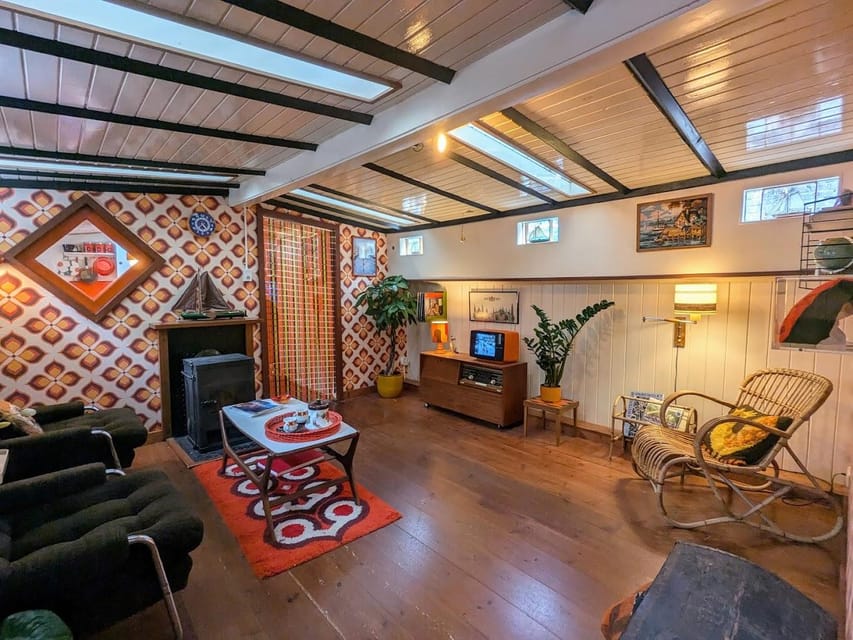
- See a 1970s houseboat home: The orange, yellow, and brown interior has been kept in its original period style.
- Follow a family of four: Learn how four people lived aboard when the vessel served as a freight barge and later as a home.
- Inspect working sailing gear: The original mast and leeboard show how the ship handled trips to Scandinavian countries.
- Plan a short visit: The compact interior can take about 15 to 20 minutes with the audio guide.
- Watch the stairs and space: The real boat setting brings narrow areas and steep steps.
A cargo ship turned into an Amsterdam home
The Hendrika Maria began life in 1914 as a cargo ship. Its working days included transport to Scandinavian countries, when the mast and leeboard were useful parts of its sailing design. In 1967, the vessel was converted into a residential houseboat.
That change gives the museum its appeal. You are not looking at a model, a recreated cabin, or a display behind glass. You are walking through the actual vessel, seeing how a working barge was adapted for ordinary domestic life.
The ship also connects two different chapters of Amsterdam’s waterways. First came the practical freight years, when the boat existed to move goods. Later came the houseboat years, when the same narrow structure became a place for a family to eat, sleep, and live.
I find that contrast more interesting than a standard house museum. The boat was not designed as a comfortable suburban home. Its shape and fittings still reflect its working past, so the residential rooms feel like a clever adaptation rather than a purpose-built apartment.
More Museums in Amsterdam
- Amsterdam: Van Gogh Museum Ticket
★ 4.7 · 52,054 reviews - Moco Museum Amsterdam Entrance Tickets with Banksy & More
★ 4.4 · 10,088 reviews - Amsterdam: The Upside Down Museum Entrance Ticket
★ 4.4 · 9,506 reviews
The 1970s interior on the Hendrika Maria
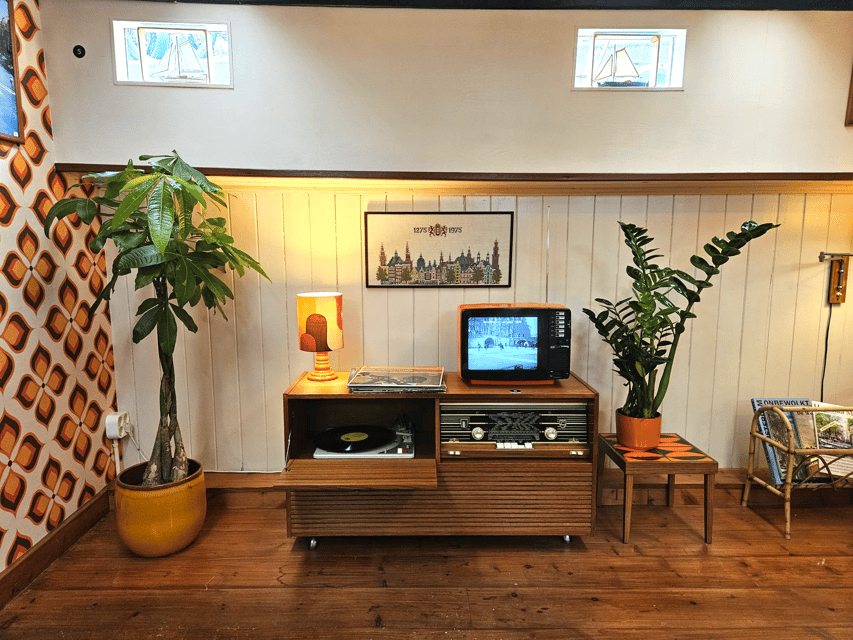
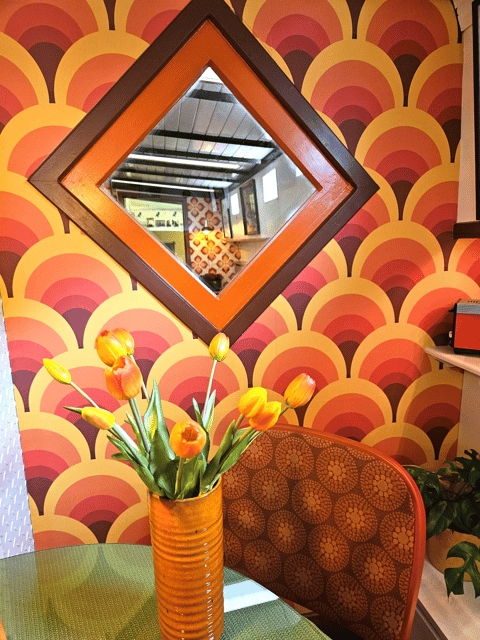
Once inside, prepare for a strong time capsule. The interior remains original to the 1970s, with plenty of orange, yellow, and brown. The colors are not subtle, but that is part of the point. You are seeing a period home rather than a freshly modernized version made to suit current taste.
This detail gives the visit a clear visual identity. A houseboat can sound romantic in the abstract, but the museum shows the practical reality. Space is limited, rooms must serve more than one purpose, and home comforts have to fit inside a vessel built for work.
I like that the interior has not been stripped of its dated character. A polished redesign would make the boat easier to photograph, but less useful as evidence of how people lived. Here, the furnishings and colors help place the home in the 1970s.
The design may not appeal to everyone. If you prefer sleek interiors or large historic rooms, the boat can feel cramped and old-fashioned. If you enjoy seeing real domestic details, the period setting gives you plenty to notice during a short visit.
How a family of four lived aboard
The central story is domestic. The museum explains how a family of four lived on the ship when it was still a freight barge and how the vessel later worked as a regular home.
That family focus keeps the visit grounded. You are not only learning dates and boat terminology. You are considering the daily problem of fitting four people into a narrow floating space. The museum lets you think about how cooking, sleeping, storage, and family routines had to work within the limits of the hull.
The information is shared in an interactive way, with plenty to read and explore during the visit. An audio guide can help you follow the boat’s story and understand the difference between its freight years and its residential period.
I would pay attention to the details that show adaptation. The important question is not simply when the ship was built, but how a vessel intended to carry goods became a place where people could live for years. That shift is the museum’s strongest idea.
The boat has been connected with houseboat life for more than 100 years, including its earlier working period and its later residential use. That long timeline gives the Hendrika Maria a useful place in Amsterdam’s waterborne story.
The mast, leeboard, and working past
The original sailing mast remains on the boat, along with a leeboard. These features matter because they show that the Hendrika Maria was once a working sailing vessel, not just a floating home.
If you are unfamiliar with a leeboard, the museum gives you a chance to connect an unfamiliar piece of equipment with the ship’s sailing function. The mast and leeboard were practical for journeys to Scandinavian countries, where the boat transported goods.
These objects add a physical layer to the history. You can see the difference between the vessel’s former purpose and its later domestic role. One part of the boat helped it move cargo across water; another part later helped support a family’s home life.
I would not expect a full maritime museum treatment here. The focus remains on the houseboat, and the sailing equipment supports that story rather than replacing it. Still, these original features are worth taking time over, especially if you are interested in boats, canal life, or working vessels.
Other collections worth booking around Amsterdam:
- Amsterdam: Red Light Secrets Museum Entry Ticket
★ 4.2 · 5,722 reviews - Amsterdam’s Weirdest Museum: Believe It or Not!
★ 4.5 · 4,086 reviews - Amsterdam: Van Gogh Museum Ticket and City Canal Cruise
★ 4.6 · 3,899 reviews - Amsterdam: Rembrandt House Museum Entrance Ticket
★ 4.7 · 3,385 reviews
What the visit feels like in practice
This is a compact stop. The interior is around 80 square meters, and a careful visit following the audio guide may take 15 to 20 minutes. If you move quickly, you could see the main spaces in about five minutes.
That range matters when planning your day. At $12 per person, the ticket is not a bargain if you expect a large museum visit lasting an hour or more. One short visit can feel expensive if you rush through it.
On the other hand, the price can make sense as a focused Amsterdam stop. You are paying to enter a genuine historic boat, not a broad attraction with a long route through many galleries. If you already enjoy canal boats, houseboats, or domestic history, the compact format may suit you well.
I would treat it as a small museum visit that fits between larger Amsterdam sights. It can work as a break from major art collections, crowded streets, or long indoor attractions. Just set your expectations correctly: this is a concentrated experience, not a half-day activity.
The one-day duration gives you flexibility to visit at an available starting time, but it does not change the size of the museum. You still need only a short block of time for the boat itself.
Tight rooms and steep stairs
The Houseboat Museum is located inside a real houseboat, and the physical setting shapes the visit. Passageways and rooms are limited, with little spare space around you.
The stairs are steep. That is an important consideration for anyone with mobility concerns, balance problems, or discomfort in narrow areas. The boat is not presented as a fully accessible modern attraction, and the information provided does not promise step-free access.
You should also expect the usual limits of a working boat converted into a home. There may be places where you need to turn carefully or pause to let someone pass. The small scale is part of the authenticity, but it can also make the visit less comfortable at busy moments.
Photography is allowed, which is useful for the colorful interior and the boat’s unusual structure. Flash photography is not permitted inside. Use the natural interior light and keep your camera ready for detail shots rather than expecting wide, open room compositions.
The audio guide and available languages
The audio guide helps add context to a visit that could otherwise pass quickly. It gives you a way to connect the boat’s physical features with its working and residential past.
The available host or greeter languages include English, French, Traditional Chinese, German, Spanish, Portuguese, Italian, and Dutch. That broad language choice makes the museum easier to follow for many international visitors.
No guide’s personal name is provided, so you should not expect a named tour led by a particular historian. The format is better understood as a self-guided museum visit with information available in several languages.
I like this arrangement for a small space. A large group lecture inside a narrow boat could make the rooms feel even tighter. An audio-based explanation lets you move at your own pace and spend extra time on the parts that interest you.
If you want a long, conversational tour with questions and discussion, this may feel limited. If you prefer to look around independently and absorb the story in a short period, it is a sensible format.
Who will get the most from this museum
The Houseboat Museum suits you best if you have an interest in one or more of these subjects:
- Amsterdam’s canal and houseboat culture
- Working cargo vessels and sailing equipment
- Small historic homes
- 1970s interiors and domestic design
- Everyday family life in unusual spaces
- Compact museums with a clear theme
Families may find the idea of living on a boat easy to discuss, especially when comparing the ship’s old freight role with its later home life. The interactive approach can also make the visit more engaging than a room full of written labels.
Boat enthusiasts will likely appreciate the mast, leeboard, and working history. You do not need specialist knowledge to understand the basic story, but an interest in how vessels function will give the physical details extra meaning.
I would be less likely to recommend it if you want a major Amsterdam attraction with many rooms, elaborate displays, or a long guided program. The museum is small by design. Its value comes from the authenticity of the boat and the clarity of its story.
Is $12 a fair price?
At $12 per person, the ticket sits in the range where expectations matter. If you judge value by time alone, the museum may disappoint. A five-minute visit is not good value for everyone, especially if you are paying for several people.
If you take 15 to 20 minutes, use the audio guide, read the information, and look carefully at the ship’s structure, the price becomes easier to justify. You are paying for access to a preserved vessel that combines maritime and domestic history in one place.
I would compare this with the kind of experience you want from your Amsterdam day. For a visitor interested in canals and houseboats, the ticket offers a direct look at a way of life that is easy to miss from the street. For someone focused only on the city’s largest museums, the same ticket may feel unnecessary.
The best value comes from treating the boat as a specialized stop, not a major attraction. Add it to a day when you are already interested in Amsterdam’s waterways, and it can provide a useful change of pace.
Booking flexibility and practical planning
The ticket includes entrance to the Houseboat Museum. Food, drinks, hotel pickup, and hotel drop-off are not included, so plan it as an independent stop rather than a full transport or sightseeing package.
You can cancel up to 24 hours in advance for a full refund. The reserve-now, pay-later option also helps if your Amsterdam schedule is still changing. Check availability for the actual starting times, since the listed duration of one day refers to the ticket window rather than a long guided program aboard the boat.
I would avoid planning this as the only activity in a full day. Its short length makes it easy to pair with other Amsterdam sights, but the supplied information does not include a transport service or a longer route through the city.
Should you book the Houseboat Museum?
Book it if you want a close look at an actual Amsterdam houseboat, enjoy unusual small museums, or are curious about how a 1914 cargo ship became a family home. The preserved 1970s interior, the story of a family of four, and the original mast and leeboard give the visit more substance than a simple photo stop.
Skip it if you expect a large museum, a long tour, or generous walking space. The $12 price is easier to defend when you slow down and use the audio guide, but it may not feel worthwhile if you only want a quick look.
My advice is simple: choose it for the subject, not the duration. If houseboats and working boats interest you, this is a direct and memorable way to see one from the inside. If they do not, Amsterdam has larger attractions that will give you more time for your money.
FAQ
Where is the Houseboat Museum located?
The museum is in Amsterdam, in North Holland, Netherlands.
What boat do you visit?
You visit the Hendrika Maria, a 1914 cargo ship that was converted into a residential houseboat in 1967.
How long does the visit take?
The ticket is listed with a duration of one day, but the boat itself is compact. A visit using the audio guide can take about 15 to 20 minutes, while a quick visit may take about five minutes.
What can I see inside the houseboat?
You can see the original 1970s interior, learn how a family of four lived aboard, and explore the boat’s history as both a freight vessel and a home.
Does the boat retain its original sailing equipment?
Yes. The boat has an original sailing mast and a leeboard, which were useful when it transported goods to Scandinavian countries.
Is photography allowed?
Yes, photography is allowed inside the museum. Flash photography is not permitted.
Is the museum suitable for people with limited mobility?
The boat has steep stairs and limited space, so it may not be suitable for everyone. The supplied information does not state that the museum has step-free access.
What languages are available?
Host or greeter support is listed in English, French, Traditional Chinese, German, Spanish, Portuguese, Italian, and Dutch.
What does the ticket include?
The ticket includes entrance to the Houseboat Museum. Food, drinks, hotel pickup, and hotel drop-off are not included.
Just added in Amsterdam
- Guided Day Trip – Volendam, Zaanse Schans, Marken & Edam★ 4.0 · 232 reviews
- Private Tour Zaanse Schans Windmills and Volendam in Jaguar★ 5.0 · 10 reviews
- Zaanse Schans and Giethoorn Unique Day Trip with Boat Cruise★ 4.5 · 17 reviews
- Half-Day Private Guided Sightseeing Tour of Zaanse Schans★ 5.0 · 14 reviews
- Zaanse Schans Private Tour Windmills★ 5.0 · 18 reviews
- Private bike tour: Hidden gems around Amsterdam and surroundings★ 5.0 · 4 reviews
- Bike tour in Amsterdam with an Italian guide★ 5.0 · 15 reviews
- Amsterdam Sightseeing Tour + Hidden Gems + Tastings + PDF guide★ 5.0 · 35 reviews
Museums, compared.

Moco Museum Amsterdam Entrance Tickets with Banksy & More
Read our review →




Browse the lists this tour appears in