
Reviewed · ANNE FRANK & JEWISH AMSTERDAM
Amsterdam: Jewish Quarter and History Guided Tour
Amsterdam’s Jewish Quarter is not a museum behind glass. It is a neighborhood of streets, bridges, homes, and memorials where the story of Jewish Amsterdam unfolded before, during, and after Nazi occupation. This two-hour walk helps you read those ordinary-looking places with far more care.
I like the way the tour connects day-to-day Jewish life with the machinery of occupation. I also like its small-group and private options, since guides such as James, Aaron, Jyry, and Masha have been praised for answering difficult questions with patience and care. The main consideration is pace: two hours covers a lot, and one participant found there was not always enough time to pause at each monument.
Key points at a glance
- Follow the route from the Amstel River: The walk begins near the water and moves through the historic Jewish Quarter.
- See major Jewish landmarks: The route includes the Portuguese Synagogue, Jewish Historical Museum, Jewish Council headquarters, Dokwerker, and Auschwitz Monument.
- Learn how occupation changed ordinary life: The guide explains Nazi rule from 1940 to 1945 and its effect on Amsterdam’s Jewish population.
- Expect a serious, sensitive subject: This is a history tour about persecution, deportation, resistance, and loss, presented in an educational setting.
- Choose the group style that fits you: Private and small-group bookings allow more room for personal questions.
- Allow for a possible finishing-point variation: The stated endpoint is Anne Frank House, but one participant reported finishing at the Holocaust memorial.
Why this Jewish Quarter walk matters
Amsterdam is often introduced through canals, grand merchants’ houses, bicycles, and museums. Those are real parts of the city, but they can hide the human story of the old Jewish neighborhood. This walk gives you a way to connect the streets with the people who lived, worked, worshipped, and raised families here.
The tour focuses especially on the years of Nazi occupation, from 1940 until 1945. You hear how new rules affected Jewish residents, how the Jewish Council was involved, and how Dutch society responded to persecution. The guide does not treat the subject as a string of dates. The aim is to show how political decisions entered ordinary homes and streets.
That approach is the strongest reason to book. If you simply walk through the area alone, you will see plaques, buildings, and memorials, but much of their meaning may remain out of reach. A guide supplies the names, events, and personal details that turn a quiet street corner into an important place.
The mood is sober. This is not a light sightseeing stroll with a few historical facts added for flavor. You will hear about the persecution and murder of Jewish people during the Holocaust, as well as the uncertainty and fear of life under occupation. Guides have been praised for treating the subject with respect and for handling personal or sensitive questions calmly.
More Anne Frank and Jewish-history walks in Amsterdam:
- Anne Frank’s Story – Guided Walking Tour through Amsterdam
★ 5.0 · 11,619 reviews - Amsterdam: Life of Anne Frank and World War II Walking Tour
★ 4.8 · 10,467 reviews - Amsterdam: Anne Frank Guided Small Group Walking Tour
★ 4.8 · 2,722 reviews
Starting beside the Amstel River
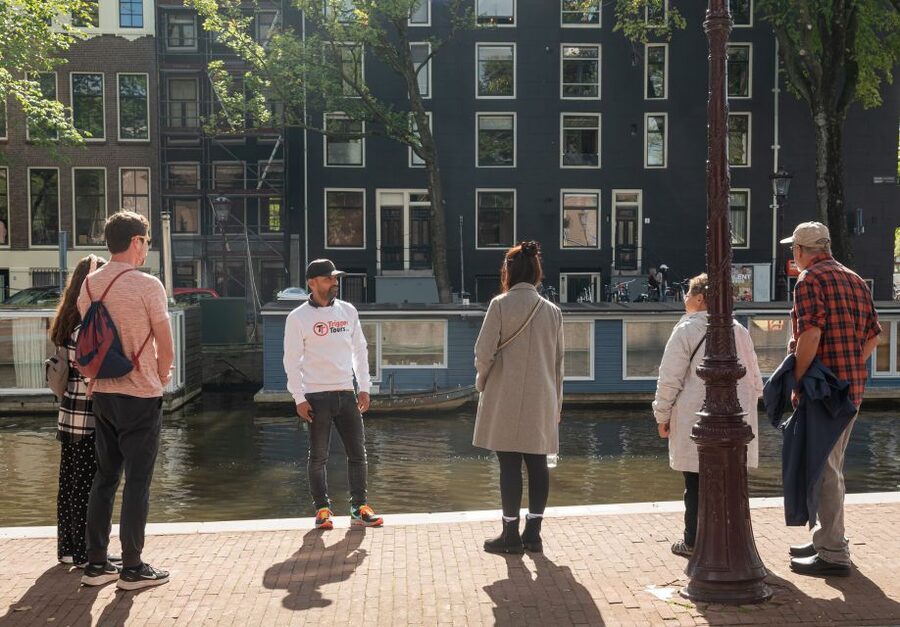
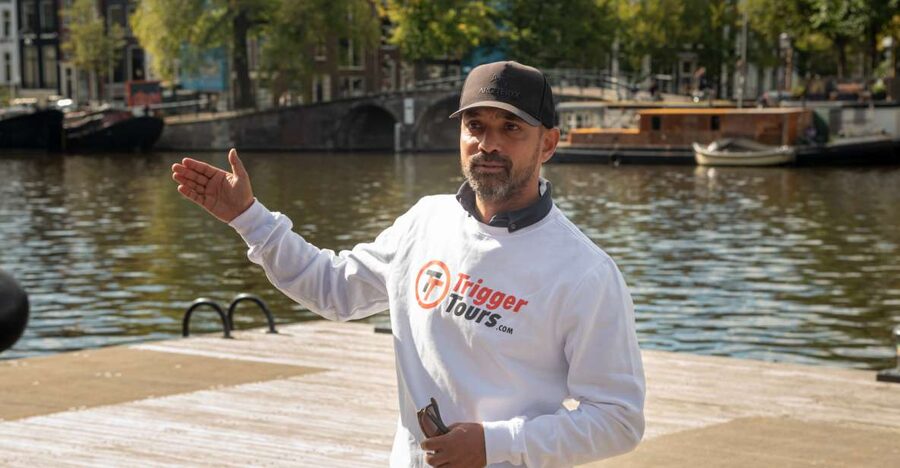
The walk begins by the Amstel River, though the exact meeting point can depend on the option you book. This is a useful place to start because the river helps you orient yourself before the route moves into the Jewish Quarter.
At the opening, your guide sets out the wider story of Jewish life in Amsterdam and the effect of the German occupation. This background matters. Without it, the later monuments can feel disconnected. With it, you can better understand how a community that had existed in Amsterdam for generations was targeted and restricted.
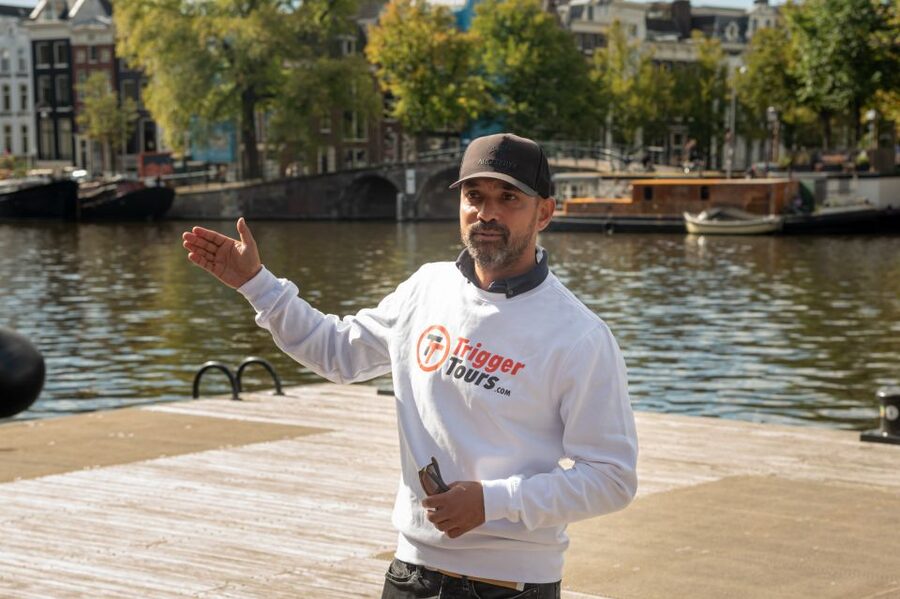
The introduction also gives you a chance to get used to the guide’s style. Past groups have worked with James, Aaron, Jyry, Masha, Marsha, Joshua, Guido, and others. The guide assigned to your departure may be different, but the most useful quality to expect is an ability to explain difficult material in plain language and respond to questions without rushing past them.
The Portuguese Synagogue and Jewish Amsterdam before the war
The Portuguese Synagogue is one of the route’s important landmarks. It helps place the Holocaust story in a much longer account of Jewish life in the Netherlands.
The building is not simply a stop for a photograph. Your guide uses it to explain the presence and importance of the Jewish community in Amsterdam before the war. That context is essential. If a tour begins and ends with Nazi persecution alone, it can reduce Jewish history to tragedy. Here, the earlier community, its institutions, and its place in Amsterdam are part of the story.
You should expect to view the synagogue as part of the walking route, not assume that an interior visit is included. The advertised activity is a guided walking tour, and the included items are the walk and guide. Food, drinks, and separate museum admissions are not included.
The synagogue also shows why a walking tour works well here. Several sites are close enough to connect on foot, yet each carries a different layer of meaning. Your guide can explain how the neighborhood functioned and why particular institutions mattered.
The Jewish Historical Museum and the life behind the buildings

The Jewish Historical Museum is another key point along the route. The tour uses it to add detail about Jewish life in Amsterdam and to connect the physical neighborhood with the people who once lived there.
You may find that the most useful information comes from the small details. A building that looks like a plain façade can have been a home, workplace, religious institution, or office tied to the community. One guide was especially praised for explaining the stories connected with buildings that would otherwise be easy to pass without notice.
The tour does not replace a full museum visit. Its value is different. In two hours, you get a guided outline of the area and its wartime meaning. If you want objects, displays, and a longer examination of Jewish life in the Netherlands, you would need extra time at the museum on your own.
That distinction helps you plan. Think of this walk as a thoughtful introduction and a way to connect several locations. It is not a substitute for every museum in Amsterdam.
A few more things to do in Amsterdam worth a look
- Amsterdam Food and Cultural Tour with Tastings
★ 5.0 · 2,442 reviews - Amsterdam: Haunted History and Ghost Walking Tour
★ 4.5 · 488 reviews - Amsterdam High-End Dutch Food & History Tour – Up to 8 guests
★ 5.0 · 482 reviews - Amsterdam: Historic City Sightseeing Canal Cruise
★ 4.5 · 444 reviews
The Jewish Council headquarters and the mechanics of occupation
The former headquarters of the Jewish Council gives the tour a more complicated chapter. Here, the guide explains how Jewish administration operated under Nazi rule and how the community was forced to deal with impossible conditions.
This part may challenge simple ideas about cooperation, resistance, and responsibility. A good guide has to explain what the council was expected to do, the pressure placed upon Jewish leaders, and the human cost of decisions made under threat. Several groups valued guides who gave an impartial account rather than forcing the subject into an easy moral conclusion.
This is also where a private or small group can make a real difference. You may have questions about how the council functioned, how ordinary people reacted, or how the Dutch authorities and wider population behaved. A smaller group gives the guide more room to stop and explain.
The tour is not presented as a debate, and it does not promise to settle every question. It gives you a framework for understanding a painful part of the occupation. I would plan to listen carefully here rather than trying to photograph every building while the guide is speaking.
The Dokwerker and the meaning of public resistance
The Dokwerker is one of the most important monuments on the route. The sculpture is tied to the February Strike, an act of public protest against the persecution of Jewish people during the occupation.
The guide gives the monument its setting and explains why it matters. Without that explanation, you might see a powerful figure but miss the event and the wider response it represents. This is a good example of the tour’s central purpose: not just showing landmarks, but helping you understand the choices and risks connected with them.
The Dokwerker also brings a different note to the walk. Much of the route deals with oppression, fear, and loss. This monument gives space to resistance and solidarity, while still keeping the limits and dangers of resistance in view.
The walk can feel brisk around major stops. One participant wanted more time to absorb each monument before moving on. If you like to study sculptures, read every plaque, and take careful photographs, you may need to return later at your own pace.
The Auschwitz Monument and the weight of memory
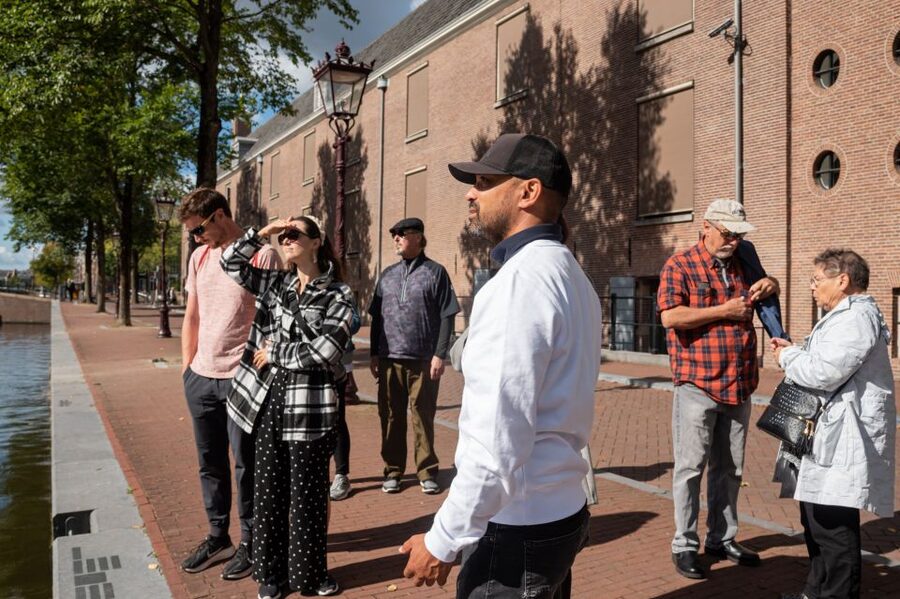
The Auschwitz Monument is likely to be one of the most emotionally difficult stops. The guide explains its purpose and places it within the history of Dutch Jewish victims and remembrance.
Give yourself permission to slow down here. The stated duration is two hours, so the guide must keep the group moving, but you do not need to treat the route as a race. Listen first, then take time to look at the memorial when the group pauses.
The monument is valuable because it shifts the story from wartime events to the question of memory. Amsterdam’s Jewish Quarter is not only a place where history happened. It is also a place where the city continues to mark loss and ask how the past should be remembered.
One account described the tour as ending at the Holocaust memorial rather than Anne Frank House. The published route says the walk finishes in front of Anne Frank House, so the actual endpoint may depend on the guide or departure option. Confirm the meeting and finishing points when you book, especially if you have a timed reservation afterward.
Anne Frank House and the final part of the story
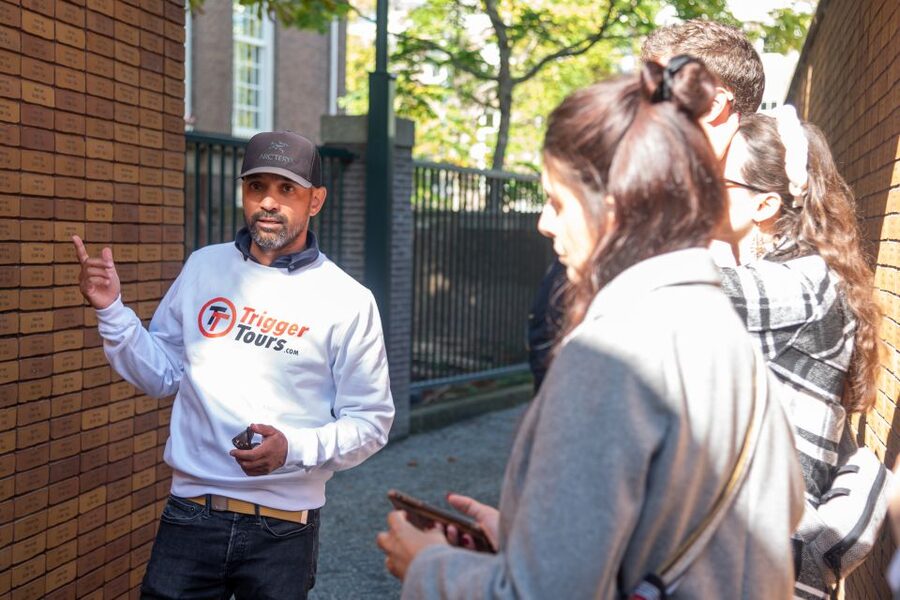
The walk is scheduled to finish near Anne Frank House. The guide explains Anne Frank’s diary, how Otto Frank helped publish it, and how the book reached readers around the world.
This is an important distinction: the tour includes a look at the house as part of the route, but it does not include admission to Anne Frank House. If you want to visit inside, you need a separate ticket and should plan it independently.
The Anne Frank story gives the tour a personal ending after the larger discussion of occupation, institutions, and monuments. You move from the history of a whole community to the words of one young writer whose diary became known worldwide.
It is also a useful reminder that Anne Frank’s story is part of Jewish Amsterdam, not the entire story. The earlier stops help place her experience beside the lives of thousands of other people. That broader frame is one of the tour’s real strengths.
Pace, group size, and the guide’s role
Two hours is enough to cover the central route, but it leaves little space for long stops. The walk is best for you if you want a clear, focused introduction rather than a slow architectural tour.
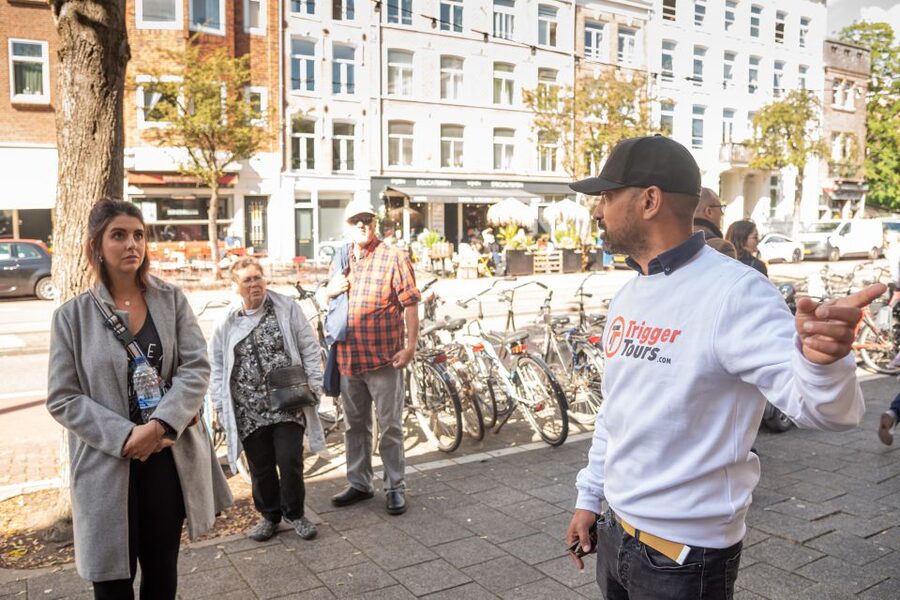
Small groups are especially useful for this subject. Guides have been praised for answering questions about personal and sensitive matters, adjusting explanations to the group, and keeping the walk at a suitable pace. Private bookings give you the greatest chance to shape the discussion, while a shared group can add different perspectives.
The experience is offered in English or Spanish. Since the subject depends on careful explanation, choose the language in which you can follow historical detail most easily.
Wear comfortable shoes and allow for normal city walking. The activity is a walking tour, not a seated talk, and food and drinks are not included. You may want to eat before or after, rather than expecting a refreshment stop during the route.
Is $23 a fair price?
At $23 per person, the tour offers good value if you want context rather than a list of addresses. The guide is the main reason to pay for it. You are buying a structured route, historical explanation, and the chance to ask questions while standing at the places being discussed.
The price is particularly reasonable for a small group if the guide keeps the discussion personal. Private pricing may vary by booking option, so compare the available formats before choosing. A shared group is likely the sensible choice for most budgets, while a private walk may suit families or visitors with a strong personal interest in Jewish history.
The tour does not include food, drinks, or entry to Anne Frank House and other attractions. Factor those costs into your day. If you plan to visit Anne Frank House, this walk can help you understand its setting, but it does not replace the house visit.
Flexible booking is another practical benefit. You can reserve now and pay later, and cancellation is allowed up to 24 hours before the activity for a full refund. Check the exact conditions attached to your selected option.
Who should book this walk?
I would recommend it to first-time visitors who want to understand Amsterdam beyond its postcard views. It also suits people with a particular interest in World War II, Jewish history, memorials, or the social history of the Netherlands.
The tour can work well before a visit to Anne Frank House, since it gives you a wider setting for that experience. It also fits visitors who have already seen the city’s major art museums and want a serious historical walk through a less obvious side of Amsterdam.
I would be cautious about booking it for very young children unless you already know they can handle the subject. The tour deals with Nazi persecution and the Holocaust, and its tone is appropriately serious.
If you prefer a relaxed stroll with plenty of time for photographs, this may feel fast. A private option could help, but the route still has a two-hour limit. You should also confirm the endpoint if you need to reach a specific attraction immediately afterward.
Should you book the Amsterdam Jewish Quarter tour?
Book it if you want the Jewish Quarter explained by someone who can connect buildings, monuments, institutions, and personal stories. The strongest part is the combination of broad wartime context with specific places such as the Dokwerker, Jewish Council headquarters, and Auschwitz Monument.
Choose a small group or private option if you expect many questions or want a more personal discussion. Choose the shared walk if you mainly want a well-priced introduction. Either way, keep your expectations clear: this is a serious historical tour, not a casual city walk, and it does not include entry to Anne Frank House.
At $23 and two hours, it is a useful addition to an Amsterdam visit, especially when guides such as James, Aaron, and Jyry are available to explain the subject with care. Just leave room in your schedule to pause, think, and perhaps revisit one or two sites on your own.
FAQ
How long is the Amsterdam Jewish Quarter tour?
The tour lasts two hours.
What language is the tour offered in?
Live guides are available in English and Spanish.
Is the tour private or shared?
You can choose a private tour or a small-group option, depending on the booking selected.
Where does the tour begin?
It begins by the Amstel River, but the exact meeting point may vary by booking option.
Where does the tour finish?
The stated route finishes in front of Anne Frank House. One participant reported finishing at the Holocaust memorial, so confirm the endpoint for your selected option.
Is admission to Anne Frank House included?
No. The activity includes the walking tour and guide, but admission to Anne Frank House is not listed as included.
Which landmarks are visited?
The route includes the Portuguese Synagogue, Jewish Historical Museum, Jewish Council headquarters, Dokwerker, Auschwitz Monument, and Anne Frank House as a final point or nearby landmark.
Are food and drinks included?
No. Food and drinks are not included.
Can I cancel the booking?
You can cancel up to 24 hours in advance for a full refund. The activity also offers a reserve-now, pay-later option.
Just added in Amsterdam
- Guided Day Trip – Volendam, Zaanse Schans, Marken & Edam★ 4.0 · 232 reviews
- Private Tour Zaanse Schans Windmills and Volendam in Jaguar★ 5.0 · 10 reviews
- Zaanse Schans and Giethoorn Unique Day Trip with Boat Cruise★ 4.5 · 17 reviews
- Half-Day Private Guided Sightseeing Tour of Zaanse Schans★ 5.0 · 14 reviews
- Zaanse Schans Private Tour Windmills★ 5.0 · 18 reviews
- Private bike tour: Hidden gems around Amsterdam and surroundings★ 5.0 · 4 reviews
- Bike tour in Amsterdam with an Italian guide★ 5.0 · 15 reviews
- Amsterdam Sightseeing Tour + Hidden Gems + Tastings + PDF guide★ 5.0 · 35 reviews
Anne Frank & Jewish Amsterdam, compared.
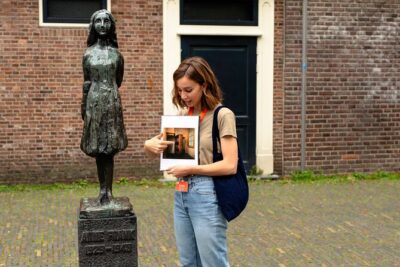
Anne Frank’s Story – Guided Walking Tour through Amsterdam
Read our review →
Life of Anne Frank and World War II Walking Tour
Read our review →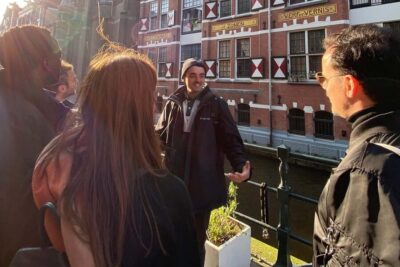

Anne Frank Walking Tour – Guided in EN/DE/IT/ES
Read our review →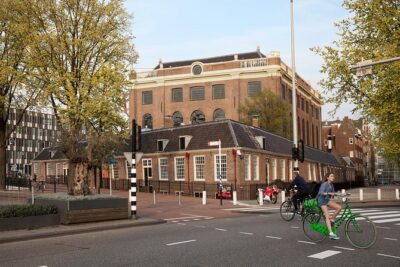
Anne Frank Walking Tour Amsterdam Including Jewish Cultural Quarter
Read our review →
Anne Frank’s Last Walk & See Anne Frank House in Virtual Reality
Read our review →
Anne Frank and Jewish Quarter Amsterdam Private Walking Tour
Read our review →
Browse the lists this tour appears in