
Reviewed · MUSEUMS
Amsterdam: The Kattenkabinet Cat Museum Entry Ticket
Amsterdam’s Kattenkabinet is a cat museum in a beautiful Herengracht canal house, where paintings by Rembrandt and Picasso share rooms with posters, sculptures, photographs, and actual cats. It is a curious mix of serious art collection and affectionate home shrine.
I like the personal story behind it, especially the memorial to the cat that inspired owner Bob Meijer. I also like the chance to see real resident cats wandering through the rooms. The catch is size: many people finish in 20 minutes to an hour, though careful art lovers and families can stretch the visit longer.
Key points before you go
- A canal house full of cat art: The collection fills several rooms and two floors of an attractive Amsterdam home.
- Works by famous artists: Look for cat-related pieces connected with Rembrandt, Picasso, Toulouse-Lautrec, Corneille, and Jože Ciuha.
- Resident cats add the surprise: Cats may be sleeping, strolling, or accepting a little attention, but their appearances are not guaranteed.
- A touching memorial corner: You can learn about Bob Meijer’s cat and leave a photo, note, or drawing of your own cat.
- A small garden and useful gift shop: The garden gives you a place to pause, while posters, tote bags, and other cat items are sold on site.
- Best for a short, unusual stop: The $15 ticket makes sense for cat lovers and art fans, but less so if you expect a large national museum.
A cat museum in one of Amsterdam’s grand canal houses
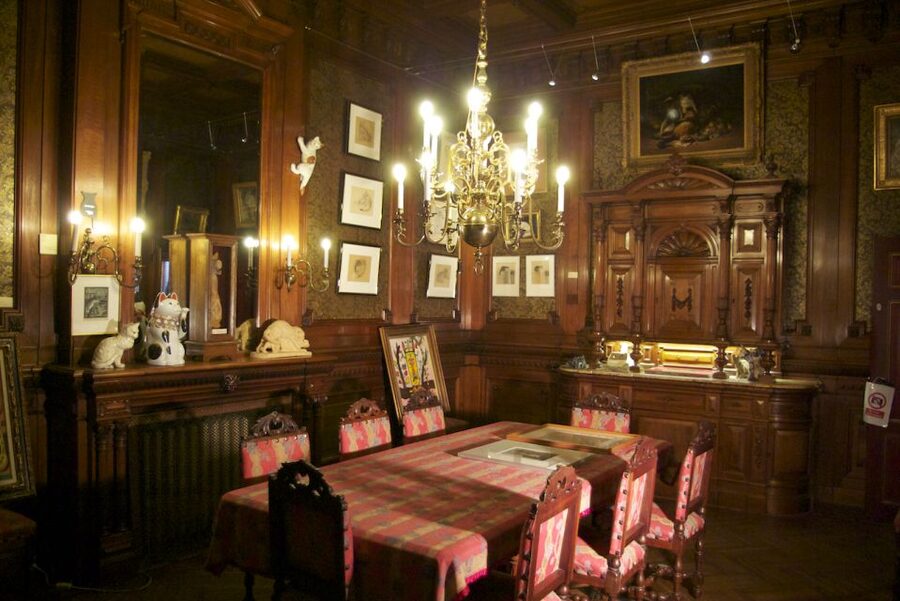
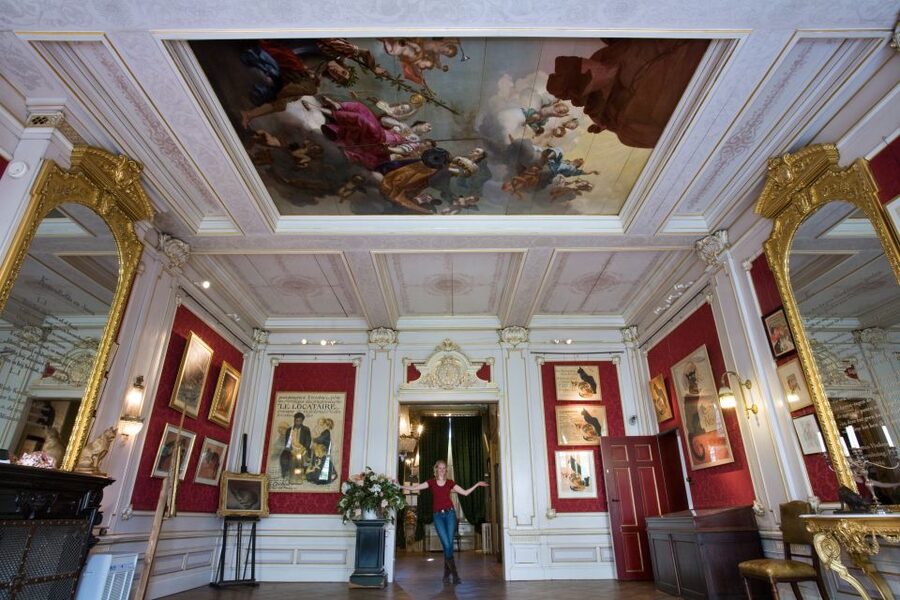
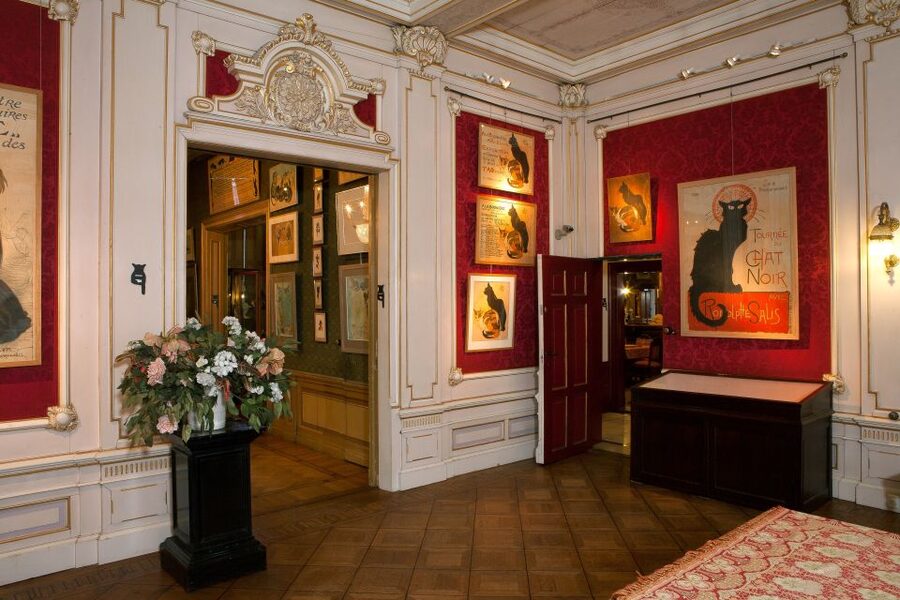
The Kattenkabinet works because the setting is part of the attraction. You are not entering a plain gallery built only for exhibitions. You are walking into a historic house on the Herengracht, one of Amsterdam’s famous canals, and finding its rooms given over to cats.
That contrast gives the place its character. The elegant rooms and old architectural details set a formal stage, while the subject matter ranges from fine art to playful souvenirs and odd cat objects. The result feels personal rather than corporate.
The museum is compact. The exhibition occupies about two floors and perhaps three or four main rooms, depending on how you count the spaces. You can make a quick circuit, but I would not rush. Frames, captions, ceramics, photographs, and small details reward a slower look.
If you are expecting something on the scale of the Rijksmuseum, adjust your expectations now. This is a focused collection in a historic home, not an all-day institution. Its appeal comes from the unusual subject, the house, and the possibility of meeting one of the resident cats.
More Museums in Amsterdam
- Amsterdam: Van Gogh Museum Ticket
★ 4.7 · 52,054 reviews - Moco Museum Amsterdam Entrance Tickets with Banksy & More
★ 4.4 · 10,088 reviews - Amsterdam: The Upside Down Museum Entrance Ticket
★ 4.4 · 9,506 reviews
The story of Bob Meijer and his cat
Start by learning how the collection began. Bob Meijer created the Kattenkabinet from his love of cats and in memory of the cat that first inspired the project. That story gives the museum an emotional center.
The memorial element is especially clear in the room where people leave notes, photographs, and drawings of their own cats. You can bring a picture if you like and add it to the display. It is a simple gesture, but it changes the museum from a collection you merely observe into a place where cat owners can contribute something personal.
This part also helps explain why the museum includes such a broad range of material. It is not only concerned with major painters or formal art history. The collection reflects the many ways people have pictured, remembered, decorated with, and lived alongside cats.
You might see a polished painting beside a lighthearted print or a decorative object with no great artistic claim. That variety is part of the point. The museum treats cats as subjects of serious art, popular imagery, domestic affection, and humor.
Paintings, prints, photographs, and sculptures
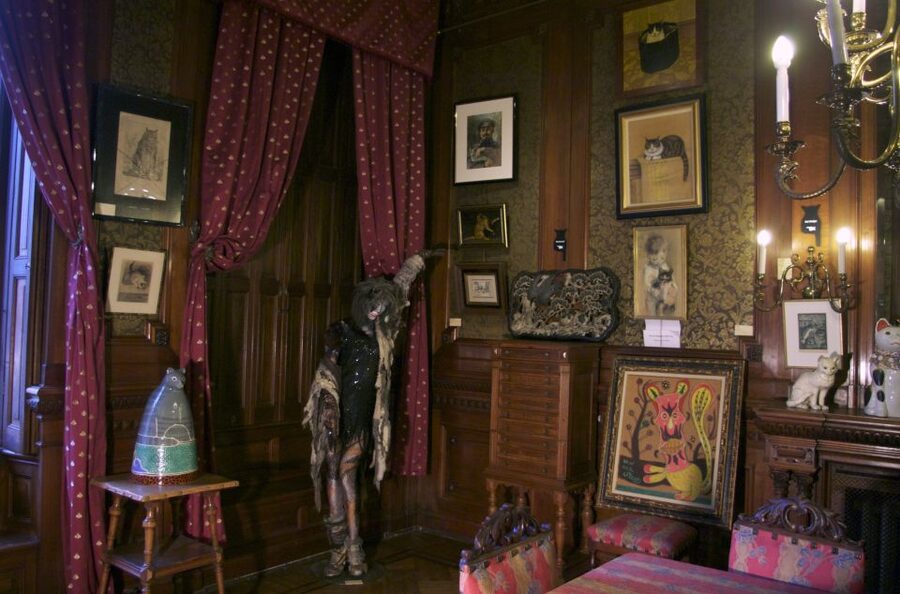
The main collection covers several centuries and many formats. You will find paintings, drawings, lithographs, posters, photographs, sculptures, ceramics, and assorted cat-related objects.
The strongest appeal is the range. One room may reward you with a work by a well-known artist, while another offers a funny poster or a richly framed image by someone less familiar. You do not need to know much about art to enjoy the visual hunt.
Works connected with Rembrandt, Picasso, and Toulouse-Lautrec give the museum more weight than its playful subject might suggest. Corneille and Jože Ciuha are also represented. These names matter because they show that the collection is not limited to anonymous cat pictures or novelty décor.
Still, this is not a museum built around a single masterpiece. The pleasure comes from accumulation. A cat appears in one style after another: noble, comic, sleepy, decorative, mysterious, or very ordinary. If you like comparing how artists see the same animal, you will have plenty to examine.
The collection also includes pieces that feel deliberately light. That keeps the visit from becoming too formal. Children can respond to the obvious cat shapes and expressions, while adults may spend more time with the technique, period, or framing.
The 17th-century ceiling and the house itself
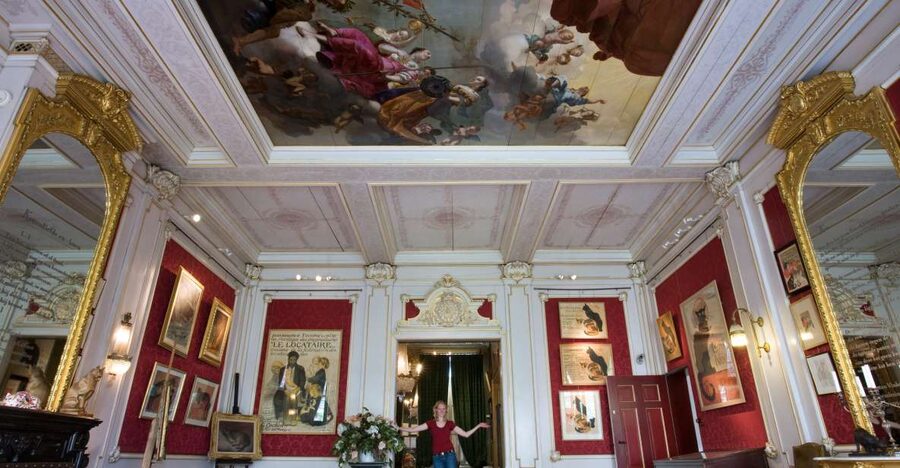
Do not look only at eye level. One of the rooms has a 17th-century ceiling painting uncovered during renovation work in the 1980s. It comes from the school of De Lairesse and depicts the Amsterdam City Virgin.
This is an important detail because it gives the building a life beyond the museum. The room is not simply a container for cat art. It carries its own Amsterdam story, and the ceiling adds a layer of historic decoration that has little to do with cats.
The house also makes the visit feel more intimate than a standard gallery. You move through domestic-scale rooms rather than large halls. That closeness can be charming, though it contributes to the limited capacity and short overall route.
Take your time with the architecture, especially if the museum is quiet. The building is one of the best reasons to visit even if your interest in cat art is moderate. If cats are your main reason for going, the historic interior is a welcome bonus.
Other collections worth booking around Amsterdam:
- Amsterdam: Red Light Secrets Museum Entry Ticket
★ 4.2 · 5,722 reviews - Amsterdam’s Weirdest Museum: Believe It or Not!
★ 4.5 · 4,086 reviews - Amsterdam: Van Gogh Museum Ticket and City Canal Cruise
★ 4.6 · 3,899 reviews - Amsterdam: Rembrandt House Museum Entrance Ticket
★ 4.7 · 3,385 reviews
Meeting the resident cats
The live cats are the museum’s most unpredictable feature. Several resident cats live around the building, and they may wander through the rooms, lounge nearby, pose for photographs, or accept a stroke.
Some people have met more than one cat during a visit. Others have seen only one, or none. Treat them as a lucky extra, not as a scheduled part of the ticket. Cats, quite reasonably, keep their own timetable.
When a cat does appear, the atmosphere changes. The art becomes less abstract and the museum feels like a lived-in home. A cat sleeping beside a framed painting can be more memorable than another object in the collection.
You should still give the cats space and follow staff guidance. This is a museum that happens to have resident cats, not a guaranteed petting session. If you are bringing children, explain that the cats may choose to hide or move away.
One particularly appealing possibility is a cat settling on a visitor’s lap. That has happened during visits, but it is not something you can plan around. Enjoy the encounter if it comes, and do not judge the museum harshly if the resident animals are off somewhere else.
The garden and a quiet pause
The museum has a garden area, which adds welcome breathing room to the compact interior. It is a pleasant place to pause after looking through the rooms, especially on a mild day.
The outdoor area is not always fully available. It has been closed during some visits, including periods outside the warmer season, so do not make the garden your main reason for booking. When it is open, though, it helps turn a quick museum circuit into a more relaxed outing.
There may be limited seating, so think of the garden as a bonus rather than a full café-style sitting area. Food and drinks are not allowed inside the museum, and smoking is not allowed in the garden.
That rule is easy to understand in a small historic house containing art and resident animals. Plan to finish snacks and drinks before entering or after leaving.
How long you should allow
The ticket is valid for one day, but the actual visit is much shorter. A fast look can take around 20 minutes. Many people will spend about an hour, while families and careful readers can stay closer to two hours.
Your timing depends on your interests:
- Cat lovers making a quick stop: Allow 30 to 45 minutes.
- Art fans reading captions and studying details: Plan about an hour.
- Families with children: Allow up to two hours if the cats are active and the children enjoy the garden.
- Shoppers or repeat visitors: Add time for the gift shop and a second look at favorite rooms.
The small size is both a strength and a weakness. It makes the museum easy to fit between canal walks, shopping, or a larger museum visit. It also means you should not expect a full afternoon of exhibits.
I would pair it with another central Amsterdam activity rather than build an entire day around it. The one-day validity gives you flexibility, but it does not turn the museum into a large attraction.
Is the $15 ticket good value?
At $15 per person, the ticket is fair if you have a genuine interest in cats, art, or unusual historic interiors. You are paying for a specialized collection, a distinctive setting, and the chance of seeing resident animals.
The value is less convincing if you compare it with large Amsterdam museums by square footage or the number of major works. The Kattenkabinet is small, and some people will feel finished very quickly. The price may seem high for a 20-minute visit, especially when the garden is closed or the cats are not visible.
On the other hand, the museum offers something that larger institutions cannot. You get a tightly focused experience with a personal story, real cats, a memorial corner, and an old canal house. For a dedicated cat lover, that combination is difficult to replace.
I also like that the collection includes more than paintings. Posters, photographs, sculptures, ceramics, lithographs, and miscellaneous objects give you enough variety to keep the visit from feeling like the same image repeated room after room.
A good family stop, with one important expectation
The museum works well for families because children can engage with the obvious theme right away. They can search for cats in paintings, identify sculptures, look for real cats, and add a drawing or note to the memorial display.
Older children may also appreciate the house and the range of art styles. A visit has kept children around nine and thirteen engaged for roughly two hours, though that depends on their interest and how much time the cats spend in view.
The compact rooms require sensible behavior. Children should not chase or crowd the resident animals, and a busy room may feel tight. The experience is best for children who can move carefully through a small art museum.
It is also a pleasant choice for mixed-interest groups. A cat lover gets the subject matter, an art fan gets works by recognized artists, and a history-minded visitor gets the canal house and its ceiling painting.
The gift shop and what you can take home
The gift shop is more useful than a quick rack of postcards. You might find posters, tote bags, and other cat-themed items, including the cat dollars mentioned by one visitor. It gives you an easy way to take home something connected to the museum without paying for another attraction.
The shop also helps if you finish the exhibition quickly. You can browse after the rooms rather than feeling that the visit ended the moment you reached the last painting.
If you collect museum posters or want a practical souvenir, leave a little extra time. The shop has been one of the stronger parts of the visit for repeat customers, particularly because displays and available items can change.
Practical planning for your visit
The museum is in North Holland, in central Amsterdam on the Herengracht. The ticket covers museum entry only. Food and drinks are not allowed inside, and smoking is not allowed in the garden.
You can cancel up to 24 hours before the visit for a full refund. A reserve-now, pay-later option is also available, which helps if your Amsterdam plans are still shifting. Check the current availability for opening times before setting out, since the ticket is valid for one day rather than for an unlimited period.
I would avoid making a tight connection between the Kattenkabinet and another timed attraction. The museum itself is short, but a cat may appear, the garden may invite a pause, and the shop can add time.
The overall rating is 4.1 from 1,044 reviews, which fits the experience well: strong affection for the subject and atmosphere, balanced by repeated concern about the small size. Go for the particular charm, not for a long museum circuit.
Who should book the Kattenkabinet?
You should book if you love cats and want a playful stop with genuine art, a personal memorial story, and the chance to meet resident animals. It is also a good choice for families, couples looking for something unusual, and art fans who enjoy seeing how one subject appears across different periods and media.
I would think twice if you want a large collection, long guided interpretation, or a guaranteed interaction with cats. There is no promise that every resident cat will appear, and the garden may not be open.
For most cat lovers, the small scale is part of the charm. You can see the collection, admire the building, browse the shop, and continue your Amsterdam day without feeling worn out. At $15, it is a sensible specialty visit when the theme speaks to you.
FAQ
Where is the Kattenkabinet located?
The Kattenkabinet is located on the Herengracht canal in Amsterdam, in North Holland, Netherlands.
What does the entry ticket include?
The ticket includes entry to the Kattenkabinet museum. Food, drinks, and smoking in the garden are not included or permitted under the stated museum rules.
How long does a visit usually take?
The museum is small. A quick visit may take about 20 minutes, while a more careful visit can last around an hour. Families may spend up to two hours.
Will I definitely see a resident cat?
No. Resident cats may wander through the museum, but their appearance is not guaranteed. Some visits include several cats, while others include only one or none.
Can I see works by famous artists?
Yes. The collection includes works associated with Rembrandt, Picasso, Toulouse-Lautrec, Corneille, and Jože Ciuha, along with pieces by less-known artists.
Is there an outdoor garden?
Yes, the museum has a garden area. It may be closed at certain times, including some visits outside the summer season, and seating can be limited.
Can I cancel my booking?
You can cancel up to 24 hours in advance for a full refund. A reserve-now, pay-later option is also available.
Just added in Amsterdam
- Schiphol Amsterdam Airport Private Arrival Transfer★ 5.0 · 68 reviews
- Amsterdam Castle & Utrecht City – Private Day Tour★ 5.0 · 21 reviews
- Amsterdam Canal, Tulip, Windmill Photoshoot | Custom Request★ 5.0 · 147 reviews
- Amsterdam Light Festival Winter Walk with Stroopwafel Workshop★ 5.0 · 66 reviews
- Become a Dutch Art Piece Photo Shoot in Amsterdam – Single Portrait★ 5.0 · 65 reviews
- Become a Dutch Art Piece Photo Shoot in Amsterdam★ 5.0 · 100 reviews
- Full-Day Private Historic Royal Tour around Palaces and Castles★ 5.0 · 16 reviews
- Private transfers from or to Schiphol (AMS) airport Amsterdam★ 5.0 · 235 reviews
Museums, compared.


Moco Museum Amsterdam Entrance Tickets with Banksy & More
Read our review →




Browse the lists this tour appears in