
Reviewed · TOURS IN ROTTERDAM
Rotterdam: Wilhelminapier, High-rise & floating architecture
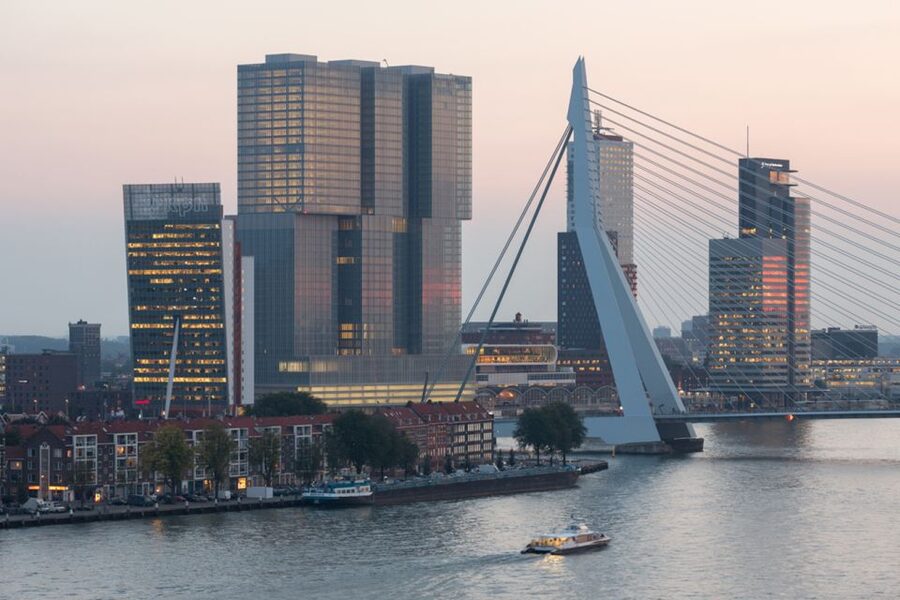
Rotterdam’s Wilhelminapier is where old port buildings meet bold new towers, and this one-hour tour gives you a tidy introduction to that change. You’ll hear about the former Holland America Line, enter the Pakhuismeesteren, and reach its rooftop for a broad view of Rotterdam’s skyline. I like the mix of architecture and port history, plus the chance to see floating projects that make this part of the city unusual.
I also like that this is a private group tour, capped at six people, with a Dutch treat and an architectural postcard included. Guide Willem earned warm praise for making the walk both funny and informative. The main drawback is the short format: one hour goes quickly, so this works best as a focused introduction rather than a complete Rotterdam architecture tour.
Key points
- Pakhuismeesteren rooftop: Visit a former harbor warehouse now used for a hotel and the Foodhallen, then take in the city from above.
- Wilhelminapier’s transformation: Learn how the former Holland America Line area changed into a district of high-rise buildings and modern design.
- De Rotterdam: Hear about the concept and design of the huge complex from a professional guide.
- Floating projects: See Rotterdam’s floating hotel, park, and office concepts along the Rijnhaven.
- Small private group: The price covers up to six people, making it more personal than a large walking tour.
- Useful extras: You receive a Dutch treat and a postcard by Rotterdam architectural photographer Ossip van Duivenbode.
Why Wilhelminapier makes a good architecture walk
Wilhelminapier is not a collection of unrelated modern buildings. It is a former harbor district that changed as Rotterdam moved from working port to contemporary city center. The tour helps you read that change instead of simply pointing at tall buildings.
The area was once linked with the Holland America Line, whose ships carried people from Europe toward new lives overseas. That background gives the waterfront some emotional weight. The same pier now presents glass towers, hotels, food venues, and experimental floating structures. You get a quick lesson in how a port can be reused without erasing its older role.
I find this kind of tour most useful when you want context for what you are seeing. A skyline photograph can show height and shape, but a guide can explain why a building is there, how its design fits the pier, and what came before it.
Other trips people book in Rotterdam:
- Rotterdam: Harbor Sightseeing Cruise
★ 4.3 · 7,599 reviews - Rotterdam: 1-Hour Sightseeing Splash Tour
★ 4.5 · 3,299 reviews - Rotterdam: Rotterdam Zoo Blijdorp Entry Ticket
★ 4.6 · 2,754 reviews
Meeting outside the red Luxor Theater
The meeting point is outside Het Nieuwe Luxor Theater, the red building on the Wilhelminapier. That is a clear landmark, but give yourself enough time to locate the correct side of the building before the start.
The tour is private and lasts one hour. That matters because the experience should feel direct and easy to follow, but it also limits the amount of time available for long explanations or interior visits. You are getting a concentrated walk, not a half-day architecture study.
Guides can lead the tour in Dutch, English, German, Spanish, or French. Willem is one named guide associated with the experience, and his approach earned particular praise for combining humor with useful information. If you enjoy asking questions, the private format should make that easier than a large group tour.
The former Holland America Line district
The first major theme is the change from shipping area to high-rise neighborhood. The Holland America Line connection gives the Wilhelminapier a story that reaches beyond architecture. You are looking at a place shaped by departures, arrivals, trade, and migration, now surrounded by some of Rotterdam’s most recognizable modern buildings.
The guide explains the transformation of the pier and the ideas behind its redevelopment. I like this part because it keeps the tour from becoming a simple list of architects and building heights. You learn why the district feels so different from older parts of Rotterdam and how the waterfront became a stage for large new projects.
The area also offers a useful contrast. Former harbor warehouses suggest storage and heavy industry, while the towers suggest offices, hotels, apartments, and new city life. That tension is part of the appeal. You can see Rotterdam’s past and present within a short walk.
Inside Pakhuismeesteren and up to the rooftop
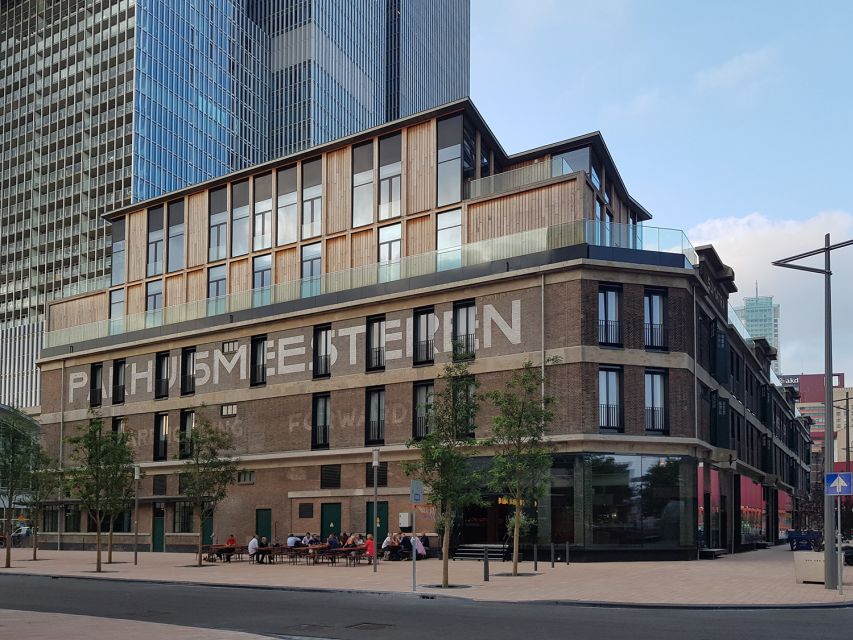
Pakhuismeesteren is one of the tour’s strongest stops. The building began life as a harbor warehouse and now contains a hotel and the Foodhallen. The change in use tells you a great deal about Rotterdam’s approach to old industrial buildings: preserve the shell and give it a new job.
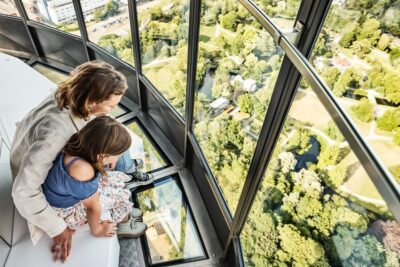
The tour includes entry to the rooftop, which gives you a scenic view of Rotterdam and its modern architecture. This is more than a quick photo stop. From above, the relationships between the pier, the water, and the surrounding towers become easier to understand.
You can also look down toward the Foodhallen, a food venue aimed at people who enjoy trying different dishes in one place. The tour does not promise a full meal there, so do not treat the visit as a food tour. Instead, think of it as a chance to see how an old warehouse now serves a social and culinary role.
A Dutch treat is included, which adds a small local touch. It will not turn the walk into a tasting experience, but it is a pleasant extra and gives the short tour a more personal feel.
Same city, a different sort of day:
- Rotterdam: Euromast Lookout Tower Ticket
★ 4.4 · 2,549 reviews - Rotterdam: Pancake Cruise
★ 4.4 · 1,986 reviews - Rotterdam: Harbor Cruise with Live Guide
★ 4.0 · 1,270 reviews - Rotterdam: Harbor Cruise on a Historic Ship
★ 4.2 · 812 reviews
De Rotterdam and the logic of high-rise design
De Rotterdam is another central subject. The guide explains its history, concept, and design, helping you understand the building as more than a large shape on the skyline.
The experience does not list an extended interior visit to De Rotterdam, so expect the focus to be on explanation and viewing the building as part of the Wilhelminapier. That is a sensible use of a one-hour tour. The complex is large enough that a full architectural inspection would require much more time.
I like having De Rotterdam included because it represents the scale of Rotterdam’s modern building program. It also gives you a chance to compare one major tower complex with Pakhuismeesteren, whose identity comes from its earlier warehouse use. One is a symbol of new construction; the other shows adaptation.
For anyone interested in architecture, the guide’s explanation is the part that gives the stop value. Without context, you may simply see another high-rise. With context, you can pay attention to its massing, purpose, and place within the pier.
Floating hotel, park, and office along the Rijnhaven
The walk continues along the Rijnhaven, where you look at floating projects: a hotel, a park, and an office. Rotterdam is well suited to this subject. Water is not just a view here; it is part of the city’s working structure and a space for testing new ideas.
The tour presents floating architecture as an innovation concept. You will see how different uses can be placed on the water rather than only on solid ground. The hotel, park, and office show three different answers to the same question: how can a city use its waterfront in new ways?
The description promises a chance to take a look at these projects, not a visit inside each one. Keep your expectations in line with that. You are viewing and discussing floating design, not taking a boat tour or spending the night in the floating hotel.
This is one reason I would recommend the tour to people who are curious about urban planning. The walk connects buildings with a wider question about how cities handle limited space, changing waterfronts, and new construction.
A rooftop view with a useful sense of place
The rooftop at Pakhuismeesteren is likely to be the visual high point. Rotterdam’s famous architecture makes more sense when you can see several buildings at once, rather than studying each one from street level.
The view also helps you understand the geography of the Wilhelminapier. You can connect the former warehouse, the water, the modern towers, and the route toward the Rijnhaven. This is especially helpful if you are new to Rotterdam and want to get your bearings quickly.
Weather will naturally affect any rooftop stop, and the supplied details do not promise a particular view condition. Still, the rooftop entrance is included, so the stop is built into the value of the tour rather than being an optional extra.
You also receive a postcard by architectural photographer Ossip van Duivenbode. It is a modest souvenir, but a fitting one. The postcard keeps the focus on Rotterdam’s buildings and gives you something more distinctive than a generic city memento.
How much value do you get for $286?
The listed price is $286 for a group of up to six people. If six people join, that works out to about $47.67 per person. For a private tour with a guide, rooftop entry, a Dutch treat, and a small architectural postcard, that can be reasonable for a group that values personal attention.
For two people, however, the cost per person is much higher. You should book it because you want a private guide and a compact architecture lesson, not because it is the cheapest way to see the pier.
The one-hour duration keeps the commitment low. You can fit it around other Rotterdam plans, including a meal at the Foodhallen or time near the Fenix Migration Museum, where the tour ends nearby. The short schedule also means you should not expect a full survey of Rotterdam’s architecture or a long stop at every building.
Free cancellation up to 24 hours before the start and the option to reserve now and pay later add flexibility. The tour is also wheelchair accessible, a useful point for anyone checking access before booking.
Who will enjoy this tour most?
I would choose this walk if you like cities that show their working past alongside new design. It suits first-time visitors who want a clear introduction to the Wilhelminapier, as well as architecture fans who want a guide to the area’s major projects.
It is also a good fit for a family or small group that prefers a private outing. The tour is short enough for people who do not want a long walking program, and the rooftop and food stop give the route more variety than a street-only architecture lecture.
Food lovers may like seeing the Foodhallen, but this is not primarily a food experience. You receive a Dutch treat, yet most of the time is devoted to buildings, waterfront change, and design.
You should think twice if you want extensive interior access, a long history tour, or time to explore each site at your own pace. The tour is tightly focused and moves through several subjects quickly.
Practical details before you book
Meet the guide outside Het Nieuwe Luxor Theater, identified as the red building. Check the available starting times when booking, since the tour lasts one hour and operates at scheduled times.
The guide languages are Dutch, English, German, Spanish, and French. The group is private, with room for up to six people. That arrangement is particularly useful if your group wants to ask about specific buildings or keep the pace suited to its own interests.
The tour ends near the Fenix Migration Museum, Rotterdam’s newest icon according to the activity details. That makes the finish convenient for continuing your day in the same part of the city, though the experience itself does not include entry to the museum.
Should you book the Wilhelminapier tour?
Book it if you want a polished introduction to Rotterdam’s modern waterfront, especially the Pakhuismeesteren rooftop, De Rotterdam, and the floating hotel, park, and office projects. The private format and multilingual guiding make it a good choice for a small group that values a personal explanation.
Skip it if you want a long, low-cost walking tour or a full meal-based visit to the Foodhallen. At $286, the value depends heavily on group size. With six people, it is a fair way to get a focused guide and rooftop access. With fewer people, it is best reserved for visitors who are genuinely interested in architecture and the changing life of Rotterdam’s harbor.
FAQ
Where does the tour meet?
The meeting point is outside Het Nieuwe Luxor Theater, the red building on the Wilhelminapier.
How long does the tour last?
The tour lasts one hour.
What languages are available?
The tour can be conducted in Dutch, English, German, Spanish, or French.
Is this a private tour?
Yes. It is offered as a private group tour for up to six people.
Is rooftop entry included?
Yes. Entrance to the rooftop of Pakhuismeesteren is included.
What is included besides the guided tour?
You receive a tasty Dutch treat and a postcard of Rotterdam by architectural photographer Ossip van Duivenbode.
Is the tour wheelchair accessible?
Yes, the activity is listed as wheelchair accessible.
Just added in Rotterdam
- Rotterdam: City Walk Audio Guide in 7 Languages on your Phone★ 3.5 · 6 reviews
- Rotterdam Must Do Tour: Highlights, History, WW2 and Architecture★ 5.0 · 20 reviews
- e-Scavenger hunt Breda: Explore the city at your own pace★ 4.5 · 27 reviews
- e-Scavenger hunt Rotterdam: Explore the city at your own pace★ 4.5 · 13 reviews
- All-Inclusive Private Windmill Tour to Kinderdijk from Rotterdam★ 4.5 · 59 reviews
- Discover Rotterdam: Classic Highlights Bike Tour with a Local★ 5.0 · 22 reviews
- Rotterdam in half a day: All-inclusive, Authentic private Tour of Rotterdam★ 5.0 · 146 reviews
- Discover Breda with a self-guided Outside Escape city game tour!★ 5.0 · 16 reviews
Tours in Rotterdam, compared.


Browse the lists this tour appears in