
Reviewed · DELFT TOURS
Delft: Canal House Museum ‘Paul Tetar van Elven’ Ticket
The most interesting thing about the Paul Tetar van Elven Museum is that it feels less like a formal gallery and more like walking into an artist’s private home. The furniture, books, paintings, studio objects, and porcelain remain tied to the life of one Delft man, rather than being gathered from unrelated places. I especially like the preserved canal-house setting and the chance to see how a 19th-century artist actually lived.
I also like the painted Salon ceiling, with the names of old masters such as Raphael, Rubens, and Rembrandt, and the large collection of Delft blue pottery and Far Eastern porcelain. The main consideration is scale: this is a small, specialized museum, not a full-day attraction with a long list of rooms or major blockbuster paintings.
Key points before you go
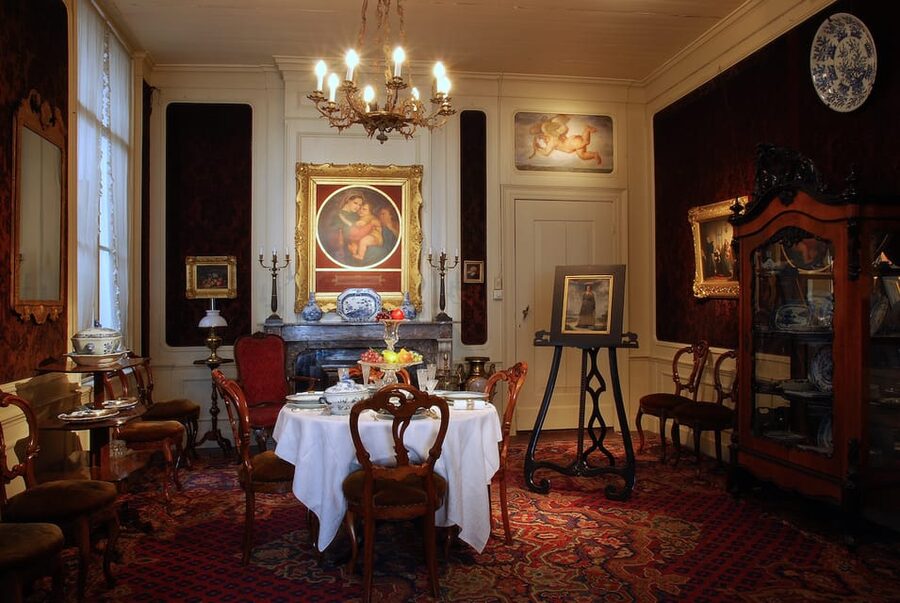
- A genuine 19th-century artist’s home: Paul Tetar van Elven left both his house and its contents so they could become a museum.
- A 16th-century canal house: The building dates from shortly after Delft’s Great Fire of 1536 and was modernized around 1800.
- A remarkable Salon ceiling: Abraham Gips painted the names of masters Tetar van Elven admired and copied.
- More than paintings: You’ll see antique books, studio belongings, furniture, Delft blue pottery, and porcelain from the Far East.
- A central Delft location: The museum is on Koornmarkt, in one of the city’s historic canal-house areas.
- Flexible booking: The $14 ticket is valid for one day, and cancellation is allowed up to 24 hours before the visit.
Entering a Delft canal house on Koornmarkt
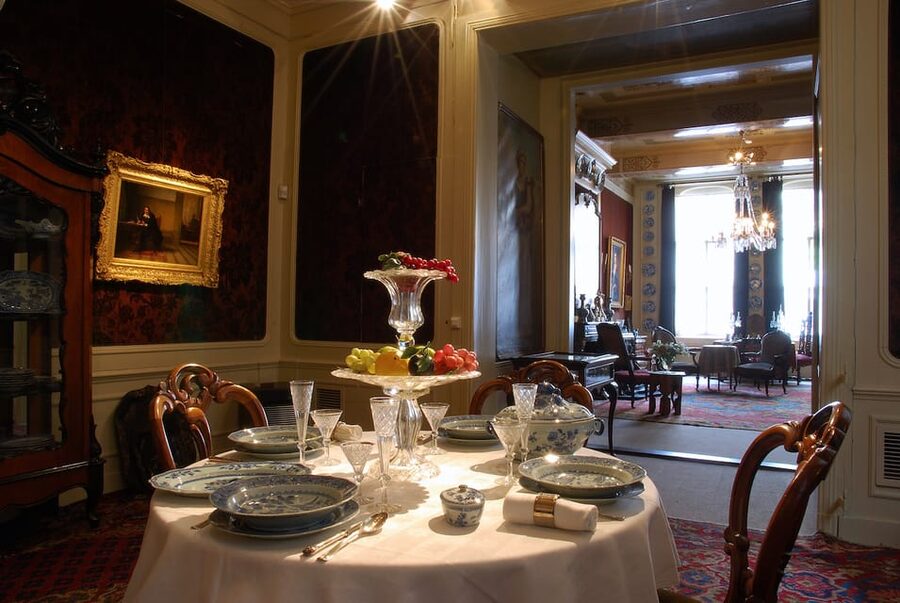
The museum is in the centre of Delft, on Koornmarkt, a street associated with the city’s prosperous canal-house tradition. The location matters because the building is not a modern museum shell. You are entering the house itself, a structure that began in the 16th century and changed with the city over several hundred years.
The house dates from shortly after the Great Fire of Delft in 1536. Koornmarkt later became one of the wealthier parts of the city, and the building received several updates, including a new front façade and major modernization around 1800.
Paul Tetar van Elven bought the house in 1864. He made no further structural renovations, but he adjusted the interiors to suit the fashion of his day. That gives the museum an appealing mix of old bones and 19th-century decoration. You can look at the rooms not simply as displays, but as evidence of how a prosperous artist arranged his domestic world.
I find this kind of setting more revealing than a single painting hung in a large gallery. The house gives you scale, texture, and context. You see the rooms where art was displayed, the furnishings chosen for daily life, and the objects collected because they mattered to the owner.
More Delft trips booked from the Netherlands:
- From Amsterdam: Rotterdam, Delft & The Hague Guided Day Tour
★ 4.2 · 1,765 reviews - Delft: Canal Cruise with Guided Commentary
★ 4.4 · 990 reviews - Rotterdam, Delft, the Hague, Madurodam from Amsterdam
★ 4.0 · 793 reviews
Paul Tetar van Elven, artist and teacher
Tetar van Elven lived from 1823 to 1896. He worked as an artist and as a drawing-master at the Polytechnic School, the institution now known as Delft University of Technology.
That combination is useful to keep in mind. He was not only a painter working alone in a studio. He also taught drawing and collected examples of art and craftsmanship. His home reflects those interests, with paintings, books, decorative objects, and ceramics sharing space with personal belongings.
His will asked that the house and its contents be turned into a museum. That decision explains why the experience has such a personal feel. The museum is not just about what he painted. It is also about his taste, his ambitions, the old masters he respected, and the objects he chose to live with.
You might find the collection more rewarding if you enjoy artists as people, not just as names on wall labels. The home lets you consider the habits behind the work: what an artist studied, copied, collected, and displayed for friends and family.
The Salon and its painted ceiling
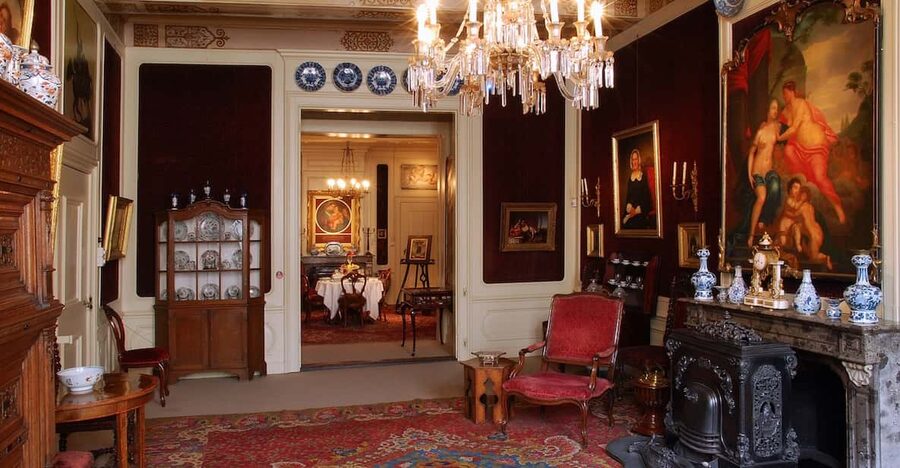
The Salon is likely to be the visual centre of your visit. It was richly furnished, and its ceiling carries the names of old masters Tetar van Elven admired and copied.
Abraham Gips, a Dutch painter who lived from 1861 to 1943, created the ceiling decoration. Raphael, Rubens, Rembrandt, and other admired artists are named there. The feature is unusual because it turns a ceiling into a record of artistic influences.
Look up before you settle into the room. In a house filled with furniture, ceramics, and paintings, it is easy to focus only on eye-level objects. The ceiling rewards a slower glance and helps explain Tetar van Elven’s artistic loyalties.
The Salon also gives you a sense of social life in a 19th-century canal house. It was not a bare working space. It was a room designed for display, conversation, and receiving visitors. The furnishings and decoration show how art and status could be presented together.
This is one of the strongest reasons to choose the museum over a general Delft sightseeing ticket. You are not merely seeing old objects. You are seeing how they worked together inside a lived-in interior.
Paintings, portraits, and the working studio
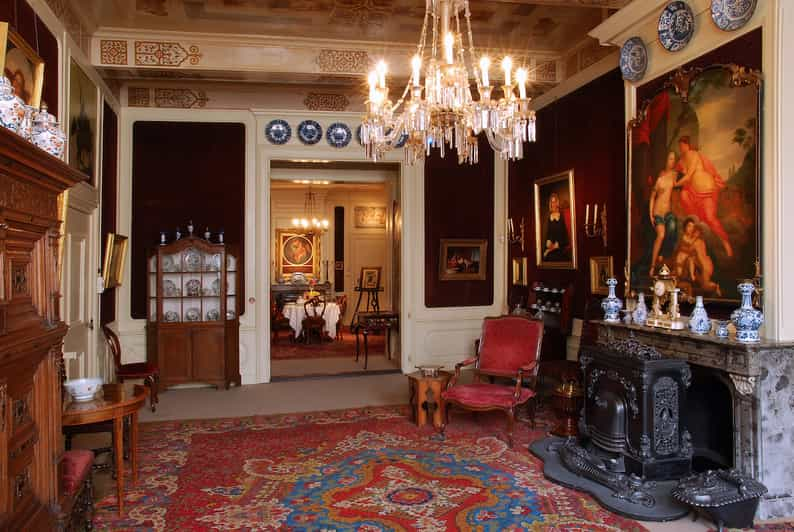
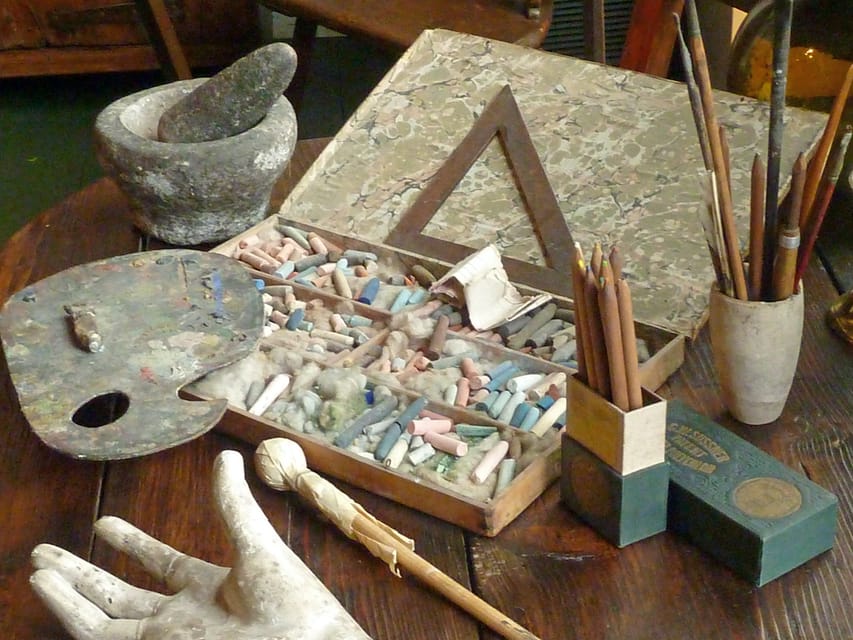
The collection includes portraits and other paintings by Tetar van Elven and by artists of his time. The museum also preserves his studio with personal possessions.
The studio should appeal to you if you want a closer look at the practical side of artistic work. It connects the public image of the painter with the private place where he worked. The supplied information does not specify every tool or object on display, so you should expect a personal workspace rather than a fully described artist’s workshop experience.
That distinction is important. This is not promoted as a hands-on art class, and the ticket does not include a painting activity. You come to observe the setting, the objects, and the relationship between the artist’s work and his home.
The portraits and paintings also help place Tetar van Elven among his contemporaries. Because his collection includes both his own work and the work of others, you get more than a single-artist display. The emphasis remains personal and domestic, not encyclopedic.
I would give the paintings time, but I would not visit expecting a major national collection. The real strength is the combination of pictures with the preserved house.
Other collections worth booking around the Netherlands:
- Amsterdam: Van Gogh Museum Ticket
★ 4.7 · 52,054 reviews - Moco Museum Amsterdam Entrance Tickets with Banksy & More
★ 4.4 · 10,088 reviews - Amsterdam: The Upside Down Museum Entrance Ticket
★ 4.4 · 9,506 reviews - Amsterdam: Red Light Secrets Museum Entry Ticket
★ 4.2 · 5,722 reviews
Antique books, Delft blue, and Far Eastern porcelain
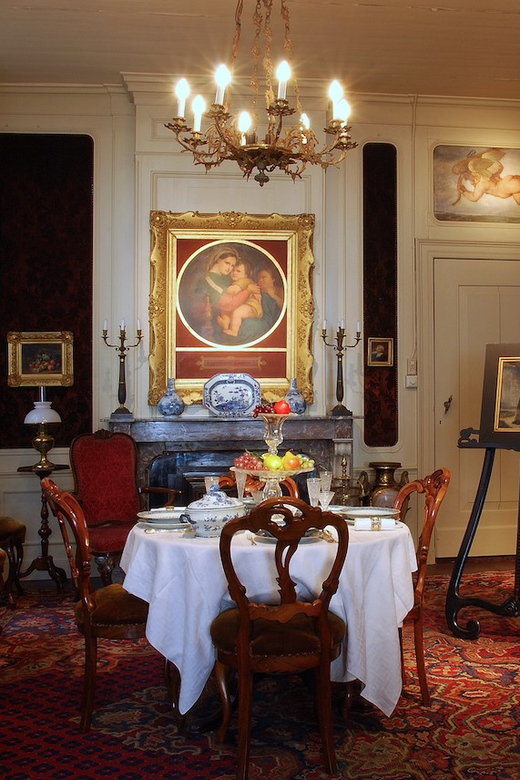
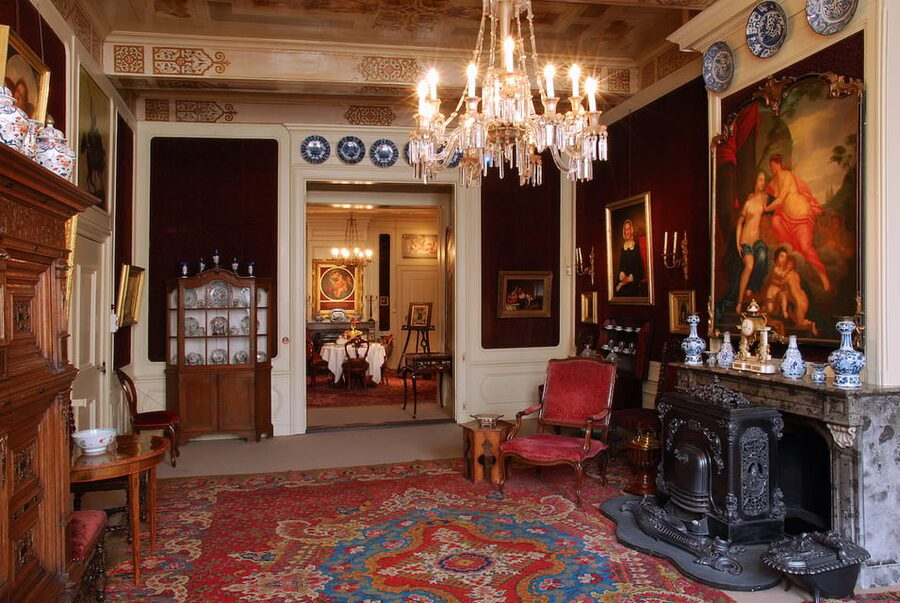
Tetar van Elven collected art, antiques, Delft blue pottery, and porcelain from the Far East. Cabinets in the house hold an extensive pottery and porcelain collection.
For many people, this will be the museum’s most distinctive feature. Delft blue pottery connects the home to the city’s best-known decorative tradition, while the Far Eastern porcelain shows the broader collecting interests of a 19th-century Dutch household.
The cabinets are also a reminder that collecting was not limited to paintings. Ceramics could be studied, displayed, and discussed as art. Their presence alongside antique books and furniture creates a fuller picture of the owner’s taste.
You do not need to be a specialist to enjoy this section. Notice the variety of forms, patterns, and display methods. The pieces are not presented as isolated objects in a modern white room. They belong to a house where the collection formed part of everyday surroundings.
The library adds another layer. Its antique books reflect Tetar van Elven’s intellectual interests and his connection to older artistic traditions. Together, the library, studio, and cabinets make the house feel like a working artist’s home rather than a decorative showroom.
Why the original furnishings matter
The most valuable part of the visit is the sense of continuity. Original furniture and household objects remain in the place where Tetar van Elven and his wife lived.
A museum can preserve an object, but a preserved room tells a larger story. The position of a chair, the arrangement of a cabinet, and the relation between a painting and a piece of pottery can show how people actually used their surroundings. Here, the interior is part of the collection.
The house’s interior is described as an authentic example of a 19th-century artist’s home in the Netherlands. That makes the visit especially useful if you are already exploring Delft’s canals and historic buildings. You are not just looking at the city from outside. You are seeing one household from within.
A guide or greeter may be available in English or Dutch. The exact guide’s name is not provided, so you should not book expecting a particular person. A guided explanation can add useful context, especially in the Salon and around the collections, but the museum’s strongest evidence is visible in the rooms themselves.
How much time and money should you allow?
The ticket costs $14 per person and is valid for one day. That price is reasonable if you value historic interiors, personal collections, and small museums with a clear identity.
I would compare it with the cost of a standard sightseeing stop in Delft. The museum does not offer a long route or a packed program, but it gives you access to a preserved house that you cannot understand fully from the street. The value comes from authenticity and detail, not duration.
The available information does not set a precise visit length. Plan around your own pace. You can make a short visit focused on the Salon, studio, and ceramics, or spend longer examining the books, paintings, and furnishings.
Food and drinks are not included. That is not a serious drawback because the ticket is for the museum itself, and the experience is easy to combine with other time in central Delft. Keep your café stop separate and use the museum as a focused cultural visit.
The ticket can be cancelled up to 24 hours in advance for a full refund. You can also reserve now and pay later, which is useful if your Delft plans are still shifting. Check availability for the starting time because the ticket is described as valid for one day rather than as an open-ended pass.
Who will enjoy this museum most?
I would choose this museum if you like:
- Historic houses with original interiors
- Artists’ homes and personal collections
- Delft blue pottery and porcelain
- Antique furniture and books
- Small museums with a strong local connection
- Art history presented through daily life
It is a particularly good match for anyone who has already seen Delft’s main streets and wants a quieter, more intimate stop. The house gives you a different view of the city than a canal walk or a large public collection.
Families may enjoy the visual variety, especially the ceiling, ceramics, and furnished rooms. Still, the museum’s appeal depends on curiosity about objects and interiors. If your group needs constant activity or interactive displays, this may feel too restrained.
Art students and people interested in drawing will find a useful connection to Tetar van Elven’s teaching role at the Polytechnic School. The museum does not promise a formal lesson, but the studio, copies of old masters, and painted ceiling create plenty to consider.
What may not suit you
The museum is specialized. If you want a broad survey of Dutch art, this is not the right ticket. Its focus is one artist, one house, his collections, and the era in which he lived.
You should also keep expectations in check about size. A one-day ticket does not mean you need a whole day inside. It means you have access during the valid period. The museum works well as one carefully chosen stop among Delft’s other sights.
The available details do not specify accessibility features, step-free access, toilet facilities, photography rules, or the exact visit route. If any of those points affect your plans, confirm them with the museum before booking.
The guide language is listed as English and Dutch. If you need another language, do not assume it is available. The exact starting times also require a check before you commit to a particular day.
My verdict on the $14 ticket
I would book the Paul Tetar van Elven Museum if you want to see Delft through a personal, domestic lens. The original furniture, artist’s studio, painted ceiling, antique books, Delft blue pottery, and Far Eastern porcelain give the visit a strong sense of place.
The museum’s best feature is its unity. The building, the rooms, the art, and the collections all belong to the same story. You are not just checking off another gallery. You are entering the world that Tetar van Elven deliberately left behind.
At $14, it offers good value for visitors who care about historic interiors and collecting. Skip it if you want a large museum, famous masterpieces by the dozen, or hands-on entertainment. Book it if the thought of an artist’s house preserved with its contents sounds more appealing than another grand exhibition hall.
FAQ
Where is the Paul Tetar van Elven Museum?
The museum is on Koornmarkt in the centre of Delft, in South Holland, Netherlands.
What does the ticket include?
The ticket includes entry to the Museum Paul Tetar van Elven.
How much does admission cost?
The listed price is $14 per person.
How long is the ticket valid?
The ticket is valid for one day. You need to check availability for the starting time.
Is food or drink included?
No. Food and drinks are not included in the ticket.
What languages are available?
English and Dutch are listed as the available languages for the host or greeter.
Can I cancel my booking?
Yes. You can cancel up to 24 hours in advance for a full refund.
Can I reserve now and pay later?
Yes. The booking option allows you to reserve your place and pay later.
What can I see inside the house?
You can see the furnished canal-house rooms, paintings, portraits, a painted Salon ceiling, the artist’s studio, a library with antique books, and collections of antiques, Delft blue pottery, and porcelain from the Far East.
Just added in the Netherlands
- Private Tour of The Hague, Delft and Rotterdam with Lunch★ 5.0 · 3 reviews
- Historical The Hague: Private Tour with Local Guide★ 5.0 · 6 reviews
- The Blue’s Clues in Delft Exploration Game and Tour★ 3.5 · 10 reviews
- The Hague Self-Guided Audio Tour★ 5.0 · 3 reviews
- Discover Historical Delft with an Audio Guide★ 5.0 · 3 reviews
- Taking Pictures in the Tulip Field at De Tulperij★ 4.5 · 35 reviews
- Delft 2-Hour Walking Tour | Discover The City With A Local★ 4.5 · 8 reviews
- 90 minutes Self Guided Walking Tour with puzzles in Den Haag★ 4.5 · 7 reviews
Delft Tours, compared.



Rotterdam, Delft, the Hague, Madurodam from Amsterdam
Read our review →
Rotterdam, Delft and The Hague Small Group Tour from Amsterdam
Read our review →


The Hague, Delft and Rotterdam Small-Group Tour (Max. 8 People)
Read our review →
Browse the lists this tour appears in