
Reviewed · FOOD TOURS
Amsterdam : Guided Cultural Food Tour
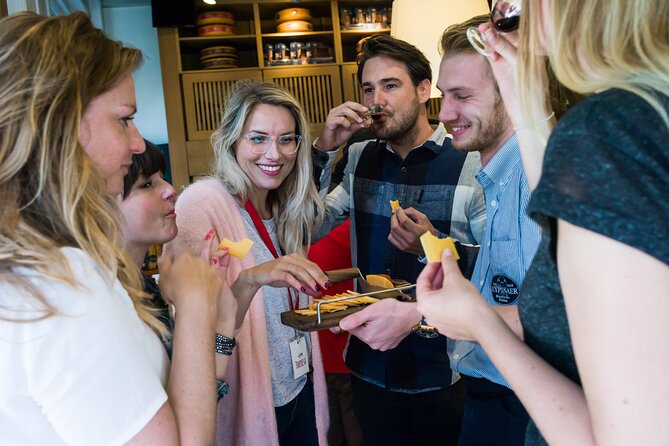
Amsterdam’s story comes alive through its food and streets on this 2.5-hour walking tour from the National Monument to Spui. You move from royal power and Golden Age trade to colonial criticism, the Jordaan, and Amsterdam’s most famous lanes, with snacks along the way. The small group, capped at 15 people, gives the guide room to answer questions and keep the walk personal.
I like the way the route links famous sights with less obvious subjects, especially Multatuli and the darker side of Dutch wealth. I also like the practical finish at Spui, a useful place for continuing your afternoon. The main drawback is price: at $102.41, this is a costly short walk, particularly since the food is described as snacks and major attraction admissions are not included.
Key points to know before you book
- A compact route through central Amsterdam: You see Dam Square, the Royal Palace, Oude Kerk, Beurs van Berlage, the Jordaan, Anne Frank House, Westerkerk, and Begijnhof.
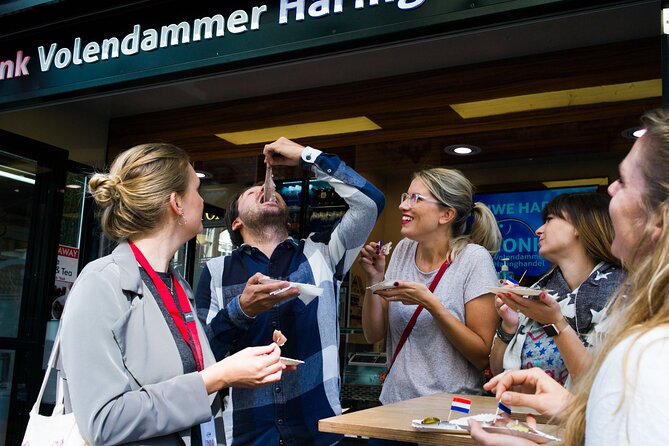
- Food is part of the lesson: Snacks add a local taste to stories about trade, monarchy, religion, and city life.
- Small groups matter here: The maximum of 15 people makes it easier to hear the guide and ask questions.
- The route covers serious subjects: Expect discussion of World War II, the red light district, colonialism, and Multatuli.
- No major attraction entry is included: The tour takes you past or near important sites, but you should not expect admission to the Anne Frank House, Westerkerk, or Begijnhof.
- A useful first-day orientation: The route ends at Spui, and you can walk back toward Dam Square with the guide if needed.
From a 13th-century settlement to Dam Square
Meet at the National Monument on Dam Square, where the tour begins with Amsterdam’s early story. The city was established in the 13th century, and this opening gives you a quick sense of how a small settlement grew into the Dutch capital.
The National Monument also sets the tone for the tour’s attention to memory. You will hear about the victims of World War II while standing in one of the city’s busiest public spaces. That contrast matters. Amsterdam is not presented only as pretty canals and old houses. The city’s past includes grief, power, money, and difficult choices.
Dam Square is the natural starting point because it brings several parts of Amsterdam together. You learn how the city changed from a small fishing village into a major commercial center, then connect that growth to the Royal Palace and the monument nearby.
The actual stop at Dam Square is brief, listed at about five minutes. That is enough for orientation, but not enough for a long lecture or detailed independent exploration. I would treat this part as a welcome to the city rather than a full square tour.
More Food Tours in Amsterdam
- 10 Tastes of Amsterdam: Food Tour by UNESCO Canals and Jordaan
★ 5.0 · 3,020 reviews - Eating Amsterdam: Food Tour & Canals Cruise
★ 5.0 · 496 reviews - Amsterdam’s Market Street Food Tour with Streat Bites
★ 5.0 · 398 reviews
The Royal Palace and Amsterdam’s changing power
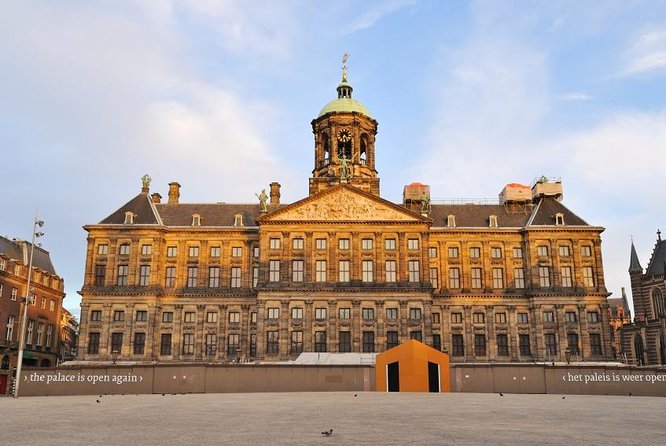
The Royal Palace gives the route a clear look at the Netherlands’ royal past. The guide explains the role of the monarchy and how that institution fits into contemporary Dutch life.
This is a useful stop because Amsterdam can seem like a city built only around trade and canals. The palace reminds you that civic power and royal power developed side by side. You get an outside view and historical context, but admission is not listed as part of the tour. If you want to see the palace interior, plan that separately.
The stop lasts about 10 minutes. That keeps the tour moving, which is important on a route with 12 stops, but it also means you should not expect an extended palace visit. The value here is the explanation, not an indoor palace experience.
Oude Kerk and the origins of the red light district
At Oude Kerk, Amsterdam’s oldest church, the tour shifts from monarchy to religion and urban life. The church is tied to the early development of the city, and the guide explains how the red light district was established in the 14th century.
This is one of the more revealing parts of the walk. Amsterdam’s red light district is often treated as a modern curiosity, but this stop places it in the city’s medieval growth. You get a clearer idea of how commerce, sailors, religion, and city expansion became connected.
The visit is planned for about 10 minutes. You should expect an explanation near the church rather than a full interior tour. Admission is not included, so anyone hoping to go inside should make separate plans.
Beurs van Berlage and the money behind the Golden Age

The Beurs van Berlage is the place to focus on trade. Here you learn how Amsterdam grew from a modest town into one of the world’s wealthiest cities during the Golden Age.
The building itself gives the subject weight. It is not just another old facade. It represents the systems of buying, selling, shipping, and finance that helped shape Amsterdam. The tour uses this stop to connect architecture with economics, which is more useful than simply pointing out a handsome building.
The stop lasts around 15 minutes, one of the longer pauses on the route. That suggests the guide has time to explain the city’s commercial rise rather than rushing past it. If economic history usually feels dry to you, the food element helps keep the subject grounded in daily life and trade.
Other tastings and food walks around Amsterdam:
- Amsterdam Food Tour of 10+ Local Classic Tastings in Jordaan Area
★ 5.0 · 334 reviews - Amsterdam Private Food Tour with Local Including 6 or 10 Tastings
★ 4.5 · 184 reviews - Amsterdam: Guided Cultural Food Tour in German or English
★ 4.8 · 126 reviews - Private Amsterdam Red Light District and Food Tour (TOP RATED)
★ 4.5 · 124 reviews
Magna Plaza and Amsterdam’s architectural layers

Magna Plaza offers a change of pace. The former post office is known for its impressive architecture, and the tour uses it to show another layer of Amsterdam’s built environment.
The stop is short, about five minutes. You will get context and a chance to look at the building, but not a long architectural study. That is fine for a walking orientation. The route is trying to show you a broad slice of Amsterdam, not spend an hour inside one landmark.
I find stops like this useful because they help you notice how the city reuses old buildings. A former post office can become part of modern city life without losing its visual connection to the past.
Multatuli and the uncomfortable side of Dutch wealth

The statue of Multatuli brings the tour into more serious territory. You learn about one of the Netherlands’ important authors and the criticism surrounding Dutch colonialism.
This subject adds needed balance to the Golden Age story. Amsterdam’s wealth did not come only from clever local trade. Colonial systems and exploitation also played a part, and the tour makes room for that difficult discussion.
You should expect a short introduction rather than a full literary or colonial history lesson. The stop takes about 10 minutes, giving the guide enough time to explain why Multatuli matters and how his work challenged the society around him.
I especially like this inclusion because it keeps the tour from becoming a polished postcard version of Amsterdam. You are shown the city’s success, then asked to consider the human cost behind some of it.
The Jordaan, where the route slows down

The Jordaan is one of the most appealing parts of the walk. Its smaller houses, local character, and picturesque streets offer a strong contrast to the grand scale of Dam Square and the Royal Palace.
Here, the guide explains how the neighborhood developed and how Amsterdam’s familiar narrow houses came to define the city. The scheduled 15-minute stop gives you time to notice the details without turning the tour into a long neighborhood wander.
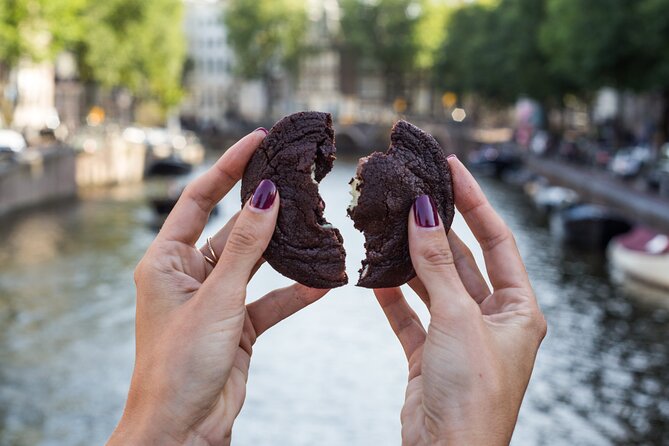
The Jordaan is also where the food-and-culture idea works particularly well. Snacks become a way to pause and connect history with ordinary city life. You are not simply hearing about institutions and trade. You are walking through a neighborhood shaped by residents, homes, shops, and daily routines.
Keep your expectations sensible. This is still a guided route, not a free afternoon in the Jordaan. You will see only part of the neighborhood, and the tour cannot cover every lane or local business in a single visit.
Negen Straatjes and practical city advice
The Nine Streets, or Negen Straatjes, is Amsterdam’s well-known shopping area. The guide points out the district and gives tips for bars, restaurants, and shopping.
This stop has practical value. A good city walk should help you decide where to return later, and this is the point where you can collect ideas for your own evening or next day. The stop lasts about 10 minutes, so bring a note-taking app if you want to remember recommendations.
The area is attractive, but it is also popular. Do not expect a quiet backstreet experience at every moment. The benefit is variety: independent shops, places to eat, and attractive lanes all close together.
Anne Frank House and Westerkerk from the outside
The route passes the Anne Frank House and gives you a brief look at the building along with an account of Anne Frank’s moving story. The stop is about five minutes, and admission is not included.
That distinction is important. This tour does not replace a visit inside the Anne Frank House, and it does not promise entry. Tickets for that museum have their own arrangements, so you should plan separately if it is a priority.
Nearby, Westerkerk provides another short stop. You see one of Amsterdam’s largest and most beautiful churches, again without an included admission. The timing is about five minutes, so this is mainly an exterior introduction and a chance to place the church within the surrounding neighborhood.
These two stops are meaningful, but they are necessarily brief. The route has many subjects to cover, so you get context rather than a full museum or church visit.
Begijnhof and the finish at Spui
The final major stop is Begijnhof, a quiet historic courtyard with a concealed church. The guide invites you to look for the hidden church, which gives the stop a small sense of discovery without requiring a long detour.
The visit lasts around 10 minutes. You should be prepared for a short guided look rather than a detailed architectural tour. As with the other stops where admission is not included, the focus is on seeing the place and hearing its story.
The walk ends at Art Amsterdam Spui, at Spui Square. This is a convenient finish because you are still in central Amsterdam, with the option to walk back toward Dam Square alongside the guide.
I like this ending more than a return to the starting point. It leaves you in a part of the city where you can continue exploring on your own. The guide’s final advice may also help you choose a cafe, meal, or further walk, though the tour does not include a separate meal.
What the $102.41 price gets you
At $102.41 per person, this is not a budget introduction to Amsterdam. The price includes the 2.5-hour guided walk, snacks, and a €1.50 tourist tax. It does not include admission to the Royal Palace, Oude Kerk, Anne Frank House, Westerkerk, or other attractions.
The value depends on how much you want from a guide. If you only want to see Amsterdam’s main sights from the outside, you can walk much of this route on your own for free. You would, however, lose the connected explanation about the city’s founding, trade, monarchy, colonial past, and neighborhoods.
The small group helps justify some of the cost. With no more than 15 people, the guide can respond to questions and avoid the feel of a large crowd. The strongest praise for the experience focuses on the guide being charismatic, friendly, easy to understand in English, and willing to answer questions. Those qualities matter on a history-and-food walk because the experience depends on conversation, not just movement from one landmark to another.
I would book this for a first or second day in Amsterdam, when you want a clear mental map and ideas for later. I would not choose it if your main goal is a full meal, museum entry, or a slow neighborhood stroll.
Timing, group size, and practical comfort
The walk lasts about two and a half hours and covers 12 stops. That is a brisk schedule. You will move through central streets, pause for explanations, and continue before any one sight receives too much time.
The tour is offered in English and uses a mobile ticket. It begins at the National Monument, Dam, 1012 JS Amsterdam, and ends at Spui 20HS, 1012 XA Amsterdam. Public transportation is nearby, and service animals are allowed.
Most people can take part, but you should be comfortable walking for the full duration and keeping pace with the group. The experience requires good weather, so poor conditions can lead to a new date or a full refund. If the minimum group size is not met, you are offered another option or a refund.
Free cancellation is available until 24 hours before the start time. After that point, the payment is not refunded, and changes are not accepted. The cut-off uses local Amsterdam time.
Who will get the most from this walk
This experience suits you if you want:
- A guided first look at central Amsterdam
- History mixed with snacks rather than a stand-alone food tasting
- A small English-speaking group
- Context for famous places you might otherwise pass quickly
- A route that includes both attractive neighborhoods and difficult subjects
- Restaurant, bar, and shopping ideas for later
It may not suit you if you want a long list of food samples, generous portions, museum entry, or a relaxed pace. The food is part of the experience, but the tour is built around culture and history first.
Families, couples, solo visitors, and history fans can all use the route as an orientation. The tone appears friendly and open to questions, which is useful if you prefer an informal guide rather than a formal lecture.
Should you book Amsterdam’s Guided Cultural Food Tour?
Book it if you want a compact, thoughtful introduction to Amsterdam and value a guide who can connect snacks with the city’s past. The route includes the Royal Palace, Oude Kerk, Jordaan, Nine Streets, Anne Frank House, Westerkerk, and Begijnhof, while also making room for colonial history and Multatuli.
Skip it if $102.41 feels high for a short walk with snacks and no included admissions. In that case, use the route as your own walking plan and spend the savings on a museum or meal.
For the right reader, the best feature is not any single landmark. It is the way the guide links Amsterdam’s pretty streets to trade, monarchy, religion, war, and colonialism. That gives you more than a quick sightseeing loop and leaves you better prepared to explore the city on your own.
FAQ
How long does the Amsterdam Guided Cultural Food Tour last?
The tour lasts approximately 2 hours and 30 minutes.
What is the price of the tour?
The price is $102.41 per person.
What language is the tour offered in?
The tour is offered in English.
Where does the tour begin?
It begins at the National Monument on Dam Square, Amsterdam, 1012 JS, Netherlands.
Where does the tour end?
The tour ends at Art Amsterdam Spui, Spui 20HS, 1012 XA Amsterdam. You can follow the guide back toward Dam Square if you wish.
How many people can join the tour?
The tour has a maximum of 15 travelers.
Are attraction admissions included?
No. Admission is not included for the Anne Frank House, Westerkerk, or other attractions along the route. The tour includes the guided walk, snacks, and a €1.50 tourist tax.
Is cancellation available?
Yes. You can cancel up to 24 hours before the start time for a full refund. Cancellations or changes made less than 24 hours before the start time are not refunded or accepted.
What happens if the weather is poor or the minimum group size is not reached?
If poor weather causes a cancellation, you are offered a different date or a full refund. If the minimum number of participants is not met, you are offered a different date or experience, or a full refund.
Just added in Amsterdam
- Guided Day Trip – Volendam, Zaanse Schans, Marken & Edam★ 4.0 · 232 reviews
- Private Tour Zaanse Schans Windmills and Volendam in Jaguar★ 5.0 · 10 reviews
- Zaanse Schans and Giethoorn Unique Day Trip with Boat Cruise★ 4.5 · 17 reviews
- Half-Day Private Guided Sightseeing Tour of Zaanse Schans★ 5.0 · 14 reviews
- Zaanse Schans Private Tour Windmills★ 5.0 · 18 reviews
- Private bike tour: Hidden gems around Amsterdam and surroundings★ 5.0 · 4 reviews
- Bike tour in Amsterdam with an Italian guide★ 5.0 · 15 reviews
- Amsterdam Sightseeing Tour + Hidden Gems + Tastings + PDF guide★ 5.0 · 35 reviews
Food Tours, compared.
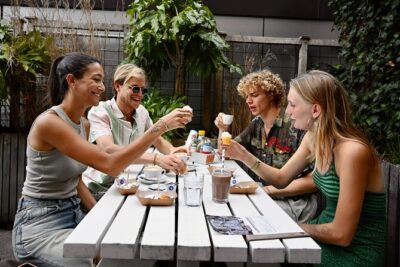
10 Tastes of Amsterdam: Food Tour by UNESCO Canals and Jordaan
Read our review →
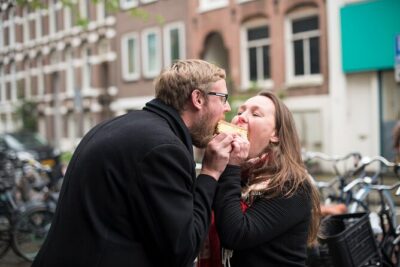
Amsterdam’s Market Street Food Tour with Streat Bites
Read our review →
Amsterdam Food Tour of 10+ Local Classic Tastings in Jordaan Area
Read our review →
Amsterdam Private Food Tour with Local Including 6 or 10 Tastings
Read our review →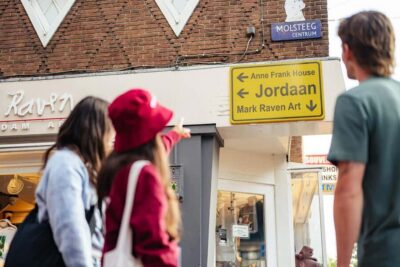
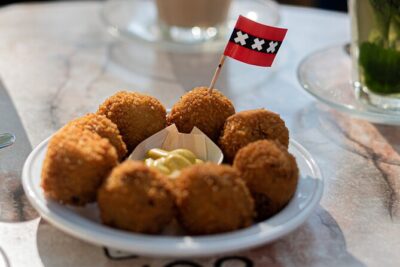
Private Amsterdam Red Light District and Food Tour (TOP RATED)
Read our review →
Eating Amsterdam: Albert Cuyp Market & The Pijp Food Tour
Read our review →Browse the lists this tour appears in