
Reviewed · WALKING TOURS
Amsterdam: Historic Walking Tour
Amsterdam makes a strong first impression, but its old center makes more sense when someone explains what you are looking at. This two-hour walking tour links Dam Square, Nieuwe Kerk, old canals, courtyards, architecture, and present-day café life into one compact introduction. I like the local focus, and I like that guides such as Arre have adapted the route to the group, including its age, size, and questions.
The possible catch is simple: two hours goes quickly in a city with seven centuries of stories and more than 100 canals. You will see many important places from the outside, but this is not an entrance tour for museums or churches. Food and drinks are also not included, so plan your own café stop afterward.
Key points at a glance
- A useful first walk: Start near Amsterdam Centraal and reach the city’s historic core on foot.
- Dam Square with context: See the palace, first built as Amsterdam’s city hall, and learn how the square developed.
- Canals and courtyards: Look beyond the postcard views for smaller spaces and local details.
- Big historical themes: Connect Amsterdam’s trade, banking, art, architecture, monarchy, and religious past.
- Guides who adjust the pace: Past guides have included Arre, James, Maria, Scarlet, and Aaron, with English and German available.
- Good value for an orientation: At $35 per person, the tour is most useful early in your stay, when every later walk becomes easier to understand.
Starting at Damrak 1 to 5
You meet in front of the main entrance of the Park Plaza Victoria Hotel at Damrak 1 to 5, 1012LG, Amsterdam. This is a practical starting point near the station and at the edge of the historic center, so the walk begins in a part of town you are likely to pass soon after arriving.
The location also gives the guide a natural way to explain Amsterdam’s shape. From here, you are close to the Damrak, the main route toward Dam Square, and the older city center. I like meeting points that help you get oriented instead of sending you to an obscure side street.
Allow enough time to find the hotel entrance. The tour is on foot from the start, and there is no included transport. Comfortable shoes matter more than fancy gear. Amsterdam’s center is easy to cover by walking, but you will spend the full two hours on your feet.
The tour runs in English or German. The exact starting time depends on availability, so check the schedule before you book. Since the walk is limited to two hours, arriving early helps you get the full route rather than losing time at the meeting point.
Other guided walks around Netherlands:
- Anne Frank’s Story – Guided Walking Tour through Amsterdam
★ 5.0 · 11,619 reviews - Amsterdam: Life of Anne Frank and World War II Walking Tour
★ 4.8 · 10,467 reviews - Absolutely Amsterdam – the Essential Introductory Walking Tour
★ 5.0 · 3,629 reviews
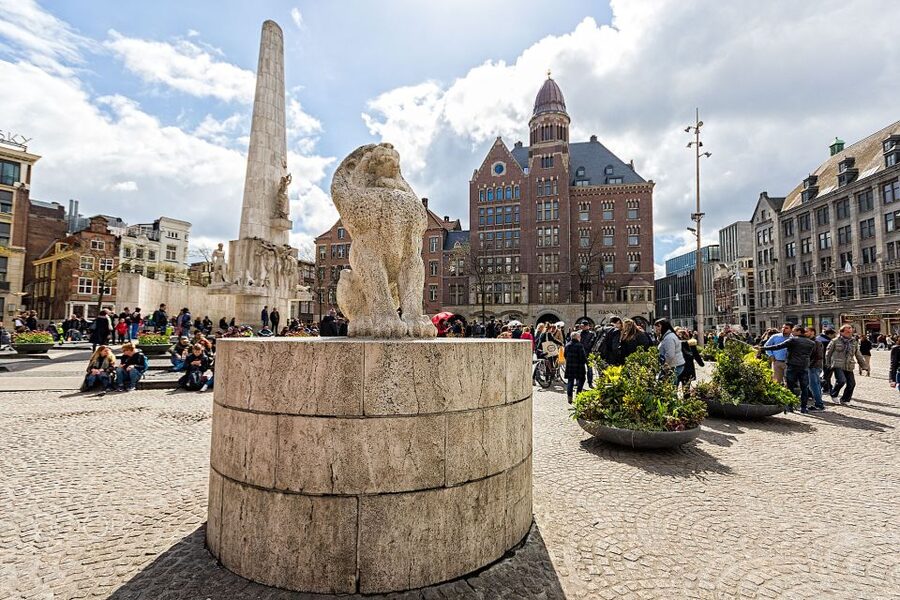
Dam Square and the former city hall
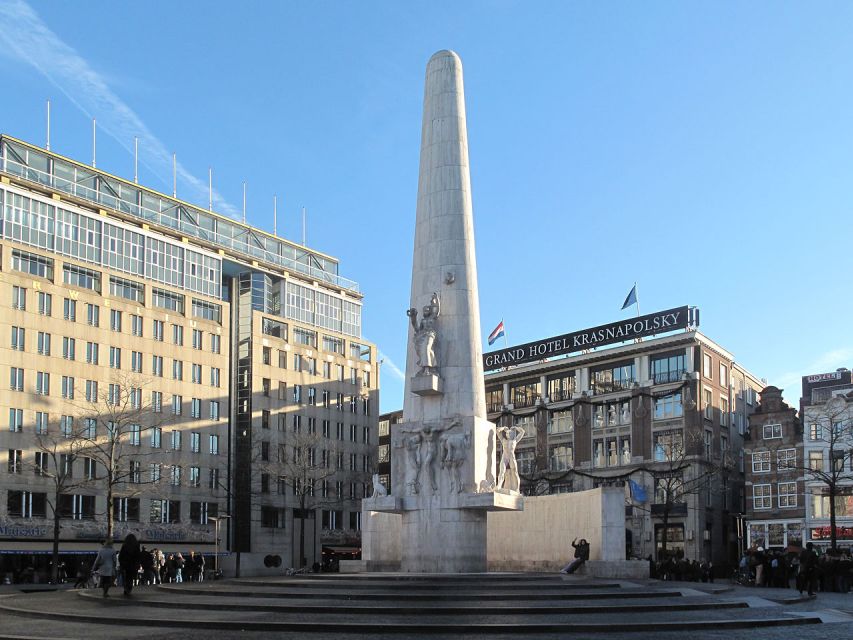
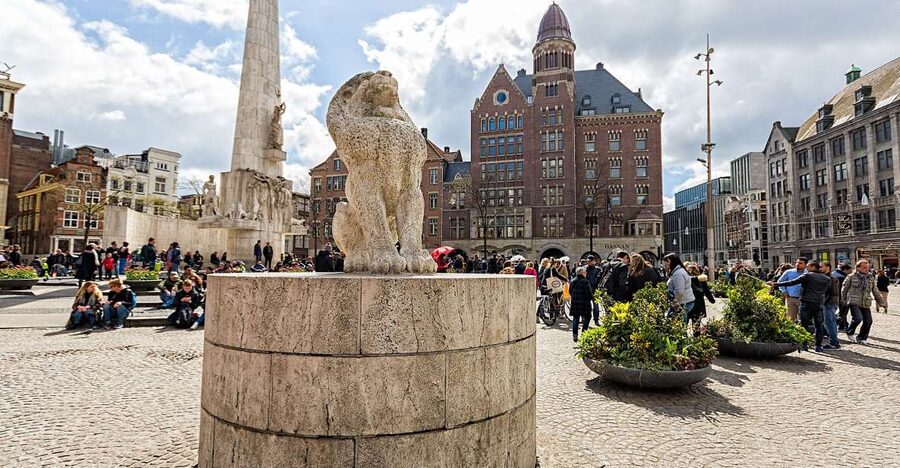
Dam Square is one of the essential places to understand Amsterdam. The palace here was originally built as the city hall, a detail that changes how you read the building. It was not simply a royal setting from the beginning. It represented the wealth and confidence of a trading city.
The guide uses the square to explain the growth of Amsterdam and the later connection with the Dutch Royal Family. That shift from civic building to royal palace gives you a clear example of how power changed hands and how the city’s public spaces gained new meaning.
You should expect to see the palace from the outside during this walking tour. The supplied details do not promise an interior visit, and the price does not include admission to attractions. That is not a flaw if you want a city orientation, but it matters if palace interiors are your main goal.
Dam Square can also be busy. A guide helps you focus on the buildings and stories instead of simply crossing a crowded open space. I find that useful here because the square can look like a general meeting point until someone explains its role in the city.
Nieuwe Kerk and Amsterdam’s religious past
The walk passes Nieuwe Kerk, one of the city’s best-known historic churches. The tour also covers older Dutch churches and discusses religious life, including the Catholic background of many local families and the country’s connection with monarchy.
You are not promised a church entrance, service, or extended interior visit. Instead, the value comes from placing the church in the wider story of Amsterdam. Religion, civic power, and royal ceremony overlap here, and a short explanation can make the surrounding streets feel less like a collection of old façades.
This part suits you if you enjoy seeing how a city’s buildings reveal its past. You will get more than dates and names, with attention to how Amsterdam developed its own culture. The guide can also answer questions, which helps if you want to spend more time on church history, the monarchy, or daily life.
The pace may feel brisk if you want long stops at each building. That is the tradeoff of a two-hour city walk. You cover more ground, but you do not linger at every sight.
The old post office and the changing city center
The former main post office is another useful stop because it shows how the center kept adapting to modern needs. The building belongs to a later phase of Amsterdam’s public life, and its inclusion keeps the tour from becoming a walk only through palaces and churches.
The guide connects the building and nearby streets with Amsterdam’s broader development. You hear about architecture, public institutions, trade, and the way the center functions today. This mix is one of the tour’s strengths. You are not only looking backward. You are also learning how the same streets serve present-day residents, cafés, bars, restaurants, and shoppers.
The walk’s historical range reaches from the 16th through the 18th centuries, when Amsterdam played a major role in international banking, trade, art, and architecture. Those subjects can sound dry in a textbook, but they become more useful when tied to the streets around you.
I would pay attention to the guide’s examples rather than trying to memorize every date. The purpose is to understand why Amsterdam looks and feels the way it does. You leave with a framework that makes later visits to museums, canals, and historic buildings more rewarding.
A few more things to do in Netherlands worth a look
- Amsterdam Food and Cultural Tour with Tastings
★ 5.0 · 2,442 reviews - Rotterdam: Kinderdijk UNESCO World Heritage Entry Ticket
★ 4.6 · 1,477 reviews - The Hague: Hop-on Hop-off Old-Fashioned Heritage Tram Tour
★ 4.4 · 1,083 reviews - Rotterdam: Harbor Cruise on a Historic Ship
★ 4.2 · 812 reviews
Canals, bridges, and the city’s working past
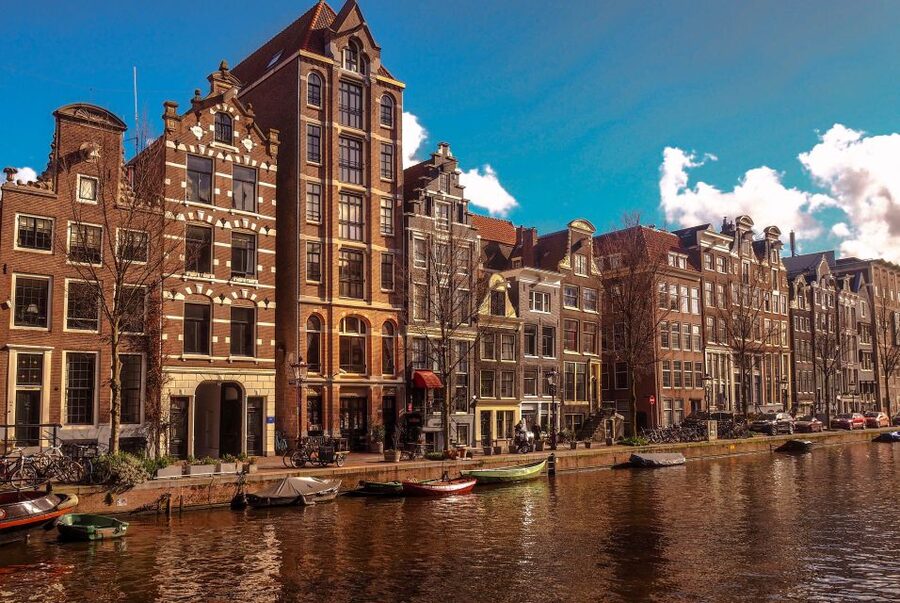
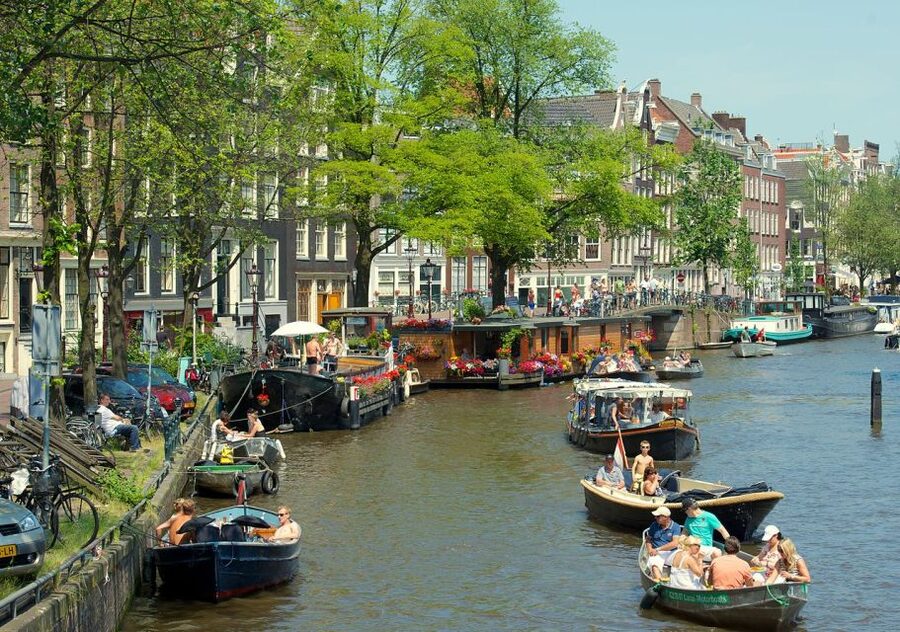
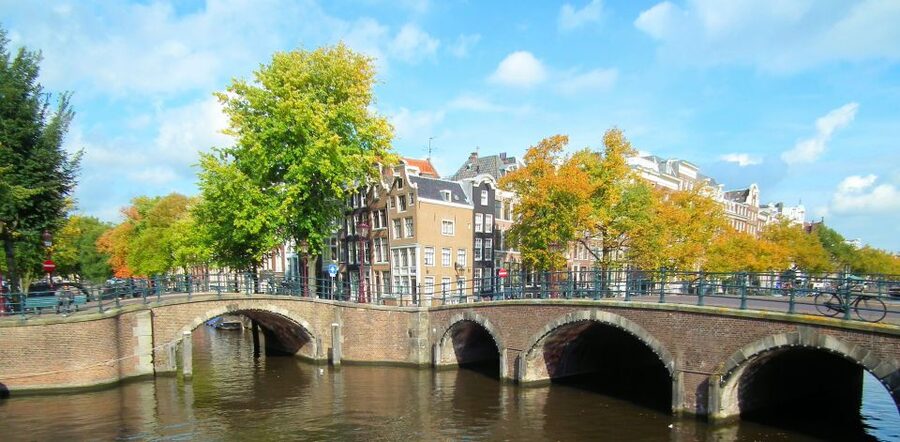
Amsterdam has more than 100 canals and more than 1,000 bridges. The tour does not attempt to cover all of them, of course, but the canal discussion gives you a better sense of why water shaped the city.
Canals were tied to movement, trade, land use, and the growth of the urban center. They are not just scenic strips for photographs. The guide explains the origins of the canal district and how Amsterdam’s position helped it grow into an international center.
This is where a local guide adds real value. You can walk beside a canal alone and appreciate the buildings, but it is harder to see the connection between water, commerce, architecture, and city planning without context. The tour supplies that thread while you are looking at the actual streets.
You will also see the city’s architecture along the route. The tour promises a look at both famous places and lesser-known corners, so the walk should include more than the most photographed canal views. Still, the exact route can change with the group and the guide, so do not expect a fixed list of every landmark in central Amsterdam.
Hidden courtyards and local details
The mention of hidden courtyards is important. Amsterdam’s main streets can be packed with activity, yet small enclosed spaces offer a quieter look at the city. These courtyards help you see that the historic center is not only grand public buildings and busy canals.
The route is designed to show places known locally, though no exact courtyard names are provided. That means you should treat them as a pleasant part of the walk rather than booking specifically for one named site.
I especially like this kind of stop on a first visit. A guide can point out details you might walk past, explain how a space fits into the neighborhood, and suggest areas worth returning to later. One guide may spend more time on architecture, another on social history, and another on present-day life.
The small-group experience described in the feedback also matters. Arre was praised for tailoring the sights and moving efficiently with a small group. Scarlet adjusted the walk to the group’s size and age. Those details suggest a personal format rather than a speech delivered without regard for the people listening.
From Amsterdam’s golden centuries to city life today
The historical core of the tour covers the 16th, 17th, and 18th centuries, when Amsterdam became important in international banking, trade, arts, and architecture. You will hear how those forces shaped the city, not simply that they happened.
A good guide can make this period feel connected to the streets under your feet. Wealth affected buildings. Trade affected the canals. Civic ambition affected public spaces. Religious and royal institutions added another layer. The walk brings these pieces together without requiring you to visit a museum first.
The tour also includes present-day Amsterdam. You learn about the café, bar, restaurant, beer, wine, and food culture that fills the center now. Food and drinks are not included, but that gives you freedom to choose your own stop later.
I would use the tour to mark places for a second visit. If a guide points out a café area, a historic street, or a courtyard you want to explore, write it down. The walk is short enough to leave you with time for your own plans, and the practical suggestions can help shape the rest of your day.
What the guide adds
The strongest part of this experience is the guide’s role. The tour uses a local, professional, licensed guide, and the available languages are English and German.
Several guide names appear in the experience record, including Arre, James, Maria, Scarlet, and Aaron. The guide you receive depends on the departure, so you should not book expecting one specific person unless the booking system confirms that name.
The feedback points to a consistent set of strengths: clear explanations, good answers to questions, engaging stories, humor, and the ability to adapt. James helped a new visitor get oriented and showed places that would have been easy to miss alone. Maria combined a friendly manner with clear explanations. Aaron made a first visit more interesting by connecting the sites through stories.
That range matters because walking tours can vary sharply by guide. Here, the format leaves room for questions and adjustment. If your group wants more on World War II, old churches, monarchy, architecture, or local culture, ask early. A two-hour walk cannot cover everything, but a responsive guide can shape the emphasis.
Is $35 a fair price?
At $35 per person, this is not the cheapest way to walk through Amsterdam, since you can explore the center without paying for a guide. The value comes from the explanation, the local route, and the time saved getting your bearings.
I think the price works best when you take the tour near the start of your stay. You learn where the main sights are, how the canals relate to the city, and which streets or courtyards deserve a second look. That can save you from spending your first day wandering without a plan.
The price does not include food, drinks, entrance tickets, or transport. If you want palace access, a church interior, or a museum visit, budget separately. This is an outdoor orientation walk, not an all-inclusive sightseeing package.
The rating of 4.7 from 16 reviews is encouraging, though the sample is small. The strongest pattern is not one particular landmark. It is the guide’s ability to provide context, answer questions, adjust the route, and make the two hours feel full.
Who should book this walk?
I would choose this tour if you are visiting Amsterdam for the first time, prefer walking to buses, and want the city explained in plain terms. It is also useful for anyone who likes history but does not want to spend the first day inside a museum.
Families and mixed-age groups may benefit from the adaptable format. Scarlet adjusted the walk to the age and size of the group, and Arre kept a small group moving while still covering a lot. Ask questions, since the tour seems well suited to conversation.
It may be less suitable if you want long interior visits, a food tasting, or a detailed specialist tour of one subject. It is broad rather than highly focused. You will see many places, but you will not spend an hour at one church or palace.
Book it early in your Amsterdam stay if possible. Then use the rest of your trip to revisit the places that caught your attention, try a café or restaurant you noticed, and explore the canals with a clearer sense of how the city grew.
Final verdict
I would book this $35 walking tour for a first look at Amsterdam’s historic center. Its best qualities are the licensed local guides, the mix of major sights and smaller corners, and the way it links canals, trade, monarchy, religion, architecture, and modern city life.
Choose it for orientation and context, not for admission to attractions or a slow, specialist study. If you want a friendly guide who can answer questions and adjust the emphasis, the format looks like a good fit. If your priority is food, museums, or palace interiors, use this as a starting point and plan those experiences separately.
FAQ
How long is the Amsterdam Historic Walking Tour?
The tour lasts two hours.
What is the price?
The price is $35 per person.
Where does the tour meet?
Meet in front of the main entrance of the Park Plaza Victoria Hotel at Damrak 1 to 5, 1012LG, Amsterdam.
Which languages are available?
The live tour guide is available in English or German.
What sights are included?
The walk includes Amsterdam’s historic center, Dam Square, the palace that was originally built as the city hall, Nieuwe Kerk, the former main post office, canals, historic architecture, and lesser-known courtyards and places.
Is food or drink included?
No. Food and drinks are not included.
Can I cancel the booking?
Yes. You can cancel up to 24 hours in advance for a full refund.
Can I reserve now and pay later?
Yes. The activity offers reserve now and pay later, so you can hold a place without paying at the time of booking.
Just added in Netherlands
- e-Scavenger hunt Roosendaal: Explore the city at your own pace★ 3.5 · 5 reviews
- 1 Hour of Whisky Distillery Experience★ 4.5 · 33 reviews
- Hattem’s Windmills, Bakeries and Ghosts: A Self-Guided Audio Tour★ 3.5 · 3 reviews
- e-Scavenger hunt Zwolle: Explore the city at your own pace★ 4.5 · 23 reviews
- e-Scavenger hunt Amersfoort: Explore the city at your own pace★ 4.0 · 18 reviews
- Discover Zutphen with a self-guided Outside Escape city game tour★ 4.5 · 4 reviews
- 3 hour boarding ticket Summer sailing from Wemeldinge (Zeeland)★ 5.0 · 17 reviews
- e-Scavenger hunt Deventer: Explore the city at your own pace★ 4.0 · 34 reviews
Walking Tours, compared.

Anne Frank’s Story – Guided Walking Tour through Amsterdam
Read our review →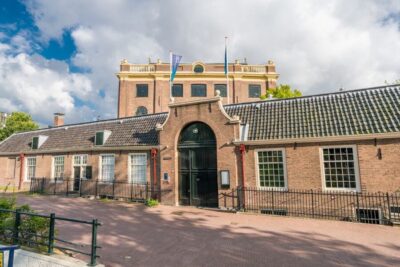
Life of Anne Frank and World War II Walking Tour
Read our review →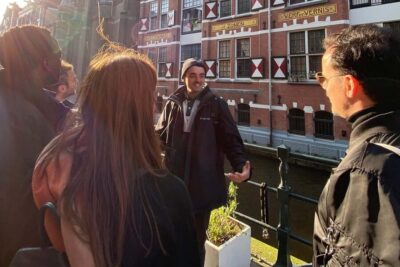

Anne Frank Walking Tour – Guided in EN/DE/IT/ES
Read our review →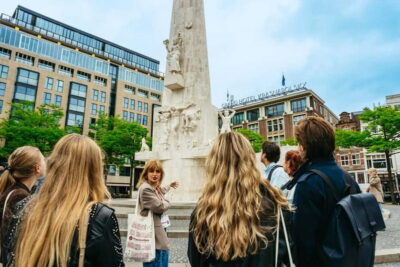

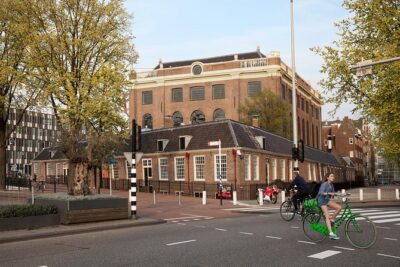
Anne Frank Walking Tour Amsterdam Including Jewish Cultural Quarter
Read our review →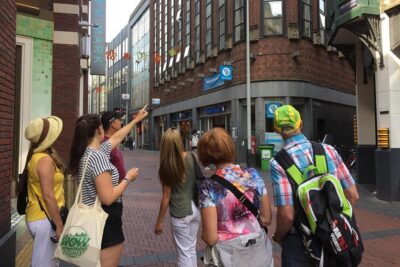
Amsterdam Highlights Walking Tour: Small Group Experience
Read our review →Browse the lists this tour appears in