
Reviewed · MUSEUMS
Amsterdam: National Maritime Museum Skip-the-Line Ticket
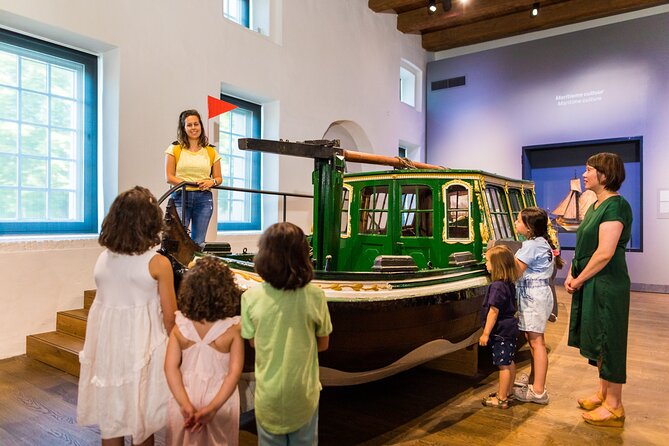
The best part of Amsterdam’s National Maritime Museum is the chance to walk through the replica VOC ship Amsterdam, built to represent an 18th-century East Indiaman. You can enter the captain’s quarters, squeeze into a sailor’s hammock, inspect the decks, and even see where a cannon would have been fired. It turns the country’s seafaring past into something you can physically explore.
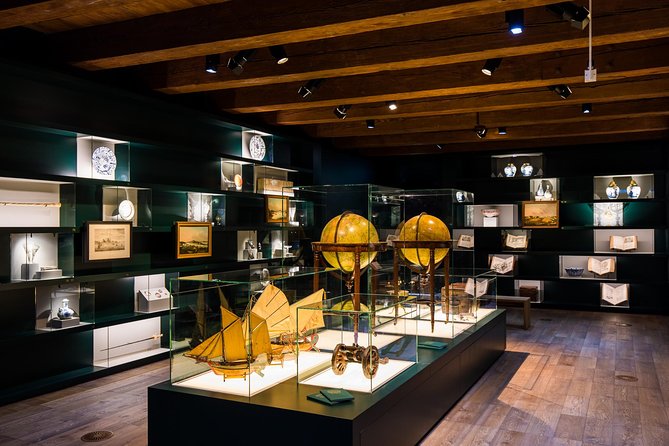
I like the museum’s balance of grand objects and hands-on displays. The mapmaking collection, carved figureheads, Royal Barge, ship models, and navigation instruments reward slow looking, while the VR ride and children’s activities keep the visit from feeling like a long row of glass cases. The 60-minute audio tour in 11 languages is another strong point.
The main thing to consider is time. There is more here than you can comfortably see in an hour, and the museum closes at 5:00 PM. At $24 per person, it is good value if you allow several hours, but less so if you are squeezing it between other short Amsterdam stops.
Key points to know before you go
- Board the 1749-style Amsterdam ship: Explore the decks, cabins, captain’s quarters, bow, and sailor sleeping areas on this full-size replica.
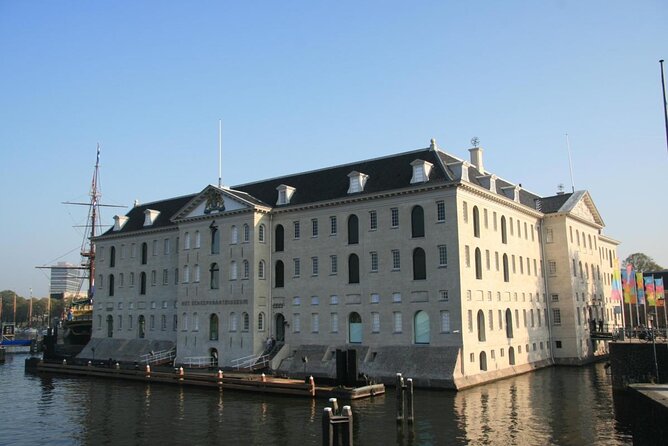
- See the former Admiralty storehouse: The museum occupies an Arsenal building from 1656, with a striking glass-covered inner courtyard.
- Use the included audio tour: Choose from Spanish, Chinese, Dutch, English, French, German, Italian, Japanese, Korean, Portuguese, or Russian.
- Expect more than old ships: Displays cover mapmaking, trade, naval warfare, colonialism, the slave trade, modern sailing, and life at sea.
- Make time for the VR ride: The bow of the ship provides a virtual trip over Amsterdam as it looked during the Dutch Golden Age.
- Plan for families: Several exhibitions use touch screens, videos, moving parts, sounds, and games aimed at younger children.
Entering Amsterdam’s 1656 Admiralty Arsenal

The National Maritime Museum is housed in the former Arsenal of the Admiralty, built in 1656. That setting matters. You are not entering a modern hall that happens to contain old objects. The building itself comes from the period when Amsterdam’s naval administration, trade, and shipping helped shape the city.
The museum’s covered inner courtyard is one of the first things worth seeing. A large glass roof covers the open space, and its design repeats the pattern of an old nautical map through about 1,200 pieces. It gives you room to pause before tackling the galleries, and it is also a useful meeting point if your group wants to spread out.
The courtyard can be visited free of charge from 10:00 AM to 5:00 PM daily. The ticket becomes more valuable when you use the indoor collections, ship, audio tour, and interactive exhibits, but the courtyard gives you a quick look at the building even if you are not ready to commit to the full visit.
The skip-the-line ticket is most useful at busy times, though it does not turn the museum into a guided tour. You explore at your own pace, and the included audio guide supplies the structure. If you arrive late in the day, remember that 5:00 PM closing leaves limited room for a full visit.
More Museums in Amsterdam
- Amsterdam: Van Gogh Museum Ticket
★ 4.7 · 52,054 reviews - Moco Museum Amsterdam Entrance Tickets with Banksy & More
★ 4.4 · 10,088 reviews - Amsterdam: The Upside Down Museum Entrance Ticket
★ 4.4 · 9,506 reviews
The Amsterdam replica makes the past tangible
The replica ship Amsterdam is the museum’s biggest draw for many people, and I can see why. Paintings and models explain how ships worked, but walking through a large wooden vessel gives you a better sense of cramped quarters, steep stairs, low ceilings, and the separation between officers and sailors.
The ship represents an East Indiaman from 1749, connected to the Dutch East India Company, often called the VOC. Start on deck, then work your way through the interior. You can see the captain’s quarters, enter the bow, and look at the spaces used by ordinary sailors. The hammock area is especially useful for families because it shows how little personal space many crew members had.
Children can fire a simulated cannon and take part in activities in the ship’s lower areas. These are not just distractions. They help younger visitors understand that sailing ships were workplaces, homes, cargo carriers, and military tools all at once.
The ship is also a good stop for anyone with a personal connection to the sea. The collection’s focus is not limited to art or famous admirals. It shows the working side of maritime life, from navigation to shipboard routines.
Allow plenty of time here. The vessel is not a quick photo stop, and the narrow passages can slow you down when several people are exploring at once. You should also expect stairs and confined spaces on parts of the ship, even though the museum itself is wheelchair accessible.
Mapmaking, figureheads, and the tools of navigation

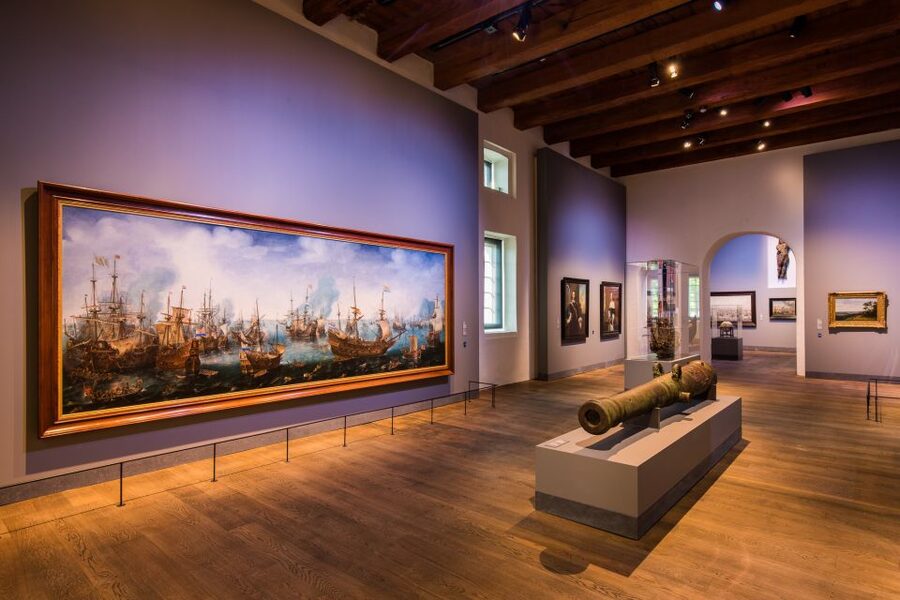
Inside the museum, the mapmaking section offers a quieter change of pace. Old sea charts show how sailors and mapmakers gradually recorded coastlines, trade routes, ports, and waters that were difficult to measure. The appeal is not only visual. These maps reveal what Dutch sailors knew, what they misunderstood, and how much depended on skilled navigation.
I would give the charts more time than you might expect. They can look decorative at first, but the audio tour helps explain why they mattered. A map was a working tool, a record of risk, and often a symbol of commercial power.
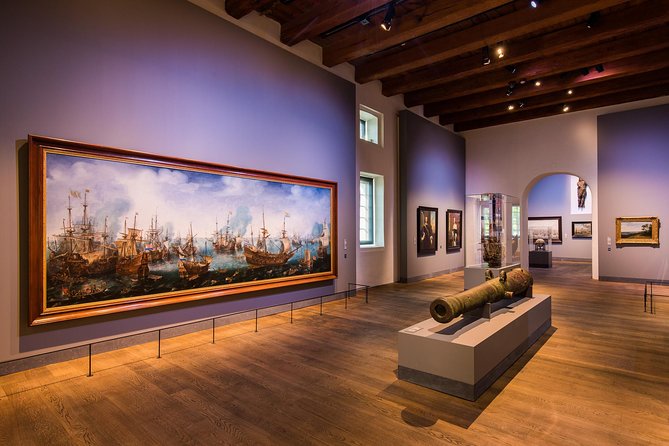
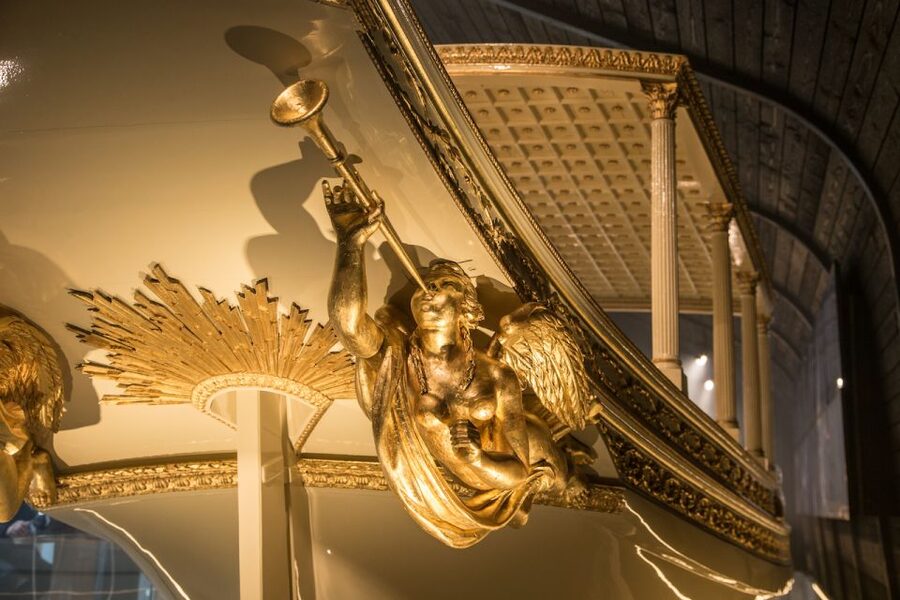
The collection also includes navigation instruments, ship models, paintings, carvings, and figureheads. The carved details are a highlight for visitors who enjoy craft and design. Figureheads and decorative pieces were not merely ornaments. They expressed status, identity, and the way a ship presented itself to the world.
The ship models help you compare vessel types and understand how hull shape, rigging, and size affected a ship’s work. They are particularly helpful before you board the Amsterdam replica, since you will have a better sense of what the full-size ship was designed to do.
This part of the museum suits adults who want context, but it does not require specialist knowledge. The audio guide makes the objects easier to follow, and descriptions are provided throughout the galleries.
Trade, war, colonialism, and the uncomfortable parts of the story
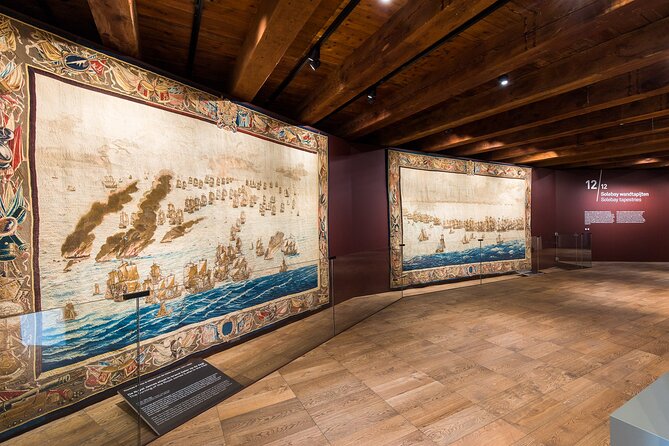
A visit here is not only a celebration of Dutch shipping. The museum addresses the country’s role in global trade, sea battles, colonialism, and the slave trade. That wider view is essential, because Amsterdam’s maritime success brought wealth and influence, but it also depended on systems that caused great harm.
The audio tour presents the history in direct terms rather than polishing it into a simple tale of brave sailors and clever merchants. You can use the objects, artwork, and explanations to see how trade networks, military force, and colonial control were connected.
This section may be more serious than the ship and VR ride, especially for families with young children. Still, it gives the museum weight. Without it, the ships and maps would be attractive objects without enough explanation of who benefited from maritime expansion and who paid the cost.
The museum also connects older seafaring with modern life at sea. Displays include present-day sailing and the experience of a solo round-the-world voyage. That contrast is useful: modern sailors have better technology, but isolation, weather, distance, and physical risk remain part of ocean travel.
I appreciate this mix of celebration and criticism. You can admire Dutch shipbuilding and mapmaking while also facing the darker uses of that skill and wealth.
Other collections worth booking around Amsterdam:
- Amsterdam: Red Light Secrets Museum Entry Ticket
★ 4.2 · 5,722 reviews - Amsterdam’s Weirdest Museum: Believe It or Not!
★ 4.5 · 4,086 reviews - Amsterdam: Van Gogh Museum Ticket and City Canal Cruise
★ 4.6 · 3,899 reviews - Amsterdam: Rembrandt House Museum Entrance Ticket
★ 4.7 · 3,385 reviews
The Royal Barge and the museum’s grander objects

The Royal Barge adds a ceremonial note to the visit. After looking at working ships, trade vessels, and naval equipment, you see how maritime design was also used to display royal status.
It is an impressive object, but its value goes beyond decoration. The barge shows the difference between a vessel built for labor and one made for pageantry. Look at the details, scale, and finish, then compare them with the plain spaces aboard the Amsterdam replica.
The museum works best when you make these comparisons. A ship model, a navigation instrument, a royal vessel, and a sailor’s hammock each show a different part of life connected to the sea. You do not need to see every label to get something from the visit, but the audio tour helps connect these separate pieces.
If you have only limited time, prioritize the Royal Barge, the Amsterdam replica, and the mapmaking displays. They give you the clearest spread of ceremonial, practical, and intellectual aspects of Dutch maritime life.
A VR trip over Golden Age Amsterdam
The virtual reality experience places you in Amsterdam during the Dutch Golden Age. From the bow of the ship, you take a virtual trip over central Amsterdam and see the city as a busy harbor at the beginning of the 17th century.
This is one of the museum’s most accessible ways to picture the past. Historical maps can be hard to read, and paintings show only one viewpoint. The VR ride gives you a broader sense of the city, its water routes, and the relationship between port activity and urban growth.
I would save it until after you have seen some of the maps and ship displays. The VR experience means more when you already understand that Amsterdam’s canals and harbor were working spaces linked to distant trade routes.
The museum also has exhibitions designed for younger children, with touch screens, videos, sounds, movable parts, and games. That makes the visit easier for families with different interests. One child can spend time with an interactive activity while another family member listens to a longer audio explanation nearby.
The VR element is a strong change of pace, but it should not be the reason you buy the ticket by itself. The experience is one part of a much larger museum, and its value comes from the way it supports the historical displays around it.
How to use the 60-minute audio tour
The audio tour is included and available in 11 languages: Spanish, Chinese, Dutch, English, French, German, Italian, Japanese, Korean, Portuguese, and Russian. It offers a clear way to get through the museum without hiring a private guide.
I would not try to listen to every possible explanation. Use the tour selectively, especially in the rooms dealing with mapmaking, colonialism, naval history, and the finest objects in the collection. Then move freely through the areas that interest you most.
The audio guide is particularly helpful because the museum covers several centuries and many subjects. Without some structure, you could move from a ship model to a military display to a modern sailing story without seeing how they fit together.
There is no guided tour included, so you remain in control of your pace. That works well if you dislike fixed group schedules. It also means you must decide where to spend your time.
Is the $24 ticket good value?
At $24 per person, this is a fair museum ticket if you treat it as a half-day or full-day visit rather than a one-hour stop. The price includes museum entry, the replica Amsterdam ship, and the audio tour. You also get the interactive exhibitions and VR experience within the visit.
The strongest value comes from variety. You are not paying only to look at paintings or only to board a ship. You get architecture, ship models, maps, navigation tools, social history, royal design, children’s activities, and modern sailing in one place.
If you are mainly interested in Amsterdam’s canals as scenery, you may prefer an activity on the water. If you want to understand why the city became a major harbor and how Dutch sea power affected the wider world, this ticket makes more sense.
The free courtyard is a nice extra, but it should not be the main reason to book. The ticket earns its price when you spend several hours inside and make full use of the audio tour.
Who should visit the National Maritime Museum?
I would recommend this museum to anyone interested in ships, maps, naval history, trade, Amsterdam, or the practical details of life at sea. It is also a good choice for families because the ship and interactive areas give children something to do beyond reading labels.
It suits first-time visitors who want context for Amsterdam’s rise as a port. It also works for returning visitors who have already seen the canals and want to understand the forces that shaped them.
You may enjoy it less if you want a tightly guided experience with one clear story from beginning to end. The museum covers many topics, and one four-star assessment noted that the links between them could be clearer. I agree that you need to create some of those connections yourself.
Wheelchair access is provided, but the replica ship contains narrow areas and shipboard levels that may not offer the same ease of movement as the main museum. If access to every part of the ship is important, check details before you go.
Cancellation is free up to 24 hours before the visit, and you can reserve now and pay later. Those terms are useful if your Amsterdam schedule is still shifting.
Should you book it?
Book this ticket if you want more than a quick museum stop and the idea of walking through a full-size 18th-century ship appeals to you. The Amsterdam replica, mapmaking displays, Royal Barge, VR ride, and candid treatment of colonial history give the visit real range.
Skip it if you have only a short window before the 5:00 PM closing or if ships and maritime history do not interest you. For everyone else, $24 is sensible value when you allow at least several hours and use the audio tour rather than rushing from room to room.
FAQ
Where is the National Maritime Museum?
The museum is at Kattenburgerplein 1, 1018 KK Amsterdam, in North Holland.
How long is the ticket valid?
The ticket is valid for one day. You should check availability for the available starting times.
What does the ticket include?
It includes entrance to the National Maritime Museum, access to the replica 18th-century ship Amsterdam, and an audio tour.
Is the audio guide included?
Yes. The museum provides a free 60-minute audio tour in Spanish, Chinese, Dutch, English, French, German, Italian, Japanese, Korean, Portuguese, and Russian.
Is there a guided tour?
No. A guided tour is not included, but the audio tour provides information as you explore independently.
Can I visit the replica ship Amsterdam?
Yes. The ticket includes access to the replica of the 1749 VOC East Indiaman Amsterdam, including areas such as the captain’s quarters, bow, and sailor sleeping spaces.
Is the museum wheelchair accessible?
Yes, the activity is wheelchair accessible. The replica ship includes narrow shipboard spaces, so access within every part may differ.
Can I cancel the booking?
Yes. You can cancel up to 24 hours in advance for a full refund.
What are the museum’s opening hours?
The covered inner courtyard can be visited daily from 10:00 AM to 5:00 PM. The provided information also notes that the museum closes at 5:00 PM, so plan enough time before closing.
Just added in Amsterdam
- Private Airport Transfer to or from Schiphol Airport★ 4.5 · 128 reviews
- Schiphol Amsterdam Airport Private Arrival Transfer★ 5.0 · 68 reviews
- Amsterdam Castle & Utrecht City – Private Day Tour★ 5.0 · 21 reviews
- Amsterdam Canal, Tulip, Windmill Photoshoot | Custom Request★ 5.0 · 147 reviews
- Amsterdam Light Festival Winter Walk with Stroopwafel Workshop★ 5.0 · 66 reviews
- Become a Dutch Art Piece Photo Shoot in Amsterdam – Single Portrait★ 5.0 · 65 reviews
- Become a Dutch Art Piece Photo Shoot in Amsterdam★ 5.0 · 100 reviews
- Full-Day Private Historic Royal Tour around Palaces and Castles★ 5.0 · 16 reviews
Museums, compared.

Moco Museum Amsterdam Entrance Tickets with Banksy & More
Read our review →




Browse the lists this tour appears in