

Reviewed · RED LIGHT DISTRICT TOURS
Amsterdam: Red Light District guided tour (TOP RATED)
Amsterdam’s Red Light District is not just a row of glowing windows. In De Wallen, you’ll walk through the oldest part of the city while learning how trade, law, religion, architecture, sex work, and coffeeshop culture shaped modern Amsterdam. The stories reach from wooden foundation piles to the world’s first condom shop.
I like the small group size, capped at 15, because narrow lanes and busy streets are easier to manage when you can hear the guide. I also like the local focus: guides such as Ben, Robin, Aarre, and Catherine explain the area with humor and respect rather than treating it as a sideshow. The main drawback is that the walk is not a good fit for people with limited mobility, and poor weather can cause cancellation.
Key points to know before you book
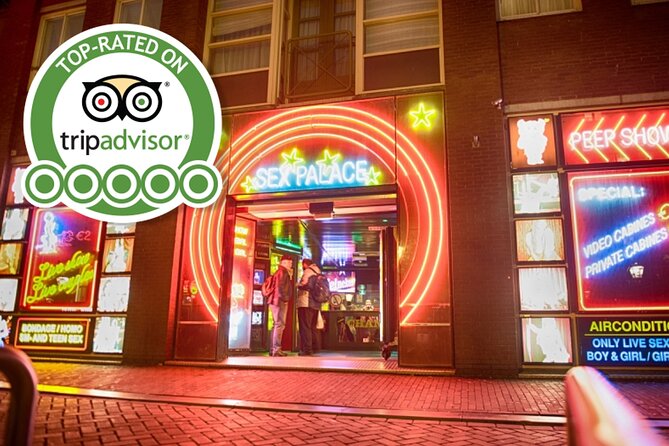
- The tour begins and ends on Damrak, making it easy to fit into a day of sightseeing in central Amsterdam.
- De Wallen is treated as a historic neighborhood, not just a nightlife stop, with visits near Dam Square, the Waag, Int Aepjen, and the smallest house.
- Guides explain Dutch laws and local customs, including the Red Light District and coffeeshop culture.
- Groups have a maximum of 15 people, though smaller groups may be available on some departures.
- The tour costs $34.17 per person and lasts about two hours, with food, drinks, and hotel transfers left out.
- The evening departure can show more activity, while a daytime walk may feel calmer and easier for seeing architecture.
What this Amsterdam Red Light District tour is really about
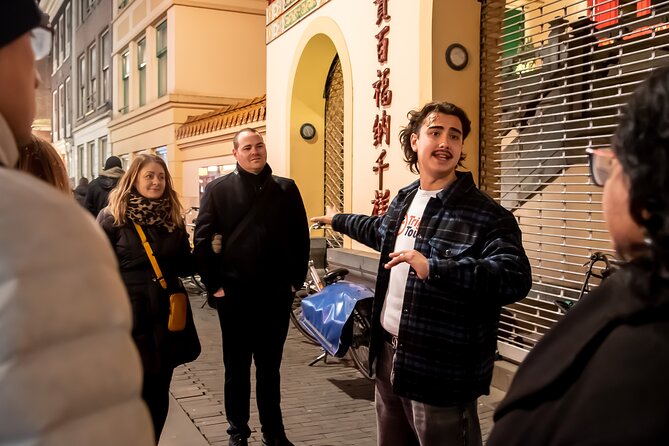
The useful thing about this walk is its wider frame. You are not simply shown the windows and told a few colorful stories. The guide connects the district to Amsterdam’s growth as a trading city, its building methods, its legal rules, and its long habit of handling social issues in a practical, sometimes unconventional way.
That makes the tour a strong first introduction to the city. You can certainly walk through De Wallen alone, but you may miss why the streets look the way they do or how the area fits into Amsterdam’s older center. A local guide helps you read the place instead of merely passing through it.
The tone also matters. This is an adult subject, but the best guides approach it with care. Catherine, Ben, Robin, Aarre, and other guides are praised for answering direct questions without losing sight of the people who work in the district. That respectful approach makes the walk more useful for couples, first-time visitors, and anyone who wants context rather than shock value.
The tour is offered in English and lasts about two hours. A maximum of 15 people keeps it more personal than a large walking group. You should still expect to walk through narrow lanes and busy central streets, so comfortable shoes are sensible.
Other Red Light District walks in Amsterdam:
- Amsterdam: Red Light Secrets Museum Entry Ticket
★ 4.2 · 5,722 reviews - Amsterdam: Red Light District Tour in German/English/Italian
★ 4.9 · 5,623 reviews - Amsterdam Red Light District & Coffee Shop Tour
★ 4.6 · 4,134 reviews
Starting at Damrak and finding your bearings
The meeting point is on Damrak, 1012 Amsterdam, and the walk returns there at the end. This is a practical starting place in the center, close to major public transport links and within easy reach of Amsterdam’s central sights.
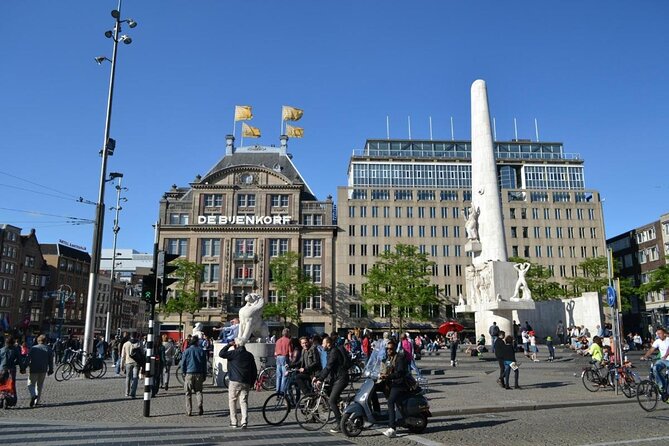
The first useful lesson is about Dam Square, referred to in the tour material as the Dam. Amsterdam was built on difficult ground, with layers of peat and clay above a firm sandy layer. Many older buildings were supported by wooden poles driven roughly 11 meters down until they reached that sand.
This is more than an architectural fact. It explains why Amsterdam has its distinctive narrow buildings and why construction in the city required such unusual solutions. The guide uses this point to show that the Red Light District is part of the city’s original urban core, not a separate entertainment zone added later.
If this is your first time in Amsterdam, the opening section should help you get your bearings quickly. The district is close to the historic center, and the tour places its nightlife within the same streets that carried commerce, religion, defense, and daily life centuries ago.
Walking through De Wallen, Amsterdam’s oldest center
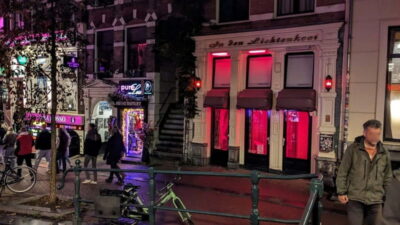
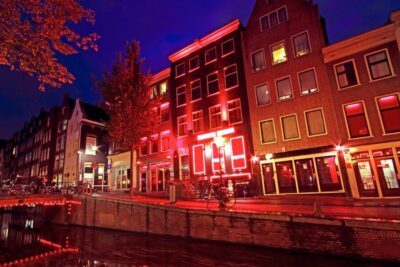
De Wallen is part of Amsterdam’s Old Town, and that age gives the walk much of its character. The lanes are tight, the buildings sit close together, and the district’s present-day activity shares space with old brick structures, canals, shops, bars, and ordinary city life.
You will see the familiar red-lit windows, but the guide’s job is to explain the system around them. The tour covers the district’s origins, its current situation, and the laws and rules that govern it. That legal context is one of the strongest reasons to take a guided walk rather than simply wander.
You may also hear about how the area is changing and what may lie ahead. The tour does not present De Wallen as frozen in time. It looks at the pressures around the district and the future of a central neighborhood where business, residents, visitors, and sex workers share a small amount of space.
The experience is likely to feel more educational than sensational. Several guides are praised for giving the subject dignity and for making guests feel comfortable asking questions. That balance is especially useful if you are curious about the area but unsure how to approach it respectfully.
Int Aepjen and Amsterdam’s surviving wooden buildings
One stop is Pub The Ape, known in Dutch as Int Aepjen. Built around 1540, it is one of only two remaining wooden buildings in Amsterdam.
That detail opens a window onto the city’s building rules. A major fire in 1452 led the government to require brick facades, making surviving wooden structures unusual. Int Aepjen is therefore not only a pub associated with the district. It is also a reminder of how fire shaped Amsterdam’s architecture.
This is the kind of stop that gives the tour value beyond its headline subject. You begin with the Red Light District, then find yourself learning about fires, building materials, old regulations, and the way Amsterdam preserved pieces of its earlier streetscape.
You should not expect a lengthy interior visit or a meal here. Food and drinks are not included, and the itinerary centers on walking and commentary. Think of Int Aepjen as an architectural and historical marker along the route.
A few more things to do in Amsterdam worth a look
- Amsterdam: 75 Minute City Canal Cruise with Audio Guide
★ 4.4 · 17,501 reviews - Anne Frank’s Story – Guided Walking Tour through Amsterdam
★ 5.0 · 11,619 reviews - Amsterdam: Johan Cruijff ArenA Tour with Optional Guide
★ 4.6 · 8,954 reviews - Amsterdam: Royal Palace Entry Ticket and Audio Guide
★ 4.6 · 6,475 reviews
The Waag and the story of Amsterdam’s defenses
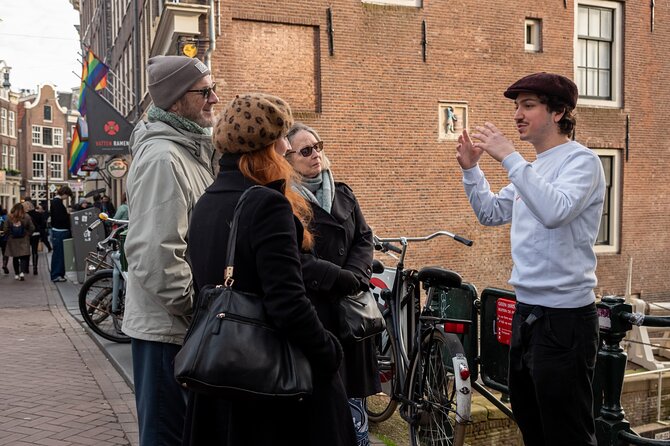
The Waag is another important stop. It began as one of Amsterdam’s city gates and formed part of the defensive wall in the 1400s. It is described as the second-oldest building in the city.
Later, guilds used the building. These were organizations for craftsmen and tradespeople, and their presence around the square reflects the commercial life of old Amsterdam. The guide uses the Waag to connect defense, government, trade, and skilled work.
This is a good example of why the walk works best as a city tour with a Red Light District focus. You are not being shown one isolated attraction. You are being shown how the oldest part of Amsterdam developed, then how the district’s current identity grew from that setting.
The Waag also gives you a stronger sense of scale. De Wallen is compact, but its landmarks belong to many different periods. Two hours is enough to introduce those layers without turning the walk into a long, exhausting lecture.
The smallest house and Amsterdam’s cramped urban past
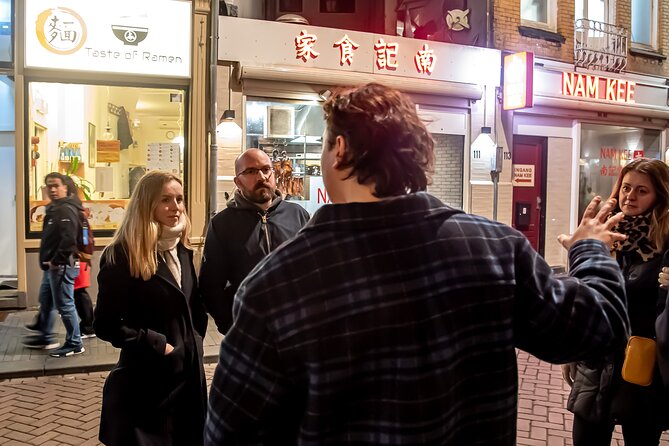
The tour also points out Amsterdam’s smallest house. Built around the 1700s, it first served as storage for the Dutch East India Company, known as the VOC. Later, people lived there for a long time.
This small building helps explain the pressure on space in Amsterdam’s old center. Narrow plots, tall facades, and practical storage buildings were part of a city shaped by trade and expensive land. The story also links everyday domestic life to the VOC, one of the forces behind Amsterdam’s wealth and global connections.
Ben is particularly praised for connecting the city’s sea trade and wealth to its modern culture. That broader explanation can make the district feel less like an odd exception and more like one expression of Amsterdam’s long commercial past.
You might find the smallest house easy to pass without a guide. Its importance is not its size alone. It is the way the guide uses it to explain how people stored goods, built homes, and adapted to limited space in the old city.
The condom shop and the present-day district
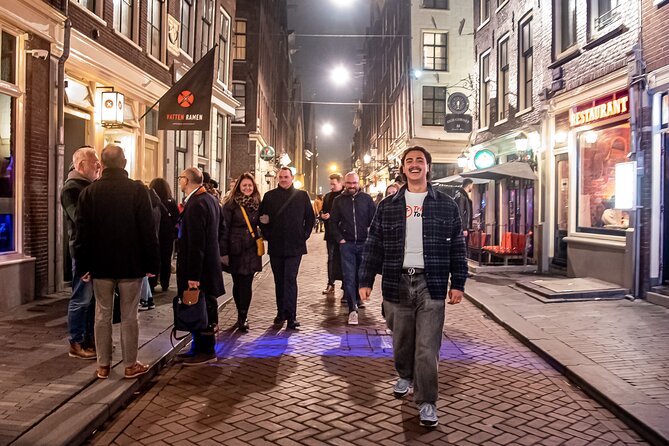
A stop at the world’s first shop devoted specifically to condoms adds a distinctly modern note. The shop has been in place since 1987 and sells many types of condoms, including size-customized options.
This stop is direct and a little playful, but it also shows how the neighborhood has developed businesses around its adult identity. The guide can place that shop within the wider story of sex work, public attitudes, and Amsterdam’s approach to regulation.
The tone may include humor. A former tour booking even singled out the banana bar as something worth asking about, but you should expect the guide to decide how much detail suits the group. The subject is adult, and the exact conversation will depend on questions and the guide’s style.
The walk also covers coffeeshop culture. Several guides are praised for explaining how coffeeshops fit into Amsterdam’s rules and culture, alongside the Red Light District. The tour does not include food, drinks, or a purchase, so think of this as an explanation of local customs rather than a tasting experience.
Ben, Robin, Aarre, Catherine, and the guide’s role
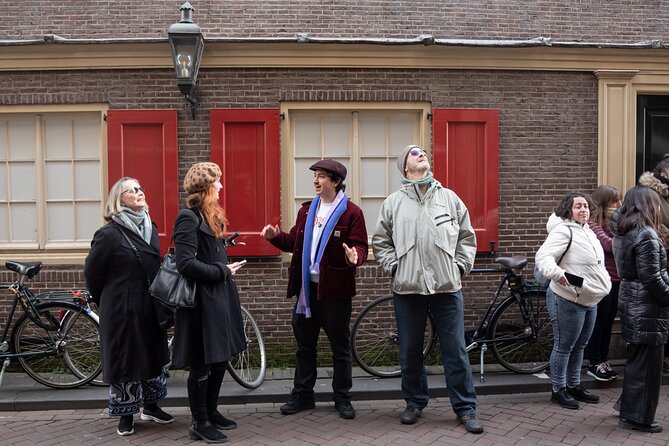
The guide can shape the experience more than any individual stop. Ben is repeatedly praised for connecting Amsterdam’s trade history with the city’s present-day tolerance and independence. He is also described as funny, clear, and willing to answer questions.
Robin brings strong local knowledge of the city and offers suggestions for places to eat and things to do after the walk. Aarre is known for an upbeat style and patience with questions, even on a cold and rainy evening. Catherine is praised for explaining the lives and careers of women in the district with sensitivity.
You are not guaranteed a particular guide, but these names give you a useful sense of the range of styles. The common thread is an effort to keep the tour lively without making the subject crude. That matters because the group may include couples, families with older children, solo visitors, and people with very different levels of comfort around the topic.
The strongest part of the tour may be the question period. You can ask about history, laws, coffeeshops, the district’s future, or the city more generally. The best guides use those questions to move beyond a memorized route.
Choosing the time, group size, and price
At $34.17 per person, this is not the cheapest way to walk through central Amsterdam, but the price is reasonable if you want explanation rather than simple sightseeing. You are paying for about two hours with a local guide, a limited group, and access to a subject that can be hard to understand from a guidebook alone.
The maximum group size is 15. That matters in De Wallen, where narrow streets and bicycle traffic can make a large group awkward. A smaller group also makes it easier to hear the guide and ask personal questions. One particularly small departure had only three people, though you should not count on that.
An evening tour may show more of the district’s nightlife. One 8 p.m. departure was described as especially interesting because more was happening after dark. A daytime departure may suit you better if you want a calmer first look at the buildings and streets. The available schedule is not specified here, so check the time before booking.
The tour requires good weather. If poor weather causes cancellation, you can receive a different date or a full refund. You can also cancel for a full refund up to 24 hours before the start time. Food, drinks, and hotel pickup are not included.
Who should book this walk
I would choose this tour if you are visiting Amsterdam for the first time, want a clear introduction to De Wallen, or have questions you would not feel comfortable asking in a crowded public setting. It also suits anyone interested in the city’s laws, trade history, architecture, and changing neighborhoods.
It is a good fit for couples and small groups who want an evening activity with substance. The local restaurant and city tips at the end can also help you plan the rest of your stay.
I would think twice if you dislike adult subject matter, want a completely private tour, or have limited mobility. Most people can participate, and service animals are allowed, but the activity is not recommended for people with limited mobility. You should also be comfortable walking outside in uncertain weather.
Should you book the Amsterdam Red Light District tour?
Book it if you want the Red Light District explained rather than merely viewed. The combination of De Wallen’s old buildings, wooden foundation stories, trade-era landmarks, condom-shop stop, coffeeshop context, and discussion of current rules gives you a fuller picture of Amsterdam.
The best reason to go early in your stay is orientation. You will leave with a better sense of the old center and a list of local suggestions from the guide. Choose an evening departure if you want more nightlife, or a smaller group if hearing and asking questions matter most.
At $34.17, it offers solid value for a two-hour, English-language walk with a group limit of 15. It is not a quiet architecture tour, and it is not designed for limited mobility, but it is a thoughtful choice for an adult visitor who wants context, candor, and a respectful look at one of Amsterdam’s most misunderstood neighborhoods.
FAQ
How long is the Amsterdam Red Light District tour?
The tour lasts approximately two hours.
Where does the tour start and finish?
It starts and ends on Damrak, 1012 Amsterdam, Netherlands.
How many people can join the tour?
The group has a maximum of 15 participants.
Is the tour offered in English?
Yes. The experience is offered in English.
What is included in the tour price?
A local guide is included. Food, drinks, and hotel pickup and drop-off are not included.
Can I cancel the tour for a full refund?
Yes. You can cancel at least 24 hours before the start time for a full refund. If poor weather causes the tour to be canceled, you will be offered another date or a full refund.
Just added in Amsterdam
- Private Airport Transfer to or from Schiphol Airport★ 4.5 · 128 reviews
- Schiphol Amsterdam Airport Private Arrival Transfer★ 5.0 · 68 reviews
- Amsterdam Castle & Utrecht City – Private Day Tour★ 5.0 · 21 reviews
- Amsterdam Canal, Tulip, Windmill Photoshoot | Custom Request★ 5.0 · 147 reviews
- Amsterdam Light Festival Winter Walk with Stroopwafel Workshop★ 5.0 · 66 reviews
- Become a Dutch Art Piece Photo Shoot in Amsterdam – Single Portrait★ 5.0 · 65 reviews
- Become a Dutch Art Piece Photo Shoot in Amsterdam★ 5.0 · 100 reviews
- Full-Day Private Historic Royal Tour around Palaces and Castles★ 5.0 · 16 reviews
Red Light District Tours, compared.


Red Light District Tour in German/English/Italian
Read our review →
Amsterdam Red Light District & Coffee Shop Tour
Read our review →
Red Light District Pub Crawl with Unlimited Shots
Read our review →

Red Light Secrets: Museum of Prostitution Amsterdam
Read our review →Browse the lists this tour appears in