
Reviewed · RED LIGHT DISTRICT TOURS
Amsterdam: Red Light District Tour in German/English/Italian
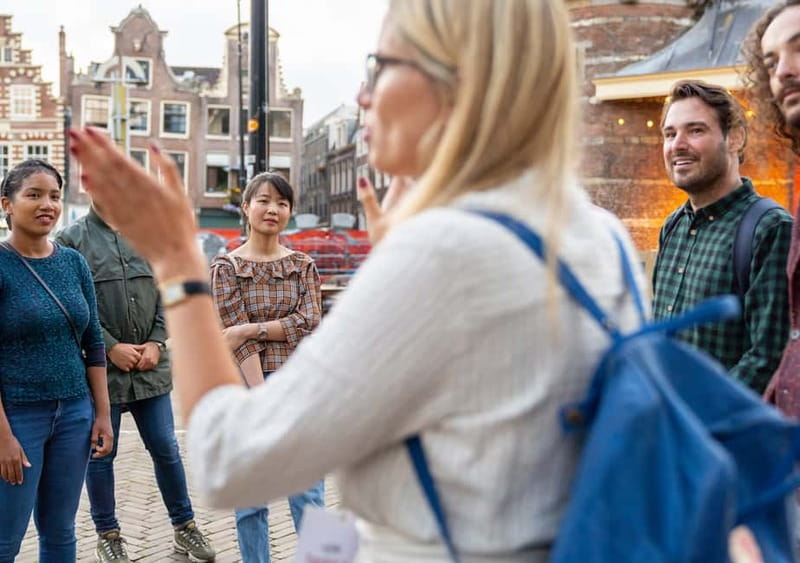
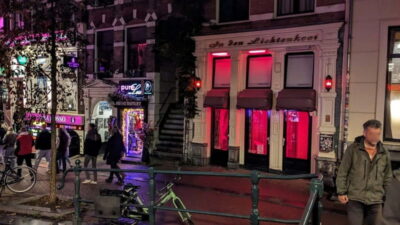
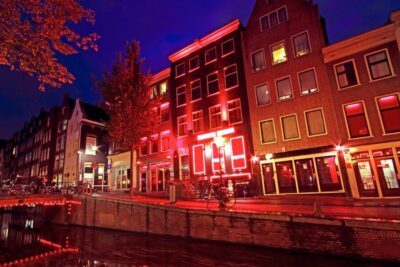
Amsterdam’s Red Light District is much more than neon windows and late-night crowds. This 1.5-hour walk looks at how the district works, from negotiations and room rent to taxes, safety, and the changing rules around sex work. It also explains why the Oude Kerk sits so close to the windows, and why coffeeshops are both a useful outlet and a serious problem for Amsterdam.
I like the straightforward look at sex work, including the practical money questions most visitors wonder about. I also like the route’s mix of odd local details, old buildings, Chinatown, and coffeeshop politics. Guides such as Risheet, Sanja, Sonja, Deborah, Francesco, and Stefanie have been praised for clear explanations, humor, and patience. The main drawback is that Amsterdam no longer allows tour groups to stop in front of the red windows, so you will need to explore that central area on your own after the walk.
Key points to know before you book
- The route covers about 1.8 kilometers: You walk at an easy pace through the center, with several stops for explanation.
- Sex work is treated as a real business: Expect discussion of earnings, expenses, prices, room rental, taxes, negotiations, and safety.
- The Oude Kerk provides the tour’s best historical contrast: Amsterdam’s oldest church sits beside one of its most provocative districts.
- Coffeeshop policy gets serious attention: You learn how the business began, why it is controversial, and what may happen next.
- The tour does not enter a coffeeshop: You receive recommendations and can visit one independently afterward.
- Choose your language carefully: English, German, or Italian options are available, but the tour is not bilingual.
What this Amsterdam walk is really about
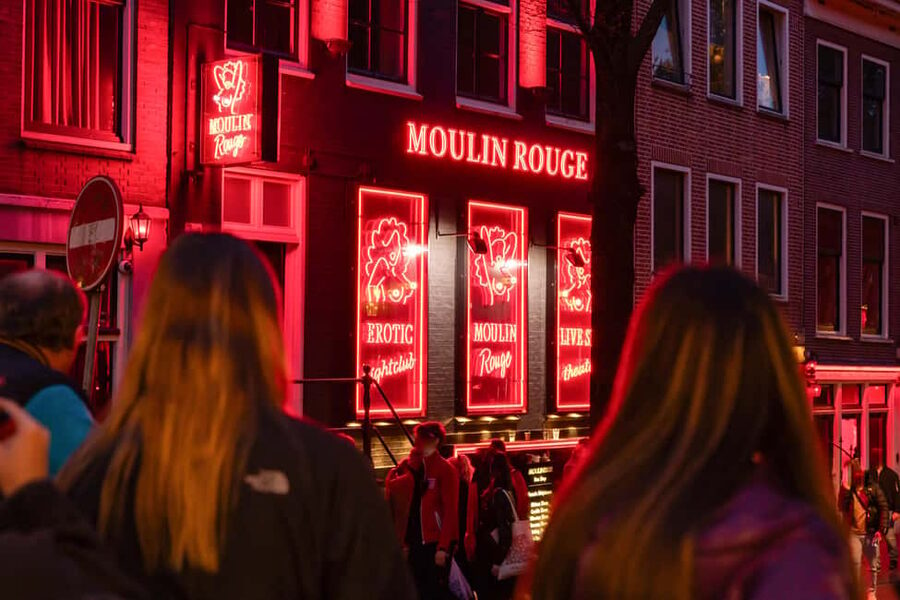
If you expect a quick stroll past red-lit windows, you may find this tour more useful than expected. Its main purpose is to explain the people, rules, money, and politics behind the district. The guide discusses how customers and sex workers negotiate, what expenses reduce earnings, how rooms are rented, and what security measures matter to the women working there.
The tone is meant to be witty and approachable rather than solemn. That helps with a subject that can become awkward fast. The best guides, including Risheet, Sanja, and Deborah, have been praised for mixing humor with clear explanations. Sonja and Stefanie also received strong praise for making difficult subjects easy to discuss.
I would not treat this as an excuse to gawk. The useful part is learning how the district functions and why Amsterdam’s approach remains contested. The tour gives you a more respectful way to see the area, provided you listen carefully and follow the rules.
Other Red Light District walks in Amsterdam:
- Amsterdam: Red Light Secrets Museum Entry Ticket
★ 4.2 · 5,722 reviews - Amsterdam Red Light District & Coffee Shop Tour
★ 4.6 · 4,134 reviews - Amsterdam: Red Light District Pub Crawl with Unlimited Shots
★ 4.1 · 2,130 reviews
Starting at Dam Square and the Condomerie
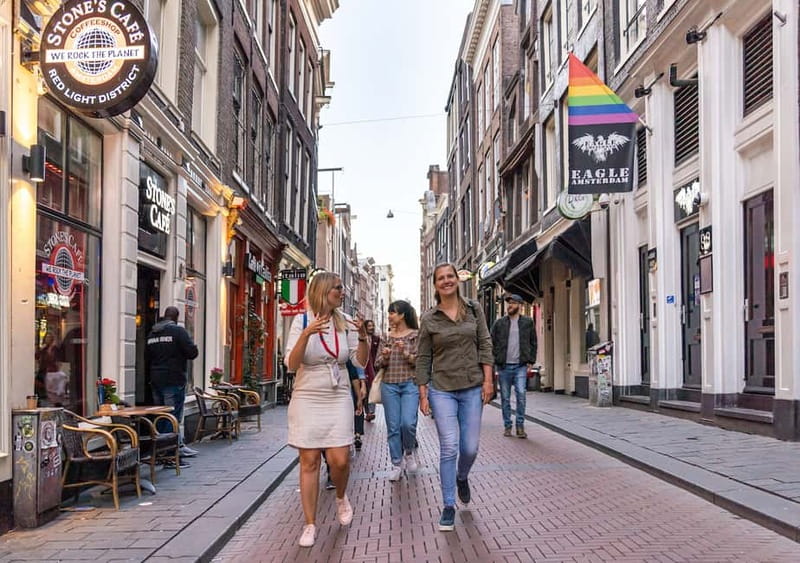
The walk begins at the National Monument on Dam Square, with the exact meeting point depending on the option you book. From there, the route heads toward Warmoesstraat, one of Amsterdam’s best-known gay streets.
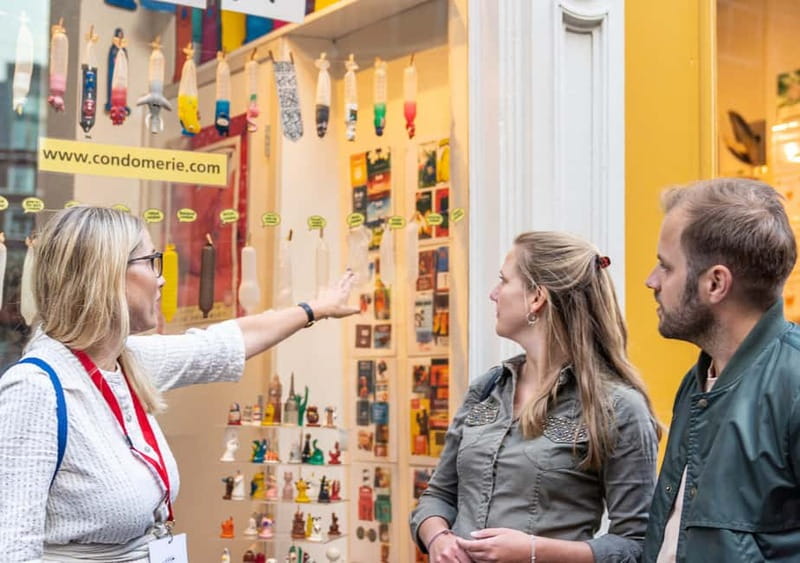
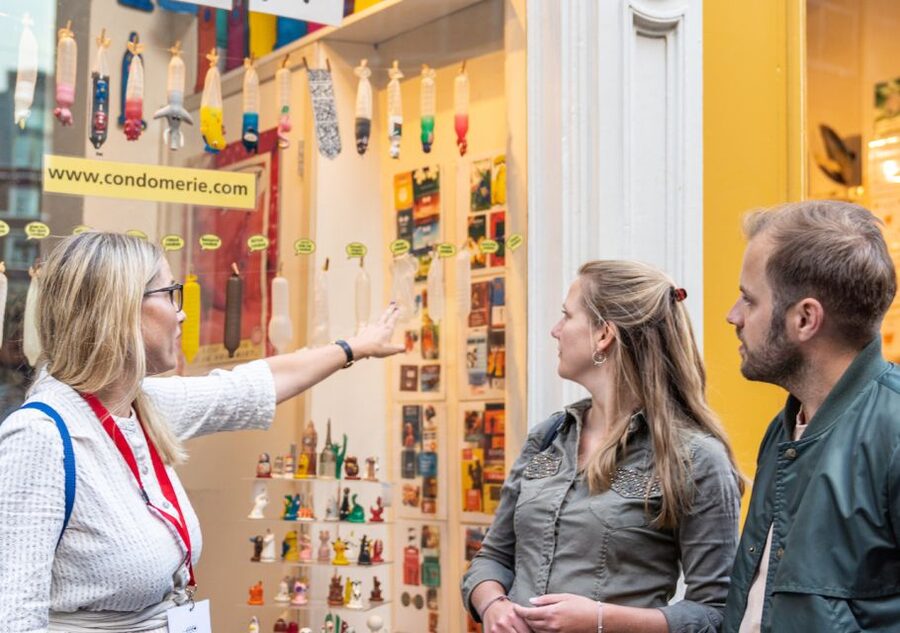
An early stop is the Condomerie, a playful shop devoted to condoms. The guide uses it to explain Amsterdam’s changing attitude toward contraception and sexual health. It is a small stop, but it adds useful local context before the tour reaches the more sensitive parts of the district.
This opening also helps you get your bearings. Amsterdam’s center can feel like a tangle of narrow lanes, canals, old brick buildings, and crowds. At roughly 1.8 kilometers, the walk is not physically demanding, but comfortable shoes still make sense, especially in wet weather.
The Oude Kerk and the district’s central contradiction
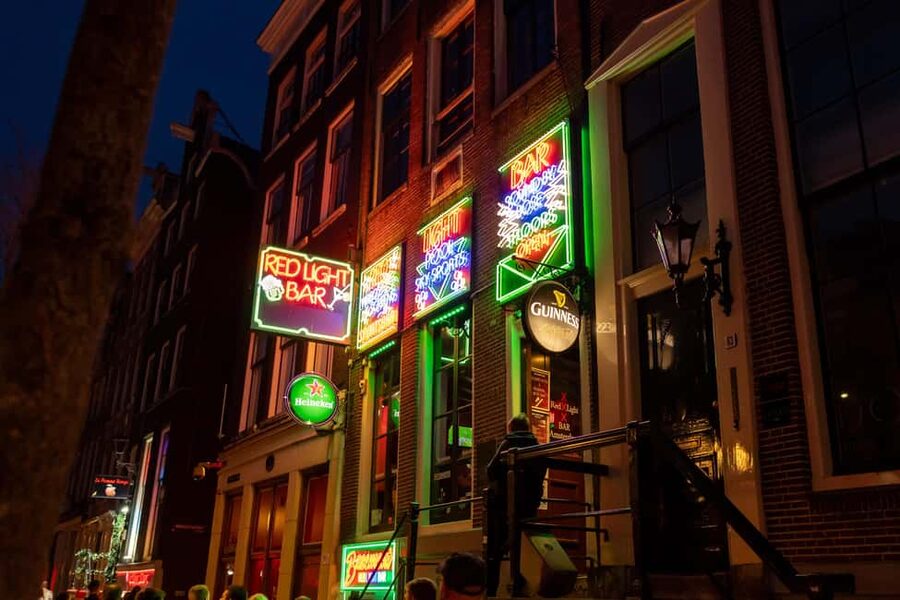
The Oude Kerk is the oldest church in Amsterdam and one of the most striking stops on the route. Its location beside the Red Light District creates the contrast that defines much of this part of the city: religious tradition, commercial sex, tourism, and ordinary neighborhood life all meet in a very small area.
The guide explains how the church and district relate to Amsterdam’s past and present. You get about 15 minutes here for a guided stop and photos, although the activity rules say cameras are not allowed. Treat this as a pause to look and listen, not as a chance to photograph workers or the windows.
The stop is valuable because it prevents the district from becoming a one-note attraction. You see an old Amsterdam landmark, then consider how the area developed around it. That context makes the later discussion of sex work and city policy easier to understand.
How the sex work discussion works
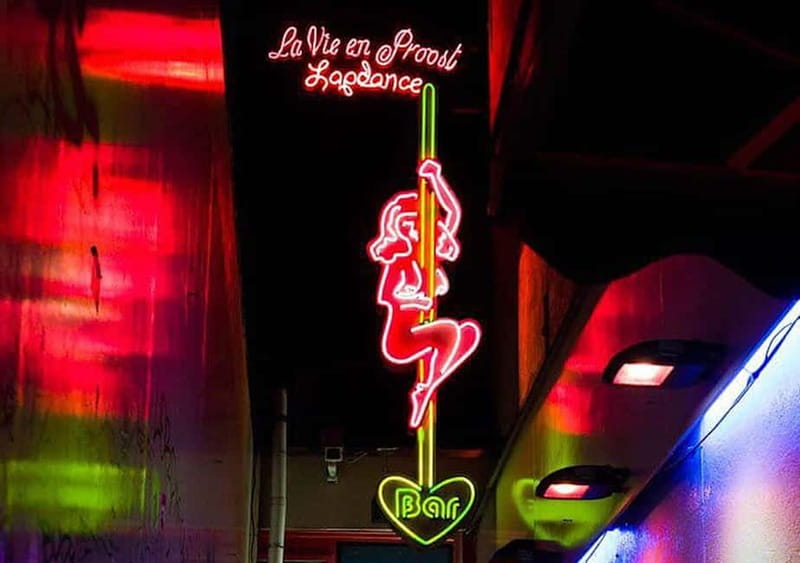
The most direct part of the tour covers the practical side of prostitution. Your guide may explain typical earnings per night, the number of customers a worker may see during a shift, and which services command higher prices. The conversation also covers room rental, operating costs, taxes, and the process of agreeing on services and price.
These details matter because the red windows can make the business look simple from the outside. In practice, the tour presents it as work shaped by rent, negotiation, regulation, personal safety, and public pressure. You also hear about the measures intended to protect sex workers and the concerns surrounding the current system.
The material is frank. This is not the right outing for anyone looking for a family-style Amsterdam walk. Children under 14 are not considered suitable, and unaccompanied minors are not allowed.
The guide’s manner makes a difference here. Sanja has been praised for explaining the logistics and pros and cons without losing her sense of humor. Deborah has also been noted for discussing current practice and possible changes to the district. Your experience will depend on the assigned guide, but the repeated emphasis on clear, patient answers is encouraging.
Same city, a different sort of day:
- Amsterdam: Van Gogh Museum Ticket
★ 4.7 · 52,054 reviews - Amsterdam Classic Saloon Boat Cruise with Drinks and Cheese
★ 5.0 · 31,825 reviews - Amsterdam Luxury Canal Cruise + Unlimited Drinks & Bites option
★ 5.0 · 30,518 reviews - Amsterdam: Heineken Experience Ticket
★ 4.6 · 30,055 reviews
Warmoesstraat, the harbor, and the dancing houses
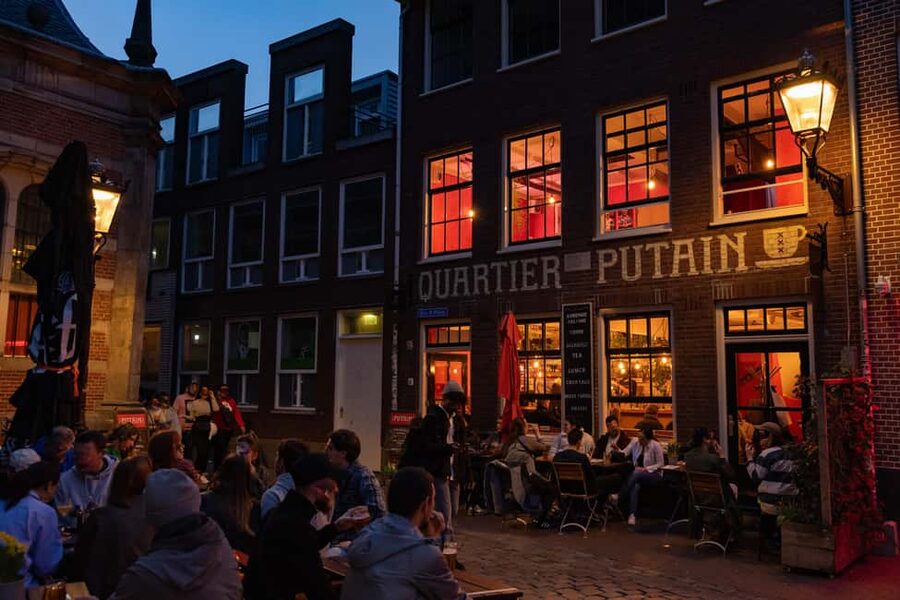
Warmoesstraat receives a short guided stop and photo pause. It is one of the district’s most famous streets, with a long connection to nightlife and Amsterdam’s gay scene. The guide places the street within the wider story of the city rather than treating it as a novelty.
The route then explains the district’s origins through the harbor. Amsterdam’s port traffic helped create the conditions for prostitution and entertainment to develop in this area. That connection between sailors, trade, lodging, and nightlife gives you a practical reason for the district’s location.
The dancing houses are another brief stop. Their narrow, leaning facades make one of the area’s most recognizable views. It is a good moment to notice Amsterdam’s unusual architecture, though the camera restriction means you should confirm what is permitted before taking pictures. Most important, never photograph sex workers. That rule is explicit and should not be treated casually.
Amsterdam Centraal and Chinatown
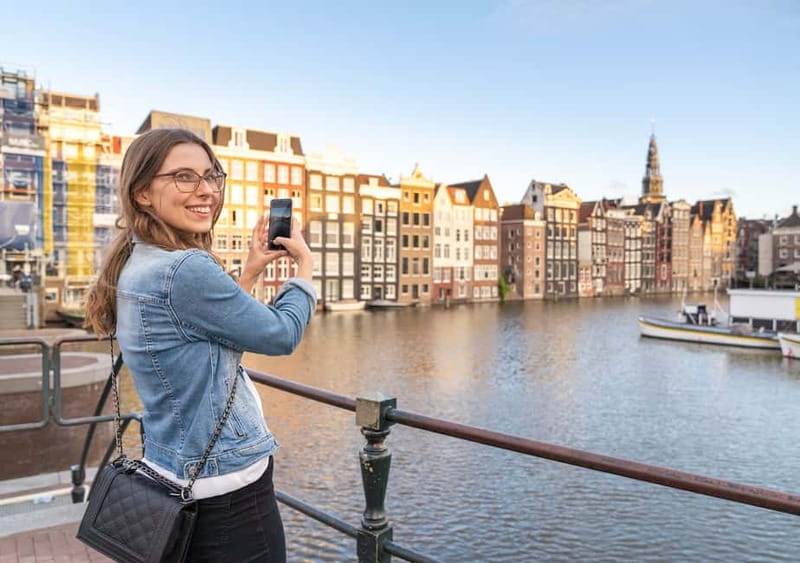
The walk continues toward Amsterdam Centraal Station, where the guide gives more city context. The station is a useful reference point because many people begin or end their Amsterdam visit here, and the Red Light District lies within easy walking distance.
The route then passes through Amsterdam Chinatown. This changes the feel of the walk and shows how several communities and commercial traditions occupy the same compact center. You are not simply moving from one red-window street to the next. The itinerary links sex work, port history, immigration, shopping streets, religion, and nightlife.
That wider setting is one of the tour’s strengths. It keeps the district connected to the living city. At the same time, the short schedule means each stop is focused. You should expect an overview with pointed explanations, not a long academic lecture on every street.
Coffeeshops, policy, and the Jolly Joker
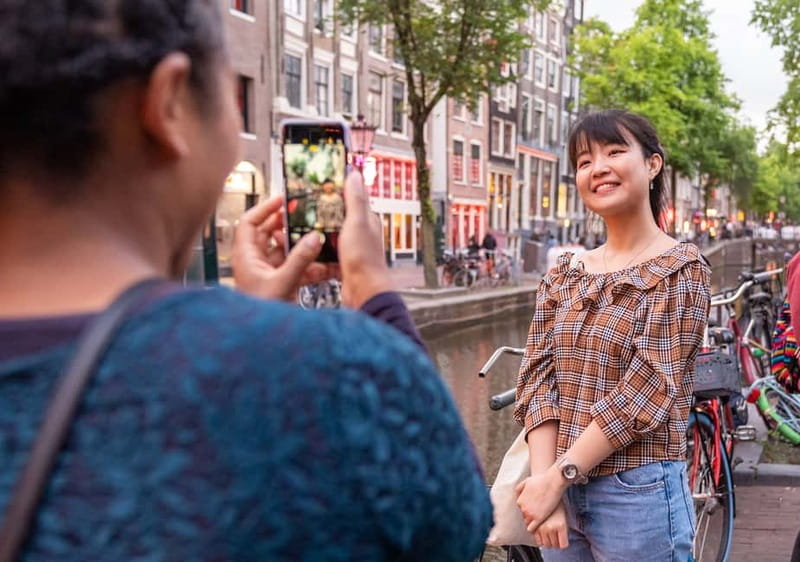
A stop near Coffeeshop The Jolly Joker introduces Amsterdam’s coffeeshop system. The guide explains how the business was established, how the city regulates it, and why coffeeshops can be seen as both a benefit and a burden.
The discussion also covers the political problem behind the system. Amsterdam has permitted the sale of cannabis in coffeeshops under specific rules, but the broader supply chain and impact on the city raise difficult questions. The tour looks at the pressures the city must manage and considers what the future might bring.
You do not go inside a coffeeshop. That is important when comparing this activity with other Amsterdam outings. Instead, you receive background and suggestions for visiting one independently after the walk. The guide can also point you toward options for continuing your Red Light District visit, including a 1970s peepshow that you may experience on your own.
The coffeeshop section adds value because it separates two subjects that are often lumped together by casual visitors. Sex work and cannabis policy have different laws, histories, and public debates. The tour gives each its own place.
Nieuwmarkt and the walk back
The final major stop is Nieuwmarkt Square, with about 15 minutes of guided explanation. This is a fitting place to gather the different threads of the walk: old city walls and streets, the harbor, nightlife, Chinatown, sex work, coffeeshops, and Amsterdam’s effort to manage tourism.
The tour returns to the National Monument. Since the activity ends where it starts, you can continue exploring the district, head toward Dam Square, or follow the guide’s suggestions for food and other local sights. Deborah has been praised for offering useful recommendations beyond the scheduled route, including places to eat.
The return point is convenient, but do not expect the guide to escort you into a coffeeshop or organize an extra activity. The value lies in giving you enough context to make your own choices afterward.
What the $28 price buys you
At $28 per person, this is reasonably priced for a 90-minute guided walk in central Amsterdam. You are paying for a live guide, a carefully arranged route, and explanations that are hard to gather from simply wandering through the district.
The value is strongest if you want context. If you only want to see the red windows, you can walk through the area for free, subject to the city’s rules. If you want to understand how the district developed, how the business operates, and why city policy is changing, the guided format earns its cost.
The price does not include food, drinks, or a tip. It also does not include entry to a coffeeshop or another attraction. Think of it as an orientation walk, not an all-inclusive nightlife package.
A private group is available, which may suit couples, families with older teenagers who meet the age rules, or friends who prefer to ask more questions. A standard group may be the better value for solo visitors and couples who want a lower-cost introduction.
Timing, crowds, weather, and language
The tour runs in English, German, or Italian. It is not bilingual, so select the language you want when booking. The supplied details place particular emphasis on German and English, while Italian is also listed as an available language. If Italian is essential, confirm that an Italian departure is operating on your chosen date.
Fridays and Saturdays are the busiest times in the district. The tour still runs, but the streets can be crowded and noisy. For a calmer walk, choose another day if your schedule allows.
The tour operates in all weather. Amsterdam rain can arrive without much warning, so bring an umbrella and wear shoes that can handle wet pavement. The pace is described as comfortable, but the route is outdoors from beginning to end.
The activity has a free cancellation policy up to 24 hours before departure, and you can reserve now and pay later. Starting times and the precise meeting point depend on availability and the option you select.
Who should book this experience
I would recommend this tour to first-time visitors who want a clear introduction before exploring the district alone. It suits adults interested in social policy, city history, sex work, cannabis regulation, and the practical side of Amsterdam’s famous nightlife.
It also works well for people who feel unsure about how to behave in the area. The guide explains what you can expect, what you should avoid, and how to continue exploring respectfully. The no-photography rule around sex workers is especially important.
You may want to skip it if you dislike frank sexual discussion, prefer a quiet architecture walk, or want to enter a coffeeshop as part of the activity. The tour also offers limited time at each stop, so anyone seeking an extensive museum-style history lesson should choose a longer city tour.
Should you book the Red Light District Tour?
Book it if you want more than a glimpse of Amsterdam’s most famous nightlife quarter. For $28, you get a focused walk that combines sex work, city policy, port history, architecture, coffeeshops, Chinatown, and practical advice.
Choose an English, German, or Italian departure carefully, avoid Friday and Saturday if you want less crowding, and bring an umbrella. Most of all, arrive ready to listen rather than stare. The tour is at its best when it helps you see the district as part of Amsterdam’s complicated, changing city center.
FAQ
How long is the Red Light District tour?
The tour lasts 1.5 hours and covers approximately 1.8 kilometers at a comfortable pace.
What languages are available?
The tour is available in English, German, and Italian. It is offered in one language at a time, not as a bilingual tour.
Where does the tour start?
The meeting point is at or near the National Monument on Dam Square, though the exact starting point can vary by the option booked.
Where does the tour finish?
The walk returns to the National Monument meeting area.
Does the tour enter a coffeeshop?
No. The tour discusses coffeeshop history and politics, but it does not include an inside visit. You can explore a coffeeshop independently afterward.
Can I take photos during the tour?
The activity information says cameras are not allowed, and photographing sex workers is forbidden. Follow the guide’s instructions and never photograph workers.
Is the tour suitable for children?
It is not suitable for children under 14, and unaccompanied minors are not allowed.
What happens if it rains?
The tour operates in all weather. Bring an umbrella and dress for outdoor walking, since the activity takes place outside.
Just added in Amsterdam
- Private Taxi Airport Transfer to or from Schiphol Airport (AMS)★ 4.5 · 66 reviews
- Castle De Haar Small-Group Tour from Amsterdam★ 5.0 · 101 reviews
- Amsterdam: ‘Boom Chicago’ English Comedy Show★ 4.5 · 213 reviews
- English Comedy Show Amsterdam: Boom Chicago★ 4.5 · 112 reviews
- Amsterdam: E-Bike Sightseeing Tour★ 4.7 · 99 reviews
- Amsterdam: Magic Show★ 4.7 · 38 reviews
- Amsterdam: Private Photoshoot for Couple, Family, or Solo★ 4.9 · 251 reviews
- Amsterdam: The Comedy Embassy Stand-Up Show★ 3.9 · 20 reviews
Red Light District Tours, compared.
Amsterdam Red Light District & Coffee Shop Tour
Read our review →
Red Light District Pub Crawl with Unlimited Shots
Read our review →

Red Light Secrets: Museum of Prostitution Amsterdam
Read our review →Browse the lists this tour appears in