
Reviewed · CANAL CRUISES
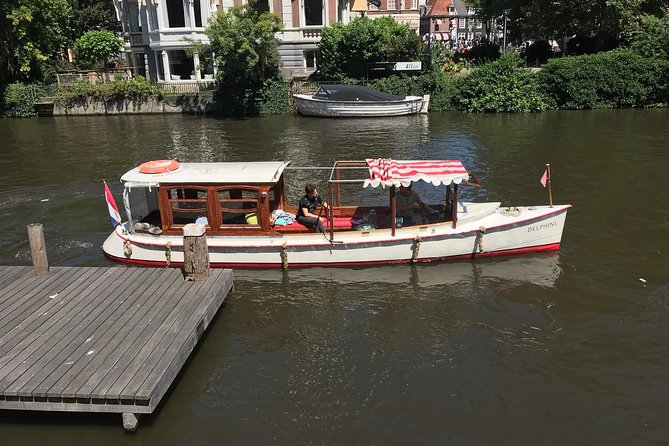
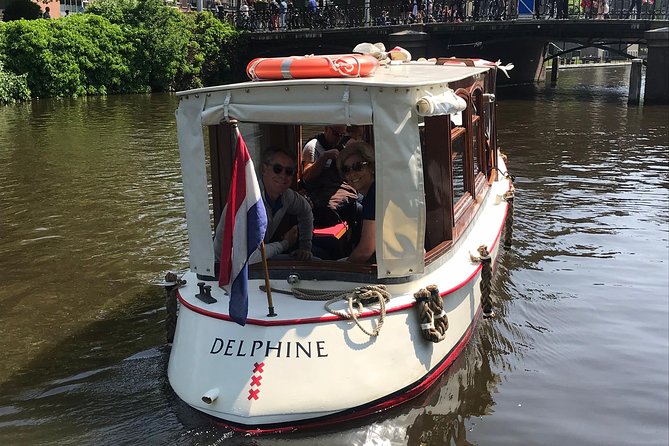
Private canal cruise on small historic boat
Amsterdam’s canal belt is best understood from the water, where narrow houses, leaning facades, houseboats, and old bridges form one long city story. This private cruise uses a small historic boat, so you get a closer look at the canals than you would from a large sightseeing vessel.
I especially like the personal art historian guide and the relaxed drinks on board, including coffee, tea, bottled water, and alcoholic beverages. You also get a route that links the Amstel, the Skinny Bridge, the grand Herengracht, the seven bridges, and the Jordaan. The main caution is price: at $599.50 per group of up to 10, it makes far more sense for a full group than for one or two people.
Key points at a glance
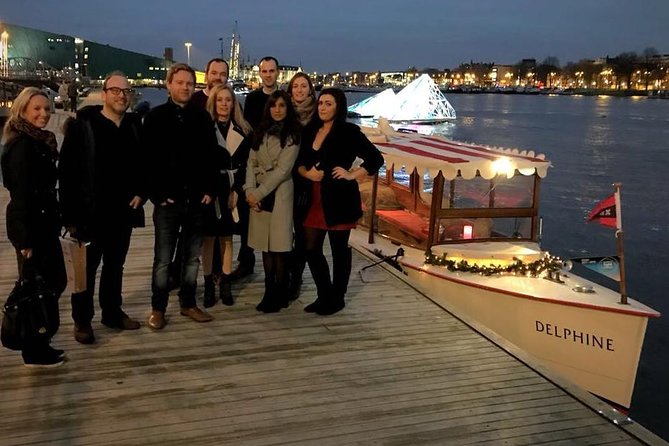
- Historic small-boat setting: See Amsterdam from a low, intimate boat rather than a large sightseeing craft.
- Private English-language tour: Only your group participates, with a professional art historian leading the cruise.
- Classic canal route: The journey includes the Amstel, Skinny Bridge, seven bridges, Herengracht, Jordaan, and Anne Frank House.
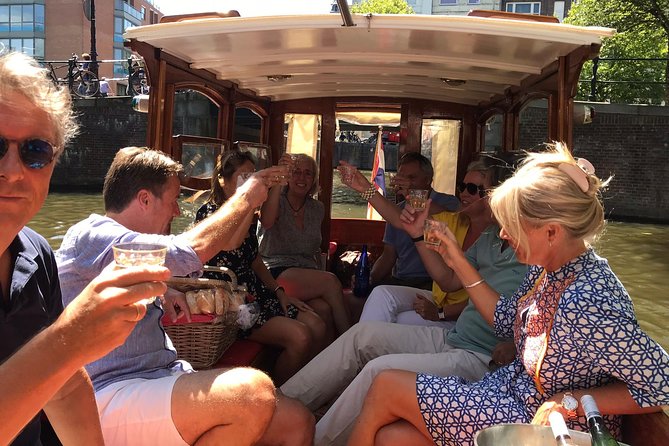
- Comfortable drinks included: Coffee, tea, bottled water, and alcoholic beverages are provided.
- Useful group value: The $599.50 price covers up to 10 people, making the per-person cost much better for a group.
- Weather matters: Poor weather can lead to a new date or a full refund, and the tour needs a minimum number of participants.
Why a small historic boat changes the Amsterdam view
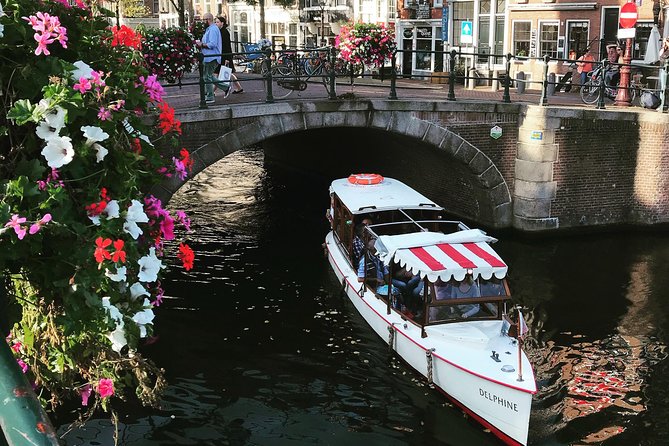
Amsterdam can feel crowded at street level, especially around the central canals. From the water, you get a calmer view of the city’s oldest neighborhoods, and a small boat can bring you close to the canal walls, bridges, and houseboats.
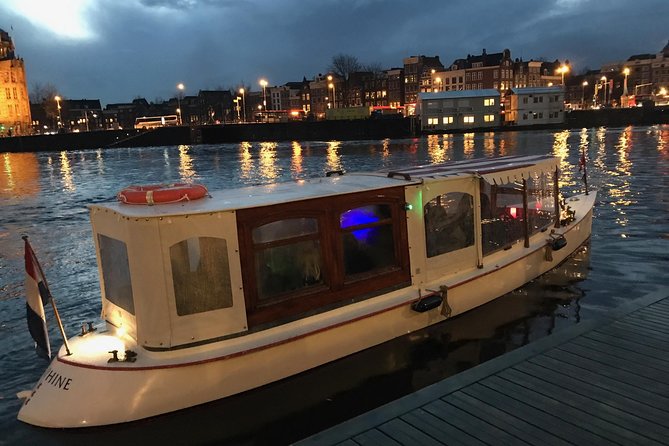
The historic boat is not just transportation. It gives the cruise a sense of place. You are looking at Amsterdam from the same waterways that shaped its trade, housing, and daily life. The scale also suits a private group: you can listen to the guide, ask questions, and enjoy the ride without sharing the boat with a large crowd.
The route lasts about one and a half to two hours. That is long enough to cover a broad section of the canal ring without turning the outing into an all-day commitment. I would place it after you have seen a few sights on foot, since the boat helps connect the parts of Amsterdam that can seem separate when you are walking from one museum or square to another.
The guide speaks English and is described as a professional art historian. That matters here. The canals are attractive on their own, but the best part of the ride is understanding why the houses look different, how the wealthy canal belt developed, and how Amsterdam expanded around the Amstel.
Other boats out on the water around Amsterdam:
- Amsterdam Luxury Canal Cruise + Unlimited Drinks & Bites option
★ 5.0 · 30,518 reviews - Amsterdam: 75 Minute City Canal Cruise with Audio Guide
★ 4.4 · 17,501 reviews - Amsterdam: City Centre Canal Cruise
★ 4.2 · 12,827 reviews
From H’ART Museum to Prinsengracht
The meeting point is outside H’ART Museum, formerly known as the Hermitage Amsterdam, at Amstel 51. This is a central starting point near public transportation, and the cruise returns to the same meeting point at the end.
The boat first enters the Spiegelgracht and then the Prinsengracht. The Spiegelgracht is a short, scenic canal near the Museum Quarter, while the Prinsengracht is one of Amsterdam’s main historic canals. It is lined with tall houses, narrow frontages, and a mix of homes, businesses, and houseboats.
As you travel along the Prinsengracht, the city’s famous canal-house style becomes easy to read. Many buildings have narrow fronts because property taxes were once linked to the width of a house facing the canal. You do not need to memorize architectural terms to enjoy this section. Just look for differences in roof shapes, window proportions, and the way old buildings tilt slightly toward the water.
This early part of the trip also gives the guide room to explain how Amsterdam’s canals worked as both transport routes and urban streets. The water was once central to moving goods and connecting homes, warehouses, and markets.
Amstelveld and the houseboats
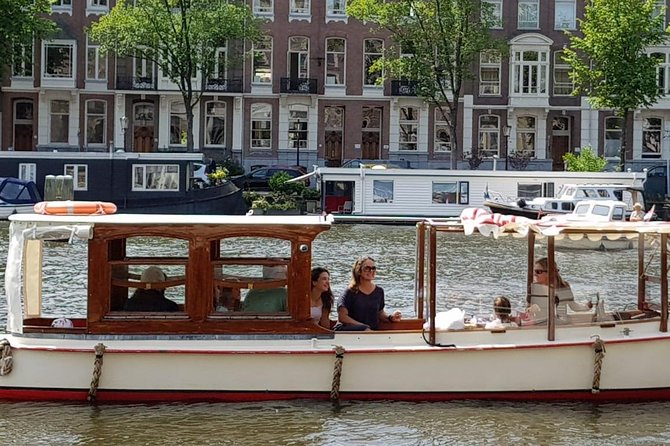
The boat continues past Amstelveld and a houseboat area before heading toward the river Amstel. Houseboats are one of the most familiar modern features of Amsterdam’s canals, and seeing them from the water gives you a better sense of how they fit into the city’s narrow waterways.
You can expect a mix of old and new here. Historic canal houses rise directly beside floating homes and working bridges. The contrast is part of Amsterdam’s character, but it also shows why a smaller boat helps. You are close enough to notice details that can disappear from the deck of a larger vessel.
Amstelveld adds another neighborhood view before the route opens toward the river. This section is less about one major monument and more about watching Amsterdam change from tight inner canals to a broader waterway.
The Amstel, Amstel locks, and Skinny Bridge
At the Amstel, the boat turns left and passes the famous Skinny Bridge. The bridge, officially known as the Magere Brug, is one of the city’s best-known crossing points. Its white structure is especially recognizable from the water, where you can see its shape against the river and surrounding buildings.
The cruise also passes the Amstel locks. These are practical pieces of the city’s water system, and they help explain that Amsterdam’s canals are not only pretty routes for sightseeing. Water levels, flood control, and boat movement have long shaped how the city operates.
This is one of the most enjoyable portions of the route because it combines a major landmark with an explanation of how Amsterdam manages its waterways. The river is wider than the canals, so the view opens up for a while. If you are interested in engineering, urban planning, or the everyday work behind Amsterdam’s postcard appearance, pay close attention here.
A few more things to do in Amsterdam worth a look
- Amsterdam Food and Cultural Tour with Tastings
★ 5.0 · 2,442 reviews - Amsterdam: Haunted History and Ghost Walking Tour
★ 4.5 · 488 reviews - Amsterdam High-End Dutch Food & History Tour – Up to 8 guests
★ 5.0 · 482 reviews - Amsterdam: Historic City Sightseeing Canal Cruise
★ 4.5 · 444 reviews
Rembrandt’s corner and the dancing houses
The route then reaches what is described as the Rembrandt corner, connected with the place where the painter spent the first years of his life in Amsterdam. This gives the guide a chance to connect the canal scenery with one of the Netherlands’ most important artists.
The boat also passes Amsterdam’s famous dancing houses. These narrow buildings appear to lean, tilt, or seem ready to sway, though the effect comes from the city’s old construction, shifting foundations, and unusual facades. From the canal, their height and narrowness are especially clear.
This part of the tour works well for first-time visitors because it puts familiar Amsterdam images into context. You are not simply checking off a landmark. You are moving through the setting that shaped the city’s art, commerce, and housing.
Herengracht, the canal of the Lords
The boat turns into the Herengracht, often called the canal of the Lords. This is the grandest section of the journey, with wide canal houses that once belonged to wealthy merchants and powerful families during Amsterdam’s commercial peak.
The guide focuses on how the rich traders of the 17th century lived. Look for larger facades, formal entrances, decorative details, and homes that were built to project status. The contrast with the narrower houses elsewhere on the route is useful. Amsterdam’s canal ring was never one uniform neighborhood. Different canals reflected different levels of wealth and different kinds of work.
I like this part because the water gives you a clean view of the full building fronts. On foot, parked bicycles, traffic, and other pedestrians can block your view. From the boat, you can compare several houses in a row and see how the canal itself was designed as a grand residential address.
The guide’s art-history background should be particularly useful here, though the exact personality of the guide will shape the experience. One review describes a college-student guide who combined strong local knowledge with humor and candor. No guide name is supplied, so you should not expect a named host in advance, but you can expect an English-speaking guide with an art-history focus.
The seven bridges on Reguliersgracht
The boat turns left toward the famous seven bridges on Reguliersgracht, then continues toward Keizersgracht. This is one of the most photogenic parts of the ride. From the right angle, the bridges line up one behind another, creating a layered view through the arches.
The effect depends on the boat’s position and the direction of travel, so it is worth having your camera ready but not staring at it the whole time. The real pleasure is seeing how the bridges repeat through the canal, creating depth and rhythm in an otherwise narrow space.
Keizersgracht, the Emperor’s Canal, adds another major section of the canal ring. Like Herengracht, it is lined with historic canal houses, but the views change as the boat moves. This is a good moment to ask the guide about architecture, trade, or how the canal belt was planned.
Jordaan and the Anne Frank House area
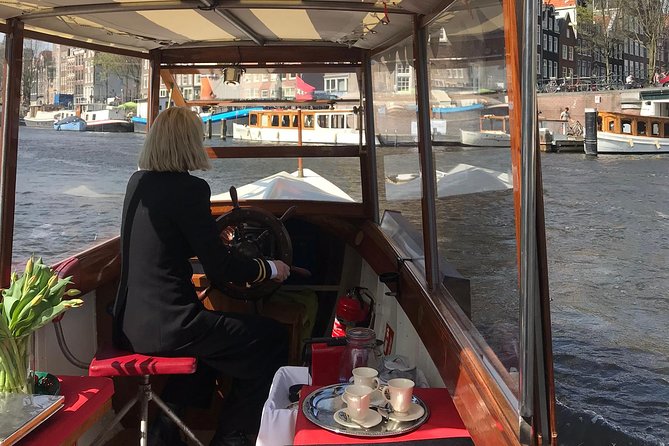
The route continues into the Jordaan neighborhood before turning back toward the starting point. The Jordaan is known for its intimate canals and more residential feel. Compared with the grand Herengracht, it has a smaller-scale atmosphere, with narrow streets and houses close to the water.
The boat also passes the Anne Frank House. The cruise does not include entry to the museum, and it should not be treated as a substitute for a timed museum visit. Still, seeing the building from the canal helps place it within the neighborhood rather than viewing it as an isolated stop.
If you plan to visit the Anne Frank House separately, reserve that visit on its own. The boat ride offers an exterior view and local context, while the museum requires its own admission and timing. Keeping those plans separate makes it easier to enjoy both.
The return through the Jordaan is a pleasant way to finish because it brings you back from the major landmarks to a quieter stretch of Amsterdam. The boat returns to H’ART Museum, so you do not need to arrange a separate end point.
What the private format is worth
The private setup is the strongest reason to book this experience instead of a standard canal cruise. Only your group participates, and the boat accommodates up to 10 people according to the booking details. That gives you room to shape the conversation around your interests.
For example, an art-focused group can ask more about Rembrandt and canal architecture. A family group might prefer shorter explanations and more time simply watching the bridges and houseboats. A group with older relatives may value the relaxed pace and the chance to avoid a long walking route.
The price is $599.50 per group. For 10 people, that works out to about $60 per person. For six people, it is roughly $100 each. For two people, it is close to $300 each, which is a much harder value to defend unless privacy and a customized setting matter greatly to you.
Coffee, tea, bottled water, and alcoholic beverages are included. That is a nice touch on a two-hour cruise, though the drinks alone do not justify the price. You are paying mainly for the private boat, the historic setting, and the guide’s attention.
The boat may suit a group celebrating a special occasion, a family that wants to stay together, or friends who dislike large sightseeing vessels. If you are traveling solo or as a couple on a tight budget, a shared canal cruise will likely be more economical.
Weather, timing, and practical details
The experience requires good weather. If poor conditions force cancellation, you are offered another date or a full refund. That policy is sensible for an open-water sightseeing experience, but I would avoid placing this cruise on the final day of a short Amsterdam visit. Give yourself another possible time slot.
You receive a mobile ticket, and the experience is offered in English. Confirmation is normally sent at booking, though bookings made within two days of departure may take up to 48 hours and remain subject to availability.
The meeting point is near public transportation, and the cruise ends where it begins. No baby stroller is allowed. Most people can participate, but the supplied information does not provide detailed accessibility specifications, so contact the provider if your group has particular mobility needs.
Free cancellation is available up to 24 hours before the start time for a full refund. Changes or cancellations made less than 24 hours ahead are not accepted for a refund.
Who should book this Amsterdam cruise
I would recommend it most strongly to a group of friends or family members who can share the cost. Ten people get good value, and even six people may find the privacy worth paying for. The route is broad enough to introduce first-time visitors to several major parts of Amsterdam in one sitting.
It also suits people who want history and architecture without a formal museum lecture. You get stories about merchants, artists, canal planning, houseboats, and the city’s waterways, but the setting remains relaxed.
I would think twice if you are traveling alone, as a couple, or on a strict budget. The route is attractive, but many shared canal cruises cover similar central waterways for much less. You should also reconsider if rain is likely and your schedule leaves no room for a change.
Should you book this private canal cruise?
Book it if you can fill much of the boat and want a quiet, personal way to see Amsterdam’s main canals. The historic boat, art historian guide, included drinks, and carefully chosen route make this more than simple transport. The best moments are the Skinny Bridge, the seven-bridge view, the grand Herengracht, and the shift into the Jordaan.
Skip it if the price will be divided between only one or two people, or if you mainly want a quick canal introduction. For the right-sized group, though, this is a comfortable and thoughtful way to understand Amsterdam from its most important street: the water.
FAQ
Where does the private canal cruise start?
The cruise starts at H’ART Museum, formerly Hermitage Amsterdam, at Amstel 51, 1018 EJ Amsterdam.
Where does the cruise end?
The activity ends back at the meeting point at H’ART Museum.
How long does the cruise last?
The cruise lasts approximately one hour and 30 minutes to two hours.
How many people can join the private boat?
The booking information lists a maximum of 10 people per group.
What language is the tour offered in?
The cruise is offered in English.
What drinks are included?
Coffee, tea, bottled water, and alcoholic beverages are included.
What happens if the weather is poor?
If poor weather causes cancellation, you are offered a different date or a full refund.
Just added in Amsterdam
- Guided Day Trip – Volendam, Zaanse Schans, Marken & Edam★ 4.0 · 232 reviews
- Private Tour Zaanse Schans Windmills and Volendam in Jaguar★ 5.0 · 10 reviews
- Zaanse Schans and Giethoorn Unique Day Trip with Boat Cruise★ 4.5 · 17 reviews
- Half-Day Private Guided Sightseeing Tour of Zaanse Schans★ 5.0 · 14 reviews
- Zaanse Schans Private Tour Windmills★ 5.0 · 18 reviews
- Private bike tour: Hidden gems around Amsterdam and surroundings★ 5.0 · 4 reviews
- Bike tour in Amsterdam with an Italian guide★ 5.0 · 15 reviews
- Amsterdam Sightseeing Tour + Hidden Gems + Tastings + PDF guide★ 5.0 · 35 reviews
Canal Cruises, compared.
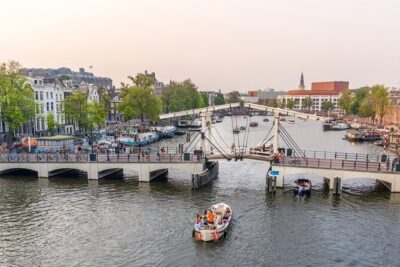
Amsterdam Luxury Canal Cruise + Unlimited Drinks & Bites option
Read our review →
75 Minute City Canal Cruise with Audio Guide
Read our review →
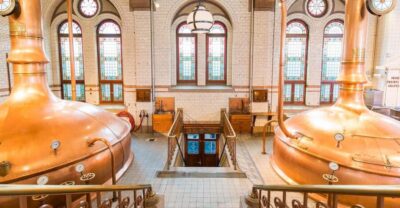
City Canal Cruise and Heineken Experience Ticket
Read our review →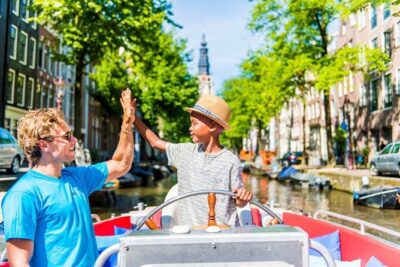
Amsterdam Canal Cruise in Open Boat with Unlimited Drinks Option
Read our review →
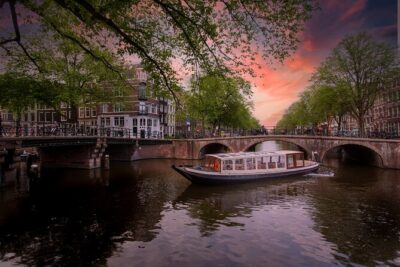
Amsterdam Evening Canal Cruise with Live Guide and Onboard Bar
Read our review →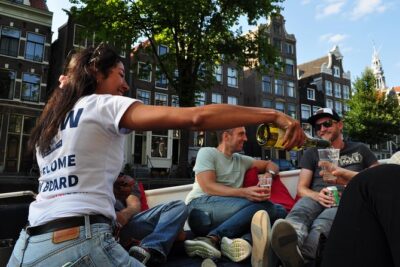
Amsterdam Canal Cruise With Live Guide and Unlimited Drinks
Read our review →Browse the lists this tour appears in