
Reviewed · WALKING TOURS
Rotterdam: Architectural Highlights Guided Walking Tour
Rotterdam’s architecture makes the most sense when someone explains the decisions behind it. This 2-hour walk with a local architect links the rebuilt city center to the Maas, showing how wartime destruction, postwar planning, modern design, and new waterfront construction fit together.
I like the route from Rotterdam Centraal to the river, since it gives you a useful introduction to the city in one direction instead of sending you in circles. I also like the mix of famous sights and urban ideas, from the Lijnbaan shopping district to the practical design of the Timmerhuis. The main drawback is pace: you cover 3 to 4 kilometers in two hours, and several people wished they had more time for questions and longer pauses.
Key points to know before booking
- Meet beneath the clock at Rotterdam Centraal: The station is an easy, central starting point, especially if Rotterdam is your first stop in the Netherlands.
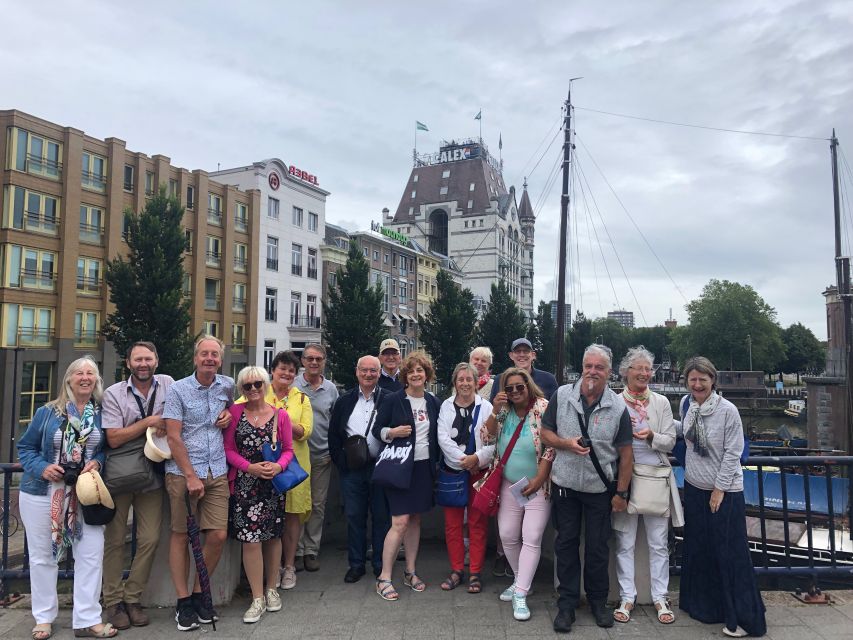
- See the city through an architect’s eyes: Guides including Tania, Tanya, Tina, and Silvia explain buildings in their historical and social setting.
- Follow a clear route to the Maas: The walk passes Lijnbaan, City Hall, Timmerhuis, Sint Laurens church, Markthal, Cube Houses, and Erasmus Bridge.
- Expect a fast but useful overview: The route covers 3 to 4 kilometers, with plenty to see and hear in two hours.
- Good value for architecture fans: At $53 per person, the tour costs more than a basic city walk but includes specialist guidance and a focused route.
- Rain or shine: Wear comfortable shoes and bring weather-appropriate clothing. There is no food, drink, or transport included.
Why Rotterdam needs an architectural walking tour
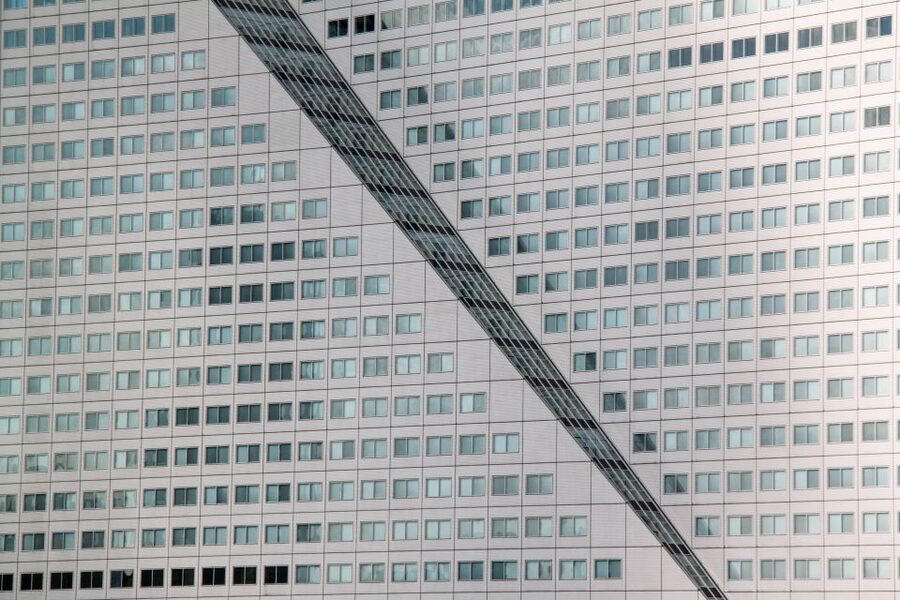
Rotterdam can feel confusing at first. Its center has grand older buildings, stark postwar blocks, experimental housing, glass office towers, and fresh waterfront construction. In many cities, these styles would be separated into different districts. Here, they often sit within a short walk of one another.
That mix is not accidental. Rotterdam’s central area was heavily damaged by bombing in 1940, and the city had to make major choices about what to rebuild, what to replace, and what kind of city to create next. The result is a place where architecture tells a story about war, trade, housing, shopping, transport, and city planning.
I find this kind of guided walk more useful than simply collecting photographs of unusual buildings. A local architect can point out why a building has a certain shape, how a public space works, or why a modern structure was placed beside an older church. You still get the photographs, but you also gain a way to read the city after the tour ends.
The English-speaking guides have different personalities and backgrounds, but the strongest part of the experience is their ability to connect buildings with Rotterdam’s development. Silvia, for example, has worked as an architect in Rotterdam and has used historical photographs to show how the city changed. Tania, Tanya, and Tina have also been praised for making technical subjects clear and approachable.
More Walking Tours in Rotterdam
- Rotterdam: Highlights & Gems Walking Tour with Dutch Local
★ 5.0 · 133 reviews - Walking Rotterdam Food Tour
★ 5.0 · 89 reviews - Rotterdam: Guided Walking Food Tour
★ 4.6 · 55 reviews
Starting beneath the clock at Rotterdam Centraal
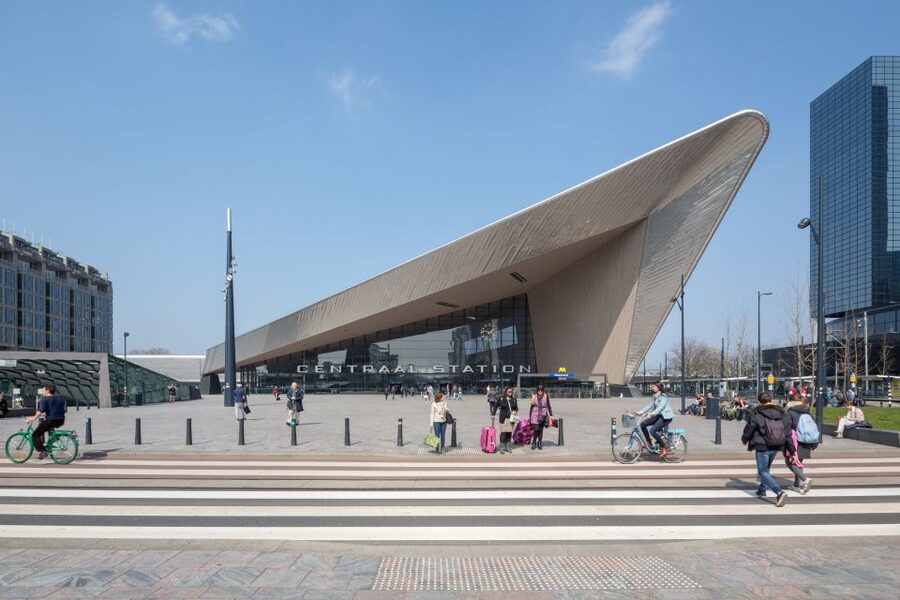
The meeting point is beneath the clock at Rotterdam Centraal Station. This is practical for a city tour because the station is easy to reach by train, tram, metro, and local transport. You do not need to make your way to a distant neighborhood before the walk begins.
Rotterdam Centraal itself is an appropriate starting point. The newer station is one of the city’s major modern landmarks, and its bold form introduces the architectural tone of the tour right away. Your guide uses the station and its setting to begin a broader discussion of Rotterdam’s growth, transport needs, and changing identity.
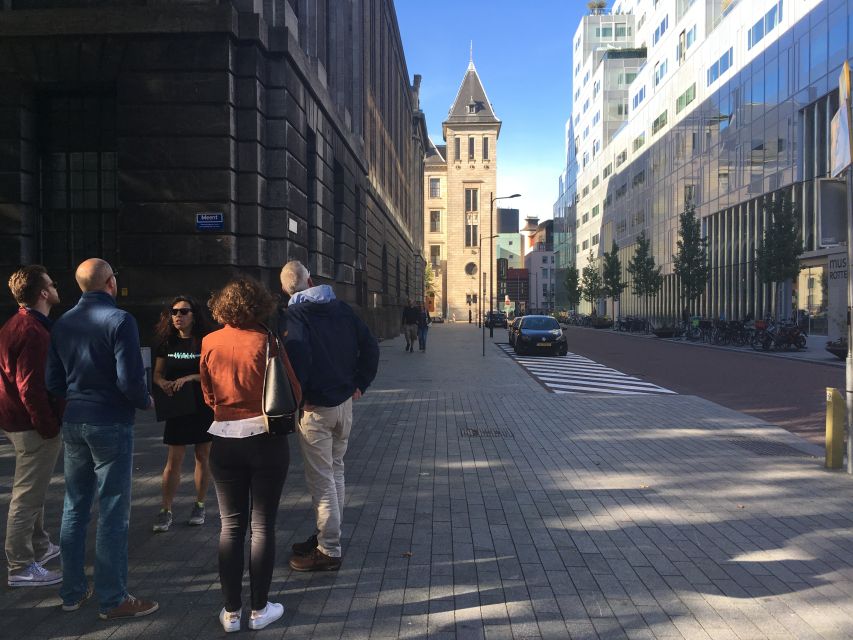
The first part of the walk helps you get your bearings. Instead of beginning with a long lecture, the route moves through the city while the guide explains what you are seeing. This works well if you have only just arrived and want a useful orientation before exploring alone.
Bring shoes that can handle several kilometers of pavement. The route is wheelchair accessible, but the distance and steady movement still matter. If you are traveling with children, youngsters aged 0 to 12 can join free, though parents should consider the length, subject matter, and two-hour duration.
Lijnbaan and the city’s postwar choices
The Lijnbaan area is one of the most useful early stops because it shows how Rotterdam approached city life after the war. Rather than treating the center as a collection of isolated monuments, the guide explains how streets, shops, open space, and pedestrian movement were planned together.
This is where the tour moves beyond the simple idea that Rotterdam is full of strange-looking buildings. The city’s design also concerns how people move through it and how commercial areas function. Lijnbaan gives you a chance to consider the relationship between architecture and ordinary daily life.
The guide also places the city’s rebuilding in its social setting. You learn about Rotterdam’s industrial past, its role as a port city, and the pressures that shaped its center. That context makes later stops easier to understand. The tour is not just about architects making eye-catching forms. It is also about a city trying to house people, support business, and present a new face after destruction.
The pace can be brisk here. If the group is large or someone walks slowly, catching every explanation may take effort. Guides do pause, and some have been especially good at waiting for the slower members of the group, but you should not expect a leisurely stroll with long periods at every building.
City Hall, Timmerhuis, and old meets new
City Hall gives the route a change of tone. Rotterdam is famous for its modern center, but the city also has older buildings that survived or were restored. Seeing them alongside newer architecture helps you understand that Rotterdam is not simply a city of futuristic experiments.
The Timmerhuis then brings you back to contemporary design. Its form and function provide a useful example of how a large modern building can be integrated into the center rather than treated as an isolated object. Your guide explains the thinking behind the building and how it relates to the surrounding streets.
This is one of the tour’s best features: you are encouraged to look at spaces between buildings, not only at façades. An architect’s explanation can draw your attention to scale, access, public use, and the way one project affects its neighbors. Those are details easy to miss if you are walking around with only a guidebook.
At this point, you also begin to see why Rotterdam appeals to people who enjoy cities as works in progress. Its architecture is not frozen in one period. Buildings reveal different ideas about what a modern city should be, and those ideas sometimes cooperate and sometimes clash.
Other guided walks around Rotterdam:
- Anne Frank’s Story – Guided Walking Tour through Amsterdam
★ 5.0 · 11,619 reviews - Amsterdam: Life of Anne Frank and World War II Walking Tour
★ 4.8 · 10,467 reviews - Absolutely Amsterdam – the Essential Introductory Walking Tour
★ 5.0 · 3,629 reviews - Amsterdam: Anne Frank Guided Small Group Walking Tour
★ 4.8 · 2,722 reviews
Sint Laurens church and the memory of 1940
The Sint Laurens church provides an important historical counterpoint. It is one of the city’s most recognizable older structures and helps show how Rotterdam’s prewar past remains present within the rebuilt center.
The church is especially useful in understanding the scale of wartime damage and the choices that followed. The tour’s explanation of Rotterdam’s destruction and rebirth gives the modern buildings more meaning. Without that background, the city can look like a random collection of concrete, glass, brick, and steel.
One memorable detail connected with the bombing is the use of lights embedded in sidewalks to outline the part of the city that was destroyed. If that feature is pointed out during your walk, it gives the history a physical presence under your feet. It is the sort of small urban detail you could easily pass without a guide.
This section may appeal most to visitors who want more than design vocabulary. The tour links architecture with memory, civic identity, and the choices made by planners and residents. It also avoids presenting rebuilding as a simple success story. The city’s development involved decisions about what to preserve, what to replace, and how much room to give new ideas.
Markthal and the Cube Houses
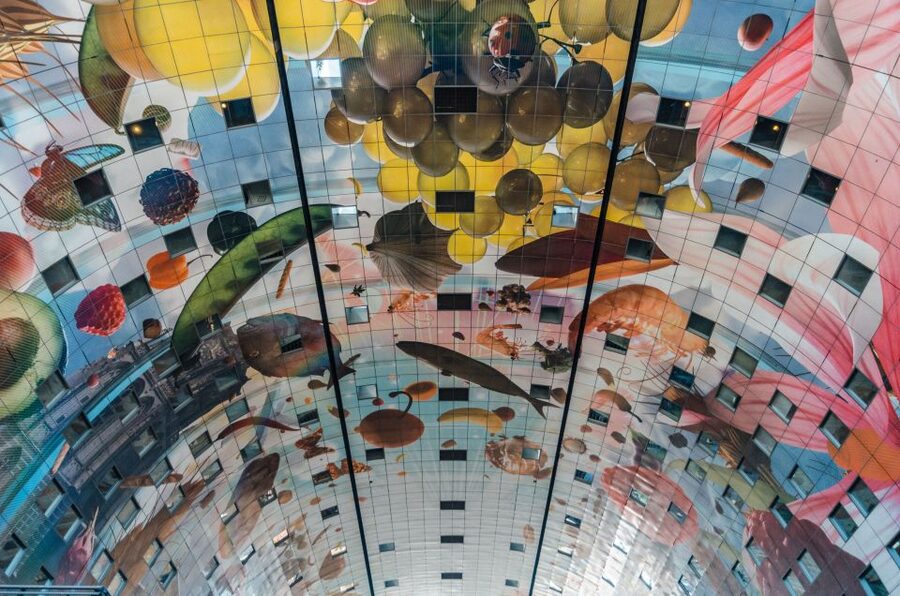
The Markthal is one of Rotterdam’s most popular modern sights, and the tour takes you inside. That matters because the building’s interior offers a different experience from seeing its exterior in a photograph. You can look up at the dramatic vaulted artwork while the guide explains how the market hall fits into the city’s newer urban plans.
The Markthal is also a practical place to pause and absorb the contrast between food, housing, retail, and public space. It is not included as a food tour, so food and drinks are your own expense. Still, the building gives you a lively example of how architecture can combine several uses in one project.
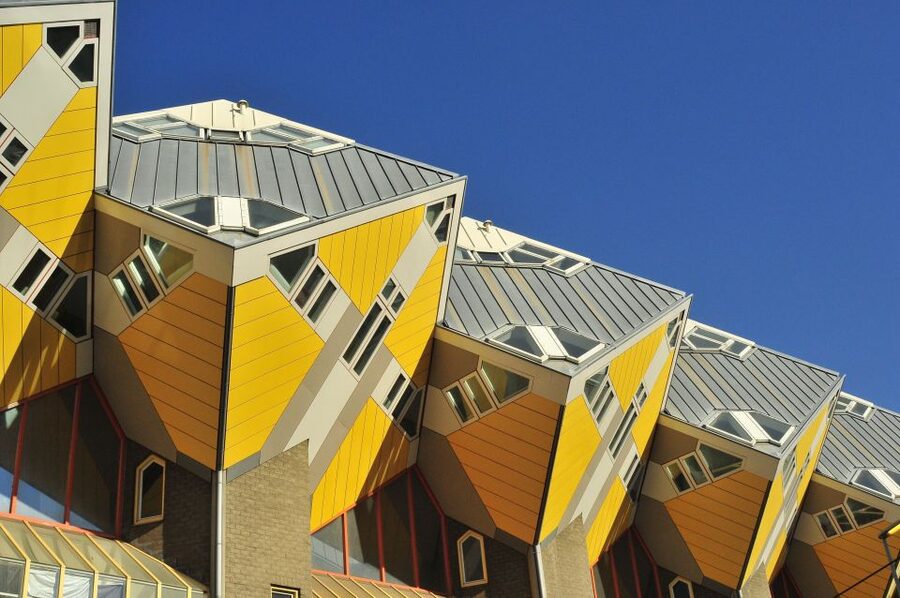
The route then passes the Cube Houses. These are among Rotterdam’s most photographed buildings, and you will have a chance to consider their unusual tilted forms and urban layout. The guide places them in the larger story of experimental housing rather than treating them as a quick photo stop.
One useful point is that the tour does not pretend every famous building is beyond criticism. A 2023 participant felt the Cube Houses had been praised for too long and would rather have seen social housing projects included. That is a fair limitation to keep in mind. The Cube Houses are visually striking, but visitors who want a fuller picture of Rotterdam’s housing policies may find this route too focused on landmark architecture.
Walking toward the Maas and Erasmus Bridge
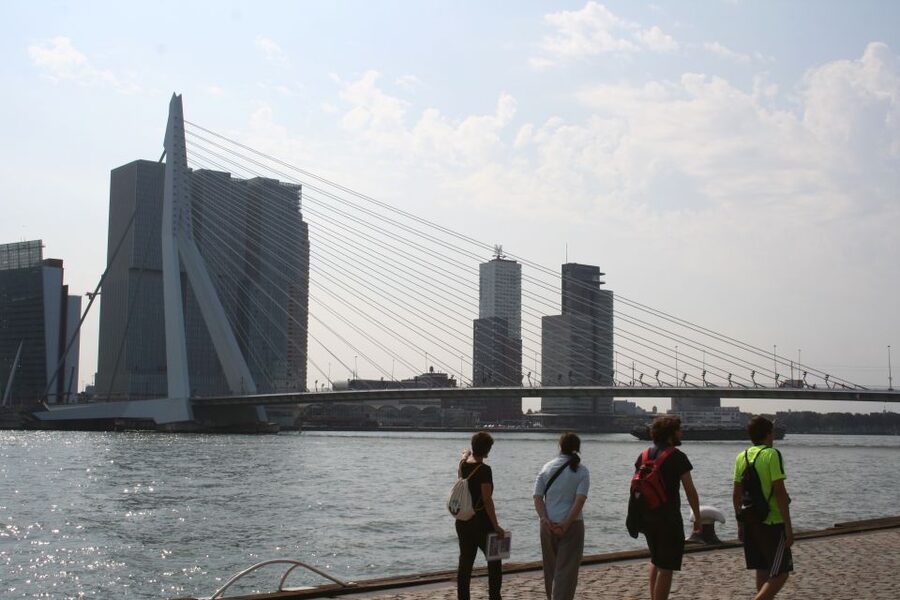
The final stretch leads toward the riverside and the newer development on the South Bank. Here, the city opens up, and the view shifts from individual buildings to Rotterdam’s high-rise skyline and its relationship with the river.
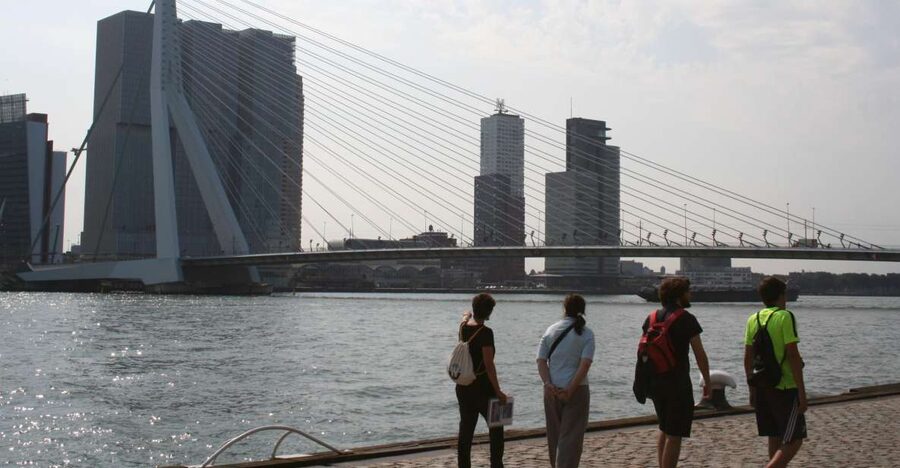
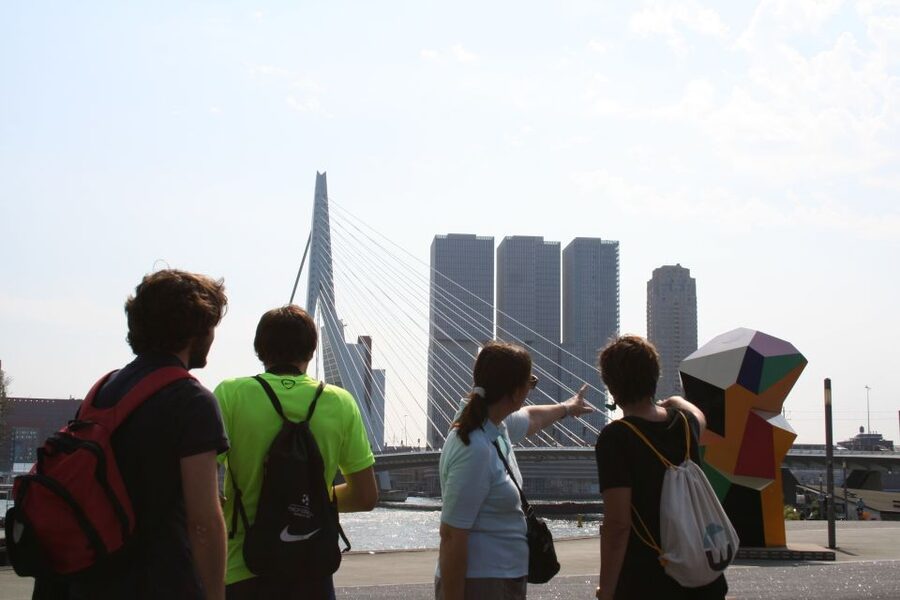
The Erasmus Bridge is the visual payoff. Its shape is easy to recognize, but the guide helps connect it to the city’s growth, river crossings, and redevelopment plans. You get a chance to look back toward the center and see how the various architectural periods combine in one broad view.
This ending works well because it gives the tour a sense of direction. You begin at the main railway station, pass through the central city, and finish beside the water. Along the way, you see Rotterdam not as a museum of buildings but as a working city that continues to change.
Do not expect a full tour of the harbor or South Bank. The walk focuses on the central route and riverside view, and two hours is not enough to cover every important project in Rotterdam. One participant suggested that a bicycle version could work well for seeing more of the harbor area. That is useful advice if you want a wider architectural survey.
How much value do you get for $53?
At $53 per person, this is not the cheapest way to spend two hours in Rotterdam. You can walk through the center on your own at no cost, and many of the buildings are easy to find.
The difference is the guide. You are paying for a specialist who can explain why the buildings look as they do, how the city changed after 1940, and what the architecture says about Rotterdam’s social and economic goals. If you enjoy design, urban planning, or city history, that added layer makes the price reasonable.
The value is also stronger if this is your first visit. The route gives you a clear mental map of central Rotterdam and helps you decide where to return later. Several guides have also offered practical suggestions about restaurants, sights, and other things to do, though those extras depend on the conversation and guide.
For a private group, the cost may feel easier to justify because you can ask more questions and set a more personal rhythm. A standard group tour can still work well, but you should expect a fixed route and a fairly full two hours.
Who should take this walk?
I would recommend it most strongly to:
- Architecture and urban design fans who want explanations, not just photographs
- First-time visitors who want a strong introduction to central Rotterdam
- People interested in the city’s rebuilding after the 1940 bombing
- Visitors arriving by train who want to start sightseeing immediately
- Families with older children who can manage 3 to 4 kilometers
- Anyone who likes seeing how a city works in daily life
You may want something else if you prefer a slow stroll, a food-focused outing, or a tour that spends more time inside buildings. The route has a lot of information packed into two hours, and some people will want more pauses.
The tour is conducted in English and operates rain or shine. Rotterdam’s weather can change quickly, so a waterproof layer and comfortable shoes are sensible. Wheelchair access is available, but the full distance remains an important consideration.
Should you book the Rotterdam architecture walk?
Book this tour if you want to understand why Rotterdam looks the way it does. The strongest guides, especially Tania and Silvia, bring architecture down to earth and connect buildings with war, industry, housing, planning, and daily life.
Skip it if your main goal is a relaxed photo walk or a detailed tour of social housing and harbor projects. The route favors central landmarks and keeps moving.
For most first-time visitors, I think it is a smart early activity. Take the walk near the start of your stay, then return to the Markthal, Cube Houses, or riverside with a better sense of what you are looking at. At $53, it earns its keep when you want Rotterdam to make sense, not merely look unusual.
FAQ
Where does the Rotterdam architecture tour begin?
Meet the guide at Rotterdam Centraal Station, underneath the clock.
How long is the walking tour?
The tour lasts two hours.
How far do you walk?
The route covers approximately 3 to 4 kilometers.
What language is the tour conducted in?
The live tour guide speaks English.
Is the tour wheelchair accessible?
Yes, the activity is wheelchair accessible.
Can children join the tour?
Children aged 0 to 12 can join for free. Parents should consider the distance, content, and two-hour duration before booking.
What happens if it rains?
The tour operates rain or shine. Bring weather-appropriate clothing and comfortable shoes.
Just added in Rotterdam
- Rotterdam: Highlights & Gems Walking Tour with Dutch Local★ 5.0 · 133 reviews
- Biking Rotterdam Food Tour with Local Guide★ 5.0 · 82 reviews
- Rotterdam Highlights & Spies: Interactive City Game★ 4.0 · 51 reviews
- Rotterdam Bike Tour – all the Highlights★ 5.0 · 105 reviews
- Walking Rotterdam Food Tour★ 5.0 · 89 reviews
- Rotterdam: Food Tour by Bike★ 4.8 · 31 reviews
- Rotterdam: Guided Walking Food Tour★ 4.6 · 55 reviews
- Rotterdam: City Highlights Guided Bike Tour★ 4.8 · 112 reviews
Walking Tours, compared.
Anne Frank’s Story – Guided Walking Tour through Amsterdam
Read our review →
Life of Anne Frank and World War II Walking Tour
Read our review →
Anne Frank Walking Tour – Guided in EN/DE/IT/ES
Read our review →

Anne Frank Walking Tour Amsterdam Including Jewish Cultural Quarter
Read our review →
Amsterdam Highlights Walking Tour: Small Group Experience
Read our review →Browse the lists this tour appears in