
Reviewed · VAN GOGH MUSEUM TICKETS
Van Gogh Museum Amsterdam Small Group Guided Tour
Van Gogh’s paintings are easy to recognize, but much harder to understand as a connected story. This two-hour guided walk through the permanent collection follows his development from dark Dutch peasant scenes to the bright, urgent brushwork of Arles and the final works from Auvers.
I like the small group limit of 14 and the wireless headsets, which help you hear without crowding around the guide. I also like the chance to stay in the museum after the tour ends. The main drawback is that two hours moves quickly, and some people may want less time on the self-portraits and more time with the famous late paintings.
Key points
- A clear artistic timeline: Follow Van Gogh from The Potato Eaters through Paris, Arles, Saint-Rémy, and Auvers.
- Small groups: A maximum of 14 adults gives you a better chance to ask questions and keep up.
- Strong guides: Martina, Claire, Kawika, Marlene, Holly, Roland, Sylvia, and others have been praised for linking Van Gogh’s life to his methods and paintings.
- Wireless headsets: The Whisper System makes it easier to hear in crowded galleries, and one participant found it useful even with hearing aids.
- Morning or afternoon choices: You can fit the tour around the rest of your Amsterdam plans.
- Stay afterward: The guided portion ends inside the museum, so you can continue viewing the collection until closing time.
Why Van Gogh Makes More Sense in Sequence
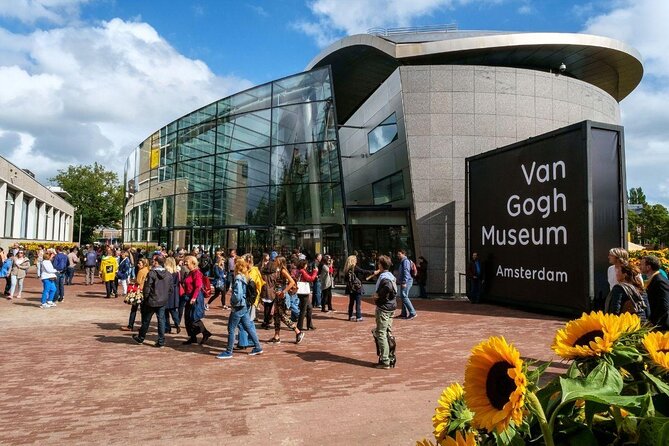
The Van Gogh Museum is one of the rare places where you can follow a single artist across nearly his whole career. That matters because Van Gogh did not begin with the swirling color and thick brushwork seen on posters and tote bags.
The early paintings are heavier and more restrained. His Paris years bring lighter color and new ideas. Arles brings yellow walls, flowers, bedrooms, and an intense interest in Japanese prints. The final rooms show a painter working with speed and force during a troubled period.
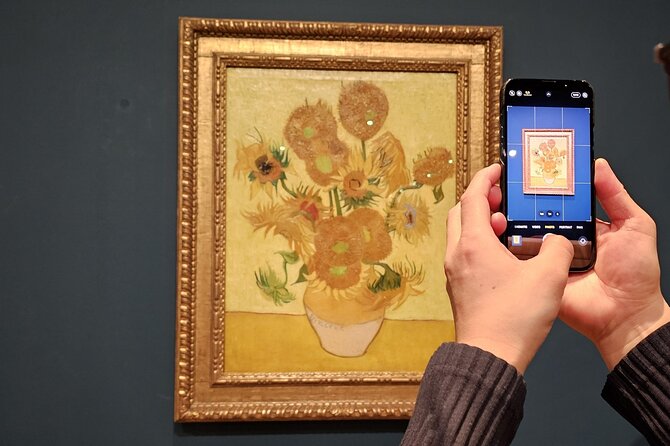
I find that sequence more useful than simply ticking off famous works. You see not just Sunflowers, but the path that led to it. You see why color became so important, how Van Gogh responded to other artists, and how his technique changed when he moved from the Netherlands to France.
The guide’s job is to keep that story clear without turning the visit into a lecture. Guides such as Martina and Claire have been praised for making the life and art connect. Kawika has also been singled out for explaining paint, brushwork, and the European art movements around Van Gogh. Those details help you look at the paintings instead of just recognizing them.
More Museums in Amsterdam
- Amsterdam: Van Gogh Museum Ticket
★ 4.7 · 52,054 reviews - Moco Museum Amsterdam Entrance Tickets with Banksy & More
★ 4.4 · 10,088 reviews - Amsterdam: The Upside Down Museum Entrance Ticket
★ 4.4 · 9,506 reviews
Meeting at Cobra Café and Getting Started
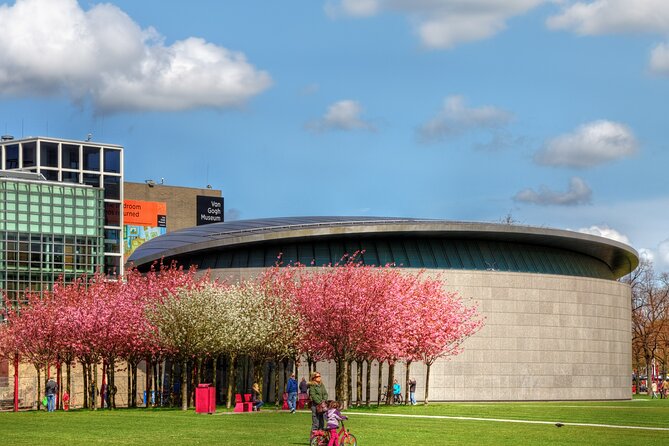
The meeting point is Cobra Café at Hobbemastraat 18, near Museumplein. The tour begins there, not at the museum entrance, so check the address carefully and allow time to reach the area by public transportation.
You will need to arrive ready for a museum visit and confirm your meeting details when booking. The experience is offered in English and is limited to adults age 18 and older. The maximum group size is 14 people, which is small enough for a guide to keep the group together while still allowing questions.
The wireless Whisper System is a practical feature rather than a flashy extra. Museums can be noisy, and groups often spread out when people stop to examine a painting. With a headset, you can stand at a comfortable distance and still follow the explanation. One participant specifically found the system helpful while using hearing aids.
The tour includes admission to the permanent collection. Special exhibitions are not part of the guided portion, though you can visit those independently after the tour if you choose.
Self-Portraits: Meeting the Artist Face to Face
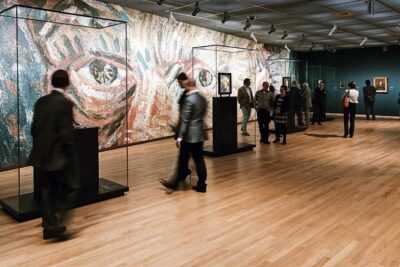
The first stop focuses on Van Gogh’s self-portraits and lasts about 20 minutes. This may sound familiar, since his face appears in so many reproductions, but the museum’s group of self-portraits gives you a useful starting point.
Van Gogh used himself as a readily available model. The paintings also show how he tested color, brush direction, and surface texture. His face changes, but so does the way he builds it. Look closely at the marks around the eyes, beard, hat, and background.
This is one part of the tour where opinions may differ. One person felt that too much time went to the self-portraits, especially with so many other major works ahead. If you already know this section well, you may wish the guide had moved faster.
Still, it sets up the main theme of the visit: Van Gogh’s style was not fixed. It developed through constant testing. A good guide makes that change visible before you reach the better-known paintings.
The Potato Eaters and Van Gogh’s Dutch Years
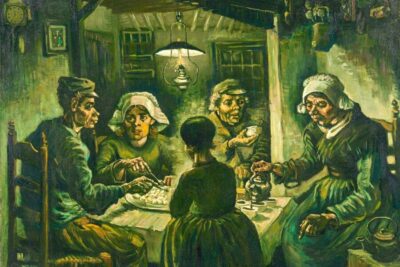
The next section covers Van Gogh’s early work and includes paintings connected to Jean-François Millet and Jules Breton. You will see Woman Lifting Potatoes, the wall of portraits known as Head of a Peasant Woman, and The Potato Eaters.
This is the part of the collection that can surprise people who know Van Gogh mainly through bright yellow flowers. The colors are dark, earthy, and limited. The figures look worn rather than glamorous. Van Gogh wanted to show working people as he saw them, with an honest sense of effort and hardship.
The Potato Eaters is the key work here. The guide may point out the rough hands, cramped room, and unusual faces. The painting is not polished in the conventional sense. That is the point. Van Gogh was aiming for emotional truth and a sense of shared labor.
The references to Millet and Breton help place Van Gogh’s early work in context. He admired artists who treated rural workers as serious subjects. You gain more from the painting when you see it as part of that interest, rather than as an isolated early experiment.
This stop lasts about 20 minutes. Listen for comments on the technical limits of the early style, but do not expect the same color drama found later. The contrast is important.
Other ways into the Van Gogh Museum from Amsterdam:
- Amsterdam: Van Gogh Museum Ticket and City Canal Cruise
★ 4.6 · 3,899 reviews - Amsterdam: Van Gogh Museum Ticket & Canal Cruise
★ 4.5 · 3,304 reviews - Van Gogh Museum Amsterdam Exclusive Tour w/ Reserved Entry
★ 5.0 · 1,760 reviews - Van Gogh Museum Tour Reserved Entry Semi Private
★ 5.0 · 1,437 reviews
Paris from 1886 to 1888: A Lighter Palette
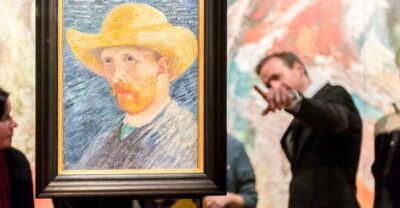
Van Gogh moved to Paris between 1886 and 1888, and the next group of paintings shows a sharp change. The tour includes Self-Portrait with Felt Hat, Still Life with Absinthe, In the Café: Agostina Segatori in Le Tambourin, and Garden with Courting Couples.
Paris exposed Van Gogh to newer approaches to color and brushwork. His palette became lighter, and the paintings began to feel more open. The self-portrait with the felt hat shows him studying modern painting while also studying himself.
The café painting is useful because it brings together people, place, and style. Still Life with Absinthe may seem quieter, but it shows how ordinary objects became a testing ground for color. The garden scene lets you compare his handling of figures and outdoor light.
I like this stop because it prevents the familiar myth of Van Gogh as a painter who appeared fully formed. You can see him adjusting. He was looking at other artists, trying new colors, and learning how small changes in brushwork could alter the mood of a scene.
This is also where a guide can make the museum feel less like a line of famous canvases. Claire has been praised for tying Van Gogh’s experiences to his art, while other guides have used an iPad to show photographs and related material. Those tools can be useful when they clarify a point, though the paintings should remain the focus.
Arles: Sunflowers, The Bedroom, and Japanese Prints
The Arles section is likely the emotional center of the tour. Van Gogh moved to the south of France in 1888, and the paintings become more forceful and colorful. The group includes Sunflowers, Almond Blossoms, The Bedroom, Japanese paintings copied from prints, and The Yellow House.
Sunflowers needs no introduction, but seeing the actual brushwork matters. Reproductions flatten the surface and often make the yellow look simple. In person, you can notice the variations in color and the thick marks that give each flower a different presence.
The Bedroom is smaller and more personal. Its slightly distorted furniture and intense colors make the room feel both familiar and unsettled. A guide can point out how Van Gogh used color and perspective to shape mood rather than simply record a room.
The Japanese prints and copies are important because Van Gogh admired Japanese art and borrowed ideas from it. Look for the simplified shapes, strong outlines, unusual framing, and attention to flat areas of color. This influence helps explain why some Arles paintings feel less like conventional European scenes.
The Yellow House adds another layer. It connects the bright color of Arles with Van Gogh’s hope for a shared artistic life. The painting is not just an attractive yellow building. It carries an idea about work, friendship, and the future.
This section takes about 20 minutes, which is enough for a focused explanation but not enough to linger at every work. If Sunflowers or The Bedroom is a personal priority, note where they are and return after the guided portion.
Saint-Rémy: Beauty Under Pressure
On the third level, the tour moves to Saint-Rémy-de-Provence. The featured works include Almond Blossoms, Wheatfield with a Reaper, Iris, and Pieta, based on Delacroix.
The paintings here show Van Gogh working with remarkable energy. Iris is a clear example of how he could organize a scene around one strong color while giving each flower its own direction and weight. The blue and green shapes feel lively without becoming random.
Wheatfield with a Reaper brings the figure and the land together. The reaper is not merely a worker in the distance. The figure becomes part of a larger cycle of labor, sunlight, and mortality. A guide can help you see how Van Gogh used repeated marks to make fields seem to move.
The Pieta reveals another side of his practice. It is based on Delacroix rather than a direct view of nature. This matters because Van Gogh was not only an observer. He also reworked images by other artists, using them as a starting point for his own color and emotion.
This room benefits from a guide who can stay precise and avoid turning every painting into a simple story about illness. The strongest explanations connect his mental state with his working methods but do not reduce the art to biography alone. That balance is one reason guides such as Marlene and Holly have been praised for their pace and clear explanations.
Auvers: Tree Roots and Wheatfield with Crows
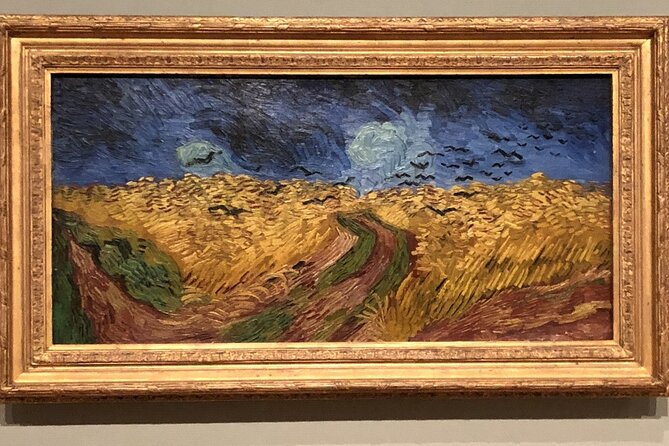
The final section takes you to the Auvers room and includes Tree Roots and Wheatfield with Crows. The visit allows roughly 15 minutes here, so the pace becomes tighter.
Tree Roots rewards close looking. The subject may appear ordinary, but the tangled forms show Van Gogh pushing paint and line toward something more physical and expressive. Instead of presenting a neat view, the painting draws you into a busy arrangement of trunks, earth, and color.
Wheatfield with Crows is one of the museum’s best-known works. It is often treated as a final statement, but a careful guide should resist neat conclusions. The paths, sky, field, and birds create a charged composition, yet the painting deserves attention as a work of structure and color, not only as a piece of biography.
The tour ends inside the Van Gogh Museum at Museumplein 6. This is a real advantage. You do not have to leave just as the story reaches its final rooms. You can continue through the museum on your own until closing time and revisit the paintings that moved too quickly during the guided walk.
What Two Hours Gives You for $77.43
The price is $77.43 per person. That is more than basic museum admission, so the value depends on how much you want interpretation rather than simple entry.
You are paying for admission to the permanent collection, a two-hour English guided tour, a small group capped at 14, and the headset system. You are also paying for a route that gives the collection a clear order. If you know little about Van Gogh or want help noticing technique, that structure can make the extra cost worthwhile.
The strongest value comes from the guides. Martina has been praised for her enthusiasm and for explaining Van Gogh’s life, style, and struggles. Claire has a gift for connecting biography and painting. Kawika has focused on paint types, methods, and the art movements around Van Gogh. Roland has been noted for keeping a good pace while still covering the expected works.
The price may feel high if you prefer to read labels, use your own audio guide, or spend long stretches with one painting. One person found the guided experience disappointing and felt an audio guide would have been better. That is a fair warning: a guide’s quality affects the experience more than any museum technology.
You also do not receive food or drinks, and special exhibitions require a separate visit at your own pace. Plan the tour around those limits.
Timing, Group Size, and Who Should Book
Morning and afternoon departures make this easier to fit into an Amsterdam schedule. The tour lasts about two hours, but you should allow extra time for reaching Cobra Café and for staying afterward if you want to explore more.
I would choose this for an adult who wants a guided introduction rather than a fast photo stop. It suits first-time museum visitors, couples with different levels of interest in art, and anyone who wants to understand why Van Gogh’s work changed so much.
It can also work for someone who does not usually care for museums. A clear story, a limited route, and a guide who explains technique can make the collection easier to follow. One participant said a less art-focused partner enjoyed the experience because the guide brought the paintings and the artist’s life together.
You should think twice if you dislike fixed pacing. Two hours means the guide decides how long each section receives. The route gives roughly 20 minutes to most areas and about 15 minutes to the Auvers room. You can stay afterward, but the guided portion itself will not let you study every painting at length.
Free cancellation is available if you cancel at least 24 hours before the start time. Changes or cancellations inside that window are not refunded. Confirmation is provided at booking, and most people can participate, but the tour is limited to adults 18 and older.
Should You Book This Van Gogh Tour?
Book it if you want a connected story rather than a room-by-room wander. The tour covers the major stages of Van Gogh’s career, uses a manageable group size, and leaves you inside the museum with time to continue alone.
The best reason to choose it is the guide. Martina, Claire, Kawika, Marlene, Holly, Roland, and the other guides have been praised for enthusiasm, clear explanations, helpful pacing, and the ability to link technique with life. The one serious risk is that a less effective guide could make the extra cost feel unnecessary.
At $77.43, this is not the budget way to enter the museum. It is a reasonable choice if you value expert interpretation, want to hear easily through a headset, and plan to use the remaining museum time afterward. If you already know Van Gogh well and prefer complete freedom, buy the simplest museum option instead. For most first-time visitors who want the paintings to make more sense, this guided format is worth considering.
FAQ
How long does the Van Gogh Museum guided tour last?
The tour lasts approximately two hours.
What language is the tour offered in?
The tour is offered in English.
How many people can join the tour?
The maximum group size is 14 travelers.
Is museum admission included?
Yes. Admission to the Van Gogh Museum’s permanent collection is included.
Can I stay in the museum after the guided tour?
Yes. The tour ends inside the Van Gogh Museum, and you can stay until closing time to explore independently.
Are special exhibitions included?
No. Special exhibitions are not part of the guided tour, but you can visit them afterward at your own pace.
Where does the tour begin?
The meeting point is Cobra Café, Hobbemastraat 18, 1071 ZB Amsterdam.
Where does the tour end?
The tour ends inside the Van Gogh Museum at Museumplein 6, 1071 DJ Amsterdam.
Who can participate in the tour?
The tour is available only to adults age 18 and older. Most adults can participate, and the museum is near public transportation.
More collections around Amsterdam
- Amsterdam: Red Light Secrets Museum Entry Ticket
★ 4.2 · 5,722 reviews - Amsterdam’s Weirdest Museum: Believe It or Not!
★ 4.5 · 4,086 reviews - Amsterdam: Rembrandt House Museum Entrance Ticket
★ 4.7 · 3,385 reviews - Amsterdam: NEMO Science Museum Ticket
★ 4.4 · 2,979 reviews
Just added in Amsterdam
- Become a Dutch Art Piece Photo Shoot in Amsterdam – Single Portrait★ 5.0 · 65 reviews
- Become a Dutch Art Piece Photo Shoot in Amsterdam★ 5.0 · 100 reviews
- Full-Day Private Historic Royal Tour around Palaces and Castles★ 5.0 · 16 reviews
- Private transfers from or to Schiphol (AMS) airport Amsterdam★ 5.0 · 235 reviews
- Private Taxi Airport Transfer to or from Schiphol Airport (AMS)★ 4.5 · 66 reviews
- Castle De Haar Small-Group Tour from Amsterdam★ 5.0 · 101 reviews
- Amsterdam: ‘Boom Chicago’ English Comedy Show★ 4.5 · 213 reviews
- English Comedy Show Amsterdam: Boom Chicago★ 4.5 · 112 reviews
Van Gogh Museum Tickets, compared.
Van Gogh Museum Amsterdam Exclusive Tour w/ Reserved Entry
Read our review →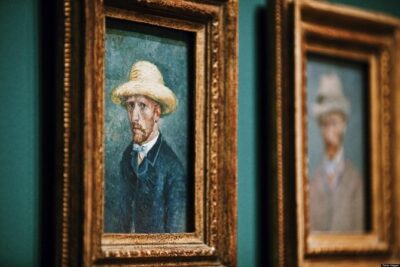
Van Gogh Museum Tour Reserved Entry Semi Private
Read our review →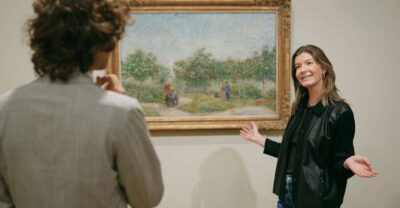
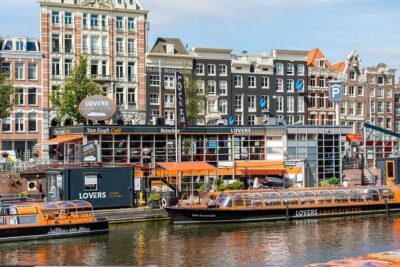
Combo Ticket: Van Gogh Museum Ticket and 1-Hour Canal Cruise
Read our review →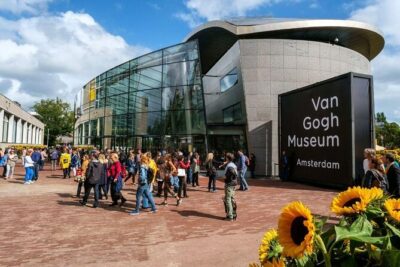
Van Gogh & Rijksmuseum w/ Reserved Entry Semi-Private 8ppl Max
Read our review →
Van Gogh Museum Masterpieces Tour up to 8 guests
Read our review →Browse the lists this tour appears in