
Reviewed · RED LIGHT DISTRICT TOURS
Amsterdam Red Light District & Coffee Shop Tour
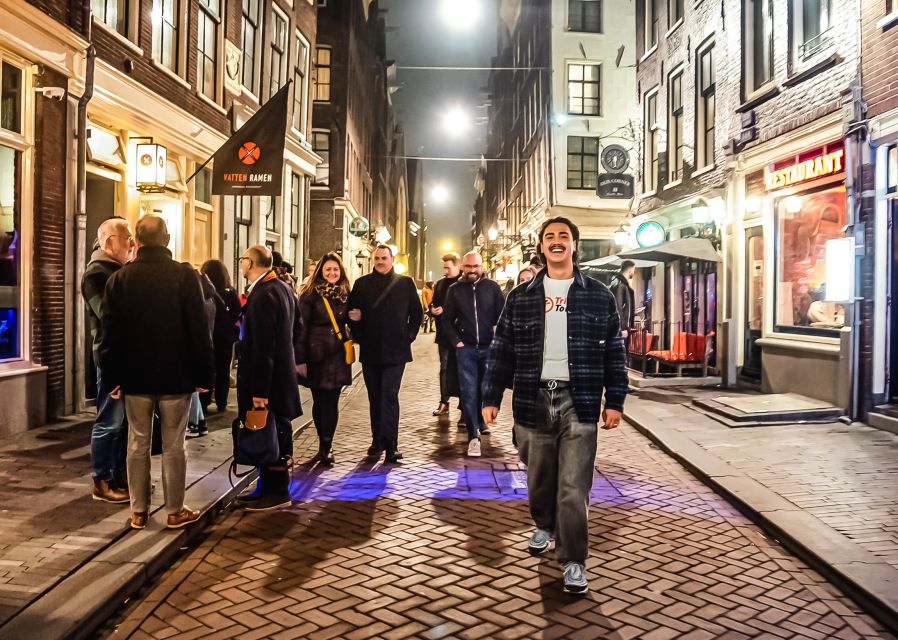
Amsterdam’s Red Light District makes more sense when you hear the story behind it. This two-hour walk connects prostitution, coffee shop culture, canals, Chinatown, and local politics instead of reducing the area to a row of red-lit windows. Guides such as Ben, Robin, Pilar, and Aarre have been especially good at turning the walk into a clear, lively history lesson.
I like the tour’s small-group and private options, which make it easier to ask direct questions without turning the evening into a spectacle. I also like the price: at $29, you get a local-led walk through several central areas and a useful introduction to Amsterdam’s social rules. The main drawback is that the route covers narrow, crowded streets and is not suitable for people with mobility impairments.
Key points at a glance
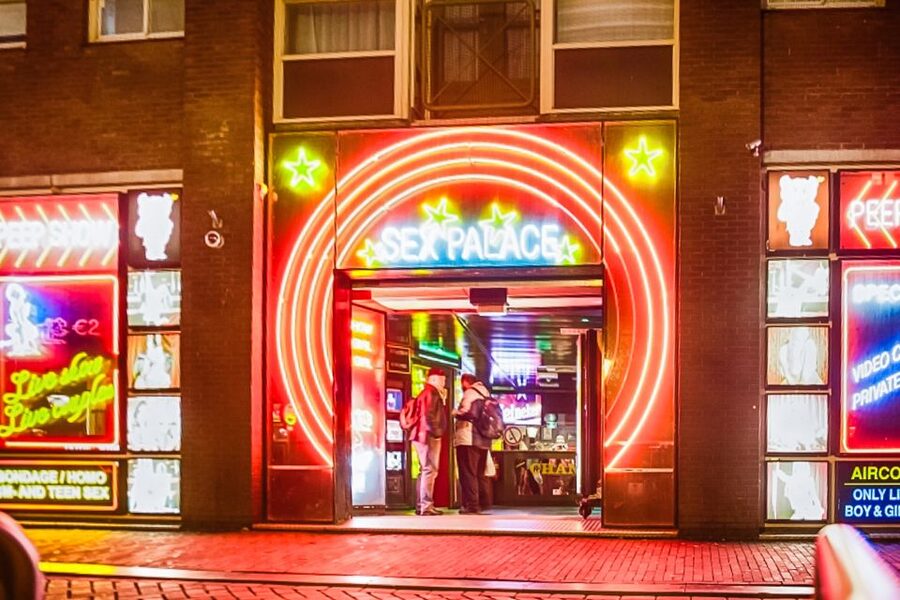
- Two hours on foot: The route links Chinatown, Zeedijk, Nieuwmarkt, the Red Light District, and several notable streets.
- More than window viewing: You hear about the legal status of prostitution, the challenges faced by sex workers, and the political questions around the district.
- Coffee shop context: The tour explains Amsterdam’s coffee shop culture and includes the area around The Jolly Joker, with the coffee shop portion restricted to people aged 18 and over.
- Narrow Amsterdam streets: You pass the Narrowest House in Europe and walk through some of the city’s tightest lanes.
- Guides with personality: Ben, Robin, Pilar, Aarre, Adam, and others are praised for humor, local stories, clear explanations, and a respectful tone.
- Easy to cancel: You can cancel up to 24 hours before the start for a full refund, and reserve now while paying later.
Why this Amsterdam walk is more than a red-lit photo stop
I think this experience works best as an orientation walk. Amsterdam’s Red Light District can feel confusing at first: historic churches sit beside adult businesses, quiet canals run past crowded lanes, and Chinatown begins almost without warning. A guide helps you understand how those pieces fit together.
The subject matter is handled as a social and historical topic rather than a dare. You learn how Amsterdam developed its reputation for tolerance, how prostitution became regulated, and why the present system still raises difficult questions. That approach matters. It lets you look at the neighborhood with curiosity and respect, rather than treating people who work there as part of a sightseeing display.
The strongest part is the commentary. Ben is often described as funny, energetic, and full of stories. Robin brings a local perspective and tends to explain the wider city as well as the district. Pilar has been especially attentive to group comfort, including for solo women, while Aarre is known for keeping the walk lively with quick facts and humor.
Of course, the exact guide shapes the experience. The tour is built around a live guide in English, German, Dutch, or Spanish, so the pace and tone may vary. Still, the repeated praise for clear explanations and friendly conversation suggests that the human element is a major reason to book.
Other Red Light District walks in Amsterdam:
- Amsterdam: Red Light Secrets Museum Entry Ticket
★ 4.2 · 5,722 reviews - Amsterdam: Red Light District Tour in German/English/Italian
★ 4.9 · 5,623 reviews - Amsterdam: Red Light District Pub Crawl with Unlimited Shots
★ 4.1 · 2,130 reviews
Starting near the Basilica of Saint Nicholas
The meeting point depends on the option you select. Possible starting points include the Basilica of Saint Nicholas, Voyager Hotel Amsterdam, and ParkBee NH Collection Amsterdam Barbizon Palace. Check your booking details carefully, since the listed locations are close to the center but are not the same place.
This central starting area is useful because the route quickly enters the older part of Amsterdam. You should arrive ready to walk for two hours, with comfortable shoes and a little patience for bicycles, pedestrians, and narrow pavement.
The walk does not use a bus or boat. The whole route is on foot, and the individual sections are listed at roughly ten minutes each. That makes the experience feel connected rather than like a series of unrelated stops, but it also means you should not expect much time to sit down.
Chinatown and the Schreierstower
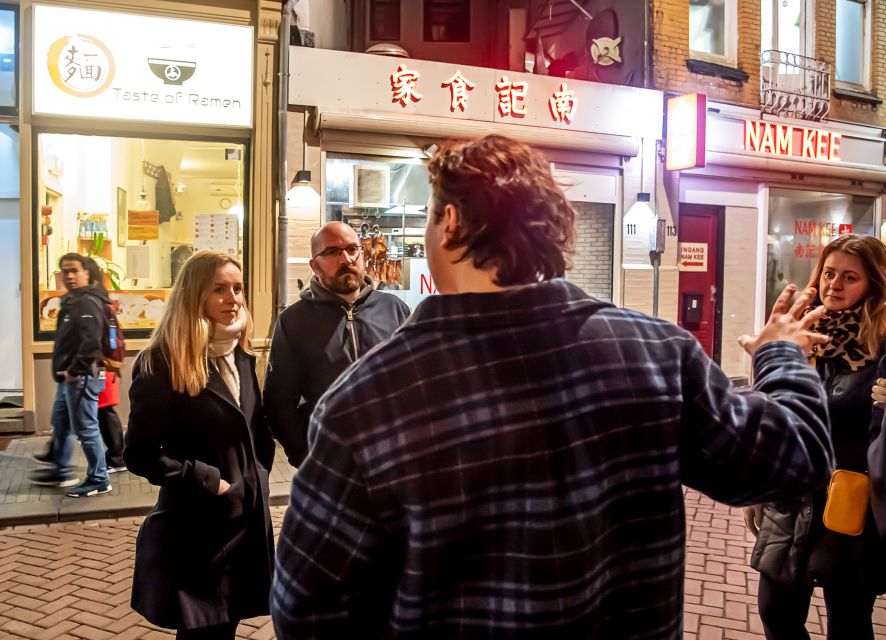
The first part of the route takes you through Amsterdam Chinatown. This gives the tour a wider frame before it focuses on the Red Light District itself. You see small shops, restaurants, and the He Hua Temple, while your guide explains how this part of the center connects with the surrounding streets.
From there, the route reaches Café the Schreierstower. The tower is a useful reminder that Amsterdam’s oldest center is not only about nightlife. Canals, defensive buildings, old streets, and commercial activity all sit close together here.
I like this opening because it avoids a one-note presentation. You begin with urban history and everyday city life, then move toward the adult entertainment district. That sequence can help you see the Red Light District as part of Amsterdam rather than as a separate attraction built only for visitors.
The downside is that the Chinatown portion is a short walking segment, not a food tour or a temple visit. You should expect guided sightseeing and explanation, not an extended stop inside shops or restaurants.
Zeedijk, the He Hua Temple, and Nieuwmarkt
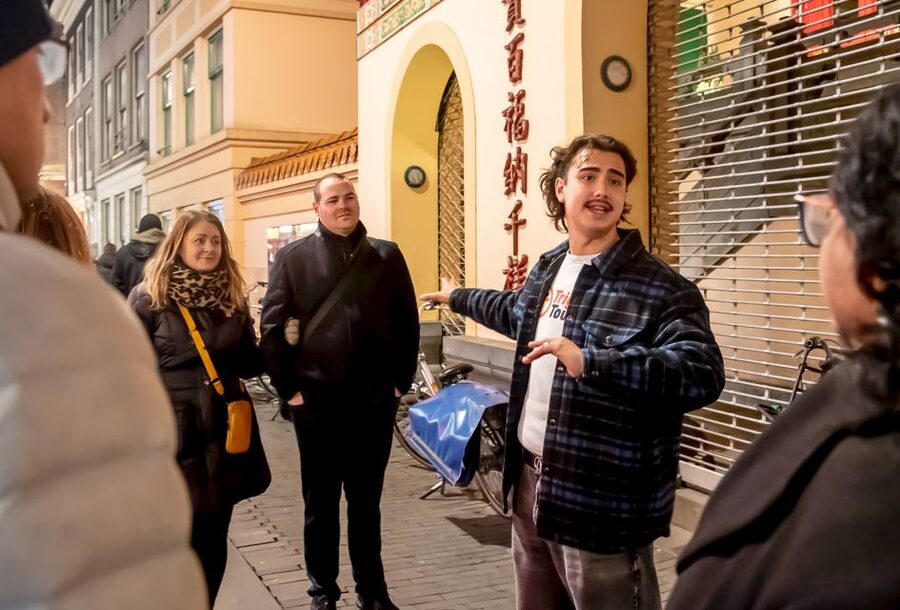
Zeedijk is one of the key streets on the route. Your guide points out how the area’s identity changes from one block to the next, with restaurants, bars, shops, and older buildings packed into a small space.
The He Hua Temple adds another layer. It helps show the cultural variety of central Amsterdam and keeps the route from being only about sex and drugs. You also reach Nieuwmarkt Square, a well-known open space where the guide can connect the surrounding streets with Amsterdam’s broader story.
This part is valuable if you want context before entering the busiest lanes. It also gives you a chance to ask questions while the group is still finding its rhythm. Guides often use these early stops to explain local customs, safety points, and how to behave respectfully in the district.
The route is not designed for a slow architectural inspection. Each part is relatively brief, and the tour must keep moving to cover the full circuit. If your priority is detailed building history, you may want a separate architecture walk.
A few more things to do in Amsterdam worth a look
- Amsterdam: Guided Ganja Walking Tour of Coffee Shops
★ 4.2 · 2,092 reviews - Private Amsterdam Red Light District and Coffee Shop Tour
★ 5.0 · 763 reviews - Giethoorn: Village & National Park Canal Cruise with Coffee
★ 4.6 · 1,596 reviews
Coffee shop culture and The Jolly Joker
The coffee shop portion is one of the main reasons people choose this tour. Your guide explains how Amsterdam’s coffee shop system works, why the city became associated with cannabis, and how the policy has shaped public debates.
The itinerary includes Coffeeshop The Jolly Joker, described as one of the notable coffee shops on the route and connected with the history of Amsterdam’s early coffee shop culture. The important point is that you are learning about the system in place, not simply being led from one shop to another for a purchase.
You must be at least 18 if you wish to visit a coffee shop. That age rule is worth checking before you book, especially if different members of your group have different ages. The activity information does not promise a cannabis tasting, a purchase, or a particular amount of time inside, so I would book it for the explanation and neighborhood context rather than for a product-focused stop.
The guide can also put the coffee shop system beside the city’s rules on prostitution. Amsterdam’s reputation for liberal attitudes does not mean that everything is unrestricted. The tour helps explain the difference between tolerance, regulation, and ongoing political disagreement.
The Narrowest House in Europe and the district’s tight lanes
Amsterdam’s narrow streets are a practical part of the experience, not just a photo opportunity. The route includes the Narrowest House in Europe, along with several tight lanes where buildings seem to press in from both sides.
These streets help explain the city’s old layout. They also show why a guide is useful. It is easy to walk through the district and miss small details, while a local can point out where the boundaries between different parts of the center begin and end.
You should keep your group together here. Narrow lanes can make it harder to hear, especially if the district is busy. The tour is not suitable for people with mobility impairments, and anyone who finds uneven or crowded walking difficult should consider that before booking.
The mood can change by time and day. One guide described a Monday evening as quiet, which is a reminder that the district will not always look like the busiest images you may have seen. A quieter walk can make it easier to listen, though it may feel less dramatic if you expect a packed nightlife scene.
Casa Rosso, Oude Kerk, and Warmoesstraat
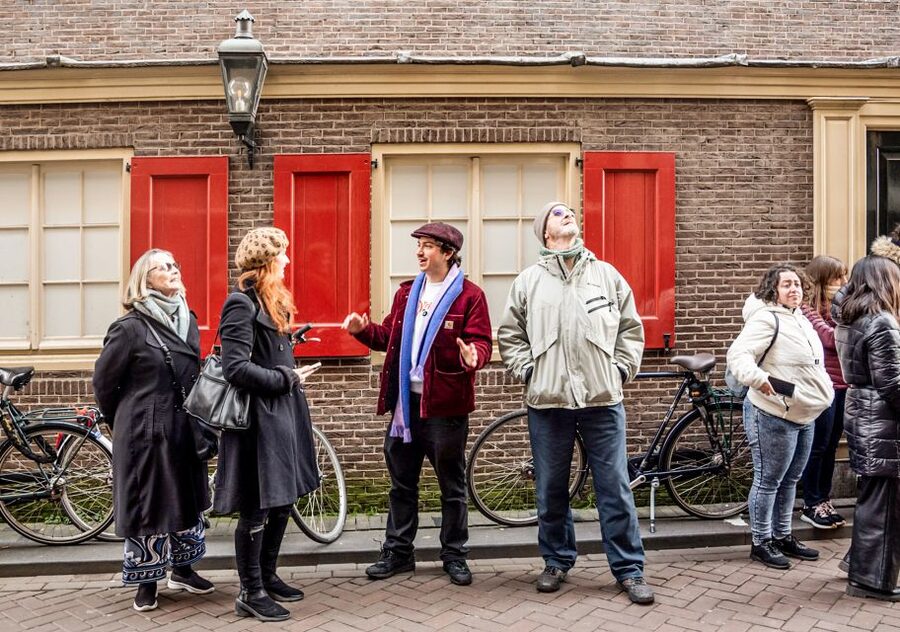
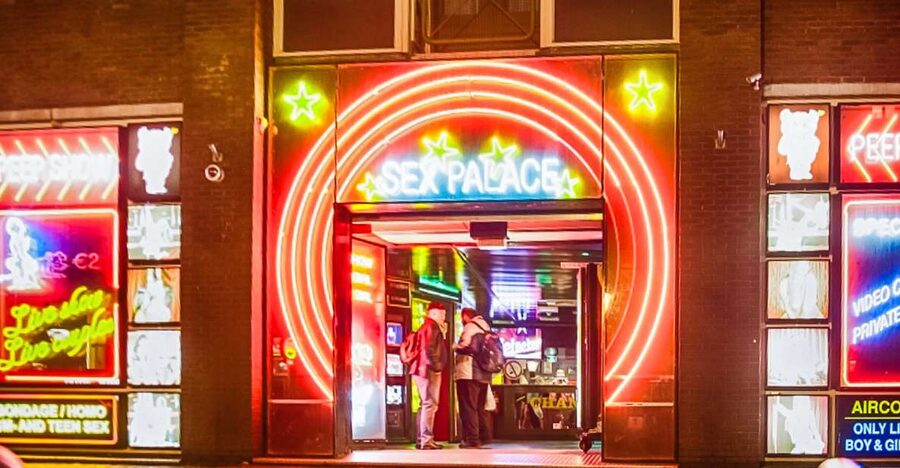
The route then moves through some of the best-known Red Light District landmarks, including Casa Rosso, the Oude Kerk, and Warmoesstraat. Here, the contrast is especially sharp. Historic religious architecture, adult entertainment, old commercial streets, and canals occupy the same compact area.
Casa Rosso represents the district’s public-facing entertainment industry. The Oude Kerk provides a strong historical counterpoint, showing how old Amsterdam’s religious and civic life overlaps with the modern neighborhood. Warmoesstraat adds another busy street to the walk, with more chances to see how nightlife and ordinary city movement share the same space.
Your guide discusses the legalization and regulation of prostitution, along with the challenges sex workers face today. That is an important distinction from simply pointing out locations. You are encouraged to understand the people and policies involved, while also being reminded that the red-lit windows are workplaces, not displays for photography.
The Condomerie is another stop that reflects Amsterdam’s practical, matter-of-fact attitude toward sexual health. It fits the wider theme of the tour, which looks at how the city talks about sex, risk, regulation, and public behavior.
Canals, safety, and local advice
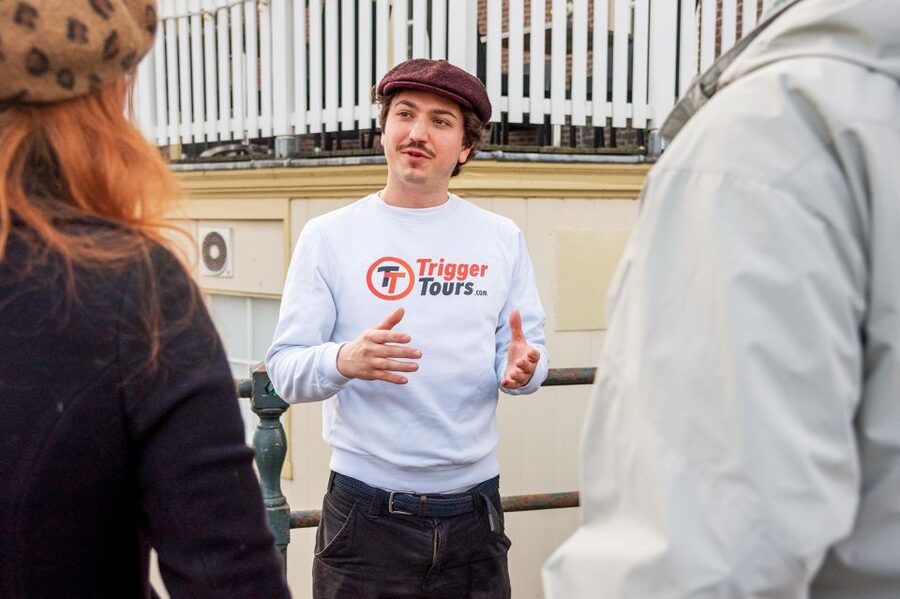
The canals are not background decoration on this walk. Your guide explains how they became part of Dutch culture and how they shaped Amsterdam’s growth. The water, narrow streets, and dense center all help explain why the district developed in its particular form.
I also value the practical side of the commentary. The guides are expected to explain safety points and respectful conduct, which is particularly useful if this is your first visit. Keep your phone and camera use discreet, follow instructions around the windows, and remember that the area is a neighborhood and workplace as well as a tourist sight.
Several guides are praised for answering questions clearly. Adam, for example, is noted for taking questions seriously and even following up after the walk. That kind of conversation is useful if you want to ask about local rules without feeling awkward.
The experience can also be a comfortable choice for a solo woman who would rather not find her way around the district alone. Pilar is specifically praised for making the route feel easygoing and attentive. That does not remove the need for normal city awareness, but a group gives you a clear structure and a guide to turn to.
Is $29 a fair price for two hours?
At $29 per person, I consider this good value if you want interpretation rather than a quick self-guided stroll. You cover several central areas, learn about the district’s history and current debates, and get access to a guide who can answer questions in real time.
The value is strongest for a first visit. Without context, you might spend two hours looking at red-lit windows and wondering what you are actually seeing. With a guide, the same streets become a lesson in Dutch policy, urban history, sexual health, tourism, and local life.
A private or small-group option may cost more depending on the booking choice, but the benefit is a quieter pace and more room for questions. If the group is large, you may hear less clearly in the narrow lanes, especially when bicycles and other walking groups pass by.
The price does not include food, drinks, transport, or a separate canal cruise. It is a walking tour, so compare it with those expectations. You are paying for a focused two-hour introduction, not a full-day Amsterdam sightseeing package.
Who should book this tour?
I would choose this tour if you want to understand the Red Light District before exploring it on your own. It suits adults interested in social policy, local history, Amsterdam’s canal culture, and the practical realities behind the city’s liberal reputation.
It is also a good fit for couples, small groups, and solo visitors who prefer company in an unfamiliar nightlife area. The guides’ friendly, humorous style should work well if you enjoy conversation rather than a formal lecture.
I would skip it if you want a private, quiet architectural tour, cannot comfortably walk narrow streets for two hours, or are mainly looking for nightlife rather than explanation. The coffee shop stop also should not be treated as a guarantee of a particular purchase or activity.
The tour is available in English, German, Dutch, and Spanish. You can cancel up to 24 hours in advance for a full refund, and the reserve-now, pay-later option helps if your schedule is still changing.
Should you book the Amsterdam Red Light District and Coffee Shop Tour?
Book it if you want the district explained with some care and humor. The best parts are the connection between Chinatown, canals, old streets, prostitution, and coffee shop policy, plus the chance to ask a local guide direct questions.
At $29, it is a sensible first step before returning to the area independently. Just wear comfortable shoes, confirm your meeting point, respect the people who live and work there, and remember that the walk is about understanding Amsterdam, not gawking at it.
FAQ
How long does the Amsterdam Red Light District and Coffee Shop Tour last?
The tour lasts two hours.
How much does the tour cost?
The listed price is $29 per person.
Is the tour guided?
Yes. A live guide leads the walk.
Which languages are available?
The tour is available in English, German, Dutch, and Spanish.
Do I need to be 18 to join?
You must be at least 18 years old if you wish to visit a coffee shop during the activity.
Is this a private tour?
Private and small-group options are available.
Where does the tour start?
The meeting point depends on the option booked. Possible locations include ParkBee NH Collection Amsterdam Barbizon Palace, the Basilica of Saint Nicholas, and Voyager Hotel Amsterdam.
What places does the route include?
The route includes Amsterdam Chinatown, Café the Schreierstower, Zeedijk Street, the He Hua Temple, Nieuwmarkt Square, Coffeeshop The Jolly Joker, the Narrowest House in Europe, Casa Rosso, the Oude Kerk, Warmoesstraat, and the Condomerie.
Is the tour suitable for people with mobility impairments?
No. The activity is not suitable for people with mobility impairments.
Can I cancel the booking?
Yes. You can cancel up to 24 hours in advance for a full refund. You can also reserve now and pay later.
Just added in Amsterdam
- Full-Day Private Historic Royal Tour around Palaces and Castles★ 5.0 · 16 reviews
- Private transfers from or to Schiphol (AMS) airport Amsterdam★ 5.0 · 235 reviews
- Private Taxi Airport Transfer to or from Schiphol Airport (AMS)★ 4.5 · 66 reviews
- Castle De Haar Small-Group Tour from Amsterdam★ 5.0 · 101 reviews
- Amsterdam: ‘Boom Chicago’ English Comedy Show★ 4.5 · 213 reviews
- English Comedy Show Amsterdam: Boom Chicago★ 4.5 · 112 reviews
- Amsterdam: E-Bike Sightseeing Tour★ 4.7 · 99 reviews
- Amsterdam: Magic Show★ 4.7 · 38 reviews
Red Light District Tours, compared.
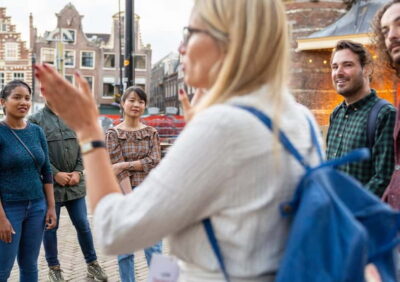
Red Light District Tour in German/English/Italian
Read our review →
Red Light District Pub Crawl with Unlimited Shots
Read our review →
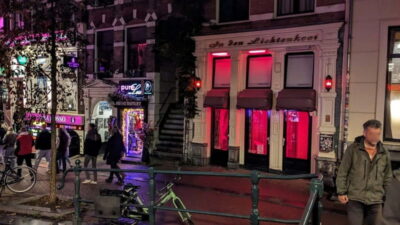
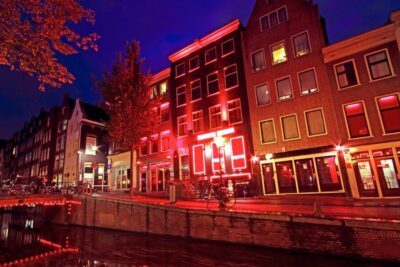
Private Amsterdam Red Light District and Coffee Shop Tour
Read our review →
Browse the lists this tour appears in