
Reviewed · CASTLE & PALACE TOURS
Amsterdam: Royal Palace Entry Ticket and Audio Guide
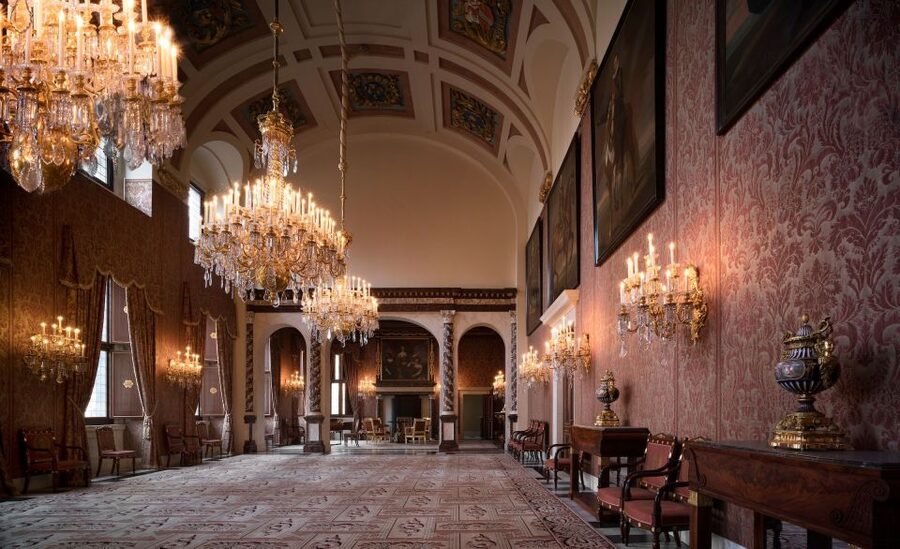
Amsterdam’s Royal Palace is less about royal spectacle and more about scale. Built in the 17th century during the Dutch Golden Age, it began as Amsterdam’s city hall and now serves as an official palace for state visits, award ceremonies, and royal receptions. The vast marble Citizens’ Hall, with Atlas carrying the sky overhead, is the grand payoff.
I like the self-guided format, since you can move quickly through familiar-looking rooms or linger over a painting, sculpture, clock, or piece of Empire furniture. I also like the choice of a shorter or longer audio route, a useful touch when you have a busy day in central Amsterdam.
The main drawback is that the palace can feel crowded, especially in smaller rooms where there is only one good viewing position. There are not many places to sit, and the ornate interiors can begin to look alike if you rush through them.
Key points to know before you go
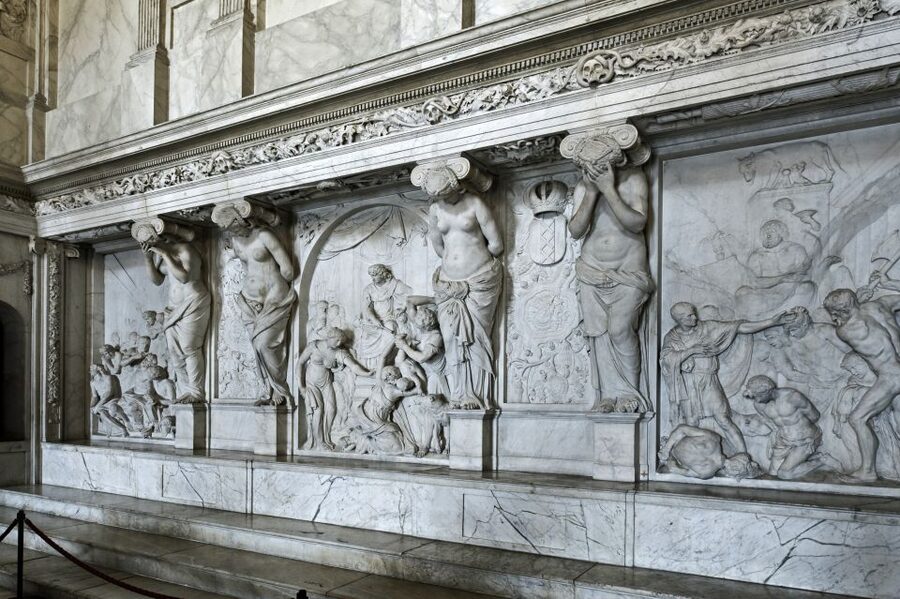
- The Citizens’ Hall is the visual centerpiece: Look up at Atlas and take in the marble scale of the room.
- The audio guide shapes the visit: It explains the building’s history, art, furniture, and present-day royal use in eight languages.
- You choose the pace: A short route works for a tight schedule, while a longer route gives the smaller rooms more attention.
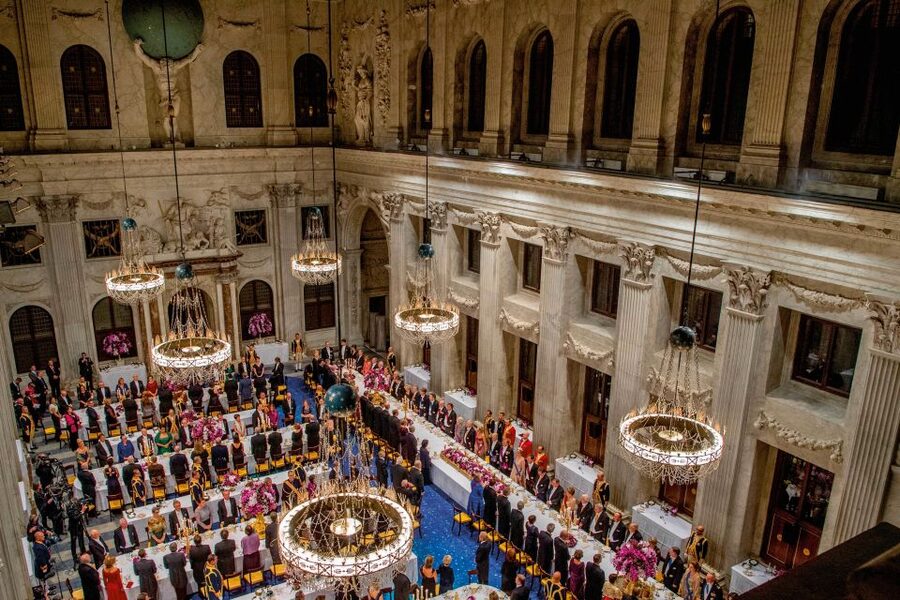
- The palace is still in use: State banquets, receptions, ceremonies, and visits by heads of state take place here.
- Children under 18 enter free: Adults need tickets, while children can collect a free ticket at the counter.
- The central location is easy to reach: Dam Square is the nearest tram stop, with several tram lines serving the area.
Why the Royal Palace feels different from a museum
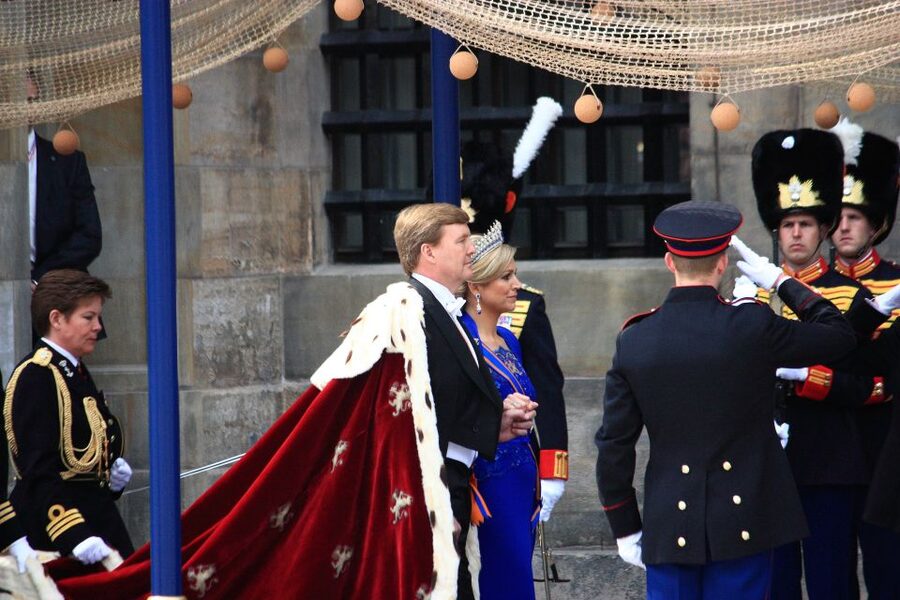
The Royal Palace of Amsterdam is a working royal building, not simply a preserved historic house. That gives the visit a useful sense of purpose. You are not only looking at old rooms. You are seeing spaces that still play a role in the Dutch state.
The building was created in the 17th century, when Amsterdam was one of Europe’s most powerful trading cities. Its original function as the city hall explains the enormous public rooms and civic symbolism. Later, Louis Napoleon used it as a palace, bringing in Empire-style furniture, chandeliers, clocks, and other fittings that remain part of the interior.
That mix is what makes the palace worth your time. The building has the formal grandeur of a royal residence, but its first identity was municipal. You can read the city’s confidence in the scale of the hallways, the marble, and the sculptural details.
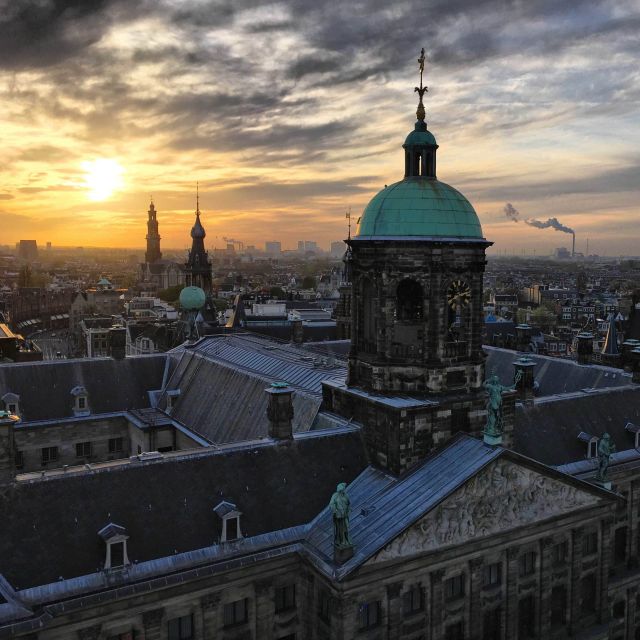
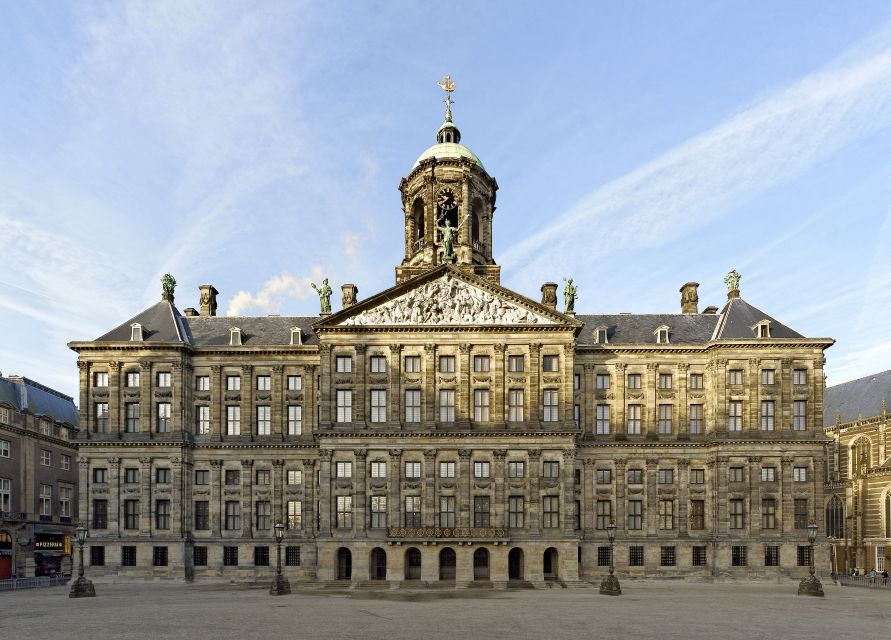
From the outside, the palace can look more restrained than spectacular. Do not judge it from Dam Square alone. The interior is where the visit becomes rewarding, with grand rooms, polished surfaces, paintings, and symbolic sculptures packed into a relatively focused route.
More Castles and Palaces in Amsterdam
- Castle De Haar Small-Group Tour from Amsterdam
★ 5.0 · 101 reviews - Amsterdam Castle & Utrecht City – Private Day Tour
★ 5.0 · 21 reviews - Full-Day Private Historic Royal Tour around Palaces and Castles
★ 5.0 · 16 reviews
Entering from Dam Square
The palace sits directly on Dam Square, one of the easiest locations in Amsterdam to reach. Tram numbers 2, 4, 12, 13, 14, 17, and 24 serve the area, and the nearest GVB tram stop is Dam Square. You can also take Metro 52 to Rokin and continue from there.
With a prepaid smartphone ticket, you can use the priority lane and show the ticket at the scan desk. This matters when a line has formed at the ticket counter. The final entry time is 5:15 PM, so I would avoid leaving this visit until the last part of the afternoon.
Once inside, you receive the audio guide. The adult guide is available in Dutch, English, German, French, Italian, Spanish, Chinese, and Russian. A children’s version is available in Dutch and English.
The audio guide is not an optional extra to ignore. It provides the background that makes the rooms easier to understand. Without it, you will still see attractive interiors, but you may miss why a sculpture is present, how the palace changed over time, or which rooms remain important today.
The Citizens’ Hall and Atlas
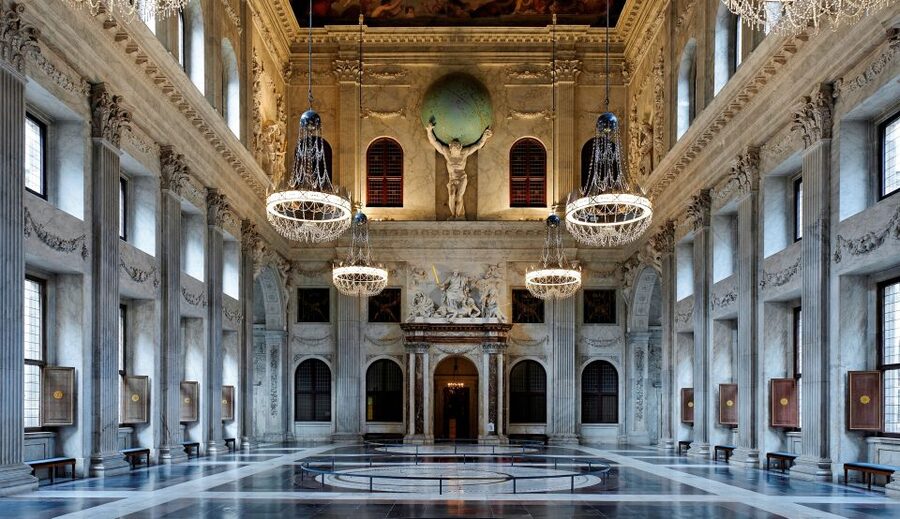
The Citizens’ Hall is the room that gives the palace its sense of scale. It is a broad marble chamber designed to express the importance of Amsterdam as a civic center. Look toward the ceiling and walls, then find the statue of Atlas carrying the sky on his shoulders.
This is a room to take slowly. The audio guide helps point out details that can disappear when you are looking at the whole space at once. You may want to stop in the center before moving closer to the sculpture and architectural decoration.
The Citizens’ Hall is also a good example of how the palace works best. Its size is impressive on its own, but the story behind the room gives the architecture more weight. The building was not created merely for comfort. It was meant to project the power and prosperity of Amsterdam.
If you have limited time, make this one of your first priorities. It is one of the palace’s clearest visual highlights and a good place to understand the building’s original civic role.
Paintings and sculpture from the Golden Age
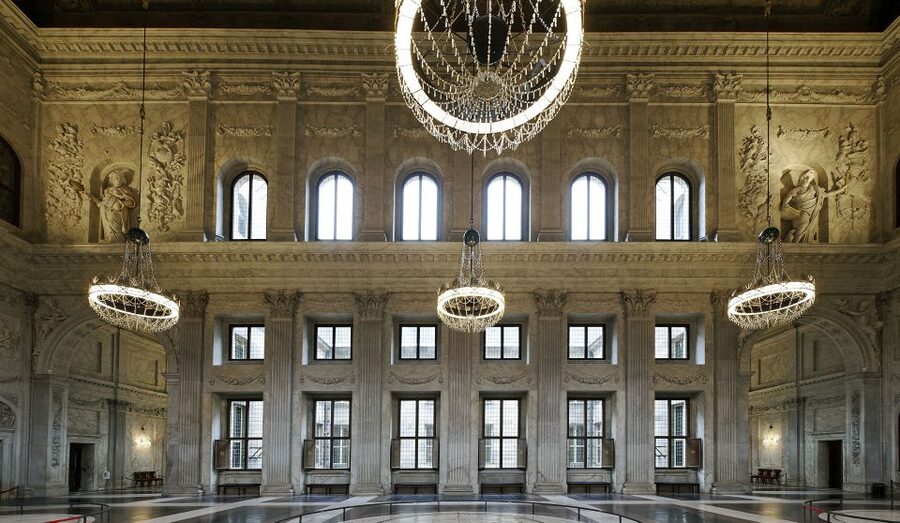
The route includes paintings by artists associated with the Dutch Golden Age, along with sculptures by Ferdinand Bol and Govert Flinck. The palace does not present art as a separate gallery collection. Instead, paintings and sculpture are part of the rooms and the building’s larger message.
That setting changes how you look at the art. You are not walking from one white gallery wall to another. You are seeing works alongside marble, furniture, chandeliers, clocks, and decorative details. The audio guide helps connect these objects to the palace rather than treating them as isolated pieces.
Give yourself time to look upward and around the edges of each room. The largest painting is not always the only detail worth your attention. The guide is especially useful for smaller sculptures and decorative features that are easy to pass without context.
The palace is not a place for a fast checklist of famous names. It rewards a slower look at how art, architecture, and civic symbolism work together. If you enjoy paintings but do not want a full art museum visit, this can be a good middle ground.
Other grand houses near Amsterdam:
- Utrecht: De Haar Castle & Park Entry Ticket
★ 4.7 · 1,350 reviews - The Hague: Escher in The Palace Museum Ticket
★ 4.6 · 896 reviews - Apeldoorn: Het Loo Palace Entry Ticket
★ 4.4 · 277 reviews
Rooms of furniture, clocks, and chandeliers
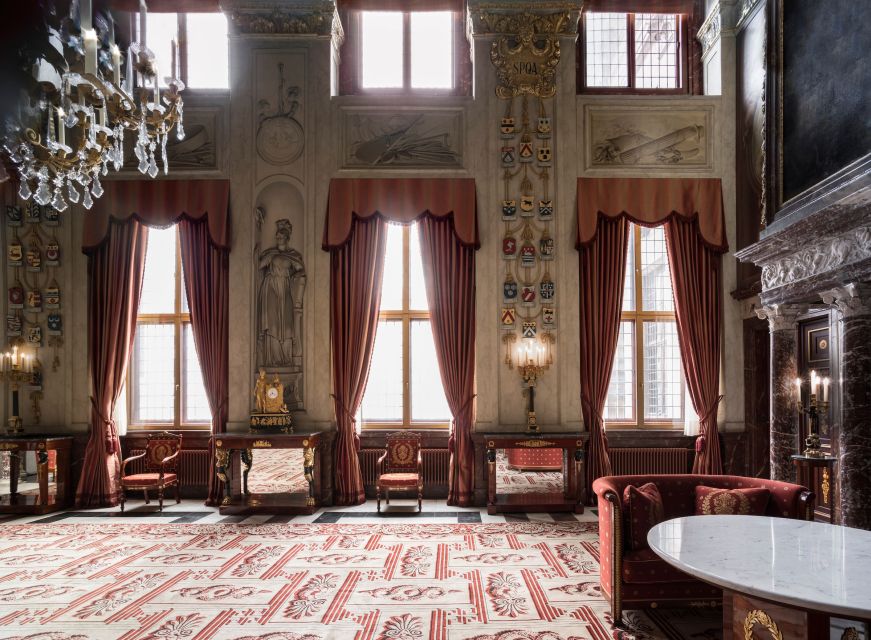
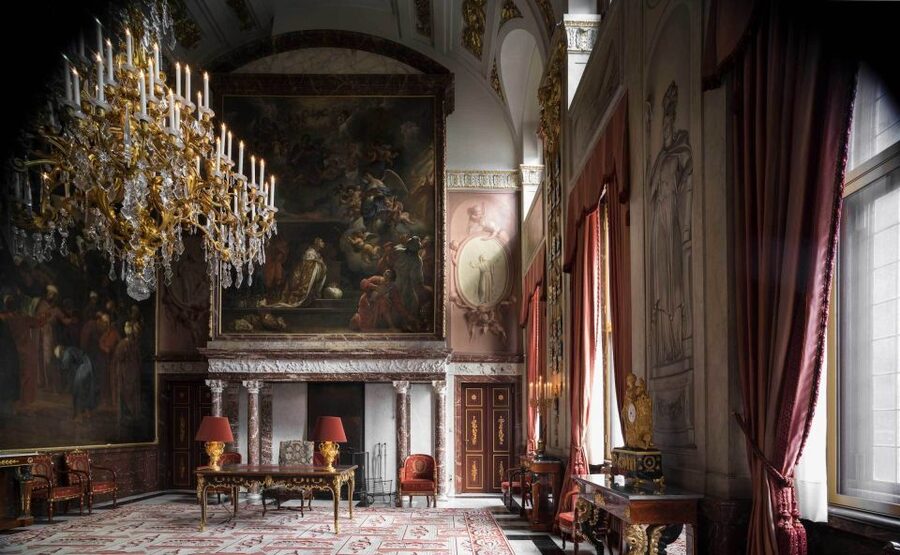
The palace preserves furniture and decorative objects from the period of Louis Napoleon. These details help explain the building’s change from city hall to royal residence.
The clocks and chandeliers are not merely background decoration. They show how the palace was adapted for court life and formal receptions. The furniture also gives the rooms a more domestic and royal character than the grand civic spaces suggest.
This part of the visit can be rewarding, though it is where some repetition may set in. One ornate room can look much like the next, especially if you are moving quickly or visiting after several other museums. I recommend using the audio guide to choose your level of attention rather than trying to study every object.
If you have only a short window, follow the highlights route. If you have more time, the longer option allows you to compare the formal public rooms with the smaller spaces and notice how the palace’s purpose shifts from civic building to royal residence.
A self-guided route that lets you set the pace
The audio tour is room by room, and you can listen at your own speed. This is a strong match for Amsterdam, where a palace visit often sits between canal walks, shopping, and other museums.
You can take a shorter tour if your schedule is tight, or follow the longer version when you want more detail. That flexibility is more useful than a fixed group tour because you are not waiting for everyone else to finish a room.
I also like that the audio guide gives the visit structure without forcing you into a particular pace. You can pause to look at a painting, move ahead when a room feels familiar, or return to a detail you missed.
The guide is described as clear and engaging, with a children’s version available in Dutch and English. That makes the palace more workable for families, though younger children may not want to spend the full visit listening closely. A shorter route is the sensible choice if attention spans are limited.
How long should you allow?
The official ticket is valid for one day, with entry during the available opening times. The building itself does not require an entire day. A visit of roughly 1.5 to 2 hours gives you time to follow the audio guide, pause in the Citizens’ Hall, and look at the major rooms without forcing the pace.
You can spend less time by sticking to the highlights. You can also spend much longer if you listen to every explanation and take your time with the paintings and furniture.
The palace has limited seating, and the route includes stairs and walking between rooms. Avoid blocking stairways while you rest, since these passages can become crowded. If you need frequent breaks, plan a slower visit and make use of the available accessible facilities.
The last entry is at 5:15 PM. I would arrive earlier rather than trying to squeeze in at the end of the day, especially if you want the longer audio route.
Is the $15 ticket good value?
At about $15 per adult, this is a reasonably priced central Amsterdam attraction. The ticket includes palace entry and the audio guide, so you are paying for both access and interpretation rather than simply walking through empty rooms.
The value is strongest if you use the guide. The palace’s rooms are attractive, but the history of the building, the role of the art, and its continued use for official events add much of the visit’s meaning.
There is one price detail worth checking before booking. A ticket bought directly at the palace may sometimes be listed at a slightly different price, with one reported on-site price of €12.50. Compare the current direct price with the convenience of a prepaid ticket and priority entry. If saving a small amount matters more than skipping the ticket line, buying at the palace may suit you.
The prepaid option is useful when you want to keep your day organized. Free cancellation is available up to 24 hours in advance, and a reserve-now, pay-later option is offered. Those terms are helpful when your Amsterdam plans are still changing.
Access, family visits, and practical restrictions
The palace is wheelchair accessible, with a lift, an accessible toilet, and wheelchairs available for visitor use. That makes the building more manageable for many people, though you should still expect a visit through several rooms and corridors.
Children under 18 enter free, but they need a ticket collected from the counter. Adults use the paid entry ticket. The children’s audio guide is available in Dutch and English, while the adult version has eight language choices.
Pets are not allowed. Smoking, food, drinks, and video recording are also prohibited inside. A still camera may be treated differently from video, but follow the palace’s instructions on the day.
The building is a quiet cultural site, not a place for running or loud play. Families can enjoy it, especially with the children’s audio guide and a shorter route, but small children who need constant movement may find the formal rooms difficult.
Who will enjoy this palace most?
I would recommend this experience to you if you like architecture, royal residences, Dutch history, art, or self-guided museum visits. It also works well for first-time visitors who want a central attraction that can fit between other Amsterdam plans.
It is a good choice for independent visitors who do not want to wait for a group or follow a live guide. You decide how long to spend in each room and can choose the level of detail.
Families should plan carefully. Free admission for children under 18 improves the value, and the children’s audio guide helps, but there are few places to rest and some rooms can be crowded. Older visitors with walking difficulties should make use of the accessibility facilities and allow extra time.
You may want to skip it if you dislike historic interiors, audio guides, or formal state buildings. Some of the smaller rooms can feel similar, and the palace does not offer the open outdoor space or lively activity found elsewhere in Amsterdam.
Should you book the Royal Palace Amsterdam?
Book it if you want a compact, well-explained look at Amsterdam’s civic and royal past. The Citizens’ Hall, Atlas statue, Golden Age art, Empire furniture, and working royal function give the visit more substance than its modest exterior suggests.
I would choose the prepaid ticket when you value a priority lane, flexible cancellation, and a planned entry during a busy day. If you are watching every euro, check the current direct ticket price first.
Use the audio guide. It is the key to understanding the palace, and the option of a short or long route lets you match the visit to your schedule. Allow about 1.5 to 2 hours, arrive well before the 5:15 PM last entry, and take the rooms at your own pace.
FAQ
How much does the Royal Palace Amsterdam ticket cost?
The listed price is $15 per person for an adult ticket. A direct palace ticket may sometimes cost a little less, so check the current price before booking.
How long is the Royal Palace ticket valid?
The ticket is valid for one day. Available entry times depend on the date you select.
What time is the last entry?
The last entry is at 5:15 PM.
Is an audio guide included?
Yes. An adult audio guide is included with the ticket. It is available in Dutch, English, German, French, Italian, Spanish, Chinese, and Russian.
Is there an audio guide for children?
Yes. A children’s audio guide is available in Dutch and English.
Do children under 18 need a paid ticket?
Children under 18 enter free, but they need to collect a ticket from the counter.
How do I reach the Royal Palace?
You can take trams 2, 4, 12, 13, 14, 17, or 24 to the Dam Square area. Metro 52 stops at Rokin, and Dam Square is the nearest GVB tram stop.
Is the palace wheelchair accessible?
Yes. The building has a lift, an accessible toilet, and wheelchairs available for visitor use.
What is not allowed inside the palace?
Pets, smoking, food, drinks, and video recording are not allowed.
More Self-Guided Tours in Amsterdam
- Amsterdam: 75 Minute City Canal Cruise with Audio Guide
★ 4.4 · 17,501 reviews - Amsterdam: Canal Cruise with Live Commentary & Audio Guide
★ 4.4 · 1,034 reviews - Amsterdam Sightseeing Canal Cruise with Audio Guide
★ 3.5 · 828 reviews - Rotterdam: Steamship Rotterdam Audio Tour Entry Ticket
★ 4.5 · 325 reviews
Just added in Amsterdam
- Amsterdam Castle & Utrecht City – Private Day Tour★ 5.0 · 21 reviews
- Amsterdam Canal, Tulip, Windmill Photoshoot | Custom Request★ 5.0 · 147 reviews
- Amsterdam Light Festival Winter Walk with Stroopwafel Workshop★ 5.0 · 66 reviews
- Become a Dutch Art Piece Photo Shoot in Amsterdam – Single Portrait★ 5.0 · 65 reviews
- Become a Dutch Art Piece Photo Shoot in Amsterdam★ 5.0 · 100 reviews
- Full-Day Private Historic Royal Tour around Palaces and Castles★ 5.0 · 16 reviews
- Private transfers from or to Schiphol (AMS) airport Amsterdam★ 5.0 · 235 reviews
- Private Taxi Airport Transfer to or from Schiphol Airport (AMS)★ 4.5 · 66 reviews
Castle & Palace Tours, compared.

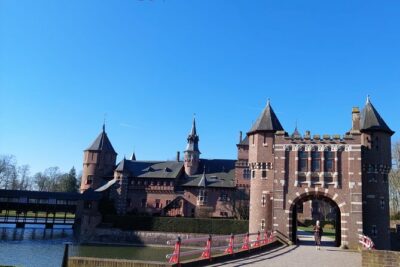
Castle De Haar Small-Group Tour from Amsterdam
Read our review →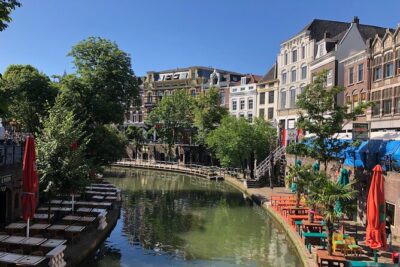
Amsterdam Castle & Utrecht City – Private Day Tour
Read our review →
Full-Day Private Historic Royal Tour around Palaces and Castles
Read our review →Browse the lists this tour appears in