
Reviewed · RED LIGHT DISTRICT TOURS
Private Amsterdam Red Light District and Coffee Shop Tour
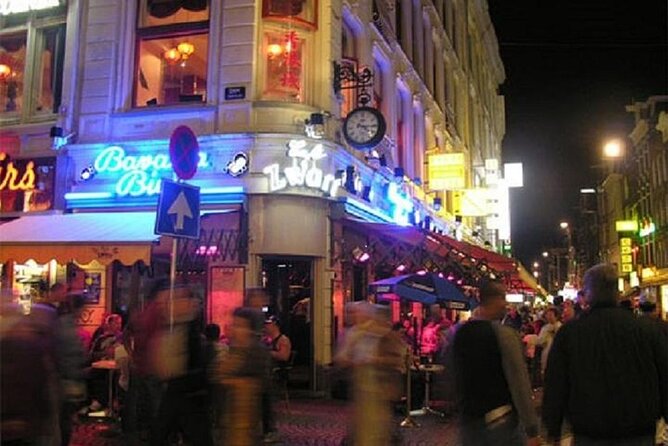
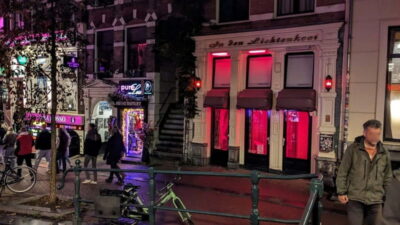
Amsterdam’s Red Light District is easier to understand when someone explains what you are seeing. This private walk puts the windows, coffee shop culture, old lanes, and unusual landmarks into their legal and historical setting. You get a calmer look at an area that can otherwise feel confusing or overhyped.
I like the private format, since your guide can adjust the pace and answer awkward questions without a crowd listening in. I also like the mix of social history and ordinary Amsterdam sights, from the Waag to the city’s smallest house. The main catch is that the tour may feel limited if you expect to enter many businesses or see every corner of the district. The Erotic Museum or coffeeshop visit requires an upgrade.
Key points
- Private attention: Only your group takes part, making it easier to ask direct questions and keep a relaxed pace.
- More than nightlife: The route includes the Dam, old wooden buildings, the Waag, the smallest house, and the Condomerie.
- Clear legal context: Your guide explains why prostitution is legal and cannabis is tolerated under Dutch policy.
- Guide quality matters: Ben, Robin, Saskia, Guido, Luis, Esther, Catherine, Aarie, and Fia have all led tours, though your assigned guide will vary.
- Optional extras: You can upgrade to visit the Erotic Museum or enter a coffeeshop with your guide.
- Good value for a small group: At $41.60 per person, the price is strongest when shared by several people who want an informative introduction.
A private walk through Amsterdam’s most misunderstood quarter
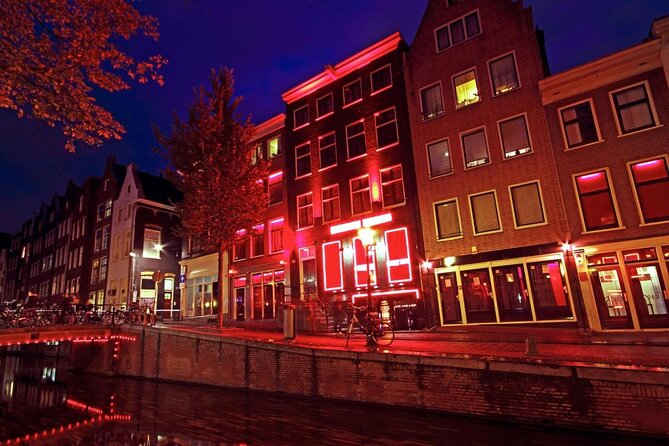
This is not simply a stroll past red-lit windows. It is a two-hour introduction to how Amsterdam handles subjects that many cities push out of sight. Your guide discusses prostitution, cannabis policy, local attitudes, and the way the district developed within the oldest part of the city.
The private setup changes the feel. Instead of following a large group through narrow streets, you walk only with your own party and an English-speaking local guide. That makes it easier to ask about laws, customs, and the difference between what is legal, tolerated, or merely associated with Amsterdam.
The experience is advertised as about two hours, while the route description also refers to a 2.5-hour historical walk. Allow at least two hours, and confirm the exact timing when you book. The meeting and ending point are both on Damrak, so you are not left across town at the finish.
Other Red Light District walks in Amsterdam:
- Amsterdam: Red Light Secrets Museum Entry Ticket
★ 4.2 · 5,722 reviews - Amsterdam: Red Light District Tour in German/English/Italian
★ 4.9 · 5,623 reviews - Amsterdam Red Light District & Coffee Shop Tour
★ 4.6 · 4,134 reviews
Starting at Damrak and the Dam
The walk begins on Damrak, a central and convenient place in Amsterdam’s Old Town. Your first major reference point is the Dam, the square that gives the city its name.
Here your guide explains one of Amsterdam’s less visible engineering problems. Much of the city sits on fen, clay, and wet ground, so older buildings were fixed to wooden piles driven down to a firm sandy layer roughly 11 meters below ground. It is a small detail, but it helps you read the city differently. Amsterdam’s grand facades are not just pretty walls. They are also the visible part of a complicated foundation system.
This opening section gives the tour useful balance. You are not rushed straight into the district’s adult themes. You begin with the city itself, then move toward the streets where commerce, religion, shipping, and sex work have long shared the same compact area.
The Old Town setting behind the red lights
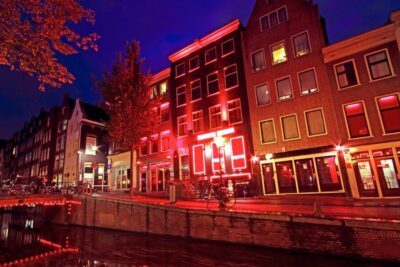
The Red Light District forms part of Amsterdam’s oldest city center. That matters because its current reputation can hide the age of the streets around it. Narrow lanes, old canals, former warehouses, and historic buildings help explain why this activity developed here in the first place.
Your guide places the district within Amsterdam’s wider past rather than treating it as a separate entertainment zone. You learn about the origins of the area, its changing role, and the modern debates around prostitution and cannabis. The best guides keep the tone respectful and plain, using humor where it helps without turning people or their work into a joke.
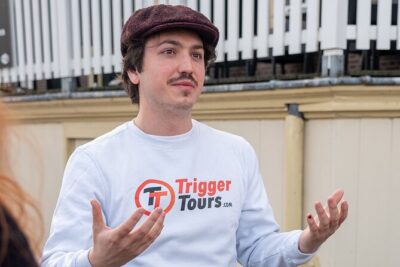
Guides praised in the tour feedback include Ben, Robin, Saskia, Guido, Luis, Aarie, Fia, Esther, and Catherine. Their styles may differ, but the strongest descriptions point to clear explanations, light humor, useful local suggestions, and a comfortable way of handling sensitive subjects. Since guides change from departure to departure, do not book based on a promise of one specific person unless the operator confirms it.
Int Aepjen, one of Amsterdam’s last wooden buildings
One stop is Pub The Ape, known in Dutch as Int Aepjen. Built around 1540, it is one of only two remaining wooden buildings in Amsterdam.
That fact opens a window onto the city’s building rules. A major fire in 1452 led the government to require brick facades, making this surviving wooden structure especially unusual. The pub is not just a quirky photo stop. It shows how fire, trade, and city regulation shaped the appearance of Amsterdam.
This is the kind of detail I value on the walk. You may pass an old building on your own and see only a dark facade. With context, it becomes part of the city’s story, and the route feels like an Old Town walk with a frank social-history theme rather than a sightseeing stunt.
A few more things to do in Amsterdam worth a look
- Amsterdam: Guided Ganja Walking Tour of Coffee Shops
★ 4.2 · 2,092 reviews - Giethoorn: Village & National Park Canal Cruise with Coffee
★ 4.6 · 1,596 reviews
The Waag and Nieuwmarkt’s older purpose
The Waag was once one of Amsterdam’s city gates and part of the defensive wall. Built around the 1400s, it is described as the second-oldest building in the city.
Later, the building served as a guildhall. Guilds were organizations of craftspeople, and their presence around the Waag reflects the working city that existed before Amsterdam became a major modern tourist center. Your guide uses the building to explain how trade and skilled work were organized in earlier centuries.
The stop also helps connect the Red Light District to the nearby square and Old Town streets. You are not only looking at windows and nightlife. You are walking through a place shaped by defense, commerce, religion, labor, and changing public morals.
The smallest house and the pressure of city space
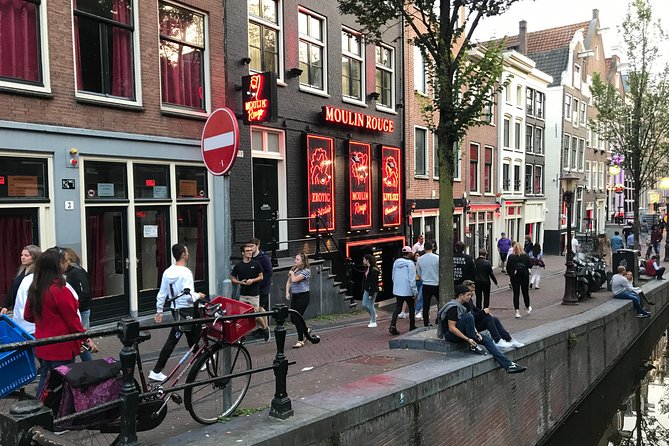
The route also includes Amsterdam’s smallest house. Built around the 1700s, it first served as storage for the Dutch East India Company, known as the VOC. Later, people lived in it for many years.
This tiny building is a useful reminder that Amsterdam has always had limited space and high-value property near the center. Its small scale contrasts with the grand trading history often associated with the VOC. It also gives your guide an easy way to discuss how the city’s buildings changed use over time.
You should not expect a long interior visit based on the information provided. Treat it as a compact exterior sight and a story stop. The value comes from the explanation, not from spending a large amount of time at the building.
The Condomerie and Amsterdam’s matter-of-fact attitude
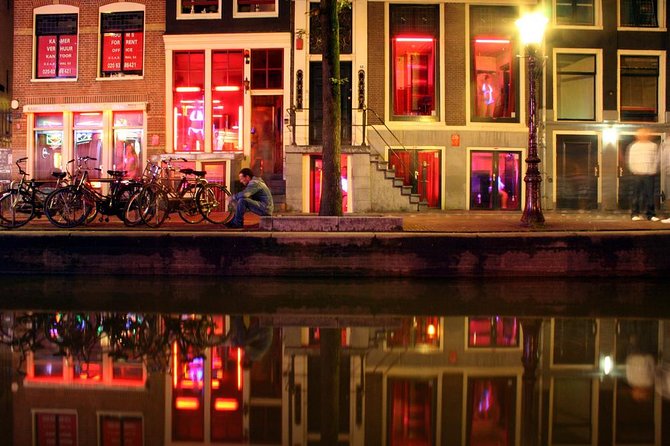
The Condomerie has been in place since 1987 and is described as the world’s first shop devoted specifically to condoms. It sells many types, including size-customized condoms and unusual designs.
This may sound like a novelty stop, but it fits the tour’s larger purpose. Amsterdam often treats sex and sexual health in a more direct, commercial way than many cities do. The Condomerie gives you a concrete example of that attitude, separate from the more sensational image of the district.
Your guide can place the shop within the neighborhood’s modern identity. It is also one of the lighter moments on the route, useful after discussions of law, exploitation, policy, and the working realities behind the windows.
What you learn about prostitution and Dutch law
A central part of the walk is the explanation of Dutch law. Prostitution is legal in the Netherlands, while the rules and public policies around it are more complex than the simple idea that everything is permitted.
The tour promises an educational look at how prostitution operates within Amsterdam’s legal and social framework. You can ask questions and gain a clearer sense of why the district exists in its current form, why it is located in the Old Town, and how the city’s tolerant image relates to actual regulation.
The guide also discusses modern issues and the difference between rumor and fact. That is useful because the district attracts strong opinions from people who have never learned how Dutch policy works. If you approach the walk as a chance to listen and understand rather than to collect provocative photos, you will get more from it.
Coffee shops, cannabis, and the missing coffee
The coffee shop section explains Amsterdam’s cannabis culture and the policy of tolerance around marijuana. One useful point is that a Dutch coffeeshop is not an ordinary cafe. As Aarie’s lively explanation makes clear, there is no coffee in the name in the usual sense.
The experience does not include food or drinks. You may upgrade to visit a coffeeshop with your guide, but the basic guided walk should not be treated as a guaranteed interior visit. Ask before booking if entering a coffeeshop is important to you.
This part is valuable for first-time visitors because cannabis policy is often reduced to a slogan. Your guide can explain the local context and answer questions in a more grounded way. The private format helps here, since people have different comfort levels and may want either a short explanation or a fuller discussion.
The optional Erotic Museum or coffeeshop upgrade
The tour offers an upgrade to visit the Erotic Museum or a coffeeshop with your guide. These extras may make the experience feel more complete if you want to see the district from the inside rather than only from its streets.
They also change the value calculation. At $41.60 per person, the basic tour is reasonably priced for a private two-hour walk, especially if several people share the booking. If you add an entry or visit, check the total price and exactly what is included before confirming.
I would choose the upgrade based on your interests. The Erotic Museum suits someone looking for a more direct look at the district’s adult themes. A coffeeshop visit suits someone who wants practical context about Amsterdam’s cannabis culture. Neither is essential for understanding the Old Town stops and legal background.
Why the private format can be worth the extra money
A private tour is not automatically better, but this subject benefits from personal attention. You can ask direct questions without waiting for a guide to address a group of strangers. Your guide can also adjust the pace if your party wants more history and less nightlife, or the other way around.
The private format works particularly well for families with older children or teenagers, couples, and small groups of friends. One group with teenagers found the explanation respectful and comfortable, which shows that the subject does not have to become awkward when the guide handles it with care.
That said, private does not mean unlimited access. You still follow the guide’s route, and one of the clearest cautions is that the district may not be explored in great detail. If you want a long, highly specialized study of every street and business, this short introduction may feel ordinary.
Timing, comfort, and practical planning
The tour is offered in English and includes a local guide and guided walking tour. Hotel pickup and drop-off are not included, so plan to reach Damrak yourself using Amsterdam’s public transport or on foot.
Wear shoes suited to city walking. The tour takes place outdoors, and one party still enjoyed it on a cold, rainy evening, but poor weather can affect your comfort. The route ends at Damrak, which makes it easy to continue into central Amsterdam afterward.
The experience is near public transport, service animals are allowed, and most people can participate. Confirmation arrives at booking. Free cancellation is available up to 24 hours before the start time. Changes or cancellations inside that window are not accepted for a refund.
Who will get the most from this walk
I would recommend it to a first-time visitor who wants to understand Amsterdam’s Red Light District without relying on rumors or a quick self-guided glance. It is also a good opening activity because guides can suggest places to eat and other sights for the rest of your stay.
History fans will appreciate the Dam, old wooden buildings, the Waag, the smallest house, and the city’s foundations. People interested in public policy will get useful context on prostitution and cannabis. Small groups who dislike crowded tours will value the private pace.
I would hesitate if your main goal is nightlife, extended time inside businesses, or a highly detailed exploration of every part of the district. The standard tour is a guided walk, not a pub crawl, meal, or full evening of entertainment. Food, drinks, hotel transport, and optional entry costs are not included.
Should you book the Red Light District and Coffee Shop Tour?
Book it if you want a respectful, plain-speaking introduction to an area that is easy to misunderstand. The best parts are the mix of Old Town history, Dutch law, cannabis policy, and a private guide who can answer personal questions. Guides such as Ben, Robin, Saskia, and Aarie have been especially well received for humor and clear storytelling, though your guide will vary.
The $41.60 price makes the most sense for a small private group that will use the chance to ask questions. Before paying, decide if you want the Erotic Museum or coffeeshop upgrade, and confirm whether the walk will run closer to two hours or 2.5 hours. If you accept that the route is an introduction rather than an exhaustive tour, it is a useful and unusually thoughtful way to get your bearings in central Amsterdam.
FAQ
How long does the tour last?
The tour is listed as approximately two hours. The route description also refers to a 2.5-hour historical walking tour, so confirm the exact duration when booking.
Where does the tour start and finish?
It starts and ends on Damrak, 1012 Amsterdam, Netherlands.
Is the tour private?
Yes. Only your group takes part in the private tour or activity.
What language is offered?
The tour is offered in English.
What is included in the price?
A local guide and guided walking tour are included.
Are food and drinks included?
No. Food and drinks are not included.
Can I visit a coffeeshop or the Erotic Museum?
You can upgrade to visit the Erotic Museum or a coffeeshop with your guide. These visits are not presented as part of the standard guided walk.
What is the cancellation policy?
You can cancel up to 24 hours before the experience starts for a full refund. Cancellations or changes made less than 24 hours before the start time are not accepted for a refund.
Just added in Amsterdam
- Full-Day Private Historic Royal Tour around Palaces and Castles★ 5.0 · 16 reviews
- Private transfers from or to Schiphol (AMS) airport Amsterdam★ 5.0 · 235 reviews
- Private Taxi Airport Transfer to or from Schiphol Airport (AMS)★ 4.5 · 66 reviews
- Castle De Haar Small-Group Tour from Amsterdam★ 5.0 · 101 reviews
- Amsterdam: ‘Boom Chicago’ English Comedy Show★ 4.5 · 213 reviews
- English Comedy Show Amsterdam: Boom Chicago★ 4.5 · 112 reviews
- Amsterdam: E-Bike Sightseeing Tour★ 4.7 · 99 reviews
- Amsterdam: Magic Show★ 4.7 · 38 reviews
Red Light District Tours, compared.
Red Light District Tour in German/English/Italian
Read our review →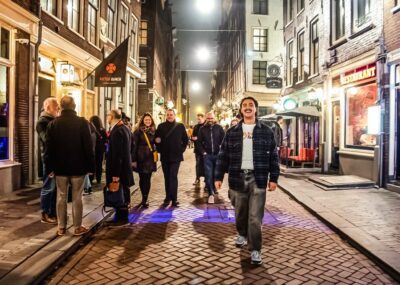
Amsterdam Red Light District & Coffee Shop Tour
Read our review →
Red Light District Pub Crawl with Unlimited Shots
Read our review →
Browse the lists this tour appears in