
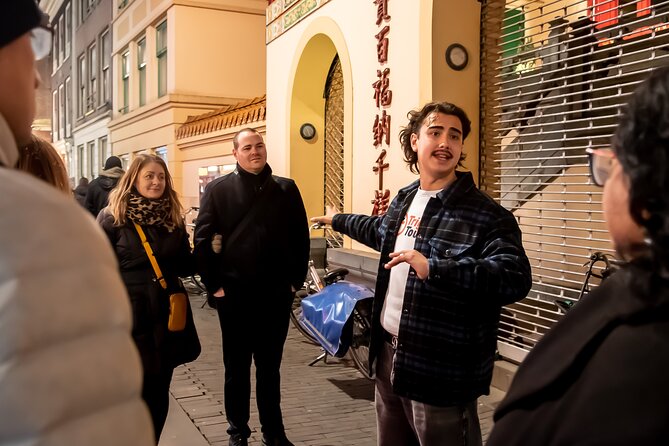
Reviewed · RED LIGHT DISTRICT TOURS
Amsterdam Red Light District and City Center Walking Tour
Amsterdam’s Red Light District is more than neon windows and late-night gossip. This two-hour walk puts De Wallen’s sex-work laws and coffeeshop culture into a wider story about Amsterdam’s oldest streets, wooden foundations, trade, religion, and city defenses.
I like the compact route and the small maximum group of 16. I also like the stops at the Waag, Int Aepjen, the Smallest House, and the condom shop, since they give you much more than a quick look at the district’s famous windows. The main drawback is that the walk is not recommended for people with limited mobility, and the busy streets can make it hard to hear at times.
Guides named Robin, Gio, and Aaron have led departures, with praise for friendly explanations, clear group control, eye contact, and time for questions. One poor experience raised concern about a guide appearing impaired, so guide quality may vary by departure. That is worth keeping in mind when choosing any group tour.
Key points before you book
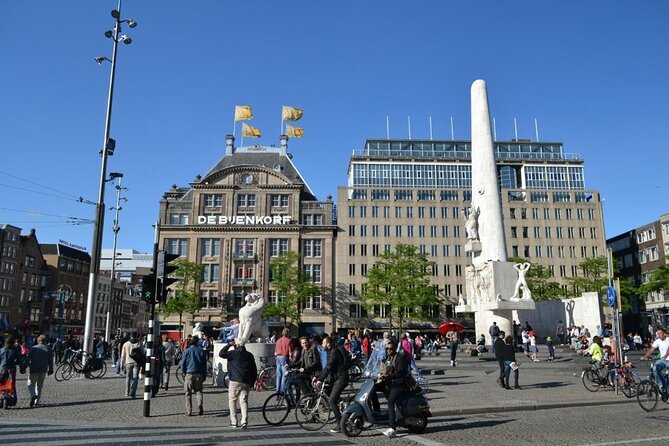
- Two hours in De Wallen: The route covers the Red Light District and nearby Old Town sights without taking up half your day.
- More than nightlife: You learn how prostitution and coffeeshops fit into Amsterdam’s laws, then connect that topic to trade, city walls, and architecture.
- Small group limit: A maximum of 16 people should make it easier to hear and ask questions than on a large coach-style walk.
- Several notable stops: Expect the Waag, Int Aepjen, Dam area, the Smallest House, and a condom shop dating to 1987.
- Easy central meeting point: The walk starts and ends at Geldersekade 2, close to public transportation.
- Good value at $31.24: The price is sensible if you want history and context, not only a quick stroll through the windows.
Why this walk works as an Amsterdam introduction
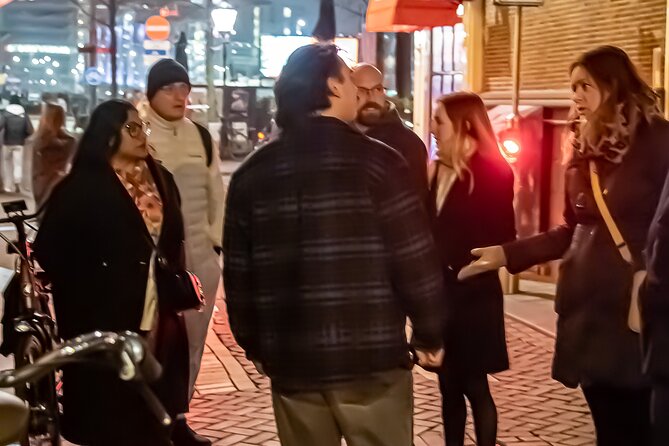
The Red Light District is one of the easiest parts of Amsterdam to misunderstand. A short visit can leave you with a collection of clichés: red-lit windows, coffeeshops, narrow lanes, and crowds taking photographs where they should not.
A guide gives the area a proper frame. You hear how the district developed, how sex work is regulated, and how the modern neighborhood grew from Amsterdam’s oldest center. That makes the walk useful early in your stay, when you want to get your bearings fast.
The route also gives you a first look at Amsterdam’s odd mix of practical engineering and old-world charm. Buildings sit on wooden piles driven through clay, peat, and water until they reach a firm layer of sand about 11 meters below ground. This is one reason the city can look delicate while resting on a serious foundation.
At roughly two hours, the tour has a sensible shape. It is long enough for context, but short enough to fit before dinner, a canal outing, or another central Amsterdam sight. You can choose among several start times, though the supplied details do not specify the exact departure hours.
More Walking Tours in Amsterdam
- Anne Frank’s Story – Guided Walking Tour through Amsterdam
★ 5.0 · 11,619 reviews - Amsterdam: Life of Anne Frank and World War II Walking Tour
★ 4.8 · 10,467 reviews - Absolutely Amsterdam – the Essential Introductory Walking Tour
★ 5.0 · 3,629 reviews
Meeting at Geldersekade 2 and entering De Wallen
The walk begins at Geldersekade 2, 1012 BH Amsterdam, and returns to the same meeting point. That makes the practical side simple, especially if you are staying near the central station or Old Town.
The first part takes you into De Wallen, the area usually called Amsterdam’s Red Light District. The streets are narrow, old, and easy to wander through without a plan. A guide helps you understand what you are seeing instead of leaving you to piece it together from signs and rumors.
The district is part of Amsterdam’s Old Town, and that matters. This is not a separate entertainment zone built recently for tourists. It sits in the oldest part of the city, where trade, housing, religion, defense, and nightlife have long overlapped.
The walk discusses window prostitution and coffeeshop culture. The useful part is not simply learning where these businesses are. You gain a clearer sense of the rules and rights connected with sex work, along with the difference between Amsterdam’s public image and the way the system actually operates.
The tour is offered in English. Since the group can include up to 16 people, you should have a reasonable chance to follow the guide, though narrow streets and evening activity may still create noise.
Dam Square and a city built on wooden poles
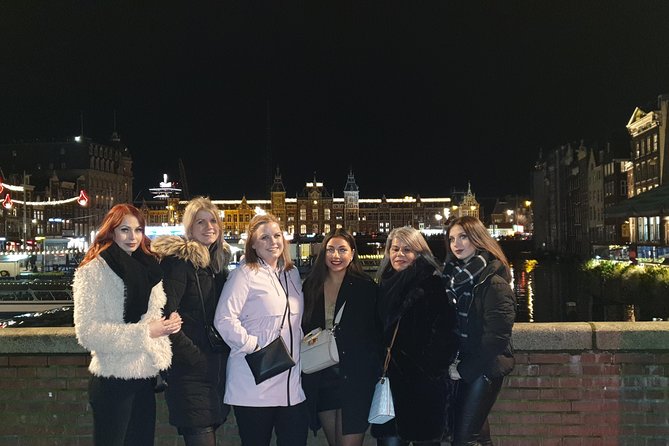
The Dam area brings in one of Amsterdam’s best practical history lessons: the city is built on difficult ground. The soil contains thick layers of fen and clay, so many buildings rely on wooden foundation piles fixed into sand roughly 11 meters below the surface.
That detail helps explain several things you see around the center. Amsterdam’s buildings are not simply old houses sitting on solid earth. They are part of a long engineering solution to waterlogged ground.
The wooden piles also give the city a useful sense of place. Amsterdam’s canals and buildings are tied to the soil beneath them, and the guide can connect the technical story to the shape of the Old Town. For me, this is the kind of fact that changes the way you look at the city after the walk ends.
The stop is not listed as a separate admission attraction, so you are seeing the area as part of the walking route. That keeps the tour moving, but you should not expect entry inside major buildings unless specifically stated elsewhere.
Int Aepjen, one of Amsterdam’s last wooden buildings
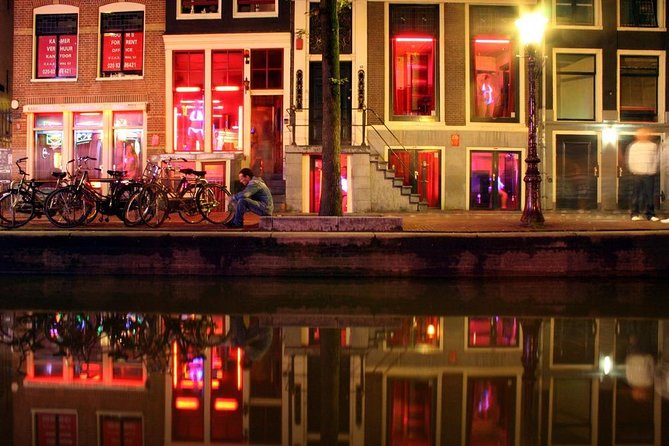
Pub Int Aepjen, also called The Ape, dates to around 1540. It is one of only two remaining wooden buildings in Amsterdam, a striking survival in a city where brick became the safer choice.
A major fire in 1452 led the government to require brick facades after the disaster. That rule helps explain why a wooden building from the sixteenth century is such a notable sight today.
This stop is especially good for people who enjoy small architectural details. It is not a grand monument, but it opens a window onto how Amsterdam looked before brick facades became the norm. The pub’s name and age also add a human touch to the route, since old city history is easier to remember when attached to a real building.
You should think of this as an exterior history stop rather than a pub visit. The supplied details do not promise food, drinks, or time inside.
Other Red Light District walks in Amsterdam:
- Amsterdam: Red Light Secrets Museum Entry Ticket
★ 4.2 · 5,722 reviews - Amsterdam: Red Light District Tour in German/English/Italian
★ 4.9 · 5,623 reviews - Amsterdam Red Light District & Coffee Shop Tour
★ 4.6 · 4,134 reviews - Amsterdam: Red Light District Pub Crawl with Unlimited Shots
★ 4.1 · 2,130 reviews
The Waag and the city’s old defenses
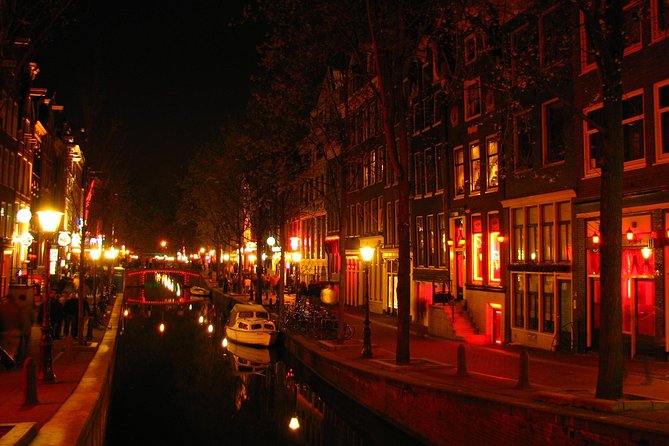
The Waag is one of the route’s strongest historical stops. Built around the 1400s, it once served as one of Amsterdam’s city gates and formed part of the defensive wall. It is also described as the second-oldest building in Amsterdam.
Later, the building became a place for guilds, the organizations that represented craftsmen and tradespeople. That change from defense to civic and commercial use mirrors Amsterdam’s growth from a fortified settlement into a major trading city.
I like this stop because it gives the tour a wider reach. You are not hearing only about the modern Red Light District. You are seeing how the same central area served different purposes over centuries.
The Waag stands by a square, which should give the guide a useful setting for explaining the building’s role. Still, the tour remains a walking experience, not a museum visit. No interior admission is included in the information provided, so plan on learning from the guide and viewing the building from the route.
The Smallest House and the city’s trading past
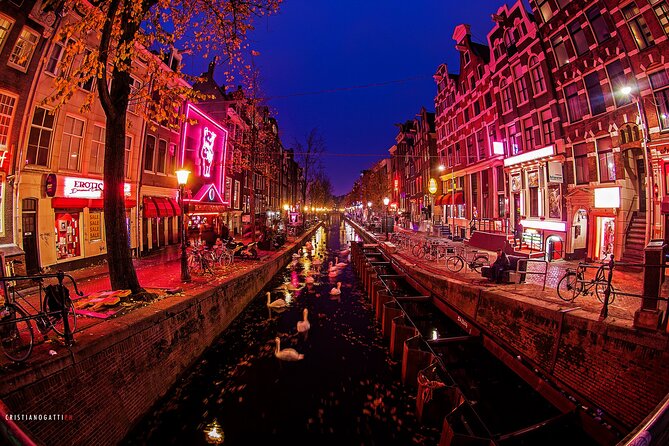
The Smallest House was built around the 1700s. It first served as a storage place for the Dutch East India Company, known as the VOC, before people later lived in it for a long time.
This tiny building is a good reminder that central Amsterdam was shaped by commerce at every scale. The city’s grand trading history depended not only on large ships and wealthy merchants, but also on cramped storage, narrow homes, and limited space.
The stop also adds variety. After the serious subject of sex-work laws and the sturdy walls of the Waag, a very small house gives the walk a memorable visual break. You can better understand how tightly packed the old center was, even without entering the building.
As with the other stops, the value is in the explanation and the setting. The details do not include an interior visit or a separate entry ticket.
The 1987 condom shop
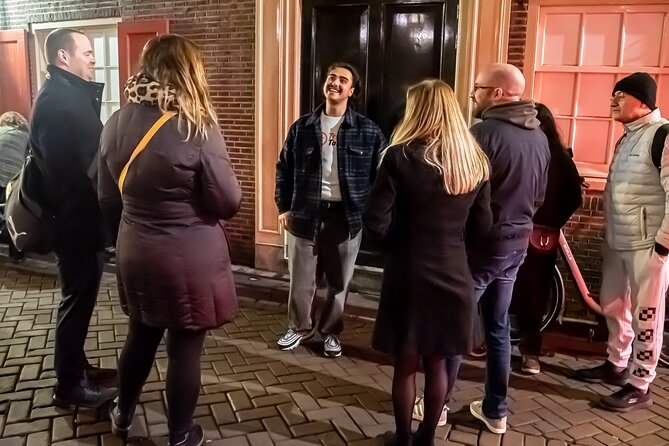
The route includes the world’s first shop devoted specifically to condoms, in place since 1987. It offers different kinds of condoms, including custom sizing and unusual designs.
This stop fits the subject of the district, but it also helps separate fact from caricature. Amsterdam’s adult businesses are part of a real commercial and legal system, not simply a spectacle for people passing through.
The shop may be a light moment on the walk, but the guide can use it to explain how the area’s adult culture became visible and organized. You should expect an exterior or street-level stop connected to the route, not a shopping requirement.
This is also a place to remember local manners. The district is a working neighborhood, and the people you see behind windows are not there for photographs. The tour can explain the area, but it does not make it acceptable to photograph sex workers.
Guide quality, group size, and the tone of the walk
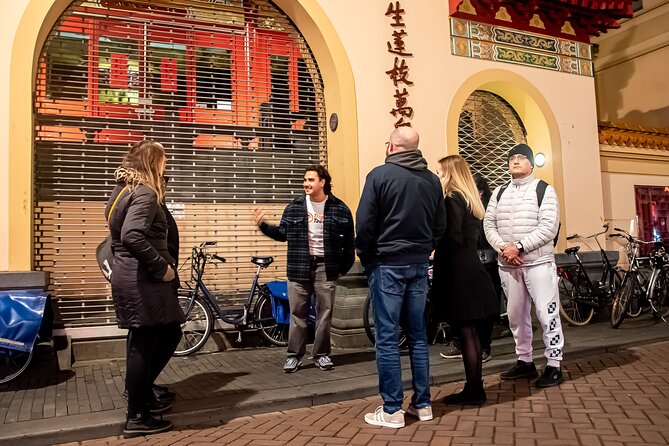
The strongest guide feedback centers on clear speaking, friendly interaction, and detailed explanations. Aaron was singled out for keeping track of the whole group, making eye contact, and giving people room to ask questions. Gio was praised for turning the walk into a memorable experience, while Robin was described as friendly and well informed.
Those details tell you what to hope for from the best departure: a guide who treats the subject seriously without making the walk stiff. You want someone who can explain laws and history, answer direct questions, and keep the group together in crowded streets.
The maximum group size is 16. That is not a private tour, but it is still more manageable than a large walking crowd. You will likely find it easier to hear the guide and stay close to the route.
One three-star experience raised a concern about a guide appearing drunk or impaired. There is no information showing how common that is, but it is fair to note the possibility. The overall rating is 4.7 from seven ratings, with most of the praise focused on the guides’ friendliness, detail, and command of the route.
Is $31.24 a fair price?
At $31.24 per person, this tour offers reasonable value if you want a guided introduction to De Wallen and central Amsterdam. You are paying for about two hours of explanation, not for entry to a paid attraction.
The price works best for first-time visitors who would otherwise walk through the district without understanding what they are seeing. The stops cover several subjects: adult culture, city engineering, medieval defense, guilds, VOC trade, and Amsterdam’s compact housing.
It is less useful if you already know the Old Town well or only want photographs. You could walk through much of the area yourself, but you would miss the legal and historical context that gives the neighborhood meaning.
Group discounts may be available, and mobile tickets are supported. Confirmation is provided at booking. Free cancellation is available if you cancel at least 24 hours before the start time. Cancellations or changes made inside that window are not accepted for a refund.
Who should book this walking tour?
I would recommend it to first-time visitors, couples, solo visitors, and small groups who want a straightforward introduction to Amsterdam’s most talked-about neighborhood. It is also useful for anyone who prefers a guide to explain sensitive subjects without turning them into cheap jokes.
The tour suits people who can walk for two hours through narrow city streets. Most people can participate, and service animals are allowed, but the experience is not recommended if you have limited mobility.
Families should think carefully about the subject matter. The walk discusses prostitution, coffeeshops, and condoms, so it may not suit young children. The information is educational, but the setting is still an adult district.
Should you book it?
Book this tour if you want the Red Light District placed in its full Old Town setting. The Waag, Int Aepjen, the Smallest House, and the wooden-pile story give the route more substance than a simple nightlife stroll.
Skip it if you want a private experience, a museum-style tour, or guaranteed access inside the listed buildings. For most first visits, though, two hours and $31.24 is a fair trade for context, orientation, and a guide-led look at a part of Amsterdam that is easy to misread.
FAQ
How long does the Amsterdam Red Light District and City Center Walking Tour last?
The tour lasts approximately two hours.
Where does the tour start?
The meeting point is Geldersekade 2, 1012 BH Amsterdam, Netherlands.
Where does the tour finish?
The activity ends back at the meeting point on Geldersekade.
Is the tour offered in English?
Yes. The tour is offered in English.
How many people can join the group?
The group has a maximum of 16 participants.
What areas does the tour visit?
The route visits Amsterdam’s Red Light District, also called De Wallen, and nearby Old Town and city center sights.
Does the tour explain coffeeshop culture and sex work?
Yes. The walk covers coffeeshop culture, window prostitution, and the laws and rights connected with sex work in Amsterdam.
Is the tour accessible for people with limited mobility?
The tour is not recommended for people with limited mobility. Most people can participate, and service animals are allowed.
Can I cancel for a full refund?
Yes. You can cancel for a full refund if you do so at least 24 hours before the experience begins. Changes or cancellations made less than 24 hours before the start time are not accepted for a refund.
More guided walks around Amsterdam
- Amsterdam: Anne Frank Guided Small Group Walking Tour
★ 4.8 · 2,722 reviews - Amsterdam: Anne Frank Walking Tour – Guided in EN/DE/IT/ES
★ 4.9 · 2,676 reviews - Amsterdam: Guided Cultural Walking Tour
★ 4.9 · 2,384 reviews - Amsterdam: Guided Ganja Walking Tour of Coffee Shops
★ 4.2 · 2,092 reviews
Just added in Amsterdam
- Guided Day Trip – Volendam, Zaanse Schans, Marken & Edam★ 4.0 · 232 reviews
- Private Tour Zaanse Schans Windmills and Volendam in Jaguar★ 5.0 · 10 reviews
- Zaanse Schans and Giethoorn Unique Day Trip with Boat Cruise★ 4.5 · 17 reviews
- Half-Day Private Guided Sightseeing Tour of Zaanse Schans★ 5.0 · 14 reviews
- Zaanse Schans Private Tour Windmills★ 5.0 · 18 reviews
- Private bike tour: Hidden gems around Amsterdam and surroundings★ 5.0 · 4 reviews
- Bike tour in Amsterdam with an Italian guide★ 5.0 · 15 reviews
- Amsterdam Sightseeing Tour + Hidden Gems + Tastings + PDF guide★ 5.0 · 35 reviews
Red Light District Tours, compared.


Red Light District Tour in German/English/Italian
Read our review →
Amsterdam Red Light District & Coffee Shop Tour
Read our review →
Red Light District Pub Crawl with Unlimited Shots
Read our review →

Browse the lists this tour appears in