
Reviewed · HISTORICAL TOURS
History & culture tour in Amsterdam with a local
Amsterdam’s story comes into focus on this compact walk, which links a fishing village, a royal square, a quiet religious courtyard, old guild buildings, Chinatown, and the grand railway station. You get more than a parade of pretty canals: the guide explains how trade, faith, war, transport, and daily life shaped the city.
I like the small group limit of 15, which gives the guide room to answer questions and adjust the talk to the people in front of them. I also like the stroopwafel stop, a small but welcome taste of Dutch life rather than just another hour of dates and building names.
The main consideration is time. Two hours passes quickly, and the walk covers many subjects and seven stops. If you want to enter major museums or tour the Royal Palace, this is not that kind of experience. It is a brisk introduction to central Amsterdam on foot.
Key points to know before you book
- Amsterdam in one clear story: The route connects the city’s origins with trade, religion, war, transport, and modern street life.
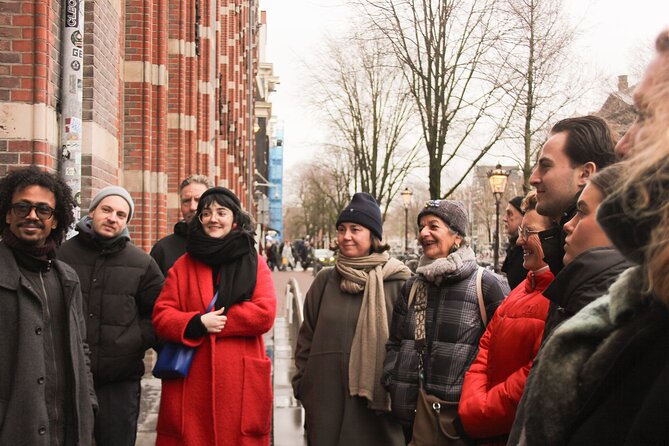
- A group capped at 15: You get a more personal walk than on a large city tour, with a better chance to hear and ask questions.
- Seven central stops: Beursplein, Dam Square, Begijnhof, the Three Canals house, Nieuwmarkt, Zeedijk, and Centraal Station all fit into the route.
- A useful first-day activity: The tour gives you historical bearings before you explore Amsterdam on your own.
- English and mobile ticket: The experience is offered in English, and your ticket can be presented on your phone.
- A modest price for a guided orientation: At $30.07 per person, the value depends on how much you want context rather than entry to paid attractions.
Why this walk works as an Amsterdam introduction
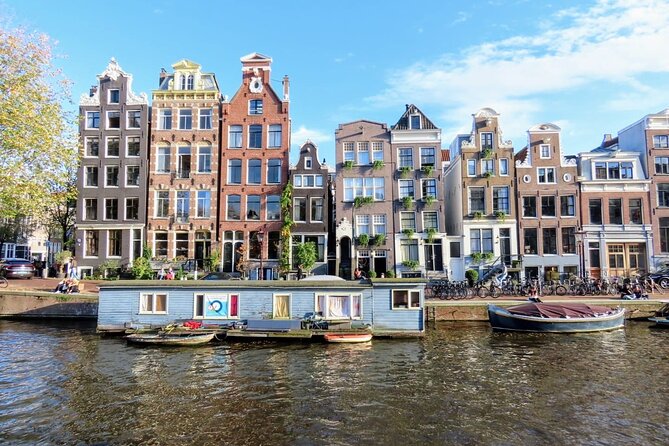
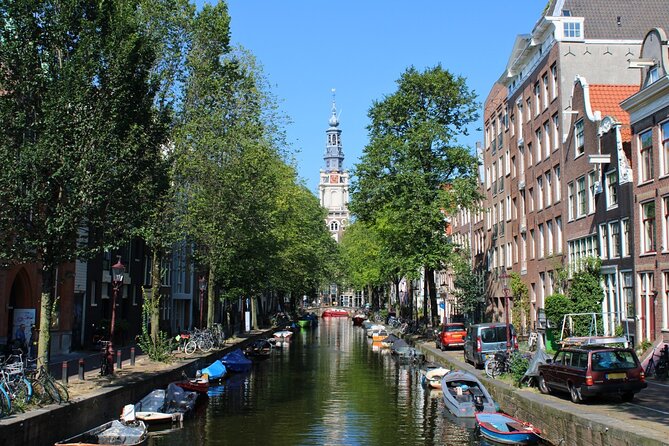
Amsterdam can look simple at first glance. You see canals, narrow houses, bicycles, and lots of water. The harder part is understanding why the city grew where it did and why its center contains such a mixture of commerce, religion, royal power, migration, and transport.
This tour gives you that framework in about two hours. It stays in central Amsterdam, so you are not spending much of the experience getting from one district to another. Instead, the guide uses short walks between stops to explain what you are seeing.
That format suits me because the city itself becomes the classroom. A square is not just a square, a gate is not just an old stone building, and a station is not just a place to catch a train. Each stop adds one piece to the story.
The route takes roughly two to two and a half hours. The official duration is listed as about two hours, but the longer estimate is useful when planning your day. Allow a little breathing room afterward, especially if you have a timed museum visit or restaurant booking.
The group maximum is 15 people. That is large enough to bring a social feel, but small enough for the guide to keep the group together without turning the walk into a moving crowd. The tour is offered in English, and most people can take part. Service animals are allowed.
A few more things to do in Amsterdam worth a look
- Amsterdam Food and Cultural Tour with Tastings
★ 5.0 · 2,442 reviews - Amsterdam: Haunted History and Ghost Walking Tour
★ 4.5 · 488 reviews - Amsterdam High-End Dutch Food & History Tour – Up to 8 guests
★ 5.0 · 482 reviews
Beursplein and the city’s unlikely beginning
The walk begins at Beursplein, a central meeting point near Amsterdam’s historic heart. Here, the guide explains how Amsterdam began as a fishing village and how its name developed.
That opening matters because it keeps the city’s later wealth in perspective. Amsterdam was not born as a grand capital. Its rise came through water, trade, and a location that allowed goods and people to move through the region.
The story then reaches the 17th century, when Amsterdam became a major center of the global economy. You will hear how a small settlement grew into a place with international influence.
This is a strong first stop for anyone who wants basic context before seeing the city’s better-known sights. It also gives you a useful question to carry through the rest of the walk: how did a practical waterborne settlement become one of Europe’s great commercial cities?
There is no admission charge at the stop, and the focus is on the guide’s explanation rather than entering a building.
Dam Square, royal power, and wartime memory
From Beursplein, the walk continues to Dam Square. This is one of Amsterdam’s most important public spaces, and the guide explains its role in the city’s formation.
You will see the Royal Palace on the Dam and learn why the square became central to Amsterdam’s civic life. The palace gives the setting a formal feel, but the square also has a public and political history that reaches far beyond royal ceremonies.
The tour includes the square’s role during the Second World War. That detail helps prevent the stop from becoming a quick look at an impressive facade. You get a sense of how the same public place can carry different meanings across different periods.
Dam Square can be crowded and visually busy. A guide is useful here because it helps you focus on the parts of the setting that matter. Still, do not expect a long, quiet pause. This is an orientation stop, not a palace visit, and admission to the Royal Palace is not part of the walk.
Begijnhof and Amsterdam’s complicated tolerance
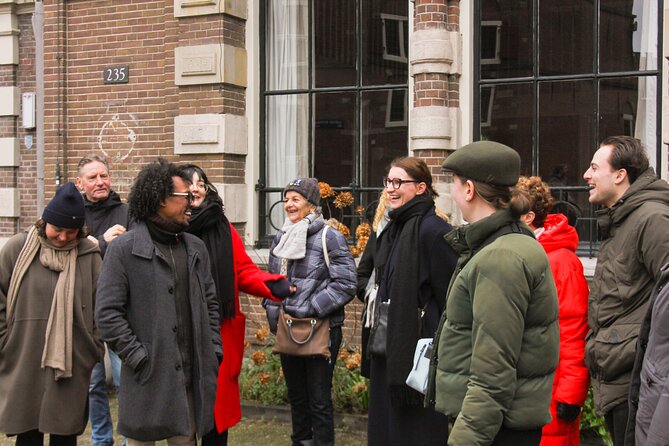
Begijnhof offers a sharp change of mood. After the open public space of Dam Square, you enter a quiet courtyard with a religious past.
The guide explains the history of the women who lived there and what the courtyard reveals about Amsterdam’s approach to religion. The word tolerance can sound simple, but the stop gives you a chance to think about how religious communities existed within a city known for trade and social variety.
You will also see one of Amsterdam’s oldest houses, one of the two remaining wooden cottages. That small detail gives the stop a human scale. Instead of looking only at major civic buildings, you get a glimpse of the older domestic city.
Begijnhof is likely to appeal most to people who enjoy atmosphere and social history. It is not a grand monument in the usual sense. Its value comes from the contrast between the peaceful courtyard and the busy streets outside, along with the guide’s explanation of what happened there.
Because this is a functioning historic setting, visitors should follow the guide’s instructions and keep the mood respectful. The tour allows you to see the courtyard, but it does not turn the visit into a long private exploration.
Same city, a different sort of day:
- Amsterdam: Van Gogh Museum Ticket
★ 4.7 · 52,054 reviews - Amsterdam Classic Saloon Boat Cruise with Drinks and Cheese
★ 5.0 · 31,825 reviews - Amsterdam Luxury Canal Cruise + Unlimited Drinks & Bites option
★ 5.0 · 30,518 reviews - Amsterdam: Heineken Experience Ticket
★ 4.6 · 30,055 reviews
The house on three canals and a bicycle bridge
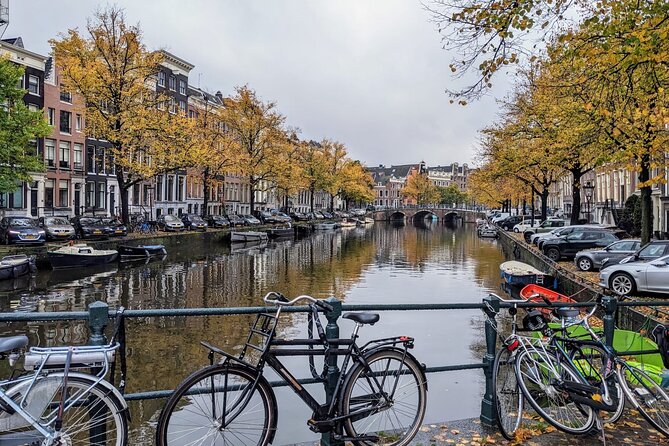
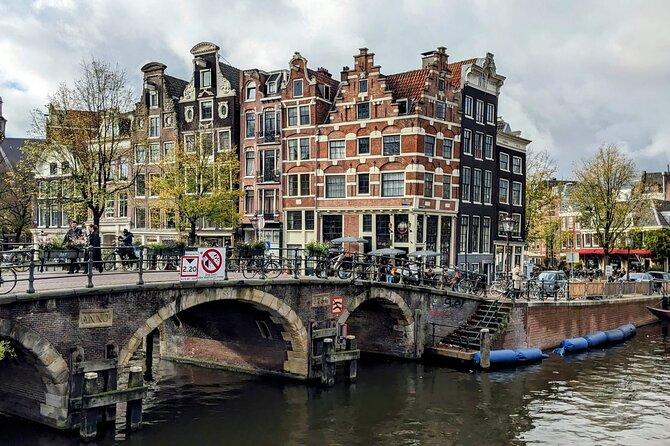
The next stop is a house positioned on three canals. This is the kind of Amsterdam detail that can be easy to pass without context. The guide points it out and explains why its placement matters.
You will also hear about the bicycle bridge. That detail connects the historic canal city with the Amsterdam you see today, where cycling is part of ordinary movement through the center.
This stop is brief, about 10 minutes, but it helps you read the city’s architecture more carefully. Amsterdam’s canal houses are often admired for their narrow fronts and tidy rows. Here, you get a reminder that the city is also shaped by water crossings, practical movement, and unusual building plots.
Do not expect a long architectural lecture or entry inside the house. The appeal is in seeing a specific feature and understanding how it fits into the wider city.
Nieuwmarkt, the Waag, and the old guild system
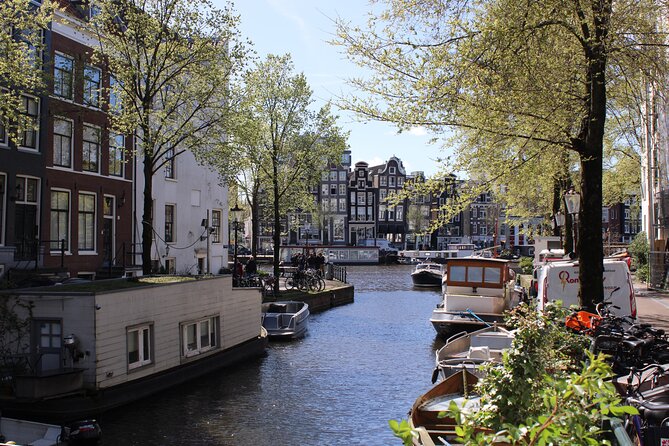
At Nieuwmarkt, the focus turns to the Waag. This building was once one of the city gates and later became a guild hall.
The guide explains why guilds mattered in Amsterdam. These were not just old-fashioned clubs. They helped organize trades, protect professional interests, and shape how work was carried out in the city.
This stop gives useful background on the people and systems behind Amsterdam’s commercial success. The city’s economic growth was not only about ships and wealthy merchants. It also depended on skilled workers, regulated trades, and institutions that managed urban life.
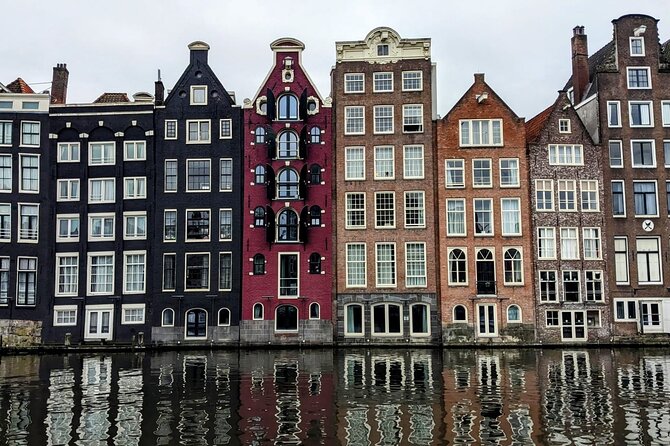
Nieuwmarkt is also where you see the dancing houses. The name points to Amsterdam’s famously narrow, leaning buildings, which can appear as if they are swaying together.
The stop combines architecture with civic history, making it one of the more satisfying parts of the route. At the same time, the area can feel active and crowded, so stay close to the guide and be ready to keep moving.
Zeedijk and the changing face of Chinatown
Zeedijk adds a more recent and social chapter to the walk. The guide introduces Amsterdam’s Chinatown and explains how the area was regarded as one of the city’s most dangerous places during the 1970s.
You then hear about its decline and transformation into a favorite place for many Amsterdammers. That change is important because it shows Amsterdam as a living city, not a museum frozen in its old trading days.
The stop also gives you a chance to think about migration and neighborhood identity. The route does not treat Chinatown as a decorative shopping district. Instead, it places the area within a story of decline, change, and renewed local appeal.
This is another short stop, around 10 minutes. You get an overview rather than a detailed food tour or a visit to specific businesses. If you want to return later for a longer look, the walk helps you know where the area fits within central Amsterdam.
Centraal Station and the city’s connection to the world
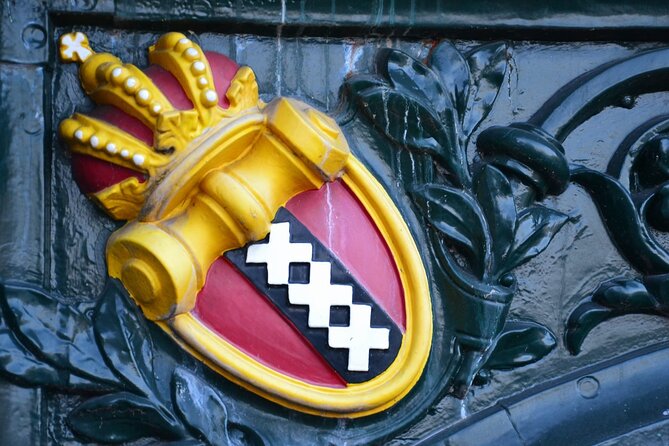
The final stop is Amsterdam Centraal Station, one of the city’s most striking buildings. The guide discusses its architecture and explains why this location has mattered for centuries.
The station is more than a transport hub. Its position reflects Amsterdam’s long connection with movement, trade, and prosperity. The city grew through links to the outside world, and the station continues that role in a modern form.
Ending here gives the route a neat sense of direction. You begin with a small settlement and its early growth, then move through commerce, religion, public power, neighborhood change, and finally a building devoted to connection.
The tour ends back at the meeting point rather than at Centraal Station, so plan for that when arranging your next activity. The station is close to the route’s central sights, but the stated end point remains Beursplein.
What the stroopwafel adds
A classic Dutch stroopwafel is included along the way. It is a small detail, but it adds warmth to a history walk that could otherwise become a steady run of names and dates.
The treat also fits the tour’s practical style. You are walking, listening, and seeing the center from street level, so a simple local snack makes more sense than a formal meal break.
One guide, Manouk, is especially associated with tailoring the experience to the people in the group and finishing with a thoughtful treat. The guide team has also been praised for adjusting the walk to suit different interests and for explaining both Amsterdam’s past and its present.
That does not mean every departure will feel identical. A local guide’s personality shapes any walking tour. Still, the available feedback points to two useful strengths: a friendly approach and a willingness to adapt rather than deliver a fixed speech.
Price, timing, and practical value
The cost is $30.07 per person. There are no separate admission charges for the listed stops, since the experience is built around outdoor sights and guided explanation.
I consider that a fair price if you want an introduction to Amsterdam’s history and do not want to spend your first day piecing together the city’s story on your own. You are paying mainly for the guide’s interpretation, route planning, and ability to connect places that might otherwise seem unrelated.
The value is lower if you prefer to wander without a schedule or already know Amsterdam well. You will not enter the Royal Palace, visit a museum, or spend long periods at any one building. This is a city orientation, not an attraction pass.
The mobile ticket keeps arrival simple. The meeting point is Beursplein, and the area is near public transportation. Free cancellation is available up to 24 hours before the start time, but cancellations or changes inside that window are not accepted for a refund.
The tour is booked, on average, 79 days ahead. That does not guarantee that every date sells out, but it suggests you should reserve early if your Amsterdam dates are fixed.
Who should take this walk?
I would choose this tour for a first visit, especially if you want a clear introduction before exploring museums and neighborhoods independently. It also suits history lovers who prefer stories tied to actual streets and buildings.
It is a good fit for solo visitors and small groups who enjoy meeting other people but do not want a huge crowd. The 15-person limit gives the walk a more personal scale.
Families and older participants should note that this is a walking experience lasting two to two and a half hours. Most people can participate, but the supplied information does not promise a fully step-free route or seating at each stop. If that matters to you, ask the provider before booking.
I would skip it if you want a slow photography walk, a canal cruise, or entry into Amsterdam’s major sights. The route is best when you want context, conversation, and a useful first look at the center.
Should you book the Amsterdam history and culture tour?
Book it if you want Amsterdam to make sense quickly. For $30.07, you get a small-group walk through seven central stops, a local English-speaking guide, a stroopwafel, and a connected story about the city’s growth.
The strongest reasons to go are the range of subjects and the compact route. In one outing, you move from fishing village to global economy, from religious courtyard to guild hall, from troubled neighborhood to modern transport center.
Just keep your expectations in the right place. This is not an inside tour of the Royal Palace or a long stop at every landmark. It is a brisk, personable introduction, and that makes it particularly useful on your first day in Amsterdam.
FAQ
How long does the tour last?
The walk takes about two hours, though the full activity can last two to two and a half hours.
What language is the tour offered in?
The tour is offered in English.
Where does the tour begin?
It begins at Beursplein, 1012 JW Amsterdam, Netherlands.
Where does the tour end?
The activity ends back at the meeting point.
How many people can join the tour?
The maximum group size is 15 people.
What places are included on the route?
The route includes Beursplein, Dam Square, Begijnhof, the House on the Three Canals, Nieuwmarkt, Zeedijk, and Centraal Station.
Is a stroopwafel included?
Yes. You enjoy a classic Dutch stroopwafel along the way.
Does the tour include entry tickets?
The listed stops have no admission ticket charge as part of the walking route. The experience does not state that entry to the Royal Palace or other paid attractions is included.
Can I use a mobile ticket?
Yes. A mobile ticket is available, and confirmation is received when you book.
What is the cancellation policy?
You can cancel for a full refund up to 24 hours before the experience starts. Cancellations and changes made less than 24 hours before the start time are not accepted for a refund.
Just added in Amsterdam
- Guided Day Trip – Volendam, Zaanse Schans, Marken & Edam★ 4.0 · 232 reviews
- Private Tour Zaanse Schans Windmills and Volendam in Jaguar★ 5.0 · 10 reviews
- Zaanse Schans and Giethoorn Unique Day Trip with Boat Cruise★ 4.5 · 17 reviews
- Half-Day Private Guided Sightseeing Tour of Zaanse Schans★ 5.0 · 14 reviews
- Zaanse Schans Private Tour Windmills★ 5.0 · 18 reviews
- Private bike tour: Hidden gems around Amsterdam and surroundings★ 5.0 · 4 reviews
- Bike tour in Amsterdam with an Italian guide★ 5.0 · 15 reviews
- Amsterdam Sightseeing Tour + Hidden Gems + Tastings + PDF guide★ 5.0 · 35 reviews
Historical Tours, compared.
Amsterdam Food and Cultural Tour with Tastings
Read our review →
Kinderdijk UNESCO World Heritage Entry Ticket
Read our review →
Hop-on Hop-off Old-Fashioned Heritage Tram Tour
Read our review →
Amsterdam High-End Dutch Food & History Tour – Up to 8 guests
Read our review →
Cruise through the Historic City Center with Guide
Read our review →
Browse the lists this tour appears in