
Reviewed · WALKING TOURS
Rotterdam Architecture Highlights Walking Tour
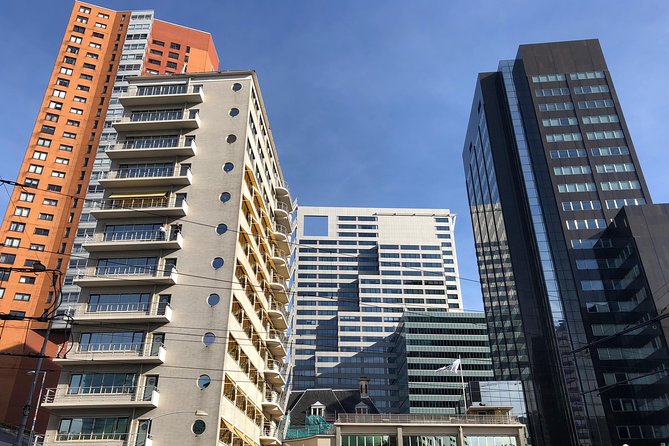
Rotterdam makes more sense when you understand why it looks so different from other Dutch cities. This two-hour architecture walk follows the city’s postwar rebuilding, from the angular entrance at Centraal Station to the bold Markthal and the river views at Boompjeskade. Along the way, an architect guide such as Tania or Silvia connects design choices with Rotterdam’s politics, daily life, and future.
I like the small-group format, capped at 15 people, because it leaves room for questions and a more personal pace. I also like that the guides bring a human side to the buildings, explaining not only how they look, but how Rotterdam changed after World War II.
The main thing to consider is the amount of walking. One account describes nearly 12,000 steps, and another notes that the Cube Houses were seen from a distance rather than visited inside. You’ll want good shoes, weather-ready clothing, and realistic expectations about what a two-hour city walk can cover.
Key points to know before you book
- A postwar city told through architecture: The tour explains how Rotterdam rebuilt after wartime destruction and why modern design became central to its identity.
- An architect leads the walk: Guides including Tania, Tanja, and Silvia bring professional training, local knowledge, and an interest in current city issues.
- Five main stops in two hours: You visit or view Centraal Station, Schouwburgplein, Timmerhuis, Markthal, and Boompjeskade.
- The Cube Houses are not a full interior visit: They appear in the route and tour imagery, but the walk may pass them at a distance.
- The route ends by the Maas: Boompjeskade gives you a broad view toward Rotterdam’s south bank and makes a pleasant finish.
- Best for curious walkers: The route suits anyone who wants architecture, urban history, and city planning rather than old-town monuments alone.
Why Rotterdam is such a good city for an architecture walk
Rotterdam offers a different kind of Dutch city experience. Amsterdam and Delft draw attention with canals, old houses, and preserved streets. Rotterdam’s character comes from rebuilding, experimentation, and a willingness to place striking new structures beside older fragments.
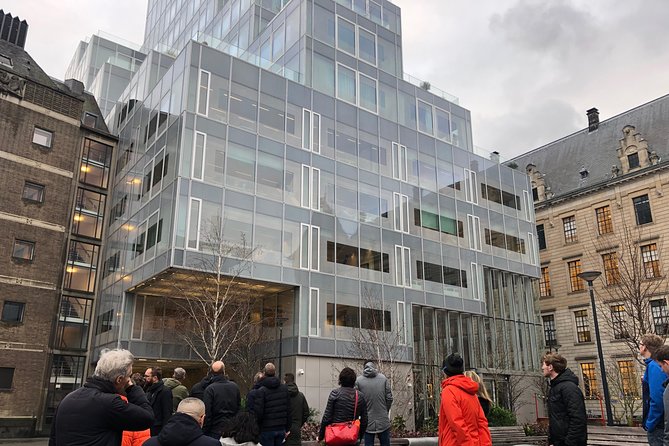
That makes an architect-led walk especially useful. Without context, a building like Timmerhuis can look like an unusual pile of glass and steel. With a guide, you get a better sense of the ideas behind it, how it fits into the city center, and how Rotterdam continues to debate what kind of city it wants to become.
The guides do not stick only to technical design. Tania and Tanja are praised for explaining the city’s development in clear, engaging terms, while Silvia is noted for adjusting her explanations to the group’s interests. That flexibility matters. You can ask about construction and form, but you can also ask how a building functions, who uses it, or what challenges the city faces now.
The tour is offered in English, though the guide may be multilingual. A few guides also speak Spanish or German, but English is the stated tour language.
More Walking Tours in Rotterdam
- Rotterdam: Architectural Highlights Guided Walking Tour
★ 4.8 · 215 reviews - Rotterdam: Highlights & Gems Walking Tour with Dutch Local
★ 5.0 · 133 reviews - Rotterdam 2-Hour Walking Tour | Discover The City With A Local
★ 4.5 · 111 reviews
Starting at Rotterdam Centraal Station
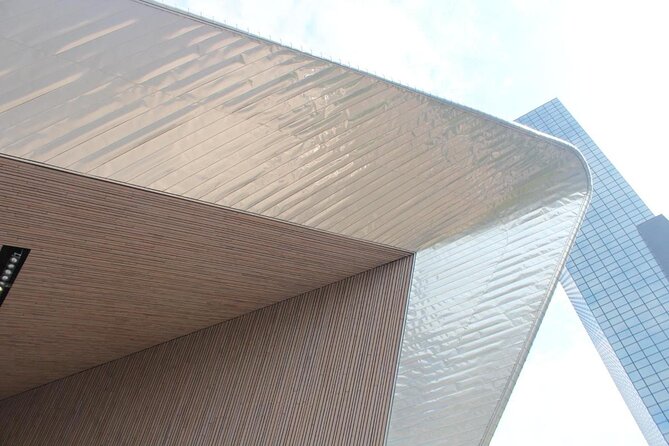
The walk begins at Rotterdam Central Station, the city’s newly built entrance. This is a sensible starting point because the station immediately announces that Rotterdam is not trying to look like a preserved medieval town.
Allow about 10 minutes here. The guide uses the station to introduce Rotterdam’s modern architectural direction and the way major public buildings shape first impressions. It is also an easy meeting point if you arrive by train or public transport.
Do not expect an extended station tour. The listed visit is brief, so the value comes from learning how to read the building and how it relates to the city around it. If you enjoy transport architecture, ask questions early, since the group will soon move on.
The meeting address is Rotterdam Central Station, 3013 AJ Rotterdam. The tour information advises checking the exact point carefully because the meeting location can be confusing. One person found the address and map did not seem to match the actual meeting place, so arrive early and allow time to find the guide.
Schouwburgplein and Rotterdam’s public life
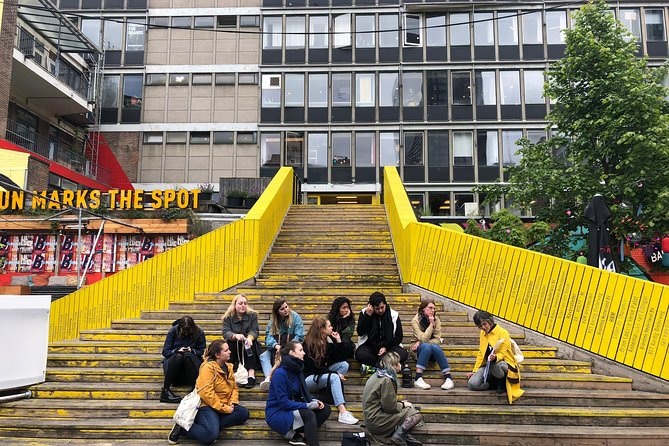
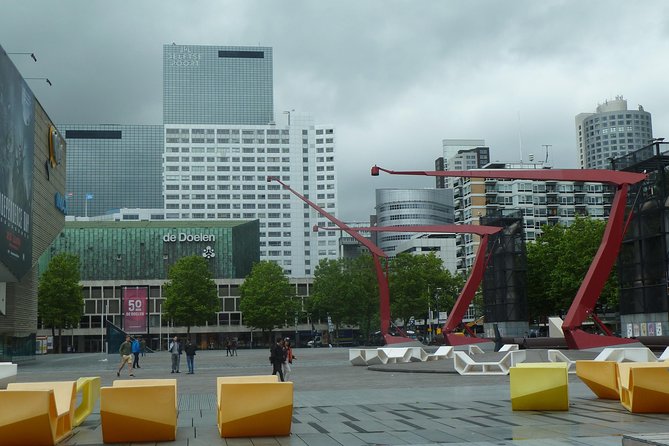
The next stop is Schouwburgplein, described as Rotterdam’s cultural podium square. The visit lasts about 10 minutes and shifts the focus from one building to an open urban space.
This is where the tour starts showing how architecture affects public life. A square is not just an empty gap between buildings. Its size, materials, lighting, and surrounding cultural venues influence how people gather, pass through, or use the space.
The guide may also connect the square to Rotterdam’s social and political choices. That broader discussion is one of the tour’s strengths, but it may not satisfy someone hoping for a strictly technical architecture lecture. You will hear about the city’s social ideals and the public role of its buildings, not only measurements, materials, and construction methods.
There is also a listed stop described as a postwar national monument, though the supplied route does not give it a clear name or separate timing. That suggests the tour includes additional context between the main stops, but the exact treatment may depend on the guide and the pace of the group.
Timmerhuis, the OMA design icon
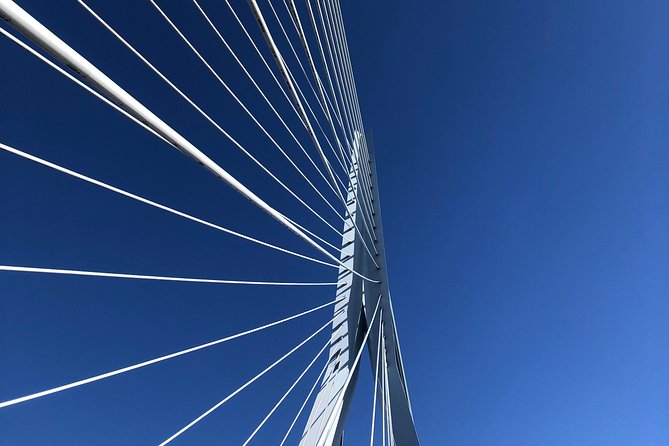
The brief stop at Timmerhuis lasts about five minutes. It is identified as an architecture icon designed by OMA, the Rotterdam-based practice associated with some of the city’s most influential modern work.
Five minutes may sound short, but this is a walking tour, not an interior architecture seminar. You will likely spend the time looking at the building’s form, position, and relationship with the surrounding city. The guide can explain why it matters and point out features you might otherwise walk past.
This is also a good place to ask your own questions. If you are interested in how the building was designed or constructed, say so. One architectural visitor felt the tour gave more attention to social activism and the public role of buildings than to practical design and construction. That is useful to know: the experience is about architecture in its city context, not a specialist technical study.
Other guided walks around Rotterdam:
- Walking Rotterdam Food Tour
★ 5.0 · 89 reviews - Rotterdam: City Center Walking Tour
★ 4.5 · 88 reviews - Rotterdam Walking Tour and Harbor Cruise
★ 4.7 · 59 reviews - Rotterdam: 2-Hour Guided Walking Tour
★ 4.6 · 58 reviews
Markthal, Rotterdam’s colorful indoor market
The route then reaches Markthal, with about 15 minutes here. It is presented as one of the city’s most eye-catching indoor markets, and it gives the walk a change of scale and mood.
Markthal is easy to appreciate visually, but a guide helps you think about what it does as a city building. It combines a public market with a large architectural structure, making it more than a quick photo stop. You can look at the market hall, the surrounding streets, and the way the building changes the feel of this part of central Rotterdam.
The stop is free to enter, according to the tour details. You should still keep the schedule in mind. Fifteen minutes is enough for an introduction and a look around, but not enough for a leisurely market visit or a full meal.
If you want to return later, Markthal is a good place to revisit on your own. The walking tour gives you the framework. A separate visit lets you take your time, browse, and eat without watching the clock.
The Cube Houses question
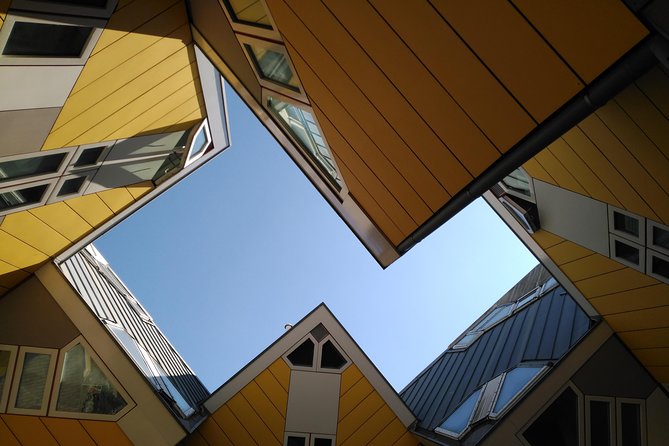
The Cube Houses are named among the highlights, but the practical expectation needs some care. The supplied route lists no dedicated timed stop for them, and one participant specifically noted that the group passed by at a distance rather than walking through the complex.
That does not make the tour a poor choice. The Cube Houses remain part of Rotterdam’s architectural identity, and viewing them from outside can still help you understand the city’s taste for unusual forms. But if you have booked this mainly to enter a Cube House or explore the complex closely, this walk may not deliver that experience.
You can ask the guide at the start how the Cube Houses fit into that day’s route. Group size, walking pace, and timing may affect how much attention they receive. If entering one is important to you, plan a separate visit rather than assuming the two-hour walk includes it.
Boompjeskade and the Maas finish
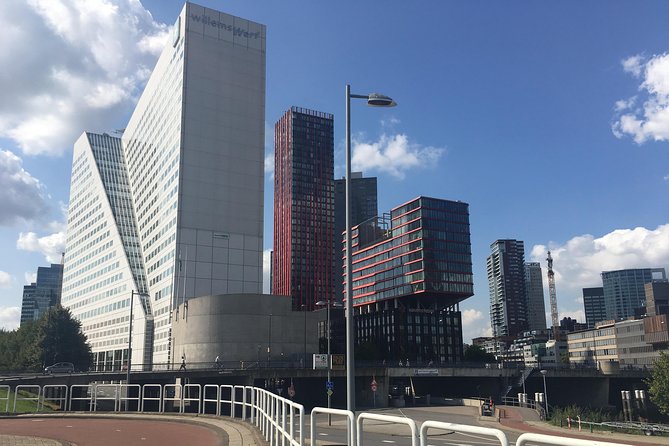
The tour ends at Boompjeskade, on the riverside. The listed time is about 15 minutes, and this is the most open part of the walk.
From here, you get a broad view across the Maas toward Rotterdam’s south bank. It is a good ending because the river helps you understand the city at a larger scale. Rotterdam is not only a collection of unusual buildings. Its port, water, bridges, and expanding south side all shape the way the city grows.
The riverfront can also be breezy and cold, even when the rest of the day feels comfortable. One account specifically warns about an icy breeze near the water. Check the forecast, bring an extra layer in cool weather, and do not dress only for the temperature when you leave your hotel.
An evening departure can add attractive light at the riverfront. One person enjoyed the sunset colors during an evening walk. That is not guaranteed, of course, but the riverside finish gives the timing some visual reward.
What the guides add
The guide is the heart of this experience. The tour is led by a professional architect, and the strongest accounts describe guides who are prepared, warm, and willing to stay longer for questions.
Tania is praised for explaining how Rotterdam’s architecture was planned and developed, while Tanja is described as friendly and generous with her time. Silvia is noted for bringing the city’s past, present, and future together and for adapting her explanations to the nationalities and interests in the group.
Those names matter because guide quality can shape a walking tour more than the list of buildings. The route itself is easy to follow. The useful part is learning why Rotterdam made particular choices and what those choices mean today.
You may hear about city politics, social activism, postwar reconstruction, and current urban challenges. If you want only formal architectural analysis, you may find the discussion broad. If you like understanding how buildings affect real people and public space, that wider approach should suit you.
The guides also seem willing to answer questions rather than deliver a fixed speech. Some groups received extra time, including one tour that ran about 30 minutes longer. You should not count on overtime, but the small-group setup makes conversation more likely.
Group size, walking pace, and physical demands
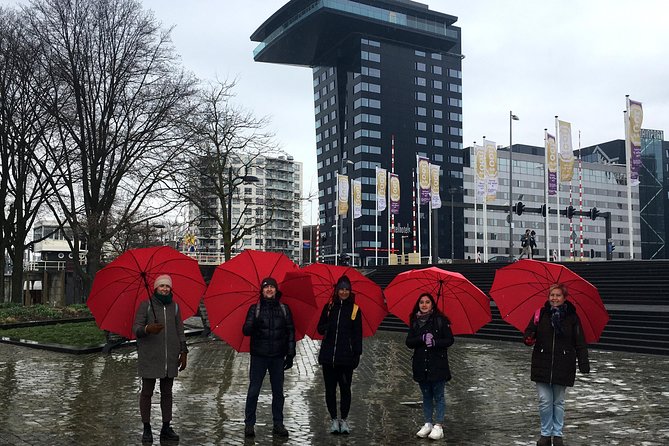
The maximum group size is 15, with a minimum of two people per booking. A small group is useful here because city architecture is easiest to discuss when you can hear the guide and stop for questions.
The route is not described as strenuous, but it is a steady city walk. You move between several central locations, stand outdoors, and finish by the river. The tour information recommends moderate physical fitness.
One account estimated close to 12,000 steps. That may reflect the individual route and walking pace, but it is a useful warning not to treat the two-hour duration as a short stroll. Wear shoes you can comfortably walk in, and consider the weather before booking.
The tour is not designed around hotel pickup or drop-off. You meet at Rotterdam Centraal and finish at Boompjeskade, so you should be ready to make your own way to and from those points.
Is $54.31 a fair price?
At $54.31 per person, this is not the cheapest way to look around Rotterdam. You are paying for a two-hour guided walk, an architect’s perspective, a small group, and the chance to ask questions along the way.
The value is strongest if you want context. You could walk past Centraal Station, Timmerhuis, Markthal, and the riverfront on your own for free. What you cannot easily reproduce is the explanation tying them together, especially the story of postwar rebuilding and the city’s current choices.
The price also makes more sense for a first visit or a day trip from Amsterdam. One person specifically found the tour worthwhile as a day trip. If you already know Rotterdam well, or if you are mainly looking for a technical architecture course, you may find the cost less appealing.
Group discounts are available, though the supplied information does not state the discount amount. The tour is commonly booked about 47 days ahead, which suggests you should reserve early if your dates are fixed, especially if you want a particular departure time or are visiting during a busy period.
Who should book this walk?
I would choose this tour if you enjoy modern buildings but want more than a photo checklist. It suits first-time visitors, architecture students, design-minded travelers, and anyone curious about how a city rebuilds itself after disaster.
It is also a good fit if you enjoy discussing urban life. The guides may take the conversation toward public space, social policy, and the problems Rotterdam faces today. That wider view gives the buildings meaning.
I would hesitate if your main goal is old Rotterdam. The route focuses on modern architecture and postwar rebuilding, and one person wished it included more of the old area nearby. I would also hesitate if you want a full Cube Houses visit or detailed construction analysis at every stop.
The tour has a minimum age of 12. Service animals are allowed, and the route is near public transportation. Dress for the forecast, especially if the walk ends near the exposed riverfront.
Should you book it?
Book this walk if you want a clear introduction to Rotterdam’s modern identity and appreciate a guide who can connect design with city life. The strongest reasons are the architect-led commentary, the small groups, the postwar context, and the chance to ask direct questions.
Skip it if you want a short, purely visual outing, an old-town tour, or an interior visit to the Cube Houses. For most curious first-time visitors, though, the route offers a useful way to understand why Rotterdam looks the way it does. Just wear comfortable shoes, check the meeting point carefully, and leave room in your schedule to explore Markthal or the Cube Houses again on your own.
FAQ
How long does the Rotterdam Architecture Highlights Walking Tour last?
The tour lasts approximately two hours.
Where does the tour begin?
The tour begins at Rotterdam Central Station, 3013 AJ Rotterdam, Netherlands.
Where does the tour end?
The walk ends at Boompjeskade on the riverside, at 3011 Rotterdam, Netherlands.
Which buildings and places are included?
The route includes Rotterdam Centraal Station, Schouwburgplein, Timmerhuis by OMA, Markthal, and Boompjeskade. The Cube Houses are featured among the highlights, but the route does not specify a full interior visit.
Is the tour offered in English?
Yes. English is the stated tour language, though the guide may be multilingual.
How many people can join the tour?
The tour has a maximum of 15 participants. A minimum of two people is required per booking.
Is the tour suitable for children?
The minimum age is 12 years.
What happens if the weather is poor?
The experience requires good weather. If it is canceled because of poor weather, you will be offered another date or a full refund. You can also cancel for a full refund if you do so at least 24 hours before the start time.
Just added in Rotterdam
- Rotterdam: City Walk Audio Guide in 7 Languages on your Phone★ 3.5 · 6 reviews
- Rotterdam Must Do Tour: Highlights, History, WW2 and Architecture★ 5.0 · 20 reviews
- e-Scavenger hunt Breda: Explore the city at your own pace★ 4.5 · 27 reviews
- e-Scavenger hunt Rotterdam: Explore the city at your own pace★ 4.5 · 13 reviews
- All-Inclusive Private Windmill Tour to Kinderdijk from Rotterdam★ 4.5 · 59 reviews
- Discover Rotterdam: Classic Highlights Bike Tour with a Local★ 5.0 · 22 reviews
- Rotterdam in half a day: All-inclusive, Authentic private Tour of Rotterdam★ 5.0 · 146 reviews
- Discover Breda with a self-guided Outside Escape city game tour!★ 5.0 · 16 reviews
Walking Tours, compared.
Anne Frank’s Story – Guided Walking Tour through Amsterdam
Read our review →
Life of Anne Frank and World War II Walking Tour
Read our review →
Anne Frank Walking Tour – Guided in EN/DE/IT/ES
Read our review →

Anne Frank Walking Tour Amsterdam Including Jewish Cultural Quarter
Read our review →
Amsterdam Highlights Walking Tour: Small Group Experience
Read our review →Browse the lists this tour appears in