
Reviewed · WALKING TOURS
Cultural Walking Tour in Rotterdam
Rotterdam’s best story is written in its buildings. This walk takes you from the clean-lined Centraal Station through rebuilt streets and historic survivors to the Maas, showing how a city nearly destroyed in World War II became a bold test ground for modern architecture. I especially like the mix of urban history and everyday city life, plus the fact that your guide may be an architect or art historian. You get more than a roll call of landmarks.
I also like the route itself: it begins at an easy rail hub and finishes beside the river, so you can continue exploring without backtracking. Guides such as Tania and Sonia have been praised for making technical subjects clear and personal. The main caution is that two hours on city streets can feel longer in cold, rain, or bright sun, and the market snack is not included in the price.
Key points at a glance
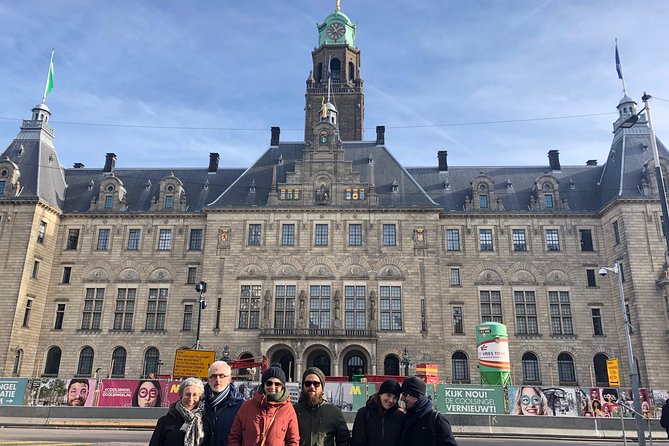
- See Rotterdam’s rebuilding story in one walk: The route connects the postwar Central Station area, Lijnbaan, old Laurenskerk, Markthal, and the Maas.
- Expect an architecture-led tour: A professional architect or art historian guide explains design, engineering, politics, culture, and urban planning.
- Start and finish in useful places: Meet at Rotterdam Centraal and finish at Boompjeskade beside the Maas.
- Plan for a small-group feel: The maximum group size is 20, though the guide may operate the tour with fewer people.
- Bring water and a charged phone: The walk can run about 2 to 2.5 hours, with many photo opportunities.
- Budget for anything you eat: Snacks and drinks are not included, despite the route passing through the Markthal.
Why Rotterdam makes such a good walking subject
Rotterdam is not a city where every attractive building belongs to the same period. That is exactly why this tour works. You move between old masonry, postwar planning, ambitious modern structures, and high-end riverfront development in a short distance.
The city center was badly damaged during World War II, leaving Rotterdam with a chance, and a problem. Rebuilding could mean copying what had been lost, or it could mean trying something new. Rotterdam chose the second path. The result is a city of wide streets, sharp angles, unusual housing, large public spaces, and buildings that often invite debate.
A guide with training in architecture or art history can give this mix some order. Instead of seeing a station, a church, a market hall, and a bridge as separate photo stops, you learn how they fit into the city’s larger story. That is the tour’s real value.
The pace should suit you if you want a strong introduction rather than a full-day architectural study. The route is listed at about two hours, although one detailed account describes a 2.5-hour walk. I would keep part of your next hour open, especially if the group pauses for questions or the guide spends extra time on a building.
More Walking Tours in Rotterdam
- Rotterdam: Architectural Highlights Guided Walking Tour
★ 4.8 · 215 reviews - Rotterdam: Highlights & Gems Walking Tour with Dutch Local
★ 5.0 · 133 reviews - Rotterdam 2-Hour Walking Tour | Discover The City With A Local
★ 4.5 · 111 reviews
Rotterdam Centraal sets the tone
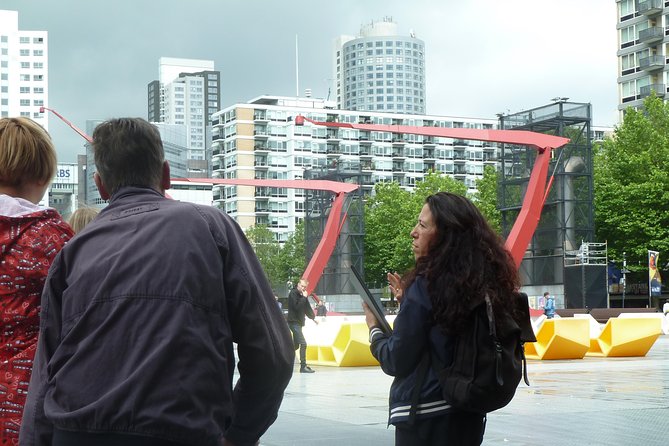
The meeting point is Rotterdam Centraal Station, at 3013 AJ Rotterdam. This is a practical start for anyone arriving by train, and it saves you the trouble of finding a small street corner in an unfamiliar center.
The station itself is an appropriate opening lesson. Its new design gives you an immediate sense of Rotterdam’s preference for scale, movement, and modern form. You begin in a place built to handle people and transport, not simply to look pretty.
Your guide will use the station as the starting point for the city’s architectural story. From there, the walk moves into central Rotterdam, where the contrast between planned postwar areas and surviving older structures becomes easier to read.
You should arrive ready to walk at a moderate pace. The tour requires a moderate level of physical fitness, and you will be outdoors for most of the experience. Wear shoes that are comfortable on city streets, and check the forecast before leaving. A January walk may be memorable for reasons beyond the architecture, so bring a warm layer.
Lijnbaan and the postwar city
The route passes through Lijnbaan, described as the country’s largest national monumental area. This is one of the places where Rotterdam’s postwar planning becomes visible in everyday form.
Lijnbaan is not simply a street to cross on the way to somewhere else. It helps explain how Rotterdam tried to create a new kind of city center after wartime destruction. Here, your guide can point out how pedestrian movement, shopping, open space, and modern buildings were brought together.
This part of the tour is useful because it moves the discussion away from isolated landmarks. You begin to see urban design as something that affects how you walk, shop, meet people, and experience the center. The guide’s explanation matters more here than a quick photograph.
If you prefer old European streets at every turn, this section may feel less romantic. Rotterdam’s appeal is different. Its center often looks planned, practical, and experimental rather than traditionally picturesque.
Laurenskerk, the old survivor
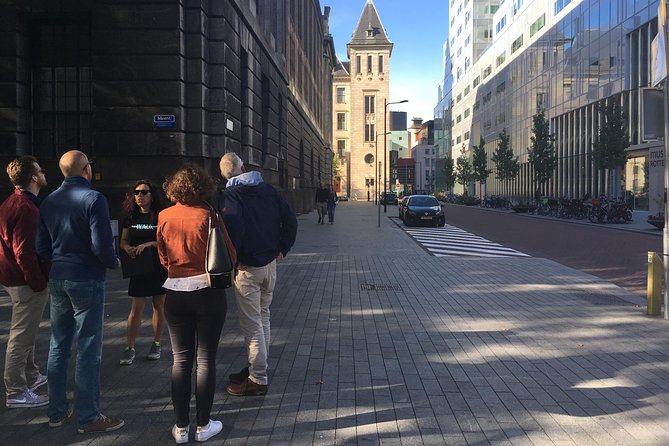
The Grote of Sint-Laurenskerk, usually called Laurenskerk, provides a sharp change of mood. The tour pauses outside the oldest building in Rotterdam, which partly survived the bombardment.
The stop is brief, about 10 minutes, and admission is not included because the visit is focused on the exterior. Even so, the church gives you a physical link to the city that existed before the war. In a center known for daring new construction, this older building carries unusual weight.
I like this stop because it keeps the modern city from becoming a simple parade of clever shapes. Rotterdam’s identity includes loss, survival, and memory as well as forward-looking design. A strong guide can explain why the church matters without turning the stop into a dry date list.
You may want to ask about the parts that survived and how the church relates to the buildings around it. The supplied tour information does not promise an interior visit, so do not plan on going inside as part of the scheduled walk.
Other guided walks around Rotterdam:
- Walking Rotterdam Food Tour
★ 5.0 · 89 reviews - Rotterdam: City Center Walking Tour
★ 4.5 · 88 reviews - Rotterdam Architecture Highlights Walking Tour
★ 5.0 · 66 reviews - Rotterdam Walking Tour and Harbor Cruise
★ 4.7 · 59 reviews
Markthal brings the city down to street level
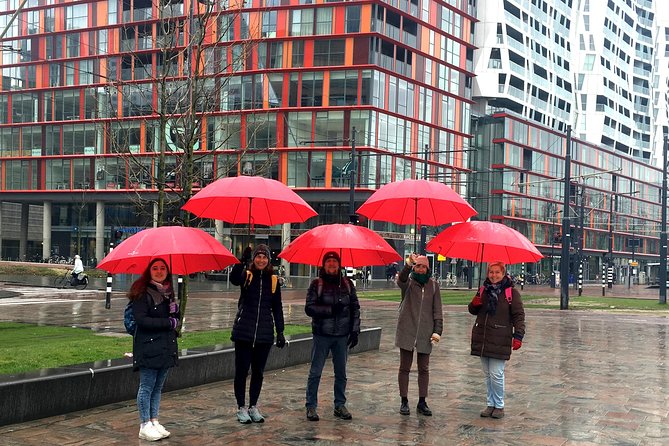
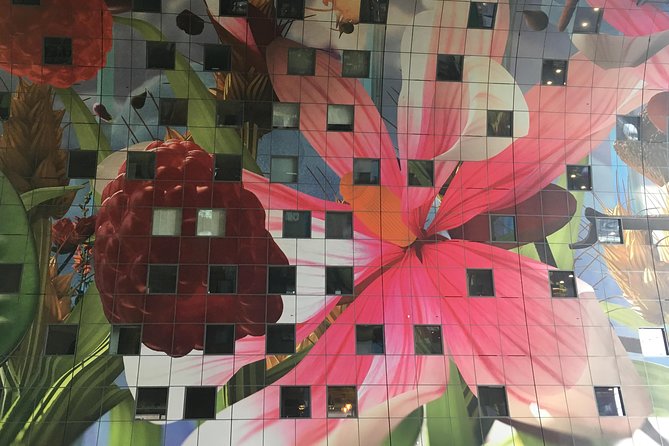
The Markthal is the tour’s most obvious link to food and daily life. This large indoor market and food hall is visually impressive, but the useful part of the visit is hearing how it fits into Rotterdam’s newer center.
The guide will explain the building, and the route is intended to include an authentic taste of local market life. However, snacks and drinks are listed as extra costs. You should bring a little spending money if you want to buy something, rather than assuming a tasting is covered by the $54.06 fee.
A market stop also gives the walk a welcome change of rhythm. Architecture can become tiring when every pause involves looking upward at a facade. Here, you can look, smell, and browse while your guide connects the building to the city’s public life.
The stop is listed at about 10 minutes, so do not expect a long meal break. If you want time to shop or eat properly, return after the tour. The route ends at the river, and Markthal is close enough to the central sights to revisit on your own.
The river finish and the Erasmus Bridge
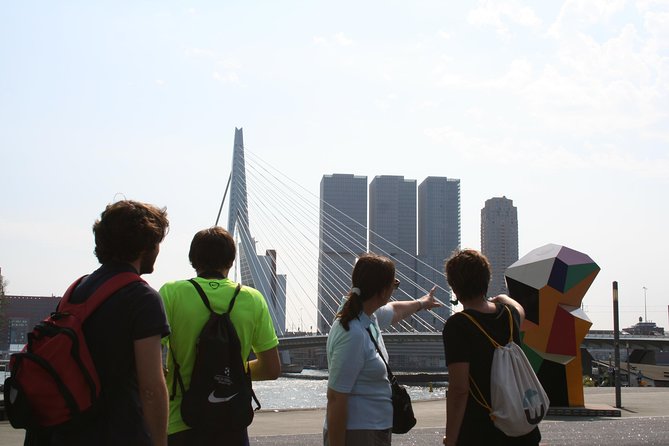
The walk concludes at Boompjeskade, beside the Maas. This is a smart ending. You finish with open views, major bridges, and the high-end development across the river, rather than being dropped back at the same station where you began.
The Erasmus Bridge gives the final section a clear visual focus. It is one of Rotterdam’s best-known landmarks, and the riverside setting lets you understand the city as a major port with a modern skyline and active connections across the water.
The river finish also helps tie together the earlier stops. Rotterdam’s architecture is not only about buildings viewed from a sidewalk. It is about movement, water, infrastructure, housing, business, and the city’s relationship with the Maas. From Boompjeskade, you can look back at the center and forward toward newer development.
Bring your phone with a full battery. The route includes many strong photo locations, and one useful suggestion from the tour experience is to plan for photos rather than relying on a quick snapshot at the end. Sunglasses can help on a sunny day, particularly near the open water.
What the guide adds to the walk
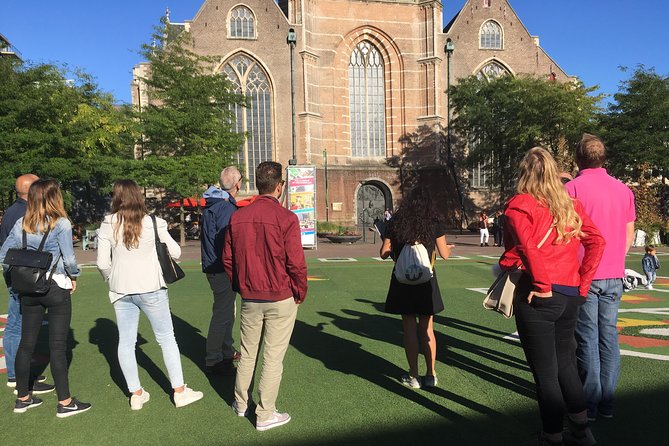
The guide is the deciding factor here. The experience includes a local guide and a professional architect guide, and it may be operated by a multilingual guide. The tour is offered in English, so confirm that English is available when booking if the guide assignment is not yet clear.
Tania is praised for knowing her material and keeping the walk engaging even in cold January weather. Sonia is described as a local architect who explained the rebuilt downtown and the setting of Rotterdam as a major port city. Those details suggest the best version of this tour is conversational, with room for questions rather than a memorized speech.
The subject matter can cover history, politics, culture, engineering, and urban design. That range is important. Rotterdam’s buildings are easier to understand when you know not only what they look like, but why the city made particular choices.
The group maximum is 20 people. That is small enough for a guide to keep the group together, though it is not a private tour. In an unusual case, you might be the only participant. That can bring extra attention and detailed discussion, but it also means you lose the social side of a shared group walk.
Price, timing, and practical value
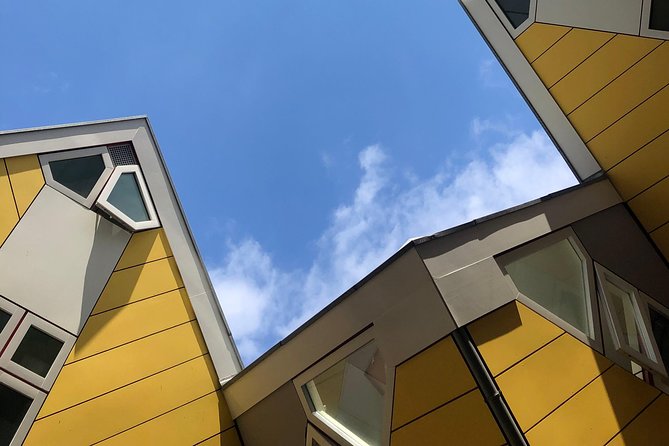
At $54.06 per person, this is not the cheapest way to see Rotterdam. You are paying for a guide with architectural or art-history training, not simply for a route between public landmarks. The value is strongest if you care about why the city looks the way it does.
The stops themselves have no admission charges listed. That means the fee is mainly for interpretation, organization, and the guide’s time. If you only want quick photographs of the Markthal and Erasmus Bridge, you can see those places independently for less. If you want the city’s rebuilding story explained as you walk, the price is easier to justify.
The tour requires at least two people per booking and accepts group discounts. It is often booked about 31 days ahead, so I would not leave it until the last moment if your Rotterdam schedule is fixed.
The start is close to public transportation, and there is no hotel pickup or drop-off. That is not a problem in a compact central route, but you need to make your own way to Centraal Station and arrange your next stop from the Maas.
Free cancellation is available up to 24 hours before the local start time. Changes or cancellations inside that window are not accepted for a refund. Service animals are allowed, and the minimum age is 12.
Who should book this Rotterdam walk
I would choose this tour if you are visiting Rotterdam for the first time and want a clear framework for the center. It is also a good fit if you enjoy buildings but do not want a highly technical lecture. The guide’s ability to connect architecture with war, culture, engineering, and daily life gives the walk wider interest.
You should also consider it if you are traveling by train. Starting at Centraal Station makes the tour easy to fit into an arrival day, while the finish at Boompjeskade leaves you near the Maas and central sights.
This is less suitable if you want a slow food tour, an indoor activity, or a detailed visit inside each landmark. The church stop is exterior-only as described, and the Markthal pause is short. You will spend much of the tour walking outside, so weather matters.
Should you book it?
Book this cultural walking tour if you want Rotterdam explained rather than simply photographed. The strongest reasons are the architect-led perspective, the useful route from Centraal Station to the Maas, and the chance to understand how wartime destruction shaped the city you see today.
Skip it if your main goal is shopping, a long market meal, or a private tour with guaranteed one-to-one attention. For most first visits, though, the walk offers a worthwhile introduction, especially if you bring water, charge your phone, dress for the weather, and budget separately for a market snack.
FAQ
Where does the Cultural Walking Tour in Rotterdam begin?
The tour begins at Rotterdam Central Station, 3013 AJ Rotterdam, Netherlands.
Where does the tour end?
It ends at Boompjeskade, 3011 Rotterdam, beside the Maas river.
How long does the tour take?
The scheduled duration is approximately two hours. One detailed account describes a walk of about 2.5 hours, so allow some flexibility.
What language is the tour offered in?
The tour is offered in English. It may be operated by a multilingual guide.
Are food and drinks included?
No. Drinks and snacks are not included. The route visits the Markthal, where you can buy something separately.
What are the age and fitness requirements?
The minimum age is 12, and you should have a moderate level of physical fitness. You should also dress for the weather because the experience is a walking tour outdoors.
Just added in Rotterdam
- Rotterdam: City Walk Audio Guide in 7 Languages on your Phone★ 3.5 · 6 reviews
- Rotterdam Must Do Tour: Highlights, History, WW2 and Architecture★ 5.0 · 20 reviews
- e-Scavenger hunt Breda: Explore the city at your own pace★ 4.5 · 27 reviews
- e-Scavenger hunt Rotterdam: Explore the city at your own pace★ 4.5 · 13 reviews
- All-Inclusive Private Windmill Tour to Kinderdijk from Rotterdam★ 4.5 · 59 reviews
- Discover Rotterdam: Classic Highlights Bike Tour with a Local★ 5.0 · 22 reviews
- Rotterdam in half a day: All-inclusive, Authentic private Tour of Rotterdam★ 5.0 · 146 reviews
- Breda Fun Puzzle Quest: True Lord Self-Guided Tour★ 4.0 · 9 reviews
Walking Tours, compared.
Anne Frank’s Story – Guided Walking Tour through Amsterdam
Read our review →
Life of Anne Frank and World War II Walking Tour
Read our review →
Anne Frank Walking Tour – Guided in EN/DE/IT/ES
Read our review →

Anne Frank Walking Tour Amsterdam Including Jewish Cultural Quarter
Read our review →
Amsterdam Highlights Walking Tour: Small Group Experience
Read our review →Browse the lists this tour appears in