
Reviewed · RED LIGHT DISTRICT TOURS
Amsterdam: Spanish Tour Unmasking the Redlight District
Amsterdam’s Red Light District is more than red-lit windows and late-night crowds. This two-hour Spanish walking tour explains how a medieval port, a wealthy Golden Age city, and a tolerant modern capital shaped the neighborhood you see today. You move through narrow lanes, old canals, churches, and former city defenses while your guide fills in the human stories.
I like the route for two clear reasons: it links the district to Amsterdam’s maritime past, and it includes major landmarks such as the Oude Kerk, De Waag, and St. Nicholas Basilica instead of treating the area as a single attraction. I also like the Spanish-language format. A Chilean guide praised in the available feedback was described as agile and clear, which matters on a story-heavy walk.
The main drawback is that this is an outdoor tour with no food, drinks, or paid admissions included. You will also need comfortable walking shoes, and the route is not suitable for children under 14 or wheelchair users. Photography inside is not allowed, so this is better for listening and looking than for collecting indoor snapshots.
Key points to know before booking
- The story begins at St. Nicholas Basilica and the harbor, giving the district a wider setting than nightlife alone.
- Zeedijk and Warmoesstraat reveal the area’s sailor roots, with old bars, canals, and streets shaped by port traffic.
- Oude Kerk is the route’s major landmark, but venue admissions are not included in the $31 price.
- The He Hua Temple and Nieuwmarkt add cultural and civic history to the walk.
- The tour is conducted in Spanish, with a live guide and a two-hour outdoor route.
- The best fit is an adult or older teenager who enjoys history and walking, not someone seeking club access or a late-night entertainment tour.
Why this walking tour gives the Red Light District more context
Many first-time visitors see the district as a cluster of windows, bars, and crowded lanes. This route gives you a longer view. You start near Amsterdam Central Station, where the city’s relationship with shipping and trade helps explain why this part of town developed as it did.
That setting matters. Amsterdam’s port brought sailors, merchants, migrants, religious minorities, and people looking for work. The district did not appear in isolation. Its streets grew from the city’s position as a trading center, then changed as wealth and population increased.
Your guide connects those changes to demand for entertainment and prostitution during the city’s prosperous Golden Age. The point is not to excuse every part of the district or turn it into a morality lecture. It is to show how economics, religion, migration, law, and social attitudes shaped one small part of Amsterdam.
I like that approach because it gives you something useful to carry into the rest of your visit. After the tour, the red lights, canals, churches, and narrow houses make more sense as pieces of one long urban story.
Other Red Light District walks in Amsterdam:
- Amsterdam: Red Light Secrets Museum Entry Ticket
★ 4.2 · 5,722 reviews - Amsterdam: Red Light District Tour in German/English/Italian
★ 4.9 · 5,623 reviews - Amsterdam Red Light District & Coffee Shop Tour
★ 4.6 · 4,134 reviews
Starting outside Barbizon Palace Hotel
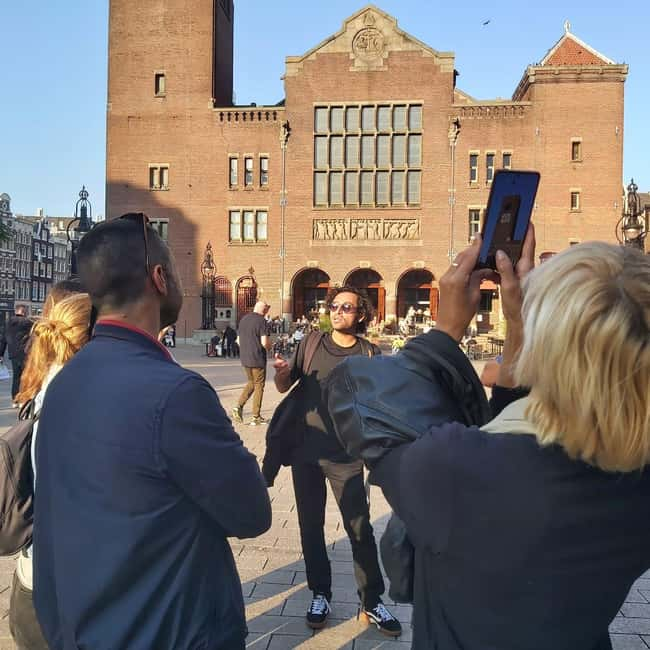
The meeting point is outside the entrance to the Barbizon Palace Hotel on Prins Hendrikkade, close to Amsterdam Central Station. This is a practical place to begin because the route starts near the city’s main arrival point and the St. Nicholas Basilica.
Look for the guide outside the hotel entrance rather than wandering into the station area. Since the walk begins outdoors, arrive ready to move. The activity lasts two hours, and the schedule varies, so you need to check the available starting time when booking.
The guide speaks Spanish throughout the tour. If you understand Spanish well, you should get more from the anecdotes and quick explanations than you would from a self-guided walk. The best feedback about the guiding focuses on clarity and energy. One guide described in the available comments was a young Chilean man who explained the material in a lively, easy-to-follow way.
Group size is not provided, so you should not book expecting a private walk or a small group. The format is a standard guided walking experience, with stops for photographs and explanations along the way.
St. Nicholas Basilica and the city’s maritime beginning
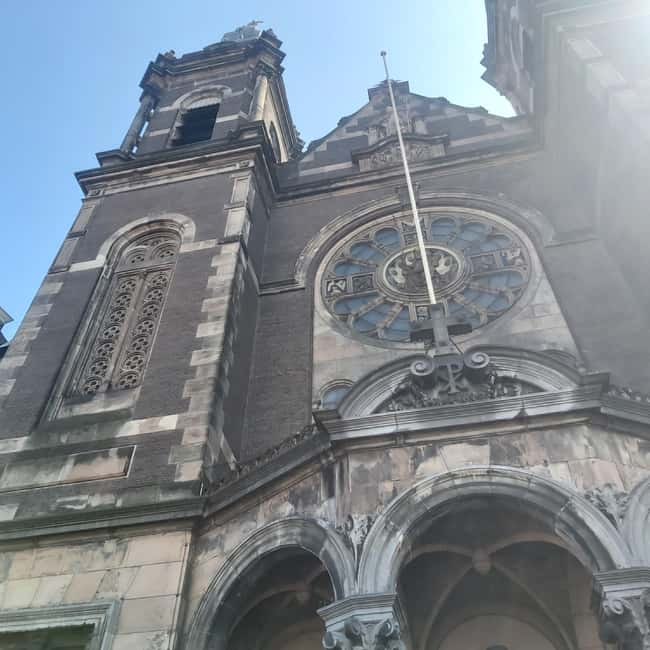
The first formal stop is the St. Nicholas Basilica, opposite Central Station. Here, your guide gives a short introduction to Amsterdam’s early development and maritime identity.
The basilica offers a useful visual marker. Its position near the station and old harbor area lets you see how close the modern arrival point is to the historic core. You are not simply heading into a nightlife zone. You are entering the part of town shaped by ships, trade, religion, and movement.
The guide then leads you toward Zeedijk. This opening section sets the tone for the tour: the Red Light District is presented as a neighborhood with several layers, not just one famous trade.
Zeedijk, sailors, and Amsterdam’s mixed past
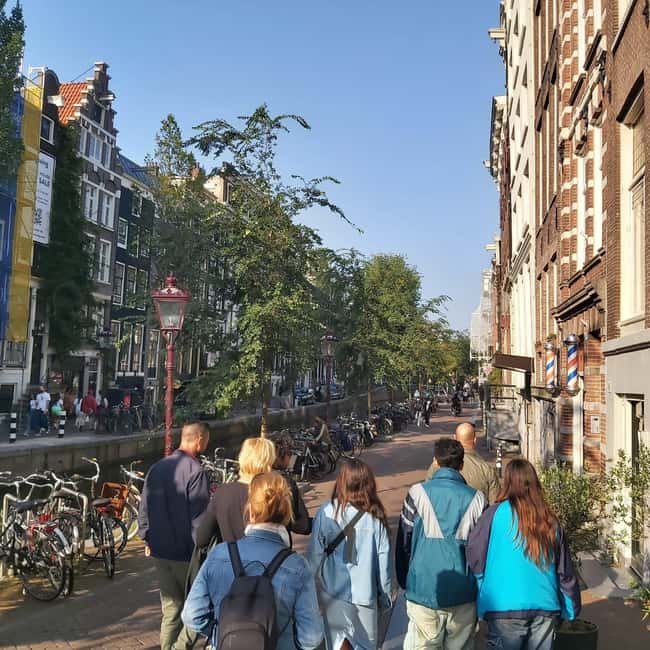
The walk to Zeedijk takes about 15 minutes. Zeedijk has a long connection to Amsterdam’s port life, and the route uses it to explain how sailors from different places affected the character of the area.
The street is associated with historic bars that once served sailors arriving from around the world. That detail helps explain why entertainment and prostitution found a home here. A port city creates constant demand for lodging, food, drink, companionship, and services.
You will also hear about Amsterdam as a meeting place for different cultures and ideas. The guide uses streets, canals, and old buildings as clues, rather than relying only on dates. That makes this section more grounded than a basic timeline.
The walk is not difficult because of distance alone, but the old streets can be narrow and busy. Stay close to the group and wear shoes with good support. You will be standing during explanations, so flimsy footwear could become tiring by the end.
Same city, a different sort of day:
- Amsterdam: Van Gogh Museum Ticket
★ 4.7 · 52,054 reviews - Amsterdam Classic Saloon Boat Cruise with Drinks and Cheese
★ 5.0 · 31,825 reviews - Amsterdam Luxury Canal Cruise + Unlimited Drinks & Bites option
★ 5.0 · 30,518 reviews - Amsterdam: Heineken Experience Ticket
★ 4.6 · 30,055 reviews
The secret stop and the He Hua Temple
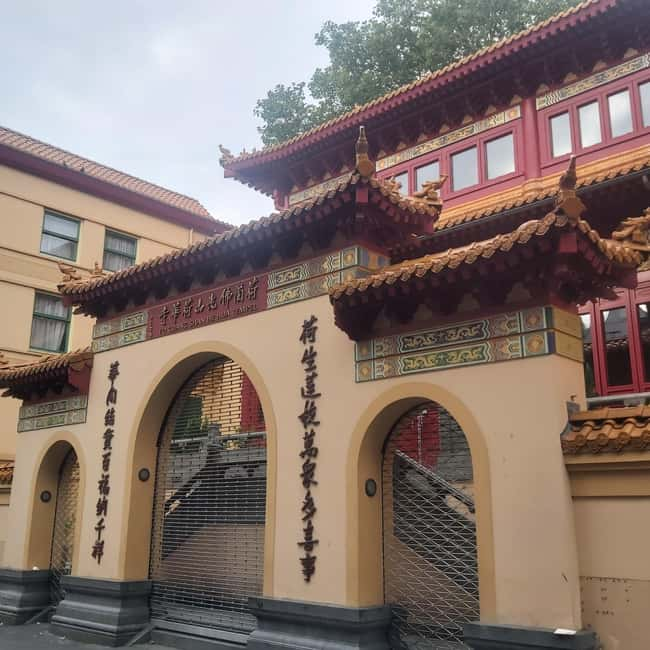
The itinerary includes a short photo stop at an unspecified location, followed by a 10-minute stop at the He Hua Temple. Because the first location is not named, you should treat it as a surprise rather than plan your day around a particular landmark.
The He Hua Temple adds a different cultural layer to the route. It helps show that the district is not frozen in a single historical period. Amsterdam’s central neighborhoods have continued to absorb new communities, customs, and religious expressions.
This stop is mainly for photographs and explanation. It is not described as a full temple visit, and the general rules say photography inside is not allowed. Bring a camera if you like, but wait for the guide to tell you when and where it is appropriate to use it.
That rule is worth taking seriously throughout the walk. The Red Light District is a lived-in neighborhood, not a stage set. Respectful behavior matters, especially around workers, residents, religious sites, and people who do not want to appear in your photographs.
Nieuwmarkt Square and De Waag
Next comes Nieuwmarkt Square, with about 10 minutes for a photo stop. The square is home to De Waag, an imposing former city gate that later became a weighing house.
This is one of the best places on the route for understanding Amsterdam as a fortified commercial city. A city gate controls movement. A weighing house supports trade. Put those functions together, and you get a clear picture of how defense and commerce worked side by side.
The stop is fairly short, so expect an explanation and time for photographs rather than a long architectural visit. The value is in the connection between the building and the city’s trading past.
Nieuwmarkt also gives the walk a change of pace. You move away from the tightest canal lanes and gain a little more room to look around. If you want detailed time inside De Waag, this tour may not be enough on its own, and no entry to venues is included.
The Red Light District and Oudezijds Voorburgwal
The route then reaches the heart of the Red Light District, with about 20 minutes of walking through the area. This is where the tour’s historical explanation meets the modern streetscape.
You will walk along Oudezijds Voorburgwal, one of the key canals in the district. The guide explains how prosperity increased the population and created more demand for nightlife and prostitution. The canal is not just a scenic waterway. It is part of the district’s working history.
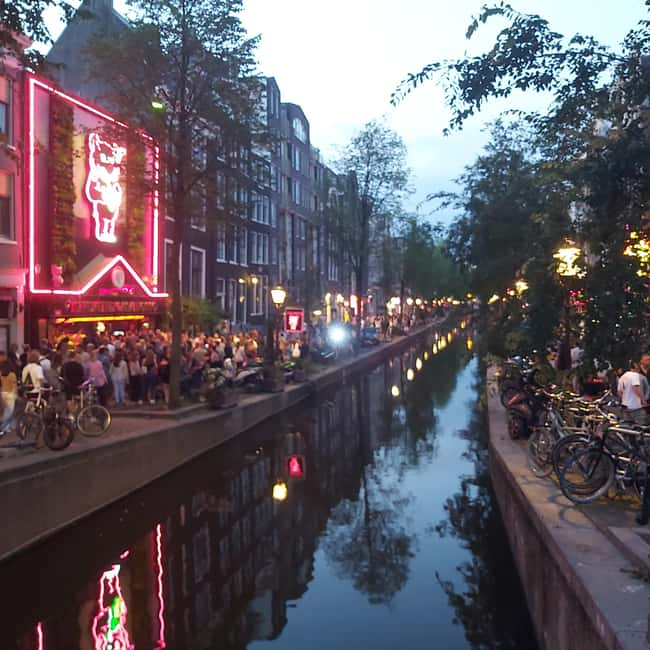
Expect narrow streets, old facades, canals, and a public atmosphere that can change from one block to the next. The tour is designed to help you read the surroundings rather than simply pass through them. You may see the familiar red-lit windows, but the guide also points to the older structures and less obvious details that explain how the neighborhood developed.
You should keep your expectations sensible. This is not a behind-the-scenes visit to working premises, and it does not include access to clubs, bars, or other venues. It is a history walk through public streets. That makes it suitable for curious adults who want context, but less suitable if your main goal is nightlife entertainment.
Photography requires care here. You may bring a camera, but the guide will advise you when it is acceptable. Do not photograph people in windows or assume that a public street means every person and business is fair game.
Oude Kerk, the district’s oldest building
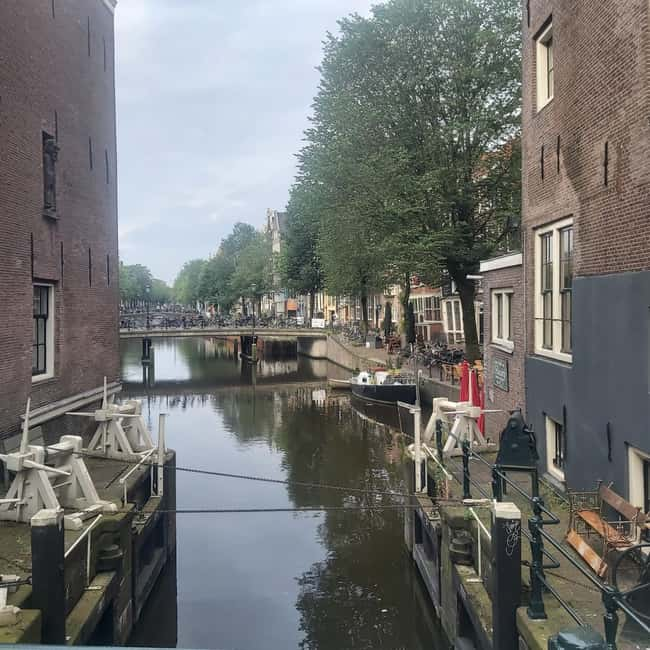
The route includes about 15 minutes at the Oude Kerk. The church is identified as the oldest building in Amsterdam and gives the tour one of its strongest contrasts: a major religious landmark at the center of the city’s historic nightlife district.
That contrast is central to the story. Amsterdam’s old center has long placed worship, trade, housing, entertainment, and sex work close together. Seeing the Oude Kerk in this setting helps you understand that the district is not a modern invention built apart from the rest of the city.
The itinerary describes a visit, but the price does not include entries to any venues. You should therefore expect to see and discuss the building, with any interior admission subject to the tour’s arrangements and separate costs. Photography inside is not allowed.
The stop also gives you a chance to pause after the walking sections. Listen for the guide’s explanation of how religious institutions, city government, and commercial life occupied the same compact area.
Warmoesstraat and a tucked-away stop
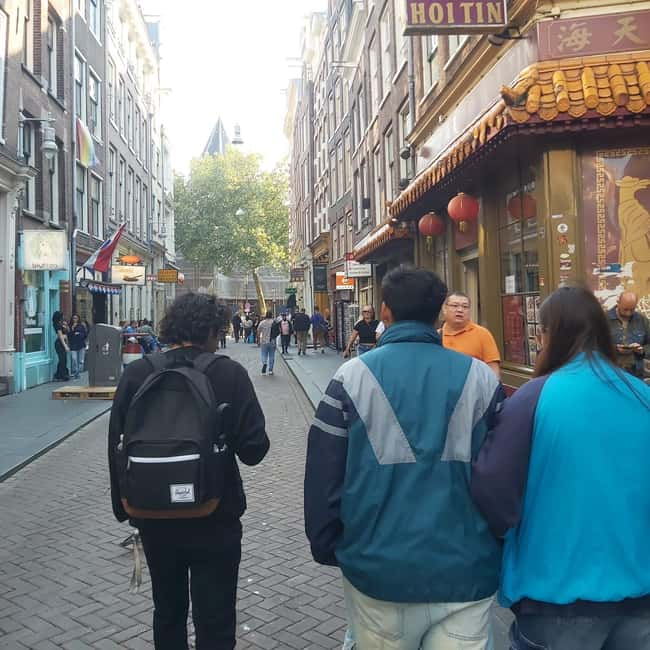
From Oude Kerk, the group walks along Warmoesstraat for about 10 minutes. This street is another reminder that the district is made of connected lanes, not one single strip.
Warmoesstraat helps keep the story moving through the older center. Your guide continues with anecdotes about the people and events that shaped the area, including the shift from port commerce to a district known for nightlife and prostitution.
A later 15-minute stop is listed as a hidden location, but no name is provided. That is useful in one way: you can expect the guide to point out a less obvious feature rather than only the headline sights. It is less useful if you want a fixed list of attractions before booking.
Treat this part as a listening stop. The most valuable details may be the small observations that you would likely miss on your own, such as the way a lane, canal, chapel, or building fits into the larger story.
Ending at Beursplein and Dam Square
The tour finishes around Beursplein, with the wider explanation tied to the Royal Palace in Dam Square. The palace’s relationship to the Red Light District forms the closing point of the historical narrative.
This ending works because it brings the story back to power and the city center. You begin near the harbor and finish near the royal and civic heart of Amsterdam. Along the way, the route links port life, commerce, religion, social rules, and changing ideas about tolerance.
The supplied meeting information also says the activity ends back at the meeting point, while the route details name Beursplein as the finish. Since those descriptions do not match perfectly, confirm the exact end point with the guide when you arrive. In either case, you finish in central Amsterdam, with easy access to the rest of the old city.
What the $31 price really buys you
At $31 per person, the main purchase is the Spanish-speaking guide and the organized route. You are not paying for food, drinks, museum tickets, or entry to nightlife venues.
That makes the price reasonable if you value interpretation. A self-guided walk can show you the same streets, but it will not necessarily explain how the harbor, Golden Age prosperity, religious buildings, migration, and progressive social attitudes connect. The guide’s stories are the central product.
The value is also stronger for Spanish speakers who prefer to ask questions and follow historical detail in their first language. If you already know Amsterdam’s history well, the tour may feel less essential. If you are seeing the district for the first time, two hours gives you a useful framework without taking up an entire day.
You should budget separately for anything you want to enter. The tour includes no food or drinks and no venue admissions. That keeps the base price clear, but it means the walk itself is the full experience.
Free cancellation is available up to 24 hours before the start for a full refund, and you can reserve while paying later. Those terms are useful if your Amsterdam schedule is still shifting.
Who should book this Spanish walking tour
I would choose this tour if you want history before spectacle. It suits adults and older teenagers, Spanish-speaking visitors, and anyone who prefers a guided explanation of a complicated neighborhood.
It is especially useful early in an Amsterdam visit. Once you understand the district’s background, you can return on your own and notice more in the streets and buildings. You will also know how to behave around photography and public spaces.
This is not a good match for children under 14, wheelchair users, or anyone who cannot comfortably walk and stand outdoors for two hours. The tour is also a poor fit if you want indoor attractions, food tasting, private access, or a party atmosphere.
Dress for the weather. Wear comfortable shoes and comfortable clothes. Nonalcoholic drinks are allowed, but alcohol and drugs are not.
Should you book it?
Book this tour if you want the Red Light District explained as part of Amsterdam’s wider history, not reduced to a quick look at red-lit windows. The route covers St. Nicholas Basilica, Zeedijk, He Hua Temple, Nieuwmarkt, De Waag, Oude Kerk, Warmoesstraat, and the canal streets around Oudezijds Voorburgwal in two focused hours.
The strongest reason to choose it is the Spanish guide. A clear, energetic guide can make the many short stops feel connected, and the available feedback specifically praises a Chilean guide for explaining the material well.
Skip it if you want extensive interior visits or a nightlife experience. For a modest $31, though, this is a practical way to gain context, learn the district’s origins, and walk through central Amsterdam with a better sense of what you are seeing.
FAQ
What language is the tour conducted in?
The tour is conducted in Spanish with a live Spanish-speaking guide.
How long does the walking tour last?
The tour lasts two hours. Starting times vary, so check availability when booking.
Where does the tour begin?
Meet the guide outside the entrance to the Barbizon Palace Hotel on Prins Hendrikkade in Amsterdam.
What landmarks are included on the route?
The route includes St. Nicholas Basilica, Zeedijk, the He Hua Temple, Nieuwmarkt Square, De Waag, the Red Light District, Oude Kerk, Warmoesstraat, and the area around Beursplein and Dam Square.
Are food, drinks, or entry tickets included?
No. The price includes the Spanish-speaking guide and walking tour only. Food, drinks, and venue admissions are not included.
Can I take photographs during the tour?
You may bring a camera, but the guide will tell you when photography is appropriate. Photography inside is not allowed.
Is the tour suitable for children or wheelchair users?
The activity is not suitable for children under 14 or wheelchair users. You should also be comfortable walking outdoors and standing during the two-hour tour.
Just added in Amsterdam
- Guided Day Trip – Volendam, Zaanse Schans, Marken & Edam★ 4.0 · 232 reviews
- Private Tour Zaanse Schans Windmills and Volendam in Jaguar★ 5.0 · 10 reviews
- Zaanse Schans and Giethoorn Unique Day Trip with Boat Cruise★ 4.5 · 17 reviews
- Half-Day Private Guided Sightseeing Tour of Zaanse Schans★ 5.0 · 14 reviews
- Zaanse Schans Private Tour Windmills★ 5.0 · 18 reviews
- Private bike tour: Hidden gems around Amsterdam and surroundings★ 5.0 · 4 reviews
- Bike tour in Amsterdam with an Italian guide★ 5.0 · 15 reviews
- Amsterdam Sightseeing Tour + Hidden Gems + Tastings + PDF guide★ 5.0 · 35 reviews
Red Light District Tours, compared.
Red Light District Tour in German/English/Italian
Read our review →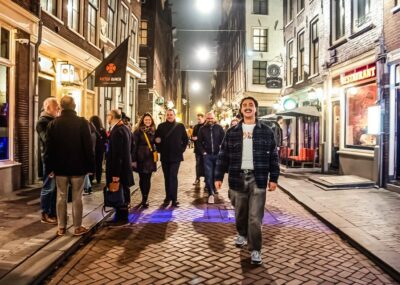
Amsterdam Red Light District & Coffee Shop Tour
Read our review →
Red Light District Pub Crawl with Unlimited Shots
Read our review →
Browse the lists this tour appears in