
Reviewed · CASTLE & PALACE TOURS
Castles, Canals and Good Folk: A Self-Guided Audio Tour of Utrecht
Utrecht’s story comes through best in its everyday places, and this walk takes you from a food market and working-class neighborhood museum to a medieval city castle and a church tied to Dutch Protestant life. I like the freedom to pause for coffee or a snack, and the offline VoiceMap app, which lets you keep moving without relying on a live guide or a mobile signal. The route also reaches parts of northern Utrecht that a quick canal stroll can miss.
The main drawback is the opening directions. One early instruction reportedly points you toward a big tree, which may leave you checking the map to get started. You also need your own phone and headphones, and the tour price does not cover food, museum admission, or other entry fees.
Key points to know before you go
- Start at Hoog Catharijne: The route begins outside the east entrance, near the P5 Interparking area on Daalsesingel.
- Follow an English audio route: VoiceMap supplies the narration, map, and location data for Android and iOS devices.
- Allow 60 to 90 minutes: You can walk straight through or add time for cafés, food stalls, and places that catch your eye.
- See Utrecht beyond the central canals: The route reaches the northern quarters, a former working-class district, the old university area, and a wartime bunker.
- Finish near Janskerk: You end close to cafés and not far from the starting point.
- Bring your own essentials: A smartphone and headphones are required, while food, drinks, transport, and admission fees cost extra.
A self-guided way into northern Utrecht
This is not a standard stop-and-listen city walk led by a person with an umbrella. It is a private audio tour for your own group, played through the VoiceMap app as you move around Utrecht. The app uses your location to deliver the right section of narration, while its map shows where you are and where the route is heading.
That format suits Utrecht well. The city is easy to explore on foot, but its character changes from one block to the next. A market, church, former hospital, city castle, and university quarter can all appear within a short walk. You get the basic story without having to match a guide’s pace.
Download the app and tour content before you set out. Offline access covers the audio, maps, and location data, so you do not need to depend on a live data connection. Once the route is running, the map is helpful rather than essential, although I would keep it available at the start.
The tour is offered in English and lasts about one hour to one and a half hours. That range matters. You can complete it at a steady pace, but a market stop, a drink at Oudaen, or a museum visit will push you toward the longer end.
Other grand houses near Utrecht:
- From Amsterdam: Castle De Haar Guided Tour
★ 4.7 · 41 reviews - Amsterdam: Royal Palace Entry Ticket and Audio Guide
★ 4.6 · 6,475 reviews - Utrecht: De Haar Castle & Park Entry Ticket
★ 4.7 · 1,350 reviews
Starting at Hoog Catharijne and the city market
The walk starts outside the east entrance to Hoog Catharijne, Utrecht’s large shopping center. The stated meeting point is Hoog Catharijne P5, Interparking, on Daalsesingel. This is a practical place to begin because it is close to public transportation and easy to reach from the modern commercial side of the city.
The first directions deserve care. One early instruction refers to heading toward a big tree, and that may not be precise enough if you are unfamiliar with the area. Open the map before you start, confirm your position, and do not feel that you are doing anything wrong if you need to check it during the first few minutes.
From there, the route leads toward the city center and its market. This is a useful first taste of Utrecht because it is not only about grand buildings. You may find croquettes, pickled herring, fresh bread, and a wide choice of Dutch cheese. The tour gives you a reason to pause and look at the food culture around you rather than treating the market as scenery to pass through.
Food is not included, so budget separately if something catches your eye. The market also gives you an easy way to adjust the pace. If you are hungry, take a break. If you want to finish in close to an hour, keep your visit brief.
A working-class neighborhood and Utrecht’s Protestant story
One stop focuses on a small museum about the people who lived in Utrecht’s working-class neighborhoods during the difficult 1920s. The museum adds social detail to the route. Instead of hearing only about wealthy merchants, churches, and impressive buildings, you get a look at ordinary lives during a hard period.
Admission is not included, and the supplied information does not state an entry price or opening schedule. Treat it as an optional stop rather than a guaranteed part of the timed walk. If it is open and you want more context, it could make the tour feel more personal. If not, the audio route still continues.
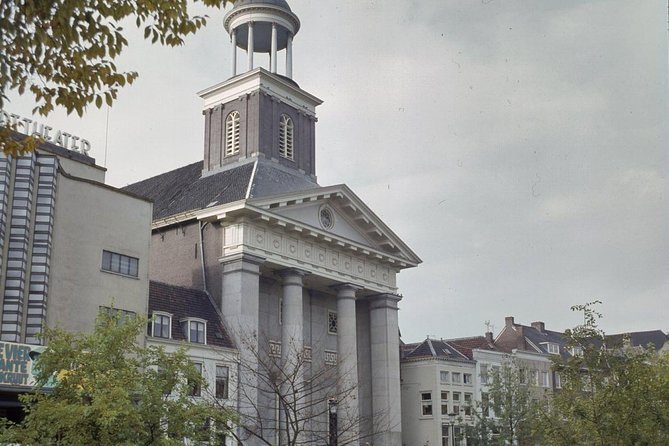
Next comes Jacobikerk, an important Protestant church. Utrecht has long played an important role in the religious life of the Netherlands, and this church begins a stretch of the walk centered on faith and commitment. The value here is the connection between a building and the wider neighborhood around it. You are not only looking at a church facade. You are being pointed toward the people and beliefs that helped shape this part of town.
The audio format works well for these quieter subjects because you can stand outside and listen without joining a group. The tour details do not promise interior access, so plan to view Jacobikerk from the route unless you separately confirm that it is open.
Oudaen city castle and a brewery in the cellars
Oudaen is one of the tour’s strongest stops. This city castle dates from around 1276 and remains one of Utrecht’s most significant buildings. The name can sound grand, but the attraction is also practical: Oudaen offers a place to stop for refreshment.
The cellars contain a craft brewery, giving the building a useful link between past and present. You can take in the medieval structure and then consider staying for a drink if timing and opening conditions suit you. Food and drink are not part of the tour price, so this is an optional expense, not an included tasting.
I like this kind of stop because it gives the walk a natural rhythm. After several historic points, you have a clear place to sit and reset. It also helps if you are traveling with someone who prefers a café break to a long sequence of architecture.
The audio tour itself lasts up to 90 minutes, but Oudaen can easily extend your outing. That is not a flaw. It simply means you should treat the advertised time as the walking and listening estimate, not as a strict door-to-door schedule.
A few more things to do in Utrecht worth a look
- Discover Utrecht with a self-guided Outside Escape city game tour
★ 4.5 · 51 reviews - Uniquely Utrecht: An Audio Tour of its Charming City Centre
★ 5.0 · 4 reviews - Amsterdam: 75 Minute City Canal Cruise with Audio Guide
★ 4.4 · 17,501 reviews - Amsterdam: Canal Cruise with Live Commentary & Audio Guide
★ 4.4 · 1,034 reviews
Neude Square, the post office, and a 400-year fabric market
The walk continues to Neude square, home to what is described as the most beautiful post office in the Netherlands. Even if you are not interested in postal buildings, the stop gives you a reason to look closely at a building that many people might pass without understanding its former purpose.
Neude is also part of the route’s café-friendly character. The exact number of stops is not given, but the walk passes pleasant places for a break. You can use the square as a pause point or save your longer stop for Oudaen.
Another highlight is the largest and oldest fabric market in the Netherlands. It has operated for around 400 years. That age gives the market more weight than a modern shopping stop, but the appeal is still immediate: textiles, trade, and the continuing use of a traditional market space.
The tour does not promise a special market event on a particular day. The route description identifies the fabric market as a stop, while the market’s operation or opening hours are not provided. If this is a major reason for booking, check current local details before you go.
From former eye hospital to Utrecht’s old university quarter
The route passes a boutique hotel that once housed an eye hospital. This is the sort of detail that makes a city walk worthwhile. A building’s current use tells only part of its story. The old hospital connection adds another layer without requiring you to visit a separate museum.
Because you pass the hotel rather than enter it, you should not expect a formal tour of the building. The audio narration is there to explain the connection as you walk by. Keep an eye out for changes in use, signs, and architectural details that might otherwise go unnoticed.
The next section moves through Utrecht’s old university neighborhood. Again, the tour is not simply chasing famous sights. It links institutions, buildings, and the people who used them. This part should appeal to you if you like seeing how education shaped a city’s streets, rather than visiting only its main postcard views.
The route also includes a wartime bunker. The available details do not state that you enter it, so plan on seeing or passing the feature from the route. Its presence brings a more recent and sobering period into a walk that also covers medieval buildings, religious life, markets, and older civic institutions.
A powerful sculpture and the final story at Janskerk
One stop presents a sculpture of a remarkable young woman whose life and death still carry meaning. The supplied information does not name the woman or provide the artwork’s title, so you should let the audio narration supply the context when you reach it.
That lack of advance detail may actually make the stop more effective. You encounter the sculpture as part of the street, then hear why it matters. The tour uses public art in the same way it uses markets and former hospitals: as a way to connect Utrecht’s past with the city you see now.
The walk ends near Janskerk, with a story about the Order of the Knights of Utrecht. The finishing point is near the Faculty of Law, Economics, and Organization, and close to several cafés. It is also not far from the starting point, which makes the route convenient if you left luggage, parked nearby, or want to continue exploring the center on foot.
The ending is less about a grand final view than about a final piece of Utrecht’s institutional and religious story. That suits the tour’s approach. It builds a picture from many smaller places rather than depending on one famous landmark.
Is $8.99 good value?
At $8.99 per person, this is inexpensive compared with a live private walking tour. You pay for lifetime access to the English tour, plus the VoiceMap app, offline audio, maps, and geodata. If you use the route once, the price is still reasonable for a 60 to 90 minute introduction. If you return to Utrecht or want to pause and resume later, lifetime access adds extra value.
The savings come with tradeoffs. There is no live guide to answer questions, correct a wrong turn, or adjust the route for your interests. You must provide your own smartphone and headphones. You also pay separately for drinks, food, museum admission, transport, and any other attraction along the way.
I see the strongest value for independent visitors who want structure but dislike fixed departure times. The audio route gives you a plan, while the market and Oudaen give you natural places to stop. It is less suitable if you want deep personal commentary, a guide who can respond to questions, or guaranteed entry into buildings.
The tour is available every day according to the stated schedule, from midnight to midnight. That reflects digital access rather than a staffed meeting time. You can begin when it suits you, but check local opening details if you want to enter the museum, visit a market, or stop at a café.
Who should book this Utrecht walk?
Book it if you are new to Utrecht and want a useful first route through the city. One review described an unplanned visit with little prior knowledge, and the audio walk served as both orientation and introduction. That is exactly where this product makes sense: you get a clear path and enough background to make the streets more readable.
It also suits repeat visitors who have already seen the best-known canals and want the northern quarters, working-class stories, the old university area, and a wartime site. Couples, friends, and families can keep their own pace because only your group participates.
You may want something else if you prefer a completely spontaneous walk. The early directions can be a little unclear, and a self-guided format asks you to manage the app yourself. Download everything in advance, start with the map open, and bring headphones that let you hear the narration while staying aware of your surroundings.
Should you book Castles, Canals and Good Folk?
I would book this tour for a flexible, low-cost introduction to Utrecht that reaches beyond the obvious center. The best parts are the mix of market food, religious sites, working-class history, Oudaen castle, and the old university quarter, plus the freedom to stop whenever you like.
Skip it if you want a live human guide, extensive interior visits, or a tightly polished route from the first instruction. At $8.99, the risk is small, but the experience depends on your phone, your navigation, and your willingness to listen while walking. For independent visitors who value context and control, it is a sensible way to spend an hour or two.
FAQ
How long does the audio tour take?
The tour takes approximately one hour to one and a half hours. Stops for food, drinks, museum visits, or other attractions will add time.
Where does the tour start?
It starts outside the east entrance to Hoog Catharijne, near Hoog Catharijne P5, Interparking, on Daalsesingel in Utrecht.
Where does the tour end?
It ends near Janskerk, close to the Faculty of Law, Economics, and Organization. The ending is near cafés and not far from the starting point.
What language is the tour offered in?
The tour is offered in English.
Do I need internet access while walking?
The audio, maps, and geodata can be downloaded for offline use through the VoiceMap app. Download the app and tour content before starting.
Are admission fees, food, or headphones included?
No. You need to bring your own smartphone and headphones. Food, drinks, transportation, museum admission, and tickets for other attractions are not included.
More Audio Tours in Utrecht
- Amsterdam Sightseeing Canal Cruise with Audio Guide
★ 3.5 · 828 reviews - Rotterdam: Steamship Rotterdam Audio Tour Entry Ticket
★ 4.5 · 325 reviews - Amsterdam Van Gogh Museum with Audio or Guided Tour
★ 4.0 · 266 reviews - Van Gogh Museum Skip the Queue with Audio Guide
★ 4.0 · 261 reviews
Just added in Utrecht
- Uniquely Utrecht: An Audio Tour of its Charming City Centre★ 5.0 · 4 reviews
- Utrecht Food Tour on a Bicycle with local guide★ 5.0 · 23 reviews
- 3 Hours itinerary between Amsterdam & Utrecht: The Heart Of Holland In A Sidecar★ 5.0 · 20 reviews
- Our Utrecht’s Private & Personalized tour★ 5.0 · 3 reviews
- Utrecht – Food Tour: Try out 6 dutch bites★ 4.5 · 6 reviews
- Historical Utrecht: Private Walking Tour with a Local Guide★ 4.6 · 3 reviews
- From Amsterdam: Castle De Haar Guided Tour★ 4.7 · 41 reviews
- Our Utrecht City Tour (Limited group size & optional Lunch)★ 4.9 · 70 reviews
Castle & Palace Tours, compared.

Castle De Haar Small-Group Tour from Amsterdam
Read our review →
Browse the lists this tour appears in